Watanabe no Tsuna

watanabe-no-tsuna

Watanabe no Tsuna

Watanabe no Tsuna

Their soul is listening — speak, and they will answer.

Basic Description

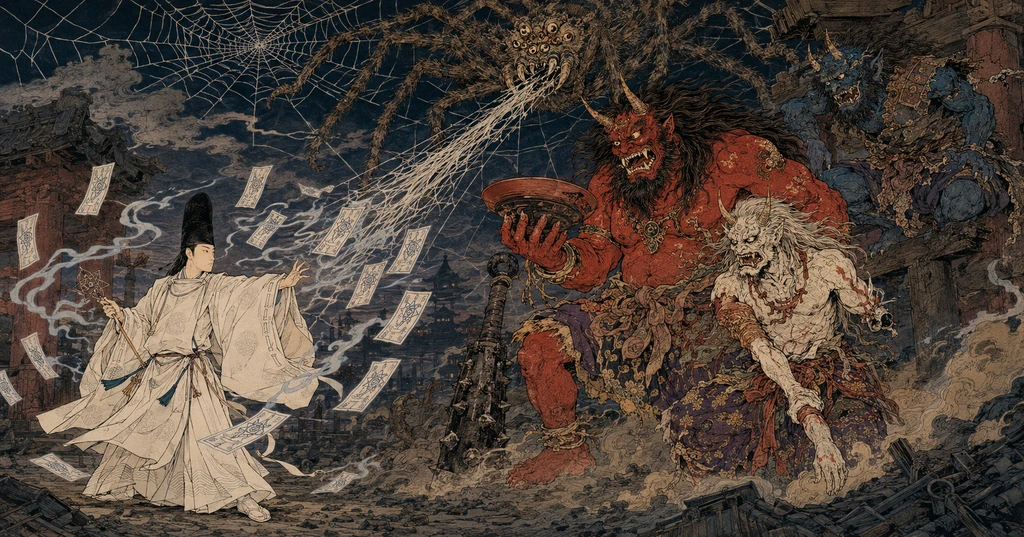
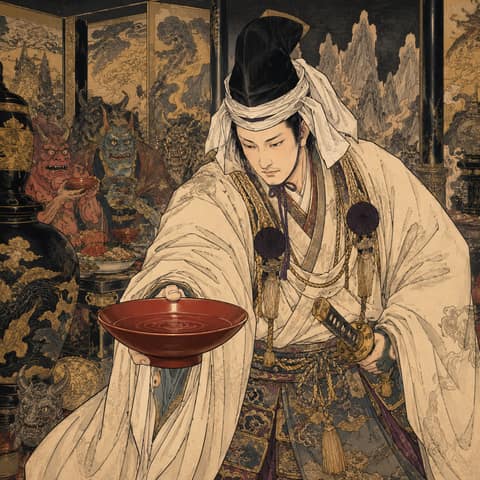
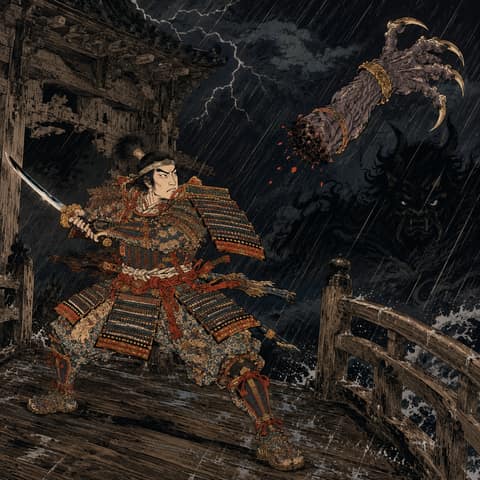
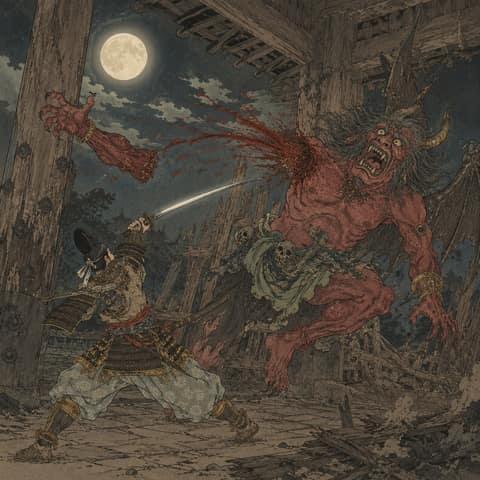
Watanabe no Tsuna is known as the foremost of Minamoto no Yorimitsu's Four Heavenly Kings, and in yokai tales, he is famous as the warrior who severed a demon's arm. Historically a mid-Heian period samurai, in the world of folklore he joins Yorimitsu's expedition to Mt. Oe to subjugate Shuten-doji, and is celebrated as the hero who cut off Ibaraki-doji's arm at Rashomon or Ichijo Modoribashi. In the "Tsurugi-no-maki" (Sword Scroll) variant of the Tale of the Heike, there is a story of Tsuna encountering a demon at the boundary of the capital and severing its arm[1].

The core of Tsuna's tale lies in the pairing of his martial prowess in slashing demons with the story of a demon infiltrating human relationships through disguise. Tsuna, who brought the demon's arm home, is later visited by the demon disguised as his elderly female relative, who breaks the seal and reclaims the arm. In the Otogizoshi tale "Shuten-doji," Tsuna joins the Mt. Oe expedition as one of Yorimitsu's Four Heavenly Kings, supporting his lord's demon subjugation[2]. Watanabe no Tsuna is a warrior who uses his blade to cut down demons appearing at the gates and bridges of the capital, while also being a hero whose human vulnerabilities are exploited by the demon's wisdom and disguise.

The value of discussing this figure in a yokai encyclopedia is that it shows how contact between demons and humans occurs not only through martial force but also through social relationships. Tsuna can slash a demon, but when a demon approaches with the face of a relative, he hesitates. Therein lies the depth of the folklore—anomalies are not just external enemies, but things that infiltrate the interior of human relationships.

Folklore & Legends

What is important in Tsuna's demon arm tale is that the stage is set at the boundary of the capital. Rashomon is the entrance to Heian-kyo, easily depicted as a place carrying imagery of ruin, thieves, corpses, and anomalies. Ichijo Modoribashi also has a boundary nature as a bridge where the dead return and a bridge avoided during weddings. Although the location fluctuates depending on the manuscript, both are points where the human world and the demon world intersect[1]. Tsuna faces the demon at that boundary and, by severing its arm, temporarily stops the otherworld's invasion.

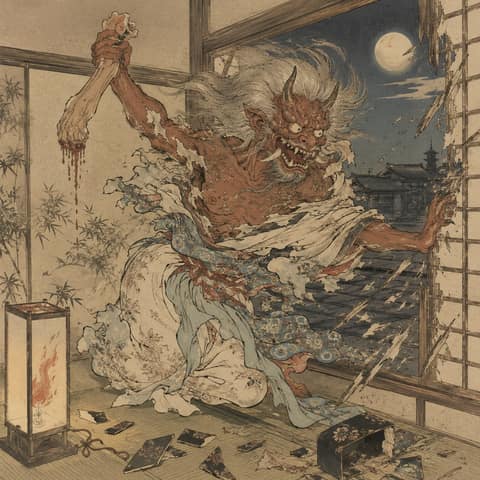
However, the story does not end the moment the arm is severed. The demon borrows the form of a relative to come to Tsuna's mansion. This is an unfolding where an anomaly severed at the outer boundary now intrudes into the inner boundary known as family relations. Even though Tsuna is a strong warrior, he cannot fully bring himself to suspect an opponent in the guise of his aunt. Here lies the human touch of the demon subjugation tale. Even a demon that can be cut with a sword is difficult to fend off when it approaches in the form of emotion and courtesy.

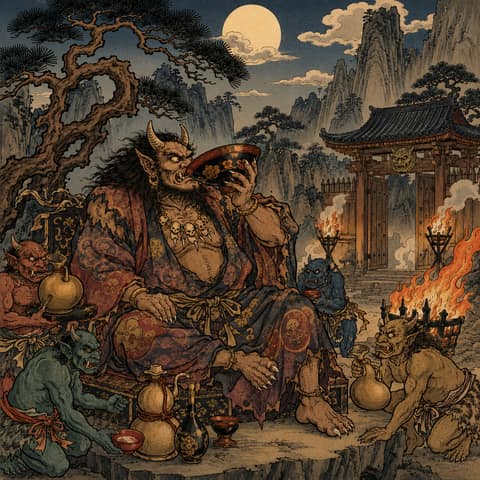
In the Mt. Oe subjugation, Tsuna is the head of the Four Heavenly Kings supporting Yorimitsu's operation[2]. While his individual tale is the demon arm of Rashomon/Modoribashi, at Mt. Oe he participates in the subjugation of Shuten-doji as a member of a team. Tsuna is a warrior who encounters demons alone at the capital's boundaries, and also a warrior who joins a major demon subjugation under Yorimitsu. This dual positioning makes him not just a strongman, but a crucial figure in folklore who repeatedly travels back and forth across the boundary between demons and humans.

The act of bringing the demon's arm home is also an act of preserving the anomaly as physical evidence. Because there is a severed arm, rather than an invisible or spoken-only demon, Tsuna's encounter becomes a concrete incident. However, that physical evidence is simultaneously a dangerous object. Once a part of the anomaly is brought into the house, the house inevitably becomes the stage for a revisit.

Tsuna's story is also layered with the authority of the Genji warriors. By being told as the head of Yorimitsu's Four Heavenly Kings, his individual demon arm tale is incorporated into the grand hero system of the Mt. Oe subjugation. While Tsuna is a warrior who fights demons alone, he is also a part of Yorimitsu's order. This duality allowed his folklore to circulate widely.

Furthermore, the ending where the arm is reclaimed is not Tsuna's defeat, but shows the tenacity of the entity known as a demon. Humans can cut off a part of an anomaly, but they cannot completely possess the anomaly as a whole. From the moment the demon's arm is brought home, it harbors the future of being reclaimed.

Detailed Analysis

In this version, we read Watanabe no Tsuna as "the boundary warrior who severed the demon's arm." What etched Tsuna's name most strongly in history is the story of him encountering a demon at Rashomon or Ichijo Modoribashi and cutting off its arm[1]. It is no coincidence that the location is a gate or a bridge. A gate divides the inside and outside of the capital, and a bridge connects this shore and the other shore. The demon appears precisely at that boundary.

Tsuna's bravery does not completely erase the demon with a single stroke. He can sever the arm, but the demon itself escapes. The remaining arm is both a trophy and evidence that the anomaly has not yet ended. Here lies the fascination of the demon arm tale. The severed arm enters the mansion as an object and is placed under human management, but the demon returns to the human world to take it back.

The revisit by the demon disguised as an old woman reveals Tsuna's weakness. He is excellent in martial force, but he finds it hard to lose courtesy toward an opponent taking the form of a relative. The demon strikes at that point. In yokai subjugation tales, the insight to see through anomalies is just as important as martial power. While Tsuna succeeded in cutting the arm, he cannot completely fend off the disguised demon. This imperfection makes him a human-like hero.

As one of Yorimitsu's Four Heavenly Kings, Tsuna also occupies an important position in the Mt. Oe subjugation[2]. In his solitary tale, he slashes the boundary demon; in the group tale, he heads for Shuten-doji under Yorimitsu's command. In other words, Tsuna is the figure who connects individual bravery with team demon subjugation. His blade participates in both one-on-one anomaly events and grand subjugation narratives.

This version of Tsuna stands between victory and letting the enemy escape. The scene of cutting the demon arm is vivid, but the development of the demon reclaiming the arm shows that anomalies cannot be simply sealed away. Even if the monster is slashed at the boundary, the monster returns inside the house, into the form of a relative, into memories. Watanabe no Tsuna's story simultaneously tells of the exhilaration of demon subjugation and the tenacity with which demons still infiltrate the human world.

The demon arm is an object that has crossed boundaries. The moment it is detached from the demon's body, it remains a part of the otherworld while being kept in a human mansion. Tsuna holds the arm as proof of victory, but that arm also serves as a beacon for the demon to return. The trophy is simultaneously a cursed object.

The demon disguised as an old woman attacks Tsuna's humanity. A warrior is strong against demons, but cannot discard courtesy toward relatives. Here the story shifts from a contest of strength to a contest of perception. If he knows it is a demon, he can slash it. But when the demon borrows a family member's face, a person cannot easily swing a blade.

This version of Tsuna is not a flawless subjugator, but a hero who wins at the boundary and wavers inside the house. That is exactly why the folklore gains depth. Demon subjugation does not end outside; it starts over once back in daily life because of what was brought back, the person trusted, and the seal that was opened.

Tsuna's charm lies in his nature as a warrior that includes this wavering. If he were simply strong, the ghost story would end quickly. But he is strong, and at the same time, deceived. Therefore, the story moves from a single stroke of the sword to a conversation in the mansion, deepening from external demon subjugation to internal suspicion.

That lingering resonance keeps Tsuna's martial valor from being just a simple victory tale.

Character Profile

This section is our own creative profile for storytelling. It is not historical fact or scholarship.

Rarity
Epic
Personality
Courageous and deeply loyal, but because he values courtesy and emotion, he is shaken by a demon disguised as a relative. Combines the strength of a sword with human vulnerabilities.
Compatibility
橋や門の怪談、鬼退治、武者の一騎打ちに惹かれる人と相性がよい。強さだけで終わらない妖怪譚を好む人にも向く。
Abilities
Severing Demon ArmsBoundary DefenseStrong SwordsmanshipLoyalty to LordMt. Oe ExpeditionPreserving Evidence of AnomaliesBattle of Wits with Demons
Weaknesses
Strong in martial force, but his judgment wavers when demons approach in the form of relatives or courtesy. Told as a hero who severs a part of the demon rather than completely annihilating it.
Habitat
Heian-kyo Rashomon, Ichijo Modoribashi, Minamoto no Yorimitsu's mansion, Mt. Oe demon subjugation tales, the narrative world of the Heike Monogatari Sword Scroll lineage.
For more detailed information and diagnosis results about The Warrior Who Severed the Demon Arm of Rashomon: Watanabe no Tsuna, please click here.

Sources & References

2
  1. 平家物語『剣巻』(綱の鬼斬り)(軍記、異本所収)((『平家物語』剣巻・源平盛衰記系), 鎌倉-室町期) [古典文献] Reference
  2. 御伽草子『酒呑童子』(作者未詳)((御伽草子・古活字本ほか), 室町-江戸期) [古典文献] Reference丹波大江山の鬼の首領・酒呑童子を源頼光と四天王が討つ説話。人を攫う大鬼の典型像を広めた。

Interested in this type of yokai?

Discover the yokai most similar to your personality with our yokai diagnosis

Start Yokai Diagnosis

Meet your guardian yokai at the shrine

Draw an omikuji fortune and discover the yokai watching over you today.