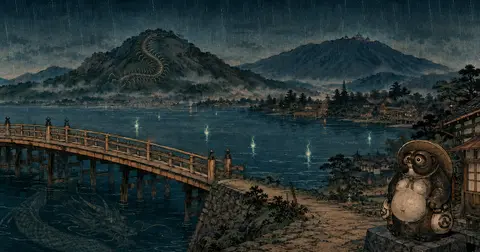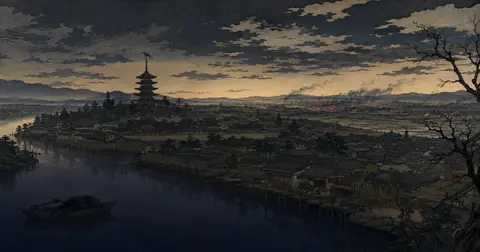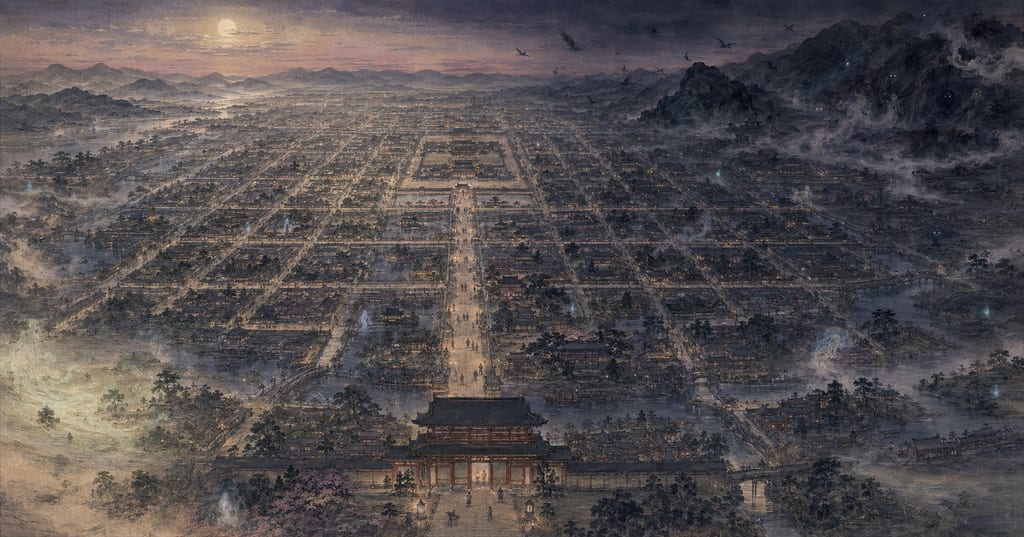
Over 1,200 years have passed since the capital was relocated to Heian-kyo in 794. To understand the yokai of Kyoto, one must first understand the boundary between two types of spaces: the grid-like capital constructed by the Ritsuryo state, and the mountains, riverbeds, and burial grounds that surround it. Yokai often emerge where these two spaces intersect and boundaries blur: upon the roofs of the Greater Imperial Palace (Daidairi), within the pavilion of Rashomon, beneath the Ichijo Modoribashi and Uji bridges, amidst the smoke of Toribeno, or deep within the Sojo-ga-tani valley of Mount Kurama. Tracing the yokai of Kyoto is also an inquiry into how people of the dynastic era delineated order within the capital and how they confronted the unknown and unsettling outside of it.
Nue
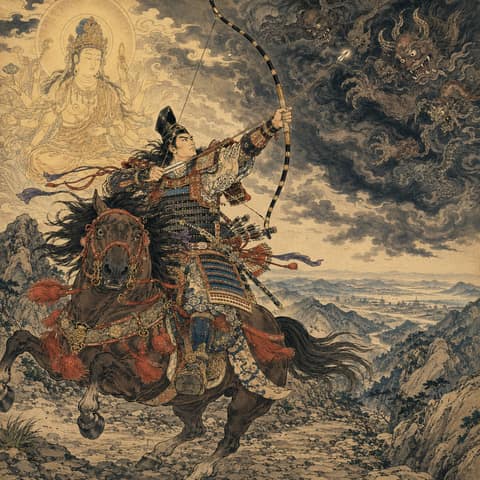
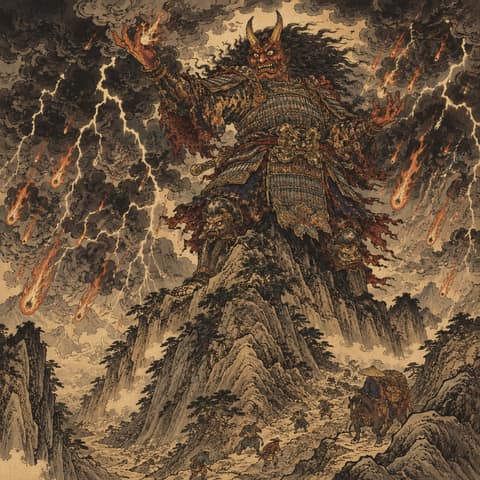
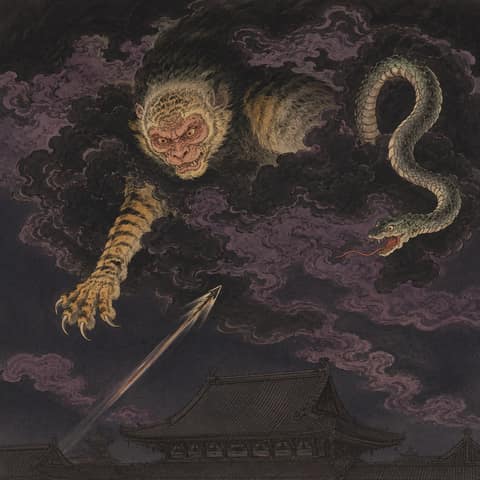
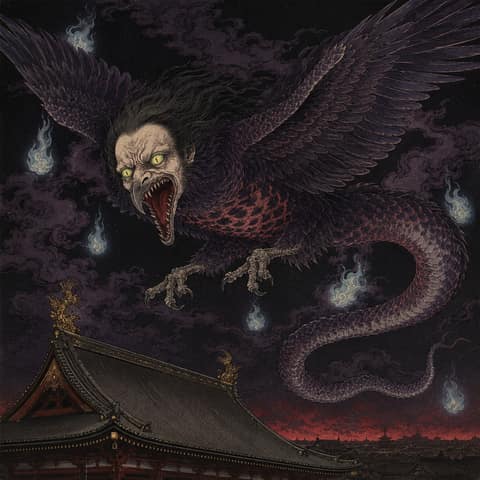
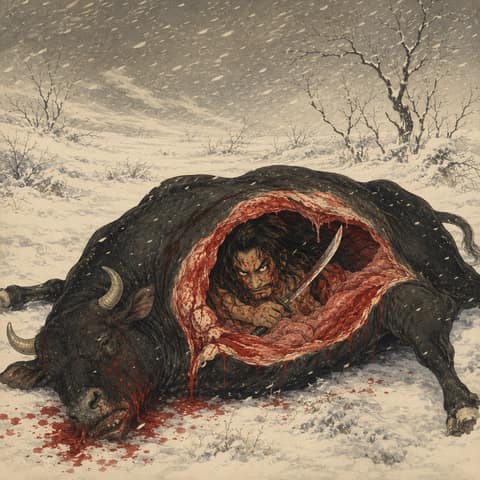
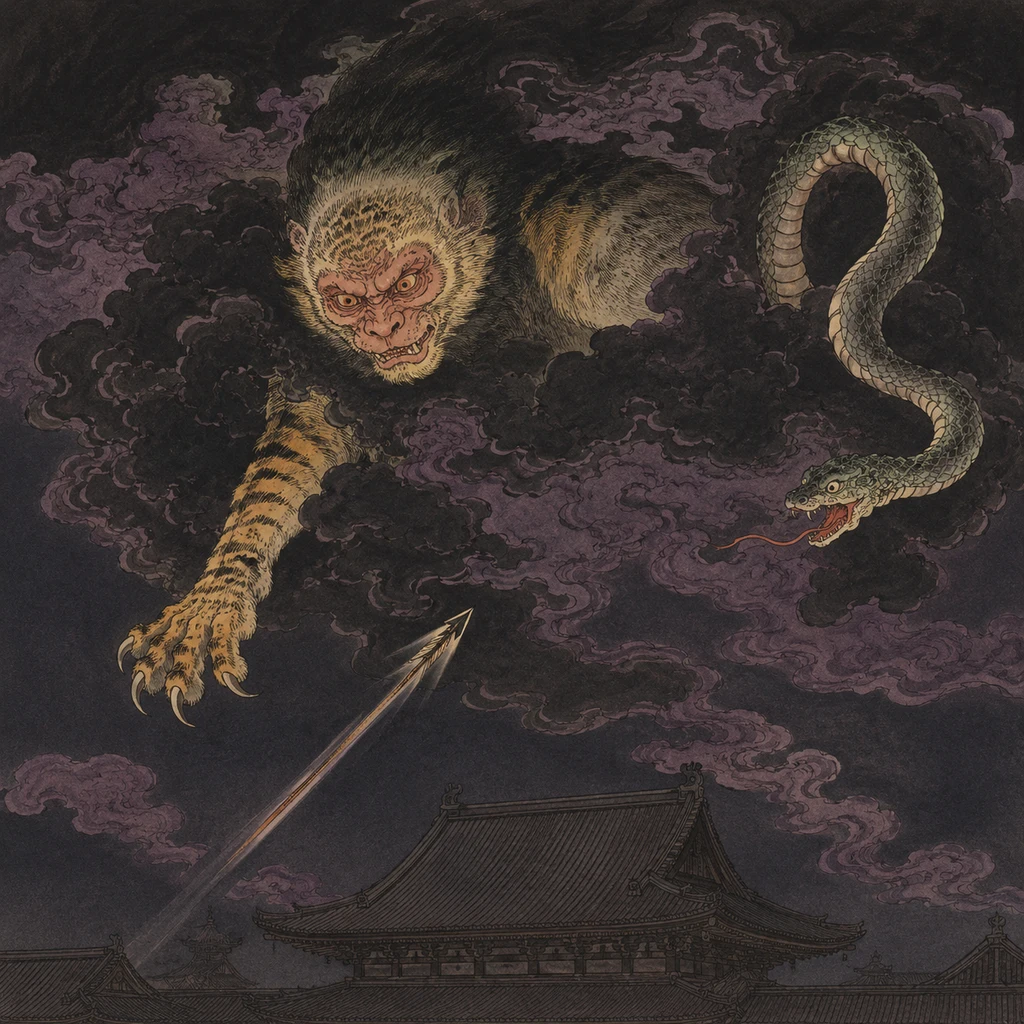
The Nue is a figure shaped by the overlap of an ancient bird name, medieval courtly marvels and warrior tales, and later Noh drama and yōkai art. It is now best known as the monster with a monkey’s head, a tanuki’s body, tiger’s limbs, and a snake’s tail, which emerges from a black cloud over the palace at night and is brought down by Minamoto no Yorimasa. That familiar image, however, cannot be treated as the Nue’s one original form. The combination of body parts varies among textual traditions, and the word nue itself predates the monster: it first named a calling bird. The Yachihoko-no-kami song in Book One of the Kojiki, which includes the line “On the green mountain, the nue cries,” shows that nue was a bird name at least as early as antiquity. The passage is not describing the later composite monster. Modern dictionaries often identify the bird with White’s thrush, but it is more useful to begin by recognizing it as an old bird name than to force a poetic term into a one-to-one modern biological classification. In medieval tales, the Nue as a bird and the Nue as a strange monster appear alongside one another rather than in a simple earlier-and-later sequence. In the Yorimasa story in section 10-56 of Book Ten of Jikkinshō, “Matters in Which One Should Aspire to Accomplishment,” Yorimasa shoots at a Nue calling from the palace hall on a rainy night, judging it to be “a small bird even by day.” By contrast, National Archives material comparing Yorimasaki with an undated printed edition of The Tale of the Heike preserves accounts that describe the creature falling from a black cloud through a combination of monkey, tanuki, tiger, snake, and other animals. From an early period, Nue has been a marvel in which a bird name, an uncanny bird, and a composite beast converge. Later receptions deepened that convergence. In the Noh play Nue, the monster slain in the tale appears at Ashiya as the Nue’s departed spirit. It recounts the misfortune of being set adrift in a hollow boat and asks a monk to perform rites for it. From the late Edo period onward, yōkai paintings and warrior prints repeatedly reimagined Yorimasa, the black cloud, and the composite body. Nue is best read not as a single fixed creature, but as a name that has continued to gather together different texts, performing arts, images, and local traditions.
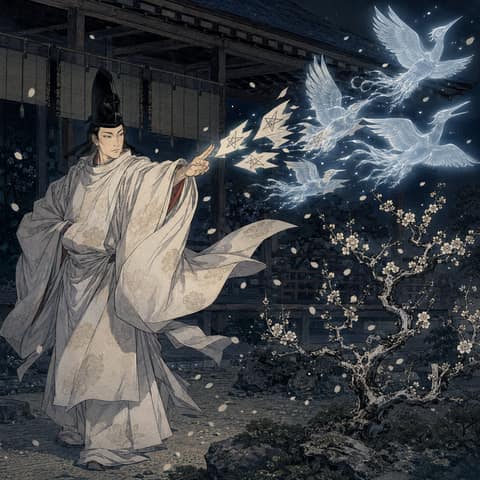
Read moreThe so-called "Three Great Evil Yokai of Japan" all share deep ties with Kyoto, and more than half of the "Three Great Vengeful Spirits" also claim Kyoto as their primary stage. This is no coincidence. To the northeast of Heian-kyo—the *Kimon* or "Demon Gate"—stands Enryaku-ji Temple on Mount Hiei as a guardian; to the southwest—the *Urakimon*—Iwashimizu Hachimangu offers protection. The Bureau of Onmyo (Onmyoryo) was established within the palace, and the Goryo-e rituals and Tenjin belief incorporated vengeful spirits into state ceremonies to pacify them. In other words, Kyoto is not only the place where yokai and vengeful spirits were most readily imagined and spoken of, but also the sacred ground where people dedicated immense effort to pacify, ward off, and explain them. These two forces have intertwined within this single city for over a millennium.
The Demon Gate and Demons of the Imperial Capital:
Mount Oe,
Rashomon,
and Mount Atago
From its very inception, Heian-kyo faced threats from external forces. The most typical representation of this is the *oni* (demons) lurking on the city's fringes and within the mountains.
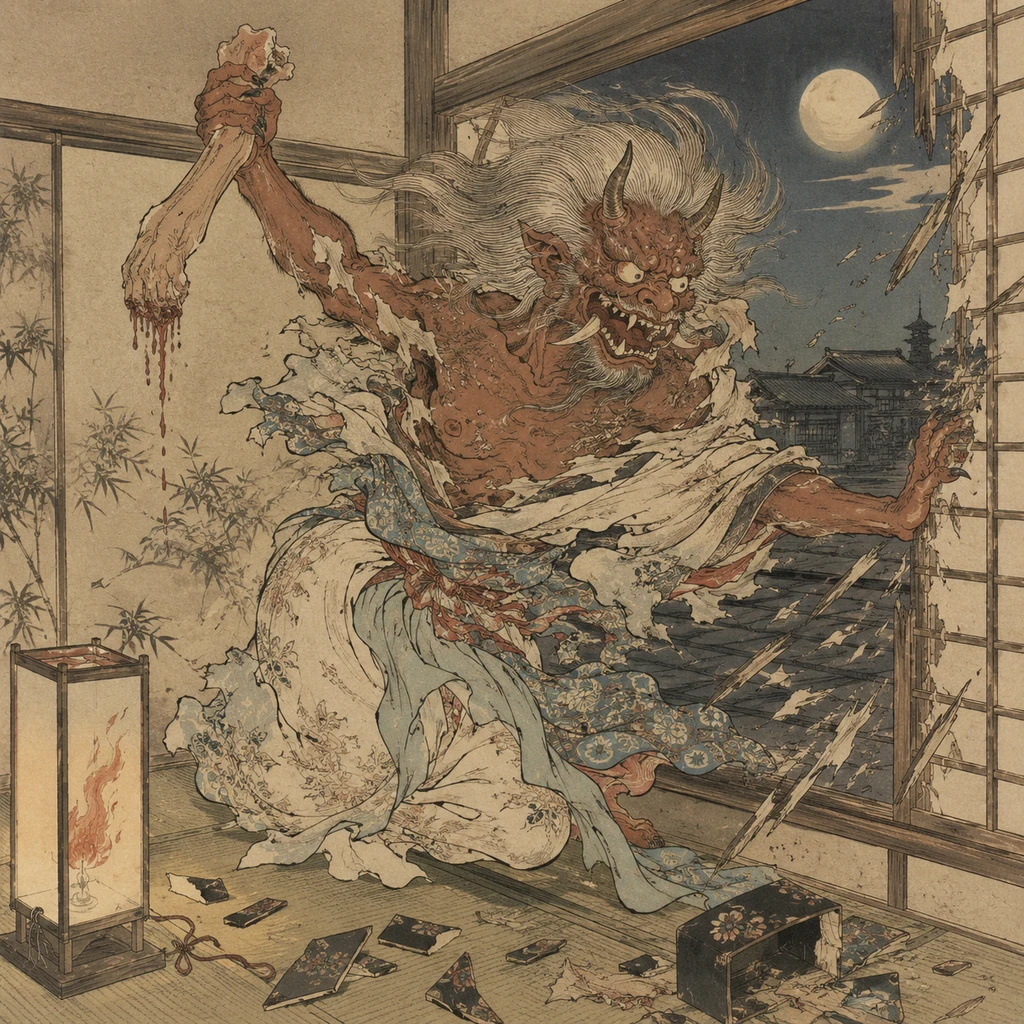
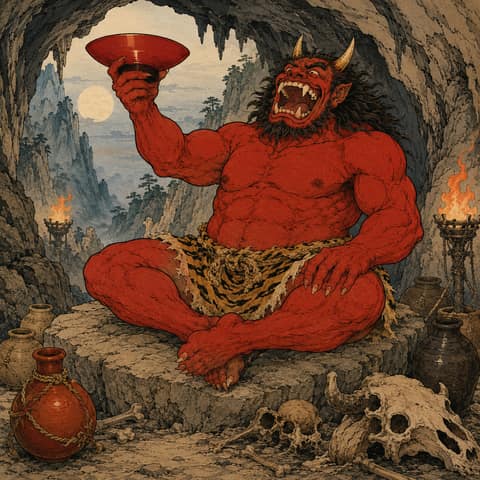
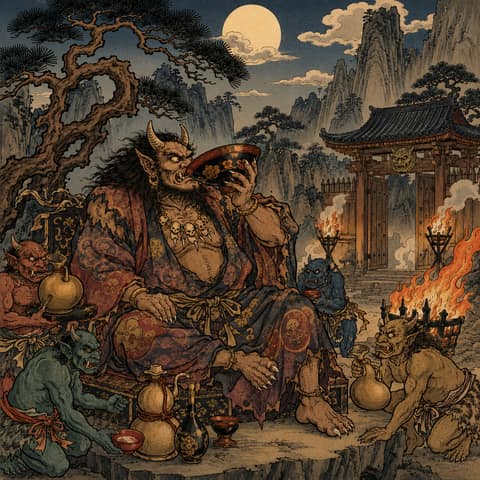
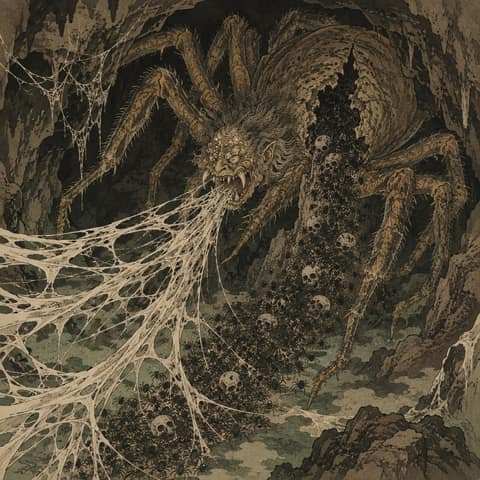
Shuten-doji entrenched himself in Mount Oe northwest of Kyoto, leading evil oni to abduct princesses from the capital until he was ultimately vanquished by Minamoto no Yorimitsu and his Four Heavenly Kings. As Japan's foremost demon king, his legend stands as the pinnacle of Kyoto's demon-slaying narratives. His second-in-command Ibaraki-doji, along with Hoshiguma-doji and Kuma-doji who appear in the *Oeyama Ekotoba* (Tale of Mount Oe Picture Scroll), collectively forged the formidable reputation of the Mount Oe demon clan.
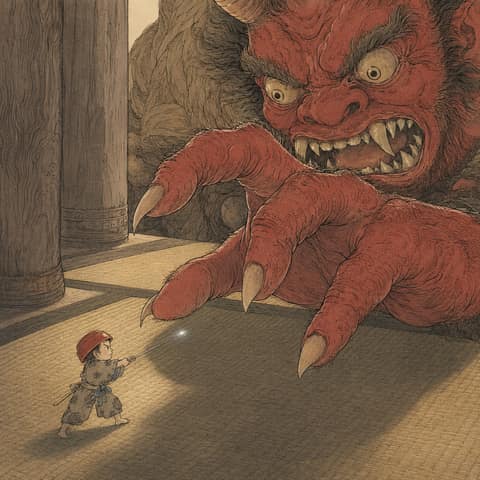
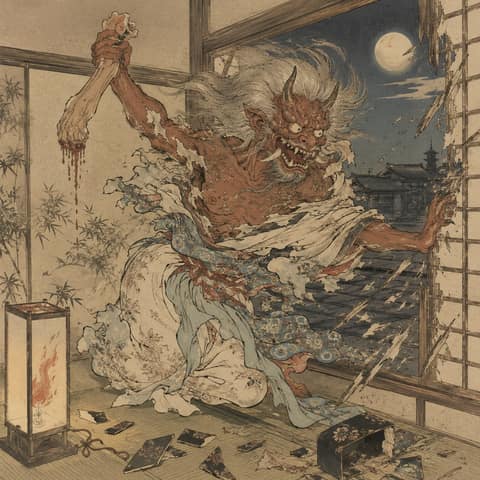
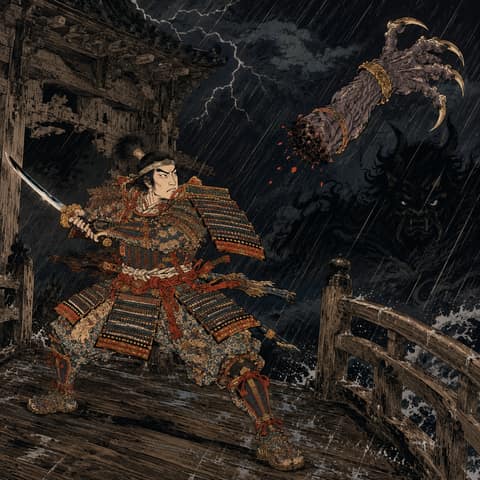
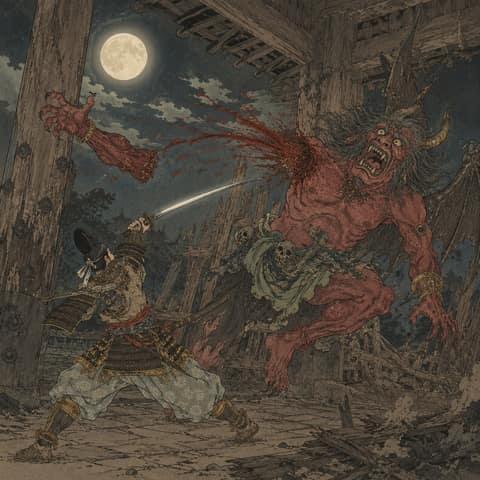
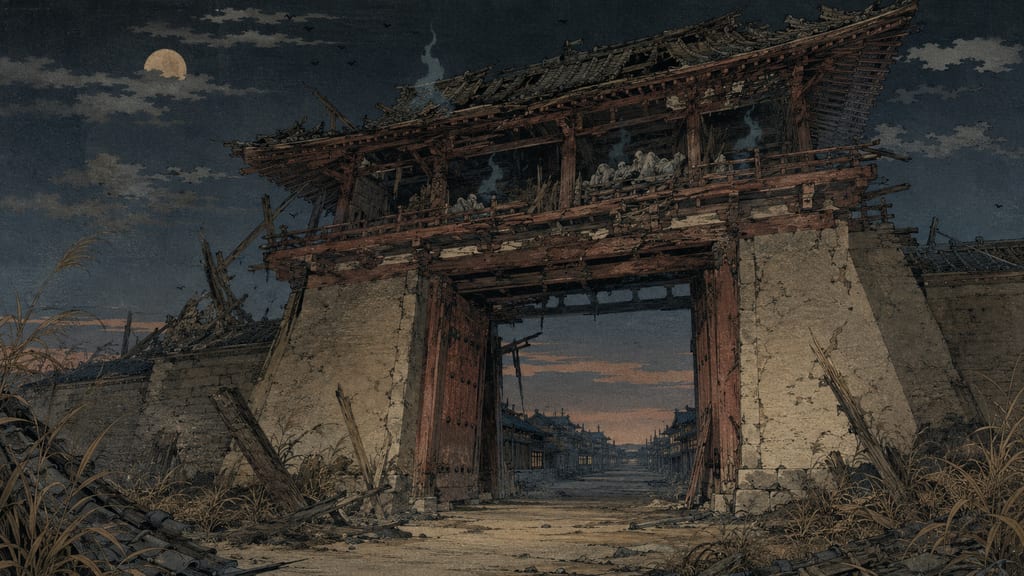
At Rashomon, the great southern gate of Heian-kyo, tales of demons similarly abound. The Noh play *Rashomon* and the Kabuki play *Modoribashi* both recount the story of Watanabe no Tsuna severing a demon's arm (this demon is usually identified as Ibaraki-doji). When the capital fell into ruin, the majestic Rashomon naturally became a demon's nest.
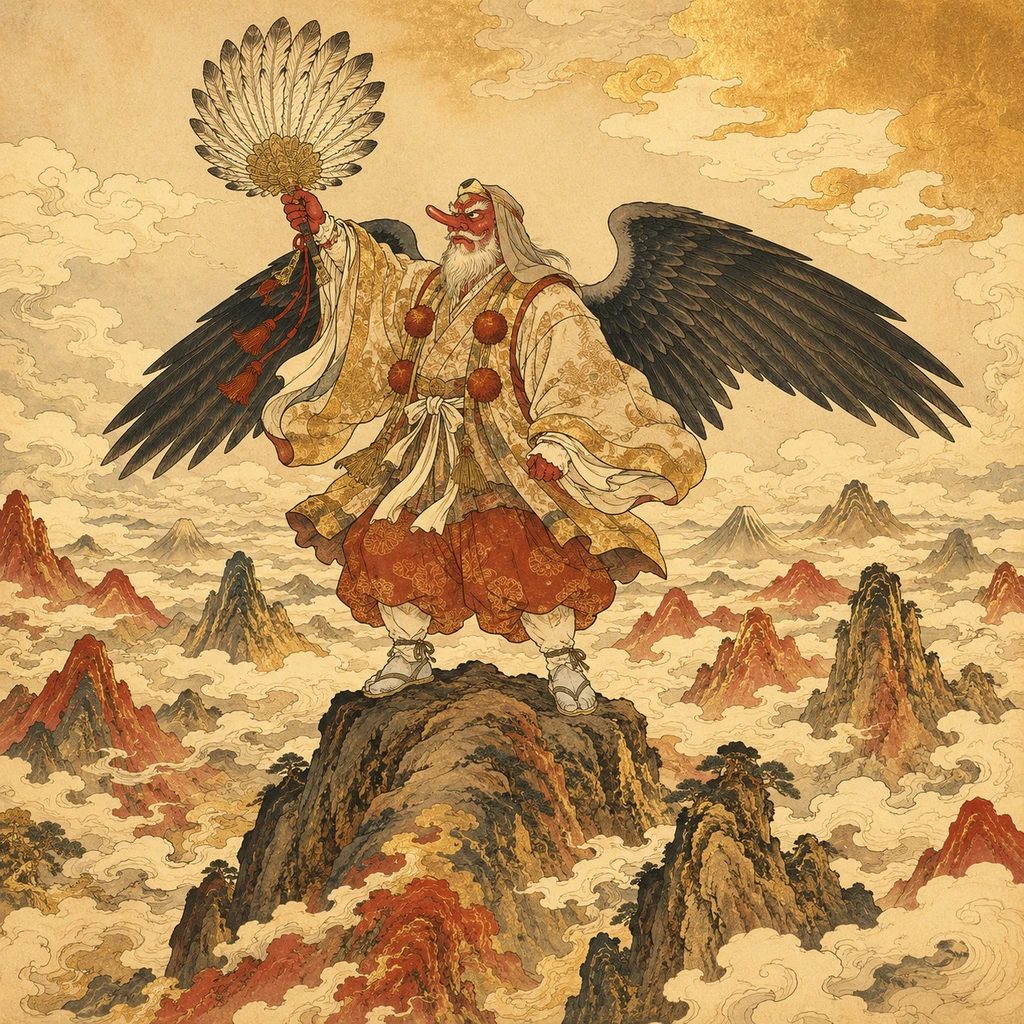
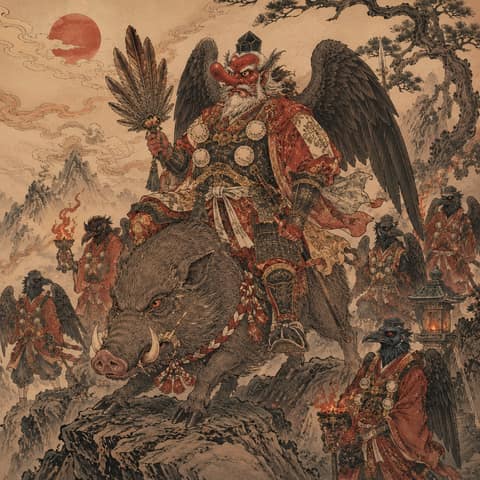
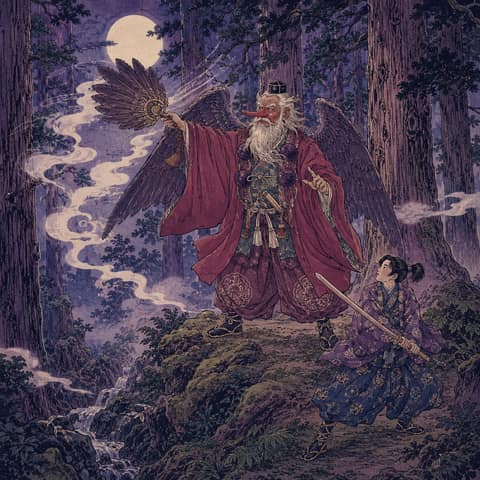
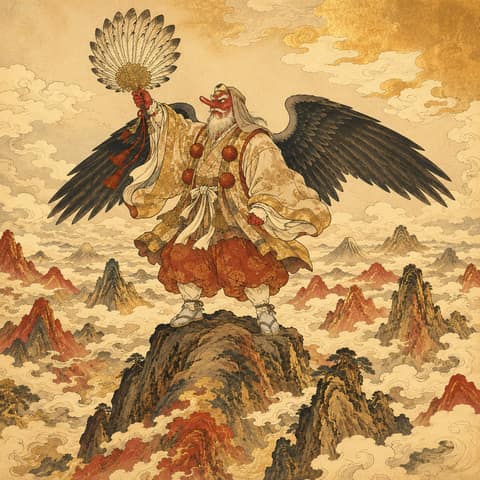
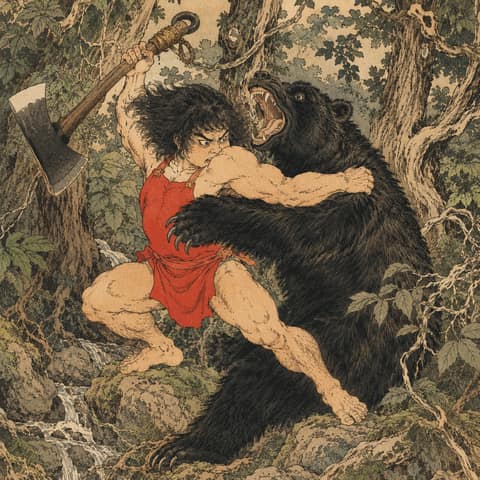
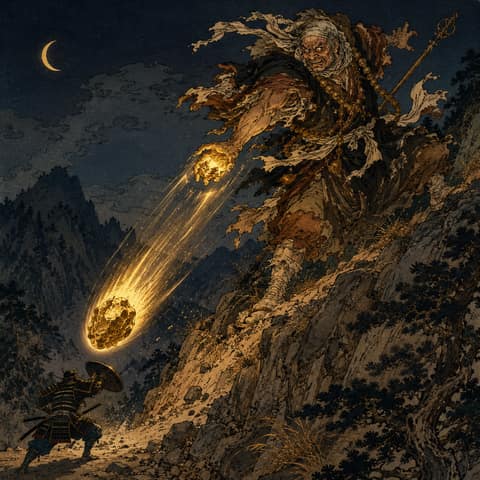
Alongside oni, tengu are the absolute overlords of Kyoto's mountainous otherworlds. Mount Atago, guarding the northwest of Heian-kyo, and Mount Kurama to the north, have long been sacred sites of tengu belief. Legend holds that when Minamoto no Yoshitsune (Ushiwakamaru) trained at Mount Kurama, he learned the art of war from the Kurama Tengu; Mount Atago, meanwhile, is ruled by Tarobo. The Tengu depicted in Toriyama Sekien's *Gazu Hyakki Yagyo*, as well as Atago-san-ki (Tarobo of Mount Atago) in *Konjaku Gazu Zoku Hyakki*, demonstrate that this capital was not only protected by gods and buddhas but also surrounded by mysterious, mountain-dwelling supernatural abilities.
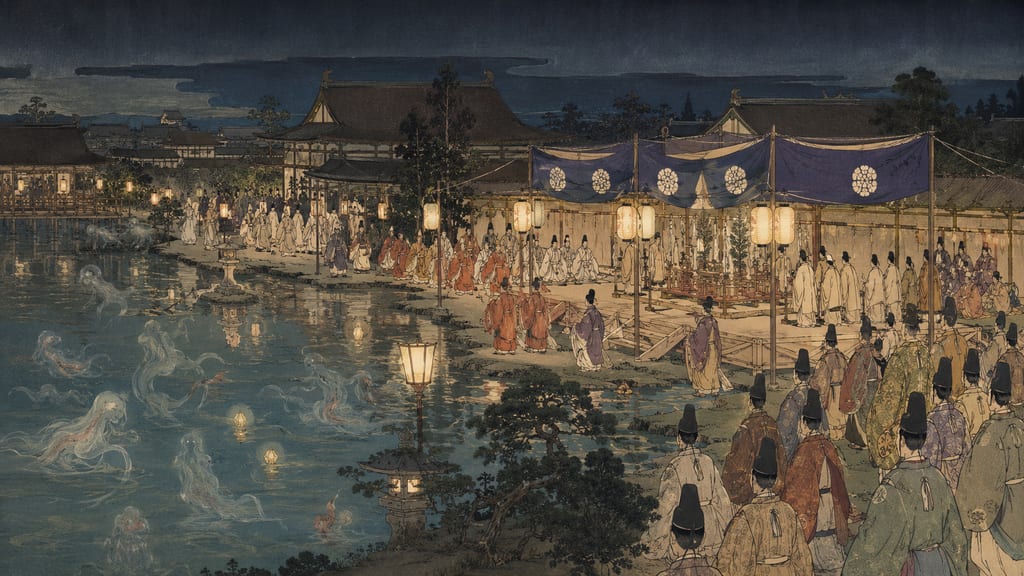
Vengeful Spirits and Jealousy:
From Political Struggles to Pitiful Specters by the Bridge
Amidst a millennium of political strife and personal vendettas, Kyoto gave birth to Japan's most famous vengeful spirits.
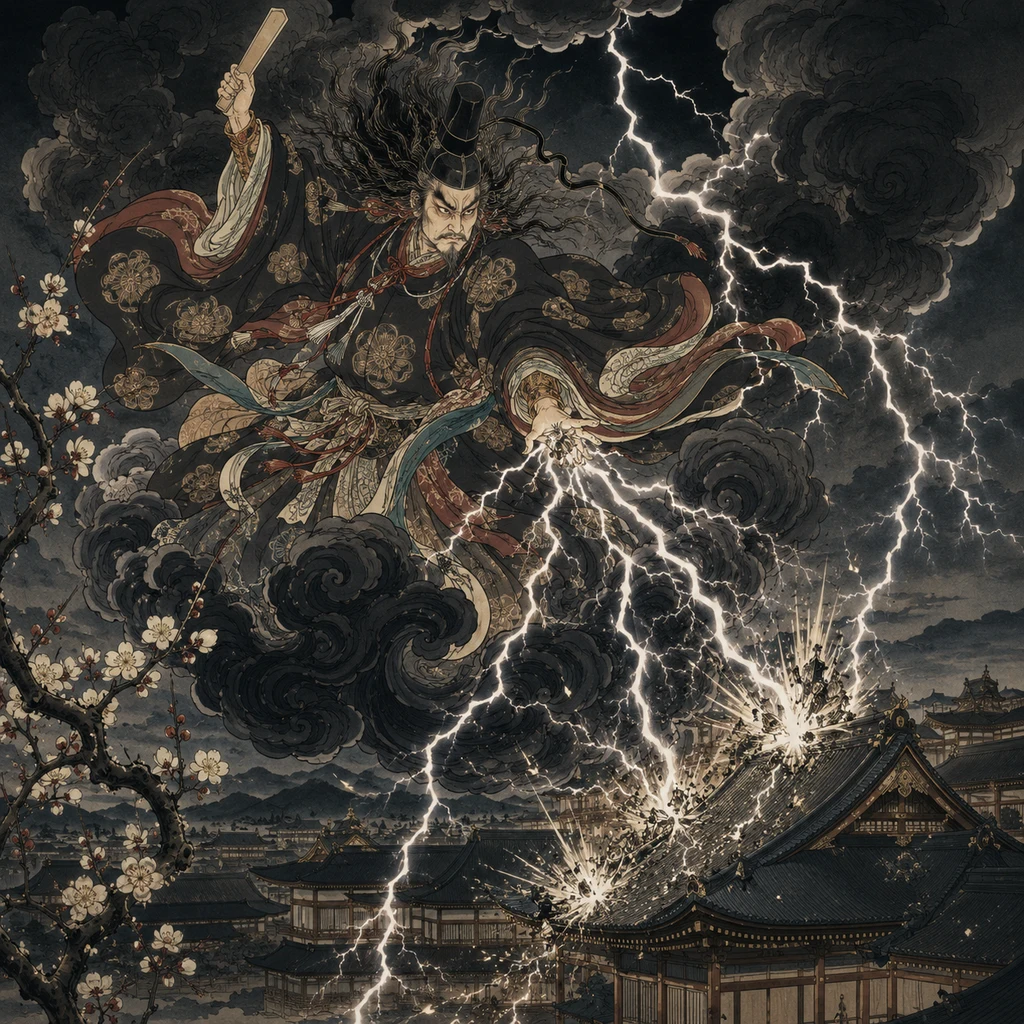 Sugawara no MichizaneSugawara no Michizane
 Shuten-dōjiShuten-dōji
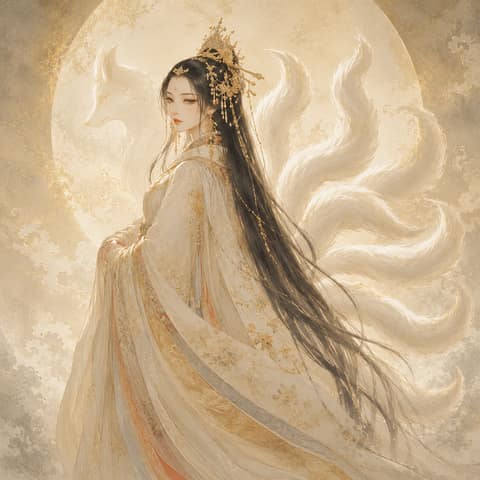
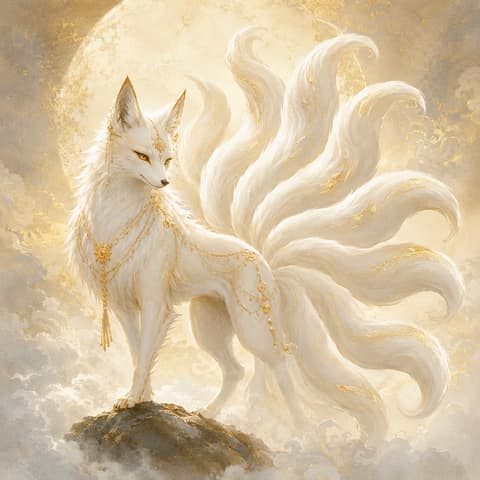
 Tamamo-no-MaeTamamo-no-Mae
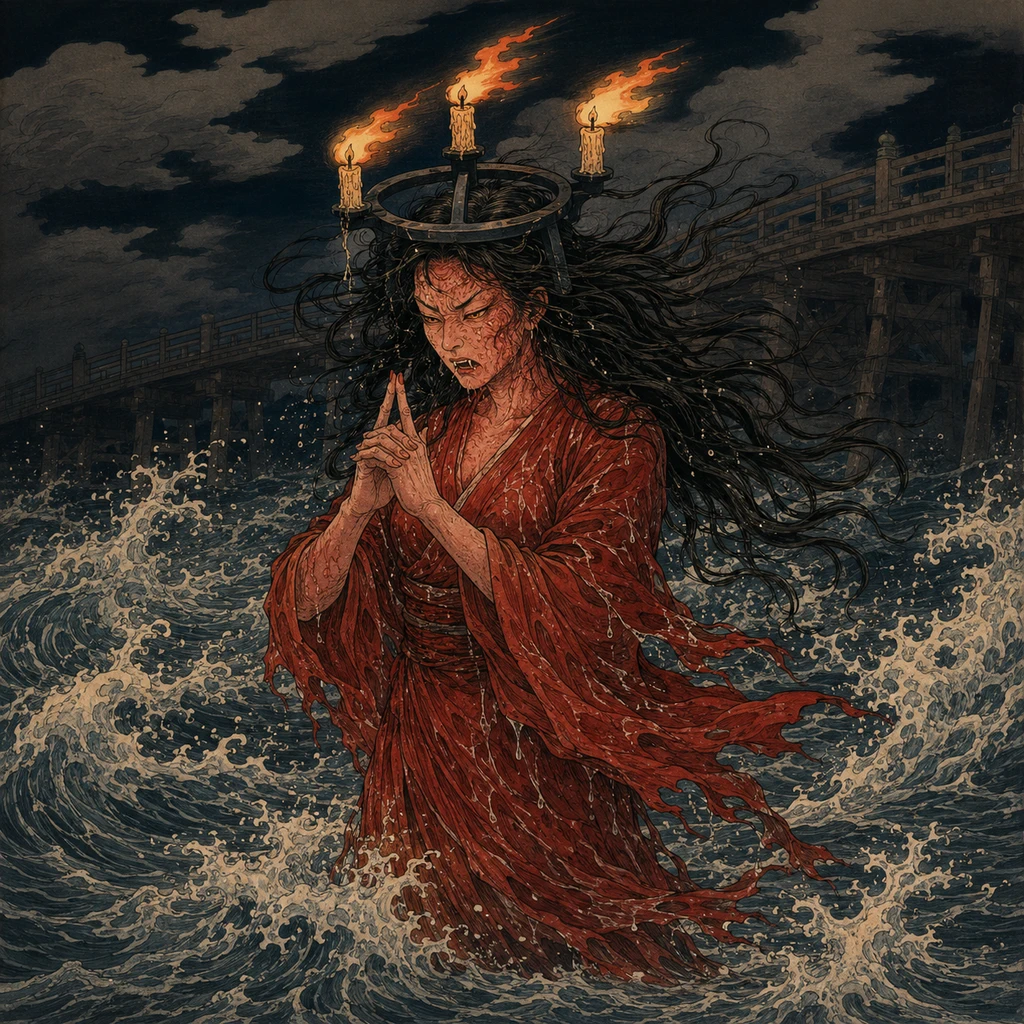 Hashihime (Bridge Princess)HAH-shee-HEE-meh
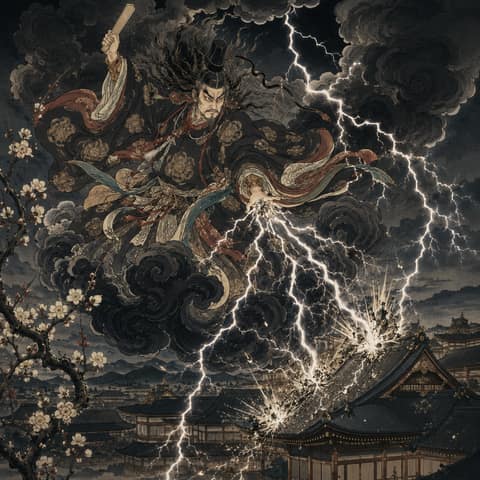
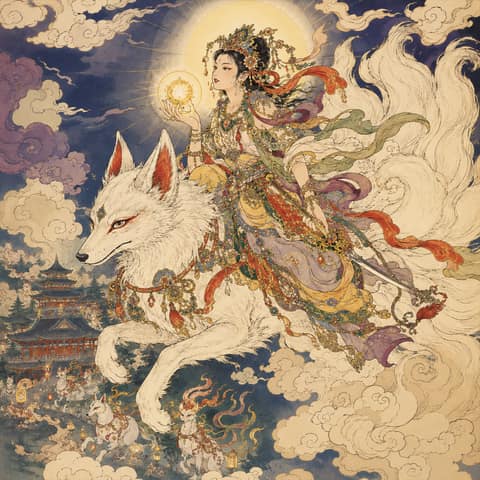
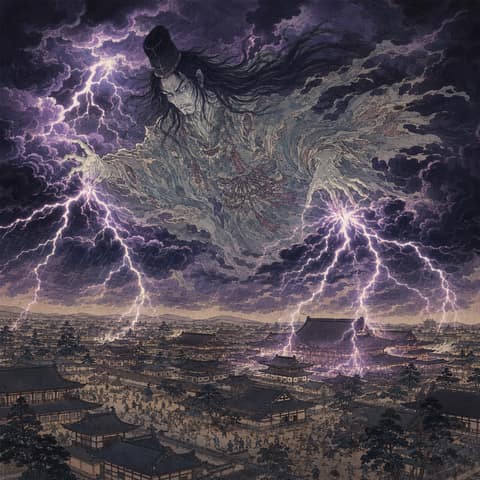
Sugawara no Michizane (later known as Tenjin) died in exile in Dazaifu after falling victim to slander. After his death, he transformed into a thunder god, striking the Seiryoden palace with lightning. He was eventually granted a divine title and enshrined at Kitano Tenmangu as the god of learning. This practice of viewing losers of political struggles as vengeful spirits and establishing shrines to pacify them—known as "Goryo belief"—forms the core of Kyoto's vengeful spirit culture. Shuten-doji and Tamamo-no-Mae, counted among the "Three Great Evil Yokai of Japan," not only plagued Kyoto but also saw their legends spread nationwide through Muromachi-period *otogizoshi* and Edo-period *joruri* and Kabuki, elevating them from local calamities to universally recognized lore.
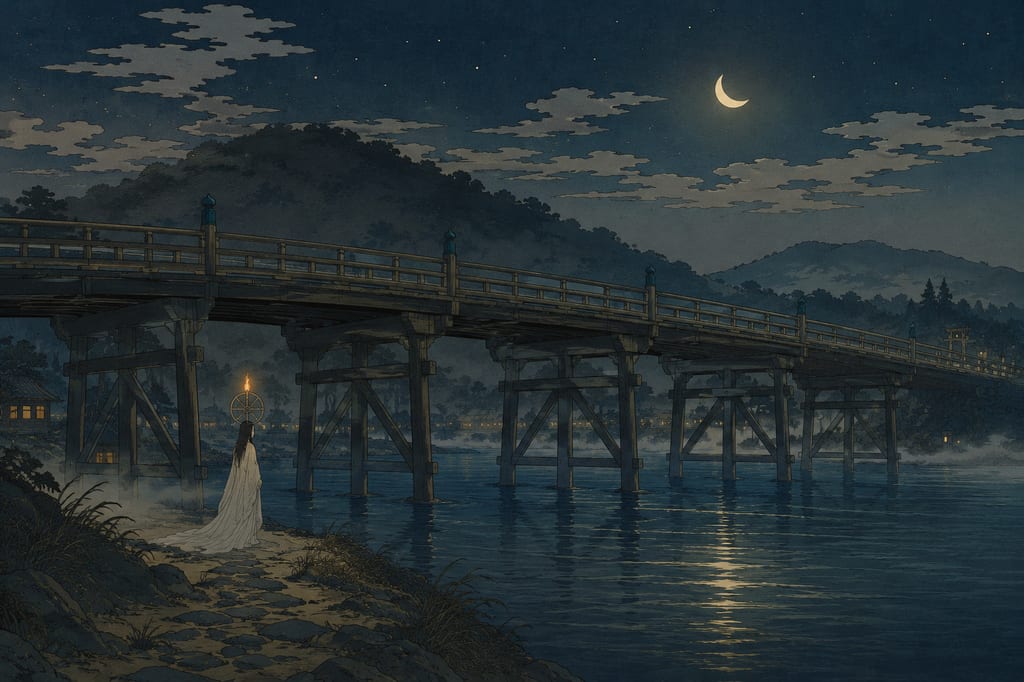
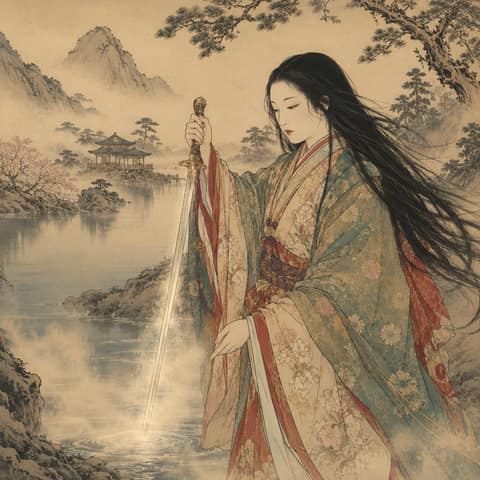
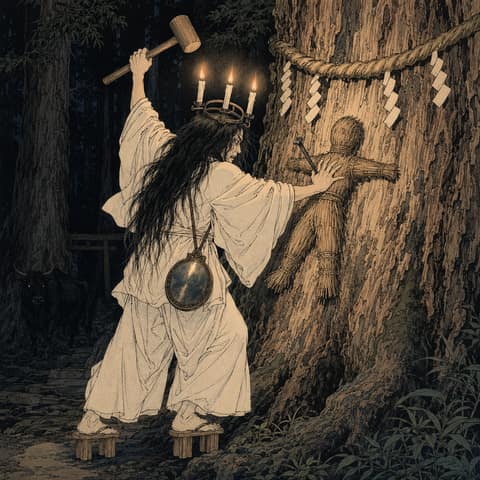
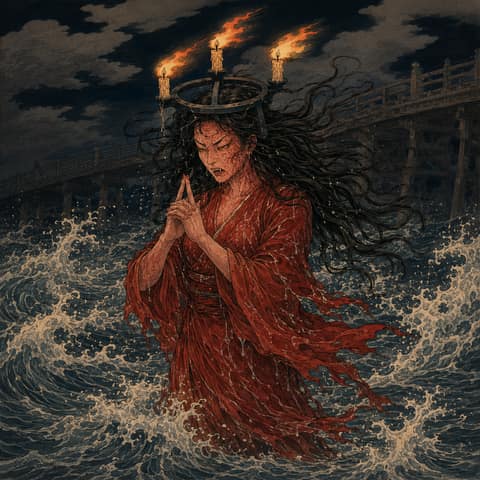
Hashihime, on the other hand, embodies personal grudge born of romantic jealousy. According to legend, a woman consumed by jealousy immersed herself in the Uji River for twenty-one days, ultimately transforming into an oni (this is the origin of the later Noh play *Kanawa*). Uji Bridge and Ichijo Modoribashi—two bridges symbolizing the "connection between the boundaries of yin and yang"—naturally became the perfect stages for the intersection of resentment and anomalies.
The Wildfires of the Burial Grounds:
Toribeno,
Adashino,
and Rendaino
Heian-kyo observed an unwritten iron rule: the dead must be sent outside the city limits. This stemmed both from considerations of urban sanitation and the avoidance of the impurity of death. Commoners often had no graves; their bodies were simply left to the elements in the mountains and fields. This gave rise to the Three Great Burial Grounds of Kyoto: Toribeno at the foot of the Eastern Mountains (Higashiyama), Adashino in Saga, and Rendaino to the north. These three locations persisted as sites for open-air and cremation burials for a millennium, naturally giving birth to their own ghostly fires and graveyard spirits.
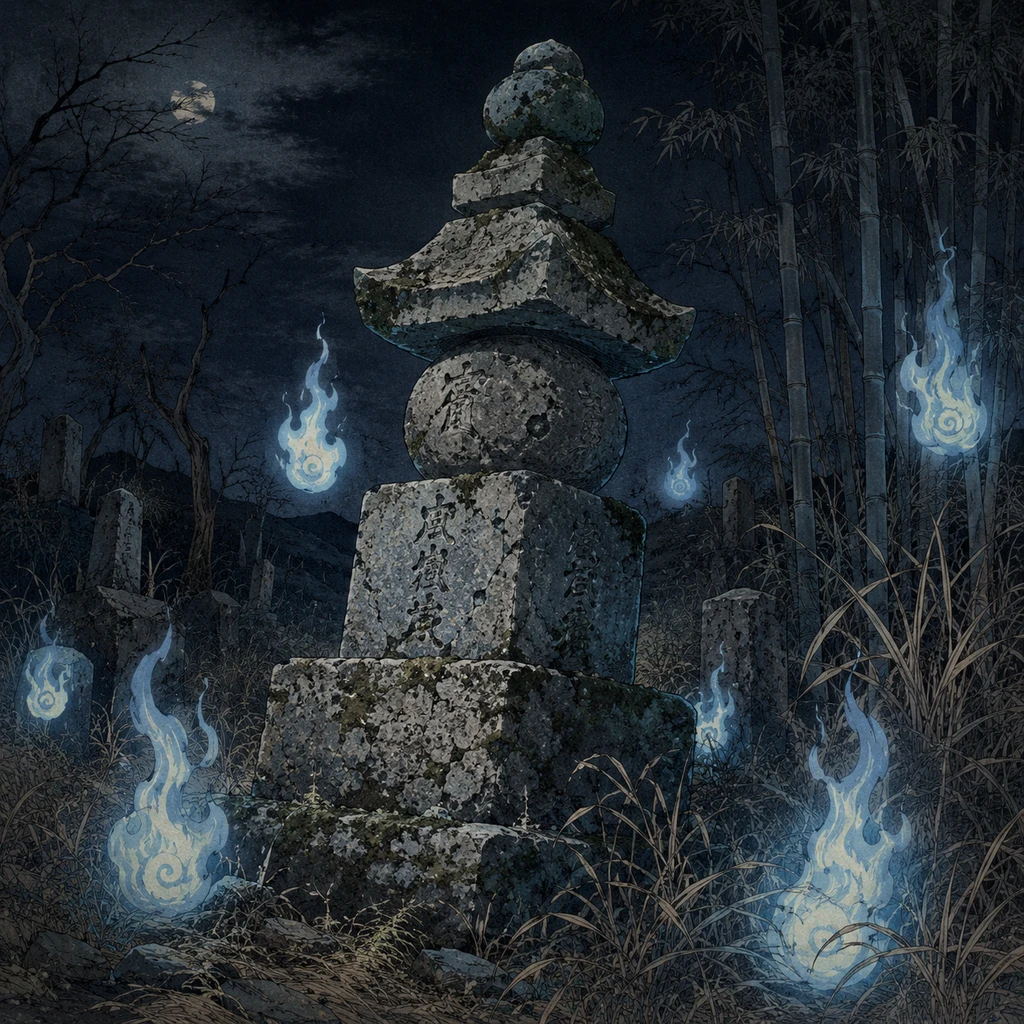 Grave FireHAH-kah-noh HEE
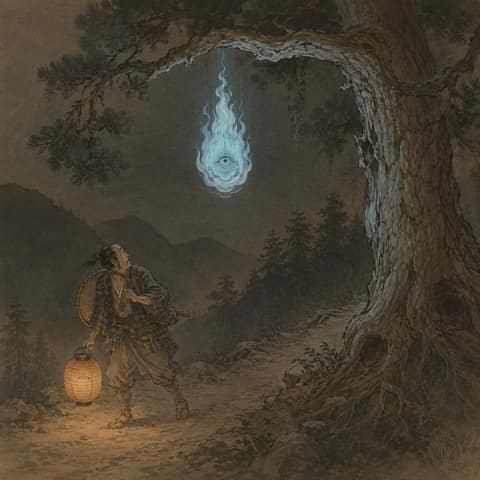
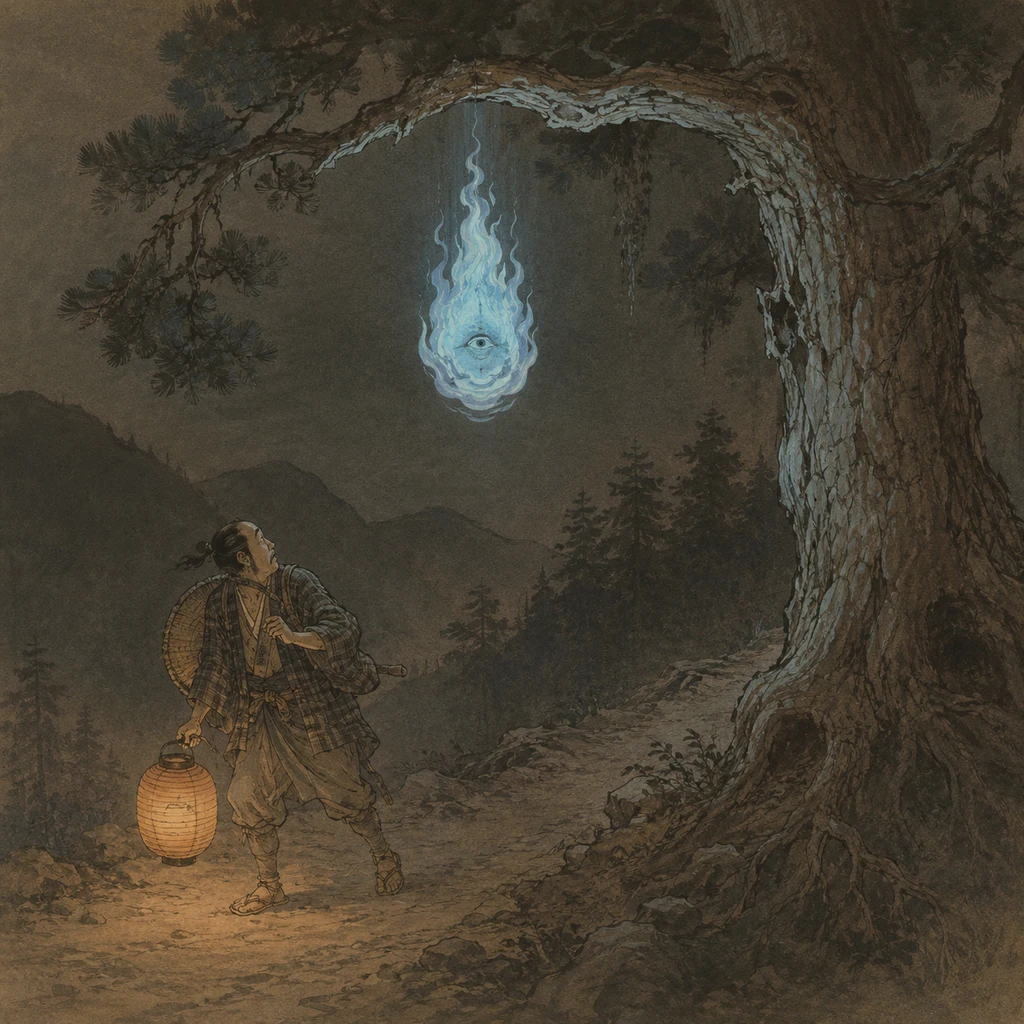 Tsurube-bi (Bucket Fire)TSOO-roo-beh-bee
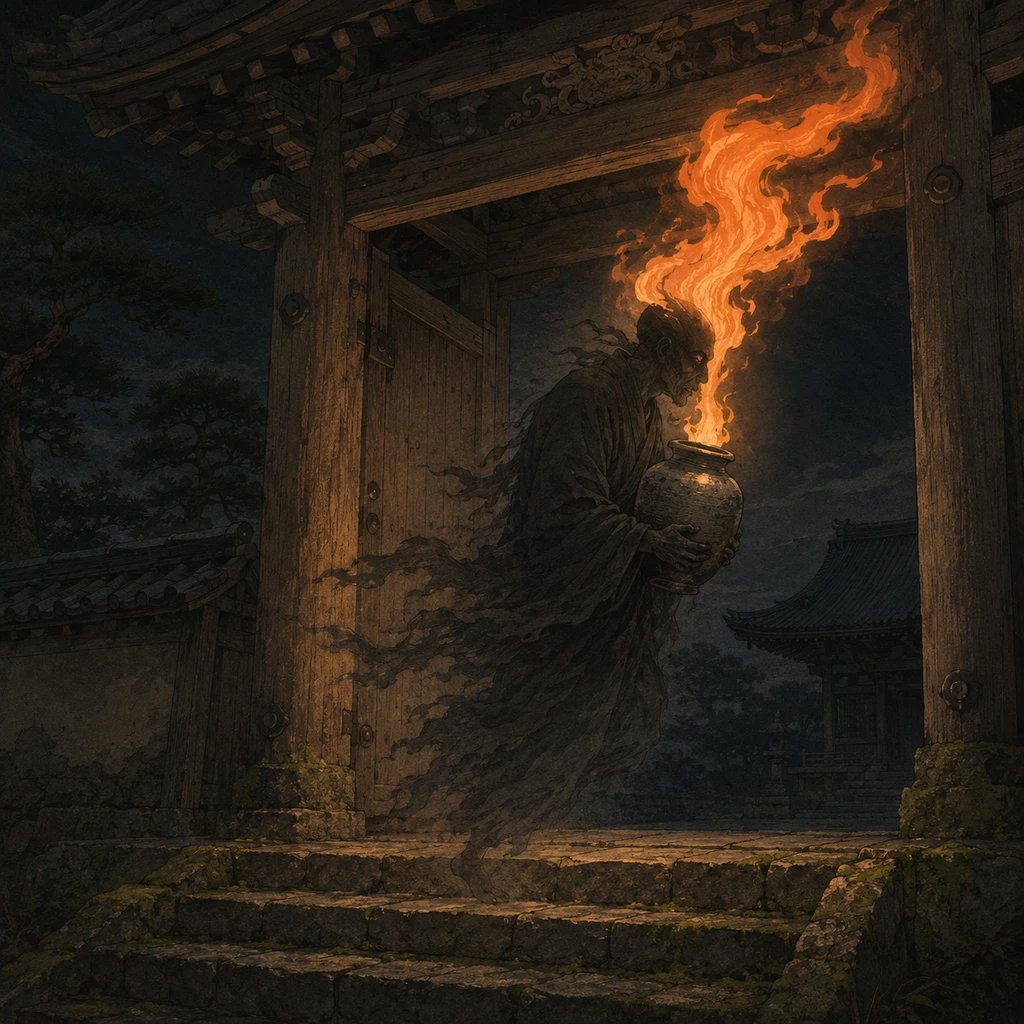 Aburabō (Oil Wraith)ah-boo-rah-BOH
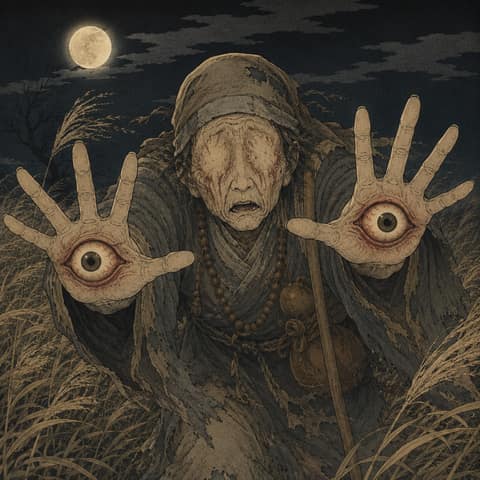
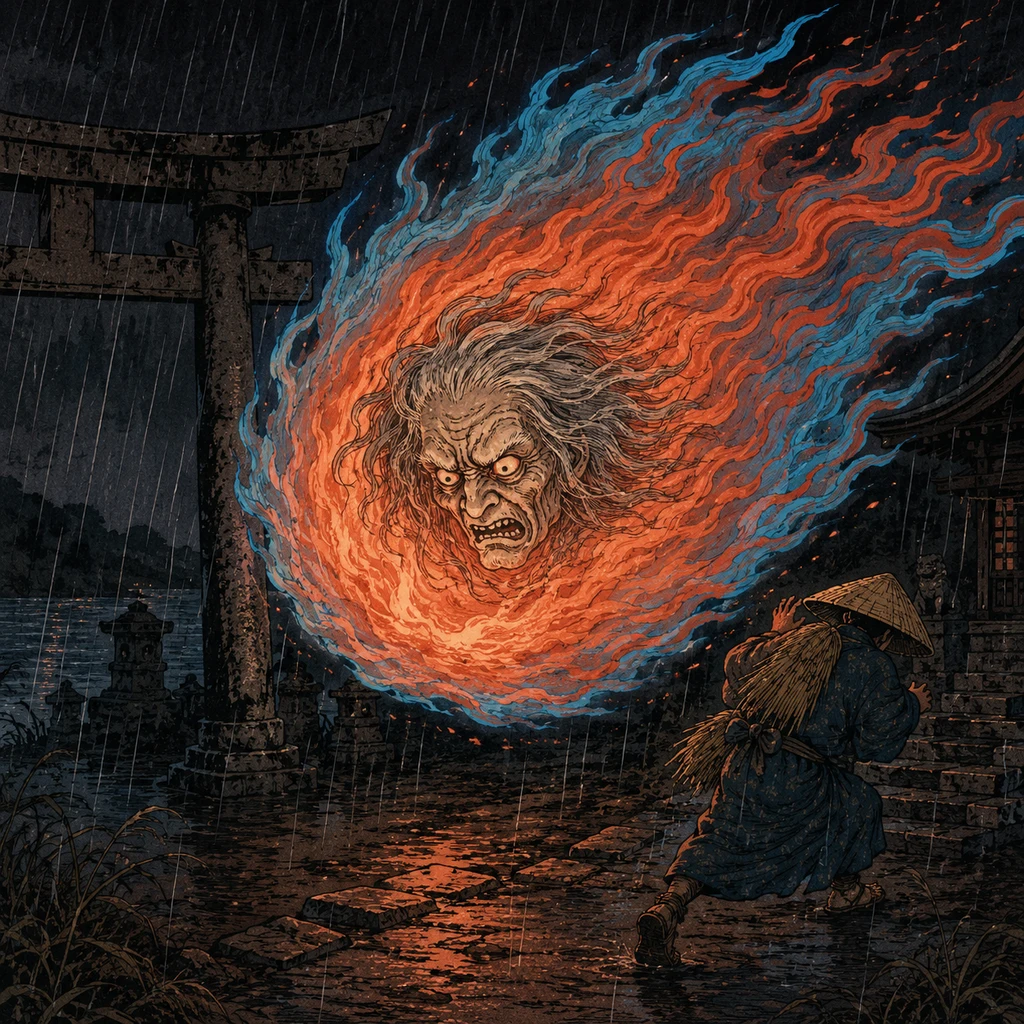 Ubagabi (Old Woman’s Fire)OO-bah-gah-bee
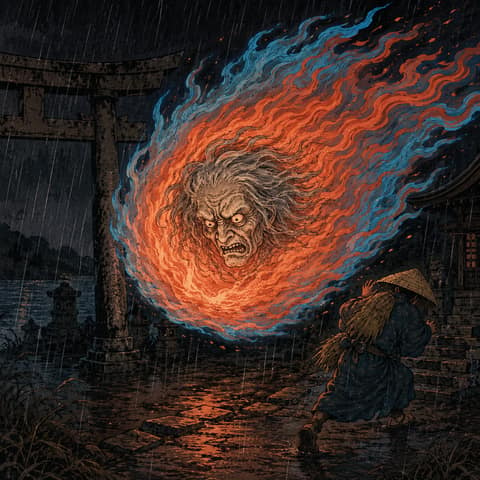
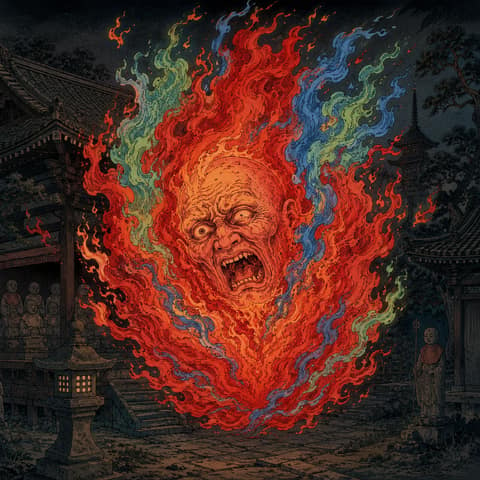
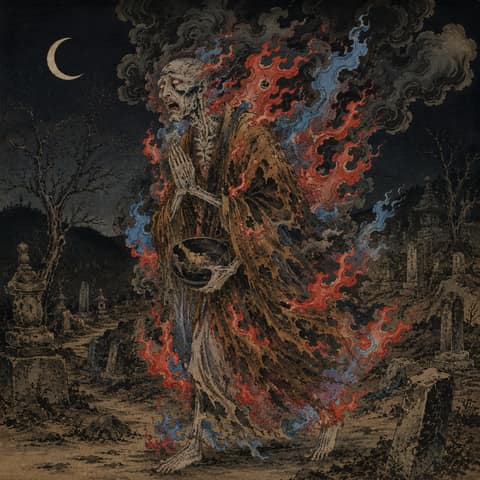
Haka-no-hi (Grave Fire) is a mysterious flame that flickers on ruined *gorinto* (five-tiered stupas); Tsurube-bi bobs up and down amidst tree branches like a well bucket; and Abura-bo (Oil Monk) is the spirit of a corrupt monk who stole lamp oil from temples and shrines. All are closely linked to specific locations in and around Kyoto and were recorded by Toriyama Sekien in works such as *Konjaku Gazu Zoku Hyakki* and *Konjaku Hyakki Shui*. Furthermore, Ubagabi (Old Woman's Fire)—which originated in Kawachi Province (modern-day Osaka) and entered the Kyoto sphere through travel via Yamashiro Province—added a vivid stroke to the taxonomy of "mysterious fires" around Kyoto.
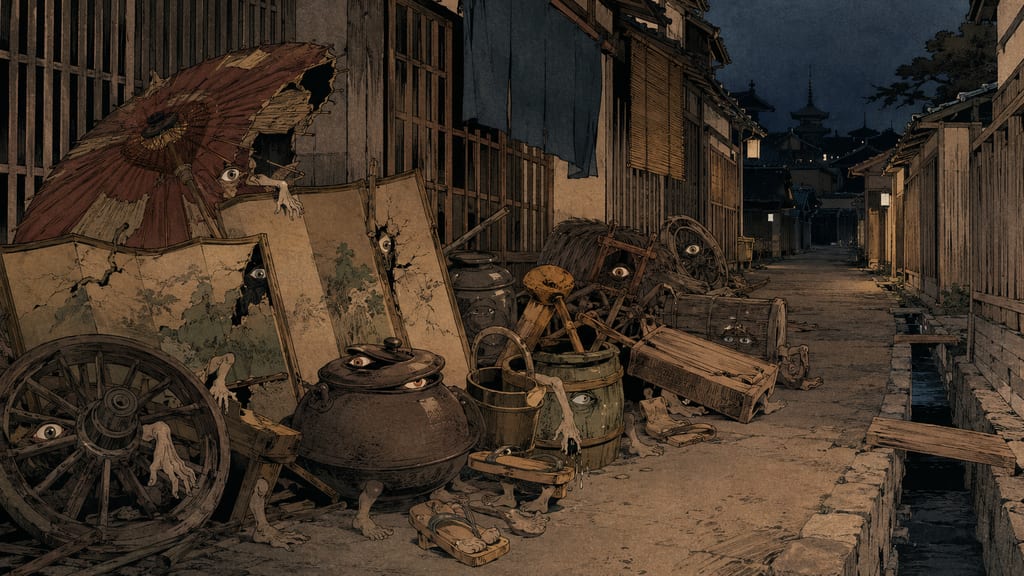
Tsukumogami of the Muromachi Period:
The City Where Objects Become Yokai
After the twilight of the dynastic era and the ensuing periods of constant warfare, the urban culture of Muromachi-period Kyoto fostered an entirely new view of yokai: that objects, having weathered the years, would harbor spirits and transform into yokai. This is the worldview of the *tsukumogami*. The notion that objects attain a soul after a century was vividly illustrated in the Muromachi-period *Tsukumogami Emaki* (Picture Scroll of Tsukumogami); by the 16th-century *Hyakki Yagyo Emaki* (Shinju-an version, housed at Daitoku-ji), the visual imagery of object yokai became even more distinct and established through the painters' brushwork.
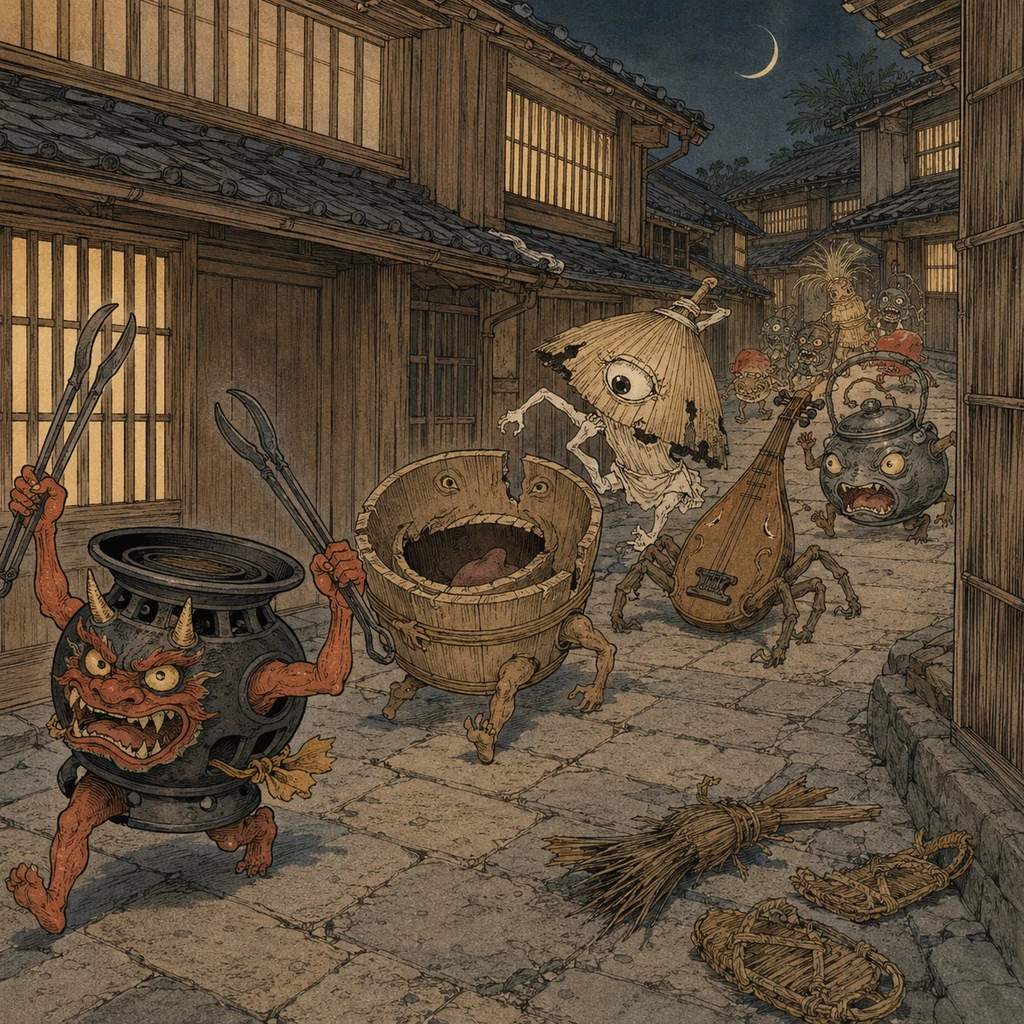
Tsukumogami
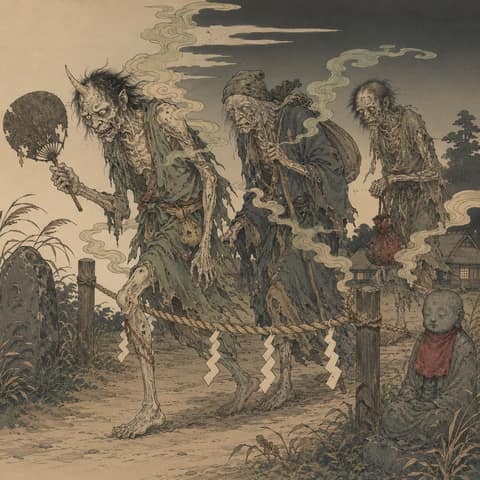
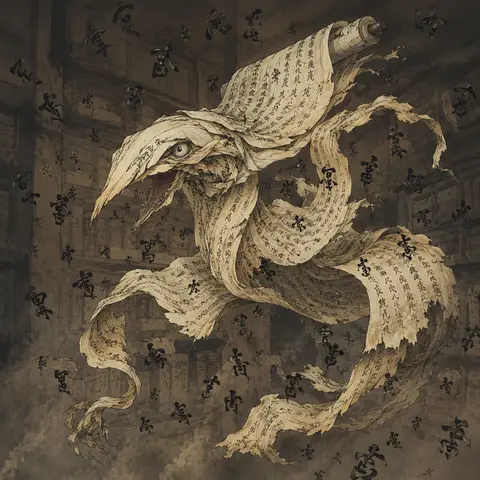
Tsukumogami (付喪神) is a term used for tools and household objects that, after being used for a long time, acquire a non-human form and agency. Today, it is widely used as a catch-all term for yōkai born from old tools, but its usage in classical literature is not that common. The representative material that explicitly states this name and places it at the center of the narrative is the *Tsukumogami Emaki* (Picture Scroll of Tsukumogami) or *Tsukumogami Ki*, believed to have been created in the Muromachi period. In that work, even though they are written with the character for "kami" (god), they are not initially deities that grant blessings to humans. They are depicted as "yōbutsu" (monsters or goblins) that resent the humans who discarded them, attack people and livestock in the capital, and eventually embrace Buddhism. The beginning of the picture scroll cites a theory from the now-lost *Onmyō Zakki* (Miscellaneous Notes on Yin and Yang), stating that after "one hundred years," utensils acquire spirits and deceive human hearts, and these are called Tsukumogami. On the other hand, the sound "tsukumo-gami" overlaps with "tsukumo-gami," meaning the white hair of an old woman. It is also recited in the 63rd section of the *Tales of Ise* as "tsukumo-gami, lacking one year to a hundred," making it a word that connects old age and the number ninety-nine. Because these two concepts were intertwined, explanations involving both one hundred years and ninety-nine years coexist. In modern times, there are instances where it is written as "九十九神" (Ninety-Nine Gods), but this is merely a variant spelling designed to make the association with the white-haired old woman more apparent. Therefore, the strict age rule often cited today—that "tools invariably gain a soul upon reaching exactly ninety-nine years"—is not actually established in classical texts. There is no single mold for their transformed appearance. In the *Tsukumogami Emaki*, they change into men, women, the elderly, children, mountain and river goblins (chimimōryō), and beasts; in the illustrations, some grow faces and limbs while retaining the shapes of the original implements like pots, jars, mallets, folding fans, and prayer beads. Although individual tool-yōkai like the Karakasa-obake (umbrella ghost) or Koto-furunushi (old koto master) can be explained as a type of Tsukumogami in later eras, not all supernatural phenomena related to old tools were called "Tsukumogami" from the beginning. In recent years, rather than viewing this as an ancient belief that spread uniformly across Japan, research has advanced to approach it as a cultural history of how picture scrolls, picture books, and storytelling have breathed life into inanimate objects.
Read moreThe people of Kyoto had a custom during the year-end soot-sweeping (*Susuharai*, December 13th) of discarding old items in the alleyways. It was said this was done to abandon the objects before they reached their hundredth year—specifically at "ninety-nine" (*tsukumo*)—thereby preventing them from gaining spirits and causing mischief. This custom vividly demonstrates that even residents of a bustling metropolis, when using and discarding everyday items, harbored a quiet suspicion that these old objects might have accumulated spirits and could retaliate in the night. Kyoto's tsukumogami legends were formed from this very mix of daily reverence and unease. By the Edo period, Toriyama Sekien's *Hyakki Tsurezure Bukuro* (1784) compiled an encyclopedic catalog of object yokai, and a vast majority of its foundational source material derived directly from Kyoto's picture scroll tradition.
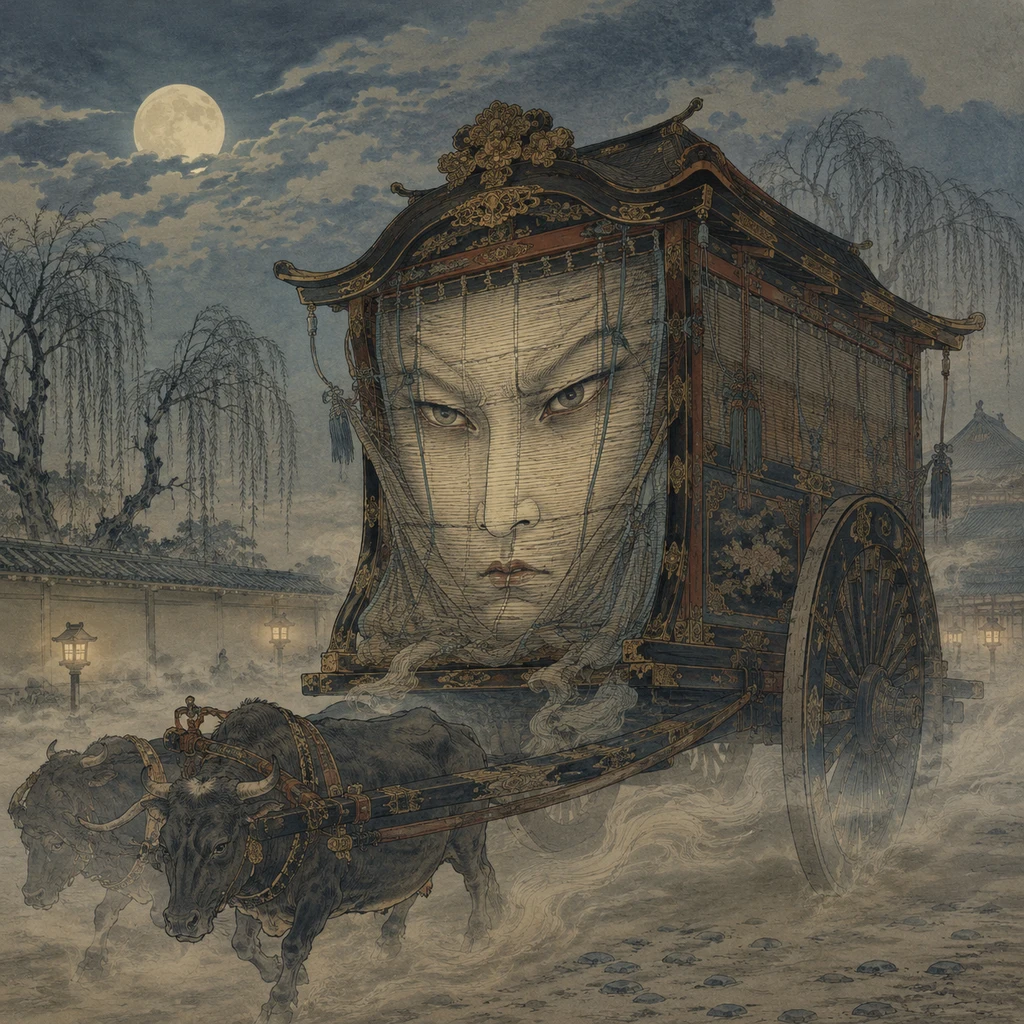 Oboroguruma (The Hazy Carriage)oh-BOH-roh-goo-ROO-mah
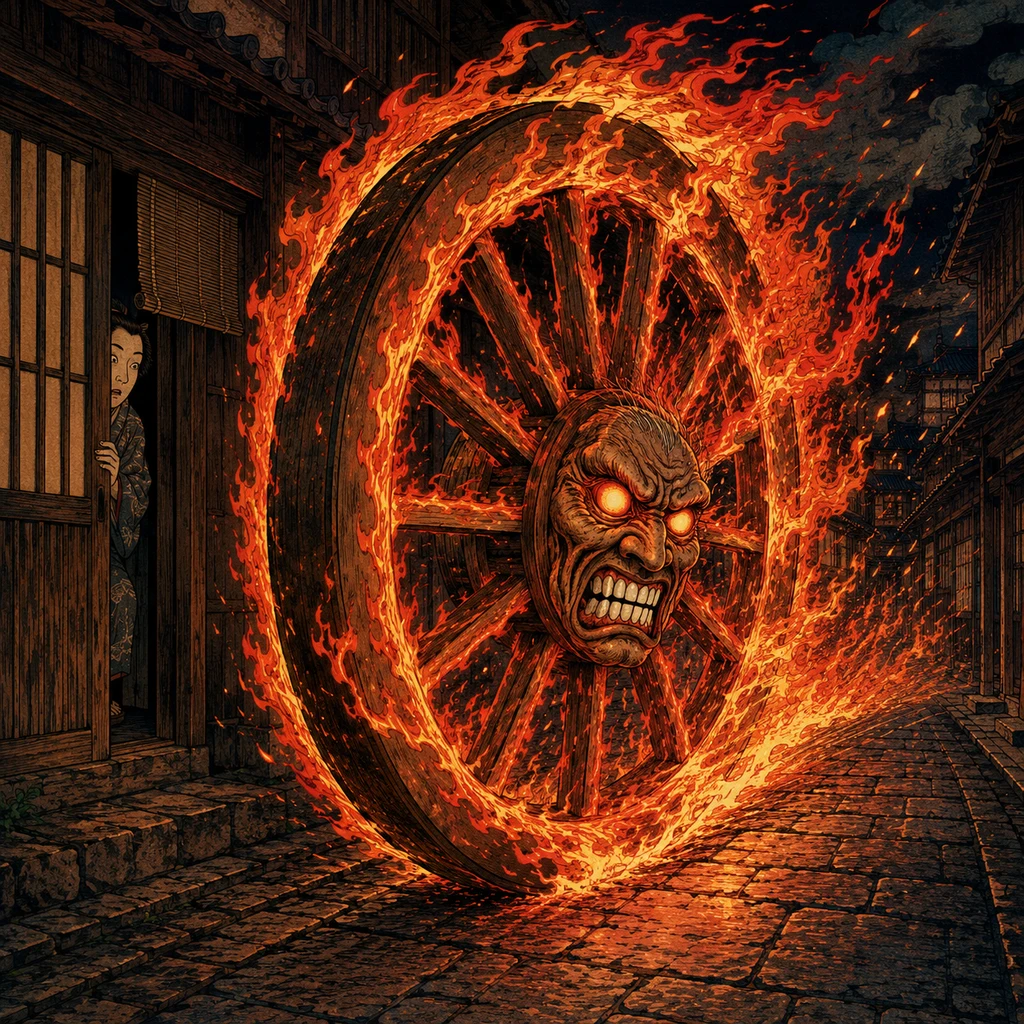 Katawaguruma (One-Wheeled Carriage)kah-tah-wah-GOO-roo-mah
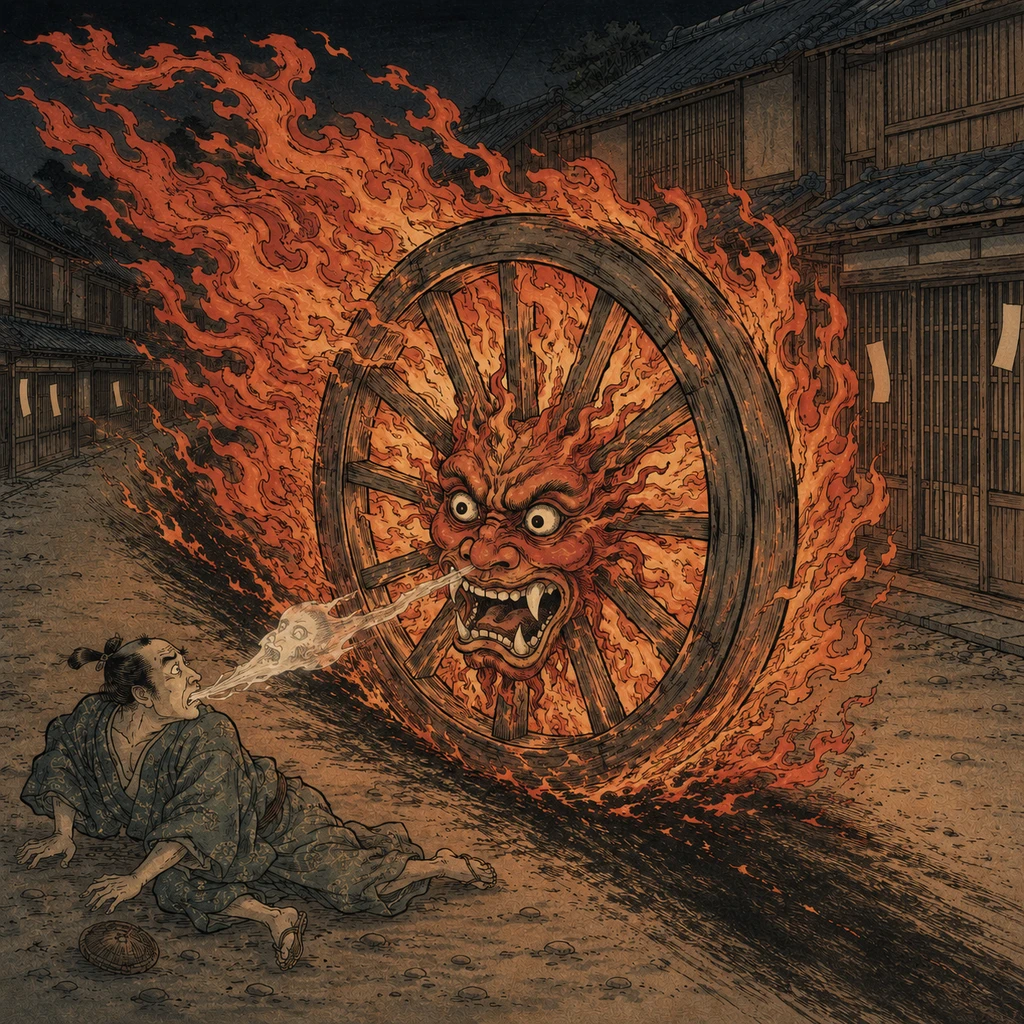 Wanyūdōwah-nyoo-DOH
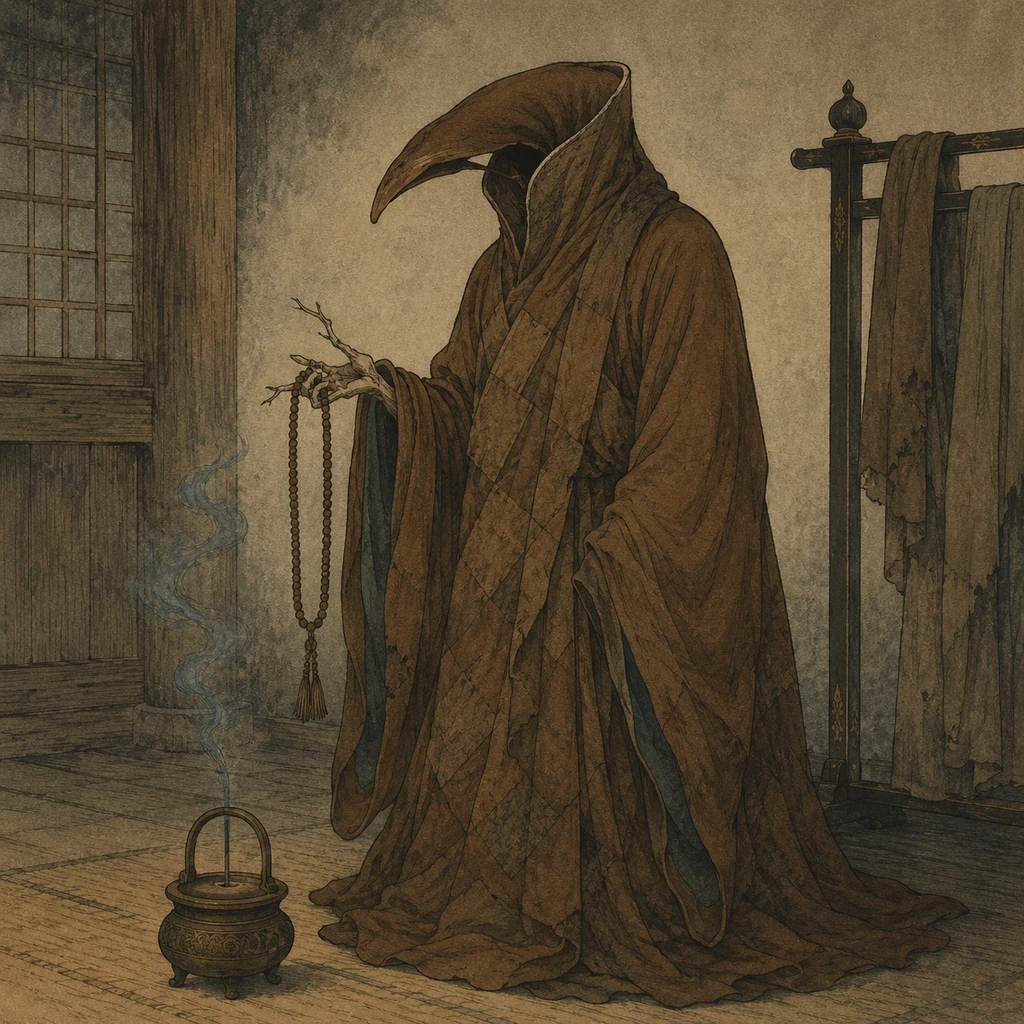 Raised-Collar Robeeh-ree-TAH-teh-goh-ROH-moh
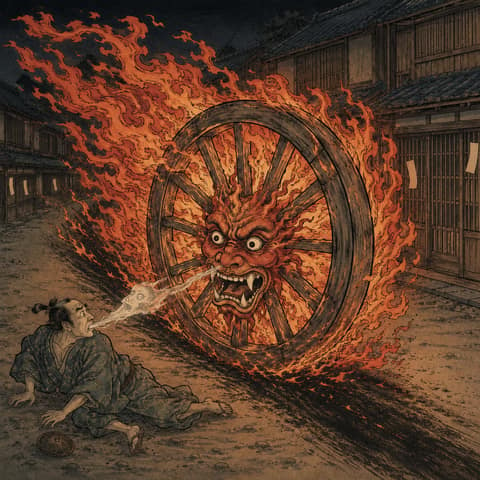
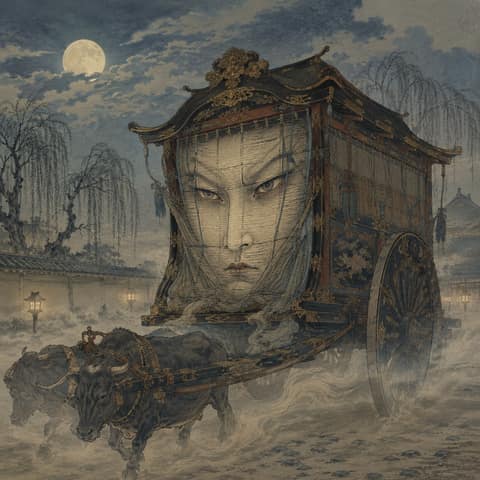
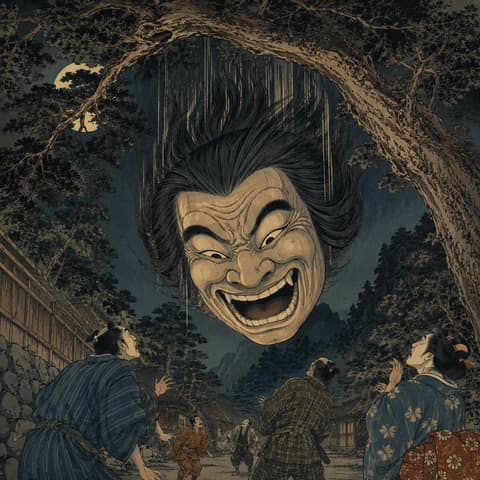
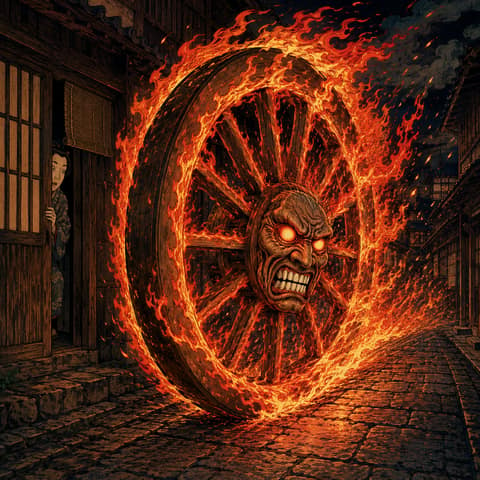
Oboro-guruma (Hazy Carriage) is the oxcart anomaly depicted in *Konjaku Hyakki Shui*: in the hazy night, a giant woman's face looms where the carriage blind should be, bearing the endless grudges born from Heian-era aristocrats vying for oxcart parking spots (the so-called *kuruma-arasoi*). Katawa-guruma (One-Wheeled Carriage) is a blazing, single-wheeled oxcart thundering through the dark streets, first recorded in *Shokoku Hyaku Monogatari*. Wanyudo is its further evolution, featuring the furious face of a giant monk (*onyudo*) at the center of the flaming wheel. Eritate-goromo is a clerical robe anomaly tinged with tengu imagery; Sekien's caption notes, "Perhaps it is the collared robe of the Sojo-bo of Mount Kurama." Once again, Kyoto's landmarks and lineages are cleverly woven into the tales of object yokai.
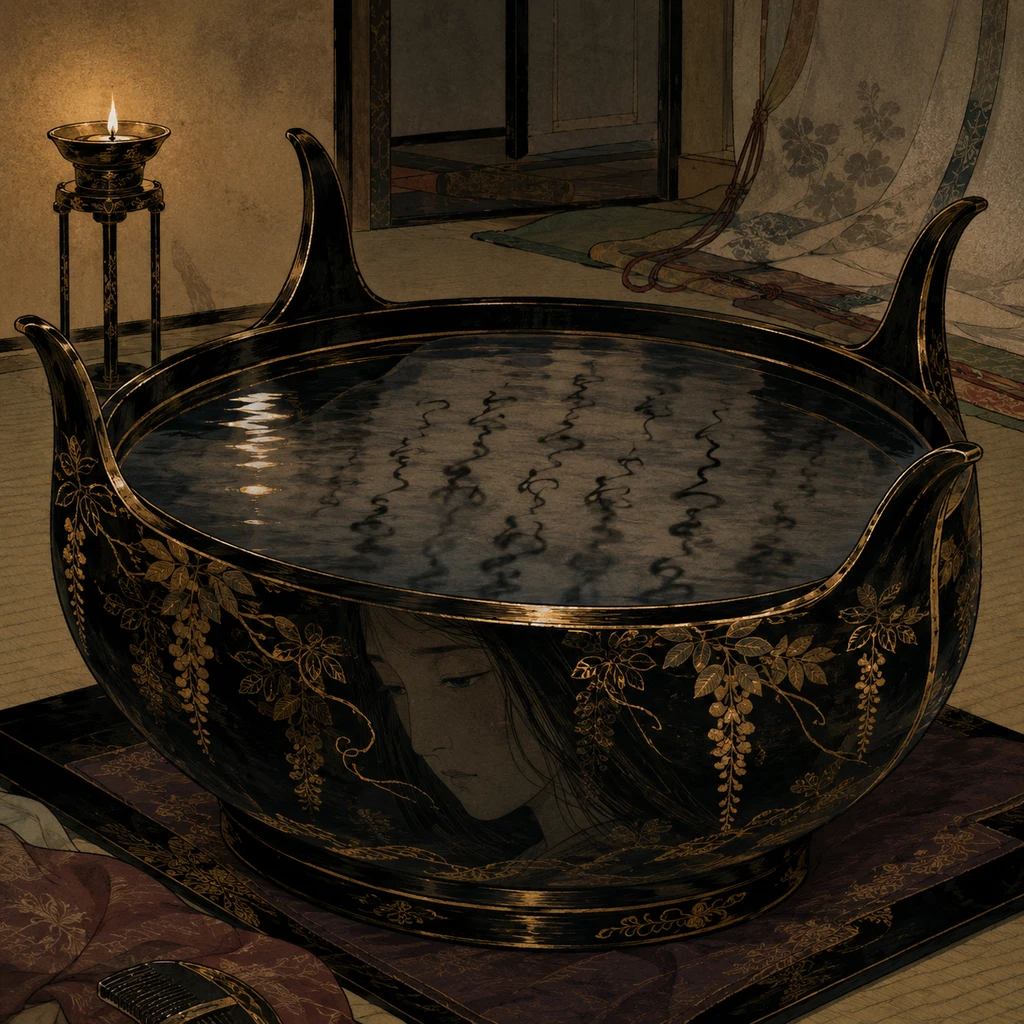
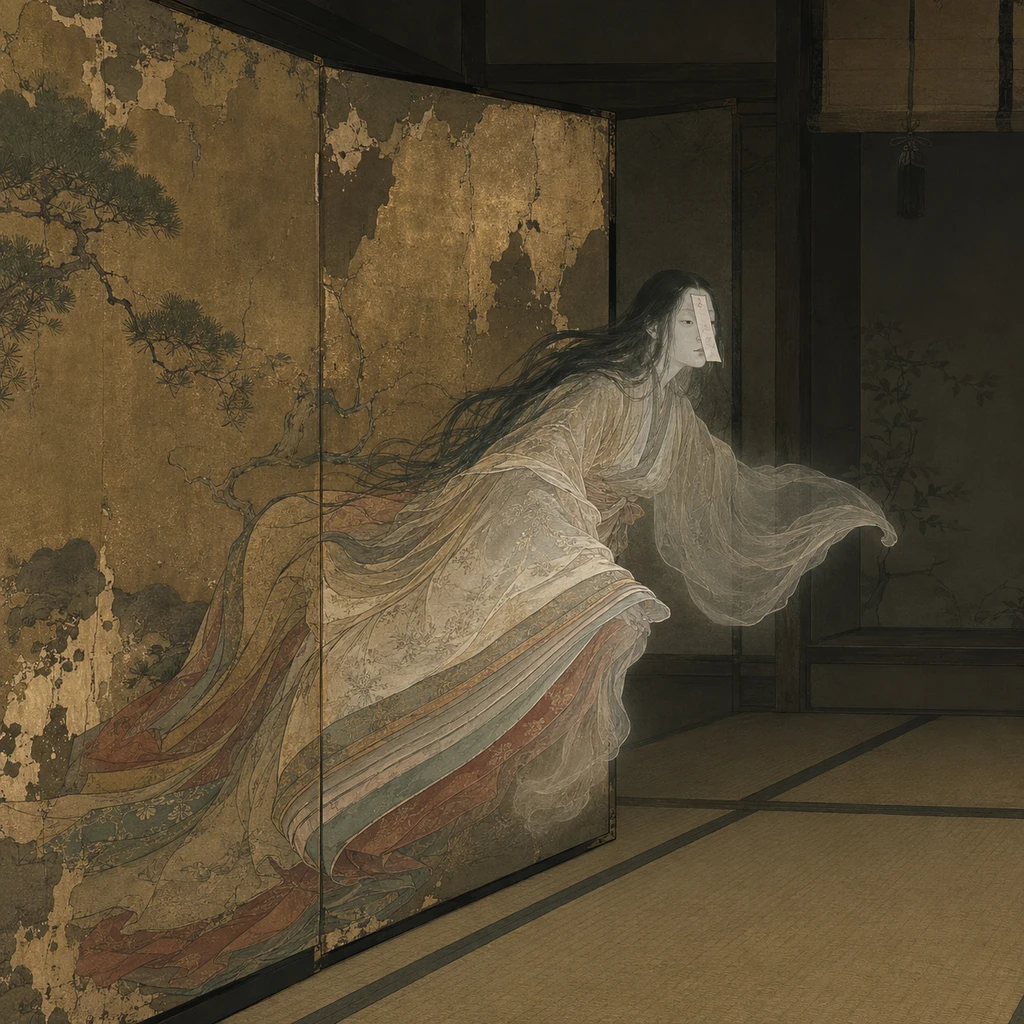
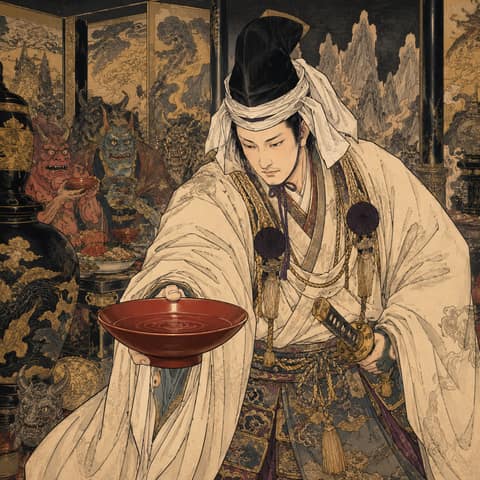
Tsunohanzou is an anomaly born from an ornate courtly washbasin, upon whose water surface text would eerily appear. Garei (Painting Spirit), found in the late-Edo essay collection *Ochiguri Monogatari*, describes the bizarre sight of a court lady stepping out of a damaged folding screen. Both belong to the archetype of "exquisite indoor furnishings turning into yokai"; within Kyoto's yokai lineage, this is among the most recognizable and distinctly elegant categories.
Residents of the Old Imperial Palace:
Anomalies Born from the Court
The most unique aspect of Kyoto's yokai is that, compared to the remote wilderness, anomalies are actually denser indoors, within the court, and amidst the ruins of old imperial palaces. Rather than spirits of the deep mountains, the entities most likely to become yokai in Kyoto are often court ladies (*nyobo*), corrupt monks, or the lingering echoes of aristocratic (*kuge*) culture. This is because, ever since *The Tale of Genji*, court literature has continuously provided the richest narrative framework for yokai legends.

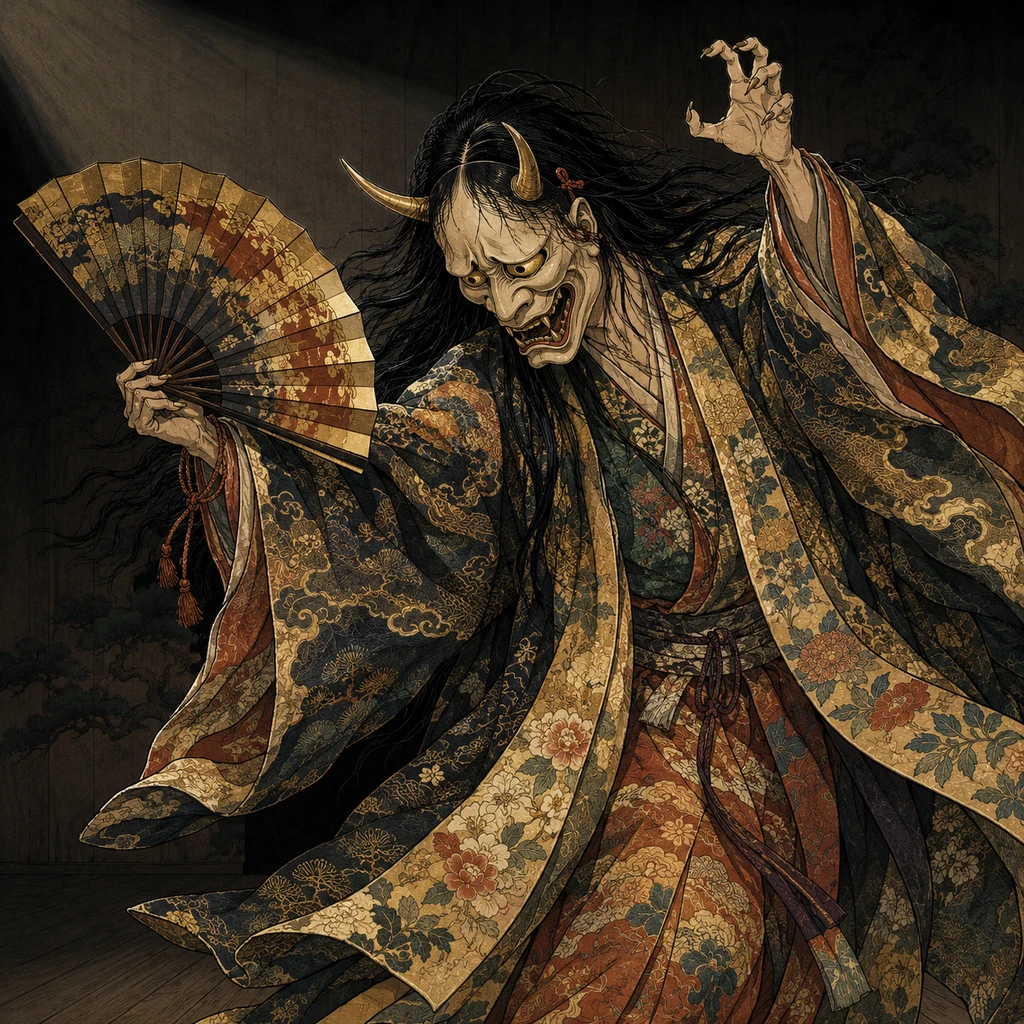
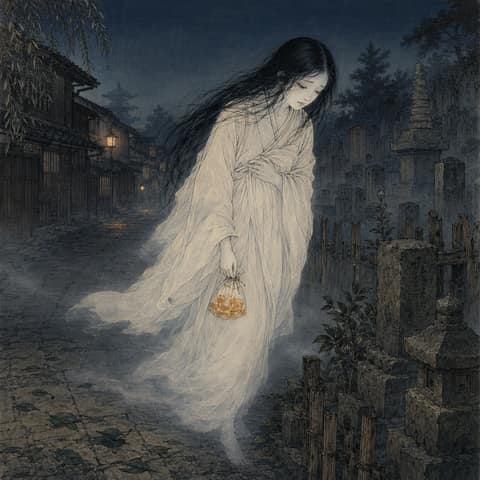
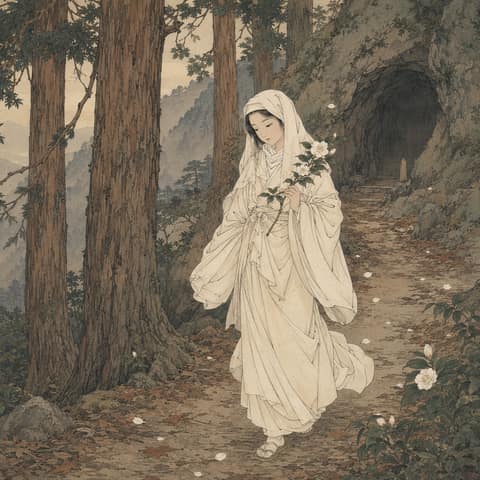
Ao-nyobo (Blue Court Lady) is a yokai depicted in Toriyama Sekien's *Konjaku Gazu Zoku Hyakki*: she has blackened teeth, wears the twelve-layered ceremonial dress (*juni-hitoe*) of a Heian noblewoman, and appears mournfully within ruined old palaces. She best embodies a certain characteristic of Kyoto's yokai: the fading shadows of old court life did not entirely perish, but rather parasitized ruined spaces to mutate into anomalies. The Hannya similarly represents the classic archetype of a woman's jealousy and hatred twisting into a demonic visage; the terrifying masks seen in the Noh plays *Aoi no Ue* and *Dojoji* were passed down directly through the Noh tradition nurtured by Kyoto itself.
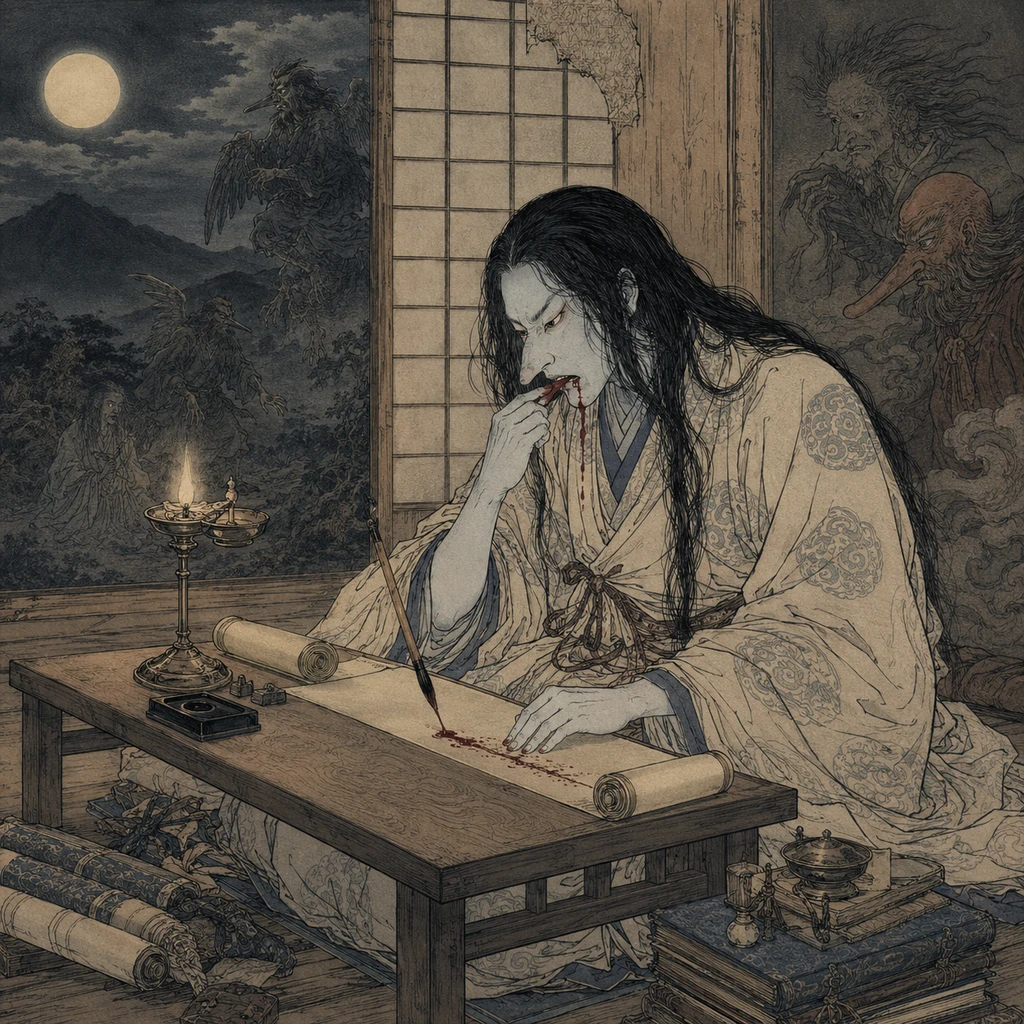
Emperor Sutoku
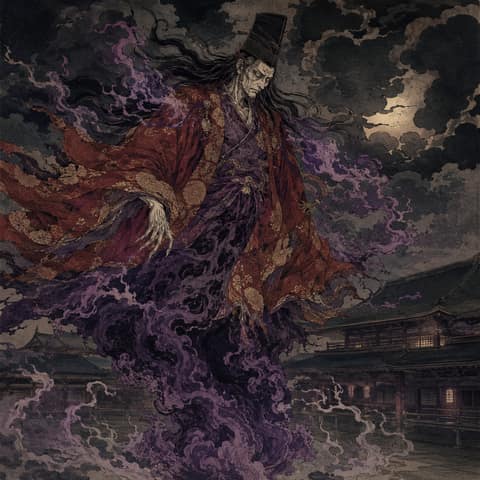
Emperor Sutoku was the seventy-fifth emperor of the late Heian period; defeated in the Hōgen Rebellion and exiled to Sanuki, he died in bitterness, and was thereafter dreaded as the most powerful vengeful spirit and Great Tengu of Japan. Among the "Three Great Vengeful Spirits of Japan," ranked beside Sugawara no Michizane and Taira no Masakado, he is often spoken of as the mightiest. Born as the son of Emperor Toba, he was dogged by the rumor that he was in truth the son of his grandfather, the cloistered emperor Shirakawa—the "uncle-child" (ojigo)—and was shunned by Toba. Though enthroned at the age of three, he was forced to abdicate at twenty-three without ever grasping the power of cloistered rule, and in the first year of Hōgen (1156) his conflict with his younger brother Emperor Go-Shirakawa came to armed clash as the Hōgen Rebellion. Sutoku's side, which mustered Minamoto no Tameyoshi and Taira no Tadamasa, was defeated in a night attack by Go-Shirakawa's side, which mustered Taira no Kiyomori and Minamoto no Yoshitomo; Sutoku was exiled to Sanuki and, never permitted to return to the capital, ended his life in the second year of Chōkan (1164). The legend that, enraged when his sutra-copies made in exile were rejected by the court, he bit off his tongue and wrote a curse in blood, and—cutting neither nails nor hair—turned into a tengu, is what made Sutoku a yokai and a vengeful spirit. After his death, whenever the realm fell into disorder it was feared as his curse, and the court labored to pacify him through renaming and the building of shrines. His vengeful spirit is depicted even in the famous tale of the uncanny in Ueda Akinari's Ugetsu Monogatari.
Read moreThe reason Emperor Sutoku is listed separately here is that he stands precisely at the historical intersection of the "Three Great Evil Yokai" and the "Three Great Vengeful Spirits." In the vast lineage of Kyoto's vengeful spirits, his holds the most suffocating narrative tension.
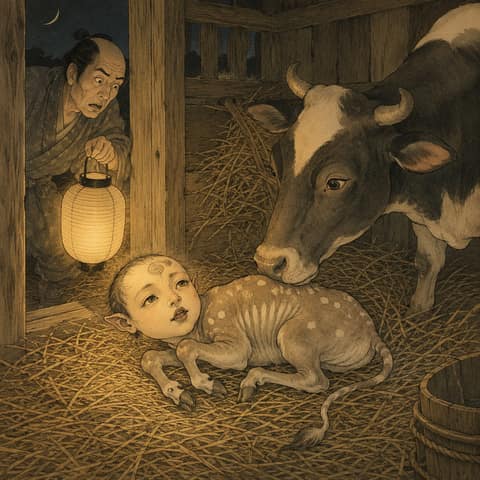
Other anomalies derived from court life are equally numerous. Gambari-nyudo originates from toilet deity beliefs; it is said that reciting a specific spell on New Year's Eve prevents his appearance—a practice deeply rooted in the aristocratic year-end rituals. Kudan is an ox-bodied, human-faced prophetic beast whose terrifying predictions once spread nationwide via Edo-period broadsheets (*kawaraban*). Itsumade is a monstrous bird drawn by Sekien that continuously cries "Until when? Until when?" (*Itsumade, itsumade*) beside corpses on the roadside, drawing upon bizarre accounts in the courtly chronicle *Taiheiki*. The Shichihoja (Seven-Step Snake), found in the *Otogiboko*, is a venomous serpent tale circulating in Kyoto's Higashiyama area.
Folk Beliefs and Wanderers:
Anomalies from the Margins
However, not all of Kyoto's yokai are trapped behind towering palace walls. The commoners on the city's fringes, the rituals of mountain beliefs, and wandering folk entertainers each birthed their own independent and vibrant lineages.
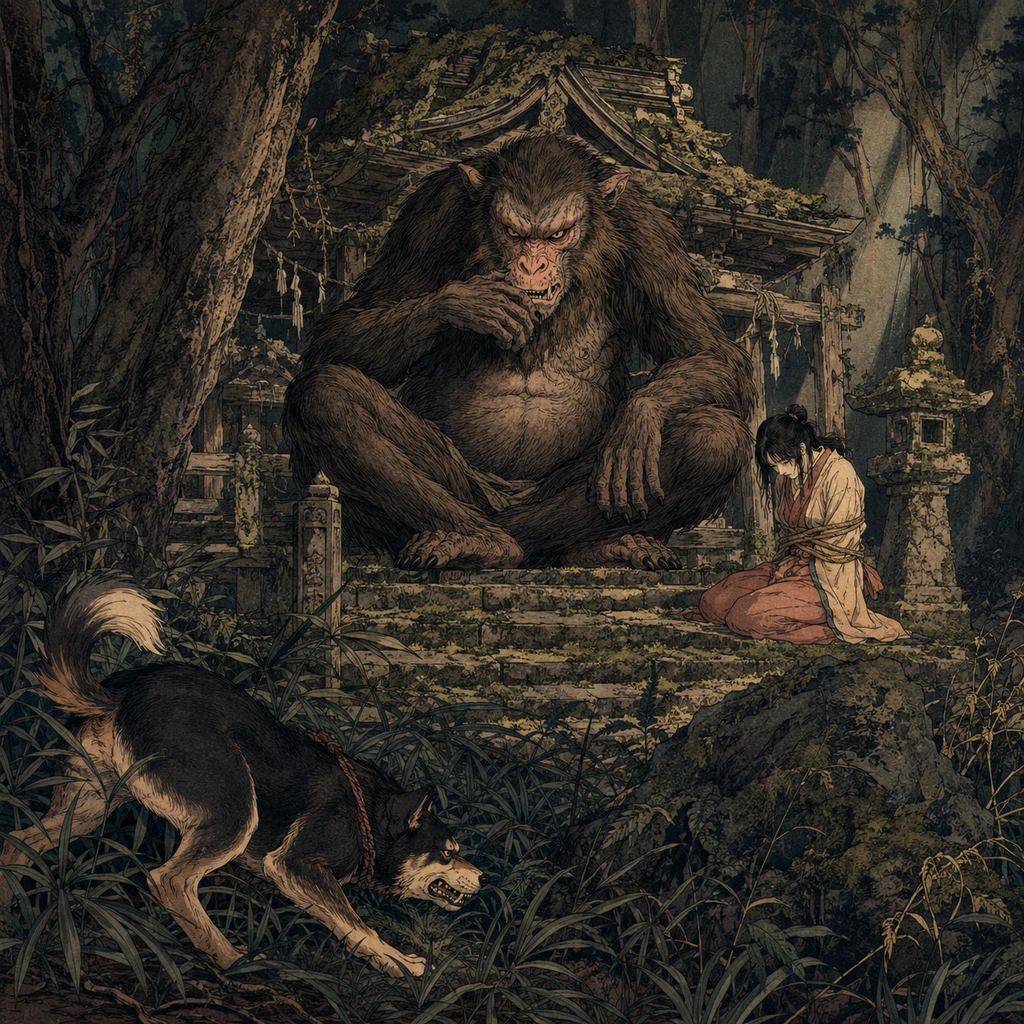 Sarugami (Monkey Deity)sah-roo-GAH-mee
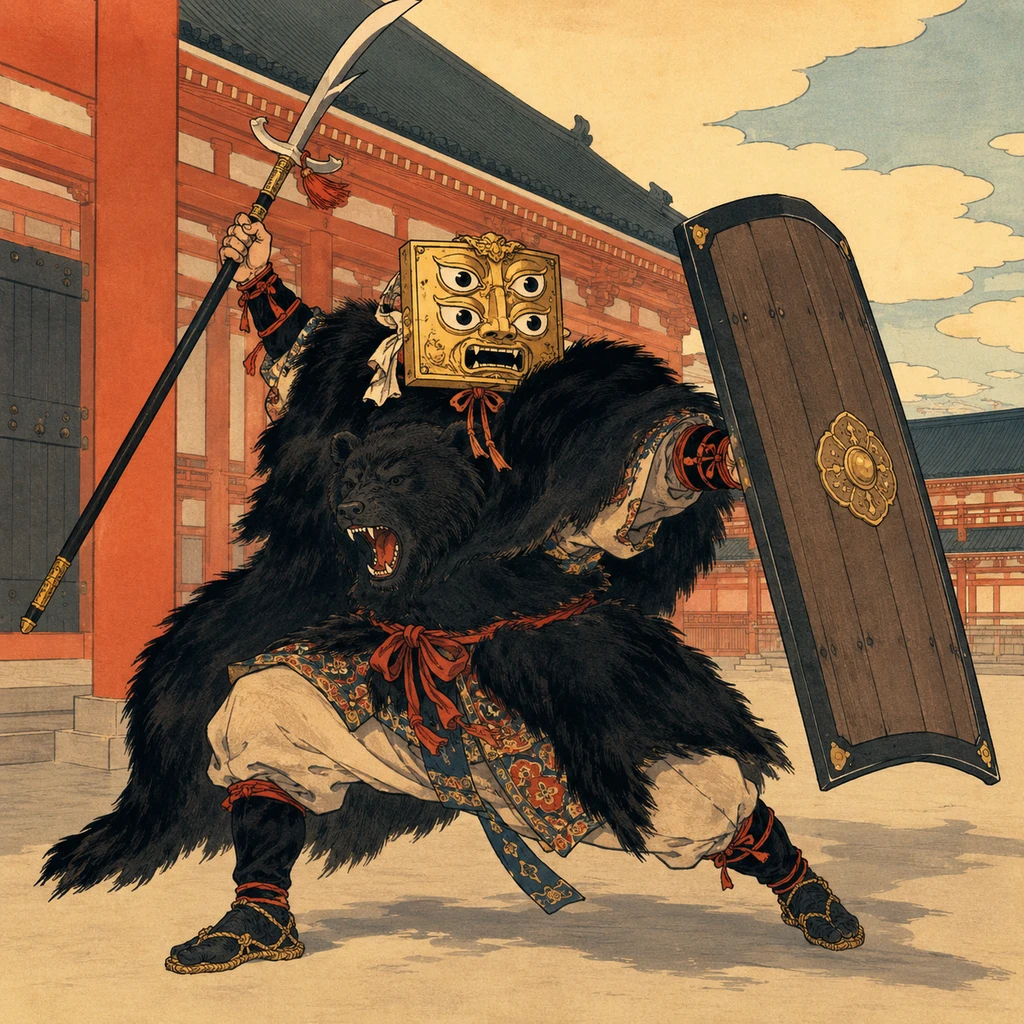 Hōsōshihō-sō-shi
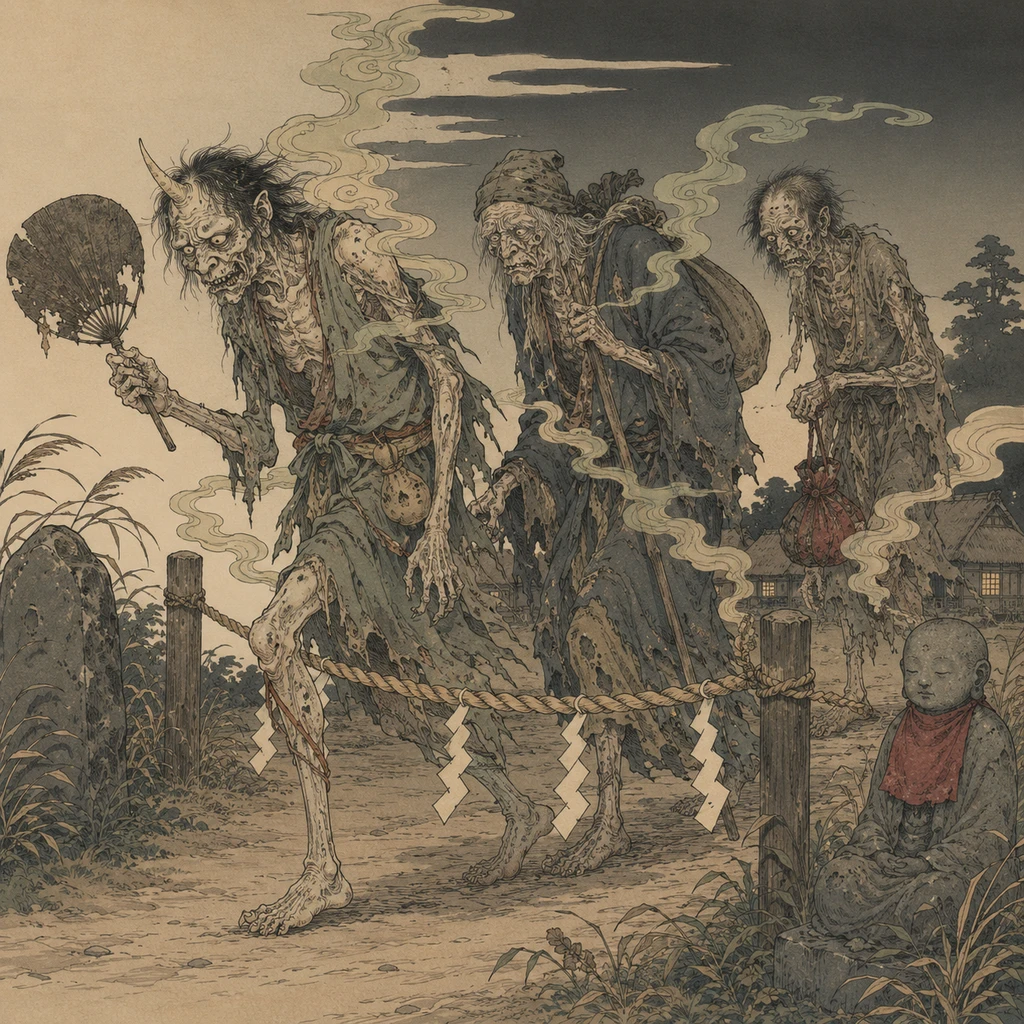 Epidemic Godyahk-BYOH-gah-mee
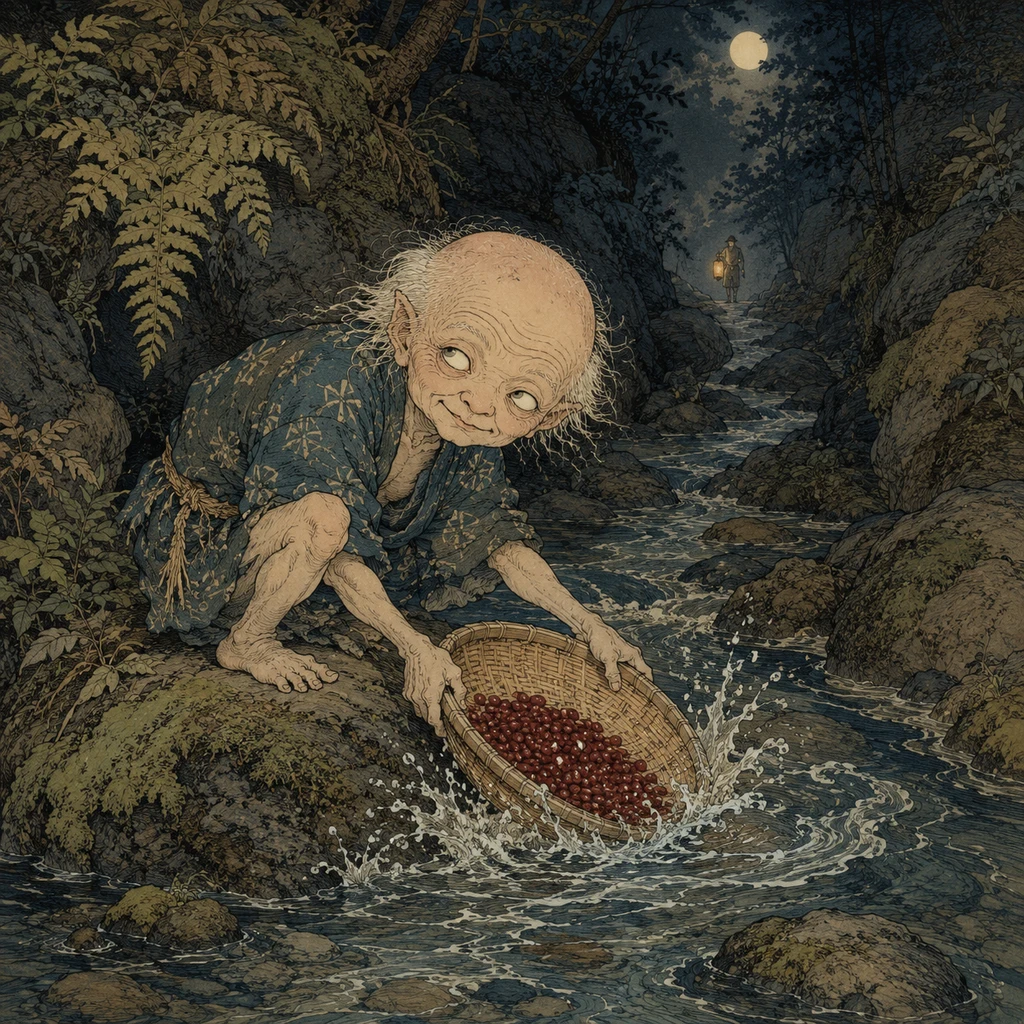 Azuki-arai (Bean Washer)ah-ZOO-kee ah-RAH-ee
The Sarugami (Monkey God) possesses a dual nature fraught with tension: on one hand, it is the sacred divine messenger "Masaru" within the Sanno belief system; on the other, it is tainted by the violent traits of the Kasuga Taisha deity lineage, standing at the crossroads of the mountains surrounding Kyoto and mountain ascetic beliefs. The Hososhi (Fangxiangshi) is the four-eyed priest tasked with exorcising plague demons during the imperial Tsuina (exorcism) rituals; importing a traditional Chinese exorcism ritual so directly and completely into the domestic court is a remarkably rare exception in Japanese supernatural culture. Though Azuki-arai (Bean Washer) is widely known in regions like Kanto and Koshin, in the Kyoto and Yamashiro area it is concretized as the eerie sound of "washing red beans" echoing by a riverbank late at night. People may never have seen its true form, but they can clearly sense its presence through the noise amidst the rushing water; this imagination of a yokai "heard but never seen" is perfectly exemplified by Azuki-arai.
The Kugutsu-shi (Puppeteers), meanwhile, were a wandering group of itinerant entertainers documented in detail since the Heian period. They later gradually attached themselves to temples and shrines, performing *sarugaku* and *kagura* at rituals and festivals as low-class *sanshomin* (marginalized people), serving as the precursors to later Ningyo Joruri (puppet theater) and Kabuki. Strictly speaking, they were not supernatural "yokai" but closer to "aberrant people" rejected by mainstream society. Yet, how the metropolis of Kyoto cleverly absorbed these marginal "entities of the otherworld" into its own urban fabric can be seen most clearly through the survival trajectories of such fringe groups.
Conclusion:
1,200 Years of Coexisting with Yokai
The grand spatial structure of Heian-kyo—its grid-like streets, demon gates, and boundaries—drew a clear line between the inside and outside of Kyoto. The existence of Goryo-e rituals, Tenjin belief, and the Bureau of Onmyo provided the official channels through which those wandering vengeful spirits and anomalies could be pacified, explained, and remembered. From the *Konjaku Monogatari-shu* to the *Hyakki Yagyo Emaki*, from Toriyama Sekien's encyclopedic catalogs to Tsukioka Yoshitoshi's ukiyo-e prints and Shigeru Mizuki's modern manga, the yokai nurtured by Kyoto have profoundly influenced how all of Japan imagines the supernatural, shaping the very foundational language of Japanese yokai visual culture. There are few cities in the world capable of so consistently and enduringly preserving, narrating, and continually revitalizing their monster traditions.
This continuous millennium-long cultural vein remains unbroken today. The Taishogun Shopping Street in Nishijin transformed into "Ichijo Yokai Street" in 2005, hosting the "Ichijo Hyakki Yagyo" yokai parade annually. The "Sento Kuyo" (Thousand Lantern Offering) held every year from August 23 to 24 at Adashino Nenbutsu-ji in Sagano lights the way for eight thousand souls without living kin; the bond between Kyoto's dead and living is reaffirmed on these two nights every year. And the International Research Center for Japanese Studies (Nichibunken), established in Kyoto in 1987, continues to publicly operate the world's largest "Database of Anomalies and Yokai Lore," centered around leading scholars like Kazuhiko Komatsu.
Even today, Kyoto coexists with yokai. Vengeful spirits are devoutly enshrined, yokai are continually depicted, and ancient legends are retold by generation after generation. Kyoto is not merely the ancient stage where yokai stories once played out; it is, in itself, a millennium-old demon capital that has sealed away the entirety of human fear, awe, belief, and memory.