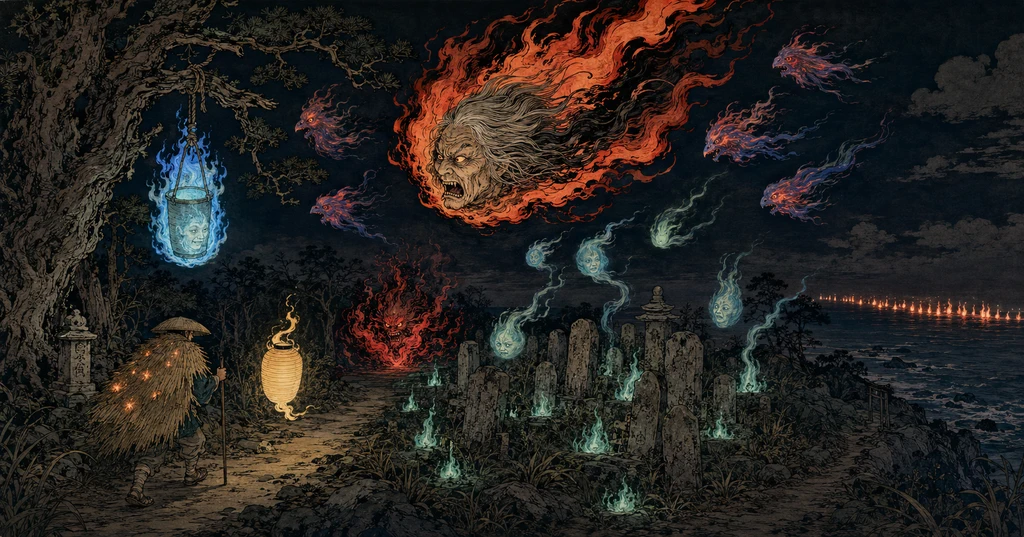
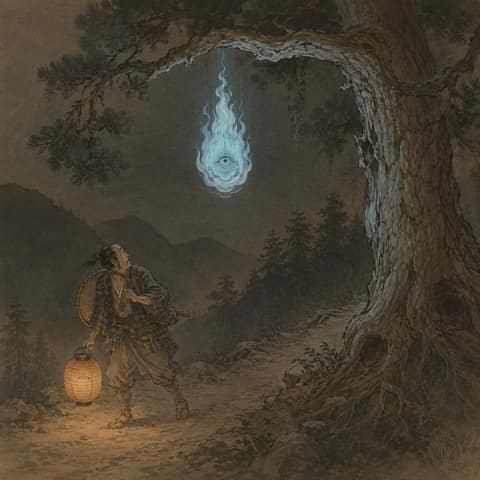
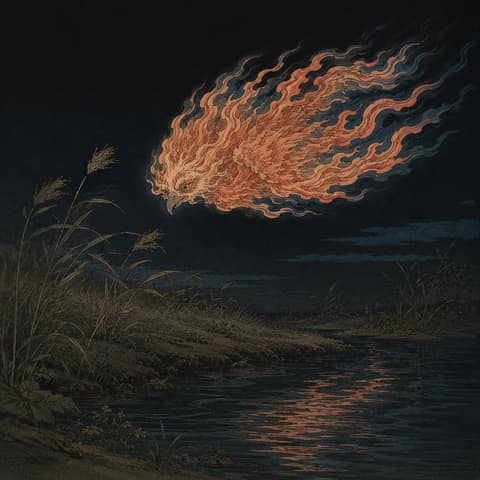
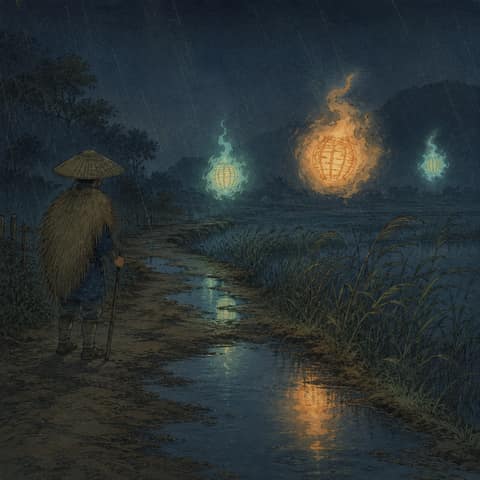
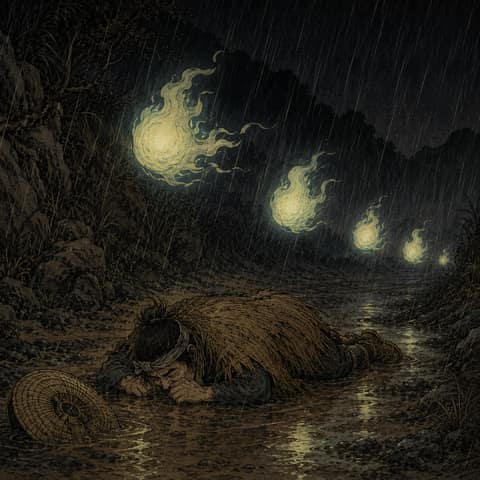
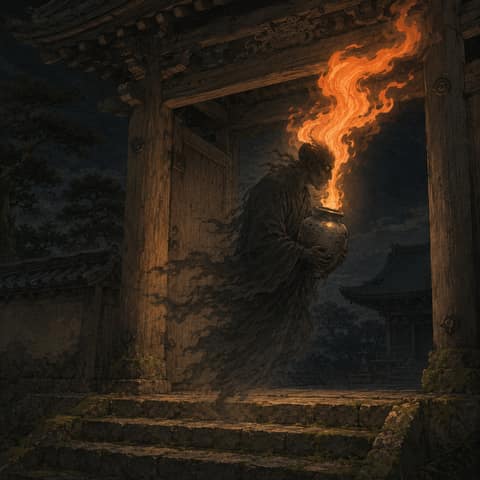
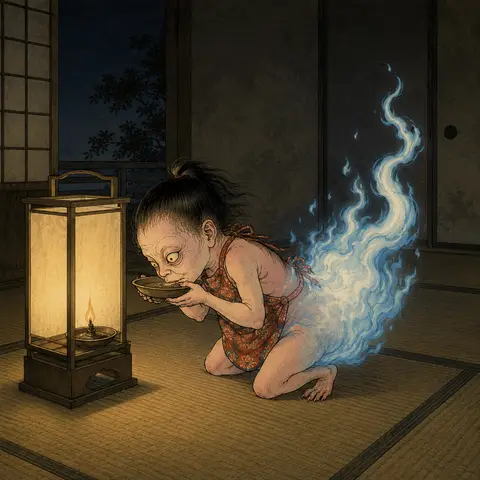
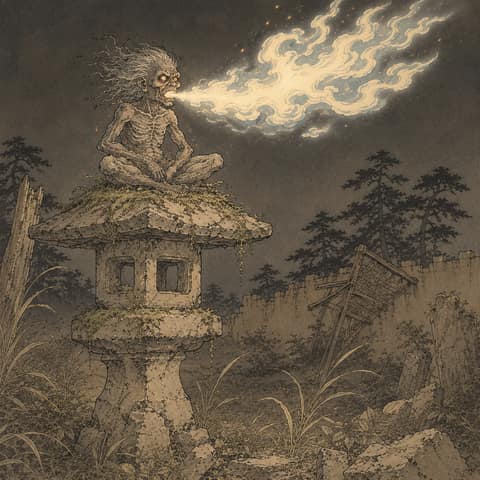
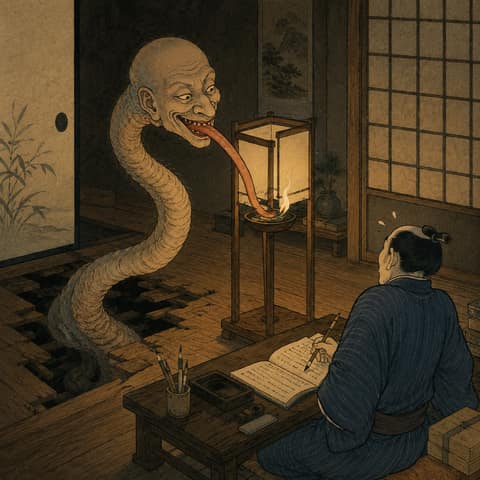
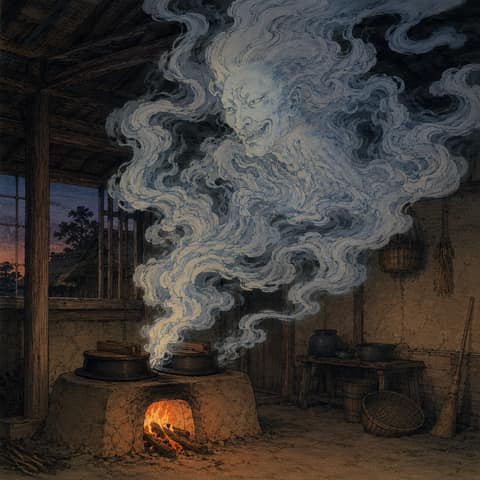
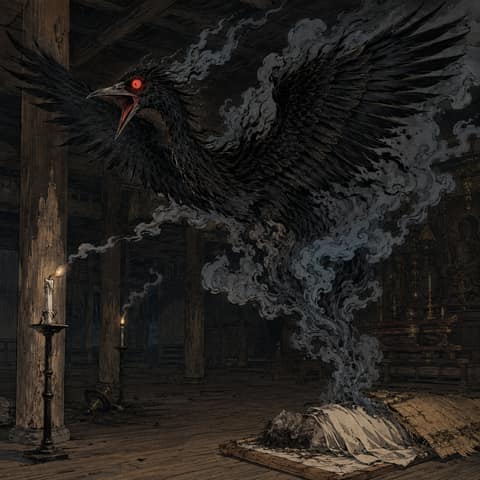
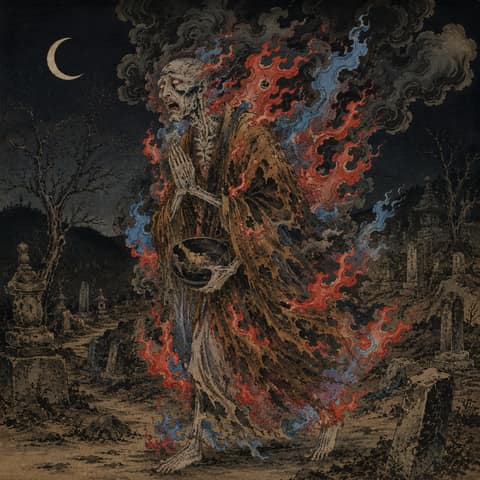
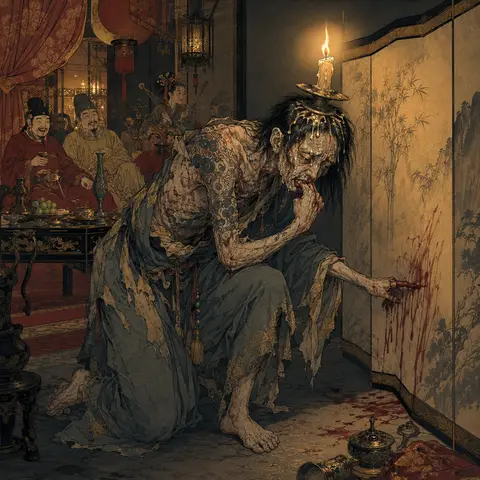
Aburabō is said to be the spirit of someone who committed a transgression involving temple or shrine lamp oil, appearing as a strange, wandering fire. Reported in Shiga and Kyoto, it is described as either a monk transformed after stealing oil from Mount Hiei or the ghostly silhouette of a figure clutching an oil jar. Most often seen on late spring and summer nights, it manifests at temple gates, along foothills, and by ponds or embankments, then drifts away in silence. Its name reflects guilt and fixation tied to oil.
Folklore & Legends
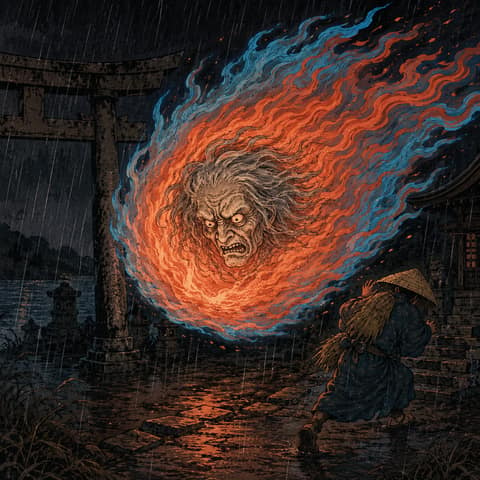
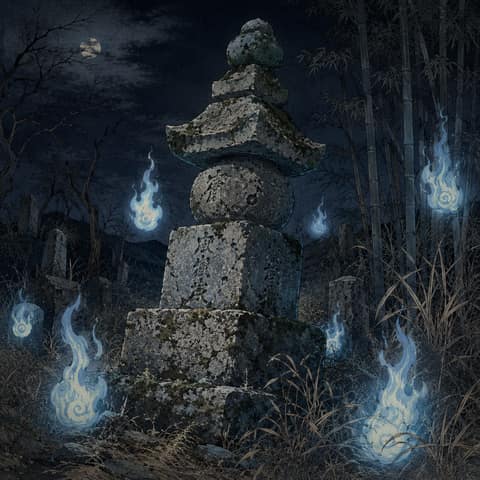
In Yasu District of Ōmi, people said that in late spring through summer a monk who stole lamp oil from Mount Hiei reappeared as a ghostly flame. At Kongōji in Aichi District, a monk who embezzled oil tax died suddenly and later showed himself at the temple gate as a specter holding oil. Shokoku Rijindan records mysterious fires on Mount Hiei’s western foothills. Kokon Hyaku Monogatari Hyōban tells of an “oil thief” flame flying toward the Main Hall, with a horrific vision of a monk’s severed head breathing fire. A similar tale, the “Oil Returned,” from Konoyo in Settsu Province, describes a fire that rises from a graveyard, passes ponds and embankments, and climbs toward Nakayama.
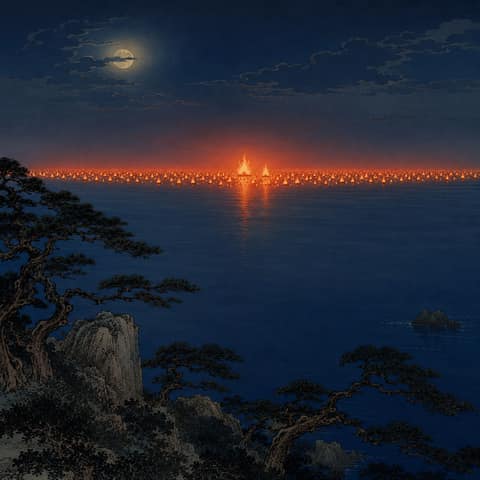
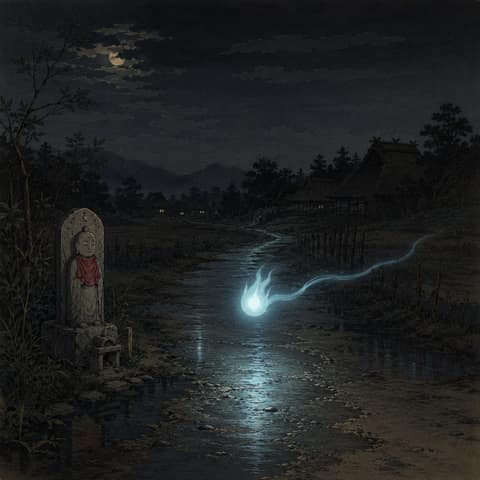
At the core of Abura-bō is the guilt of misappropriating oil meant for temple and shrine lamps, manifesting as a spirit flame. Early modern records and local lore place its appearances around the foothills of Mount Hiei and temple precincts across Ōmi, most often from dusk to midnight in late spring through early summer. It takes the form of a small orange to yellow fireball, or the shadow of a monk cradling an oil jar, following a set course over gates, halls, and pond embankments before vanishing. Its voice is uncertain, though some regional tales mention indistinct murmurings. Names vary by area—“Abura-bō,” “Oil Thief,” “Oil Returned”—all carrying a folk warning about taboos surrounding oil and the need for proper rites. Specific individuals or temple names differ across sources, but the strict management of lamp oil in temple society likely fostered these tales. Methods to calm it include sutra chanting, burial of offerings, and restoring lamp offerings, though no fixed formula is known.
Character Profile
This section is our own creative profile for storytelling. It is not historical fact or scholarship.
said to be appeased by memorial rites and confession
Abilities
drifts as an orange ghost-flame at nightrepeats a set route across gates embankments and mountain pathsclings to oil lamps and flickers
Weaknesses
resists pursuit or capture and is little affected by means other than memorial rites, said to be easily calmed by priests chanting sutras and performing requiem rites
Habitat
around Yasu District in Ōmi Province, western foothills of Mount Hiei, near Konya in Settsu Province
The diagram below is a diagnostic evaluation chart for Abura-bō (Traditional Form). The higher the value of each item, the stronger that characteristic is expressed.