YOKAI.JP

Hieizan Jogyodoひえいざんじょうぎょうどう

2 yokai rooted in Hieizan Jogyodo. Explore the legends tied to this land.

  • Myōtaraten

    Myōtaraten

    Epic

    myoh-tah-rah-ten

    Myōtaraten, Local Guardian Deity

    Deities & Divine SpiritsEchigo Province (Niigata), Dewa Province (Yamagata)

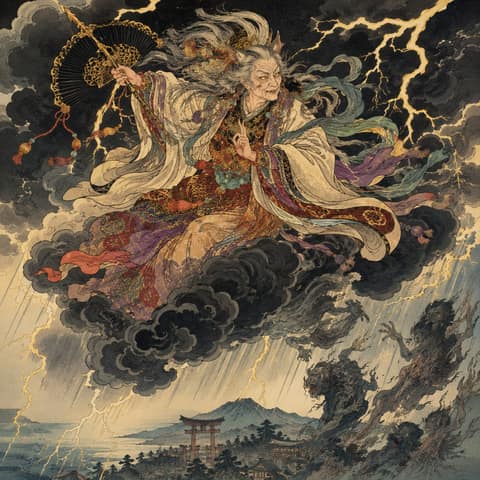
    A compiled version of the Myōtaraten images rooted in local faiths of Echigo Yahiko and Okitama in Dewa. Their origin tales involve transformations of an old woman, an ogre, or a shapeshifting cat, whose ferocity is quelled when enshrined, after which they call rain and protect children and the virtuous as village guardian deities. Though bearing a Buddhist-style celestial name, the being is essentially a deified female presence embodying the numinous power of mountains and borders, centered on faith around Mount Yahiko and the Ichihon-yanagi wayside shrine. One tradition says thunder roars once a year when she returns to Sado, aligning agrarian views that link thunderstorms with harvests. Names and forms vary—old crone, celestial maiden, demoness—but the core is a turn toward benevolent protection.
  • Aburabō (Oil Wraith)

    Aburabō (Oil Wraith)

    Uncommon

    ah-boo-rah-BOH

    Abura-bō (Traditional Form)

    Half-Human BeingsŌmi Province (Shiga), Yamashiro Province (Kyoto), and surrounding regions

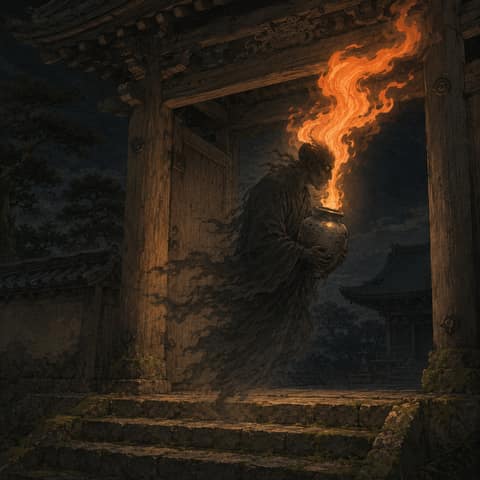
    At the core of Abura-bō is the guilt of misappropriating oil meant for temple and shrine lamps, manifesting as a spirit flame. Early modern records and local lore place its appearances around the foothills of Mount Hiei and temple precincts across Ōmi, most often from dusk to midnight in late spring through early summer. It takes the form of a small orange to yellow fireball, or the shadow of a monk cradling an oil jar, following a set course over gates, halls, and pond embankments before vanishing. Its voice is uncertain, though some regional tales mention indistinct murmurings. Names vary by area—“Abura-bō,” “Oil Thief,” “Oil Returned”—all carrying a folk warning about taboos surrounding oil and the need for proper rites. Specific individuals or temple names differ across sources, but the strict management of lamp oil in temple society likely fostered these tales. Methods to calm it include sutra chanting, burial of offerings, and restoring lamp offerings, though no fixed formula is known.