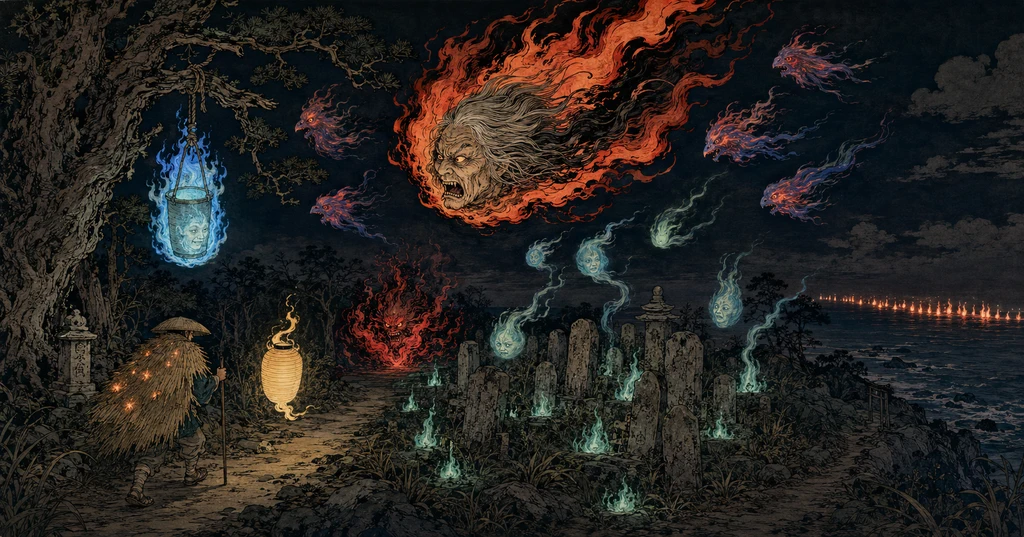
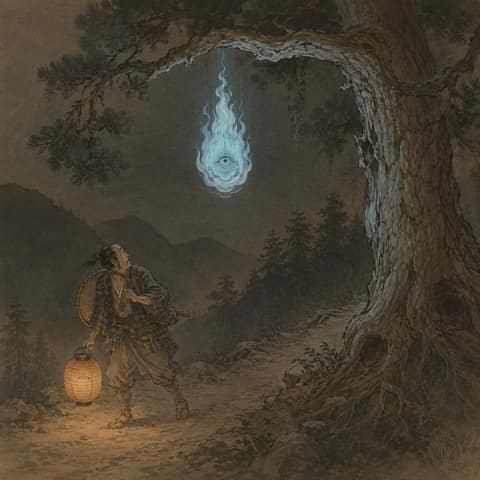
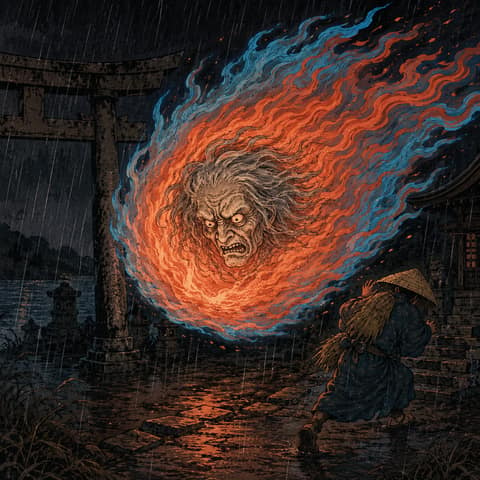
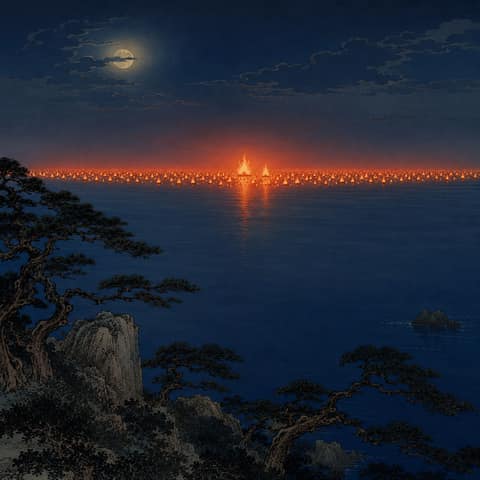
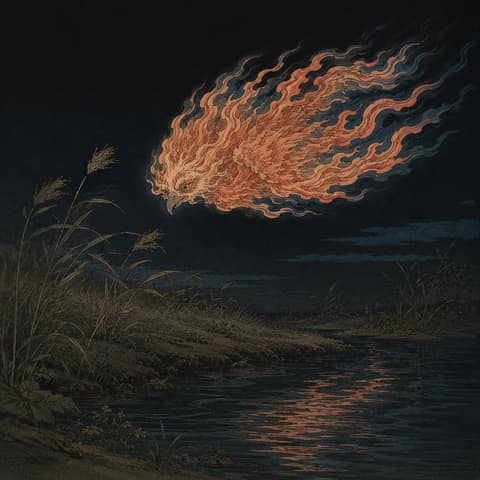
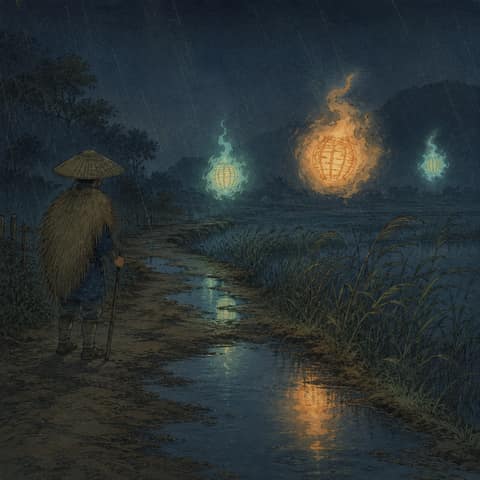
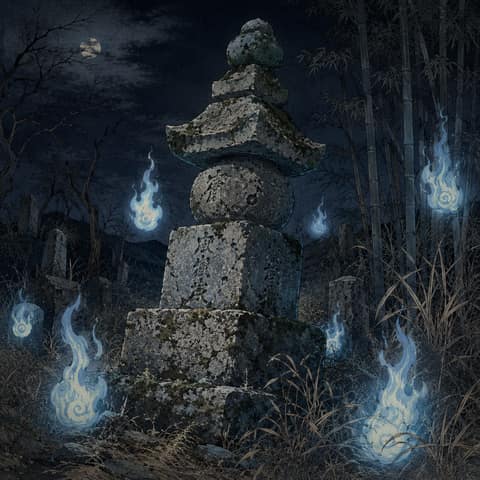
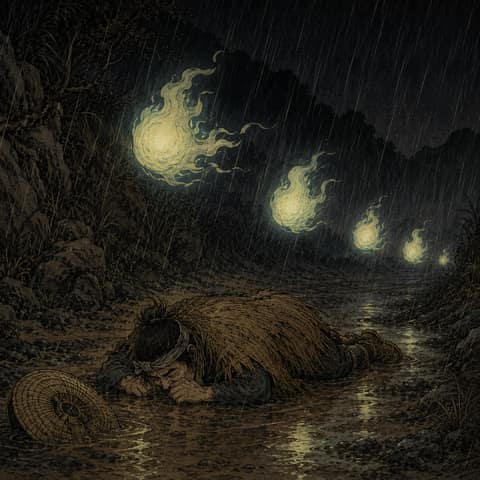
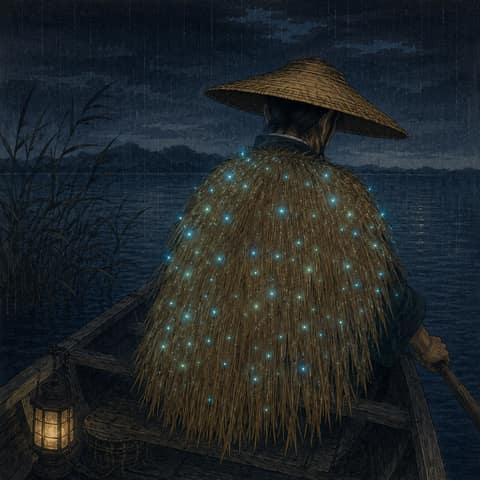
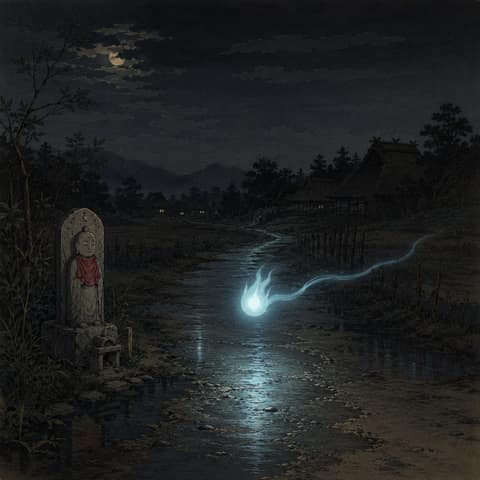
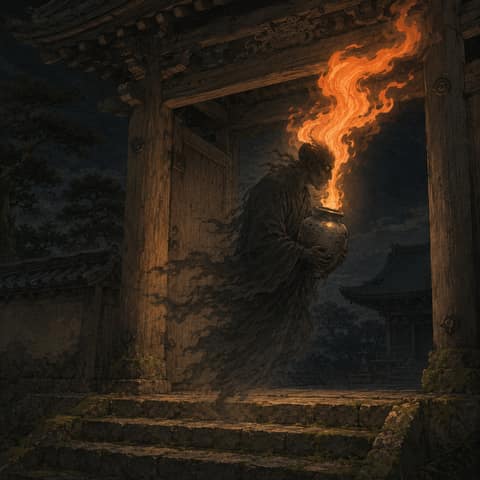
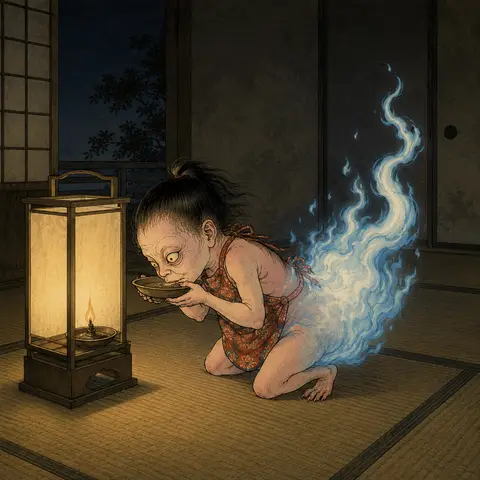
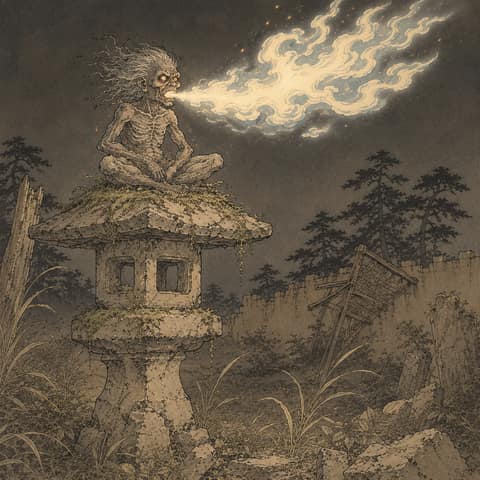

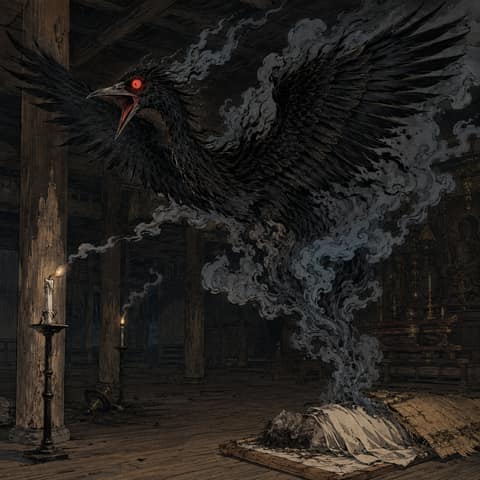
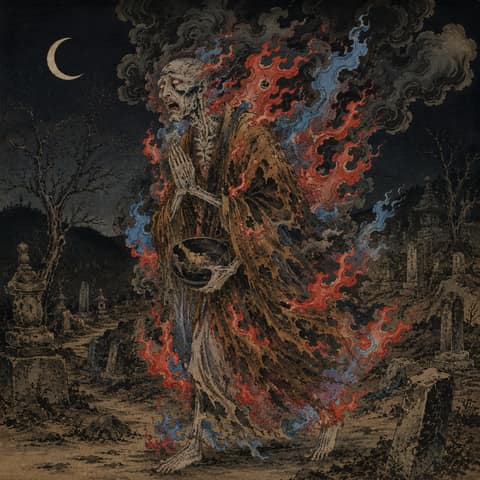
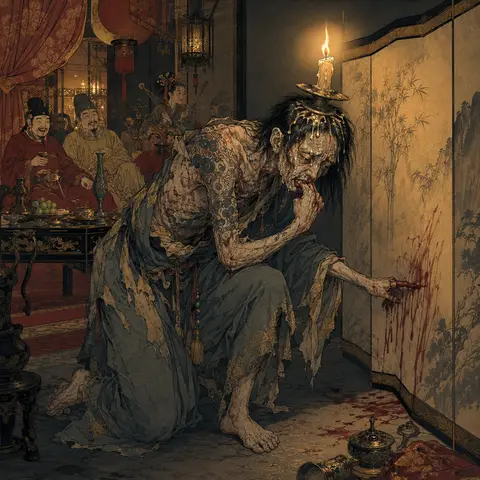
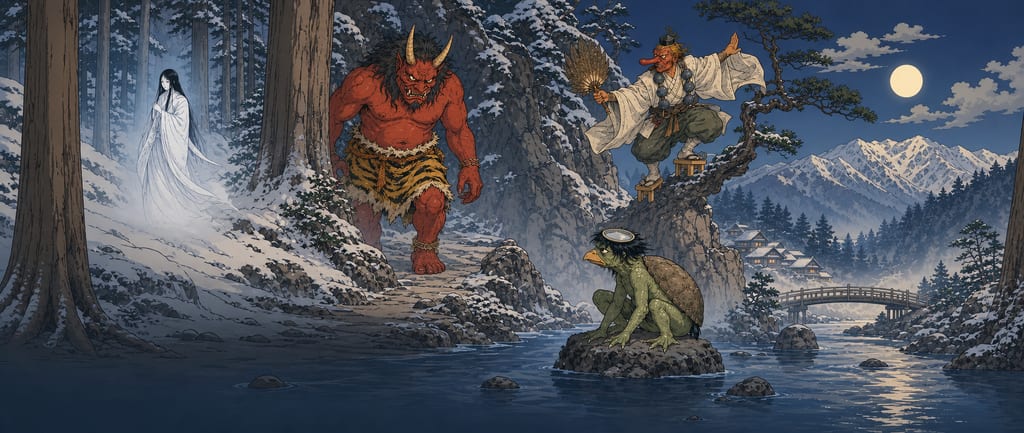
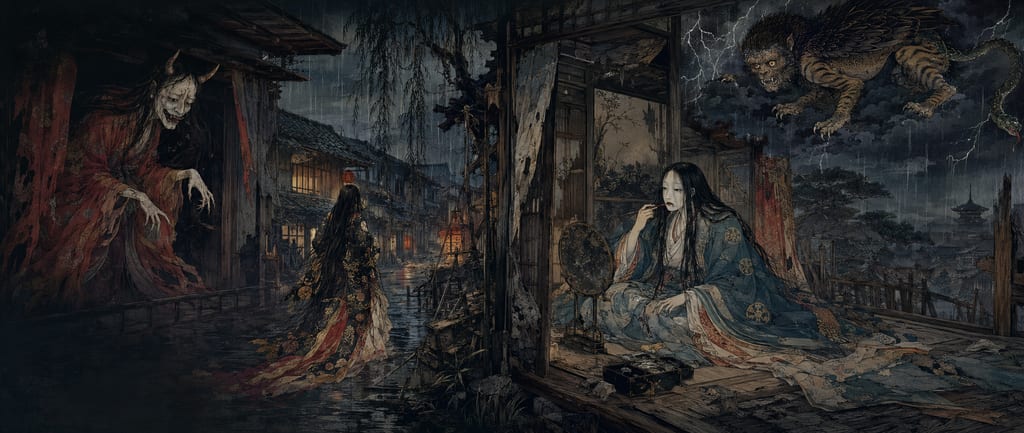
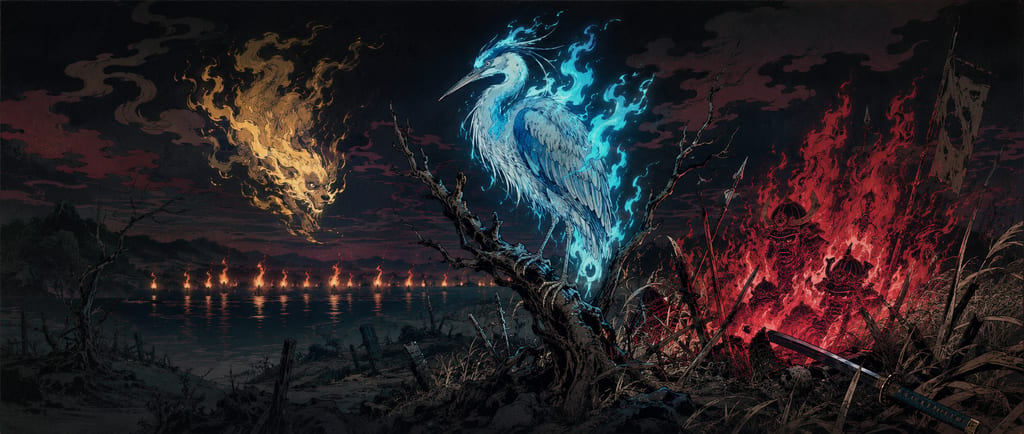
A depiction based on the traditional understanding of hitodama. It is a spirit flame that appears in answer to impending death or powerful emotions, said to fly to one’s family line or close relations. It drifts lower than shoulder height with a faint trailing tail. Though it seems to be carried by the wind, it is also said to travel as if toward a destination. Its color is often pale blue, but varies by region, with many reports of orange or red. Sightings cluster near places of passage or boundary—temple and shrine grounds, graveyards, old roads, field ridges, and pond edges. Early modern essays, local gazetteers, and modern folklore collections mention it as a “greeting flame before death” or “parting flame,” and distinguish it from onibi and kitsunebi, which have different origins. Scientific explanations have been attempted, yet tradition regards it as a sign of a soul’s coming and going.
Character Profile
This section is our own creative profile for storytelling. It is not historical fact or scholarship.
Yokai Type - Traditional Yokai
Category - Ghosts & Spirits
Rarity - Epic
Personality - thought to be swayed by lingering regrets and bonds, ultimately uncertain
Compatibility - said to respond well to funerary rites, Buddhist chants, votive lights
Abilities - faint luminescence in twilightflying to relatives and places of attachmentappearing as a portent accompanied by sound
Weaknesses - said to quiet with sutra chanting or funeral rites, easily scattered by strong wind or heavy rain
Habitat - graveyards and temple or shrine precincts, crossroads at village edges and old roads, riversides pond banks and field ridges