Common
Traditional Yokai

Yokkabu-i

Yokkabu-i

Also Known As
Takahashi Juhachido Odori
Category
Gods & Spirits
Personality
Exhibits terrifying behavior by making children cry and threatening to carry them off, but rooted in a profound love to protect their lives from water accidents.
Origin
Kinpocho, Minamisatsuma City, Kagoshima Prefecture
View on map

Basic Description

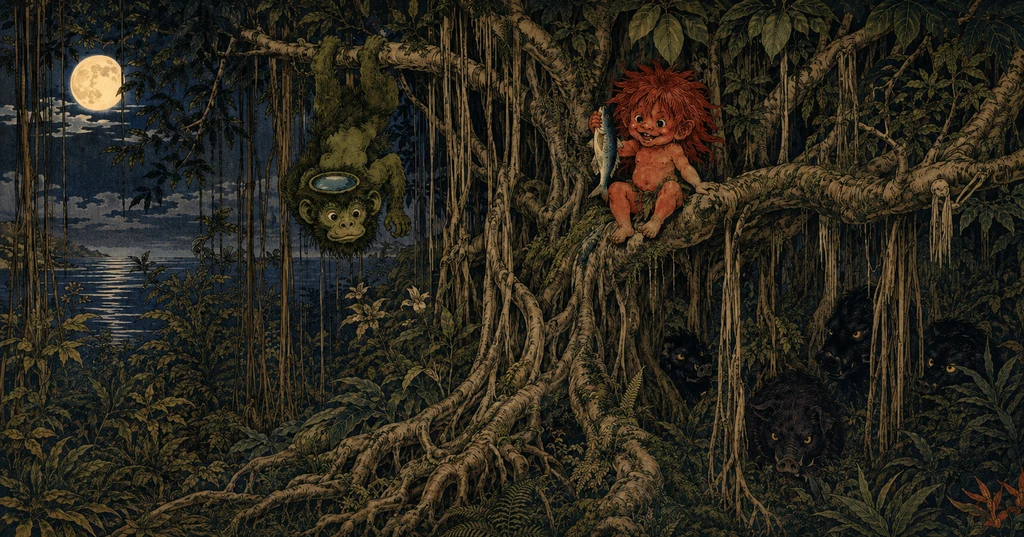
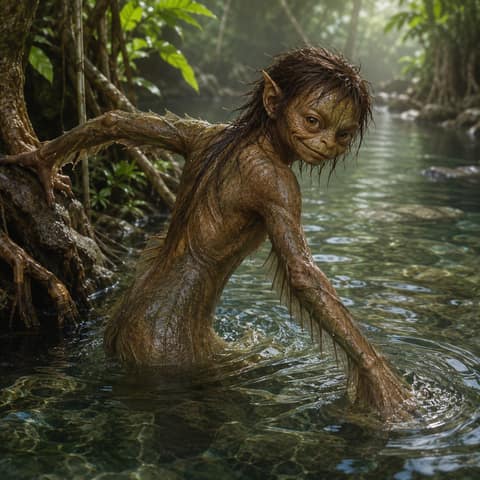
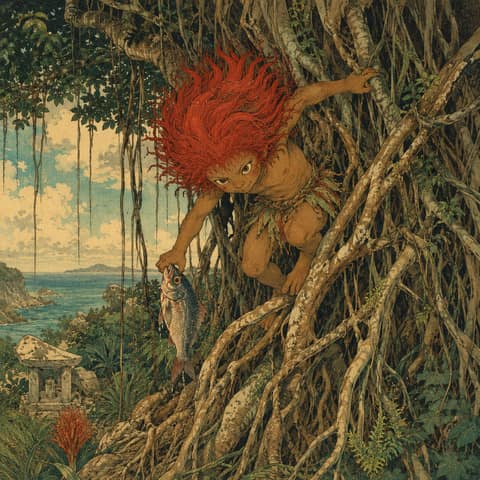
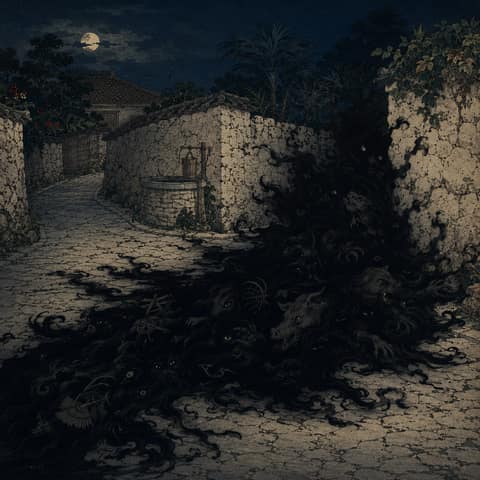
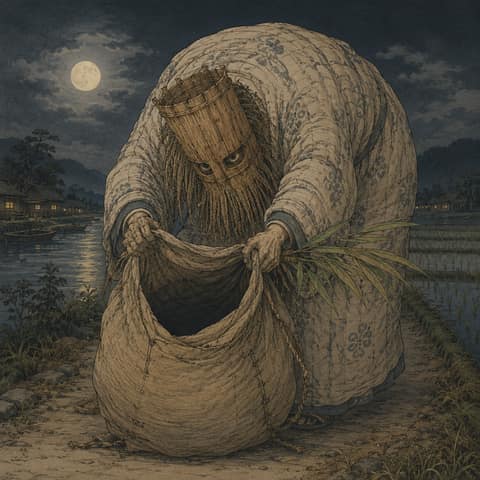
A visiting deity believed to be an incarnation of a Garappa (kappa), appearing during the "Water God Festival (Takahashi Juhachido Odori)" held every August on the lunar calendar in the Takahashi district of Kinpocho, Minamisatsuma City, Kagoshima Prefecture. It earned the name "Yokkabu-i" because it covers itself entirely with a "Yogi," a traditional form of bedding. Emitting strange shrieks, it threatens children with a hemp sack, acting as a warning against water accidents while being worshipped as a deity that brings good health and protection from illness.

Folklore & Legends

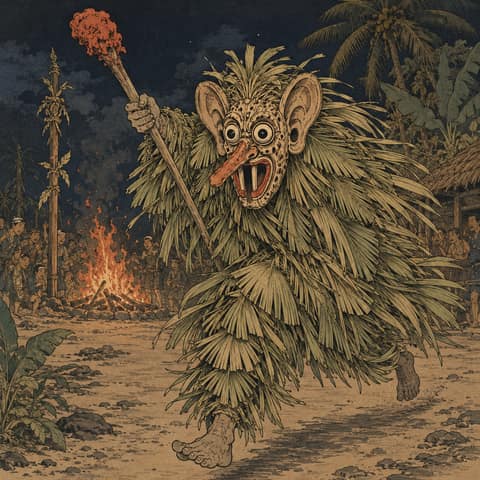
Young men don eerie masks with long "beards" made from palm bark and completely cover themselves with old *yogi* bedding, transforming into grotesque figures. Considered messengers or incarnations of the Garappa, the gods of the waterside, they roam wildly through the village carrying large hemp sacks (kamasu). Making a strange "shush, shush" sound, they search for children; upon finding them, they threaten to shove them into the sacks and carry them away, making them utterly terrifying to the young. However, this is not mere bullying; it carries a deeply educational warning: "Beware of accidents near the water." At the same time, it is believed that having one's head or shoulders tapped by the bamboo leaves they carry serves as an exorcism, blessing the person with a year of good health. It is a precious traditional event that has been designated as a National Selected Intangible Folk Cultural Property of Japan.

Detailed Analysis

The Yokkabu-i ritual is a rare folkloric example that beautifully blends water god worship with the discipline of children in the Satsuma Peninsula, where Garappa (kappa) legends remain strong. The method of manifesting an extraordinary "god" using eerie masks made of palm bark and everyday tools like the *yogi* conveys the ancient layers of Japan's masked deity and visiting deity faiths. While the continuation of such traditional events is threatened by a declining and aging population, it has functioned as a crucial cultural mechanism to deepen community bonds and pass down both the terrors and blessings of nature to the next generation.

Character Profile

This section is our own creative profile for storytelling. It is not historical fact or scholarship.

Personality
Exhibits terrifying behavior by making children cry and threatening to carry them off, but rooted in a profound love to protect their lives from water accidents.
Compatibility
Strict with children who underestimate the dangers of the water, but bestows protection upon those who accept the exorcism of being tapped with bamboo leaves.
Abilities
Prevention of water accidents (educational warning)Exorcism for health using bamboo leavesPrayer for family safety
Weaknesses
Declining birthrates and aging population in the local community (lack of successors for the festival)
Habitat
Around Tamate Shrine and the watersides of the Takahashi district, Kinpocho, Minamisatsuma City, Kagoshima Prefecture
For more detailed information and diagnosis results about Deity Preaching Warnings of the Water, please click here.

Sources & References

1
  1. ヨッカブイWikipedia(Wikipedia, 2006) [government]鹿児島県南さつま市金峰町高橋に伝わる来訪神行事「高橋十八度踊り(ヨッカブイ)」に関する解説記事。大ガラッパ(大河童)の仮装や行事の由来について詳しく記載されている。

Interested in this type of yokai?

Discover the yokai most similar to your personality with our yokai diagnosis

Start Yokai Diagnosis

Meet your guardian yokai at the shrine

Draw an omikuji fortune and discover the yokai watching over you today.