Common
Traditional Yokai

Boze

Boze

Also Known As
Boze of Akusekijima
Category
Gods & Spirits
Personality
Despite a wild and terrifying appearance, it is a benevolent deity that bestows blessings and vitality upon the people.
Origin
Akusekijima, Toshima Village, Kagoshima Prefecture
View on map

Basic Description

A visiting deity (*raihoshin*) passed down on Akusekijima in the Tokara Islands of Kagoshima Prefecture. Appearing on the final day of the Obon festival (July 16th on the lunar calendar), it is worshipped as a being that purges evil spirits and impurities while bringing good fortune to the people. In 2018, it was inscribed on the UNESCO Intangible Cultural Heritage list as one of the "Raihoshin: Ritual Visits of Deities in Masks and Costumes".

Folklore & Legends

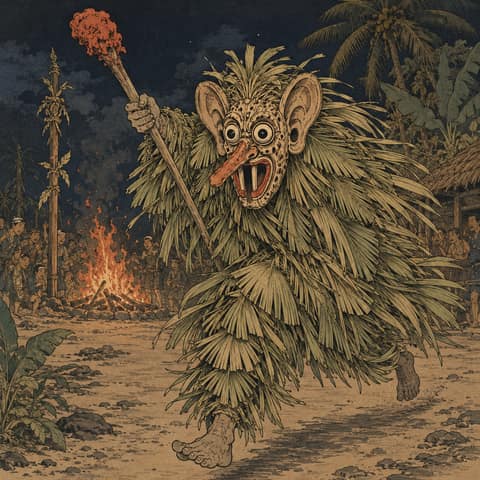
The Boze appears as a grotesque figure, its entire body covered in the leaves of the Chinese fan palm, wearing a mask characterized by large ears, wide eyes, a huge mouth, and a distinctively long nose. Three young men from the island dress as Boze, carrying long sticks called "Bozemara" tipped with red mud. Accompanied by the beating of taiko drums, they chase after the spectators, particularly targeting children and women (Bon Odori of Akusekijima, Toshima Village). It is said that having this red mud smeared on one's body brings divine favors such as protection from illness and the blessing of fertility. It is a sacred Obon ritual that the islanders have fiercely guarded through oral tradition, and it has been designated as a National Important Intangible Folk Cultural Property of Japan.

Detailed Analysis

It is believed that the Boze was once widely worshipped across the various islands of the Tokara archipelago, but today, Akusekijima is the only place where its original form survives. During the Obon period, this deity not only guides the spirits of the dead (ancestors) who have returned to this world back to the other shore, but also infuses the living with vitality. This ritual deeply preserves the extremely primitive form of Japan's ancient *raihoshin* (visiting deity) faith. By visualizing a "visitor from the other world" through masks and costumes, this event functions as a crucial spiritual foundation for living in harmony with the harsh nature of the southern islands and strengthening the solidarity of the community.

Character Profile

This section is our own creative profile for storytelling. It is not historical fact or scholarship.

Personality
Despite a wild and terrifying appearance, it is a benevolent deity that bestows blessings and vitality upon the people.
Compatibility
Grants strong divine protection to those (especially women and children) who accept having the red mud smeared on them without fear.
Abilities
Purging evil spirits and impuritiesBestowing health and protection from illnessBlessing with fertility and descendants
Weaknesses
Appears exclusively on the final day of the Obon festival
Habitat
The village and Bon Odori venues of Akusekijima, Toshima Village, Kagoshima Prefecture

For more detailed information and diagnosis results about The Visiting Deity of Akusekijima, please click here.

Sources & References

3
  1. 来訪神:仮面・仮装の神々ユネスコ(無形文化遺産, 2018) [news]男鹿のナマハゲなどと共に「来訪神」としてユネスコ無形文化遺産に登録された。
  2. 悪石島の盆踊り十島村(十島村公式サイト) [government]旧暦7月16日の盆の最終日に現れるボゼの行事の公式な解説。
  3. 悪石島のボゼ文化庁(国指定文化財等データベース, 2017) [government]2017年に国の重要無形民俗文化財に指定。

Interested in this type of yokai?

Discover the yokai most similar to your personality with our yokai diagnosis

Start Yokai Diagnosis

Meet your guardian yokai at the shrine

Draw an omikuji fortune and discover the yokai watching over you today.