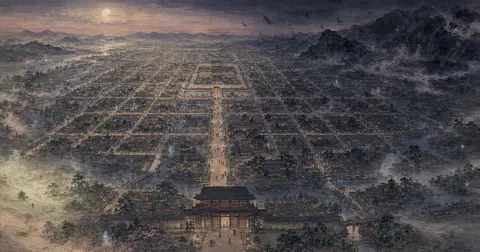
受験シーズンになると、北野天満宮の境内は合格祈願の絵馬であふれる。菅原道真を「天神様」── 学問の神として仰ぐ、全国およそ一万二千の天満宮の総本社である。だが千年前、この神はまったく別の顔をもっていた。都を震撼させた、日本でも屈指の怨霊。それが菅原道真であった。
右大臣にまで昇りながら、無実の罪で大宰府へ流され、失意のうちに没した学者。その死後、都を相次ぐ災いが襲い、人々は彼の祟りに震えた。祟る怨霊が、なぜ学問の神へと姿を変えたのか。本稿は、北野天満宮の創建をたどりながら、その転身の物語を読み解く。
右大臣から、
大宰府へ
菅原道真[1]は、平安前期を代表する学者であり、漢詩人であり、政治家であった。学問の家に生まれ、その才を宇多天皇に見いだされて累進し、昌泰二年(八九九)には右大臣にまで昇りつめた[1]。
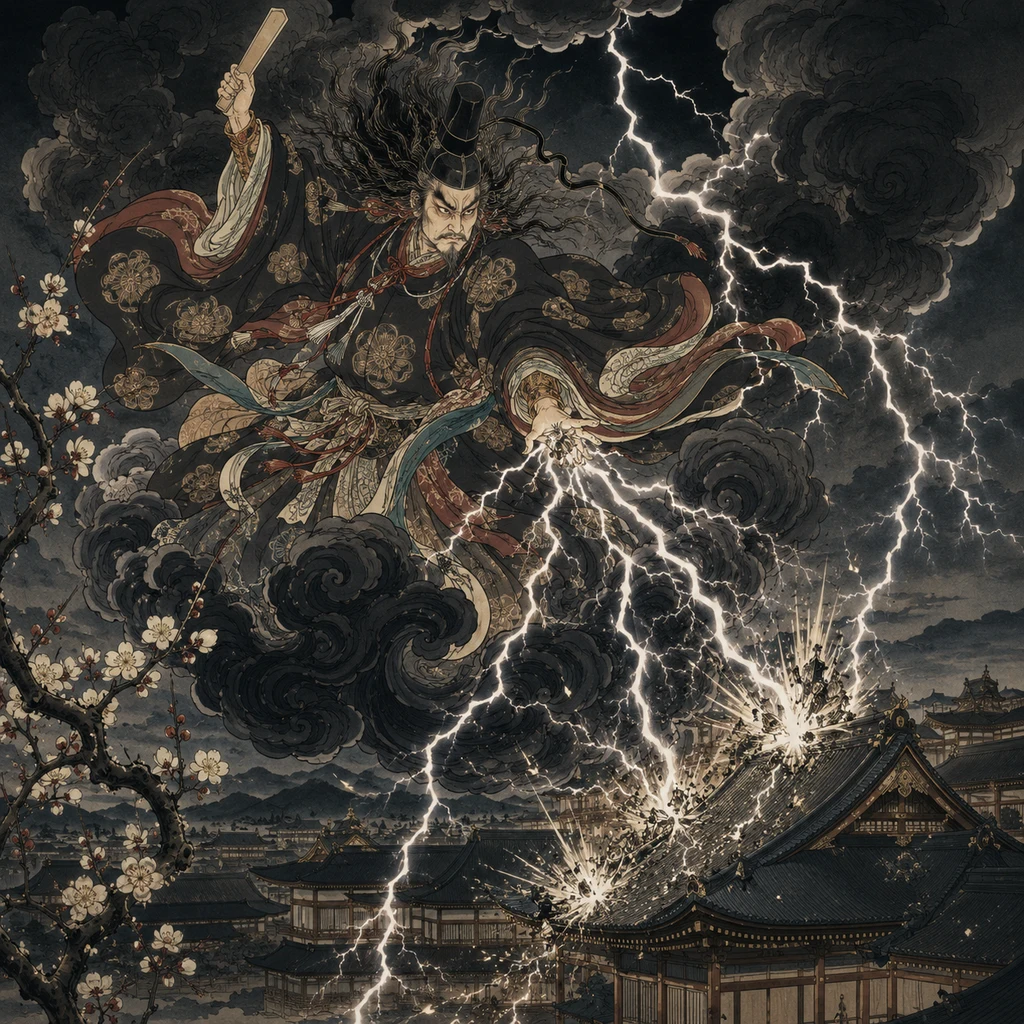
Sugawara no Michizane
Sugawara no Michizane was a Heian-period scholar and composer of Chinese verse who rose to the office of Minister of the Right; after his death he came to be counted among the most dreaded vengeful spirits in Japan, and was in time enshrined nationwide as Tenman-Tenjin, the god of learning. Born into the scholarly Sugawara house, he was favored under the two reigns of Uda and Daigo, but in the fourth year of Shōtai (901), slandered by the Minister of the Left Fujiwara no Tokihira, he was demoted to Dazaifu, where he died in despair in the third year of Engi (903). After his death, the capital saw a succession of deaths among his political enemies, beginning with Tokihira, followed by plague and drought, all whispered to be the curse of Michizane, who had been sunk by a false charge. Above all, the lightning strike on the palace's Seiryōden in the eighth year of Enchō (930), which killed and wounded many nobles, fixed the conception of Michizane as Karai-Tenjin, the thunder-wielding "Fire-and-Thunder Heavenly Deity." To pacify that raging spirit, the court enshrined him as a god, and the cult of Tenjin spread outward from Kitano Tenmangū in Kyoto and Dazaifu Tenmangū, built over his grave. Feared at first as a curse-bringing deity, Tenjin gradually changed in character—on account of Michizane's own outstanding learning in life—into a guardian of scholarship and letters; and in the early-modern era, as terakoya schools spread, he became beloved even among commoners as the god who grants success in study and clears false accusations. The plum he loved so dearly in life, and the thunder he wielded as a vengeful spirit, survive to this day as his emblems.
Read moreだが、栄達は長く続かなかった。昌泰四年(九〇一)、道真は「天皇を廃して娘婿の斉世親王を皇位に就けようとした」との嫌疑をかけられ、大宰府へ左遷される[1]。藤原時平の讒言によるものと伝わる。家族とも引き裂かれ、九州の地で謹慎の日々を送った道真は、延喜三年(九〇三)、失意のうちに大宰府で没した[1]。都を恋うる漢詩を残しての、孤独な死であった。
学問の家·菅原氏に生まれた道真は、幼くして詩才を示し、文人官僚の頂点とされる文章博士をつとめた人であった。その学識は当代随一とうたわれている。左遷に際して、庭の梅に別れを告げて詠んだとされる一首が、今に伝わる ──「東風(こち)吹かば にほひおこせよ 梅の花 主なしとて 春を忘るな」。春風が吹いたなら香りを送っておくれ、主がいないからといって春を忘れるな、と。やがて、その梅が一夜にして大宰府の道真のもとへ飛んでいったという「飛梅」の伝説も生まれた。
都を襲う祟り
道真の死後、都に異変が続く。彼を陥れた藤原時平が早世し、醍醐天皇の皇子が相次いで世を去った[1]。人々は、これを道真の怨霊の仕業と噂しはじめる。
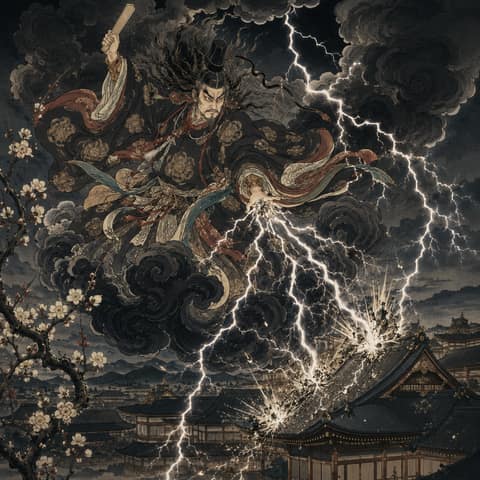
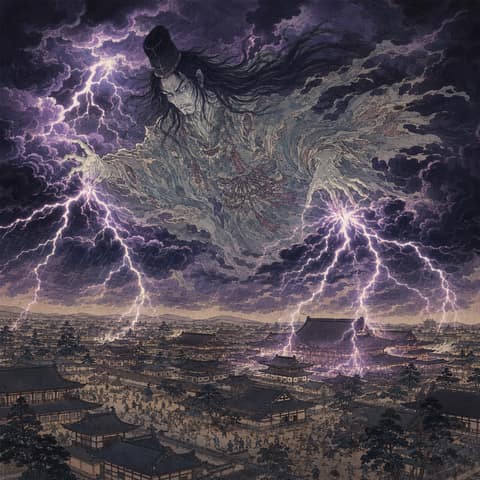
決定的だったのが、延長八年(九三〇)の清涼殿落雷事件である。内裏の中枢に雷が落ち、朝廷の要人が死傷した[1]。この一撃で、「道真の怨霊による祟り」という認識は決定的なものとなった。鎌倉期の『北野天神縁起絵巻』では、道真の霊が雷神と化し、鬼の姿で清涼殿を襲う場面が描かれる[2]。学者であった道真は、いまや雷を操る恐ろしい怨霊として、都人に畏れられたのである。道真の霊は「天満大自在天神」とも呼ばれ、雷と火を司る荒ぶる神として、朝廷からも民からも畏怖された。無念の死を遂げた高貴な者の霊が祟りをなすという観念は、当時の都を深く支配しており、こうした荒魂を祭祀によって鎮める「御霊会」も、たびたび営まれていた。
火雷天神を祀る ── 北野天満宮の創建
荒ぶる怨霊は、鎮めねばならない。天暦元年(九四七)、右京に住む少女·多治比文子や近江の神童への道真の託宣にもとづき、北野の地に社殿が造営された[3]。
北野が選ばれたのには理由がある。この地にはもともと火雷神を祀る社があり、雷の神を祀る場であった[3]。雷神と化した道真の怨霊を鎮めるには、ふさわしい土地だったのである。道真は「火雷天神」として祀られ、その霊力は雷を鎮め、災いを退けるものへと転じていく。怨霊を否定して排除するのではなく、神として祀りあげ、その力を都の守りに変える ── 日本独特の御霊信仰が、ここに結晶した。
祟り神から、
学問の神へ
朝廷もまた、道真の神格化を進めた。永延元年(九八七)には初めての勅祭が行われ、官位や称号が追贈された[3]。祟りを恐れての鎮魂は、やがて篤い崇敬へと変わっていく。
そして時代がくだるにつれ、人々は道真のもう一つの顔 ── 生前の卓越した学者としての姿を思い出す。雷神の猛々しさは薄れ、代わって「学問の神」としての性格が前面に出てきた。今日、北野天満宮は全国およそ一万二千の天満宮·天神社の中心として、受験生をはじめ多くの参拝者を集める[3]。祟る怨霊は、千年をかけて、合格祈願の神へと姿を変えたのである。
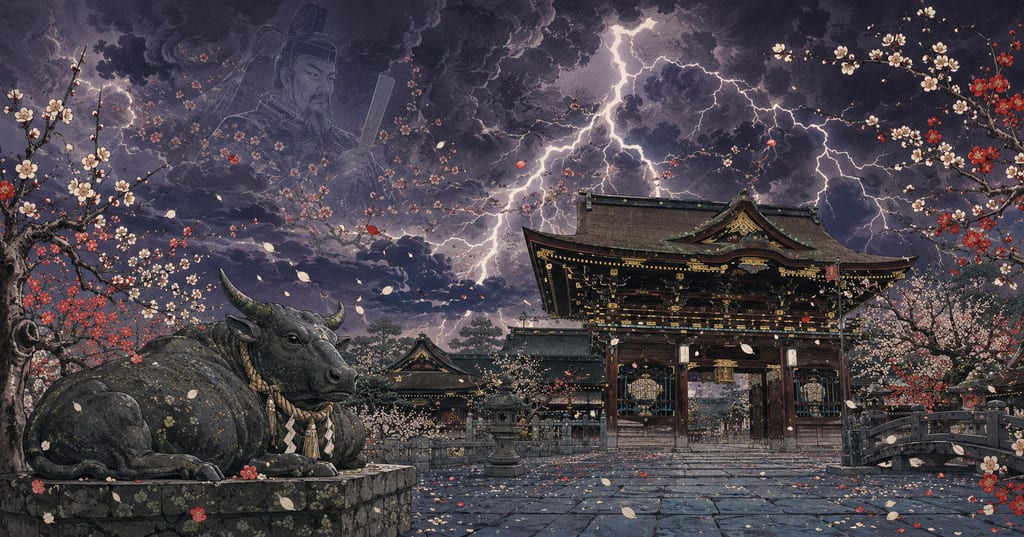
天神信仰には、道真ゆかりの象徴が寄り添っている。境内を埋める梅は、道真が愛し、飛梅伝説にも語られた花であり、天満宮の神紋ともなった。また、道真の亡骸を運ぶ牛が途中で伏して動かなくなり、その地に墓を定めたという伝承から、牛は天神の使いとされた。今日も多くの天満宮に臥牛(がぎゅう)の像が置かれ、参拝者がその頭を撫でて知恵を願う。荒ぶる雷神の面影は、こうしてやわらかな学びの神の姿へと包みこまれていった。
天神様、
全国へ
北野天満宮を中心に、天神信仰は全国へと広がっていった。北野天満宮は、今日およそ一万二千を数える天満宮·天神社の中心的存在となっている[3]。道真が没した九州では、その墓所に太宰府天満宮が建ち、北野とならぶ天神信仰のもう一つの本拠となった。荒ぶる雷神を鎮めるために生まれた社は、いつしか全国の人々が学びと誠実を祈る場へと変わっていったのである。
道真が学問の神として慕われるのは、彼が生前、卓越した学識と誠実な人柄で知られた人物だったからにほかならない。祟りへの恐れから始まった信仰は、時とともに、道真その人の徳を敬う気持ちへと深まっていった。受験生が合格を、書を学ぶ者が上達を、幼い子らが学びの成就を祈る ── かつて都を震わせた怨霊は、いまや最も身近で、最もやさしい神の一柱となっている。
怨霊を、
神に祀るということ
菅原道真の物語は、日本人が「祟り」とどう向き合ってきたかを、鮮やかに示している。
強い無念を抱いて死んだ者は、強い怨霊になる。だが日本人は、その怨霊を力ずくで祓おうとはしなかった。むしろ手厚く神として祀り、その強大な力を、災いを退け都を守る方向へと転じさせた ── これが御霊信仰である。崇徳天皇、平将門とならび「日本三大怨霊」に数えられる道真が、いまや最も親しまれる学問の神となっていることほど、この信仰の本質を物語る例はない。怨霊の力が強ければ強いほど、祀られたのちの神もまた、強い加護をもたらすと信じられたのである。
節分に「鬼は外」と豆を撒く行事もまた、災いをなすものを祓い鎮める心性の延長線上にある。京都全体の妖怪文化については、京都府の妖怪事典も併せて読まれたい。