👹
Divine
Yokai

Sakanoue no Tamuramaro

さかのうえのたむらまろ

Category
Divine Spirit / Deity
Personality
A calm and resolute general of protection. Rather than rampaging recklessly, he unites divine protection, local faith, and military strategy to calm disrupted boundaries. Standing between history and legend, he simultaneously bears the brilliance of victory and the weight of conquest.
Origin
Yamashiro Province / Kiyomizu-dera (now Higashiyama Ward, Kyoto City, Kyoto Prefecture) / Mount Suzuka / Suzuka Pass (now around the border of Kameyama City, Mie Prefecture and Koka City, Shiga Prefecture) / Isawa in Mutsu Province / around Taga Castle
View on map

Basic Description

Sakanoue no Tamuramaro was a real military official who was active from the late Nara to the early Heian period, and after his death, he was enshrined as a divine general, Tamura Daimyojin, and a god of war to protect the capital. Historically, he served Emperors Kanmu, Heizei, and Saga, was involved in the Tohoku policy as Seii Taishogun (Commander-in-Chief of the Expeditionary Force Against the Barbarians), and was heavily relied upon during the Kusuko Incident. However, in the tales, war chronicles, and temple origins from the Middle Ages onwards, his figure departed from historical facts, transforming into Tamuramaru or General Tamura, who subjugates demons and ogres under the divine protection of Kiyomizu Kannon and Vaisravana (Bishamonten). Joined with Suzuka Gozen, he is the central figure of the "Tamura-gatari" (Tales of Tamura) that defeats Otakemaru, serving as the axis of heroic legends connecting Kyoto, Suzuka, and Tohoku[1][2].

Folklore & Legends

The historical Sakanoue no Tamuramaro was a military man of the early Heian period, born in 758 and died in 811. The Sakanoue clan had a lineage of immigrant clans and was a family that excelled in the arts of bow and horse as court military officials. Tamuramaro is known as the Seii Taishogun who was involved in the construction of Isawa Castle and the management of Tohoku, and who guided the surrender of Aterui and More to the Imperial Court. However, reading him simply as a one-sided "hero of demon subjugation" obscures the historical Tohoku policy and the history from Aterui's perspective. Sakanoue no Tamuramaro, as featured on YOKAI.JP, is not the historical military official himself, but rather the figure who was deified and legendaryized in later faith and stories[1][3].

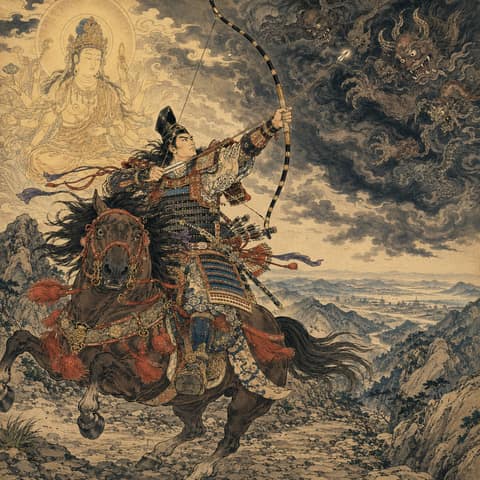
Kiyomizu-dera Temple was deeply involved in the legendization of Tamuramaro. In the *Kiyomizu-dera Engi* (Origins of Kiyomizu-dera), the image of Tamuramaro intertwined with Kannon worship was formed, and he eventually came to be told as a warlord who pacified demons and evil spirits under the protection of Kiyomizu Kannon. In the Noh play *Tamura*, the origins of Kiyomizu-dera and the demon subjugation of Mount Suzuka are combined, and Tamuramaro becomes a hero embodying the miraculous power of Kiyomizu Kannon. What is important here is his character as a "warrior of protection" who quells evil through divine protection, rather than just raw military might[4][5].

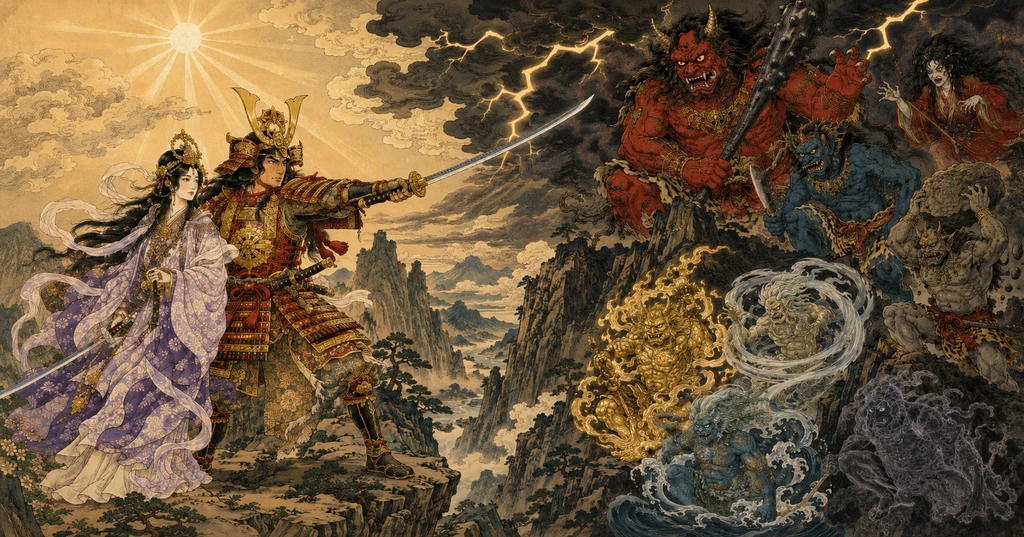
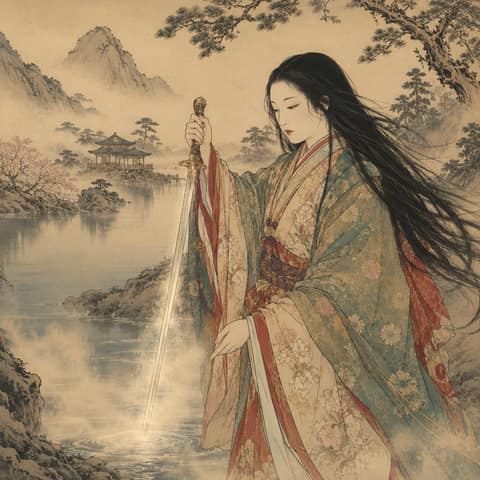
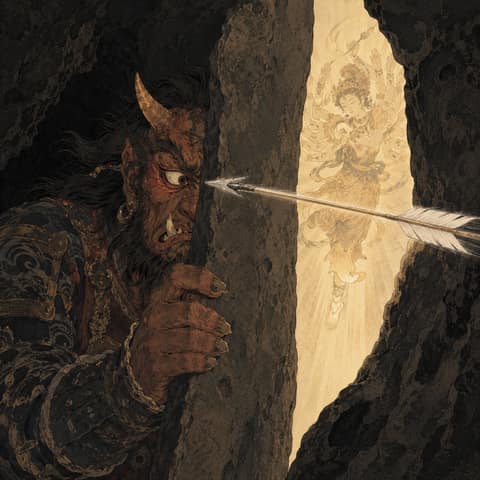
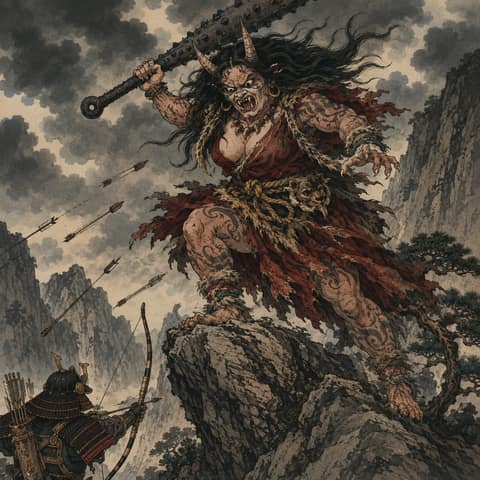
In Mount Suzuka, Tamuramaro joins forces with Suzuka Gozen and enters the story of Otakemaru's subjugation. The historical Sakanoue no Tamuramaro and figures like Tamuramaru Toshimune or Tamura Goro Toshinari from Otogizoshi are not identical. The name and lineage waver depending on the story. However, as a hero who pacifies the demons devastating the Suzuka Pass on the outskirts of the capital, the name Tamuramaro became a powerful vessel. Suzuka Gozen is a goddess, celestial maiden, and Tateeboshi who knows the inside of the mountain, and with her help, Tamuramaru reaches Otakemaru. The appeal of the Tamura-gatari lies not in the victory of a single warlord, but in the fact that Kiyomizu Kannon, Suzuka Gozen, the sacred sword, and mountain pass faith come together to form a single subjugation tale[2][6].

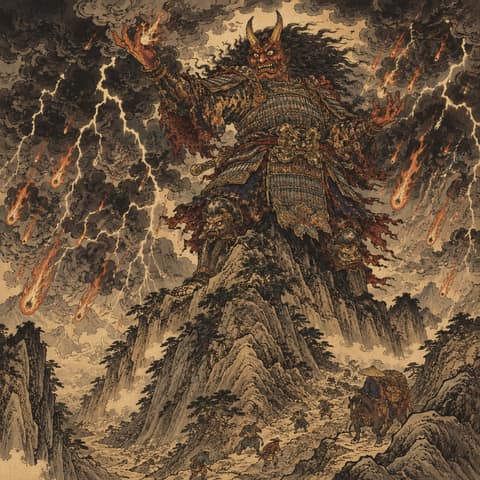
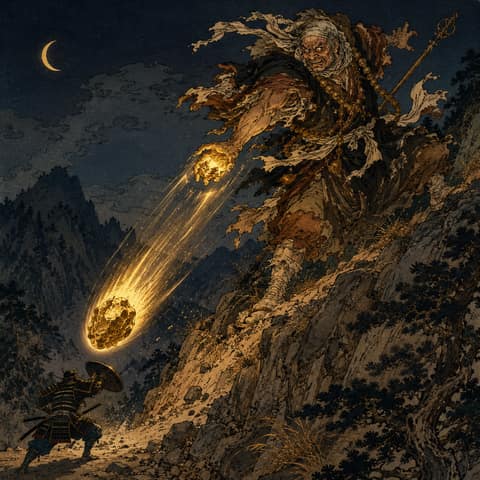
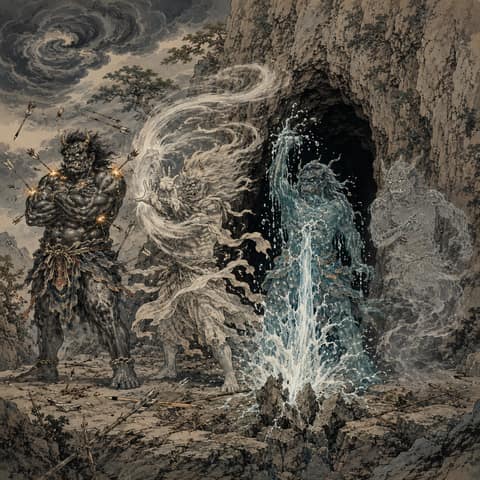
In Tohoku, the Tamuramaro legend has yet another layer. The memories of the historical Seii Taishogun were transformed into the subjugation of demons such as Akuro-o, Otakemaru, Takamaru, and Otakemaru, and linked to the temple and shrine origins of places like Takkoku-no-Iwaya, Isawa, Sanpaku, and Mount Iwate. In the Oku-joruri *Tamura Sandaiki*, the story of Mount Suzuka intersects with the place names of Tohoku, and General Tamura is relocated as a hero who pacifies evil demons in various regions. Here we can see not only the story of conquest seen from the center, but also the process by which regions drew the Tamura legend to their own temples, shrines, mountains, and mounds[7][3].

After his death, Tamuramaro was worshipped as a divine general protecting the east of Heian-kyo, a god of martial arts and warding off evil, and Tamura Daimyojin. Kiyomizu-dera in Kyoto, Tamura Shrine in Suzuka Pass, and the Tamura traditions across Tohoku each possess a different image of Tamuramaro. A historical figure was cloaked in the miraculous power of Kiyomizu Kannon, became a married deity with Suzuka Gozen, expanded into the subjugation of demons in Tohoku, and was ultimately enshrined as a god of war. The magnitude of this transformation is precisely why Sakanoue no Tamuramaro is valuable to feature on a yokai site. He is not a yokai. However, he is the central axis connecting legends of yokai, demons, deities, buddhas, and warriors[1][4].

Related Yokai

Yokai deeply tied to this one in legend.

Detailed Analysis

This version of Sakanoue no Tamuramaro is not treated as the historical military official, but as the deified Tamura Daimyojin of later generations. He is told as a warrior receiving the protection of Kannon at Kiyomizu-dera, a paired husband-and-wife deity with Suzuka Gozen at Suzuka Pass, and as General Tamura subjugating Akuro-o and Otakemaru in Tohoku. A single person's name wandered through the temple origins of Kyoto, the mountain pass faith of Suzuka, and the shrine and temple origins of Tohoku, acquiring different faces in each land.

The power of Tamuramaro is not the sword that slashes demons itself. Kiyomizu Kannon, Vaisravana, Suzuka Gozen, the sacred sword, and the gods of the passes support his story, transforming his martial prowess into "protection acknowledged by the gods and buddhas." Therefore, in the Tamura-gatari, rather than the scenes of defeating enemies, what matters more is which gods and buddhas took his side, in what land he was enshrined, and to which mounds or temples the memories were transferred. Sakanoue no Tamuramaro is a hero who defeats yokai, but at the same time, an axis to pass down yokai as stories to later generations.

Character Profile

This section is our own creative profile for storytelling. It is not historical fact or scholarship.

Personality
A calm and resolute general of protection. Rather than rampaging recklessly, he unites divine protection, local faith, and military strategy to calm disrupted boundaries. Standing between history and legend, he simultaneously bears the brilliance of victory and the weight of conquest.
Compatibility
Highly compatible with those who do not just blindly believe hero tales but can separately interpret historical facts, faiths, and local folklore. He is harsh toward those who seek only strength, but grants protection to those who do not overlook the prayers and pain left in the land.
Abilities
Enshrined as a divine god of war protecting the capitalTold as a hero receiving the divine protection of Kiyomizu Kannon and VaisravanaAccomplishes the subjugation of demons like Otakemaru together with Suzuka GozenConnects the folklore of Kyoto, Suzuka, and Tohoku through the Tamura-gatariGathers faith for martial arts protection, warding off evil, and boundary pacification
Weaknesses
Conflating historical facts with legends. If one does not distinguish between the real Sakanoue no Tamuramaro, the fictional Tamuramaru, and the deified Tamura Daimyojin, the complexity of Tohoku history and Suzuka folklore is lost.
Habitat
Kiyomizu-dera Temple, Eastern protection of Heian-kyo, Mount Suzuka / Suzuka Pass, Tohoku Tamura folklore sites such as Isawa, Taga Castle, and Takkoku-no-Iwaya
For more detailed information and diagnosis results about God of War Pacifying Demons, Tamura Daimyojin, please click here.

Sources & References

7
  1. 坂上田村麻呂(新稿版)高橋崇(吉川弘文館〈人物叢書〉, 1986) [歴史研究]史実の坂上田村麻呂の生涯・官歴・後世の神格化を扱う基本研究。
  2. 鈴鹿峠と坂上田村麻呂山田雄司(三重大史学8(三重大学人文学部考古学・日本史研究室), 2008) [研究論文] Reference鈴鹿峠における坂上田村麻呂伝説の展開と、田村神社・鈴鹿山周辺の地域伝承を論じる研究。
  3. 田村麻呂と阿弖流為古代国家と東北新野直吉(吉川弘文館〈歴史文化セレクション〉, 2007) [歴史研究]坂上田村麻呂と阿弖流為、古代国家の東北政策を扱う研究。
  4. 英雄伝説の日本史関幸彦(講談社学術文庫, 2019) [歴史研究]田村麻呂を含む中世英雄伝説の形成と受容を扱う研究。
  5. 田村の草子・鈴鹿の草子作者未詳(室町時代物語大成第7ほか, 室町後期) [古典文献] Reference田村丸・鈴鹿御前・大嶽丸の関係を語る御伽草子・室町物語系本文。
  6. 鬼と修験のフォークロア内藤正敏(法政大学出版局, 2007) [民俗研究] Reference鬼伝承・修験・田村語りの関係を論じ、大嶽丸や悪路王の変容を検討する研究。
  7. 東北の田村語り阿部幹男(三弥井書店, 2004) [民俗研究] Reference奥浄瑠璃『田村三代記』を中心に、東北へ展開した田村麻呂伝説と鬼退治譚を扱う研究。

Interested in this type of yokai?

Discover the yokai most similar to your personality with our yokai diagnosis

Start Yokai Diagnosis

Meet your guardian yokai at the shrine

Draw an omikuji fortune and discover the yokai watching over you today.