Kosodate Yurei
kosodate-yurei
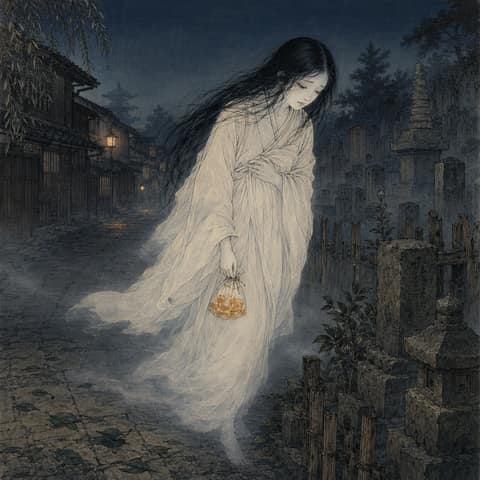
The Mother's Ghost Raising Her Child in a Grave, Kosodate Yurei
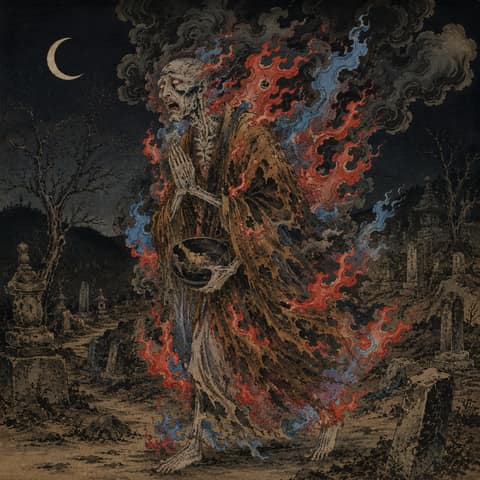
The Kosodate Yurei is a ghost of a woman who gives birth in a grave after death, or is buried with a child in her womb, and appears to raise that child. The core of the supernatural phenomenon involves, firstly, the "birth in the grave" where the child survives in the earth, and secondly, the "phantom money" where the coins paid by the ghost turn into shikimi leaves or tree leaves the next morning. In the story of Rokudo-no-Tsuji in Kyoto, the plot follows the woman to the candy store, sees her disappear into the Toribeno cemetery, and upon digging, finds a baby sucking on candy. Unlike ghost tales of terrifying curses and revenge, the center of this story is strictly maternal love. The woman holds no grudge against the living; she only seeks to keep her child alive. The epilogue, where the rescued child later becomes a monk and accumulates high virtue, takes the form of the deceased mother's affection being sublimated into a Buddhist connection, resonating with the Jizo and funeral beliefs of the Higashiyama area. As with the candy from Minatoya Yurei Kosodate-ame Honpo, the fact that the legend continues to live on in connection with a real object is also a characteristic of this ghost.