Yokai Encyclopedia

Encyclopedia of Japanese Yokai

24 Yokai|14 Category|Page 1 of 1
Localization in Progress - More content available in Japanese version
View Japanese
Sort by: NameAscending
総称・汎称
  • Aka-ashi (Red Foot)

    Aka-ashi (Red Foot)

    Uncommon

    AH-kah AH-shee

    Aka-ashi

    General ClassificationsVarious regions of Japan (Shiwaku Islands in Kagawa, Fukuoka Prefecture, Hachinohe in former Mutsu)

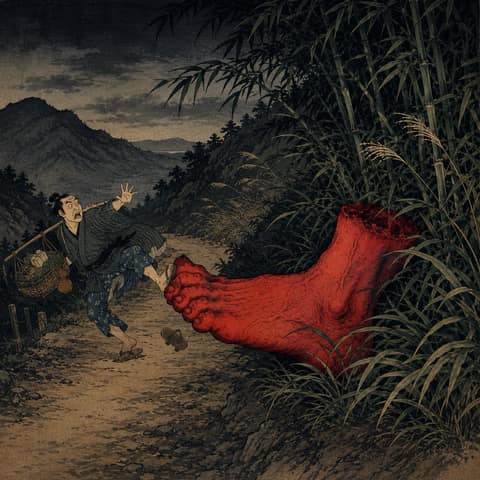
    Based on records from various regions, in places where it shows itself only a pair of red feet jut from the roadside, startling passersby and throwing off their pace. Where it remains unseen, a dry, cottony or cobweb-like touch clings to the shins, shortening strides and increasing fatigue. It is not lethal, yet it is feared for causing falls and leading people off the road. Its relation to the Red-Hand Child is noted in sources but not assumed to be identical. Encounters are told at crossroads, mountain paths, and brush edges in sparsely peopled spots, most often from dusk to midnight. As remedies, some regions pass down practical measures: breathe deeply and steady your steps, sit to retie sandal thongs, brush aside the roadside grass, though details vary locally and remain uncertain.

  • Akki (Malevolent Oni)

    Akki (Malevolent Oni)

    Uncommon

    AHK-kee

    Akki (Traditional Image)

    General ClassificationsAcross Japan

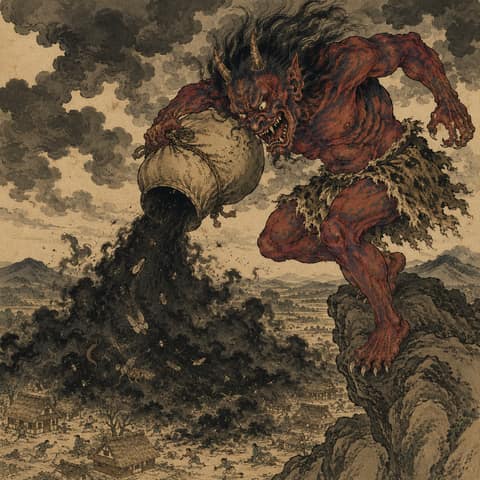
    The traditional image of the akki is a collective notion of “oni” that personify external calamities such as epidemics and natural disasters, spoken of not as individuals but as targets to be subdued. After Buddhism took root, they were systematized as beings set against benevolent deities, often depicted as groveling demon figures trampled by the Four Heavenly Kings or Wisdom Kings to display divine might. Among commoners, practices like Setsubun bean-throwing and displaying foul-smelling or thorny materials expressed a shared intent to guard boundaries and repel misfortune at the threshold of the home. In texts they overlap with terms like akuma and jaki, and over time could also signify inner demons of desire and agitation, yet in daily practice they were treated chiefly as personifications of external threats.

  • Aobōzu (Blue Monk)

    Aobōzu (Blue Monk)

    Rare

    ah-oh-BOH-zoo

    Aobōzu of Traditional Iconography and Provincial Tales

    General ClassificationsNagano

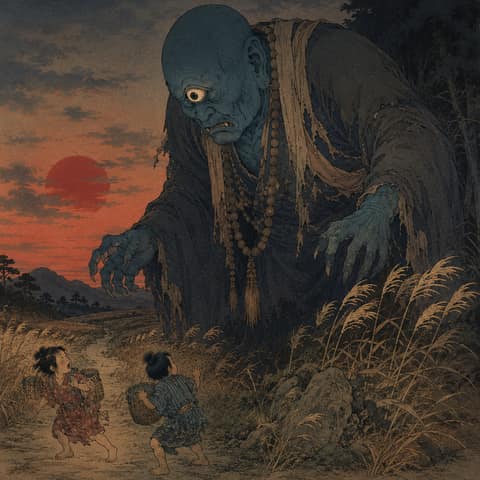
    An Aobōzu type based on images in Edo-period picture scrolls and regional field collections. Depicted as a monk with a bluish hue or as a one-eyed priest, it may be told as an animal in disguise, a manifestation of a mountain deity, or an uncanny being of uncertain nature. It serves to warn children against wandering, anchors tales of hauntings in fields, mountains, and vacant houses, and conveys oral taboos. No fixed proper name or origin is agreed upon, and its conditions of appearance and behavior vary by region. Because Sekien’s print lacks commentary, notes from other sources list it alongside the “One-Eyed Monk” or as an allegory for an unseasoned priest, but neither view is definitive. In premodern oral accounts, concrete images coexist under multiple labels such as “Blue Priest,” “Great Monk,” and “Little Monk.”

  • Ayakashi

    Ayakashi

    Epic

    ah-yah-KAH-shee

    Maritime Ayakashi

    General ClassificationsCoastal regions across Japan, especially Western Japan

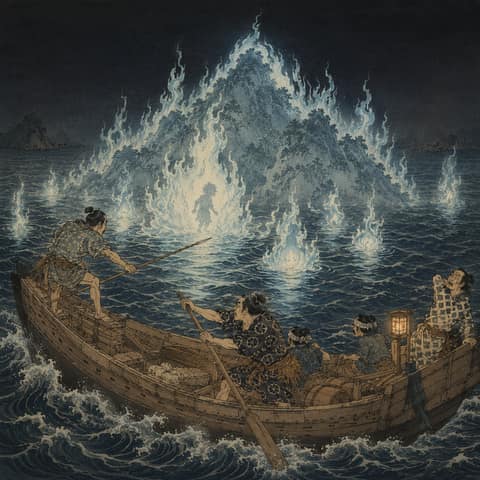
    A consolidated image of ayakashi used as a catchall name for sea-borne anomalies tied to maritime disasters across Japan. Forms vary widely—ghostly fires, phantasms, phantom women, sea serpents—but share behaviors such as leading ships astray, blocking courses, distracting crews, and luring the thirsty. In Tsushima, will-o’-wisps are said to become mountains, and local lore advises boldly pressing ahead to disperse them. In Nagasaki they drift as ghostly lights at sea, in Yamaguchi and Saga they are feared as funayurei, and off Bōsō they are recorded as a well-woman specter. The name is also shared with the real remora in folk belief that it slows a vessel, functioning as a folk explanation for natural phenomena and seafaring anxiety. Toriyama Sekien’s imagery shows a giant sea serpent, tying the idea to ancient notions of sea monsters.

  • Big-Headed Boy

    Big-Headed Boy

    Uncommon

    oh-AH-tah-ma koh-ZOH

    Edo Kibyoshi and Picture-Book Source Edition

    General ClassificationsEdo period

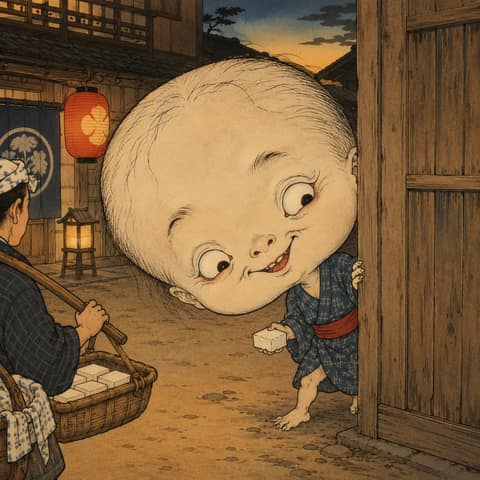
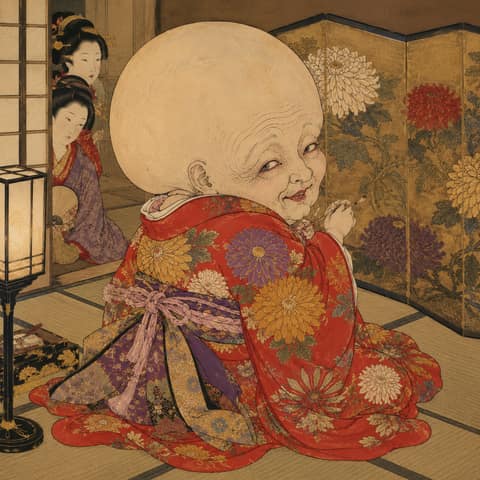
    Organized around depictions found in kibyoshi and picture-books from the Tenmei to Kansei eras. In Yohkai Chakutōchō it is placed as a grandson of the Mikoshi-nyūdō, with lines stating it bullied a tofu seller to obtain tofu, and its image features an oversized head on a childlike body. A similarly big-headed boy appears in Bakemono Yofuke Omi-se under a different name, and scholars note its word-proximity to the sideshow and street performance “Choroken.” In modern times it is often confused with the Tofu-kozo, but folklorists advise against conflation and favor respecting each source’s naming and design differences. Shigeru Mizuki emphasized its beast-like bare feet and huge head and presented it as distinct from the Tofu-kozo.

  • Cow Head

    Cow Head

    Legendary

    ushi-no-kubi

    The Forbidden Ghost Story from which Tellings Offer No Return

    Generic / GeneralAn urban legend forbidding its telling / Reception through the works of Sakyo Komatsu

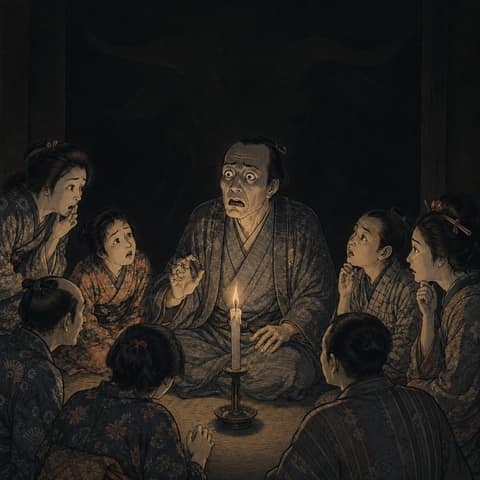
    This version of Cow Head is a form where the untold text itself has been yokai-fied. Ghost stories usually have an introduction, development, turn, and conclusion. It is told where, who, saw what, and what happened. Cow Head extracts that center. All that remains is the title, the taboo, the anomaly in those who heard it, and the silence of the teller. And yet, it is terrifying. Rather, precisely because nothing is shown, readers arbitrarily paint the most unbearable pictures within themselves. The strength of Sakyo Komatsu's "Cow Head" lies in the fact that it consciously treated the mechanism of this blank space as a story. Readers want to read the contents of the terrifying story. However, the work stares back at that very desire. Terror does not lie in the object, but dwells in the posture of the reader seeking the object. Cow Head is also a ghost story that punishes the heart wanting to consume ghost stories. The word "Cow" also works to prevent a concrete monster image from being established. Gozu Tenno, Ushi-oni, Kudan, Ox-Head and Horse-Face—Japanese anomaly culture has many strong images surrounding the heads of cows. But Cow Head does not connect directly to any of them. Rather, it merely lets the existing ox-head images resonate from afar, making the reader feel that "there is something old and heavy." The absence of content is supported by cultural associations. As an urban legend, Cow Head is highly compatible with the hearsay format. Someone heard it, it used to be told, only a certain teacher knew it, the student who heard it met a terrible fate. These prefaces are frames designed to compensate for the lack of text. The telling styles of the school and urban ghost stories collected by Hiroshi Matsuyama also have many techniques for amplifying terror through the distance of hearsay. In Cow Head, the fact that the distance is too far to see the center becomes the terror itself. Viewed as a taboo ghost story, Cow Head carries the command "Do not know." Just as "Purple Mirror" forbids remembering the word, and "Kokkuri-san" forbids summoning with a light heart, Cow Head forbids approaching the content. When forbidden, people want to know. Here lies the trap of the ghost story. Does the text not exist, or did it exist but was lost, or is someone hiding it? That inability to judge prevents the reader from stepping outside the story. On YOKAI.JP, we do not treat Cow Head as a specific ox-headed yokai, but as a modern anomaly protecting the blank space of ghost stories. If one were to depict its figure, it would not be a giant cow's head, but a mouth stopping just as it begins to tell, a blank manuscript, the dead silence inside a bus. Cow Head does not appear. By not appearing, it enters deeper into the reader's imagination than any yokai. Placing this anomaly in the modern information environment reveals yet another face. In an era where searching should bring up anything, there is a story whose true contents do not appear no matter how much you search. Summary articles, analyses, and creative versions can be found, but the definitive text cannot be grasped. In an age of information overload, absence itself holds a rare value. Cow Head is a yokai in the format of a secret, remaining in an era where secrets have vanished. And that secret is not protected as long as someone does not tell it, but continues to be protected by everyone believing it cannot be told.
  • Great Tonsure

    Great Tonsure

    Rare

    OH-kah-BOO-roh

    Sekien Iconography Standard

    General ClassificationsEdo period

    A Daikatsura interpreted strictly through Toriyama Sekien’s original imagery. Rather than a concrete monster, it functions as a satirical figure borrowing the iconography of brothel pages and the immortal youth Kikujidō. The chrysanthemum-patterned long-sleeved robe evokes tales of longevity and coded slang, while the shaved scalp suggests a paradox of childlike form and senescent decay. Mentions of Nachi and Kōya serve as metaphors for the contradiction between ascetic rule and transgression. The oversized childlike body in the picture imparts an uncanny yet comic effect. Historical sources list no specific powers or harms, and its appearances are confined to the pictorial frame. Despite the similar name, it is a different lineage from the later “Ōkamuro.”

  • Keukegen

    Keukegen

    Epic

    KAY-oo-kay-gen

    Kehakigen (Traditional Version)

    General ClassificationsJapanese folklore

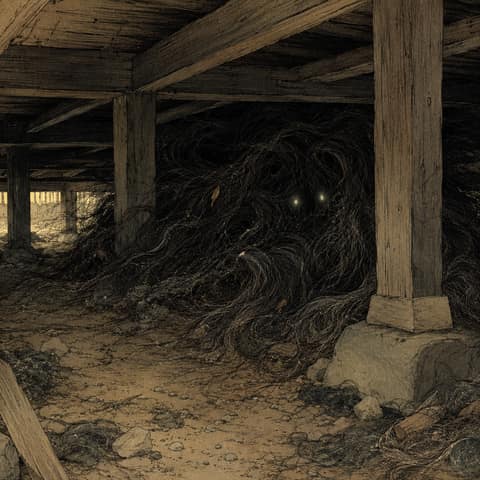
    A hair-covered apparition of uncertain origin first depicted in Sekien’s illustrated compendium. Its name implies “seldom seen,” and this rarity is considered its defining trait. Later links to dampness or illness are editorial interpretations without firm oral tradition. Adhering to the original source, only its appearance and rarity are treated as certain.

  • Kuro-bōzu (Black Monk)

    Kuro-bōzu (Black Monk)

    Uncommon

    KOO-roh BOH-zoo

    Kuro-bōzu (Traditional Folk Variants)

    General ClassificationsUncertain; tales recorded in Edo/Tokyo, Kumano (Kii Province), and Nomi District, Kaga Province

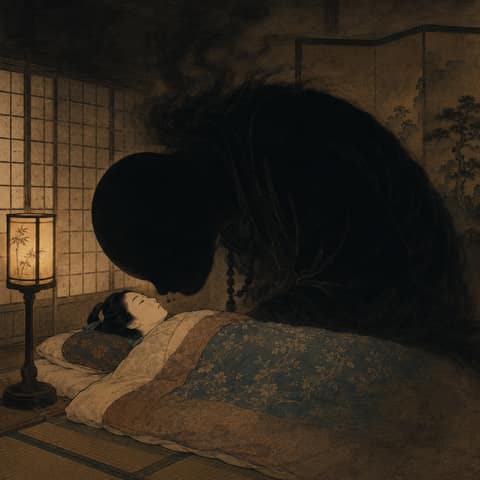
    The name Kuro-bōzu has long served as a catch-all for regionally varied apparitions. In Edo-Tokyo it was recorded as a bedroom prowler that drew close to women’s mouths to sip their sleeping breath, leaving a fishy odor before departing. Sightings are vague and it is sometimes classed with faceless ghosts. In the Kii Kumano region, meeting it in the mountains causes its height to shoot up, and the more one pursues it the larger it grows before fleeing at great speed. Near the Osada River in Kaga, it appears as a black mass outlined only by its silhouette and escapes into water when struck with a staff, a behavior some locals attribute to an otter spirit. Across Japan the term also substitutes for giants like Ōnyūdō or sea spirits like Umibōzu, sharing one or more traits of black coloration, monk-like appearance, sudden elongation, and affinity with watersides. None of these types show sustained habitation, and reports of appearances typically cease in time.

  • Lamp-less Soba Stall

    Lamp-less Soba Stall

    Uncommon

    ah-kah-ree NAH-shee SOH-bah

    Honjo Seven Wonders Type

    General ClassificationsTokyo

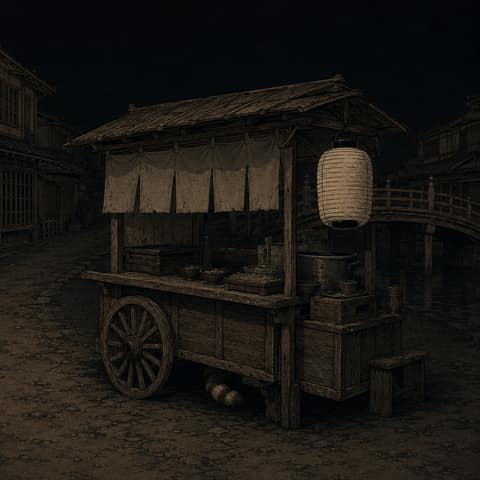
    A stall-based apparition type rumored in the town quarters of Edo’s Honjo. It does not attack directly but carries a taboo-like dread in which misfortune befalls those who touch it after a delay. Two variants are told side by side: one where the lantern stays extinguished, and one where the oil never runs out and the flame keeps burning. Both are marked by lights that stray from the ordinary. The absence of a stall keeper echoes empty-mansion ghost tales; though often explained as a tanuki trick, local lore commonly avoids naming a definite identity. It appears near watersides at night when foot traffic thins, drawing no customers and inspiring fear simply by existing. Records appear in local folktale collections and oral traditions, with details varying by storyteller.

  • Meat-Sucker

    Meat-Sucker

    Uncommon

    NEE-koo-soo-ee

    Draining Beggar of Lantern Fire in the Mountains

    General ClassificationsWakayama

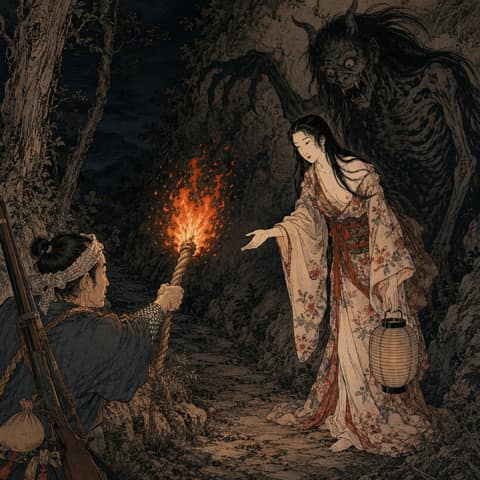
    Based on types recorded around Kumano and Mount Kuanashi, this yokai takes the form of a young woman, asks for a light from a lantern, then steals it and slips into the dark to drain the victim’s flesh or vital essence. In encounter tales, brandishing strong flame from a matchcord or fire striker drives it off, and bullets engraved with Buddhist names expose its true form as a skeletal fiend—mountain taboos and carry-on wisdom are emphasized. Although later images show it slipping indoors to steal vitality while nestled close, this version centers on wilderness meetings and warnings for night travel, noting that lanterns, live embers, and recitation of Buddhist names function like protective charms. It avoids conflation with foreign lore and follows Kii oral traditions and records.

  • Momongaa

    Momongaa

    Rare

    moh-mohn-GAH-ah

    Momongaa (Print-Illustration Variant)

    General ClassificationsJapanese folklore

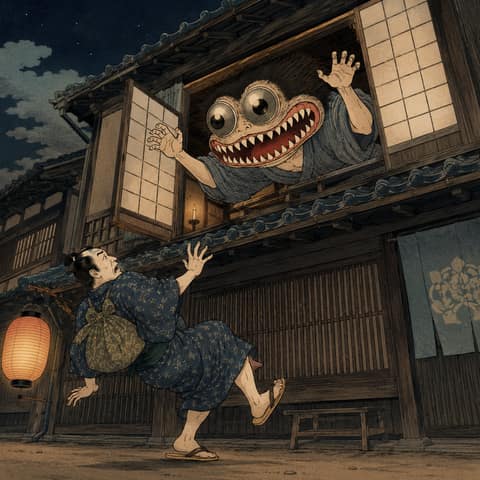
    An image based on what appears in Edo-period prints. It thrusts out huge round eyes and a split mouth from an upstairs doorway or by a paper screen, baring sharp teeth to bluff and frighten, or writhes on all fours as a white lump of flesh with stubby limbs. Its name has the ring of a shouted call, and it is depicted as a specter that turns away nighttime visitors. It claims no personal name or lineage, emphasizing a showy display of monstrous features.

  • Mujina

    Mujina

    Epic

    MOO-jee-nah

    Traditional Tale Compliant – Trickster Mujina

    General ClassificationsFukushimaChiba

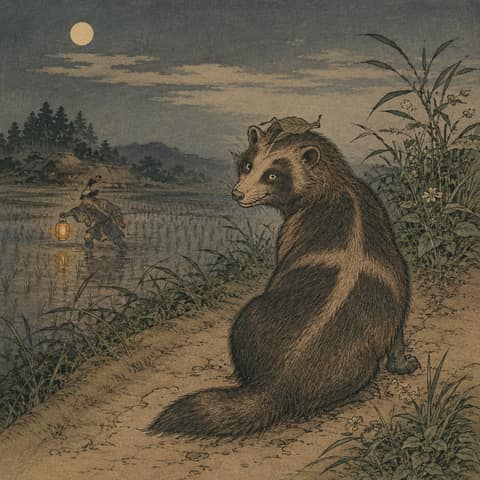
    A trickster figure based on mujina tales from across Japan. It appears as a beast about the size of a dog with slightly short forelegs; elders are said to show a cross-shaped patch of fur on the back. Skilled at disrupting attention and sense of direction, it makes travelers mistake fields for rivers, ridges for water surfaces, and straw stacks for human figures on night roads. Malicious ones disguise food and latrines as other things, causing shame or misfortune. When taking human form it favors inconspicuous looks such as a boy, a traveler, or a village woman, and may lure with voice alone. In many regions its lore blends with tanuki and fox tales, with the name “mujina” used regardless, but it broadly belongs to the class of beasts that bewitch. Rather than being repelled by martial arts or spells, most stories end with it vanishing once its true nature is seen through, after which it avoids the area. The proverb “mujina of the same hole” means birds of a feather, combining the observation that they share burrows with associations from trickster tales. Traditions are rich in eastern Japan, and Edo-period paintings depict it under the title “Mami” or “Badger.”

  • Nadezatō (the “Smoothing” Blind Monk)

    Nadezatō (the “Smoothing” Blind Monk)

    Rare

    NAH-deh-zah-TOH

    Iconography-Based Version

    General ClassificationsYatsushiro, Kumamoto Prefecture (Matsui Collection)

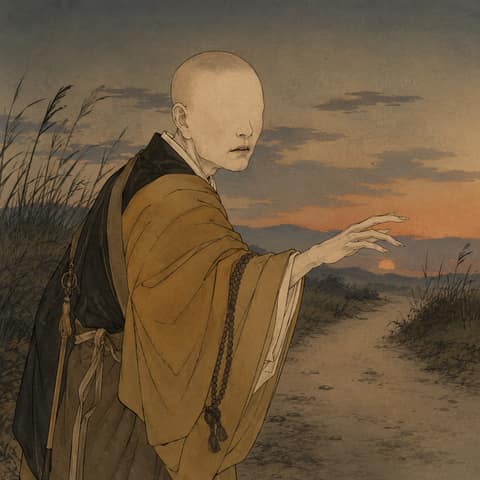
    This version relies solely on images from picture scrolls with minimal notes. Nade-zato has a transmitted name and appearance, but the textual account is missing, so its nature and conduct cannot be fixed. The iconography shows a shaven-headed, blind masseur-like figure with eyes left undrawn; some depictions emphasize long fingers or claw-like hands. Related imagery includes an identical type titled “Mugan” (No-Eyes) in Edo-period Hyakki-zu, suggesting variant naming. Tada Katsumi notes that nade may connect to nademono, which transfers defilement by touch, and to an old byname for “cat,” hinting at a being that feigns meekness to hide its true nature; however, this is scholarly interpretation, not a firm local tradition. Accordingly, abilities, weaknesses, and habits are scarcely recorded and should be treated as unknown.

  • Net-Cutter

    Net-Cutter

    Rare

    AH-mee-kee-ree

    Iconographic Standard, Traditional Interpretation

    General ClassificationsJapanese folklore

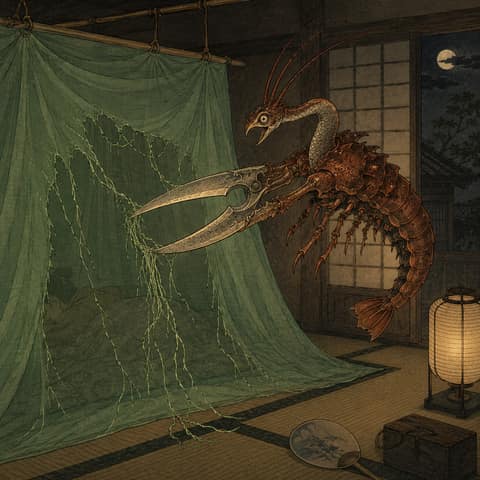
    An interpretation grounded in Sekien’s depiction, tempered by later commentaries that popularized the trait of cutting nets and mosquito screens. Concrete behaviors are sparsely recorded in local sources, and it is often understood as a personification of wear, tear, and fraying. It appears with a carapace-like body and large pincers, shows up at night, and quietly severs its target, with no clear evidence of direct harm to people.

  • Nuppefuhofu

    Nuppefuhofu

    Epic

    NOOP-peh-FOH-hoh-foo

    Traditional Image (E-maki Source Fidelity)

    General ClassificationsJapanese folklore

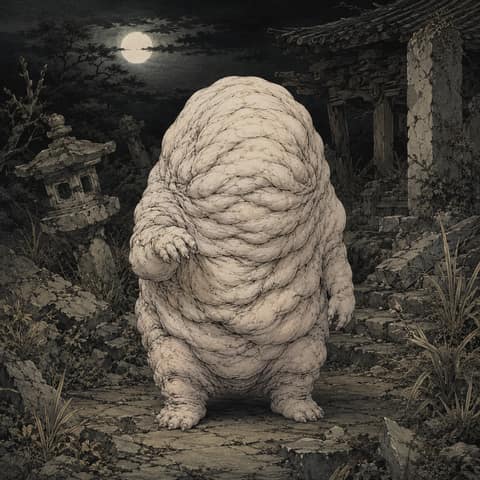
    A typical form based on Edo-period yokai picture scrolls. A one-head-tall, white, wrinkled mass stands upright with stumpy limbs and indistinct facial features. Only its name and image are preserved, so its behavior and intent are unsettled. In texts it is sometimes read as a prototypical faceless ghost (nopperabo), or noted as a transformation of an old toad or of foxes and raccoon dogs. Satirical books mention it “drinking the fat of the dead” or “disguising itself as a doctor,” but a broad regional tradition is hard to confirm. Claims of temple hauntings or a corpse-like stench likely stem from later interpretations, and firsthand accounts are limited. Its look is marked by powdery white skin and continuous folds of wrinkles.

  • Nurikabe

    Nurikabe

    Epic

    NOO-ree-KAH-beh

    Nurikabe

    General ClassificationsFukuokaOita

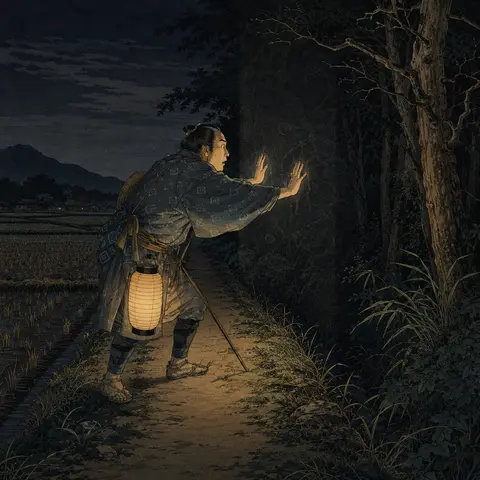
    Invisible to the eye yet felt as a solid wall, this form matches northern Kyushu tales of travelers led astray. It does little harm and specializes in halting progress. The obstruction spreads from ankle to shoulder height, denying head-on passage. Stepping to the side, pausing to rest, or probing the ground and roadside with a stick weakens it. It is understood as a road spirit that tests those who travel.

  • Otoroshi

    Otoroshi

    Epic

    oh-toh-ROH-shee

    Iconography from Picture Scrolls (Early Modern Tradition)

    総称・汎称Unknown

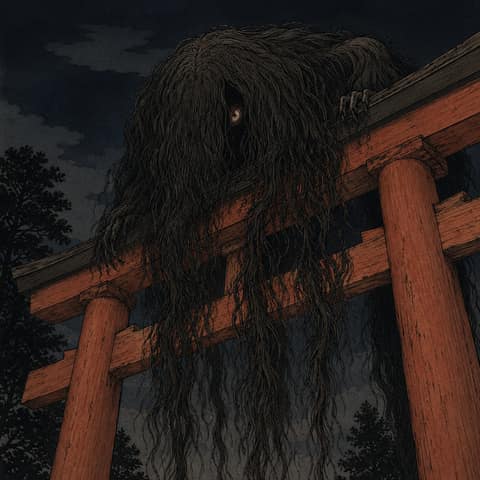
    Organized around forms depicted in Edo-period picture scrolls and picture sugoroku. Long hair covers the entire body, with bangs hanging down to obscure the face. In works like Hyakkai Zukan and Gazu Hyakki Yagyō it appears on the same page as Waira, suggesting a shared sound and sense of fear. Names such as Otoroshi, Odoro-odoro, and Keiippai are listed together, implying variation from differing readings of repeating marks. Specific locales, deeds, or omens cannot be inferred from the images; some show it atop a torii, but no sources conclusively assign it a punitive divine role. In folk thought, it is seen as a form shaped by the notion of odorogami (bristling hair) and the language of fear.

  • Phantom Locomotive

    Phantom Locomotive

    Uncommon

    nee-SEH-kee-shah

    False Locomotive (Traditional Type)

    General ClassificationsTokyoEhime

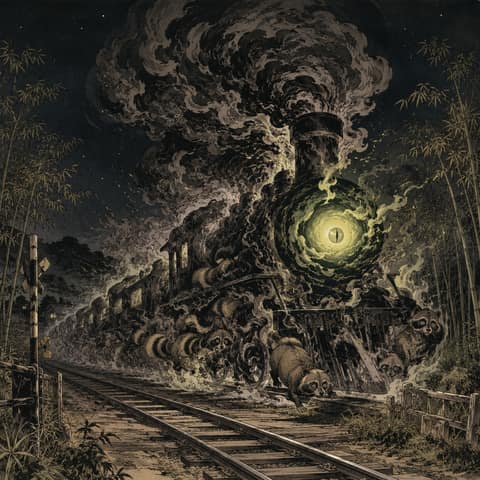
    Accounts of the False Locomotive cluster around the era when the alien sounds and sights of steam engines entered rural life, understood through beliefs in beastly transformations and mimicry. Across regions the plot is similar: at night a whistle and pounding wheels approach from ahead, even lights are seen, but everything vanishes just before impact. Soon after, a dead tanuki or badger is found and given memorial rites. Folklorists place it alongside beings like Azukiarai and Sand-Throwers, extending the idea that uncanny noises are the work of animals. Rumors spread not only by word of mouth but also via newspapers, producing uniform distribution and content. Even when tied to specific locales or temples, the core remains threefold: the match of sound and phantasm, and the tangible animal corpse. It declined as modern transport expanded, yet survives in trackside ghost tales.

  • Red Tongue

    Red Tongue

    Epic

    AH-kah-shah

    Iconographic Tradition: Akazashita (Toriyama Sekien lineage)

    General ClassificationsVarious regions of Japan (sources uncertain)

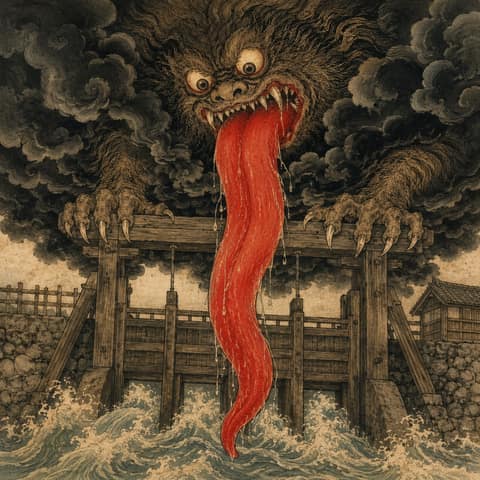
    Akazashita is a rare case where imagery precedes textual records. Its core features are a colossal tongue thrusting from black clouds and a bestial face. Toriyama Sekien placed this figure over a sluice gate, and later scholars offered symbolic readings drawing on notions of filth such as scum and grime and on proverbs that cast the mouth and tongue as gates of calamity, but Sekien left no notes. In many early modern sources the sluice gate is absent, and the name wavers between Akazashita and Akakuchi. Links to the Onmyodo guardian name Akazashita-shin of the Grand Duke direction or to the Rokuyo day Akakuchi have been noted but cannot be firmly genealogized. Since the Showa era, fable-like explanations and local tales have spread, yet statements beyond the base sources should be avoided.

  • Sandworm

    Sandworm

    Uncommon

    SAHND-wohrm

    Giant Worm Advancing Through Sand - Sandworm

    General TermFictional / Imported Giant Worm Advancing Through Sand (Sandworm)

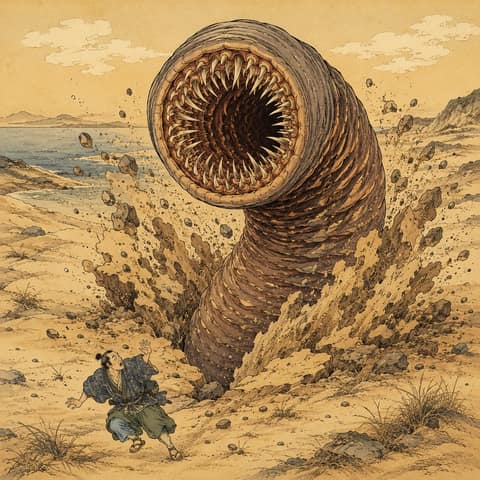
    This is an interpretation of the "apex predator of the sand sea that attacks upon detecting vibrations," burned into the minds of modern people through games and fantasy works. The Sandworm in this version lacks sight; instead, it acutely senses the slightest "footsteps (vibrations)" of humans walking on the surface, embodying the ultimate panic horror as it suddenly opens its massive jaws from underfoot to swallow its prey whole. Speaking of Japan's indigenous subterranean anomalies, there are the "Giant Catfish (Oonamazu)" and "Giant Earthworm" that cause earthquakes, but while they are symbols of "the disaster itself," the Sandworm is strictly set as a "creature reigning at the apex of a harsh ecosystem," reflecting the rationalism of an imported monster. Layers of sharp concentric fangs, an armor-like hard body surface, and overwhelming mass that even swords and magic (or modern weaponry) cannot penetrate. It is the crystallization of the unfathomable terror and romance that the Japanese, living in an island nation surrounded by the sea, harbor toward the "endless desert" they have never once stepped foot in. Precisely because it lacks the background of a local indigenous spirit, it continues to evolve and grow larger in new creative works today as a purely "desperate foe in the struggle for survival."

  • Snake-Bone Hag

    Snake-Bone Hag

    Epic

    jah-KOHTS-bah-bah

    Sekien Iconography Standard

    General ClassificationsJapanese folklore

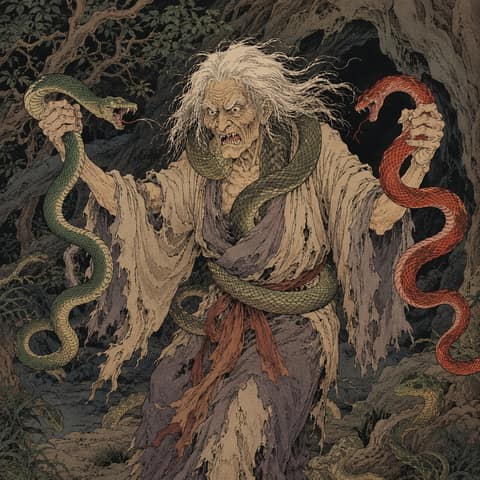
    Jakotsubā is a name based on the image and brief note in Toriyama Sekien’s Konjaku Hyakki Shūi (late 18th century), without any specific oral tradition attached. The picture shows an old woman wreathed in snakes. The note mentions the Shanhai Jing’s account of the Wuxian people in the Overseas West Classic, citing those who hold a blue snake in the right hand and a red snake in the left, yet it stops short of directly identifying this old woman. The term itself appears in early modern chapbooks and theater as a derogatory label for an old woman, which Sekien likely molded into a yokai. Later encyclopedias claim she is the wife of “Snake Goemon,” that the blue snake freezes and the red snake burns, but these are embellishments inspired by Sekien’s wording, not grounded in cited tradition. Folklorically it visually aligns with the lineages of “oni-baba” and “snake bride,” but because no rites, taboos, or place-names unique to Jakotsubā are identified, academic treatments handle it as source-undetermined.

  • The Woman of Ikebukuro

    The Woman of Ikebukuro

    Uncommon

    ee-keh-BOO-kroh no OHN-nah

    Edo Folk Belief: The Woman from Ikebukuro

    General ClassificationsTokyo

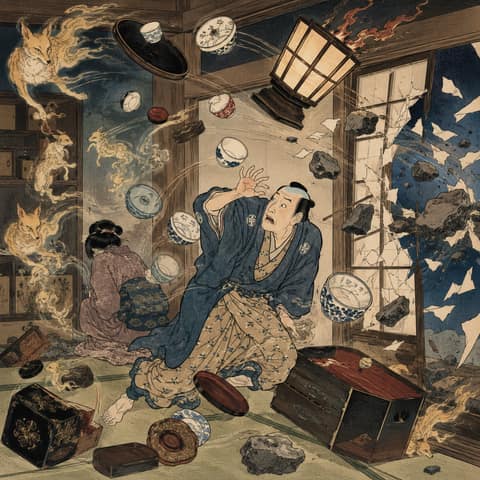
    A late Edo period folk belief recounts that households employing a woman from Ikebukuro would suffer a barrage of noisy disturbances: sounds of thrown stones, damaged shutters, flying utensils and lanterns, and small fires flitting into the tatami room. Many versions begin with an affair between the master and a maid, and the phenomena cease once the maid is dismissed. Explanations vary, including obligations to the local tutelary deity, links to Osaki-possession tales from the Chichibu area, or simple human contrivance such as hoaxes and harassment. Rather than a single yokai individual, the term serves as a catch-all for disturbances tied to hiring women from certain locales, with parallel cases recorded for places like Ikejiri, Numabukuro, and Meguro.

  • Tsuchigumo (Earth Spider)

    Tsuchigumo (Earth Spider)

    Legendary

    TSOO-chee-GOO-moh

    Tsuchigumo of the Raikō Extermination Tale

    General ClassificationsNaraKyoto

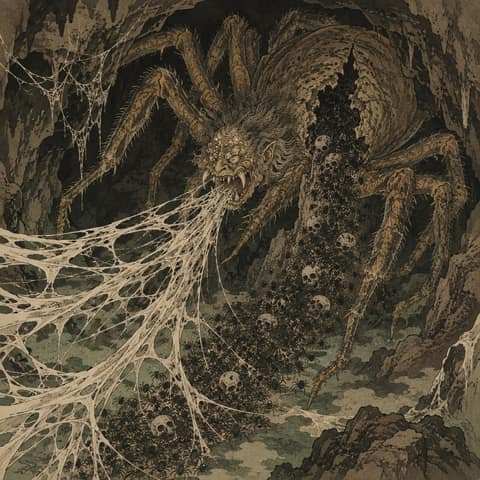
    A yokai image fixed in medieval narratives: as Minamoto no Raikō lies ill, a monk-like apparition appears at his pillow. When struck, it flees leaving white blood, and following the trail leads to a mound or cave where a giant spider lurks. In Noh it calls itself “the ancient spirit of Mount Katsuragi,” while picture scrolls show it beguiling people with manifold shapeshifts and illusions. Its grotesque form—countless heads and swarms of small spiders bursting from its belly—has been read as a symbol of all manner of demons. Early modern joruri and kabuki inherited this line, tying it to the martial exploits of Raikō’s Four Heavenly Kings. Although the ancient term tsuchigumo once referred to local powers, that lineage diverges from the storybook yokai; only the name was carried over.

Showing 1 - 24 of 24 yokai