Cow Head

ushi-no-kubi

Cow Head

Cow Head

Their soul is listening — speak, and they will answer.

Basic Description

Cow Head is a forbidden ghost story that exists precisely because its contents are never told. Ordinary ghost stories make readers tremble by recounting what terrible events occurred. However, with Cow Head, only the framework circulates—"those who hear the story are driven to an irreversible state of absolute terror" and "therefore, no one can tell it to the end"—while the crucial text is left blank. This absence is the true form of the anomaly.

Sakyo Komatsu's short story "Cow Head" is an important work that strongly impressed this blank space as a modern ghost story[1]. Rather than directly presenting the contents of a terrifying ghost story, the work depicts the power of the rumor that a story too terrifying to tell exists. Cow Head, which later spread as an urban legend, incorporated elements like the title, taboos, ghost story sessions at schools or training camps, and tellings on buses or during trips, multiplying as a "story that is scary despite having no content."

Categorically, Cow Head is a yokai name, but simultaneously the name of a ghost story format. It does not refer to a story where an ox-headed spirit or a beastly anomaly appears, but points to the danger of hearing, telling, and knowing. Among the urban legends handled in ASIOS's "Solving 'Urban Legends'," it is close to the type where "whether you know the story or not" becomes the core of the terror, rather than authenticity or eyewitness accounts[2]. Because Cow Head makes the reader's imagination fill in the non-existent text, it leaves a blank space stronger than any concrete description.

For this reason, Cow Head is established by including the desires of the person reading the ghost story. Wanting to know more scary stories, wanting to hear a story no one knows, wanting to touch something forbidden. Without such feelings, a ghost story that is only a title holds no power. Conversely, the more a reader loves ghost stories, the deeper Cow Head pierces them. It is not scary despite saying nothing, but rather, it uses the desire to hear as a mirror to frighten.

Folklore & Legends

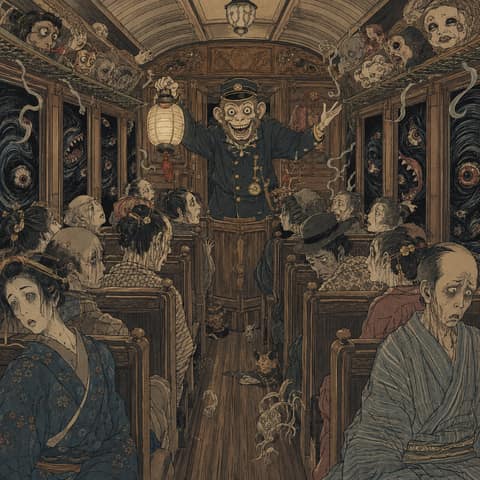
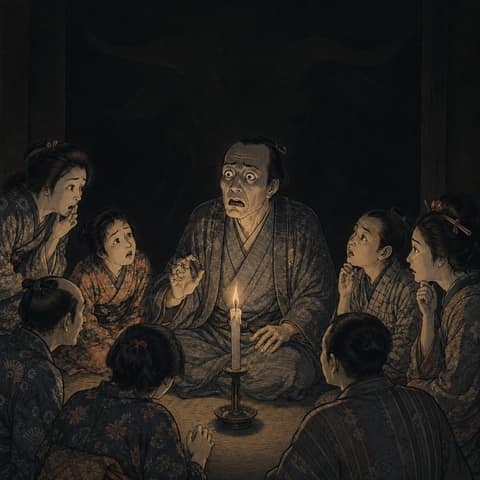
Tellings of Cow Head are often prefaced with phrases like, "Once, a teacher started telling it on a school trip bus," or "A ghost story lover tried to tell it as the final story." The listeners are laughing at first, but as the story progresses, they lose color, and the teller is stopped halfway. Alternatively, it is said that because those who heard it never returned to normal, no one knows the contents today. What is important is that in any variation, the crucial main text of the story is never revealed.

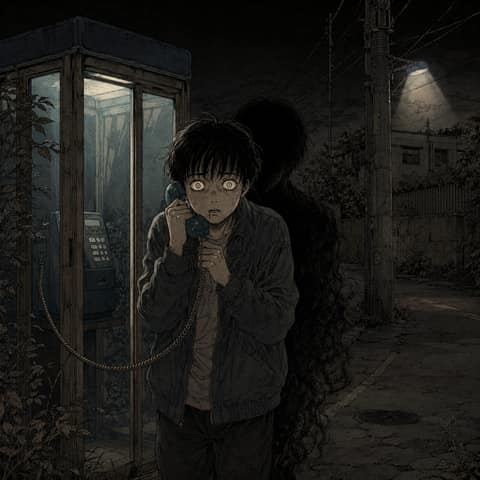
This structure reverses the expectations of a ghost story. The reader waits for terrifying content. But the content does not appear. Precisely because it does not appear, the reader projects the worst imaginations from within themselves. As seen in Hiroshi Matsuyama's collection of urban legends, modern ghost stories gain intensity through the hearsay format of "a friend of a friend heard it" or "it was told at school"[3]. Cow Head purified this hearsay nature to the extreme, paring it down to a form where only the title and the taboo are transmitted.

Its relationship with Sakyo Komatsu's work must be handled carefully. Rather than simplifying it as the entire Cow Head narrative originating from a single original work, it is better to see that the work widely visualized the format of the "untold ghost story" and prompted its subsequent oral transmission and transformation into an urban legend. Through literature, school ghost stories, urban legends, and online analyses referencing each other, Cow Head came to wear the face of an empty classic[1].

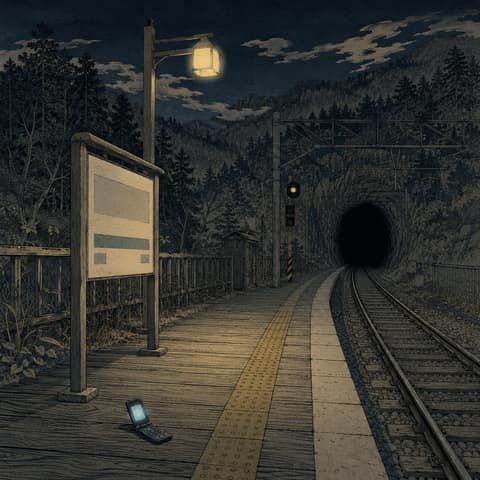
Place names are not essential. It can occur anywhere there is a place to tell stories: buses, classrooms, overnight trips, ghost story sessions, internet articles. Therefore, in studying its geography, it is appropriate to treat it not as the folklore of a specific prefecture, but as a nationally distributed taboo ghost story with creative origins. The "location" of Cow Head is not a point on a map, but the silence born the moment someone prefaces, "This is the one story you must never tell."

At the same time, Cow Head is a self-critique of ghost story culture. In Hyakumonogatari (One Hundred Ghost Stories), the anomaly draws nearer as more stories are told, but in Cow Head, the final story is not told. By stopping the pleasure of telling at its peak, the ghost story session itself becomes an incomplete ritual. The listeners do not receive a conclusion, and the teller keeps the secret. This incomplete state creates the room for it to be retold time and again. That is where the terror lingers.

Related Yokai

Yokai deeply tied to this one in legend.

Related1

Detailed Analysis

This version of Cow Head is a form where the untold text itself has been yokai-fied. Ghost stories usually have an introduction, development, turn, and conclusion. It is told where, who, saw what, and what happened. Cow Head extracts that center. All that remains is the title, the taboo, the anomaly in those who heard it, and the silence of the teller. And yet, it is terrifying. Rather, precisely because nothing is shown, readers arbitrarily paint the most unbearable pictures within themselves.

The strength of Sakyo Komatsu's "Cow Head" lies in the fact that it consciously treated the mechanism of this blank space as a story[1]. Readers want to read the contents of the terrifying story. However, the work stares back at that very desire. Terror does not lie in the object, but dwells in the posture of the reader seeking the object. Cow Head is also a ghost story that punishes the heart wanting to consume ghost stories.

The word "Cow" also works to prevent a concrete monster image from being established. Gozu Tenno, Ushi-oni, Kudan, Ox-Head and Horse-Face—Japanese anomaly culture has many strong images surrounding the heads of cows. But Cow Head does not connect directly to any of them. Rather, it merely lets the existing ox-head images resonate from afar, making the reader feel that "there is something old and heavy." The absence of content is supported by cultural associations.

As an urban legend, Cow Head is highly compatible with the hearsay format. Someone heard it, it used to be told, only a certain teacher knew it, the student who heard it met a terrible fate. These prefaces are frames designed to compensate for the lack of text. The telling styles of the school and urban ghost stories collected by Hiroshi Matsuyama also have many techniques for amplifying terror through the distance of hearsay[3]. In Cow Head, the fact that the distance is too far to see the center becomes the terror itself.

Viewed as a taboo ghost story, Cow Head carries the command "Do not know." Just as "Purple Mirror" forbids remembering the word, and "Kokkuri-san" forbids summoning with a light heart, Cow Head forbids approaching the content. When forbidden, people want to know. Here lies the trap of the ghost story. Does the text not exist, or did it exist but was lost, or is someone hiding it? That inability to judge prevents the reader from stepping outside the story.

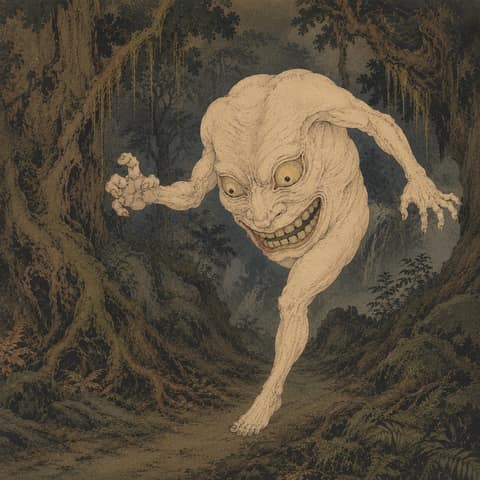
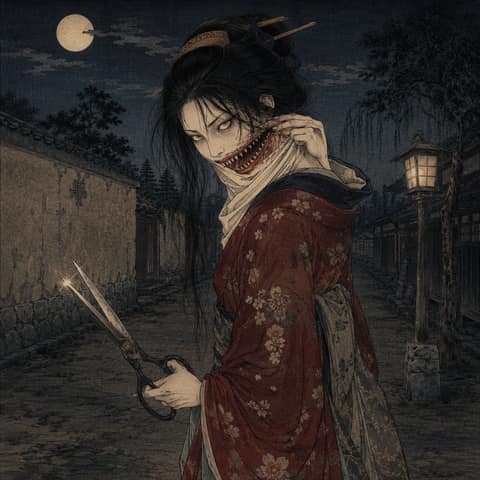
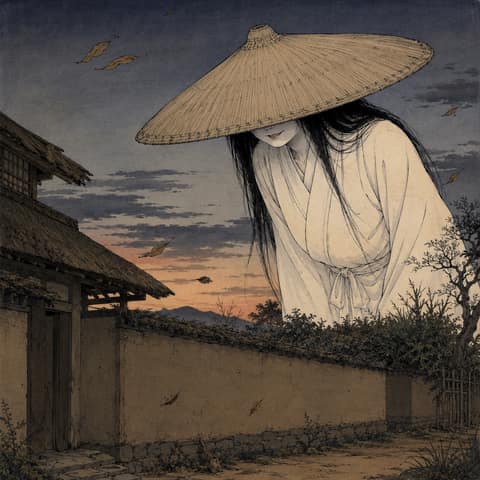
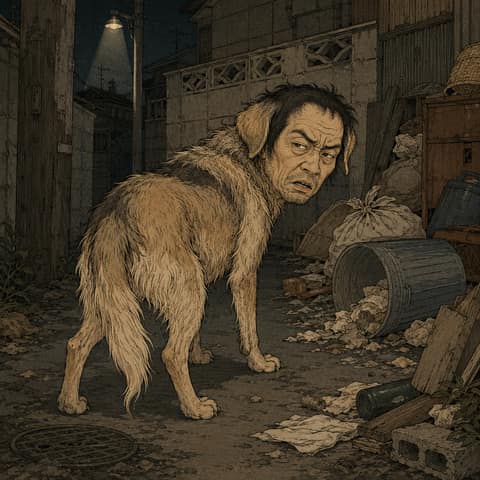
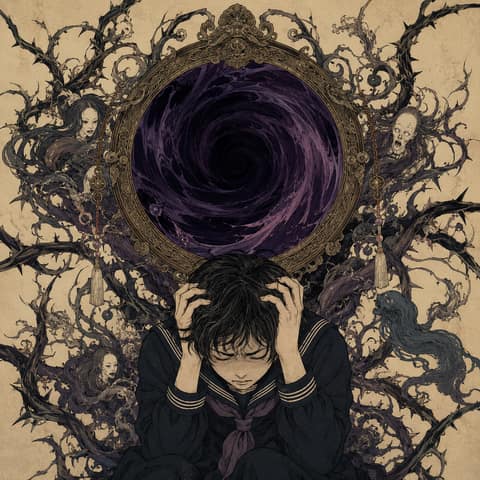
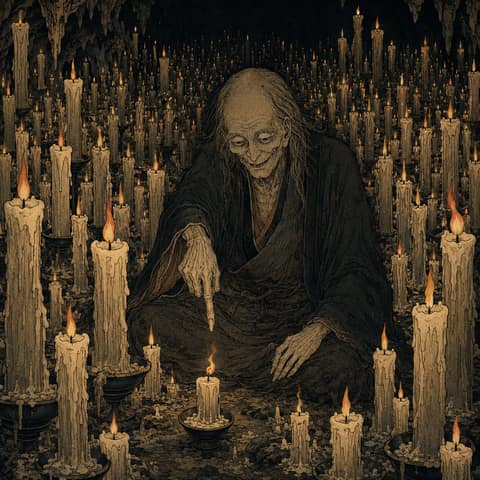
On YOKAI.JP, we do not treat Cow Head as a specific ox-headed yokai, but as a modern anomaly protecting the blank space of ghost stories. If one were to depict its figure, it would not be a giant cow's head, but a mouth stopping just as it begins to tell, a blank manuscript, the dead silence inside a bus. Cow Head does not appear. By not appearing, it enters deeper into the reader's imagination than any yokai.

Placing this anomaly in the modern information environment reveals yet another face. In an era where searching should bring up anything, there is a story whose true contents do not appear no matter how much you search. Summary articles, analyses, and creative versions can be found, but the definitive text cannot be grasped. In an age of information overload, absence itself holds a rare value. Cow Head is a yokai in the format of a secret, remaining in an era where secrets have vanished. And that secret is not protected as long as someone does not tell it, but continues to be protected by everyone believing it cannot be told.

Character Profile

This section is our own creative profile for storytelling. It is not historical fact or scholarship.

Yokai Type
Modern Kaii
Rarity
Legendary
Personality
Tells nothing, cornering the listener with only a title and rumors. Protects the blank space, overheating the imagination the more one demands an explanation.
Compatibility
怪談の構造そのものに惹かれる人、禁じられた話の余白を怖がれる人。想像力が強い人ほど深く絡め取られる。
Abilities
Content concealmentTabooificationImagination amplificationHearsay infectionSilence dominationTelling suppressionTitle curse
Weaknesses
Weak against creations that fix the text or overly explanatory commentaries. When the blank space can no longer be kept blank, Cow Head shrinks into just a monster's name.
Habitat
The final story at a ghost story session, a school trip bus, a classroom at night, a blank manuscript, the silence when someone suddenly stops talking.
🔮Yokai Compatibility Test

For more detailed information and diagnosis results about The Forbidden Ghost Story from which Tellings Offer No Return, please click here.

Sources & References

3
  1. 牛の首小松左京(短編小説・のち各種作品集に収録, 1960年代) [文学・都市伝説]内容を誰も語れない怪談という枠組みを広く知らしめた小松左京の短編。都市伝説化した「牛の首」理解の重要な受容史資料。
  2. 謎解き「都市伝説」ASIOS 編 / 廣田龍平(彩図社, 2022) [学術書] Reference都市伝説の発祥年代を実証的に検証した書。トイレの花子さんについて、現在型(呼出して応答する型)の明確に年代を遡れる初出は 1960 年代後半とする。
  3. 3 本足のリカちゃん人形 ── 真夜中の都市伝説松山ひろし(イースト・プレス, 2003) [都市伝説研究] Reference現代日本の人形系都市伝説を編纂した松山ひろしによる代表作。 メリーさんの電話の起源を、 1968 年タカラ開始のリカちゃん電話 (自動応答サービス) を巡る不気味な噂の変奏として整理し、 商標·企業イメージへの配慮から「メリーさん人形」 へ置換された口承過程を考察。 84-87 頁。

Interested in this type of yokai?

Discover the yokai most similar to your personality with our yokai diagnosis

Start Yokai Diagnosis

Meet your guardian yokai at the shrine

Draw an omikuji fortune and discover the yokai watching over you today.