YOKAI.JP

Kunekune

くねくね

Kunekune

Kunekune

Their soul is listening — speak, and they will answer.

Basic Description

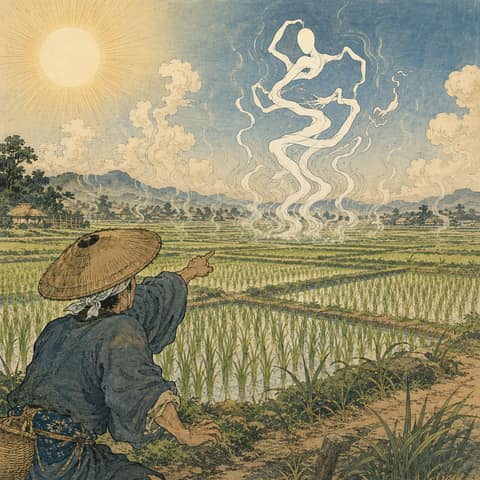
Kunekune is a white, humanoid apparition appearing in rural landscapes, originating from early 2000s internet urban legends. Seen during the daytime in midsummer, it is witnessed in the distant background of rice paddies, riverbanks, or beaches, standing tall and writhing its body from side to side like a thin white paper doll. Its most prominent feature is a cognitive-based horror structure: "It is harmless when viewed from afar, but attempting to understand its true identity using binoculars or the like will cause insanity." It is known that a fictional story posted on a ghost story submission site in 2000 lost its "fiction disclaimer" when it was reposted to the 2ch occult board in 2003, subsequently circulating independently as a true experience. It is one of the representative examples of an internet-born "forum-posted ghost story" and is a symbolic entity of the early 2000s 2ch ghost story boom that predates Hachishakusama (2008).

Folklore & Legends

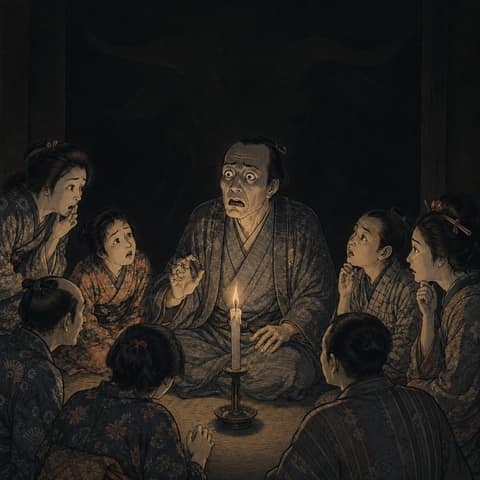
Independent circulation of a fictional ghost story. The origin of Kunekune is traced back to a fictional story posted on a ghost story submission site around 2000. After being modified by another poster, it was shared on the 2channel Occult board in 2003. However, during its spread across the internet, the "this is fiction" disclaimer was dropped, resulting in the ghost story itself circulating independently as a true account. In the same year, 2003, dedicated Kunekune threads were established on boards like the Folklore and Mythology board, accumulating personal experiences (actually creative secondary derivations) and variant iterations. As a typical example of a "forum-posted ghost story" taking on a life of its own beyond the distinction between fiction and reality, it has become a subject of study in folklore and internet culture.

Three elements: Distant view, humanoid, and white. The original Kunekune concept shares three core elements. (1) It only appears in the distance—not in the center of one's field of vision, but far across a rice paddy or riverbank, at a distance roughly equivalent to an adult male standing with arms outstretched. (2) Although humanoid, its joint structure is abnormal, and it writhes fluidly from side to side like a paper doll. (3) Its standard color is white, with extremely rare reports of black individuals. Unlike other urban legends (such as Slit-Mouthed Woman or Hachishakusama), these three elements establish an epistemological horror where "the act of looking itself is a curse," rather than relying on physical contact or direct attacks.

"Binoculars" and the curse of cognition. The central mechanism of Kunekune is the structure that "attempting to understand its true identity causes insanity." In the original story, a young boy stares at Kunekune through binoculars, eventually losing his sanity and spending the rest of his life in a care facility. Rather than the object of cognition itself, this setting suggests that "the act of recognizing is punished," sharing a philosophical background similar to H.P. Lovecraft's cosmic horror of 1936 or the collapse of the subject in Franz Kafka's "The Metamorphosis" of 1937. It is positioned as a rare case where a Japanese internet ghost story independently reproduced the epistemological structure of American weird fiction.

Attempts at post-hoc folkloric interpretation. Parallel to its circulation, derivative stories proposed post-hoc folkloric interpretations, such as "a transformation of a field god or scarecrow," "the personification of agricultural labor accidents (the silhouette of someone collapsed in a paddy from heatstroke or dehydration)," or "the lingering echo of paper dolls placed in fields during spirit-sending rituals." However, these were not inherent settings of the original ghost story, but rather retroactively constructed by later storytellers to connect it with Japanese rural culture. Unlike the Jizo ward setting of Hachishakusama, these developed along a completely different lineage from the creator's intentions.

Modern inheritance and film adaptation. In 2010, it was adapted into an original direct-to-video movie titled "Kunekune" (Directed by Hisataka Yoshikawa, 50 minutes, starring Ryo Shihono and Risako Tokoro). However, it proved difficult to cinematically reproduce the epistemological horror structure of the original work, and the film received low evaluations. Kunekune is a rare ghost story whose original charm (the fear of what cannot be seen) is incompatible with visual media; instead, it has been repeatedly reproduced through text media, illustrations, and SCP Foundation-style content. In the 2020s, it continues to be inherited as one of the standard "Three Major 2ch Forum Ghost Stories" (Hachishakusama, Kunekune, Kisaragi Station) on TikTok and YouTube horror channels.

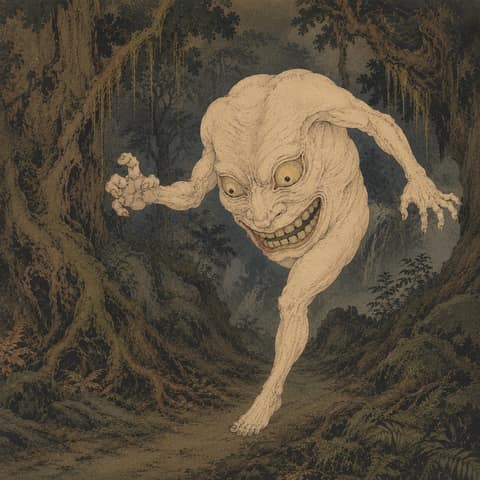
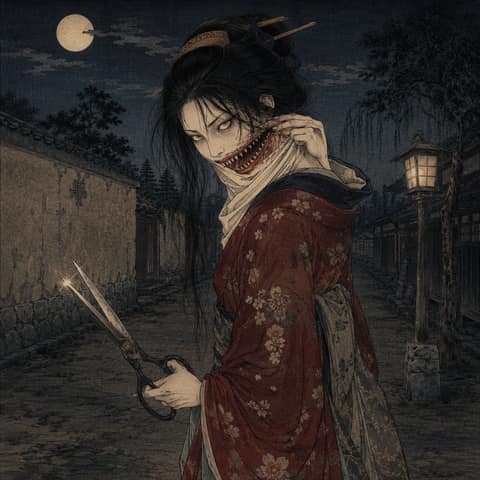
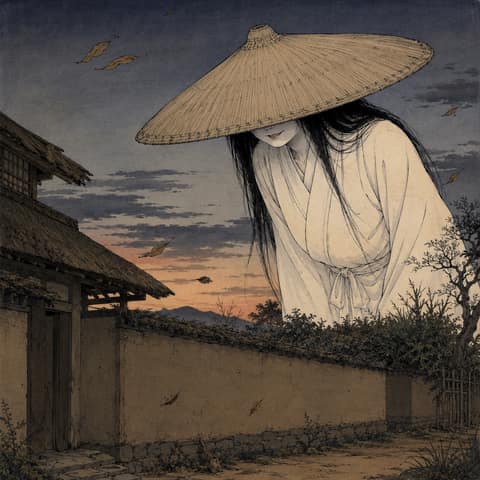
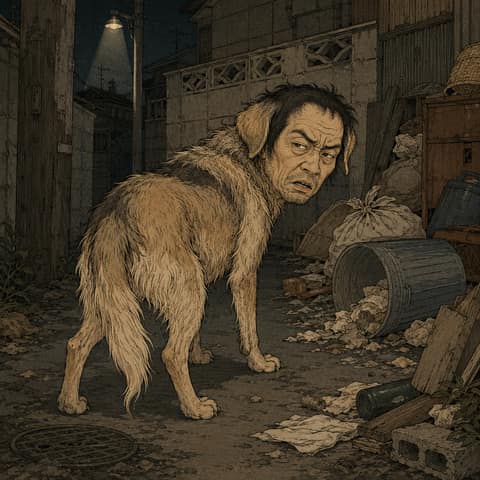
Yokai Cards1

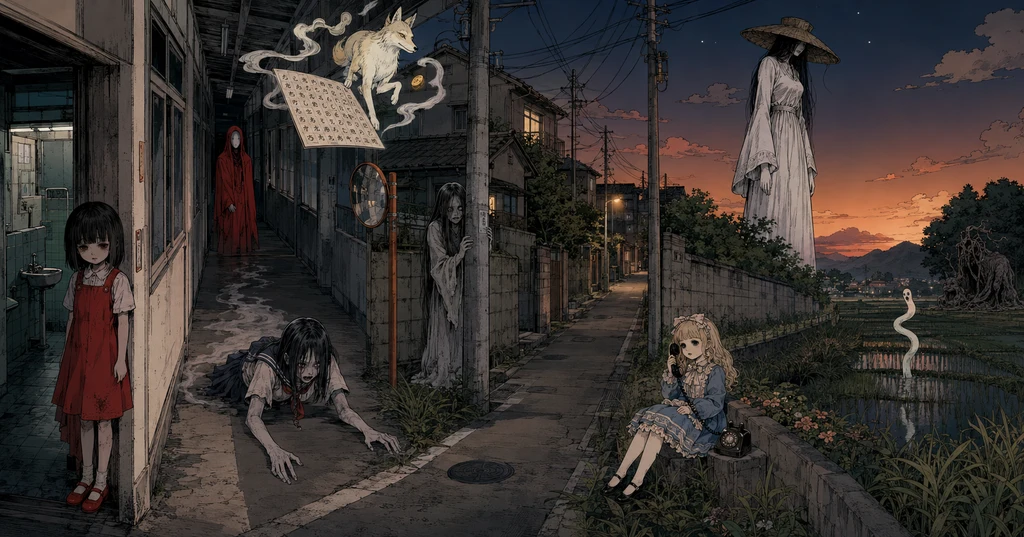
Kunekune across multiple art-style decks

Card gallery

Detailed Analysis

The epistemological horror of "looking itself is a curse". The basic description touched upon the narrative structure and visual elements, but this thorough breakdown dives into Kunekune's greatest uniqueness—the punishment for cognition itself. Many traditional Japanese ghost stories inflict harm through physical contact (having legs cut off, being decapitated, being severed at the waist) or by approaching a specific location (abandoned houses, mountain passes, tunnels). Kunekune is different. Standing in the distance, it causes no harm, but the moment an observer uses binoculars or strains their eyes to "see its true identity"—attempting to complete their cognition—they go insane. This structure, which punishes the observer's subjectivity (understanding, interpretation, verbalization) itself, is unique for bringing a philosophical dimension to the ghost story.

Undercurrents with Lovecraftian cosmic horror. In the 1920s and 30s, H.P. Lovecraft (1890-1937) established the concept of cosmic horror: "attempting to understand an existence beyond human cognitive abilities results in the loss of sanity." Representative works include "The Call of Cthulhu" (1928) and "At the Mountains of Madness" (1936). Kunekune can be read as an entity that reconstructs this structure within the Japanese rural landscape. While it is unclear if the Japanese internet writers directly referenced Lovecraft, the idea of a "punishment for cognition" parallels the central theme of American weird fiction, demonstrating the intellectual depth of post-war Japanese horror culture.

The significance of selecting "rural landscapes" as the space. Kunekune always appears in open rural spaces such as "rice paddies, riverbanks, and beaches." In contrast to many urban legends set in "enclosed spaces" (abandoned houses, schools, bathrooms, train stations), Kunekune appears in the distant, unobstructed view. This is not unrelated to the increase in urban-born populations during the post-war rapid economic growth period, where urban youths' opportunities to experience "rural life" were limited to vacations, returning to hometowns, or summer camps. For an urban youth visiting their grandparents during summer vacation, the distant view of a rice paddy is the epitome of "non-ordinary scenery" disconnected from daily life. Placing Kunekune there gives form to the "vague anxiety towards the countryside" felt by urban residents.

The cultural background of the 2003 2channel Occult board. The 2ch Occult board in 2003 supported the golden age of internet forum-posted ghost stories, alongside Hachishakusama in 2008 and Kisaragi Station in 2004. 2ch's anonymity, the blurred boundary between fiction and reality, and its copy-paste virality served as the incubator for ghost stories like Kunekune, where "fiction disclaimers are dropped, making them real." Folklorist Ryuhei Hirota (ASIOS) terms this "internet folklore," categorizing it as a new ghost story generation mechanism distinct from the oral tradition of urban legends.

The difficulty of visual adaptation. The 2010 film adaptation "Kunekune" (directed by Hisataka Yoshikawa) highlighted the difficulty of visually reproducing the original's "looking itself is a curse" structure. Because film is a visual medium, depicting something that "should not be looked at" creates a self-contradiction. The same issue applies to SCP Foundation entities that "punish visual contact," which are similarly difficult to adapt for the screen. Kunekune is rather a rare ghost story that maintains its vitality in "media that leave room for imagination," such as text, illustrations, and dramatic readings.

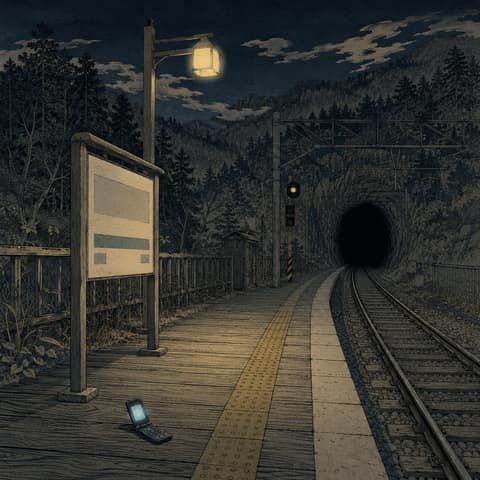
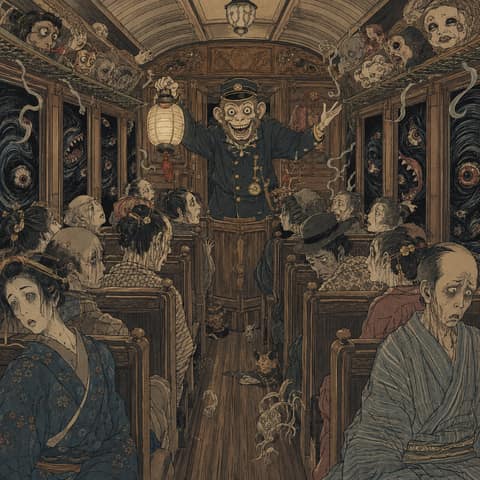
As one of the "Three Major 2ch Forum Ghost Stories". Kunekune (2000/2003), Kisaragi Station (2004), and Hachishakusama (2008) are representative forum-posted ghost stories born on the 2ch Occult board between the early and late 2000s, often grouped together in later years as the "Three Major Forum Ghost Stories." Kunekune presents epistemological horror, Kisaragi Station the eeriness of traveling to the otherworld, and Hachishakusama the structuralization of folkloric wards—each offering unique narrative mechanisms. Repeatedly reproduced on TikTok and YouTube horror channels in the 2020s, they have become a pathway for Gen Z to rediscover "2000s Japanese internet ghost stories."

Character Profile

This section is our own creative profile for storytelling. It is not historical fact or scholarship.

Yokai Type
Modern Kaii
Rarity
Epic
Personality
Stands in the distance, punishing the observer's cognitive act itself
Compatibility
Harmless if viewed from afar, conflicts with those who attempt to comprehend its true form
Abilities
Appears in the rural distance as a white humanoid resembling a paper dollWrithes its body from side to sideDrives observers insane when they attempt to understand its true formHarm is triggered by tools that enhance cognition, such as binoculars and telescopesRarely appears as a black individual
Weaknesses
Ceasing observation while it remains in the distance, not carrying binoculars, urban spaces far from rural areas
Habitat
The distant view of midsummer rice paddies, riverbanks, beaches, and farming villages; rural areas visited by urban residents on vacation
🔮Yokai Compatibility Test

For more detailed information and diagnosis results about The White Silhouette Standing in the Rural Distance: Kunekune, please click here.

Sources & References

2
  1. くねくね (2 ちゃんねるオカルト板スレッド)(匿名投稿)(2 ちゃんねるオカルト板·民俗学神話学板, 2000 年怪谈投稿サイト初出 / 2003 年 2 ちゃんねる転載) [ネット原典]ネット発投稿型怪谈の代表。 2000 年に怪谈投稿サイトへ書き込まれた創作が、 2003 年に 2 ちゃんねるオカルト板へ転載された過程でフィクション注記が抜け落ち、 実体験談として独立流通した。 認識論的恐怖構造を持つ怪谈の典型例。
  2. クネクネ (オリジナルビデオ作品、 2010)吉川久岳 (監督)(オリジナルビデオ作品·上映時間 50 分, 2010 年) [映像作品]クネクネを題材にした 2010 年公開のホラー OV 作品。 主演しほの涼·所里沙子。 山中の村でクネクネに翻弄される家族を描く。 原典の認識論的恐怖構造を映画で再現する難しさが指摘された作品。

Interested in this type of yokai?

Discover the yokai most similar to your personality with our yokai diagnosis

Start Yokai Diagnosis

Meet your guardian yokai at the shrine

Draw an omikuji fortune and discover the yokai watching over you today.