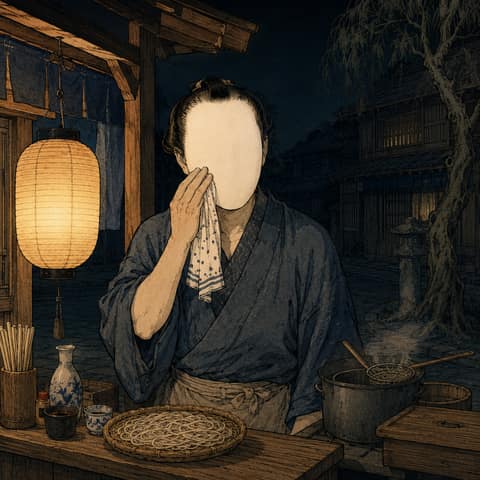
A trickster figure based on mujina tales from across Japan. It appears as a beast about the size of a dog with slightly short forelegs; elders are said to show a cross-shaped patch of fur on the back. Skilled at disrupting attention and sense of direction, it makes travelers mistake fields for rivers, ridges for water surfaces, and straw stacks for human figures on night roads. Malicious ones disguise food and latrines as other things, causing shame or misfortune. When taking human form it favors inconspicuous looks such as a boy, a traveler, or a village woman, and may lure with voice alone. In many regions its lore blends with tanuki and fox tales, with the name “mujina” used regardless, but it broadly belongs to the class of beasts that bewitch. Rather than being repelled by martial arts or spells, most stories end with it vanishing once its true nature is seen through, after which it avoids the area. The proverb “mujina of the same hole” means birds of a feather, combining the observation that they share burrows with associations from trickster tales. Traditions are rich in eastern Japan, and Edo-period paintings depict it under the title “Mami” or “Badger.”
Character Profile
This section is our own creative profile for storytelling. It is not historical fact or scholarship.
Yokai Type - Traditional Yokai
Category - General Classifications
Rarity - Epic
Personality - cautious, relentless, mischievous yet vindictive
Compatibility - active at night, often encountered on field paths near villages, tends to avoid people
Abilities - glamour and confusion of paths rivers and directionsshapeshifting into a boy traveler or village womanvocal luringpranks in groupsrelentless pursuit to lead victims astray
Weaknesses - having its true form exposed through acts like salt prayer beads or bright firelight, being called by name, sunlight at dawn, pacified by offerings of sake and food in some tales
Habitat - field paths and forest edges, grounds around old shrines and temples, along irrigation canals, satoyama zones between fields and mountains