YOKAI.JP

Iwanaga-hime

いわながひめ

Iwanaga-hime

Iwanaga-hime

Their soul is listening — speak, and they will answer.

Basic Description

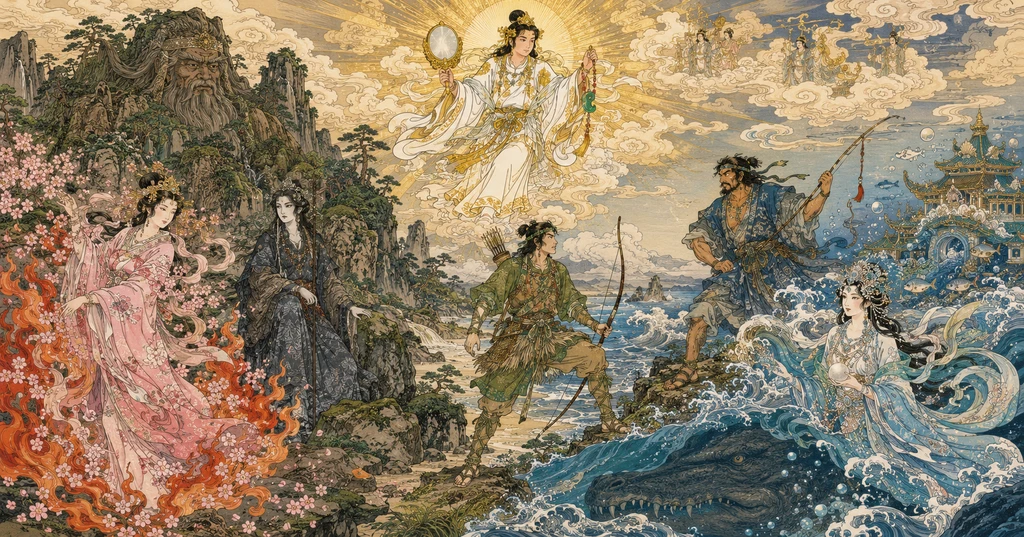
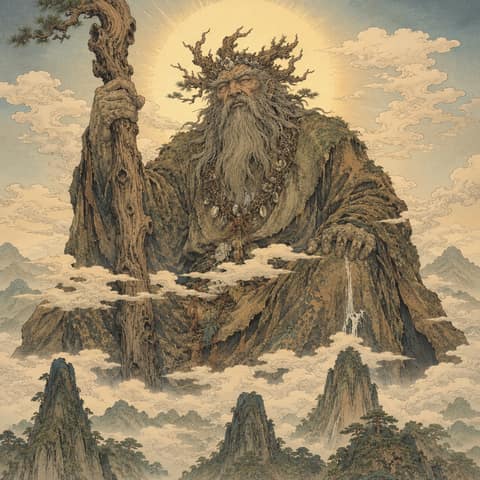
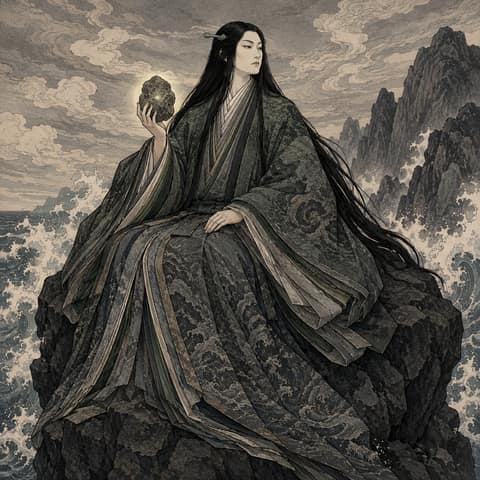
A daughter of Oyamatsumi who appears at the end of Volume 1 of the *Kojiki* and in the 9th stage of the Age of the Gods in the *Nihon Shoki*, and the older sister of Konohana-sakuya-hime. Her divine name "Iwanaga" means "a woman as eternal, steadfast, and enduring as a rock," serving as a symbol of immortality, longevity, and unshakable solidity. She is also written as Ishinaga-hime in the *Kojiki*, and has an alias, Kokemusuhime. Following the descent of Ninigi-no-Mikoto from the heavens, her father Oyamatsumi presented both sisters together, but Ninigi sent Iwanaga-hime back because of her ugly appearance, marrying only Konohana-sakuya-hime. Because of this, Oyamatsumi declared: "If you had kept Iwanaga-hime by your side, the life of the heavenly descendant would have been eternal like a rock; but since you kept only Sakuya-hime, your life will be fleeting like a blossom." This is the origin myth of the shortened lifespans of humans and the imperial line in Japanese mythology (classified by comparative mythologist Tarō Ōbayashi as a Japanese variant of the "banana-type myth" of mortality origins from Sulawesi, Indonesia). She is enshrined at Kumomi Sengen Shrine, Hoshoishi Shrine, Shiromi Shrine (where legend states the mirror she threw in grief over her ugliness became the origin of the village's name), and Kifune Shrine Yui-no-Yashiro (a matchmaking shrine where she paradoxically hid in shame over her rejection, resolving to "grant good matches to the people"), presiding over matchmaking, longevity, and steadfastness.

Folklore & Legends

The true identity of Iwanaga-hime is the daughter of Oyamatsumi, appearing at the end of Volume 1 of the *Kojiki* and in the 9th stage of the Age of the Gods in the *Nihon Shoki*. She is written as "Ishinaga-hime" in the *Kojiki*, and "Iwanaga-hime" in the *Nihon Shoki* and *Sendai Kuji Hongi*, with some theories identifying her with Kokemusuhime or Konohana-chiru-hime. The semantic meaning of her divine name is "a woman as eternal, steadfast, and enduring as a rock," symbolizing immortality, longevity, firmness, and solidity. She forms the core of the ancient Japanese dualistic mythic structure (eternity vs. transience, solidity vs. beauty, immortality vs. brief life, rejected older sister vs. accepted younger sister) alongside her younger sister Konohana-no-sakuya-bime, who represents cherry blossoms and ephemerality.

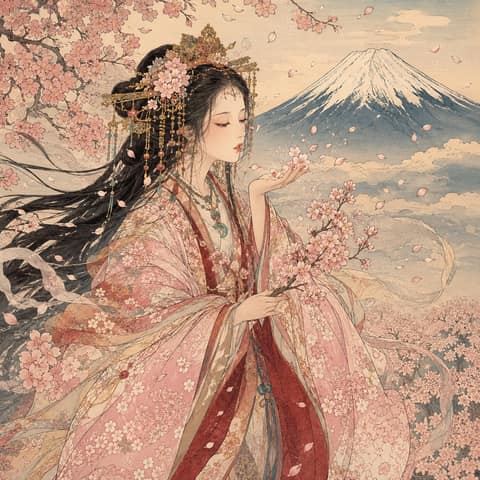
The core of her narrative lies in the myth of the heavenly descent (Tenson Korin) found at the end of Volume 1 of the *Kojiki* and the 9th stage of the *Nihon Shoki*. When Ninigi-no-Mikoto proposed to the beautiful Konohana-sakuya-hime at Cape Kasasa in Hyuga, her father Oyamatsumi rejoiced and offered both the older sister Iwanaga-hime and the younger sister Sakuya-hime along with many tributes. However, Ninigi rejected Iwanaga-hime for being ugly and sent her back to her father, taking only Sakuya-hime as his wife. The lament of Oyamatsumi in response is the climax of the story: In the *Kojiki* version, "If you had let Ishinaga-hime serve you alongside her, the lifespan of the heavenly descendants would have been eternally immovable like a rock; but because you kept only Sakuya-hime, your life will be short like the flowers of trees." In the *Nihon Shoki* version, the shortened lifespan is caused by "the curse of the unaccepted Ishinaga-hime." This serves as the origin myth for the mortality and shortened lifespans of humans and the imperial line, forming the foundation of Japan's indigenous view of life and death before the introduction of Buddhism.

Comparative mythologist Tarō Ōbayashi classified this tale as a Japanese variant of the "banana-type myth" (a tale of choosing between a stone and a banana). It shares the same lineage as the origin myth of death from Sulawesi, Indonesia (where God offered humans a choice between a stone and a ripe banana, and because humans chose the "delicious" banana, they lost stone-like eternity and gained a short life that withers in one generation like a banana), acting as the Japanese equivalent to universal myths of the origin of death such as the Book of Genesis (expulsion from Eden) or Greek mythology (Pandora's box).

Among her principal shrines, Kumomi Sengen Shrine (Kumomi, Matsuzaki, Shizuoka) is known as a rare shrine that enshrines only Iwanaga-hime among the approximately 2,000 Sengen shrines nationwide. Situated at the summit of Mount Eboshi (elevation 162m), there is an ancient tradition (recorded in Norinaga Motoori's *Kojiki-den*) that "when Mount Eboshi is clear, Mount Fuji is cloudy," historically identifying it as the older sister's seat in contrast to the younger sister's Mount Fuji. Hoshoishi Shrine (Mikumo, Itoshima, Fukuoka) is located in the center of Ito-koku and is an ancient shrine that enshrines both sisters as main deities (recorded in the 1695 *Hoshoishi Shrine Engiki*), representing a precious case of sister-pair worship.

Shiromi Shrine (Shiromi, Saito, Miyazaki; former Nishimera Village area) enshrines three deities: Iwanaga-hime, Oyamatsumi, and Prince Kaneyoshi, founded in 1489. Its sacred object is a "silver mirror"—transmitting a legend that the mirror Iwanaga-hime threw away while lamenting her ugly appearance got caught on a large tree on Mount Ryubo, changing the place name from "Shiromi Village" to "Ginkyo (Silver Mirror) Village." The 33-part Shiromi Kagura performed every December 12-16 is a National Important Intangible Folk Cultural Property and the most significant base for the modern inheritance of the Iwanaga-hime faith.

Yui-no-Yashiro (Middle Shrine) of Kifune Shrine in Kyoto has been deeply venerated as a matchmaking shrine since before the Heian period. Stemming from the paradoxical legend that Iwanaga-hime hid in Kibune out of the shame of rejection and enshrined herself declaring, "I will bestow good matches upon the people," she has been worshiped as "a god who does not sever ties, but makes them endure." The story of the Heian poet Izumi Shikibu, who prayed at the Yui-no-Yashiro over discord with her husband Fujiwara no Yasumasa and achieved a reconciliation after dedicating a famous poem about fireflies (recorded in the *Goshui Wakashu*), became the literary basis for the shrine's matchmaking divinity. This paradoxical religious structure—where the rock, a symbol of eternal immobility, is tied to "enduring relationships"—continues to the present day.

In folk beliefs, there is a sympathetic superstition that climbing Mount Omuro in the Izu region (considered an incarnation of Iwanaga-hime) and praising her sister's Mount Fuji will result in injuries or poor fishing—a classic example of folk religion "sympathizing with the older sister rejected for her ugliness." Connections with ancient Japanese rock worship (Iwakura and Iwasaka) have also been pointed out, placing Iwanaga-hime within that sphere. The Gessuiseki Shrine of Mount Tsukuba (Tsukuba, Ibaraki) enshrines an Iwakura where Iwanaga-hime is said to have passed away, showing the syncretism of rock worship and her divinity. In modern times, she has experienced a "feminist re-evaluation," earning the empathy of contemporary female readers as "the sister rejected by beauty standards," frequently reappearing in anime, games, and novels under the motifs of "immortality/solidity," "kindness behind ugliness," and "matchmaking."

Detailed Analysis

The true identity of Iwanaga-hime is the daughter of Oyamatsumi appearing at the end of Volume 1 of the *Kojiki* and in the 9th stage of the Age of the Gods in the *Nihon Shoki*. She is written as "Ishinaga-hime" in the *Kojiki*, and "Iwanaga-hime" in the *Nihon Shoki* and *Sendai Kuji Hongi*, with theories also equating her with Kokemusuhime and Konohana-chiru-hime. According to the semantic interpretation by Kokugakuin University's Classical Culture Project, her divine name means "a woman as eternal, steadfast, and enduring as a rock (Iwa)"—clearly designating her as a goddess symbolizing immortality, longevity, firmness, and solidity. Positioned alongside her younger sister Konohana-no-sakuya-bime as the two daughters of Oyamatsumi, she forms the core of contrast structures: "rock vs. flower," "eternity vs. transience," "solidity vs. beauty," "immortality vs. short life," and "rejected older sister vs. accepted younger sister."

The core of her narrative lies in the myth of the heavenly descent (Tenson Korin) found at the end of Volume 1 of the *Kojiki* and the 9th stage of the *Nihon Shoki*. After Ninigi-no-Mikoto (the heavenly descendant) descended to Takachiho in Hyuga, he met the beautiful Konohana-sakuya-hime at Cape Kasasa and proposed to her father Oyamatsumi. The father was overjoyed and presented both the older sister Iwanaga-hime and younger sister Sakuya-hime with many tributes. However, Ninigi rejected Iwanaga-hime for her ugly appearance, sending her back and marrying only Sakuya-hime. Oyamatsumi's lament became the story's climax—in the *Kojiki*: "If you had let Ishinaga-hime serve you, the lifespan of the heavenly descendants would have been eternally immovable like a rock; but because you kept only Sakuya-hime, your life will be short like the flowers of trees" (lifespan shortened due to the failure of Oyamatsumi's oath); in the *Nihon Shoki*: "Shortened lifespan caused by the curse of the unaccepted Ishinaga-hime" (a more direct causality). Though slightly different, both accounts serve as the origin myth for the shortened lifespans of humans and the imperial line, forming the foundation of Japan's indigenous view of life and death before Buddhism.

Comparative mythologist Tarō Ōbayashi classified this tale of contrast between Iwanaga-hime and Konohana-sakuya-hime as a Japanese variant of the "banana-type myth" (a tale of choosing between a stone and a banana). Belonging to the same lineage as the origin myth of death from Sulawesi, Indonesia (where humans chose a delicious banana over a stone, losing eternity to gain a short life that withers in one generation), it is the Japanese equivalent of universal origin of death myths like the Book of Genesis (expulsion from Eden) or Greek mythology (Pandora's box).

Among her shrines, Kumomi Sengen Shrine (Kumomi 386-2, Matsuzaki, Shizuoka) garners attention in Shinto history and folklore studies as a rare shrine among the approximately 2,000 Sengen shrines nationwide that exclusively enshrines Iwanaga-hime. Sitting atop Mount Eboshi (elevation 162m), an ancient legend (recorded in the late 18th-century *Kojiki-den*) says, "When Mount Eboshi is clear, Mount Fuji is cloudy," historically identifying it as the older sister's seat in contrast to Sakuya-hime's Fuji. It was rebuilt in 1657, with its original founding unknown. Hoshoishi Shrine (Mikumo, Itoshima, Fukuoka) in the center of Ito-koku is an ancient shrine enshrining both sisters (recorded in the 1695 *Hoshoishi Shrine Engiki*). This rare sister-pair worship suggests a connection between imported continental culture and the Iwanaga-hime faith, given Ito-koku's role as ancient Japan's gateway to the continent.

Shiromi Shrine (Shiromi, Saito, Miyazaki; former Nishimera Village area) enshrines three deities: Iwanaga-hime, Oyamatsumi, and Prince Kaneyoshi (of the Nanboku-cho period), founded in 1489 with its original sanctuary built in 1675. Its sacred object is a "silver mirror"—a place-name origin legend claims the mirror Iwanaga-hime threw in despair over her looks caught on a tree on Mount Ryubo, changing "Shiromi Village" to "Silver Mirror (Shiromi) Village." As a symbolic equivalent to rock, the mirror shows the unique syncretism of Iwanaga-hime's rock worship and mirror deity worship. The 33-part Shiromi Kagura dedicated every December 12-16 is a National Important Intangible Folk Cultural Property, representing the pinnacle of Kyushu folk performing arts as the primary stronghold for modern Iwanaga-hime veneration.

Yui-no-Yashiro (Middle Shrine) of Kifune Shrine in Kyoto has been deeply worshiped for matchmaking since before the Heian period. Originating from the paradoxical legend that Iwanaga-hime hid in Kibune out of the shame of rejection, declaring "I will bestow good matches upon the people," she has been worshiped as "a god who does not sever ties, making them endure." The literary foundation for this matchmaking divinity is the story of Heian poet Izumi Shikibu (978?-1041?), who prayed here during marital strife and achieved reconciliation after dedicating a famous firefly poem. This paradoxical faith structure, linking the rock (a symbol of eternal immobility) with "enduring relationships," has continued unbroken from the Heian era to today.

In folk beliefs, Mount Omuro in Izu (elevation 580m) is seen as her incarnation, carrying a sympathetic superstition that "praising sister Fuji while climbing Mount Omuro brings curses of injury or poor fishing"—a classic example of folk empathy for the "rejected ugly sister." Furthermore, Mount Tsukuba's Gessuiseki Shrine (Tsukuba, Ibaraki) enshrines an Iwakura where Iwanaga-hime reportedly died, showcasing the blending of ancient Japan's rock worship with her divinity. At Oyamatsumi Shrine's precinct shrine, Anaba Shrine (Omishima, Imabari, Ehime), she is enshrined with her father Oyamatsumi, preserving the origin of father-daughter worship. Today, since Mount Fuji's World Heritage registration (2013), Kumomi Sengen Shrine and Mount Eboshi have become tourist destinations. Additionally, as the "sister rejected by beauty standards," she resonates with modern female readers, advancing a feminist re-evaluation. Frequently reappearing in modern media with themes of "immortality/solidity," "kindness behind ugliness," and "matchmaking," the modern reinterpretation of this ancient myth continues to evolve.

Character Profile

This section is our own creative profile for storytelling. It is not historical fact or scholarship.

Yokai Type
Kami
Rarity
Divine
Personality
Harbors the pain of rejection, yet possesses a paradoxical gentleness that vows 'never to sever ties.' Radiates a mature dignity that presides over essential eternity and solidity rather than superficial beauty.
Compatibility
Most compatible with those seeking matchmaking, marital reconciliation, longevity, prolonged life, and health. She also answers those who carry appearance complexes or hold values that prioritize the inner self.
Abilities
Blessing of Eternity and Steadfastness (Rock-solid ties)Matchmaking and Marital Reconciliation (Kifune Yui-no-Yashiro)Longevity and Prolonged Life (Symbol of Immortality)Divine power of sympathy and empathy born from rejectionCore of Iwakura (sacred rock) worship
Weaknesses
Because she bears the myth of being "rejected for being ugly," she is cold toward prayers that overly emphasize physical appearance or looks. Enshrining her alongside Konohana-sakuya-hime dilutes the sisterly contrast structure, so independent enshrinement is traditionally recommended (which is why Kumomi Sengen Shrine is considered a rare and special shrine).
Habitat
Kumomi Sengen Shrine (Matsuzaki, Shizuoka) / Hoshoishi Shrine (Itoshima, Fukuoka) / Shiromi Shrine (Saito, Miyazaki) / Kifune Shrine Yui-no-Yashiro (Kyoto) / Mount Omuro (Ito, Shizuoka) / Gessuiseki Shrine on Mount Tsukuba (Tsukuba, Ibaraki) / Matchmaking and Iwakura worship sites nationwide.
🔮Yokai Compatibility Test

For more detailed information and diagnosis results about Iwanaga-hime, Goddess of Eternity, Steadfastness, and Matchmaking, please click here.

Sources & References

5
  1. 石長比売·磐長姫 (記紀)『古事記』 上巻末·『日本書紀』 神代下(記紀·神社史·民俗·比較神話学, 712·720) [宗教·神話·民俗]大山祇神の娘·木花咲耶姫の姉。 『古事記』 表記「石長比売」、 『日本書紀』 表記「磐長姫」。 神名「岩のように永遠·堅固な女性」、 不死·長寿·堅固·磐石の象徴。
  2. 磐長姫·木花咲耶姫対比譚 (人類短命化神話)『古事記』 上巻末(記紀·神社史·民俗·比較神話学, 712) [宗教·神話·民俗]邇々芸命が磐長姫を醜いとして拒絶し木花咲耶姫だけを娶ったため、 大山祇神が「天孫の御命は花のごとく短くなる」 と告げた日本神話の死の起源譚。
  3. バナナ型神話·大林太良比較神話学大林太良『日本神話の比較研究』(記紀·神社史·民俗·比較神話学, 20 世紀) [宗教·神話·民俗]インドネシア·スラウェシ島の死の起源神話 (石とバナナの選択譚) と同系統の日本版死の起源神話として磐長姫·木花咲耶姫対比譚を位置付ける学術分類。
  4. 銀鏡神社·銀鏡神楽 33 番銀鏡神社社伝·宮崎県民俗(記紀·神社史·民俗·比較神話学, 1489 創建) [宗教·神話·民俗]宮崎県西都市銀鏡。 磐長姫·大山祇命·懐良親王を祀る。 ご神体「銀の鏡」 は磐長姫が醜貌を嘆き投げた鏡の伝承。 12 月 12-16 日銀鏡神楽 33 番は国指定重要無形民俗文化財。
  5. 貴船神社結社·縁結び信仰 (和泉式部蛍の歌)貴船神社·『後拾遺和歌集』(記紀·神社史·民俗·比較神話学, 平安期~) [宗教·神話·民俗]磐長姫が拒絶の恥から貴船に隠れ「人々に良縁を授けん」 と鎮座した逆説的伝承。 和泉式部の蛍の歌『後拾遺集』 巻第二十) で夫婦復縁の故事として文学化。

Interested in this type of yokai?

Discover the yokai most similar to your personality with our yokai diagnosis

Start Yokai Diagnosis

Meet your guardian yokai at the shrine

Draw an omikuji fortune and discover the yokai watching over you today.