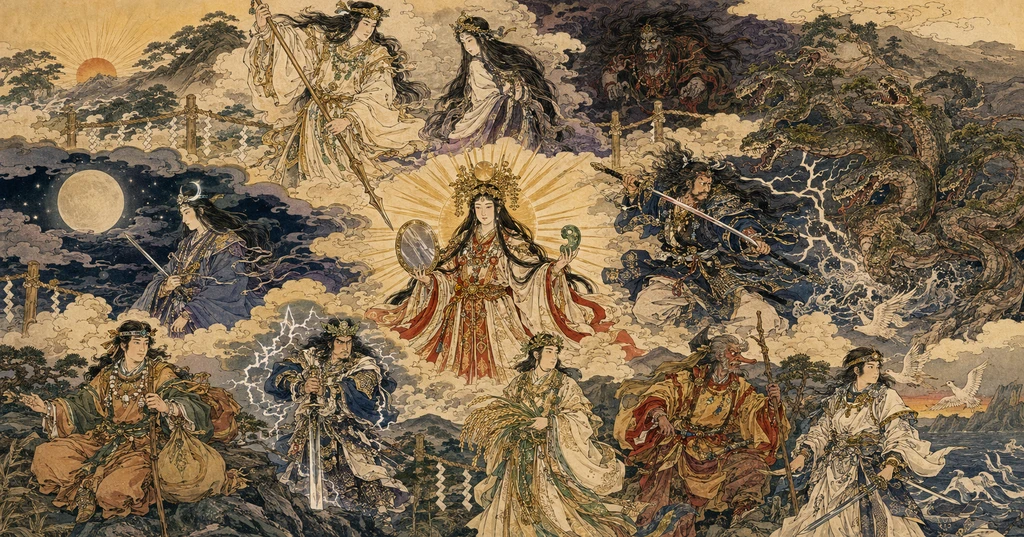
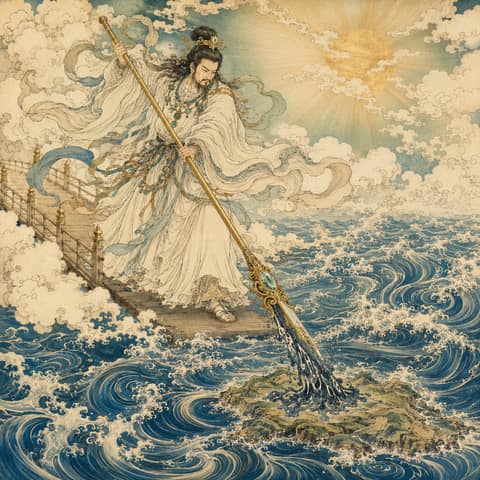
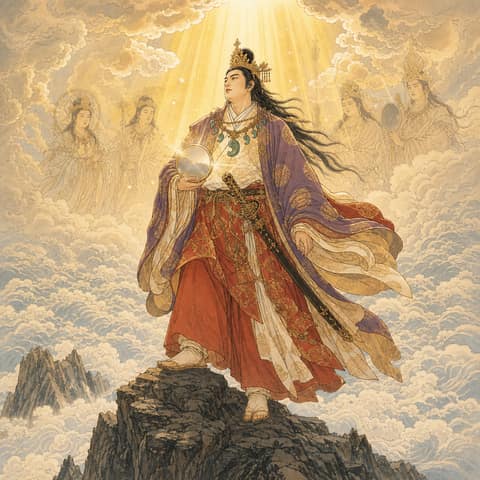
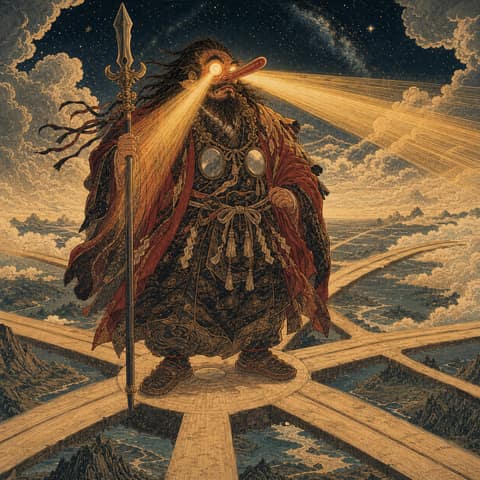
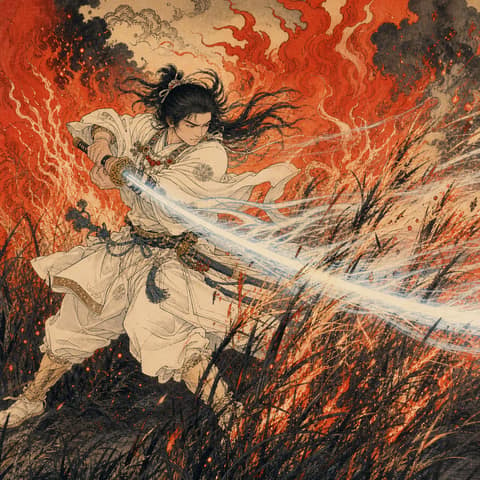
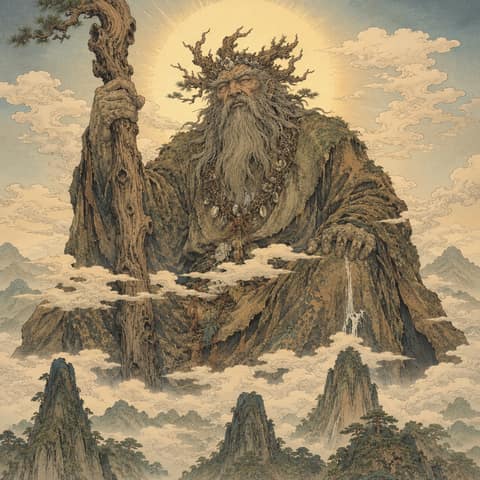
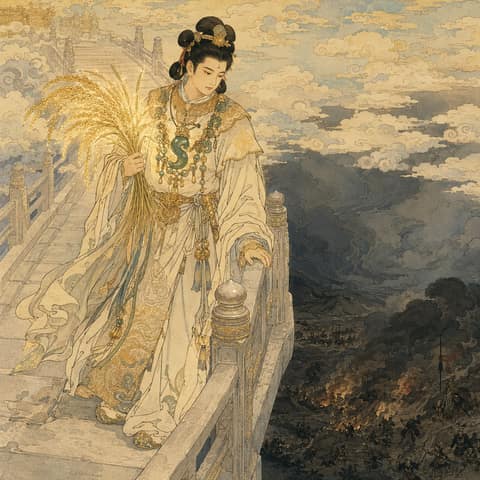
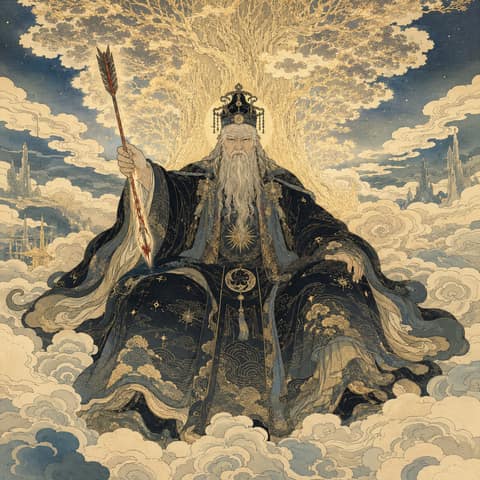
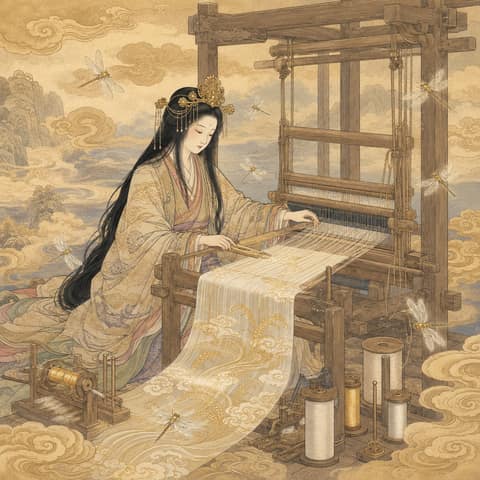
The Structure of the Ancient State Myth: "Tenson Korin". While the basic description touches upon the outline of the Heavenly Descent, this deep dive explores the structure of the "Tenson Korin" as the foundational myth of the ancient Japanese state. The Tenson Korin depicts the divine descent from Takamagahara (the celestial world of purity and order) to Ashihara no Nakatsukuni (the earthly world of chaos and conquest) as the core myth establishing ancient Japan's foundation, ruling authority, and the origins of agricultural civilization[1]. Its intricate structure—involving specific artifacts (the Three Sacred Treasures), attendants (the five pillar gods), commands (the divine decree), and bedding (the Madoko-ofusuma)—forms the fundamental basis for religious ceremonies like the ancient enthronement rituals, the Niiname-no-Matsuri, and the Daijosai. Transcending a simple mythological tale, it is a foundational narrative device that has threaded through Japanese state, religion, politics, and culture from antiquity to the modern era.
Comparative Mythology of Descent Myths in World History. In global mythology, the Tenson Korin myth[1] is positioned as a quintessential example of "heavenly descent/divine incarnation" myths. From the Dangun myth of the Korean Peninsula (Hwanung, son of the Lord of Heaven, descending to Mount Taebaek), to the legends of Genghis Khan in Mongolia, the shaman descent tales of northern Tungusic peoples, the descent of Krishna in India, and the Incarnation in Christianity, "divine descent from heaven to earth" myths are widely distributed across the ancient world. The similarities with descent myths in Northeast Asia (like Korea and Mongolia) present a crucial comparative religious question, suggesting that ancient Japanese mythology may have formed within a broader Northeast Asian cultural sphere. Understanding the Tenson Korin not as an isolated Japanese phenomenon but as a Japanese variation of a shared ancient Northeast Asian mythological imagination is a significant achievement of post-war Japanese mythological studies.
The Historicity of the Descent Site Controversy. The fact that the alleged location of Ninigi's descent site, "Takachiho Peak in Tsukushi Hyuga," is split between two major traditions—Takachiho Town in Miyazaki Prefecture and the Kirishima mountain range in Kagoshima Prefecture[2]—is the result of the ancient state myth evolving through multiple layers of regional folklore, geographic manifestation, and political competition. The ancient central government (the Yamato Court) did not pinpoint a specific location, adopting the abstract name "Takachiho in Hyuga," allowing independent "our land is the descent site" traditions to develop throughout southern Kyushu across the medieval, early modern, and modern periods. Amid modern tourism branding rivalries, local historical research, and shrine heritage systems, the two major traditions coexist, functioning as unique cultural resources. This is a classic example of how ancient mythology is multi-layeredly integrated into regional culture.
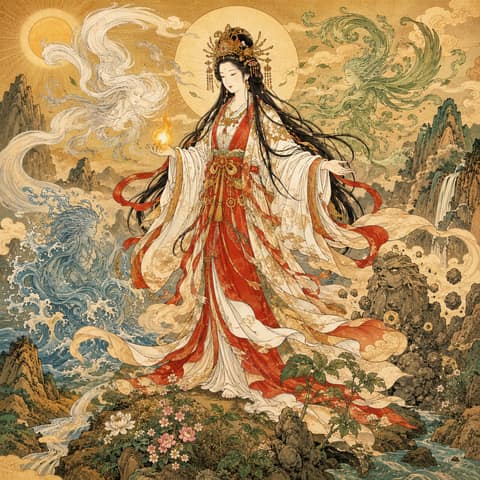
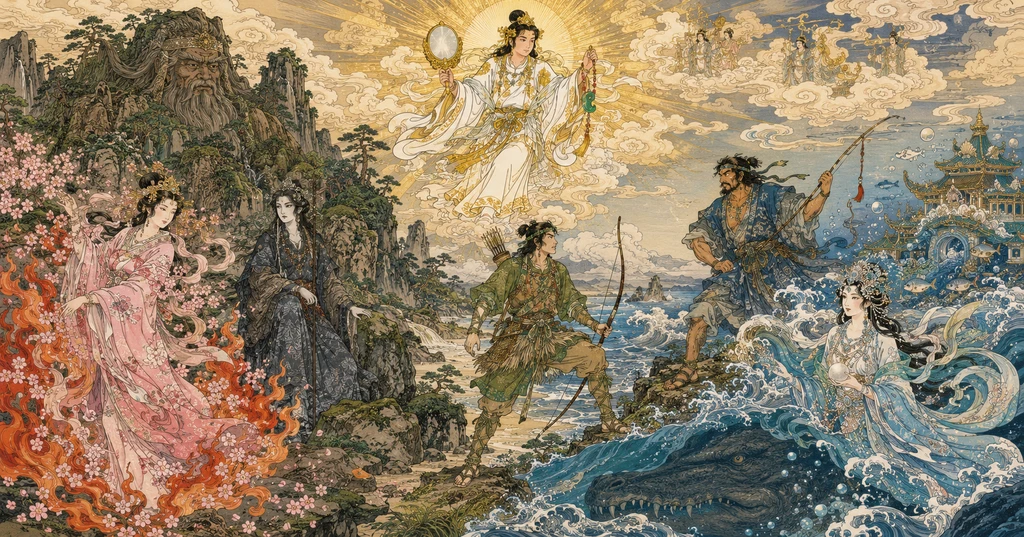
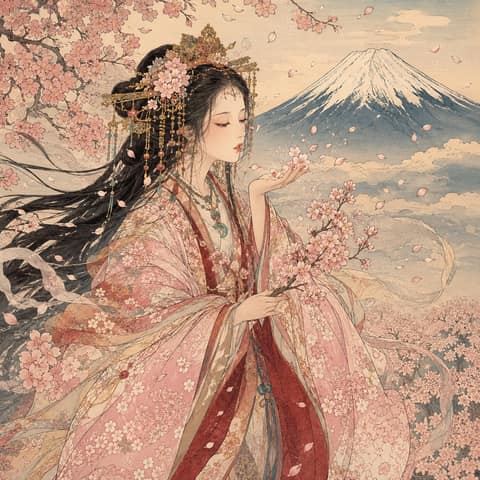
Konohanasakuya-hime and the Origin of Lifespan ── The Choice Between Beauty and Eternity. The fact that Ninigi-no-Mikoto's choice of Konohanasakuya-hime (the cherry blossom goddess) and rejection of Iwanaga-hime (the rock-eternal goddess) became the origin myth explaining why his descendants—the Imperial lineage and humanity—lack eternal life[1] illustrates the "fundamental tension between beauty and eternity" in ancient Japan. The contrast between the beautiful but fleeting cherry blossom and the ugly but eternal rock demonstrates the root structure of the ancient Japanese view of life, aesthetics, and impermanence. As a uniquely Japanese concept of impermanence predating the introduction of Buddhism, this idea has been passed down as a foundational philosophy threading through later Japanese culture, including Ukiyo (the floating world), cherry blossom appreciation, Bushido, and the tea ceremony. It serves as crucial material providing the mythological basis for the Japanese aesthetic of "it is beautiful precisely because it fades."
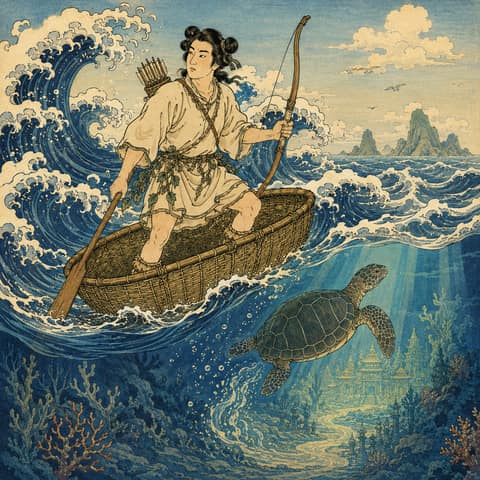
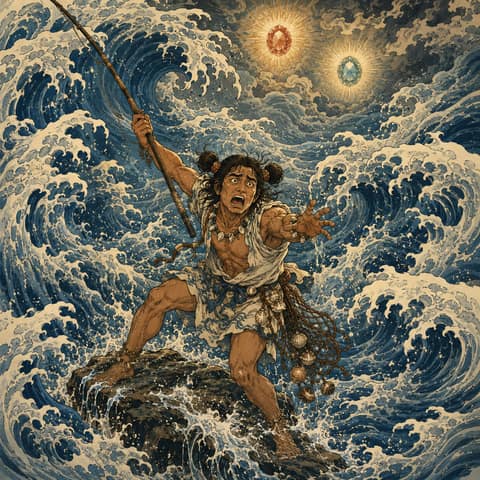
From Umisachi-hiko and Yamasachi-hiko to Jimmu's Eastern Expedition. Among the three children of Ninigi-no-Mikoto and Konohanasakuya-hime, Yamasachi-hiko (Hoori-no-Mikoto) visited the Sea God's palace, married Toyotama-hime, and fathered Ugayafukiaezu-no-Mikoto, who in turn had Emperor Jimmu with Tamayori-hime. This four-generation lineage forms the core of ancient Japanese state legitimacy. Jimmu's Eastern Expedition (the myth of Emperor Jimmu migrating east from Hyuga to Yamato to ascend the throne) is the logical conclusion of the Heavenly Descent, mapping the establishment of the ancient Japanese state as a three-stage geographic migration: "Takamagahara → Hyuga → Yamato." As the starting point of ancient state mythology, Ninigi-no-Mikoto is the foundational deity spanning over two millennia of political history, from Jimmu's expedition and successive enthronements to the ancient Ritsuryo system, pre-war State Shinto, the post-war Imperial family, and the modern Emperor system.
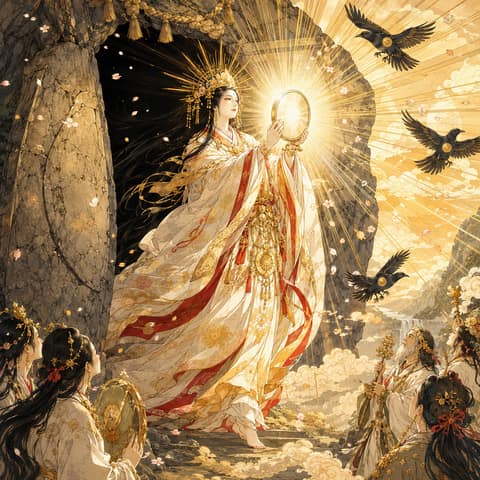
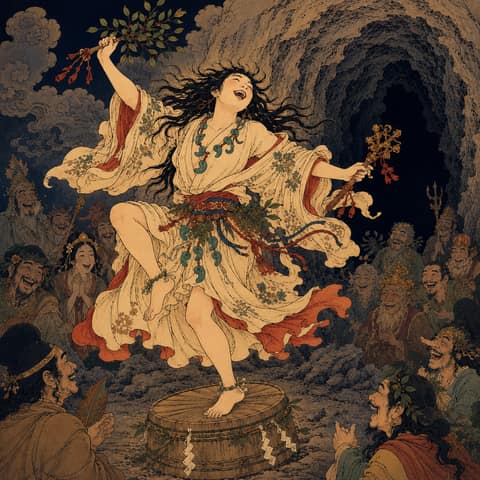
The Tenson Korin Cultural Sphere of Southern Kyushu. Southern Kyushu (Miyazaki, Kagoshima, and southern Kumamoto Prefectures)—the primary area enshrining Ninigi-no-Mikoto—has developed unique religions, cultures, and folklore as the "Land of the Heavenly Descent" since ancient times[2]. With the Yokagura of Takachiho Town (a Nationally Designated Important Intangible Folk Cultural Property reenacting the opening of the heavenly rock cave), the sacred Kagura dances and festivals of Kirishima Jingu, the pilgrimages to the imperial tomb at Nitta Shrine, and the Jimmu accession festival at Miyazaki Jingu, the region maintains a multi-layered system of religion, performing arts, and festivals that carries ancient mythology into the present. The creation of modern regional brands like "Myths of Hometown Miyazaki" and "Kirishima Tourism" are prime examples of how ancient myths have expanded into modern regional revitalization, tourism industries, and educational materials. This is a rare instance of ancient mythology functioning as a living cultural resource spanning over two thousand years.
Ninigi-no-Mikoto in the 21st Century ── Ancient Mythology and Modern Japan. In the 21st century, Ninigi-no-Mikoto and the Tenson Korin myth are preserved as material for ancient historical research, southern Kyushu tourism, Shinto rituals, and pop culture. Moving from political reinforcement under State Shinto before and during the war, to cultural relativization under the post-war separation of religion and state, and finally to multi-layered expansions in 21st-century tourism, subcultures, and education, the ancient myth maintains a strong continuity with modern Japanese spiritual culture. Continuously reimagined in subculture works like the games 'Okami' and 'Megami Tensei,' and the manga 'Demon Slayer,' the ancient Heavenly Descent myth bridges two millennia to continually drive the spiritual culture of 21st-century Japanese people. He is the symbolic deity of Japanese mythology, embodying the continuous thread of cultural inheritance from antiquity to the present.
Character Profile
This section is our own creative profile for storytelling. It is not historical fact or scholarship.
Yokai Type - Kami
Category - Deities & Divine Spirits
Rarity - Legendary
Personality - Possesses both the nobility of Amaterasu Omikami's grandson and the majesty of the heavenly descendant destined to rule Ashihara no Nakatsukuni while leading the five pillar gods. An ancestral founding deity of ancient Japan, whose attachment to beauty—choosing Konohanasakuya-hime over Iwanaga-hime—resulted in the fundamental choice that brought mortality to his descendants.
Compatibility - Deeply connected with those studying the Heavenly Descent, Jimmu's Eastern Expedition, and ancient state-building myths; travelers exploring southern Kyushu (Kirishima, Takachiho, Satsuma); and those who revere the cherry blossom aesthetic and the impermanence of fading life. Resonates with individuals who understand the continuity of the Imperial lineage, Shinto, and agricultural rituals from ancient times to the present.
Abilities - Tenson Korin ── Divine descent from Takamagahara to Ashihara no NakatsukuniHolding and inheriting the Three Sacred TreasuresLeading the Five Pillar Gods (ancestors of ritual, divination, instrumentation, mirrors, and jewels)Status as the Heavenly Grandson guided by SarutahikoMarriage to Konohanasakuya-hime and fathering three children (Umisachi-hiko, Hosuseri, Yamasachi-hiko)Establishing the origin of human mortality by rejecting Iwanaga-himeServing as the foundation of the ancient Imperial lineage as the great-grandfather of Emperor Jimmu
Weaknesses - The mortality of his descendants resulting from rejecting Iwanaga-hime (loss of eternal life); the limitations of becoming earthly by residing permanently in Ashihara no Nakatsukuni despite being a deity of Takamagahara; and the mythological instability caused by textual discrepancies between the Kojiki and Nihon Shoki, as well as the dispute between the two major legendary descent sites.
Habitat - Kirishima Jingu in Kirishima City, Kagoshima; Nitta Shrine in Satsumasendai City, Kagoshima; Takachiho Shrine, Amano-iwato Shrine, and Kushifuru Shrine in Takachiho Town, Miyazaki; Miyazaki Jingu in Miyazaki City; Heavenly Descent-lineage shrines nationwide; Ichinomiya (principal shrines) enshrining Ninigi-no-Mikoto; the mythological tourism sphere of southern Kyushu.