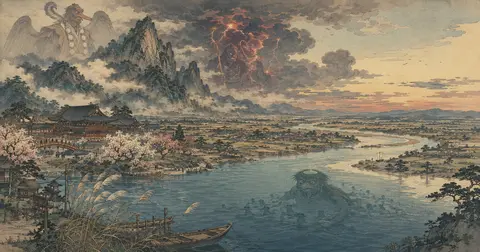
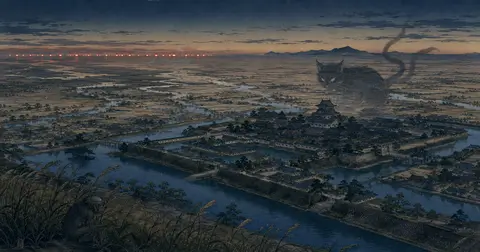
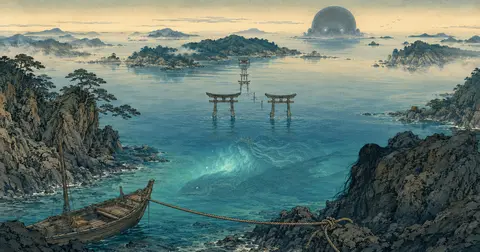
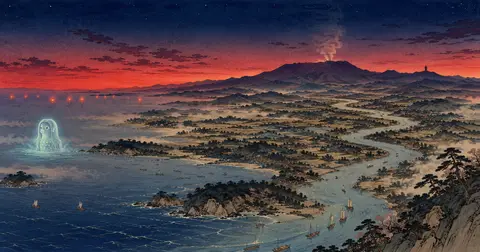
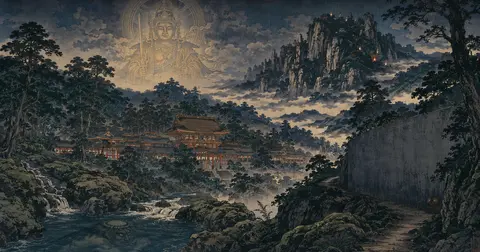
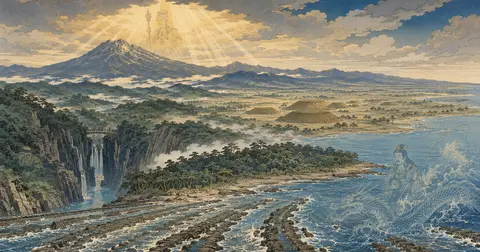
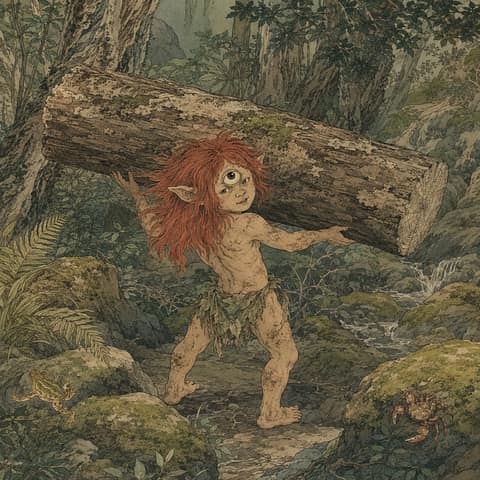
日向国は、いまの宮崎県を中心に広がっていた旧国である。県全体の神話的な見取り図は宮崎県の妖怪事典に譲るとして、このページでは、旧国「日向」という名の内側に残った三つの層を掘り下げたい。第一に、天孫降臨後の王権神話を母胎から支える木花咲耶姫。第二に、日向市東郷町の椎谷川・坪谷川に伝わる河童ひょうすんぼ。第三に、河童が山へ入った姿として語られる山童である。
この三者は、一見すると大きく隔たっている。木花咲耶姫は『古事記』に現れる神格であり、ひょうすんぼは子どもの川遊びを戒める在地の水の怪、山童は九州山地に分布する山の小妖である。しかし日向国という枠で見ると、火・水・山がひとつながりになる。木花咲耶姫は火中出生によって天孫の正統性を証し、ひょうすんぼは水辺の岩を撫で続け、山童は河童と同じ存在が季節によって山へ移るという民俗観を示す。神話の国は、天上から降りた神々だけでできているのではない。川を恐れ、山を畏れ、火に誓いを託した人びとの記憶が、その下層で静かに息づいている。
火のなかで生まれる日向神話
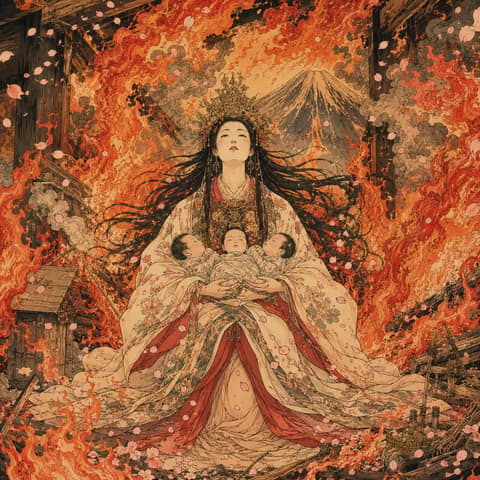
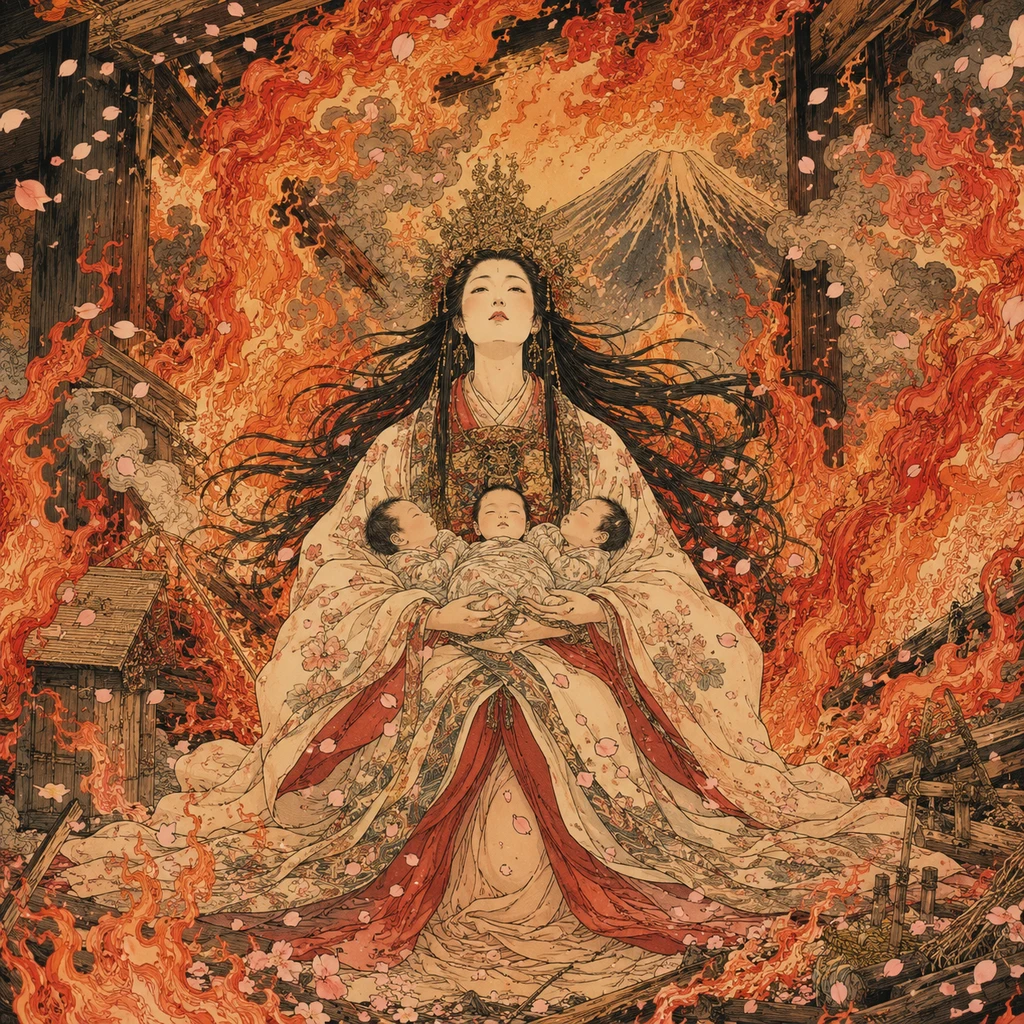
日向国の記事を木花咲耶姫から始めるのは、彼女が単なる「美しい女神」ではなく、天孫の血統を地上の身体へ接続する神だからである。國學院大学「古典文化学」事業の神名解説は、木花之佐久夜毘売を大山津見神の娘、邇邇芸命の妻とし、別名に神阿多都比売を掲げる[1]。この女神をめぐる神話は、大きく二つに分かれる。ひとつは姉・石長比売を返したため、天孫の命が岩のように永遠ではなく、木の花のように短くなるという短命起源譚。もうひとつは、一夜で懐妊したことを疑われた木花咲耶姫が、戸口のない産屋に入り、自ら火を放って三柱の御子を産む火中出生譚である[1]。
Konohanasakuyahime
Konohanasakuyahime is a goddess who appears in the *Kojiki* and *Nihon Shoki* as the daughter of Oyamatsumi (the great mountain god) and the consort of Ninigi-no-Mikoto, the heavenly grandchild who descended to earth. Her name means "princess as beautiful as blooming tree flowers," and she is revered as the symbol of cherry blossoms. In the *Kojiki*, she is also known as Kamu-atatsu-hime. When Ninigi-no-Mikoto proposed to her, her father offered both her and her older sister, Iwanagahime (Princess of Eternal Rocks). However, Ninigi-no-Mikoto chose only the beautiful Konohanasakuyahime and sent back the ugly older sister. Because of this, it is said that the descendants of the heavenly grandchild (meaning humans) would flourish beautifully like cherry blossoms but would inevitably fall, thus gaining a finite lifespan. When Konohanasakuyahime became pregnant after just one night, Ninigi-no-Mikoto suspected her of infidelity. To prove her purity, she set fire to her delivery hut and safely gave birth to three deities—Hoderi (Umisachihiko), Hosuseri, and Hoori (Yamasachihiko)—amidst the roaring flames, an event known as her birth-in-fire. Originating from this myth of surviving the flames to give birth, she is worshipped as the goddess of safe childbirth, fire prevention, and bountiful harvests. She is also the primary deity of approximately 1,300 Asama Shrines across Japan, which venerate Mount Fuji as their sacred object of worship. Toman Shrine in Hyuga Province (present-day Miyazaki Prefecture) is an ancient shrine dedicated to her, and the local place name "Tsuma" (Wife) is said to originate from the site where she met and married Ninigi-no-Mikoto.
Read moreここで重要なのは、火が破壊ではなく証明として働く点である。疑いを受けた女神は、言葉で弁明する代わりに、炎のなかで出産する。火照命・火須勢理命・火遠理命が無事に生まれることで、その子らが天神の御子であることが示される。火は母を焼く災厄であると同時に、血筋を浄め、正統性を可視化する試練でもあった。日向国の神話では、王権の始まりが抽象的な理念としてではなく、産屋・火・出産というきわめて身体的な場面から語られる。
西都市妻に鎮座する都萬神社は、木花咲耶姫を主祭神とする日向の古社である[2]。社伝では、邇邇芸命がこの地で木花咲耶姫に出会い、妻に迎えたいと告げたことから、地名「妻」が生まれたと語る。神話を史実としてそのまま読むことはできない。だが、地名・神社・祭祀がひとつの物語を長く支えてきたことは確かである。日向国の妖怪文化を考えるとき、この「神話が土地の名に沈殿する」感覚は欠かせない。宮崎県ページが天孫降臨・海幸山幸まで広く束ねるのに対し、日向国ページでは、まずこの火中出生の場面を、旧国の精神的な炉として置いておきたい。
川辺の約束、
ひょうすんぼ
ところが、日向国の怪異は神話の高みだけにあるのではない。むしろ妖怪らしい妖怪は、旧国の川辺に潜んでいる。日向地方に伝わるひょうすんぼは、九州に広く分布する河童系の水の怪で、宮崎の在地伝承では日向市東郷町の椎谷川と深く結びつく[3]。
Hyousunbo
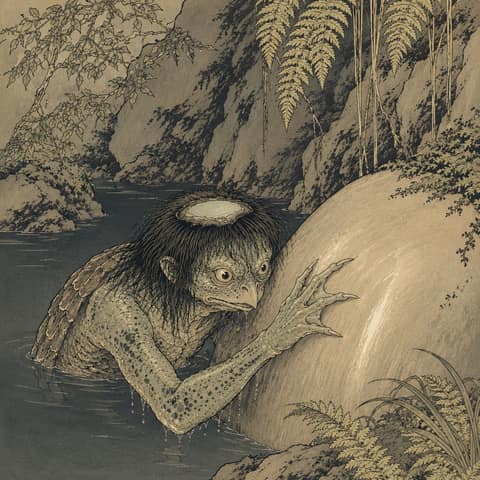
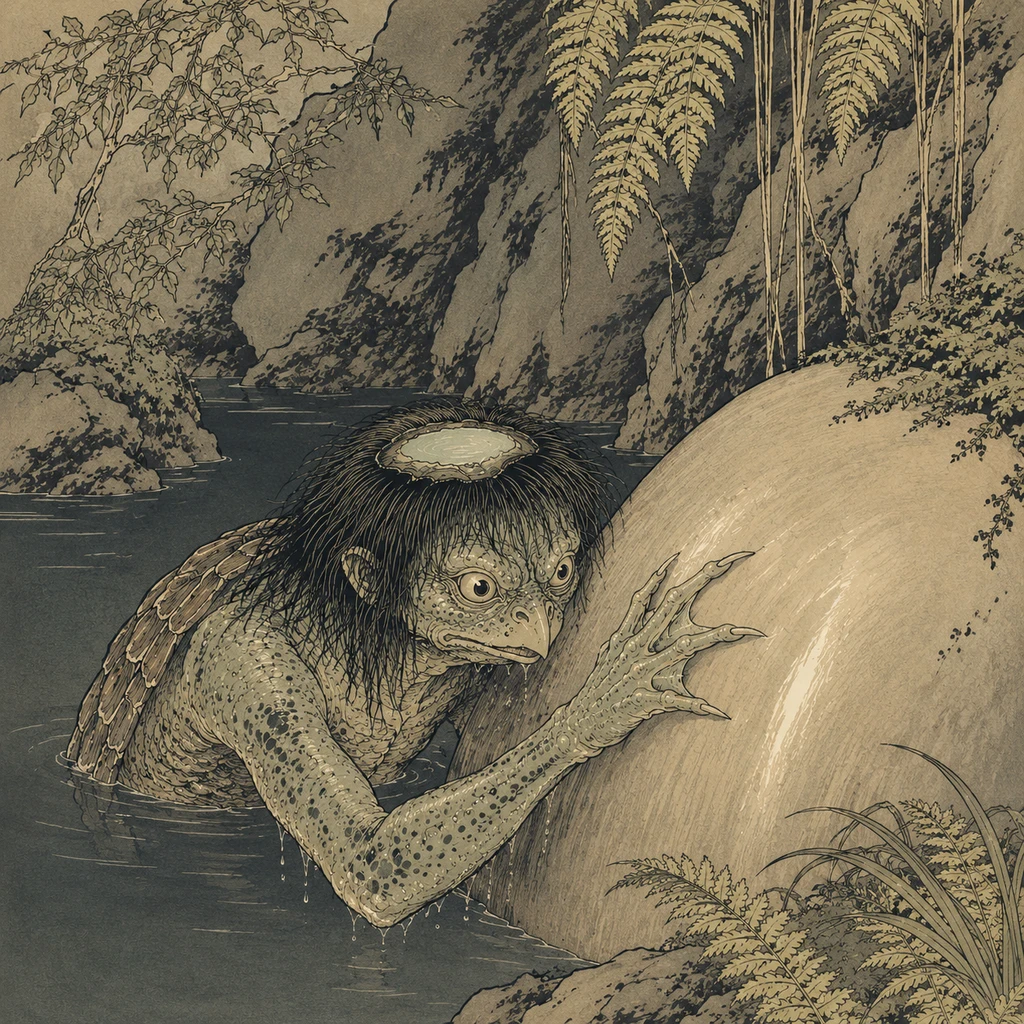
Hyousunbo is a type of kappa transmitted primarily in the Hyuga region of Miyazaki Prefecture and across southern Kyushu. Its name is said to derive from the "hyoi, hyoi" sound it makes while swimming in the water, and it corresponds to the "hyosube" dialectal family used to refer to kappa throughout Kyushu. It lived near the water and was feared as a malicious trickster that dragged children swimming in the river to their deaths. Legend says it lived in the Shiiya River flowing through the Warabi district of Togo-cho in Hyuga City, and is famous for making a promise with the villagers: "I will not take the lives of the river's children until a certain rock rots away completely." The hyousunbo touched the rock so many times to check its decay that the rock became smooth and polished as if rubbed, earning it the name "Hyosubo Rock" (later buried during river improvement works). This folklore is accompanied by the belief in seasonal migration—living in the river from spring to autumn and moving to the mountains in winter—and it is said that sumo matches dedicated to the water god were held every year at the Suijin-buchi (Water God's Abyss) of the Tsuboya River. Among the southern Kyushu lineage that calls kappa "garappa" or "kawantaro," the hyousunbo is a water apparition unique to Hyuga, possessing specific legends of a promise and a rock.
Read moreミヤザキイーブックスに採録された伝承では、東郷町蕨野を流れる椎谷川に、いたずら好きなひょうすんぼが棲んでいた。子どもが川で遊ぶと溺れさせて命を奪うため、村人はひょうすんぼと「この岩が腐れてなくなるまでは、この川で決して子どもの命を取らない」という約束を交わす。夏になり子どもが川遊びをするたび、ひょうすんぼはその岩が腐れていないかを手で撫でて確かめた。そのため岩は磨かれたようにつるつるになり、「ひょすぼ岩」と呼ばれたという[3]。
この話の面白さは、妖怪退治ではなく契約譚であるところにある。村人はひょうすんぼを滅ぼさない。水辺の危険を完全に取り除くこともできない。ただ、岩がある限り子どもの命を取らないという条件を置き、その約束をひょうすんぼ自身に確かめ続けさせる。水害や水難と隣り合わせの生活のなかで、人びとは水の怪を敵として排除するより、約束を結ぶ相手として想像したのだろう。失われた「ひょすぼ岩」は、石そのもの以上に、人と水の怪との境界を示す記憶の装置だった。
さらに同じ東郷町の坪谷川には水神淵があり、水神講で相撲が奉納されたと伝わる[3]。河童が相撲を好むという観念は全国にあるが、ここでは水神を祀る行事と結びついている。ひょうすんぼは単なる子ども脅しではない。川の深み、農耕の水、相撲という身体技法、そして水神への畏れが重なった存在である。天上の神々が国の始まりを語るなら、ひょうすんぼは、村の水辺で毎年繰り返される危険と祈りを語る。
山へ入る河童、
山童になる水神
ひょうすんぼ伝承のなかで見逃せないのは、河童が水路を通って山へ行き来するという記述である。ミヤザキイーブックスの記事も、河童が春秋に里と山を去来する田の神・山の神の信仰と結びつくと説明している[3]。この観念を、より広い九州民俗のなかで受け止める存在が山童である。
Yamawaro
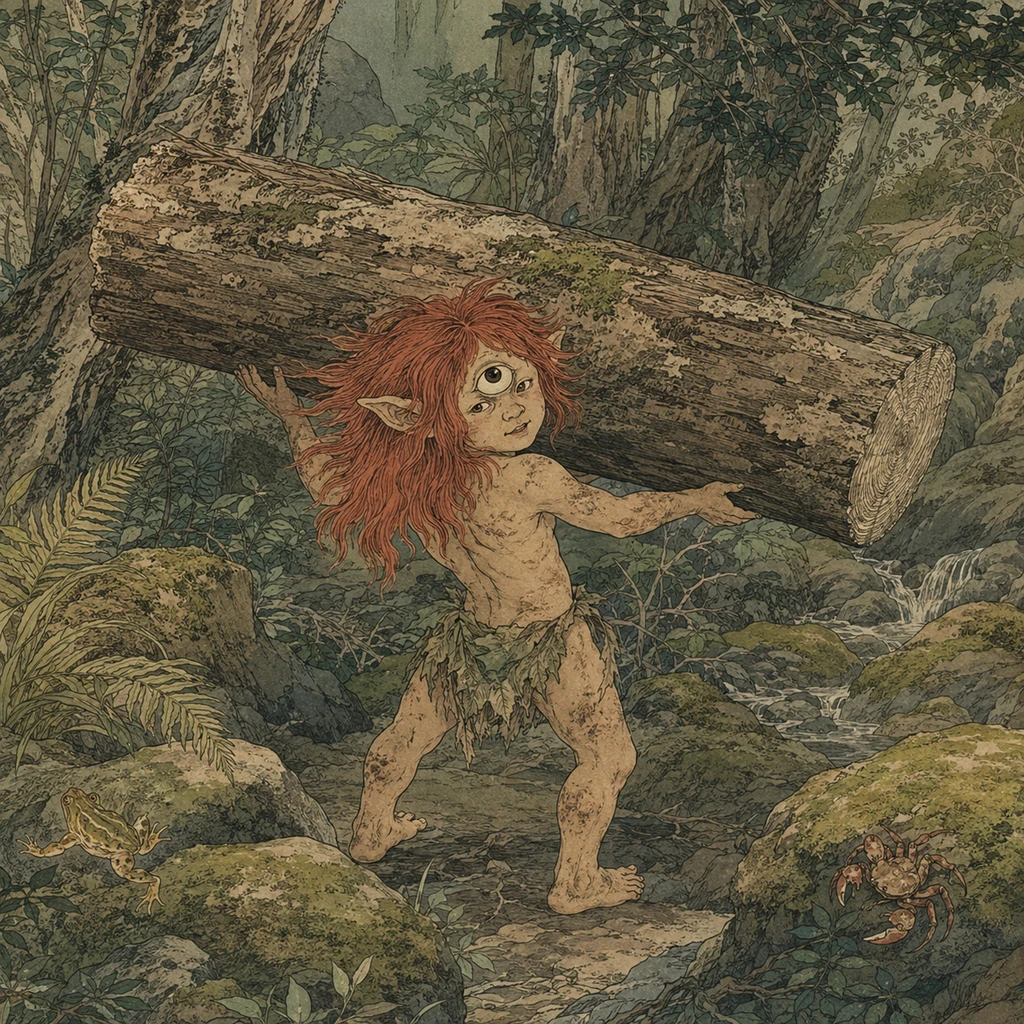
The *Yamawaro* (Mountain Child) is a mountain monster, sometimes said to have one eye and one leg, passed down as dwelling in the mountains of Kyushu. Terajima Ryoan's *Wakan Sansai Zue* (1712) records that *Yamawaro* exist in Chikuzen Province (Fukuoka Prefecture) and the Goto Islands, describing them as resembling humans with round faces, long red hair covering their eyes, pointed dog-like ears, and a single eye on their nose. Said to be about the height of a ten-year-old child, they appear in mountain huts to steal salt and are fond of eating crabs and frogs. While they help with woodcutting and charcoal-making, demanding sake or rice balls in return, they are also known for their mischievous nature—challenging people to sumo wrestling, playing tricks on livestock, and entering baths without permission. The tradition that kappa move to the mountains and transform into Yamawaro is widely distributed across Kyushu.
Read more山童は、九州の山中に現れる小さな山の怪として知られる。寺島良安『和漢三才図会』は、筑前国や五島列島に山童がいると記し、十歳ほどの童の姿、人に似た身体、赤く長い髪、一つ目の異形などを伝える[4]。一方で柳田國男『山島民譚集』以後の民俗学では、河童が季節によって山へ入ったものを山童とする「河童の渡り」の考え方が重視されてきた[5]。国際日本文化研究センターの怪異・妖怪伝承データベースにも、春分ごろ川へ来るものが河童で、秋分ごろ山へ帰ると山童と呼ばれるという採録例がある[6]。
この山川去来の観念を日向国に戻して見ると、ひょうすんぼと山童は別々の妖怪というより、同じ自然観の二つの面に見えてくる。川にいるときは子どもを引く水の怪。山へ入れば、木こりや山仕事の人びとが出会う小さな山の怪。姿や名は土地ごとに変わるが、背後には、田畑の水をもたらす存在が季節によって山と里を往復するという農耕民俗がある。水は山から来て、川となり、田を潤し、また山へ帰る。妖怪もまた、その循環に沿って移動する。
日向国が面白いのは、この民俗層が神話層と対立せず、同じ土地のなかに重なっていることである。木花咲耶姫の神話では、山の神・大山津見神の娘が天孫と結ばれ、火のなかで御子を産む。ひょうすんぼと山童の民俗では、水の怪が川と山を往来し、村人は水難を避けるために約束や奉納を行う。どちらも、山・水・火を人間の生活の外側にある力として見ている。違うのは、その力が王権神話として語られるか、村の伝承として語られるかだけである。
旧国日向という読み方
現代の宮崎県ページでは、高千穂・西都・青島・日南などを横断し、記紀神話の大きな流れを読むことができる。だが旧国「日向国」として見ると、焦点は少し変わる。日向は、天孫降臨の舞台として国の始まりを背負わされる一方で、その足元には椎谷川のひょうすんぼや、山へ帰る山童のような、名も小さく、生活に近い怪異が残った土地である。
この二重性こそ、日向国の妖怪文化の核だろう。木花咲耶姫は、炎のなかで生まれる命を通じて神話の正統性を支える。ひょうすんぼは、川辺の岩を撫で続けることで、人と水の怪との約束を支える。山童は、河童が山へ帰るという信仰を通じて、水と山が切り離せないことを示す。旧国日向の妖怪を読むことは、天上から降りた神々の物語を、川岸の岩や山道の気配へ降ろして読み直すことでもある。
だから日向国は、「神話の国」という一語で閉じてしまうには惜しい。神話はこの地を高く掲げるが、妖怪はその土地を低く、近く、手触りのある場所へ戻してくれる。火の産屋、椎谷川の岩、水神淵の相撲、山へ帰る河童。そこに並ぶ小さな場面の連なりに、旧国日向の深い面白さがある。