YOKAI.JP

Sarutahiko-no-Mikoto

さるたひこのみこと

Sarutahiko-no-Mikoto

Sarutahiko-no-Mikoto

Their soul is listening — speak, and they will answer.

Basic Description

Sarutahiko-no-Mikoto is a Kunitsukami (earthly deity) who appears in the *Kojiki* and *Nihon Shoki*. During the Tenson Korin (the descent of the heavenly grandchild), when Amaterasu's grandson Ninigi-no-Mikoto descended to earth, Sarutahiko waited at the Ame-no-yachimata (the crossroads between heaven and earth) to serve as a guide to Ashihara-no-Nakatsukuni (the Central Land of Reed Plains)[1][2]. He is recorded as 'Sarutabiko-no-Kami' or 'Sarutabiko-no-Okami' in the *Kojiki*, and as 'Sarutahiko-no-Mikoto', 'Chimata-no-Kami', or 'Funado-no-Kami' in the *Nihon Shoki*. According to the *Nihon Shoki*, he is described with an extremely bizarre appearance: 'a nose seven ata long (approx. 1.3 meters), a back seven shaku long, and eyes that shine like the Yata-no-Kagami (Eight Span Mirror) and glow red like a ground cherry (hozuki).' He is considered the prototype for the later Tengu and stands as the greatest grotesque deity in ancient Japan. After successfully guiding Ninigi-no-Mikoto, he married Ame-no-Uzume-no-Mikoto, and the two deities settled in the upper reaches of the Isuzu River in Ise Province. Later, he met a peculiar end when his hand was caught by a hirabu-gai (a type of bivalve) while fishing at Azaka (present-day Matsusaka City, Mie Prefecture), causing him to drown. From the Middle Ages onward, through syncretism with Doso-jin, Funado-no-Kami, and Sae-no-Kami, he became widely venerated as the guardian deity of village boundaries, crossroads, and mountain passes. During the Edo period, due to a phonetic association with 'Saru' (monkey), he became the primary deity of the Koshin belief system, playing a central role in popular religion. Enshrined primarily at Sarutahiko Shrine in Ise City, Mie Prefecture, Tsubaki Grand Shrine in Suzuka City, and Futamiokitama Shrine at Futamiura in Ise, he continues to be deeply revered today as the god of roads, travel, guidance, and new beginnings.

Folklore & Legends

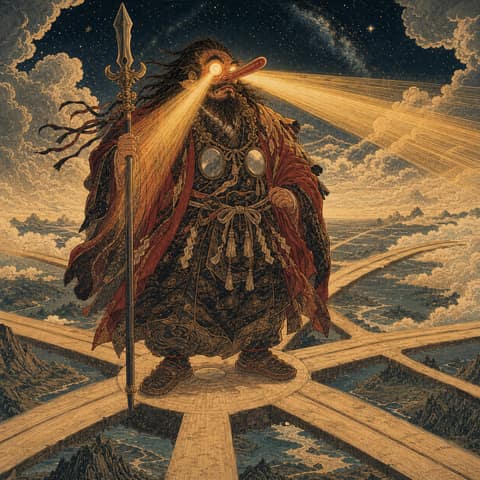
The Grotesque Deity of Ame-no-yachimata ── Awaiting Ninigi-no-Mikoto. When Ninigi-no-Mikoto was about to descend from Takamagahara (the High Celestial Plain) to Ashihara-no-Nakatsukuni during the Tenson Korin, a deity of bizarre appearance stood at Ame-no-yachimata, the crossroads between heaven and earth, radiating light that illuminated both realms. Amaterasu-Omikami and Takagi-no-Kami dispatched Ame-no-Uzume-no-Mikoto, ordering her to 'ask who is there and why he stands there.' When Ame-no-Uzume bared her breasts and asked with a laugh, the strange deity introduced himself: 'I am the Kunitsukami Sarutabiko-no-Kami. I have come to serve as a guide for the Heavenly Grandchild.' This marks Sarutahiko-no-Mikoto's first appearance, and he holds a unique position as the 'Kunitsukami' (earthly deity) who welcomes the Amatsukami (heavenly deity) at the pivotal moment of the Tenson Korin, the central ancient Japanese state myth. He is an important divine figure symbolizing the intersection, reconciliation, and cooperation between the two mythological systems: Takamagahara (heavenly) and Ashihara-no-Nakatsukuni (earthly).

Grotesque Depiction ── Long Nose, Mirror-like Eyes, Glowing Red. According to the description in the *Nihon Shoki*, Sarutahiko-no-Mikoto's appearance is extremely strange, described as having 'a nose seven ata (approx. 1.3m) long, a back seven shaku long, and eyes that shine like the Yata-no-Kagami and glow red like a ground cherry'. Among the deities appearing in ancient mythology, this is an unusually grotesque description, which is considered the prototype for the later Tengu (shugendo-related mountain yokai known for their long noses, red faces, and strange forms). From a folkloric perspective, Sarutahiko's grotesque nature is a religious expression of 'a deity standing at the boundary between the otherworld and this world,' visualizing the core ancient belief in a guardian from the otherworld. The awe inspired by his bizarre appearance is the root of later beliefs in Doso-jin and crossroads deities.

Marriage to Ame-no-Uzume ── The Origins of the Sarume-no-Kimi. After guiding Ninigi-no-Mikoto to Mount Takachiho in Tsukushi-no-Himuka, Sarutahiko-no-Mikoto returned to his homeland in the upper reaches of the Isuzu River in Ise Province, accompanied by Ame-no-Uzume-no-Mikoto. By the instruction of Ninigi-no-Mikoto, Ame-no-Uzume came to be known as 'Sarume-no-Kimi', and the two deities married. Sarume-no-Kimi is regarded as the ancestral deity of female ritual practitioners (shrine maidens and kagura dancers) in ancient Japan, becoming the progenitor of the Sarume clan, which presided over pacification rituals in court ceremonies like the Daijosai and Niinamesai. The marriage between the grotesque guiding god and the naked, laughing kagura goddess carries deep religious significance as a mythological expression of 'cooperation across boundaries' in ancient Japan.

The Tragedy of the Hirabu-gai ── The Tale of Drowning in Ise. Sarutahiko-no-Mikoto's end is unique within ancient mythology. While fishing in Azaka in Ise Province (around present-day Asaka-cho, Matsusaka City, Mie Prefecture), his hand was caught by a hirabu-gai (a type of bivalve shell), and he was pulled into the sea and drowned. It is said that three deities were born in three stages: as he sank, as he surfaced, and as he reached the shore; these deities are currently enshrined at Azaka Shrine in Matsusaka City, Mie Prefecture. The strange conclusion where the great guiding deity of the Tenson Korin drowns after being caught by a shell has been interpreted as a symbolic tale expressing the human vulnerability, contingency, and unknowability of fate of heroic deities in ancient mythology.

Syncretism with Doso-jin, Funado-no-Kami, and Sae-no-Kami. From the Middle Ages onwards, Sarutahiko-no-Mikoto was syncretized with Doso-jin (deities protecting village boundaries, crossroads, and mountain passes), Funado-no-Kami, and Sae-no-Kami (deities blocking evil spirits), and was widely venerated nationwide as the guardian deity of these liminal spaces. This is the result of his core function as a guide during the Tenson Korin in the *Kojiki* and *Nihon Shoki* expanding into the universal attributes of 'roads, travel, boundaries, and new beginnings', positioning him at the heart of the religious culture of Doso-jin stone monuments, crossroads Jizo, and Sae-no-Kami festivals distributed throughout the country. During the Edo period, due to the phonetic similarity of 'Saru' (monkey), he became associated with the Koshin belief (a Daoism-derived belief involving all-night vigils every 60 days to defeat the Three Corpses), forming the core of the spread of Sarutahiko Koshin towers and the three wise monkeys (see no evil, hear no evil, speak no evil).

Sacred Sites of Ise ── Sarutahiko Shrine, Tsubaki Grand Shrine, and Futamiokitama Shrine. The primary shrines dedicated to Sarutahiko-no-Mikoto are centered in Ise Province (present-day Mie Prefecture): (1) Sarutahiko Shrine in Ise City, Mie Prefecture (located outside the Uji Bridge of the Inner Shrine, revered since ancient times as a preparatory shrine before visiting Ise Jingu), (2) Tsubaki Grand Shrine in Suzuka City, Mie Prefecture (a former Kanpei Taisha and the head shrine of over 2,000 shrines nationwide worshipping Sarutahiko as their main deity), and (3) Futamiokitama Shrine in Futami-cho, Ise City, Mie Prefecture (famous for the Meoto Iwa or Wedded Rocks, a sacred site for sunrise and purification with Sarutahiko as the deity). Tsubaki Grand Shrine serves as the nationwide headquarter, forming the core of Sarutahiko worship from ancient times to the present. The ancient custom of visiting Sarutahiko Shrine or Futamiokitama Shrine before visiting Ise Jingu physically embodies the religious inheritance of the ancient myth: 'being guided by the leading deity to visit Amaterasu-Omikami.'

Sarutahiko-no-Mikoto in the 21st Century ── God of Roads, Travel, and New Beginnings. In the 21st century, Sarutahiko-no-Mikoto is widely embraced by modern Japanese people as the god of 'roads, travel, new beginnings, and guidance,' invoked when buying a new car, starting a new business, traveling safely, or facing major life milestones. The pilgrimage to Ise Jingu, Tsubaki Grand Shrine, and Futamiokitama Shrine continues ancient practices and draws many worshippers today. The expansion of the ancient guiding deity into the modern universal attributes of 'roads, travel, and guidance' continues to sustainably influence the spiritual culture of the Japanese people, serving as a prime example of the symbolic inheritance of an ancient deity. He is also frequently reimagined in pop culture (such as *Megami Tensei* and *Okami*), demonstrating a continuous span of over two millennia between ancient mythology and modern Japanese spiritual culture.

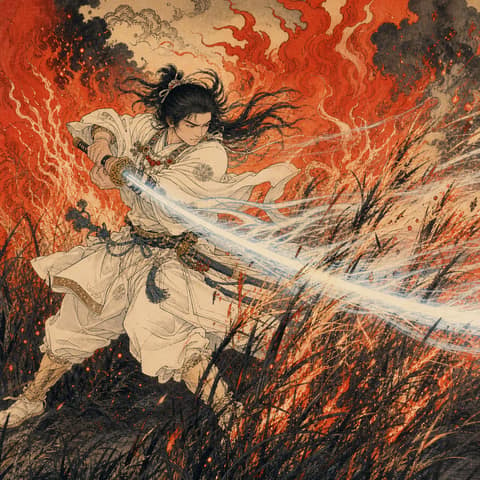
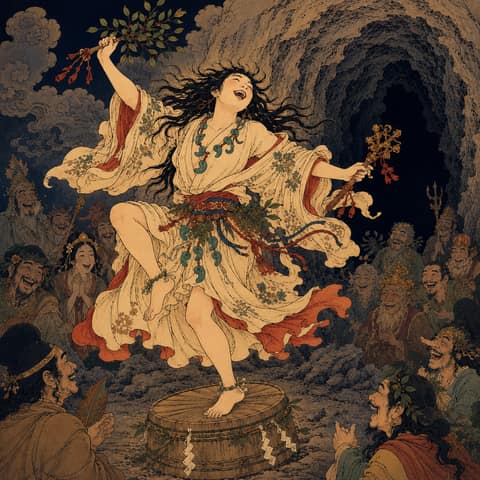
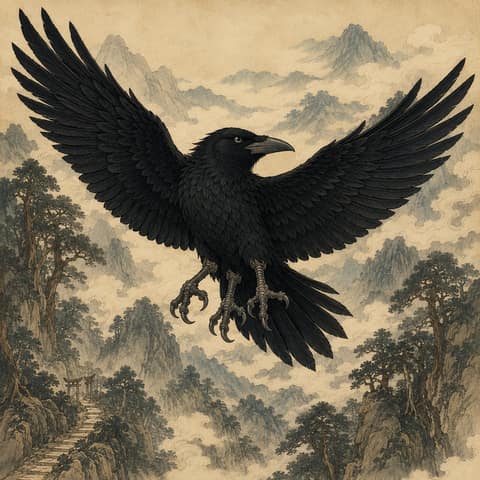
Yokai Cards1

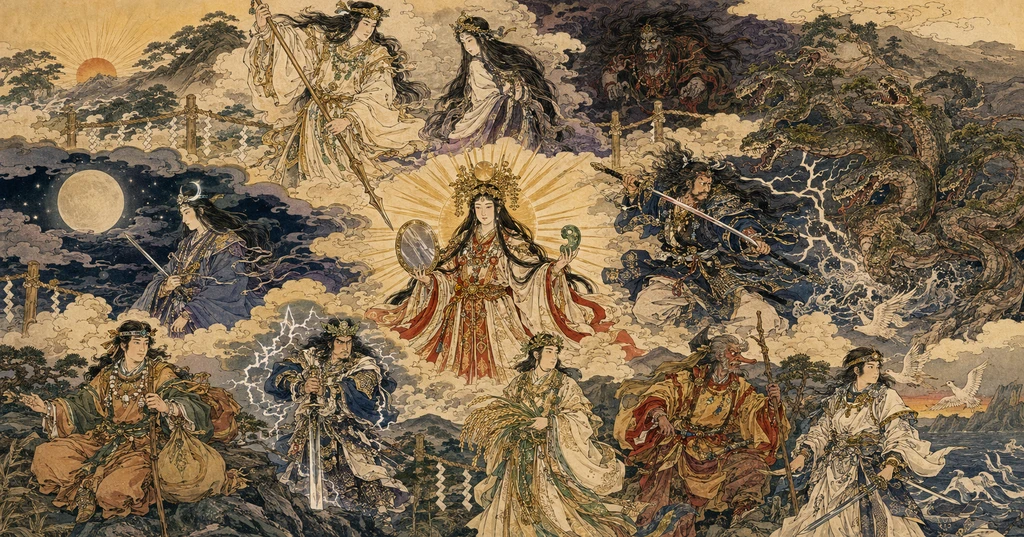
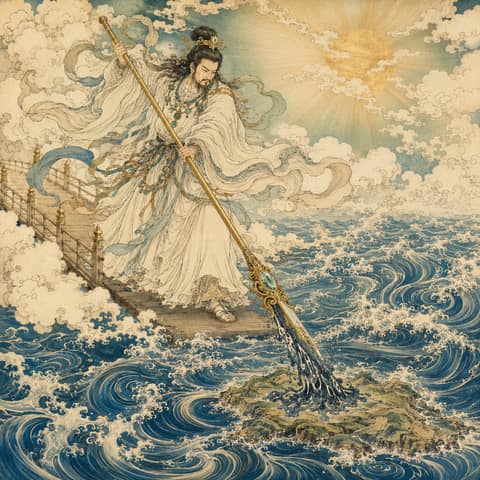
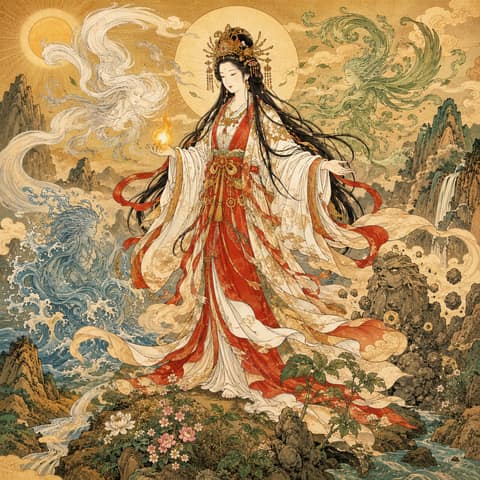
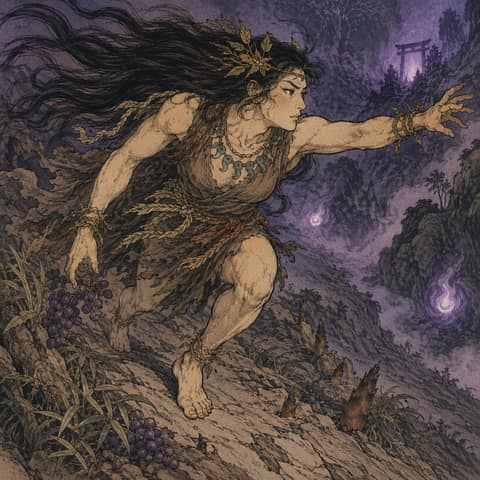
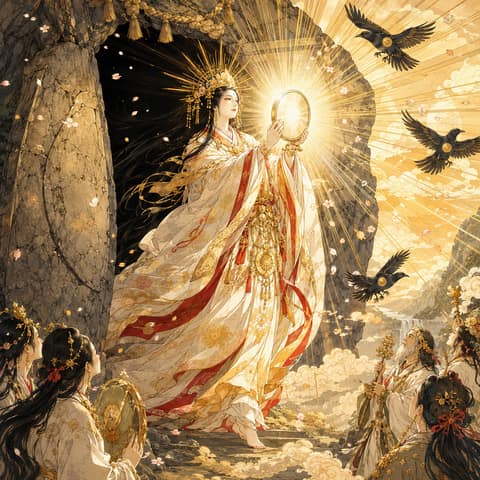
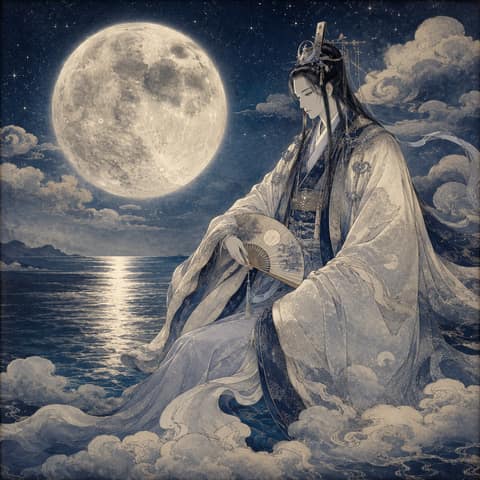
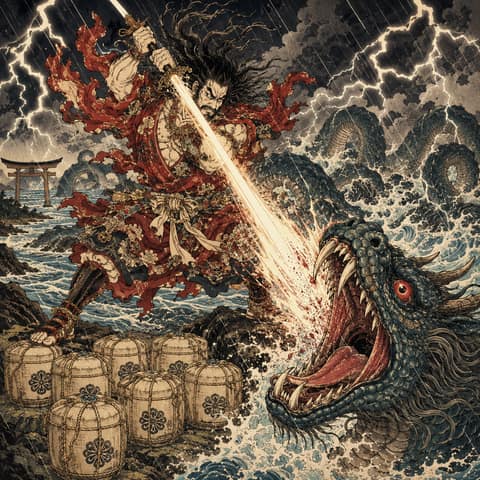
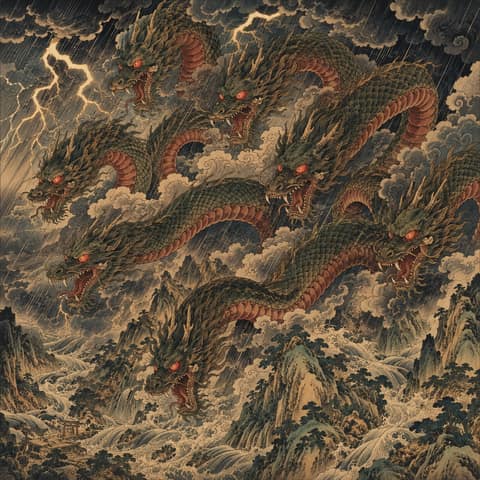
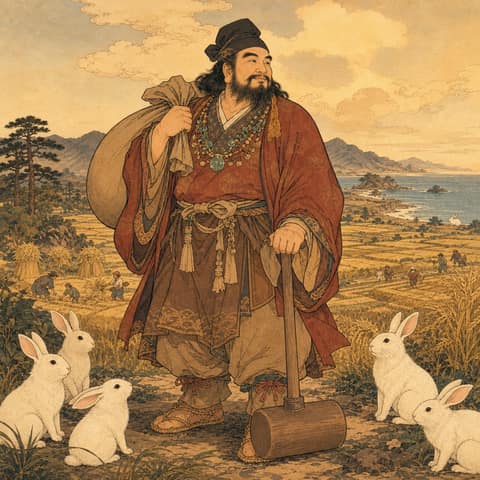
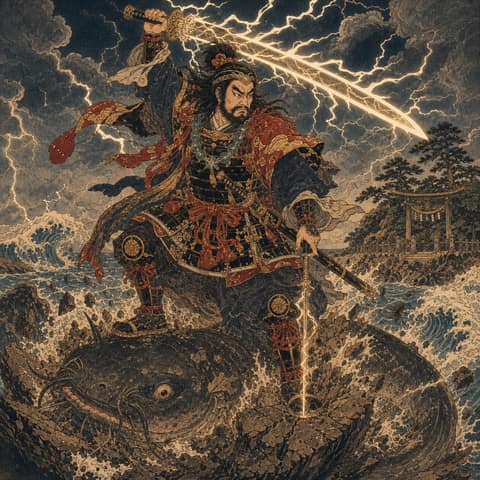
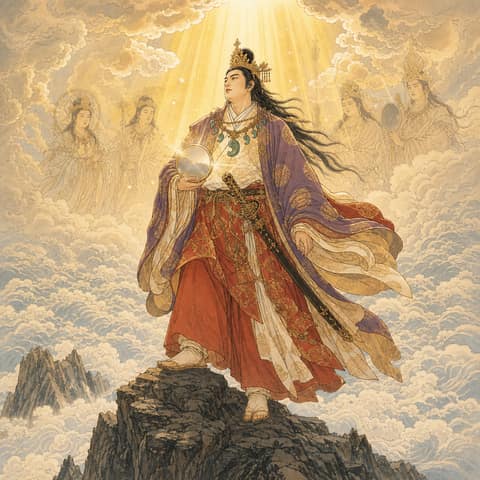
Sarutahiko-no-Mikoto across multiple art-style decks

Card gallery

Related Yokai

Yokai deeply tied to this one in legend.

Detailed Analysis

Special Position in Ancient Mythology as the 'Grotesque Guiding God'. While the basic description touches on Sarutahiko-no-Mikoto's main myth, this detailed explanation delves into his unique position as a 'grotesque guiding god' in ancient Japanese mythology. His bizarre appearance, with a nose seven ata long and eyes shining like the Yata-no-Kagami, is extremely visual and concrete even among the descriptions of deities in ancient myths, serving as the ultimate religious expression of 'a deity standing at the boundary between the otherworld and this world.' The fact that such a strong contrast between the noble Amaterasu-lineage deities and a grotesque Kunitsukami was placed at the core moment of the Tenson Korin, the central ancient Japanese state myth, can be interpreted as an intentional narrative device by the myth's compilers. Grotesqueness is not just visual oddity; it is the concrete embodiment of universal religious feelings such as protection from the otherworld, crossing boundaries, and reconciling with the heterogeneous.

Prototype of the Tengu ── Development into Shugendo and Mountain Beliefs. Sarutahiko-no-Mikoto's grotesque description (long nose, red face, glowing eyes) is folklorically positioned as the prototype of the later Tengu (shugendo-related mountain yokai). The Tengu beliefs of the Heian and medieval periods inherited Sarutahiko's grotesque nature while intricately intertwining with Buddhism, shugendo, and mountain worship to undergo unique development. The hierarchical system of Tengu, such as Daitengu, Karasu Tengu, and Konoha Tengu, can be understood as the medieval refinement of the 'grotesque deity' originating from the ancient Sarutahiko. The relationship between Sarutahiko and the Tengu is a crucial genealogical theory in Japanese yokai studies, serving as core material for examining the continuity between ancient mythology and medieval yokai culture.

Reconciliation and Cooperation between 'Amatsukami and Kunitsukami'. In the political and religious event of the Tenson Korin, where 'Amatsukami (deities of the heavenly realm) descend into the territory of Kunitsukami (deities of the earthly realm),' Sarutahiko-no-Mikoto stands out as a rare Kunitsukami who proactively welcomed the Amatsukami. In contrast to Okuninushi's yielding of the land, which was a 'forced transfer,' Sarutahiko's guidance occupies the contrasting position of 'voluntary cooperation.' This represents two aspects of religious integration between the center (Amatsukami lineage) and the periphery (Kunitsukami lineage) in ancient Japan. The contrast between forced integration (Okuninushi) and voluntary cooperation (Sarutahiko) reflects the editorial intent of the ancient state myths and the complex multiplicity of ancient Japanese political history.

The Tragedy of the Hirabu-gai ── Vulnerability of the Deity and the Meaning of His End. The ending where Sarutahiko-no-Mikoto drowns after being caught by a hirabu-gai is a unique tale in ancient mythology that expresses the vulnerability of deities, human contingency, and the unknowability of fate. The ironic conclusion in which the great guiding god receives a fatal wound from a small natural object like a shell mythologizes universal themes in ancient Japan, such as 'confrontation with nature,' 'the limits of heroes,' and 'the unknowability of fate.' Furthermore, the specific circumstance of 'an accidental death while fishing' includes a religious reflection of marine, fishing, and coastal life in ancient Japan, symbolically demonstrating Sarutahiko's essence as a god standing at the boundary of sea and land, the intersection of life and death. The ending of the myth is not merely a tragedy but an advanced symbolic device that narrates the essential attributes of the deity.

The Core of Doso-jin and Crossroads Deity Beliefs ── The Heart of Nationwide Folklore. From the Middle Ages onwards, Sarutahiko-no-Mikoto was widely venerated as the guardian deity of village boundaries, crossroads, mountain passes, and barriers through syncretism with Doso-jin, Funado-no-Kami, and Sae-no-Kami. The fact that Sarutahiko is positioned at the center of folk religion, such as Doso-jin stone monuments, phallic stones, crossroads Jizo, and Sae-no-Kami festivals distributed nationwide, demonstrates the continuous inheritance from ancient state myths to medieval folk religion. Doso-jin worship is not merely a religious ritual but a folkloric practice that gives meaning to universal anthropological themes of 'boundaries, new beginnings, protection, and harmony' through ancient myths. As a deity supporting the roots of Japanese people's sense of life, movement, and boundaries from ancient times to the present, Sarutahiko possesses a cultural reach that transcends a single deity appearing in a myth.

Association with Koshin Belief ── Popular Religion in the Edo Period. During the Edo period, due to the phonetic association of 'Saru' (monkey) in Sarutahiko, he was linked to the Koshin belief (originating from Chinese Daoism, involving an all-night gathering every 60 days to defeat the Three Corpses), and Koshin towers, Sarutahiko Koshin mounds, and the three wise monkeys (see no evil, hear no evil, speak no evil) spread nationwide. This is a representative example of the multilayered fusion of ancient mythology, medieval Doso-jin, early modern Daoism, and Edo popular religion, demonstrating the typical Japanese religious culture of 'syncretism through phonetic association.' The combination of Koshin and Sarutahiko beliefs functioned as a core institution supporting the collective religious life, village society, and nighttime socializing of commoners in the Edo period, leaving traces in the modern landscape of the three wise monkeys and Koshin mounds.

Sarutahiko-no-Mikoto in the 21st Century ── Modern God of Travel, Guidance, and New Beginnings. Today in the 21st century, Sarutahiko-no-Mikoto is widely cherished as the god of 'roads, travel, new beginnings, and guidance,' serving as an object of prayer for new car purchases, traffic safety, starting new businesses, safe travels, and major life milestones. Pilgrimages to Tsubaki Grand Shrine, Sarutahiko Shrine, and Futamiokitama Shrine continue ancient customs, and the religious structure of the ancient myth of 'visiting Amaterasu-Omikami under the guidance of the guiding god' has been inherited to this day. Even in a modern society marked by globalization, informatization, and individualization, the universal theme of 'life's paths, choices, and guidance' continues to impart new modern meanings to the ancient guiding god. As a rare deity whose presence bridges ancient mythology and modern Japanese spiritual culture for over two thousand years, he bears a living inheritance in religion, culture, and tourism in the 21st century.

Character Profile

This section is our own creative profile for storytelling. It is not historical fact or scholarship.

Yokai Type
Kami
Rarity
Legendary
Personality
Combines the guardian's majesty residing in his grotesque form with a long nose and brightly shining mirror-like eyes, the love and cooperation seen in his marriage to Ame-no-Uzume, and the human vulnerability and submission to fate shown by his drowning after being caught by a hirabu-gai. As a 'grotesque figure standing at the boundary,' he is the greatest guiding deity in ancient Japan, bridging the otherworld and this world.
Compatibility
Deeply connected with those wishing for new beginnings, travel, safe journeys on the road, major life milestones, buying a new car, or starting a new business, as well as those visiting Ise Jingu, Tsubaki Grand Shrine, Futamiokitama Shrine, and Sarutahiko Shrine, and those who inherit the beliefs of Doso-jin, crossroads deities, and Koshin. Resonates with a religious sense that reveres the grotesque, boundaries, reconciliation, and cooperation.
Abilities
Waiting and leading at Ame-no-yachimata (the crossroads between heaven and earth)Guiding the Tenson Korin to Ashihara-no-NakatsukuniReconciliation and cooperation between the mythologies of Takamagahara and Ashihara-no-NakatsukuniProtection from the otherworld through a grotesque appearanceMarriage to Ame-no-Uzume and the origins of Sarume-no-KimiNationwide protection of village boundaries as Doso-jin, Funado-no-Kami, and Sae-no-KamiSyncretism with Koshin belief and the three wise monkeys, forming the core of Edo popular religionUniversal attributes as the modern god of roads, travel, new beginnings, and guidance
Weaknesses
The human vulnerability and submission to contingency shown by drowning after his hand was caught by a hirabu-gai; the sense of heterogeneity due to his grotesque appearance and his marginal position within the central mythological system; variations in notation between the *Kojiki* and *Nihon Shoki*; and the loss of mythological singularity due to syncretism with Doso-jin from the Middle Ages onwards.
Habitat
Sarutahiko Shrine in Ise City, Mie Prefecture (outside Uji Bridge of the Inner Shrine); Tsubaki Grand Shrine in Suzuka City, Mie Prefecture (nationwide head shrine); Futamiokitama Shrine in Futami-cho, Ise City, Mie Prefecture (Meoto Iwa / sunrise sacred site); Azaka Shrine in Matsusaka City, Mie Prefecture (site of the drowning tale); Doso-jin stone monuments, crossroads Jizo, Koshin towers, and village boundary guardian shrines nationwide; and modern spaces for praying for roads, travel, and new beginnings.
🔮Yokai Compatibility Test

For more detailed information and diagnosis results about Grotesque Guiding God of the Tenson Korin / Sarutahiko-no-Mikoto, please click here.

Sources & References

3
  1. 古事記太安万侶((現存最古の日本神話典籍), 和銅 5 年 (712)) [古典文献] Reference和銅 5 年 (712) 太安万侶が献上した日本最古の神話典籍。上巻にヤマタノオロチ退治譚を収め、形態描写・八塩折之酒の罠・天叢雲剣出現・須佐之男とクシナダの結婚・須賀の歌等を具体的に記す。國學院大學古事記学センターによる校訂本文・現代語訳が公開されている。
  2. 日本書紀舎人親王ら((養老4年成立の正史), 720) [古典文献] Reference推古天皇三十五年二月条に、陸奥国の狢が人に化けて歌ったという記事を含む。狸・狢系の獣変化を考える際の古い記録。
  3. 猿田彦神社·椿大神社·二見興玉神社 ── 伊勢の猿田彦聖地体系各神社·三重県(三重県伊勢市·鈴鹿市, 古代~現代) [神社·古代神道聖地]猿田彦命を主祭神とする伊勢の主要神社群。 (1) 三重県鈴鹿市·椿大神社 (旧官幣大社·猿田彦命を主祭神とする全国二千余社の総本宮)、 (2) 三重県伊勢市·猿田彦神社 (伊勢神宮内宮宇治橋外·古来から伊勢神宮参拝の前段宮)、 (3) 三重県伊勢市二見町·二見興玉神社 (夫婦岩·猿田彦命を祭神とする日の出·禊ぎの聖地)、 (4) 三重県松阪市·阿射加神社 (猿田彦命溺死譚の地·阿邪訶の比定地)。 古代神話の中核神格を継承する伊勢の聖地体系で、 古来の「先導神に導かれて天照大御神に詣でる」 参拝作法を現代まで継承する。

Interested in this type of yokai?

Discover the yokai most similar to your personality with our yokai diagnosis

Start Yokai Diagnosis

Meet your guardian yokai at the shrine

Draw an omikuji fortune and discover the yokai watching over you today.