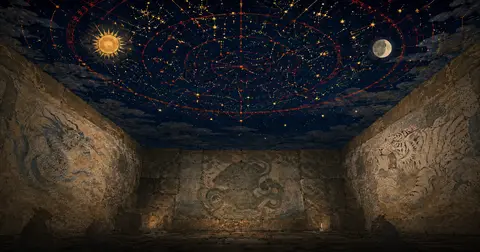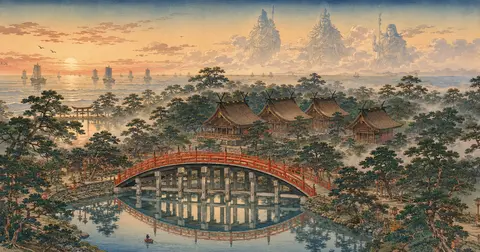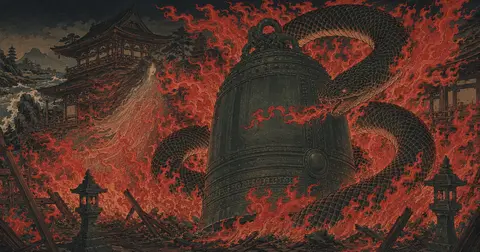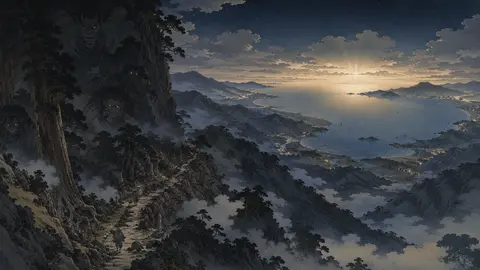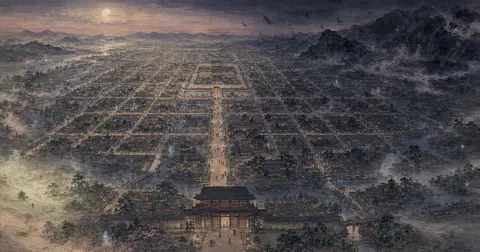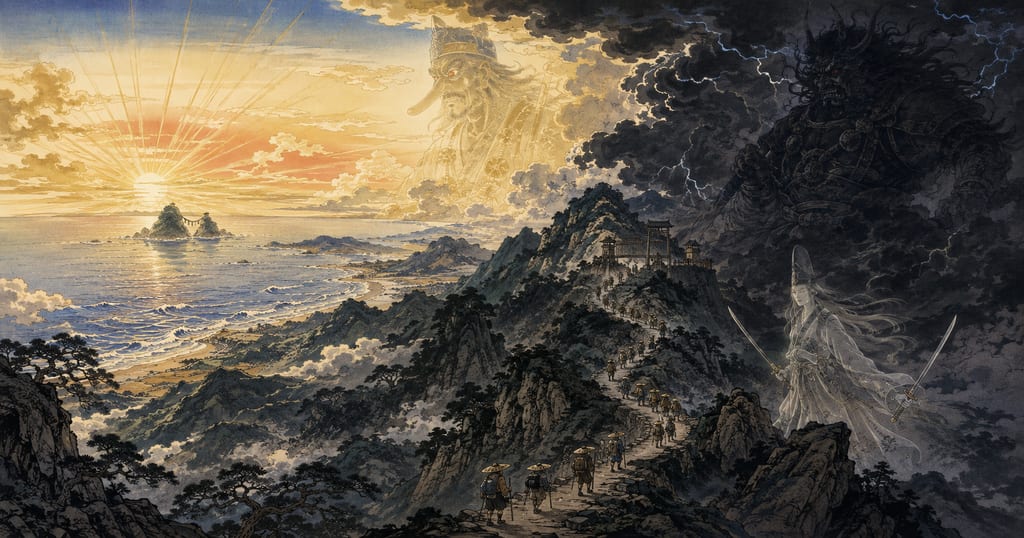
伊勢国は、令制国のなかでも特別な国であった。多くの国が地方の経済や軍事で都に組みこまれたのに対し、伊勢は何より「神の国」として在った。五十鈴川のほとりに天照大御神が鎮まり、その神領を支えるために度会・多気の郡がまるごと神に捧げられ、都からは天皇に代わって神に仕える未婚の皇女・斎王が送りこまれた[1][2][3]。国そのものが、一柱の神を中心に編まれていたのである。
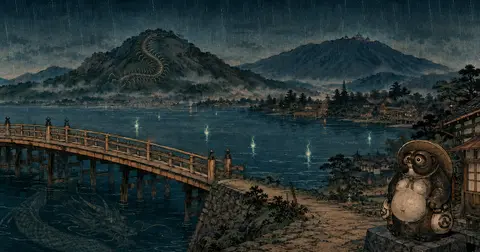
だが聖性の濃い国だからこそ、その縁(へり)では怪が濃くなる。西の端、近江との境には古代の三関のひとつ鈴鹿関が置かれ、その峠には大嶽丸と鈴鹿御前の物語が育った[4]。北の桑名では多度の一目連が風雨を司り、四日市では大入道が祭りのからくりとなり、松阪の夜道では髪切りが人の髪を断ち、伊勢の雨夜には悪路神の火が漂う。そして都から伊勢神宮へ向かう参宮街道には、おかげ参りの群衆と、その道連れに化ける怪の噂がつきまとった。本稿では、現代の三重県の妖怪事典が県全体の広がりを描くのに対し、古代律令の「伊勢国」という枠 ── 神宮・斎王・神郡・関と街道 ── から、この聖国の妖怪をたどっていきたい。
神の国の成り立ち ── 神宮・神郡・斎王
伊勢を妖怪の地図として読むには、まずこの国が「どうやって神の国になったか」を押さえておかねばならない。すべては一人の皇女の旅から始まる。
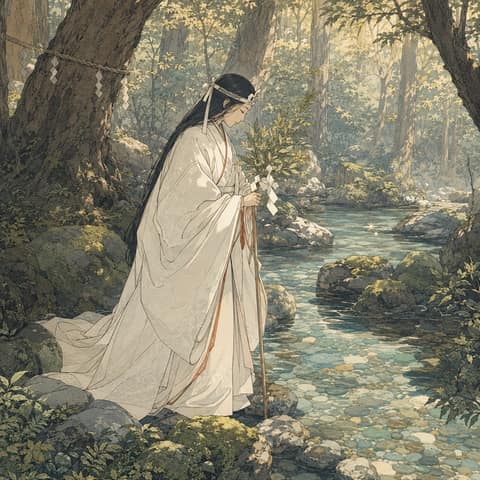
『日本書紀』や中世の縁起が語るところでは、もとは天皇の宮中に祀られていた天照大御神を、崇神天皇のとき豊鍬入姫命(とよすきいりひめのみこと)が、つづいて垂仁天皇の皇女・倭姫命(やまとひめのみこと)が、ふさわしい鎮座の地を求めて諸国をめぐったと伝わる。倭姫命は大和をたち、伊賀・近江・美濃をへて伊勢へ入り、ようやく五十鈴川のほとりに「ここぞ」と社を定めた ── これが皇大神宮(内宮)の起こりであり、その巡幸の途上に祀られた各地の社は、後世「元伊勢」と呼ばれた[1]。神が、自らの居場所を探して地上を歩いた物語。伊勢国の地面には、最初からこの「神の足どり」が刻まれている。
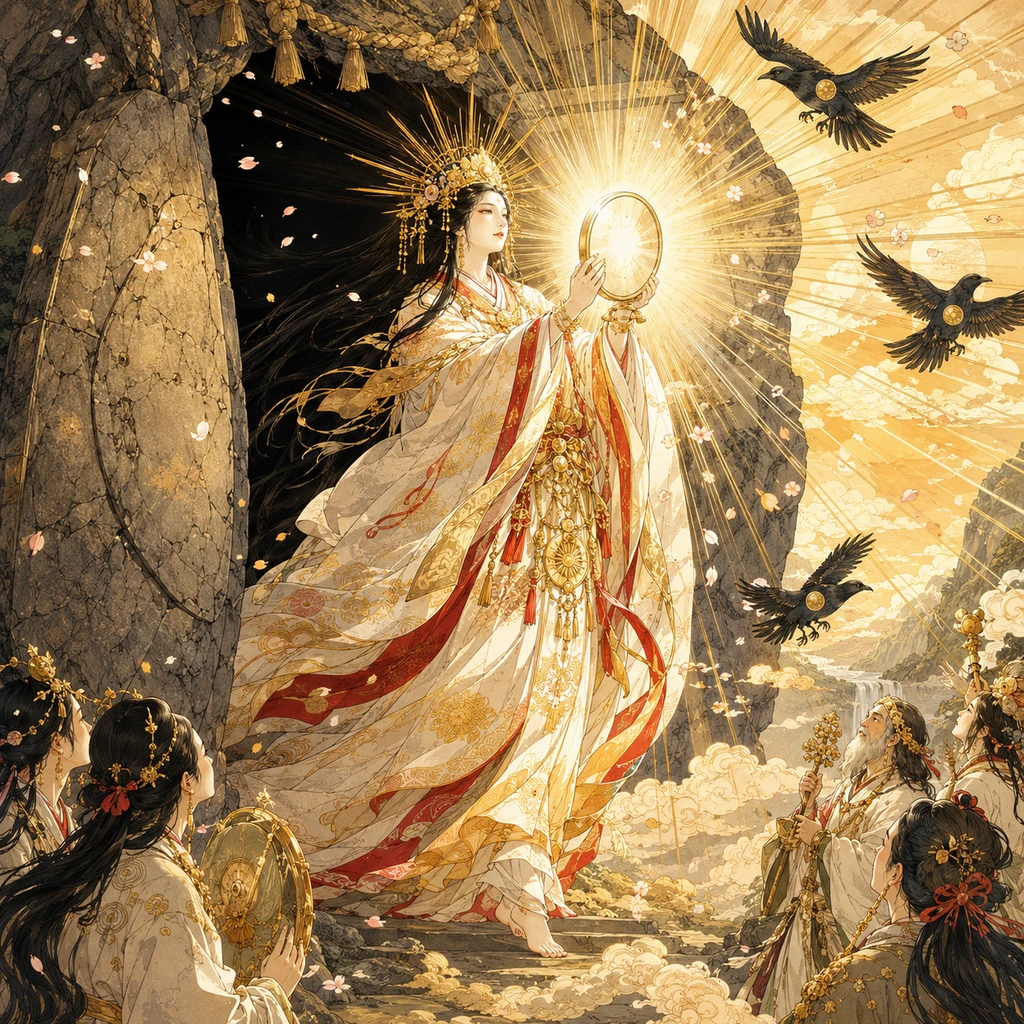
Amaterasu-Omikami
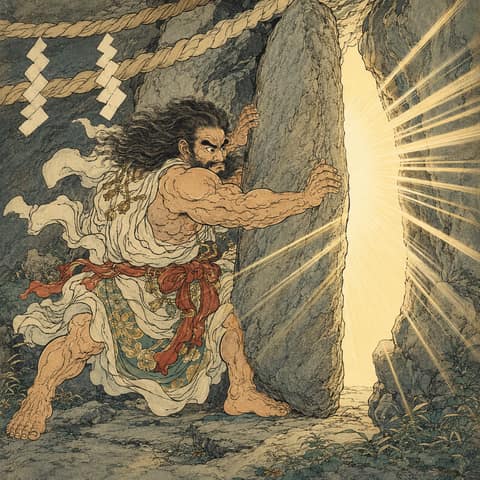
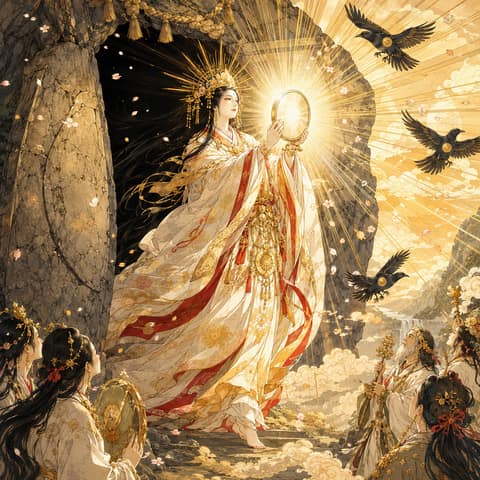
Amaterasu-Omikami is the sun goddess appearing in the *Kojiki* (712) and *Nihon Shoki* (720). She is the eldest of the Three Precious Children, born from the left eye of her father, Izanagi-no-Mikoto, when he performed a purification ritual (misogi) at Ahakihara to cleanse himself of the impurities of the underworld (Yomi). In the *Kojiki*, her name is written as "Amaterasu-Omikami" (天照大御神 / 天照大神); in the *Nihon Shoki*, she is referred to as "Sun Goddess," "Ohohirume-no-Muchi," and "Amaterasu-Omikami." The divine name chanted by Shinto priests before the altar at Ise Jingu is "Amaterashimasu-Sume-Okami." Entrusted by her father with the rule of Takamagahara (the High Plain of Heaven), she was enraged by the violent acts of her younger brother Susanoo-no-Mikoto in Takamagahara and hid in the Heavenly Rock Cave (Amano-Iwato), plunging the world into darkness. This "Hiding in the Rock Cave" episode is one of the greatest stories in Japanese mythology. After being lured out of the cave by the wisdom and dances of the eight million gods, she bestowed the Three Sacred Treasures (the Yata no Kagami mirror, the Yasakani no Magatama jewel, and the Kusanagi sword) upon her grandson Ninigi-no-Mikoto, sending him down to govern Ashihara-no-Nakatsukuni (the Central Land of Reed Plains). Thus, she became the ancestral deity of Emperor Jimmu and the successive imperial lineage. With her primary enshrinement at the Inner Shrine of Ise Jingu (Kotaijingu), she has been revered as Japan's supreme deity from ancient times to the present.
Read more神を迎えた国は、神を養う仕組みを持たねばならない。律令の世になると、伊勢では度会(わたらい)・多気(たけ)の二郡が、のちに飯野(いいの)郡を加えた三郡が、郡まるごと神宮の所領「神郡(しんぐん)」とされた。神郡から上がる租税は、伊勢国司ではなく神宮の祭祀と造営にあてられ、平安期には神宮の太神宮司がその行政権を握っていく[2]。一国の三つの郡が、人の政(まつりごと)ではなく神の祭(まつり)のために回っている ── これは全国でもまれな、徹底した「神の国」の経済であった。二十年に一度、社殿をそっくり建て替える式年遷宮も、こうした神領の上にこそ成り立つ。
そして都は、神に仕える人をも送りこむ。斎王(さいおう)である。天皇が即位するたびに、未婚の内親王や女王のなかから占いで一人が選ばれ、天皇に代わって伊勢神宮の天照大御神に仕えた。斎王は都を発つと、二百人を超える従者をしたがえ、五泊六日をかけて伊勢へ下る ── この「群行(ぐんこう)」そのものが、俗世を離れて神に近づいていく長い禊の旅であった。斎王が住んだのが、神宮から十数キロ離れた多気郡(現·明和町)の斎宮(さいくう)で、宮殿と役所をそなえた一個の都であった。伝説では倭姫命を初代とし、確かな記録では天武天皇の娘・大伯皇女(おおくのひめみこ)を初めとして、南北朝の動乱で絶えるまで、およそ六百六十年・六十人を超える斎王がここに暮らした[3]。神に最も近い場所に、最も清らかな皇女を置く ── その清浄への執着の強さは、裏返せば、伊勢という国がどれほど「穢れ」と「境」を意識した国であったかを物語っている。
面白いことに、最も清浄な内宮そのものには、鬼や妖怪の伝承がほとんどない。怪は、聖域の中心ではなく、その外縁 ── 参道、海辺、峠、街道 ── にこそ群れる。神郡の境、斎王の禊、関のかなた。聖なる中心が強いほど、それを取り巻く境界の不安は濃くなる。伊勢国の妖怪は、ほとんどがこの「神の国の縁」から立ちあらわれるのだ。
道をひらく神、
海辺で禊ぐ ── 猿田彦と二見
神の国へ入るには、まず道を通り、身を清めねばならない。その両方をつかさどるのが猿田彦命(さるたひこのみこと)である。
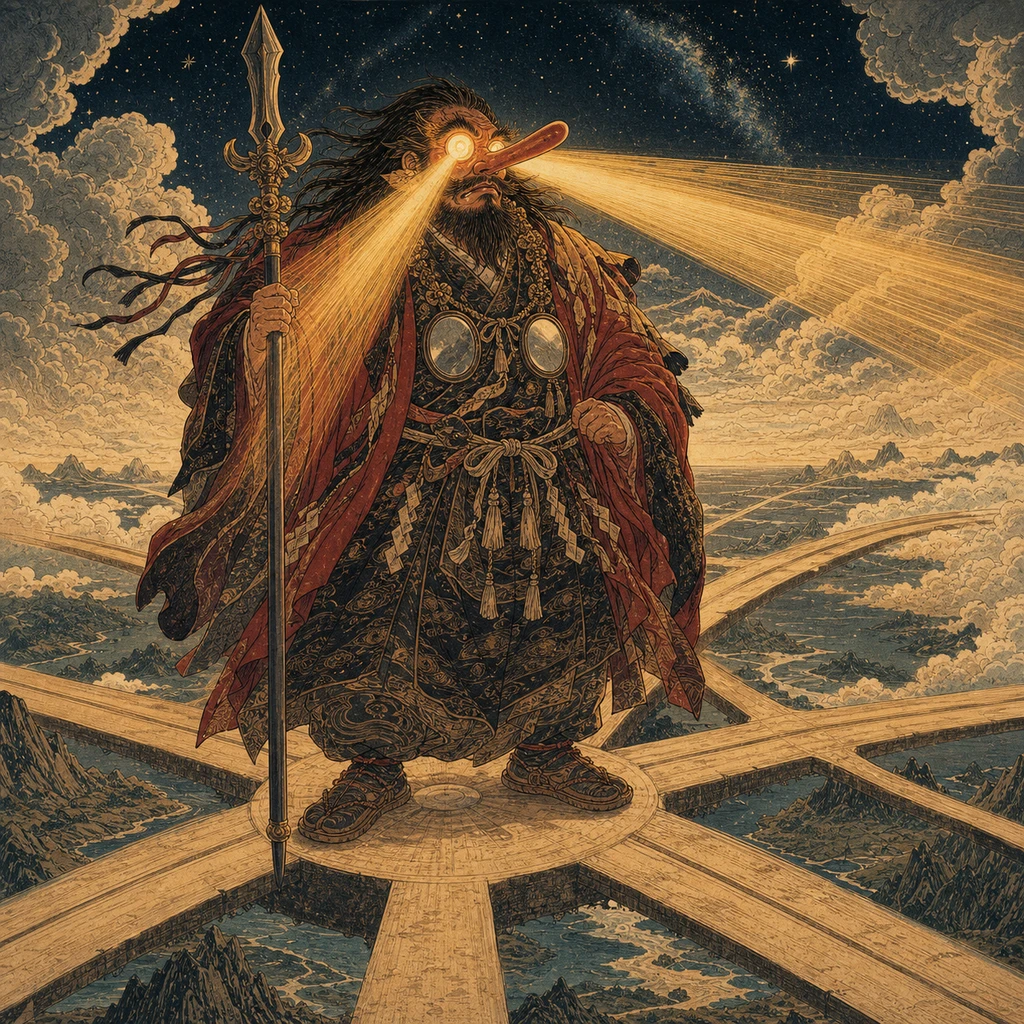
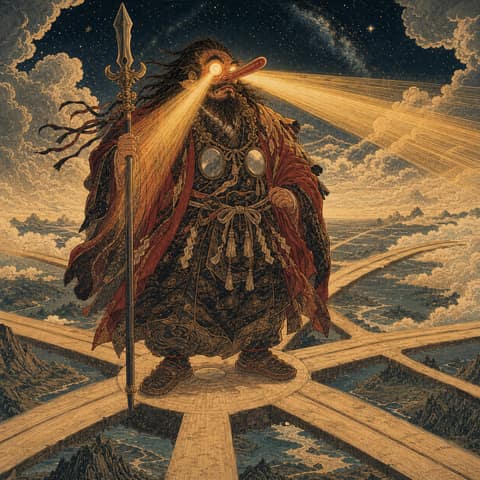
Sarutahiko-no-Mikoto
Sarutahiko-no-Mikoto is a Kunitsukami (earthly deity) who appears in the *Kojiki* and *Nihon Shoki*. During the Tenson Korin (the descent of the heavenly grandchild), when Amaterasu's grandson Ninigi-no-Mikoto descended to earth, Sarutahiko waited at the Ame-no-yachimata (the crossroads between heaven and earth) to serve as a guide to Ashihara-no-Nakatsukuni (the Central Land of Reed Plains). He is recorded as 'Sarutabiko-no-Kami' or 'Sarutabiko-no-Okami' in the *Kojiki*, and as 'Sarutahiko-no-Mikoto', 'Chimata-no-Kami', or 'Funado-no-Kami' in the *Nihon Shoki*. According to the *Nihon Shoki*, he is described with an extremely bizarre appearance: 'a nose seven ata long (approx. 1.3 meters), a back seven shaku long, and eyes that shine like the Yata-no-Kagami (Eight Span Mirror) and glow red like a ground cherry (hozuki).' He is considered the prototype for the later Tengu and stands as the greatest grotesque deity in ancient Japan. After successfully guiding Ninigi-no-Mikoto, he married Ame-no-Uzume-no-Mikoto, and the two deities settled in the upper reaches of the Isuzu River in Ise Province. Later, he met a peculiar end when his hand was caught by a hirabu-gai (a type of bivalve) while fishing at Azaka (present-day Matsusaka City, Mie Prefecture), causing him to drown. From the Middle Ages onward, through syncretism with Doso-jin, Funado-no-Kami, and Sae-no-Kami, he became widely venerated as the guardian deity of village boundaries, crossroads, and mountain passes. During the Edo period, due to a phonetic association with 'Saru' (monkey), he became the primary deity of the Koshin belief system, playing a central role in popular religion. Enshrined primarily at Sarutahiko Shrine in Ise City, Mie Prefecture, Tsubaki Grand Shrine in Suzuka City, and Futamiokitama Shrine at Futamiura in Ise, he continues to be deeply revered today as the god of roads, travel, guidance, and new beginnings.
Read more猿田彦は、ただの道案内の神ではない。天孫降臨のとき、天の八衢(やちまた)に立って一行を導いた「みちひらき」の神でありながら、『日本書紀』はその姿を、鼻の長さ七咫(ななあた)、背は七尺、目は八咫鏡(やたのかがみ)のように赤く照り輝く異形として描く ── 道をひらく神そのものが、人ならぬ相貌をそなえていた。『古事記』では、伊勢の阿邪訶(あざか、現·松阪)の海で漁をしていた猿田彦が比良夫貝(ひらぶがい)に手を挟まれて溺れ、その沈むさま・泡の昇るさま・泡の弾けるさまから三柱の神が生まれたと語られる。神でありながら海に溺れて死ぬという生々しさが、この神を「境を渡る者」の守り神たらしめている。鈴鹿の山麓、鈴鹿市山本町の椿大神社は、この猿田彦大神を祀る全国の総本宮であり、倭姫命の巡幸を導いた縁にもつながる[5]。
道をひらいた先で、人は禊をする。伊勢神宮へ参る人々は、古来まず二見浦(ふたみがうら)で身を清めてから神宮へ向かった ── これを浜参宮(はまさんぐう)という。二見興玉神社は猿田彦大神を主祭神とし、夫婦岩(めおといわ)の沖に沈む興玉神石を拝む。海と神域の境で身を浄める浜辺に、道ひらきの神とその使いの蛙(かえる)が鎮まっているのは、いかにもふさわしい[6]。神の国は、道と禊の二重の門をくぐった先にある。猿田彦は、その門に立つ番神なのだ。
- Sarutahiko-no-Mikotoさるたひこのみこと
- Amaterasu-Omikamiあまてらすおおみかみ
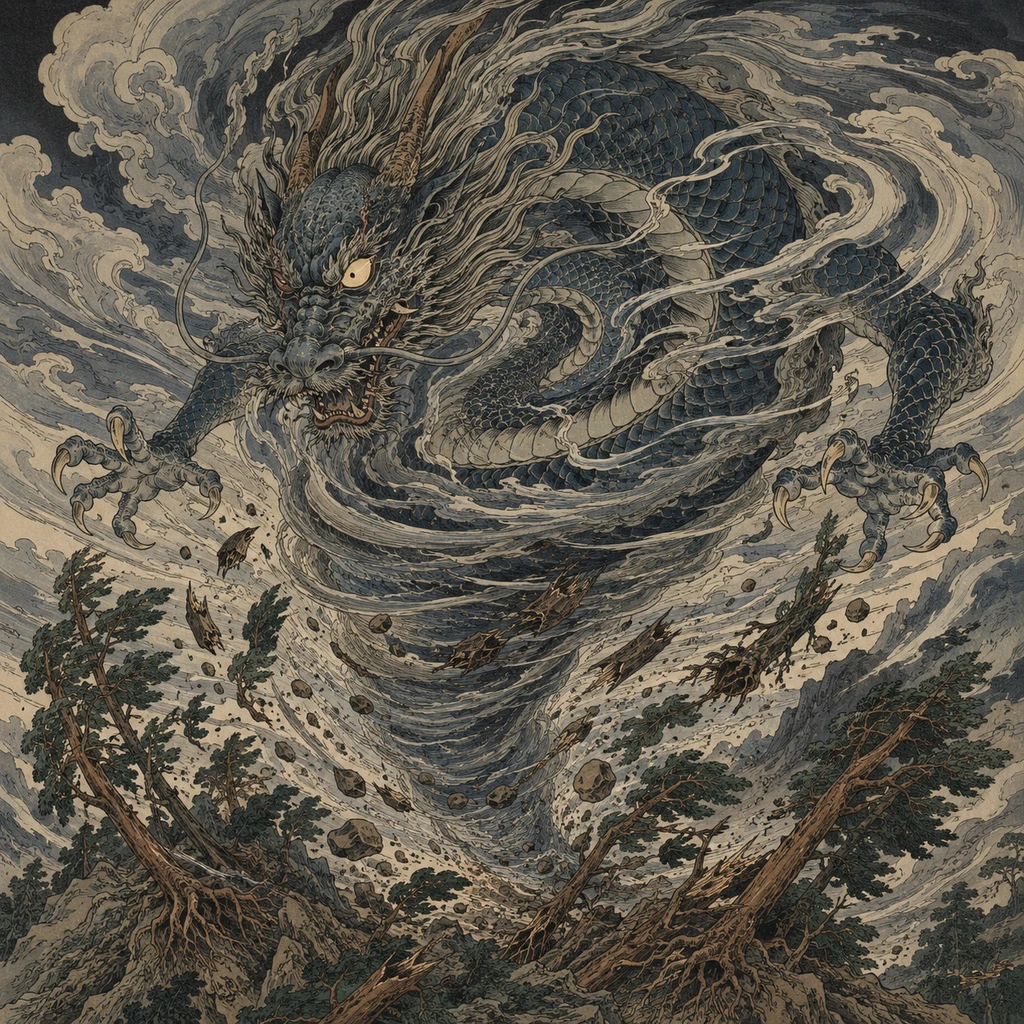 Hitome-ryōHEE-toh-meh RYOH
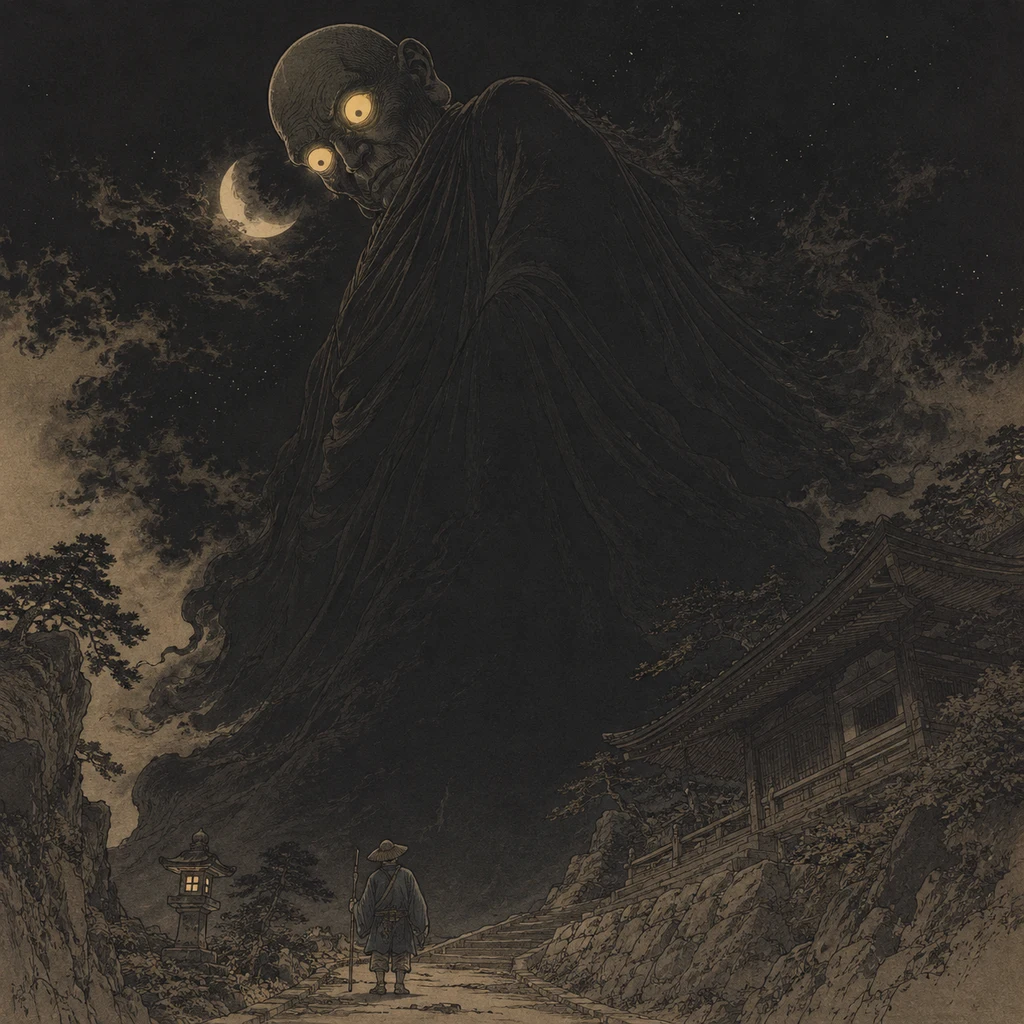 Great Nyūdō (Giant Priest Apparition)oh-oh-nyoo-DOH
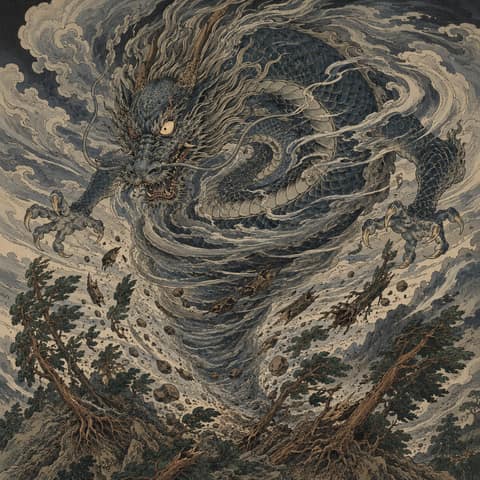
国の北の門もまた、荒ぶる神が守っている。一目連(いちもくれん)である。桑名の多度大社の別宮・一目連神社が祀るのは、鍛冶の神・天目一箇命(あめのまひとつのみこと)。一目連は片目の龍神にして風神とされ、暴風雨を呼ぶ荒神として恐れられた。その社殿には扉がない ── 神が神威をふるって天へ翔け出すためだという[7]。隻眼は、片目をつぶって鉄の焼け色を見きわめる鍛冶の姿に通じるとも説かれる。桑名は木曽三川が伊勢湾へそそぐ水の町で、洪水と高潮につねにさらされてきた。荒ぶる風雨の神を扉なき社に祀ってなだめる ── そこには、水とともに生きる伊勢北部の人々の切実な祈りがこもる。多度大社で若者が急坂を馬で一気に駆けのぼる「上げ馬神事」もまた、風雨を司る神の前で天へ駆けのぼろうとする所作にほかならない。
西の関 ── 鈴鹿峠の鬼神
聖国の西の端、近江との境には、古代律令制の最重要の関門のひとつが置かれていた。鈴鹿関(すずかのせき)である。美濃の不破関、越前の愛発(あらち)関とならぶ「三関(さんかん)」のひとつで、東海道が近江から伊勢へ越える鈴鹿峠の麓(現·亀山市旧関町)に据えられた。天武朝に整えられ、延暦八年(七八九年)に停廃された後も、国家の非常時に関を閉じる「固関(こげん)」の儀は永く続いた[4]。都の側から見れば、鈴鹿関の向こうは「東国」── 制度の光が薄れ、得体の知れぬものが棲む外界の始まりであった。だからこそ、この峠は鬼神の物語を呼び寄せる。
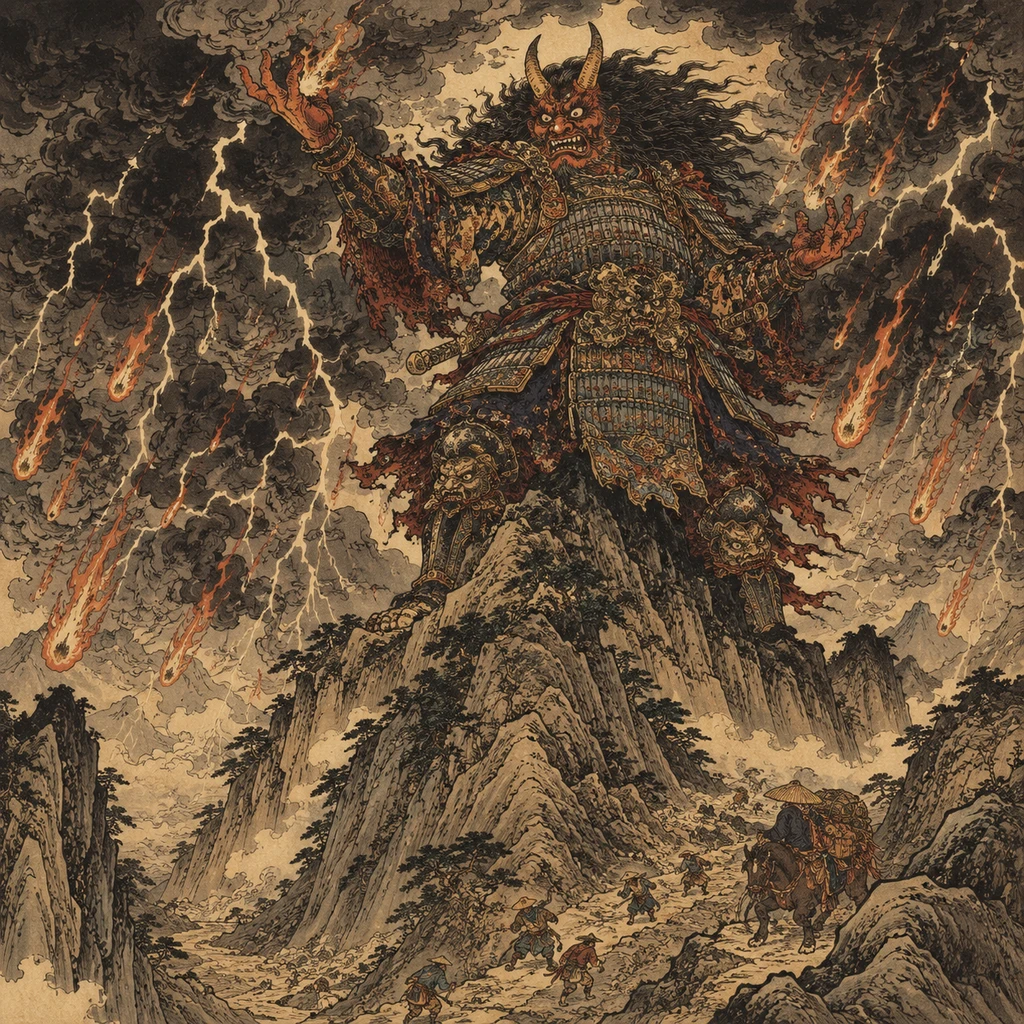
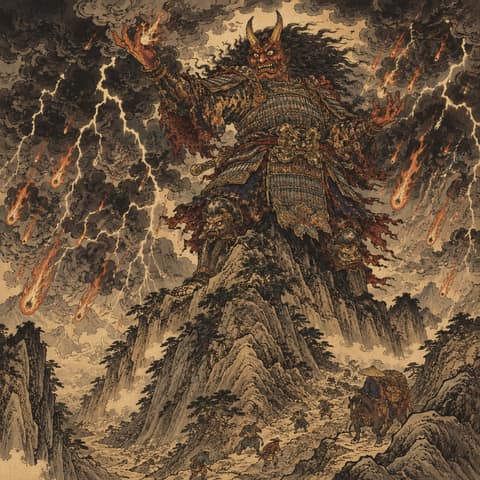
Ootakemaru
Ootakemaru is a demon god said to have made his stronghold at Mount Suzuka and the Suzuka Pass, located on the border between Ise and Omi provinces. In Otogizoshi and the Tamura stories, he appears as a Great Demon King who steals tributes meant for the capital and repels armies with black clouds, lightning, and rain of fire, only to be slain by Tamuramaru (modeled after Sakanoue no Tamuramaro) and Suzuka Gozen. The Tamuramaru of the story is not the historical Shogun himself, but a heroic figure born from the overlapping of medieval Kiyomizu Kannon worship, boundary beliefs of the Suzuka Pass, and Tamura legends from the Tohoku region. Ootakemaru is also sometimes cited as one of the "Three Great Yokai" alongside Shuten-doji and Tamamo-no-Mae. The fact that his severed head and remains are later incorporated into tales of treasures, temple origins (engi), and burial mounds reflects the medieval significance of a "slain great enemy".
Read more伊勢国の妖怪から主役を一体選ぶなら、大嶽丸(おおたけまる)である。山田雄司の研究は、この峠に伝わる坂上田村麻呂伝説を、交通路と在地の賊徒伝承、社寺の縁起が重なりあって形づくられたものとして整理している[8]。大嶽丸は鈴鹿山を黒雲で覆い、雷鳴と火の雨を降らせ、美しい童子や公家にも変化(へんげ)する大鬼神であった。手にするのは大通連(だいつうれん)・小通連・顕明連(けんみょうれん)の三明(さんみょう)の剣。山奥にひそむ怪物ではなく、都の秩序を関の外から揺さぶる「境界の鬼神」として立ちあがるところに、この鬼の本質がある。鈴鹿関という現実の国境装置の不安が、そのまま峠の鬼神像へと結晶したのだ。
- Ootakemaruおおたけまる
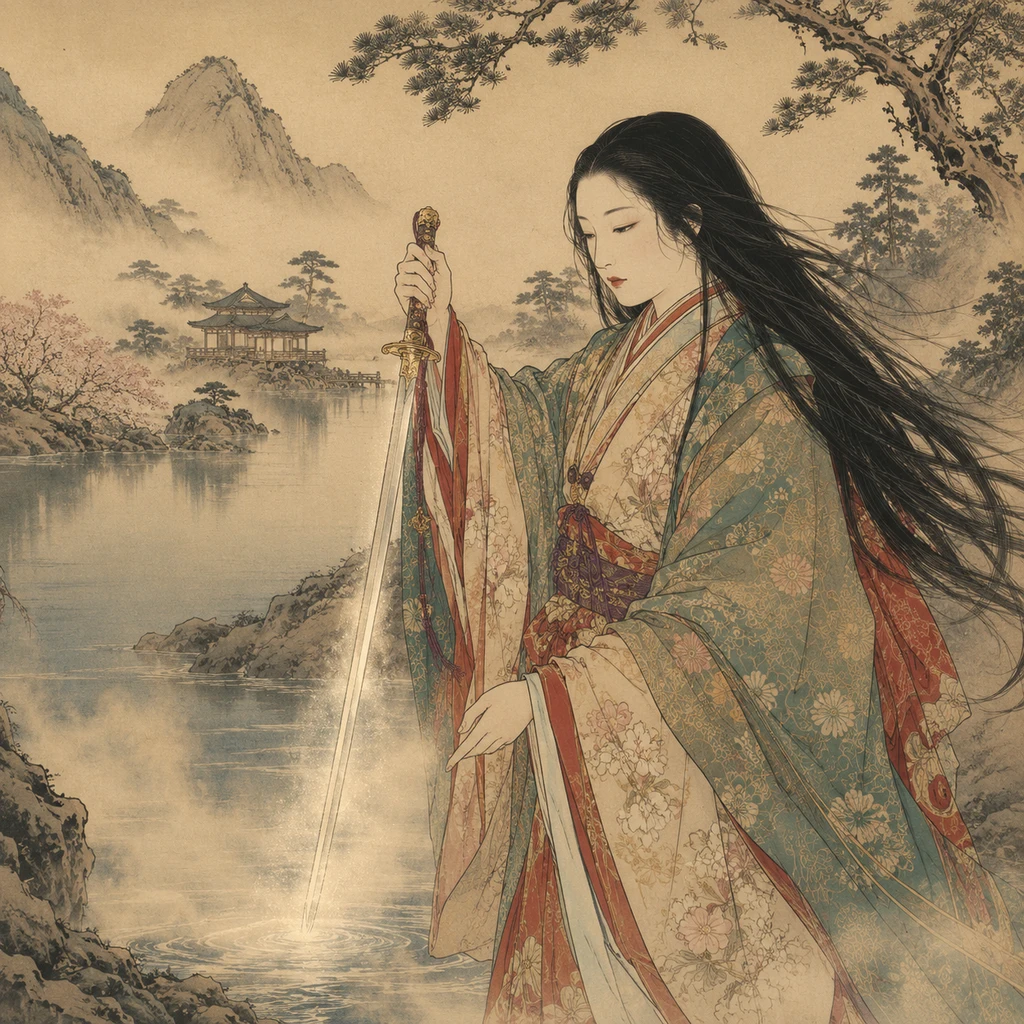 Suzuka Gozenすずかごぜん
 Fujiwara no Chikata’s Four Onifooj-ee-WAH-rah no chee-KAH-tah no yohn-kee
 Hair-CutterKAH-mee-KEE-ree
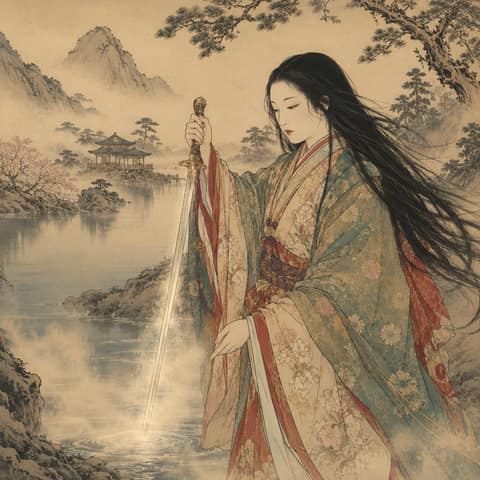
その大嶽丸を攻略する鍵を握ったのが、天女とも女盗賊「立烏帽子(たてえぼし)」ともいわれる鈴鹿御前(すずかごぜん)である。鈴鹿山に住んで旅人を襲う女首領でありながら、天降った女神でもあり、鬼の大嶽丸を恋い慕う一面さえ持つ。御伽草子『田村の草子』系の語りでは、鈴鹿御前が色香で大嶽丸から二振りの剣を奪い、田村丸(坂上田村麻呂)と力を合わせて鬼を討つ[9]。峠の内側を知り抜いた女性の霊が、外から来た英雄を導く ── 鈴鹿の物語は、男の英雄譚というより、峠そのものの力を味方につける物語なのだ。しかも大嶽丸は一度討たれただけでは終わらない。奥浄瑠璃『田村三代記』などの語りでは、討たれた魂魄が天竺へ戻り、奪われずに残った顕明連の力で蘇って陸奥の霧山で二度目の討伐を受ける[10]。鈴鹿御前が天命で世を去ると、田村丸は冥府の閻魔王に直談判して妻を取り戻したとも語られる。鈴鹿峠の麓、亀山市の片山神社は、いまも鈴鹿御前を鈴鹿大明神として祀っている。
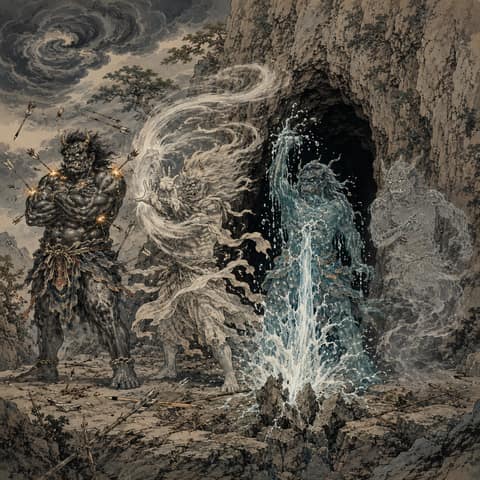
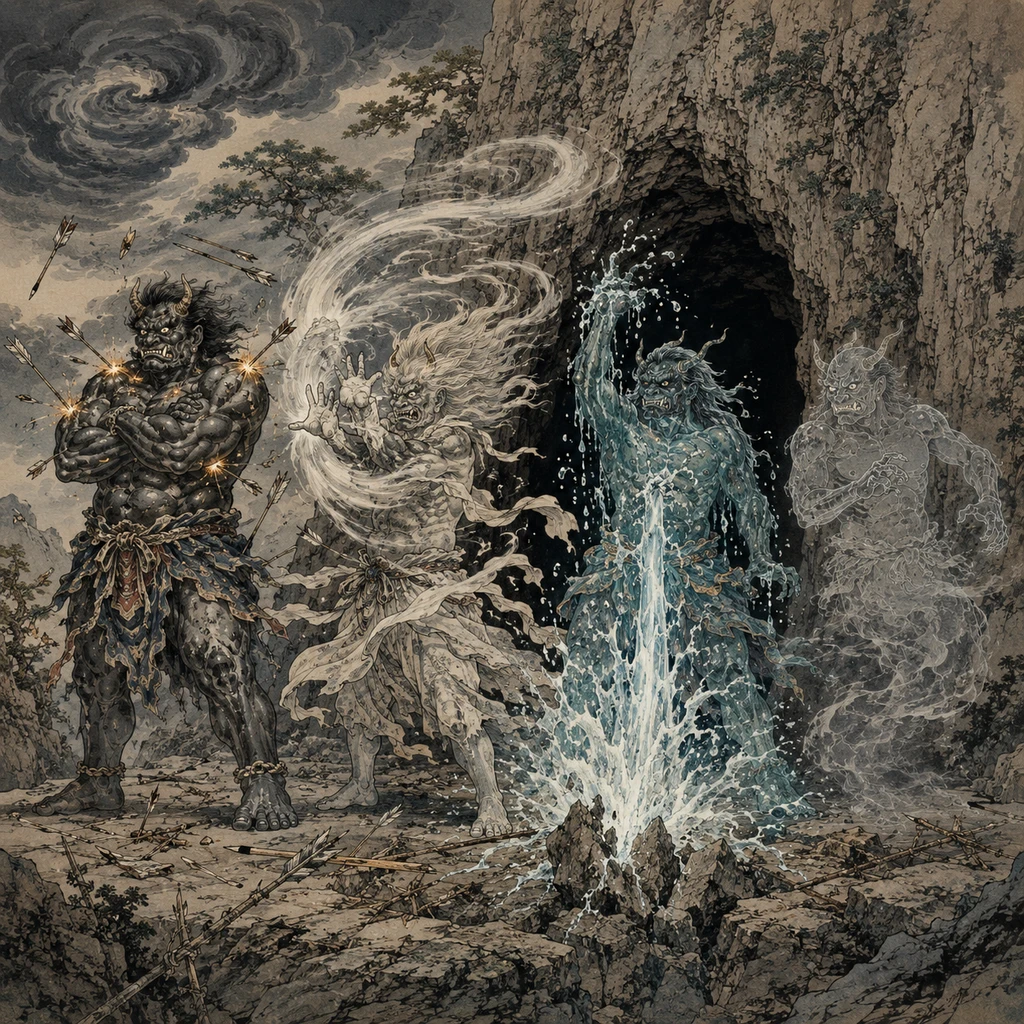
関の不安が呼ぶのは、峠の鬼だけではない。伊勢の山中には、もう一群の鬼が伝わる。藤原千方(ふじわらのちかた)の四鬼である。『太平記』巻十六「日本朝敵事」は、土蜘蛛や平将門と並べて、千方が金鬼(きんき)・風鬼・水鬼・隠形鬼(おんぎょうき)の四鬼を従えて朝廷に背いたと語る。武器を弾く堅い体の金鬼、強風を起こす風鬼、洪水を呼ぶ水鬼、姿を消す隠形鬼 ── 一軍に値する鬼たちだったが、紀朝雄(きのともお)が「草も木もわが大君の国なればいづくか鬼の棲(すみか)なるべし」と詠み送ると、鬼どもは言霊に屈して四方へ去り、後ろ盾を失った千方は滅んだ[11]。金・風・水、そして気配を消す隠形 ── 四鬼の力は、自然そのものを操る呪力の擬人化でもあった(火鬼・土鬼を加える異伝もあり、五行思想との関わりがうかがえる)。千方自身は陰陽師とも将軍とも語られる伝説的人物で、実在は定かでない。伊賀との境に近い山あいには、いまも千方の首塚と伝わる五輪塔が残る。武力ではなく一首の和歌が鬼を退けるという結末は、神と言葉の国らしい。鈴鹿の大嶽丸も、伊勢山中の四鬼も、どちらも「朝廷に背く者」として語られ、討たれて土地に名を残す ── 聖国の縁では、まつろわぬ者がそのまま鬼の名を負わされたのである。
お伊勢参りの道、
港町の祭り、
雨夜の火
聖国の縁に立つのは、鬼や神ばかりではない。神宮へ向かう道、伊勢湾の港町、そして暮らしのすぐ隣の夜道にも、怪はひそむ。
江戸の世、伊勢神宮へは「おかげ参り(お蔭参り)」と呼ばれる熱狂的な集団参詣が、ほぼ六十年を周期に全国を席巻した。慶安三年(一六五〇)・宝永二年(一七〇五)・明和八年(一七七一)・文政十三年(一八三〇)・慶応三年(一八六七)のおかげ年には、数百万ともいわれる人々が伊勢をめざして街道をゆきかった。なかには家人に黙って柄杓(ひしゃく)ひとつを手に飛び出す「抜け参り」も多く、街道筋の人々が施行(せぎょう)で彼らを支えた[12]。参詣者の宿と祈祷を取りしきったのが御師(おんし)と呼ばれる神宮の下級神職で、彼らが全国に配った神宮大麻(おふだ)と伊勢暦が、お伊勢参りの熱を絶えず焚きつけた。だが、これほど多くの人が見知らぬ道を歩けば、道連れに化ける狐狸の噂や、行き倒れの霊の話が当然のように生まれる。聖地へ向かう参宮街道そのものが、怪異の通る道でもあったのだ。
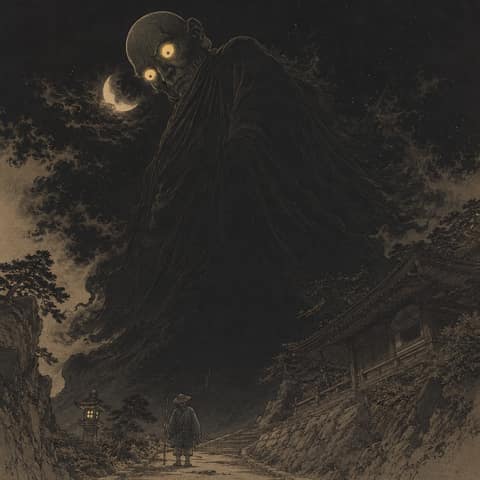
伊勢湾沿いの港町では、怪異は祭礼や噂のかたちをとる。四日市の大入道(おおにゅうどう)は、首がにゅうっと伸びる巨大なからくり山車だ。人形の高さおよそ四・五メートル、伸びる首が二・七メートル、山車台を合わせれば全長は約九メートルにおよび、「日本一大きいからくり人形」とも称される。鯨のひげを仕込んだ仕掛けを、内部の数人がかりで操る。四日市の諏訪神社の祭礼で、海辺の桶之町(おけのちょう)に出た化け狸を逆に脅かし返すために作られたのが始まりと伝わり、いまは四日市まつりの名物として親しまれている。文化二年(一八〇五)の製作と伝わり、現在の大入道は四日市市の有形民俗文化財に指定されている[13]。化け狸への対抗から生まれた巨大人形が、二百年を経て町の宝になった ── ここでは妖怪は退治されて消えるのではなく、祭りの顔として土地に居つづける。
- Great Nyūdō (Giant Priest Apparition)oh-oh-nyoo-DOH
- Hair-CutterKAH-mee-KEE-ree
 Fire of the Akuro-gamiAH-koo-roh-gah-mee no HEE
- Ootakemaruおおたけまる
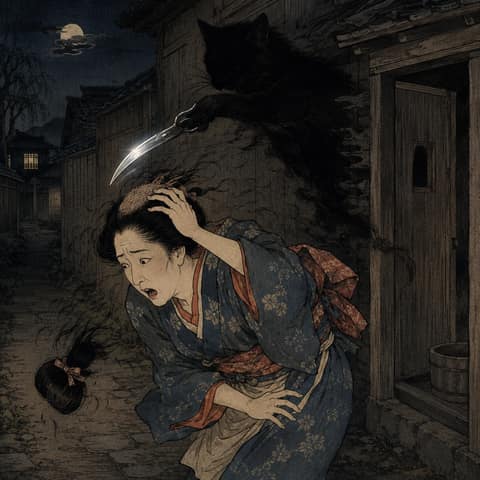
松阪では、怪異は近世の都市怪談として記録された。髪切り(かみきり)である。菊岡沾凉(きくおかせんりょう)の『諸国里人談』(一七四三年)は、元禄のはじめ、伊勢の松坂と江戸の紺屋町で、夜道を行く者が本人も気づかぬうちに髪を根元から切られ、結ばれたままの髪が路上に落ちていた、という怪を伝える[14]。狐の仕業とも髪切虫のしわざとも噂され、江戸では幾度も「髪切り騒動」が起きて人々を不安にさせた。絵師・鳥山石燕も、鋏のような爪を持つ妖怪としてこの髪切りを描いている。誰にも触れられた覚えがないのに、気づけば髪が断たれている ── その不可解さこそが、人々の不安をかきたてた。松阪は、江戸に大店をかまえた伊勢商人を数多く輩出した豊かな商都であった。人の行き交う繁華な町だからこそ、夜道の髪切りの噂は、いっそう生々しく人々のあいだを駆けめぐったのだろう。
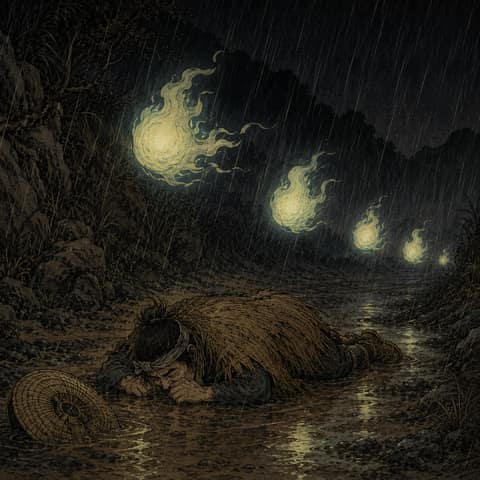
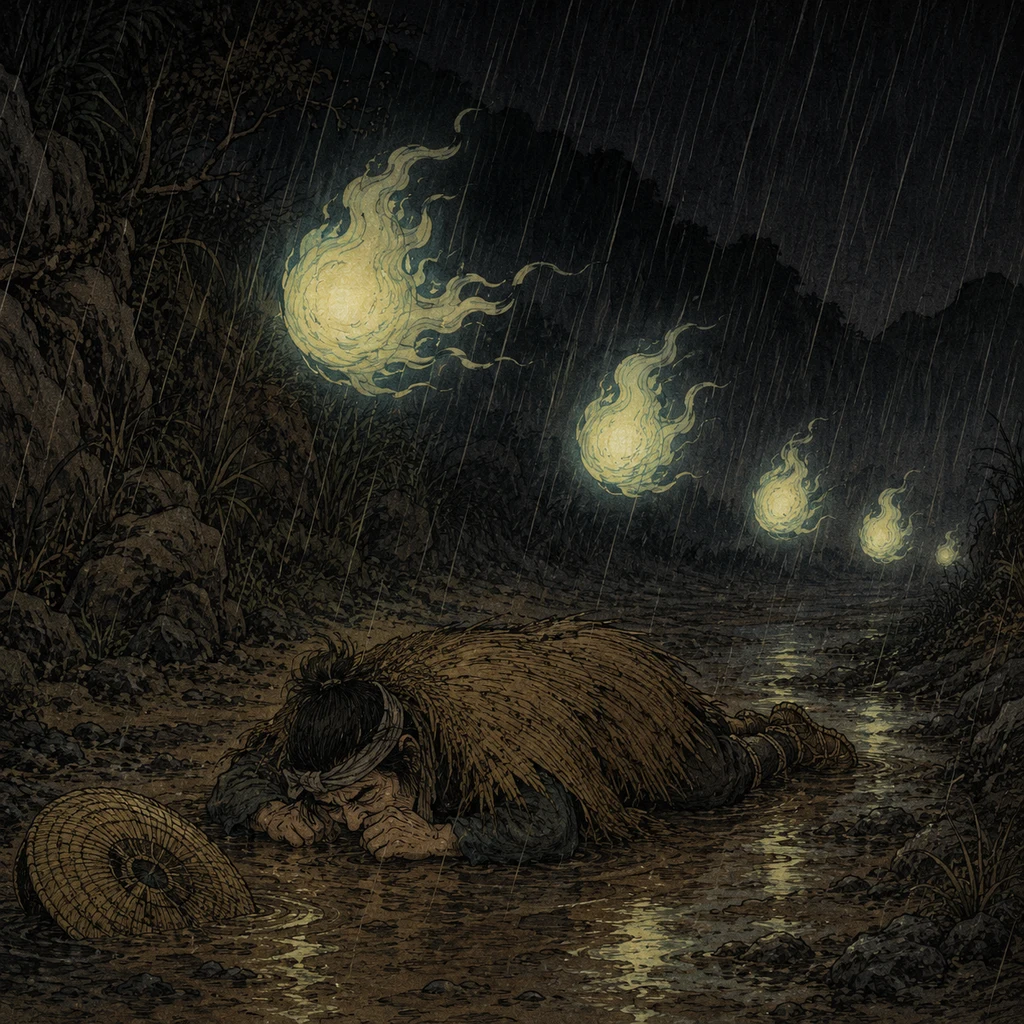
そして伊勢の雨の夜には、悪路神(あくろじん)の火が漂う。為永春水の随筆『閑窓瑣談』は、田丸領の間弓村(まゆみむら、現·玉城町)の猪草が淵に、雨夜になると提灯を灯したような怪火が往来し、出会えば病を得るので、すばやく地に伏してやり過ごすのがよい、と記す[15]。「悪路神」という名から、坂上田村麻呂が討った蝦夷(えみし)の長・悪路王(あくろおう)を連想する説もあるが、確かな根拠があるわけではない。いずれにせよ、田村麻呂の鬼退治譚が色濃いこの伊勢の地で、雨夜の怪火に「悪路」の名が冠せられたことは、興味深い符合である。海辺の港、松阪の夜道、伊勢の雨 ── 神宮の清浄からいちばん遠い暮らしの隅で、こうした小さな怪異が静かに息づいている。
伊勢国は「神に編まれた境界の国」である
伊勢を神の国としてだけ見れば、神宮と斎王の荘厳さばかりが前に出る。逆に妖怪の国としてだけ見れば、大嶽丸や鈴鹿御前の物語が孤立して見える。だが実際には、聖と怪は、同じ一枚の地図のうえに重なっている。天照大御神を五十鈴川に迎えるために神郡が編まれ、斎王が群行で身を清めて下り、参宮の道に禊の浜が置かれた ── その「清浄への執着」の強さが、そのまま「境界への恐れ」の濃さでもあった。
国の中心に神宮の光があるからこそ、その外縁の闇が際立つ。西の鈴鹿関のかなたには大嶽丸が黒雲を呼び、山中には朝廷に背く四鬼がひそみ、北の桑名では一目連が風雨を司る。道ひらきの猿田彦が国の門に立つからこそ、参宮街道には道連れの怪が生まれ、松阪の夜には髪切りが、伊勢の雨には悪路神の火が漂う。神が道をひらき、鬼が道を塞ぐ ── 伊勢国では、聖なるものと怪しいものとは、はじめから背中合わせなのだ。
倭姫命が神の鎮座地を探して歩いた巡幸の道、斎王が都から下った群行の道、おかげ参りの群衆が踏みしめた参宮街道。伊勢国の妖怪は、人がこの「神へ至る道」をゆくとき、その境のきわに立ちあらわれる。古代律令の枠を脱いで、より広く現代の県全体を歩きたいなら、ぜひ三重県の妖怪事典へ ── 鈴鹿の峠を越えた近江との境、南へ下った熊野や志摩の海まで、この聖国の縁はさらに遠くへと続いている。