YOKAI.JP

Amaterasu-Omikami

あまてらすおおみかみ

Amaterasu-Omikami

Amaterasu-Omikami

Their soul is listening — speak, and they will answer.

Basic Description

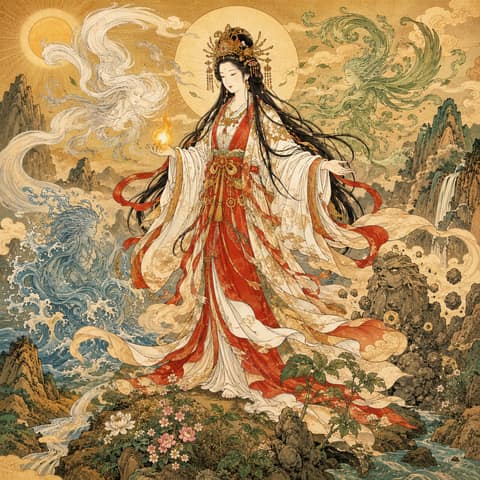
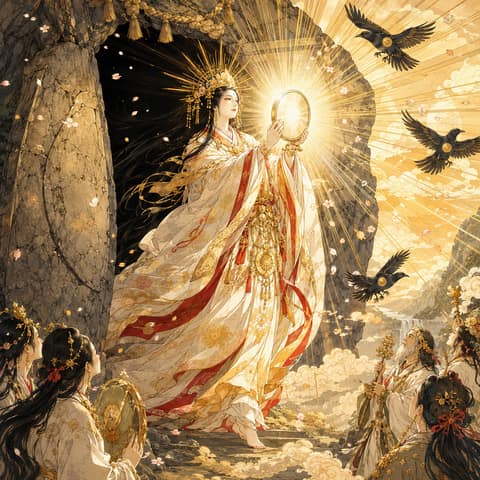
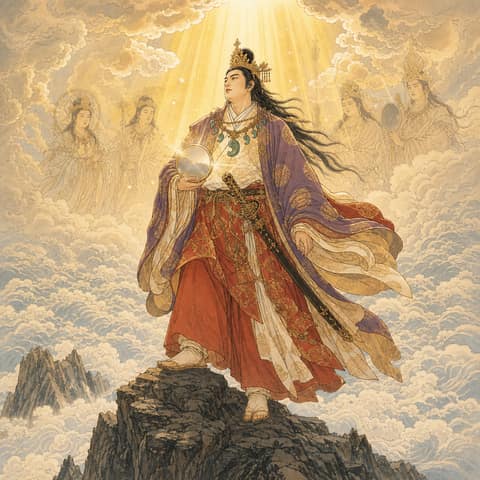
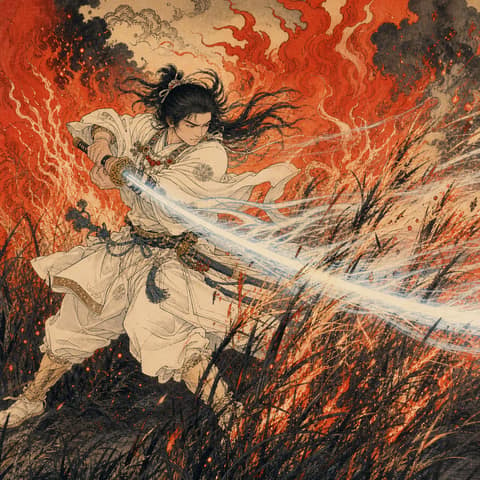
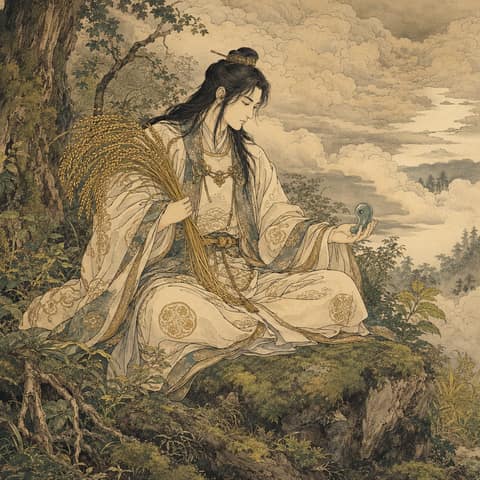
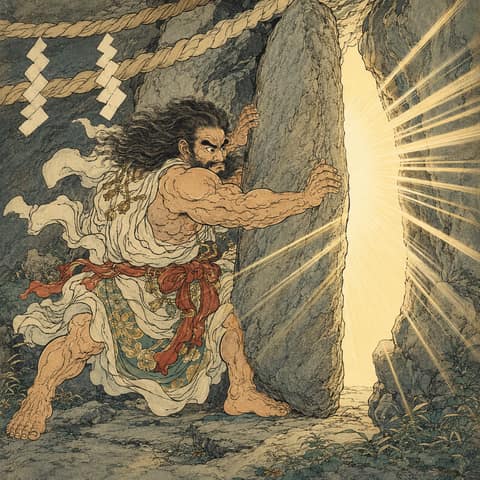
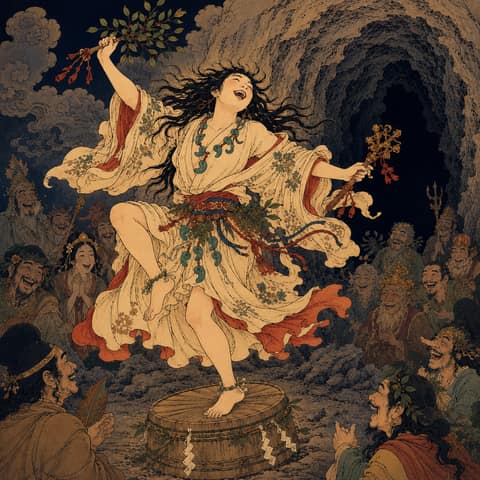
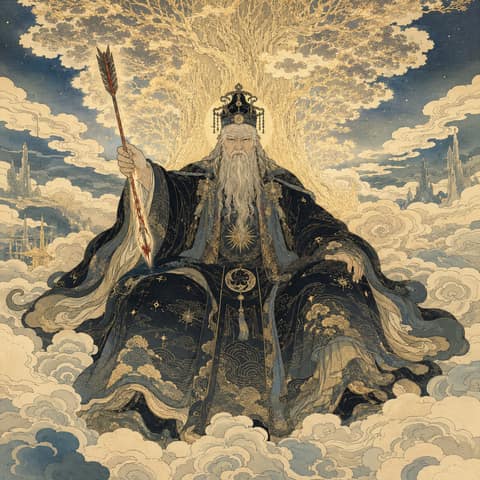
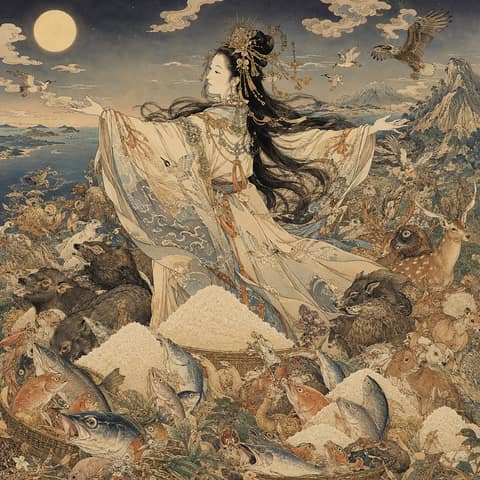
Amaterasu-Omikami is the sun goddess appearing in the *Kojiki* (712) and *Nihon Shoki* (720). She is the eldest of the Three Precious Children, born from the left eye of her father, Izanagi-no-Mikoto, when he performed a purification ritual (misogi) at Ahakihara to cleanse himself of the impurities of the underworld (Yomi)[1][2]. In the *Kojiki*, her name is written as "Amaterasu-Omikami" (天照大御神 / 天照大神); in the *Nihon Shoki*, she is referred to as "Sun Goddess," "Ohohirume-no-Muchi," and "Amaterasu-Omikami." The divine name chanted by Shinto priests before the altar at Ise Jingu is "Amaterashimasu-Sume-Okami." Entrusted by her father with the rule of Takamagahara (the High Plain of Heaven), she was enraged by the violent acts of her younger brother Susanoo-no-Mikoto in Takamagahara and hid in the Heavenly Rock Cave (Amano-Iwato), plunging the world into darkness. This "Hiding in the Rock Cave" episode is one of the greatest stories in Japanese mythology. After being lured out of the cave by the wisdom and dances of the eight million gods, she bestowed the Three Sacred Treasures (the Yata no Kagami mirror, the Yasakani no Magatama jewel, and the Kusanagi sword) upon her grandson Ninigi-no-Mikoto, sending him down to govern Ashihara-no-Nakatsukuni (the Central Land of Reed Plains). Thus, she became the ancestral deity of Emperor Jimmu and the successive imperial lineage. With her primary enshrinement at the Inner Shrine of Ise Jingu (Kotaijingu), she has been revered as Japan's supreme deity from ancient times to the present.

Folklore & Legends

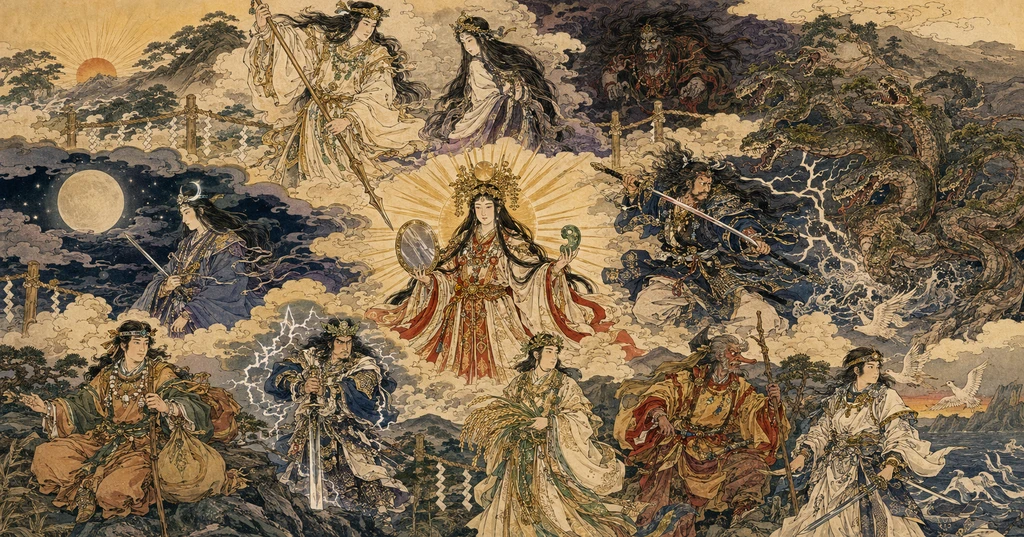
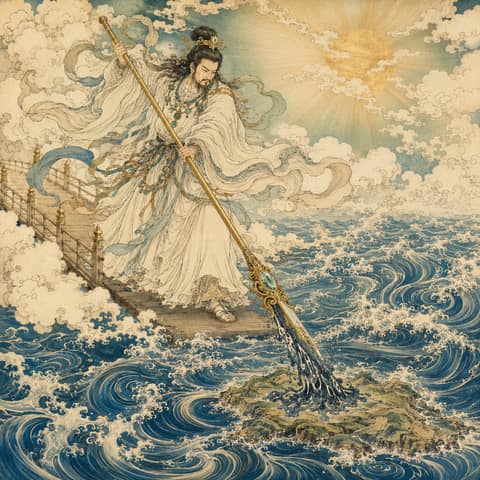
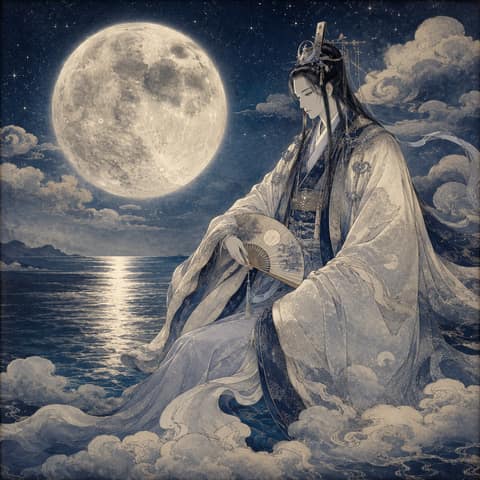
Born from the Left Eye ── Eldest of the Three Precious Children. According to the first volume of the *Kojiki*, when Izanagi purified himself at Ahakihara in Tsukushi-Himuka from the defilement of Yomi, Amaterasu-Omikami was born as he washed his left eye. Tsukuyomi-no-Mikoto was born from his right eye, and Takehaya-Susanoo-no-Mikoto from his nose; these three were called the Three Precious Children (Mihashira-no-Uzumiko). Father Izanagi entrusted them with ruling three realms: Amaterasu with Takamagahara, Tsukuyomi with the Realm of Night, and Susanoo with the Sea Plain. Amaterasu was positioned as the supreme deity of ancient Japanese cosmology, presiding over the sun, light, and the day.

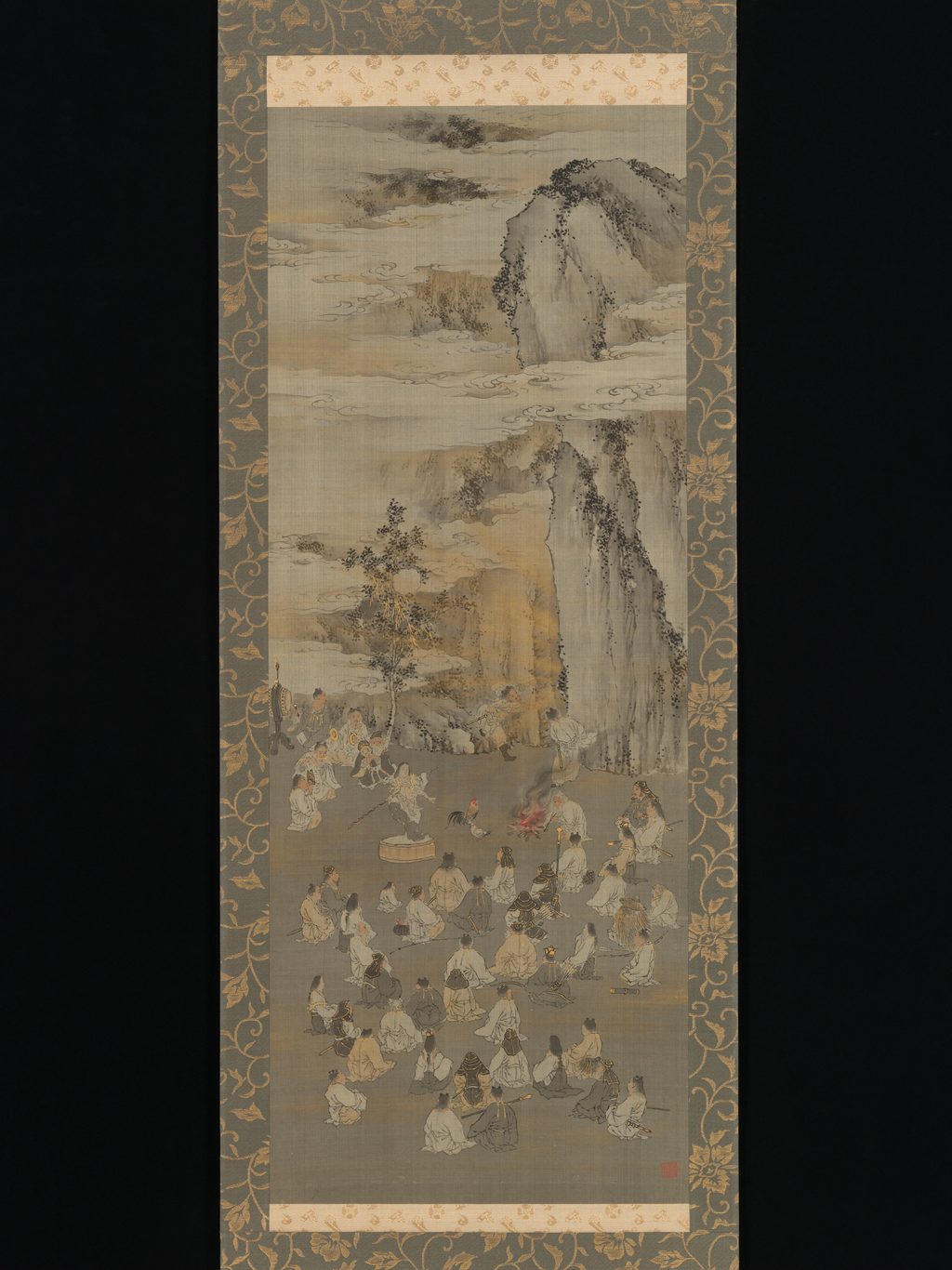
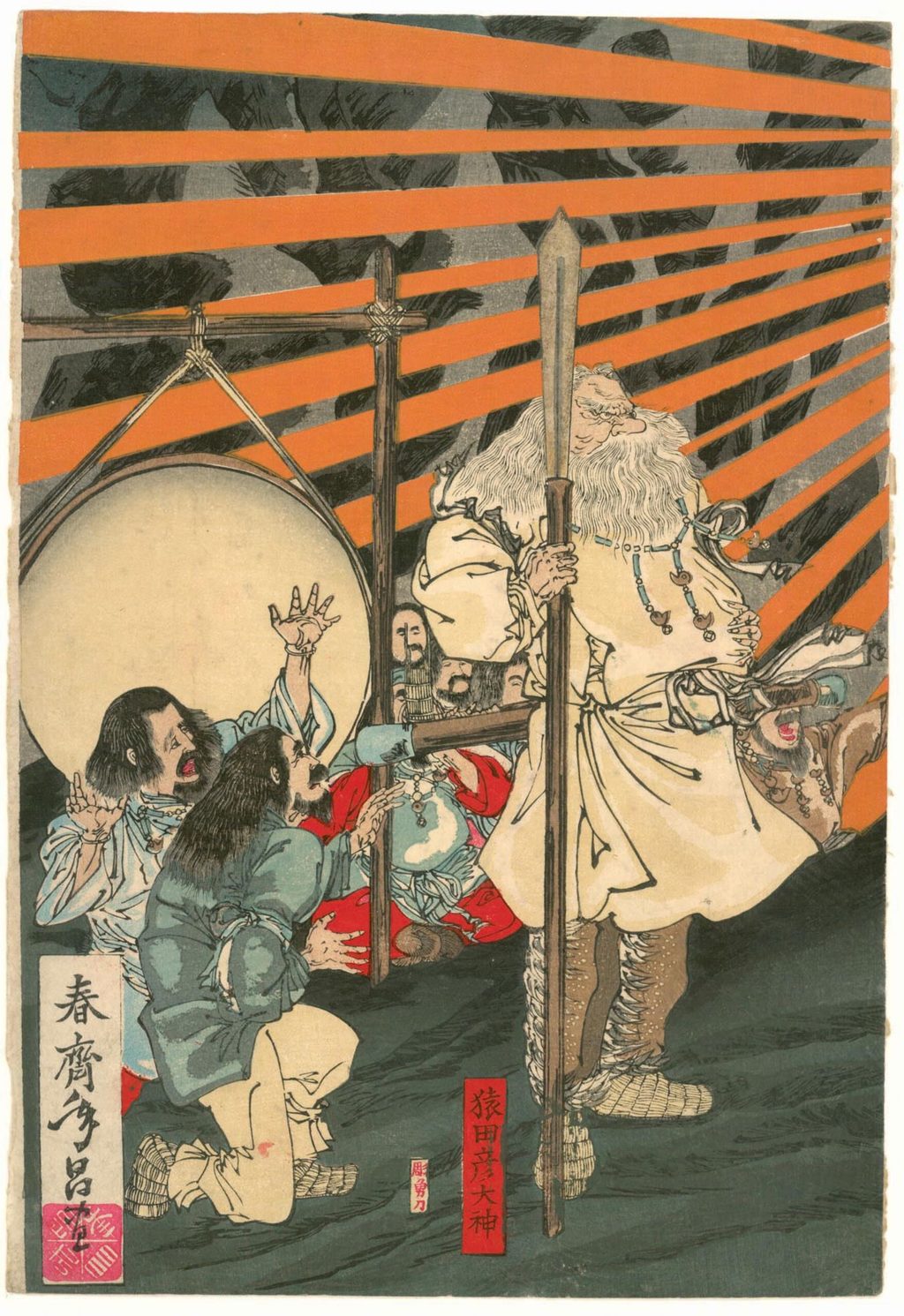
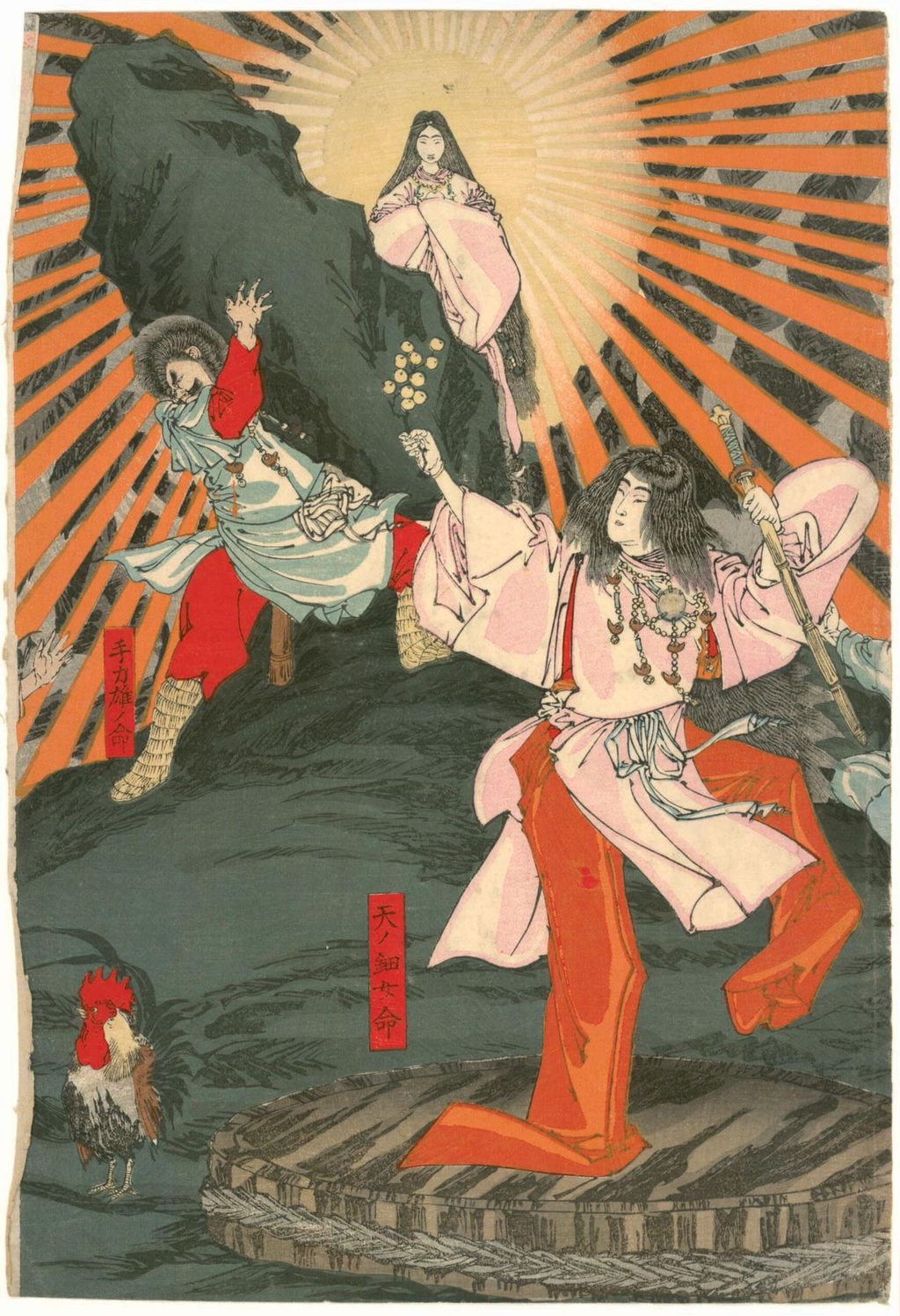
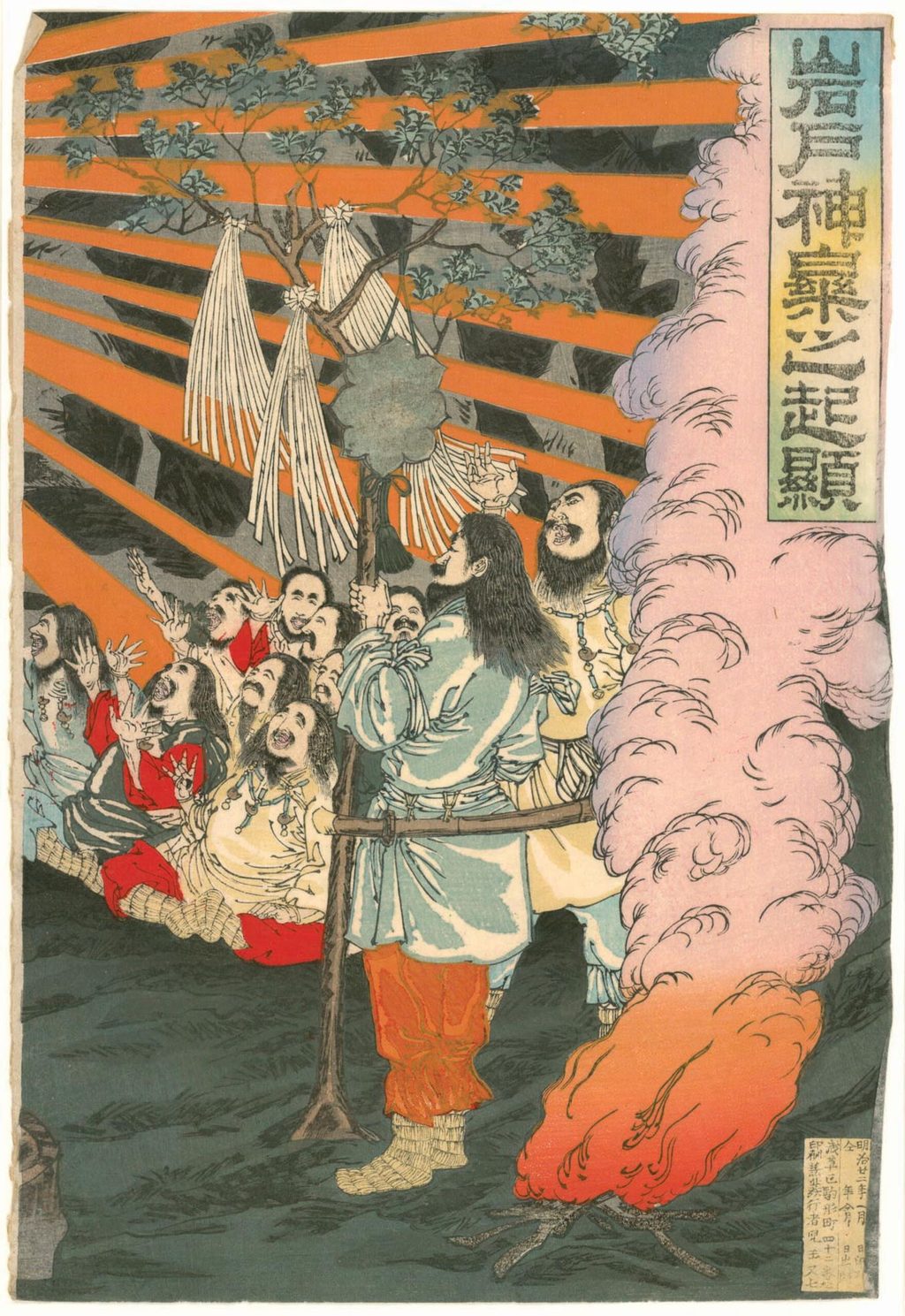
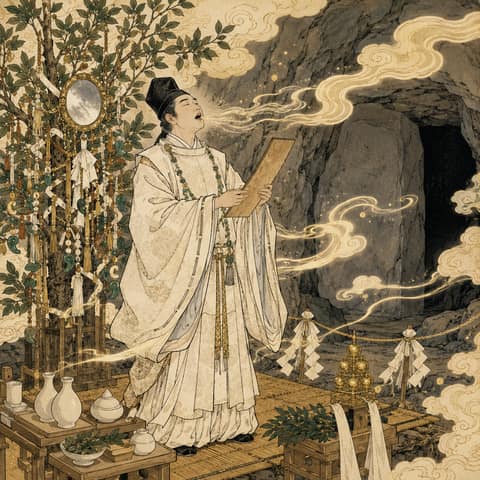
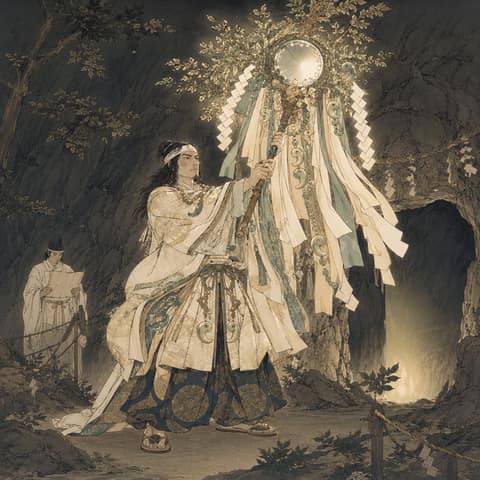
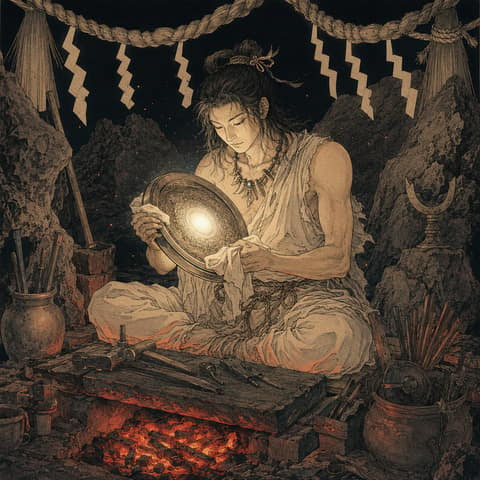
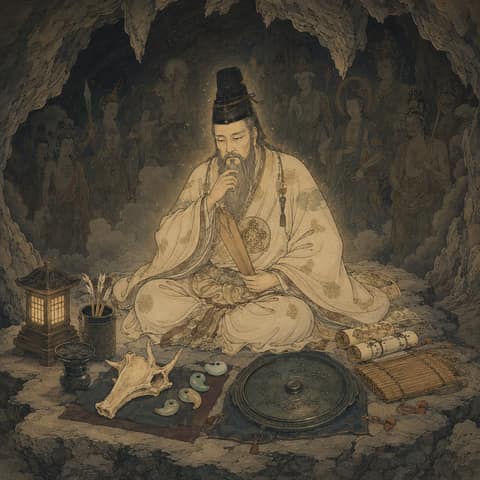
The Oath with Susanoo and Hiding in the Rock Cave. Right before being banished for yearning after his deceased mother Izanami, Susanoo ascended to Takamagahara to bid farewell to his sister. Amaterasu, suspecting he had come to usurp her realm, met him fully armed. To prove he had "no evil intentions," Susanoo proposed an oath (ukehi), a divination where they would produce deities from each other's sacred items. Five male gods (including Ame-no-Oshihomimi) were born from Amaterasu's jewels, and three goddesses (the Munakata Goddesses) were born from Susanoo's Totsuka sword. Empowered by his victory in this oath, Susanoo wreaked havoc in Takamagahara—destroying rice paddy ridges, spreading feces in the palace, and throwing a flayed horse into the weaving hall. The resulting death of a weaving maiden caused Amaterasu to shut herself in the Heavenly Rock Cave (Ame-no-Iwaya), plunging the world into darkness. The eight million gods held a grand banquet before the cave, utilizing Ame-no-Uzume's kagura dance, evergreen trees from Mount Amanokagu, the Yata mirror, and jewels to lure Amaterasu out. This is the "Hiding in the Rock Cave" tale, the paramount episode in Japanese mythology, containing the core narratives of the sun's disappearance and rebirth, the origin of kagura, and the archetype of Shinto rituals.

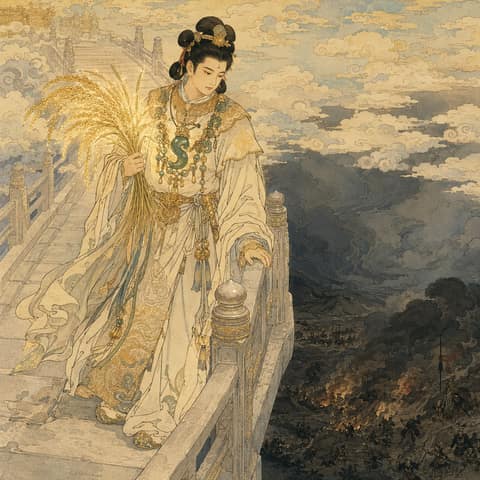
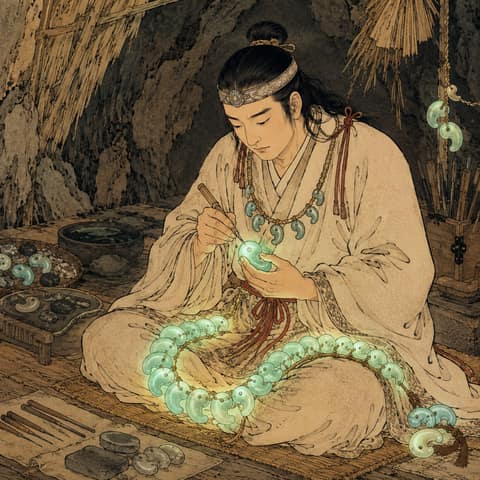
Descent of the Heavenly Grandson and the Three Sacred Treasures. When entrusting the rule of Ashihara-no-Nakatsukuni to her grandson Ninigi-no-Mikoto, Amaterasu bestowed the Three Sacred Treasures and commanded his descent ── the Yata no Kagami (the eight-span mirror, representing her own spirit), the Yasakani no Magatama (the comma-shaped jewel), and the Kusanagi no Tachi (the sword of the great serpent presented by Susanoo). She sent down the Yata mirror with the divine decree: "Revere this as my own spirit," which would later become the object of worship at Ise Jingu's Inner Shrine. The descent of the heavenly grandson is the greatest episode of "the transfer of rule from heaven to earth" in Japanese mythology, establishing the narrative framework for the ancient imperial lineage from Ninigi to Emperor Jimmu over five generations.

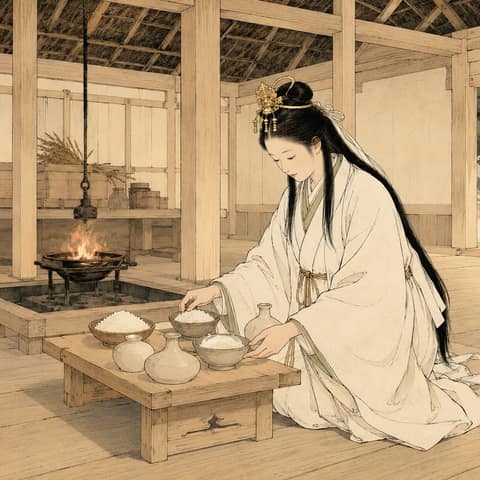
Establishment of the Inner Shrine of Ise Jingu. Amaterasu-Omikami was initially enshrined within the imperial palace, but during the reign of Emperor Sujin, the weight of worshipping her there became too great. Yamatohime-no-Mikoto, acting as a divine representative, carried the Yata mirror through various provinces until the sanctuary was finally established along the Isuzu River in Ise during the 25th year of Emperor Suinin's reign (approx. 2000 years ago). This is the origin of the Inner Shrine (Kotaijingu) of Ise Jingu, which became the eternal sacred site worshipping Japan's supreme deity as "Amaterashimasu-Sume-Okami." The object of worship in the Inner Shrine remains the Yata mirror, and the tradition of Shikinen Sengu (rebuilding the shrines every 20 years, continuing since the 4th year of Empress Jito / 690 CE) keeps the sanctuary perpetually renewed. As the core of Ise Shinto and the pinnacle of all Japanese Shinto, Ise Jingu lies at the root of religious life from ancient times to today.

Academic Research by Akihide Mishina, Takeshi Matsumae, and Shinobu Orikuchi. In the Edo period, Norinaga Motoori's *Kojiki-den* (completed in 1798) viewed Amaterasu-Omikami as "the actual sun itself," rejecting rationalized interpretations stemming from "Chinese minds" (Karagokoro). Post-war, Shinobu Orikuchi interpreted the original meaning of "Ohohirume" as "Sun Wife" (Hime), deducing it referred to a miko or saio (shrine maiden). Takeshi Matsumae proposed the male deity theory: "The archetype of Amaterasu was various male sun gods (Amateru deities) across regions, who were later feminized," which became the center of post-war mythological debate. Akihide Mishina also raised similar points in his comparative mythological research. The peculiarity of a "female sun god" in Japanese mythology remains a core issue in comparative mythology for deciphering the links between women, kingship, religion, and agriculture in ancient Japan.

Rebirth in Modern Culture. In post-war Japanese subculture, Amaterasu-Omikami has been repeatedly reimagined. In Capcom's game *Okami* (2006), the unique design portraying the sun god Amaterasu as a white wolf was highly acclaimed. The "Sun Breathing" in the manga *Demon Slayer* is interpreted as a motif inheriting Amaterasu's solar attributes and status as the strongest deity in Japanese myth. She frequently appears in anime like *Fate/Grand Order*, *Nura: Rise of the Yokai Clan*, *Touhou Project*, and *Record of Ragnarok*. She is a symbolic presence of ancient mythology that continues to exert a sustained influence on the religion, politics, and culture of the Japanese people from ancient times to the modern era.

Detailed Analysis

The Peculiarity of Japanese Mythology: Sun God = Female. While the base description touched on the primary myths of Amaterasu-Omikami, this detailed explanation delves into the comparative religious peculiarity of Japanese mythology in making the sun god female. Sun deities in ancient world mythologies—such as Greece's Apollo, Egypt's Ra, India's Surya, Inca's Inti, and Babylonia's Shamash—are predominantly male. On the other hand, female sun deities like Japan's Amaterasu, Norse's Sól, Baltic's Saulė, and some in Eastern Europe are relatively rare. In post-war Japanese mythological studies, scholars like Takeshi Matsumae proposed the male deity theory, stating that "the archetype of Amaterasu was various male sun gods (Amateru deities) who were later feminized," which became a central controversy. If we adopt this theory, the feminization of the sun god can be read as a unique deification process that advanced within the kingship, religion, and agricultural rituals of ancient Japan.

The "Hiding in the Rock Cave" Tale ── Comparative Religion of Sun Disappearance Myths. The "Hiding in the Rock Cave" tale, where Amaterasu-Omikami hides in a cave and plunges the world into darkness, is a prime example of "sun disappearance and rebirth" in world mythology. Myths recounting the disappearance and rebirth of the sun—such as the Aten faith of ancient Egypt, Surtr in Norse myth, the Hittite sun god disappearance myth, and the Baltic sun god rebirth myths—are widely distributed as religious responses to the winter solstice, solar eclipses, and agricultural cycles in ancient farming societies. Amaterasu's seclusion is interpreted as the origin myth of Shinto kagura and ritual ceremonies, where "ritual tools like Ame-no-Uzume's kagura dance, the Yata mirror, jewels, evergreen trees, and the eternal bird (announcing the eternal dawn)" summon the sun god from the cave. As the root myth of religious rituals like the ancient Japanese winter solstice festival, Niiname-no-Matsuri, and Kanname-no-Matsuri, it holds cosmological significance far beyond a simple heroic tale.

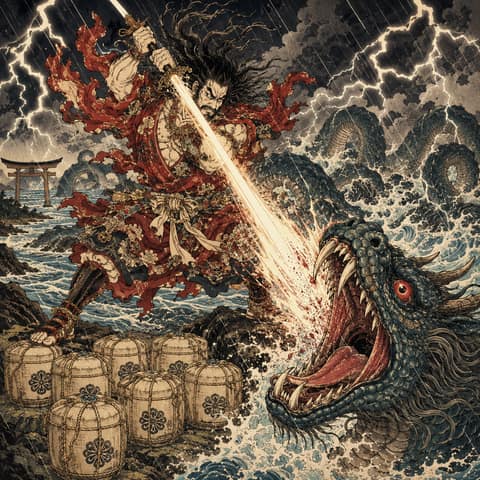
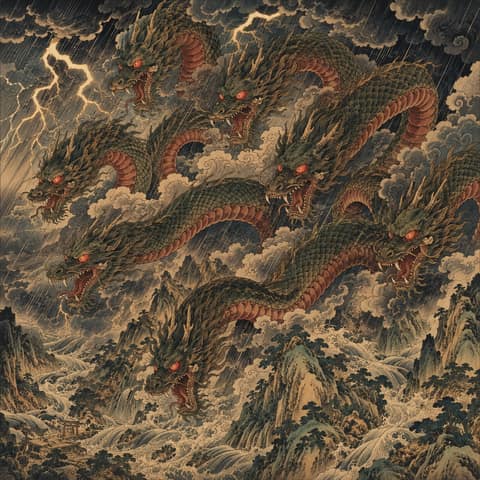
The Three Sacred Treasures ── The Unity of Kingship and Religion. The Three Sacred Treasures (the Yata mirror, Yasakani jewel, and Kusanagi sword) that Amaterasu-Omikami bestowed upon Ninigi during the heavenly descent symbolize the unity of kingship, religion, and mythology in ancient Japan. The Yata mirror embodies sunlight and Amaterasu's spirit; the jewel is a symbol of spiritual power and prayer in ancient Japanese religion; and the Kusanagi sword is a symbol of martial power and rule obtained through Susanoo's slaying of the Eight-Headed Serpent. The Three Sacred Treasures became the core of ancient imperial enthronement rituals and continue to function as the central apparatus of imperial succession ceremonies to this day. They are devices embodying the unique continuity of myth and politics in ancient Japan, where mythological narratives exert a sustained influence on modern political systems and state rituals.

Ise Jingu and the Shikinen Sengu ── Two Thousand Years of Succession. The Inner Shrine of Ise Jingu (Kotaijingu) is the sacred site enshrining Amaterasu-Omikami from ancient times to the present. Through the "Shikinen Sengu" (the ritual of completely rebuilding the shrine buildings every 20 years), which began in the 4th year of Empress Jito (690 CE), ancient architectural techniques, rituals, and Shinto culture have been passed down for over 1,300 years. This is a unique philosophy of succession that "embodies eternity through newness"—realizing an "eternity as constant rebirth" through periodic wooden reconstruction, in contrast to the "unchanging eternity" of ancient stone temples. The Shikinen Sengu continues in the 21st century, with the 62nd iteration conducted in 2013. It is a rare phenomenon in world religious history that embodies the essential views of time, eternity, and renewal in ancient Shinto.

The Imperial Lineage and the Basis of Ancient State Legitimacy. As the ancestral deity of the ancient imperial lineage, Amaterasu-Omikami has been at the core of the basis of legitimacy for the Japanese state from ancient times to the present. The genealogy from Emperor Jimmu to successive emperors to the modern emperor was established through five generations from Amaterasu, functioning as an apparatus to guarantee the continuity between ancient myth and the ancient state. This is a prime example of establishing legitimacy through a founding myth of an ancient state, alongside China's Mandate of Heaven, Korea's Dangun myth, Rome's Aeneas myth, and Britain's Brutus myth. She has a complex religious and political history, having been emphasized and politically utilized as the core of State Shinto in pre-war Japan, and undergoing a history of re-evaluation and depoliticization under the post-war system of separation of church and state and popular sovereignty.

Ise Shinto, Ryobu Shinto, and Yoshida Shinto ── History of Medieval Shinto Thought. In medieval Japan, faith in Amaterasu-Omikami gave rise to multiple ideological systems such as Ise Shinto, Ryobu Shinto, Yoshida Shinto, and Suika Shinto. Ise Shinto (Kamakura-Muromachi periods) was formed by Ise priesthood lineages like the Watarai and Arakida families, producing Shinto scriptures like the "Shinto Gobusho." Ryobu Shinto (Kamakura period) was a syncretism with Shingon Esoteric Buddhism, centered on the "Honji Suijaku" theory that identified Amaterasu with Mahavairocana (Dainichi Nyorai). Yoshida Shinto (Muromachi period) was a unique system formed by Kanetomo Yoshida (1435-1511), advocating "Yuiitsu Shinto," which positioned Shinto above Buddhism and Confucianism. Suika Shinto (Edo period) was a system integrating Confucianism, Neo-Confucianism, and Shinto by Ansai Yamazaki (1618-1682), emphasizing Shinto ethics centered on Amaterasu. These medieval and early modern Shinto thoughts evolved around Amaterasu-Omikami as their central axis, playing a decisive role in the formation of Japan's indigenous religious philosophy.

Amaterasu-Omikami in the 21st Century ── From National Tutelary Deity to Individual Spirituality. Under the post-war constitutional system of separation of religion and state and popular sovereignty, Amaterasu-Omikami has been redefined from a political status as the "core of pre-war State Shinto" to a religious status as the "tutelary deity of the entire nation and the spiritual pillar of individuals." With over 8 million annual visitors to Ise Jingu, the nationwide distribution of Jingu Taima (amulets) centered on Ise Jingu, and the organizational structure of Shinto groups and the Association of Shinto Shrines, faith in Amaterasu remains at the foundation of Japanese daily religious life in the 21st century. At the same time, she has become a modern icon repeatedly reimagined in subcultures, games, and manga, making this a rare case where ancient myth and the spiritual culture of modern Japanese people maintain continuity across two millennia. Beyond merely a deity appearing in myths, she is a presence that holds sustained meaning as a core symbol running through the entirety of Japanese culture.

Character Profile

This section is our own creative profile for storytelling. It is not historical fact or scholarship.

Yokai Type
Kami
Rarity
Legendary
Personality
Radiant and benevolent, yet possessing a strict sense of order. She feels a strong responsibility as a ruler but has an overly sensitive and emotionally intense side that leads her to shut herself away when deeply hurt.
Compatibility
Highly compatible with those who respect order and have bright, sincere hearts. Clashes with those who are chaotic, rule-breaking, or overly aggressive.
Abilities
Governance of sunlight, the day, and agricultural cyclesSupreme rule of Takamagahara (the heavenly world)Possession and bestowal of the Yata Mirror, Yasakani Jewel, and Kusanagi SwordOath with younger brother Susanoo, generation of five male and three female deitiesSeclusion in the Heavenly Rock Cave (sun disappearance) and the darkening of the worldCommanding grandson Ninigi-no-Mikoto's heavenly descent and establishing the ancient imperial lineageInheritance of rituals at Ise Jingu's Inner Shrine for over two millenniaModern symbolism spanning State Shinto, personal faith, and subculture
Weaknesses
Overly sensitive reaction to her brother Susanoo's violent acts (the sensitivity of shutting herself in the cave upon the weaving maiden's death), the limits of an ancient ruler who plunged the world into darkness out of her own emotions, political utilization in pre-war State Shinto (and the history of post-war re-evaluation and depoliticization)
Habitat
Ise City, Mie Prefecture - Ise Jingu Inner Shrine (Kotaijingu); Izawa-no-Miya; Takihara-no-Miya; Takachiho, Miyazaki Prefecture - Amano-Iwato Shrine; Miyazu City, Kyoto Prefecture - Kono Shrine (Moto-Ise); Amaterasu-affiliated and Jingu-affiliated shrines nationwide, households enshrining Jingu Taima; Japanese state rituals, personal faith, and subcultural spaces from ancient to modern times
🔮Yokai Compatibility Test

For more detailed information and diagnosis results about Supreme Deity of Takamagahara, please click here.

Sources & References

4
  1. 古事記太安万侶((現存最古の日本神話典籍), 和銅 5 年 (712)) [古典文献] Reference和銅 5 年 (712) 太安万侶が献上した日本最古の神話典籍。上巻にヤマタノオロチ退治譚を収め、形態描写・八塩折之酒の罠・天叢雲剣出現・須佐之男とクシナダの結婚・須賀の歌等を具体的に記す。國學院大學古事記学センターによる校訂本文・現代語訳が公開されている。
  2. 日本書紀舎人親王ら((養老4年成立の正史), 720) [古典文献] Reference推古天皇三十五年二月条に、陸奥国の狢が人に化けて歌ったという記事を含む。狸・狢系の獣変化を考える際の古い記録。
  3. 伊勢神宮内宮 (皇大神宮)·式年遷宮神宮司庁(三重県伊勢市·神宮司庁, 垂仁天皇 25 年 (約 2000 年前) 鎮座·持統天皇 4 年 (690 年) 式年遷宮開始·第 62 回 2013 年斎行) [神社·祭祀儀礼]天照大御神を祀る日本神道の頂点·伊勢神宮内宮 (皇大神宮)。 倭姫命 (ヤマトヒメノミコト) が御杖代として八咫鏡を奉じて諸国を巡幸し、 垂仁天皇 25 年に伊勢の五十鈴川沿岸に鎮座地が定まったとされる。 御神体は今も八咫鏡。 持統天皇 4 年 (690 年) から始まる 20 年ごとの式年遷宮 (シキネンセングウ) により社殿が新造され続け、 第 62 回遷宮は 2013 年に斎行された。 古代から現代まで日本神道の中核として千三百年以上にわたり古代の建築技術·儀礼·神道文化が継承されている。
  4. 古事記伝 (全 44 巻)本居宣長((江戸期国学の代表的注釈書、 没後 1822-1825 年に整版刊行), 1798 (寛政 10 年完成)) [学術注釈書] Reference江戸期国学の大成者·本居宣長 (1730-1801) が 35 年の歳月をかけて完成させた『古事記』 注釈書。 全 44 巻。 古代日本語の音韻·語彙·神名·神話譚を文献学的·言語学的に厳密に注釈し、 国学の中核として近世·近代日本思想を駆動した不朽の名著。 イザナギ·イザナミ·三貴子等の創世神話を含む古事記全文を解読する基礎文献。

Interested in this type of yokai?

Discover the yokai most similar to your personality with our yokai diagnosis

Start Yokai Diagnosis

Meet your guardian yokai at the shrine

Draw an omikuji fortune and discover the yokai watching over you today.