YOKAI.JP

伊斯許理度売命

いしこりどめのみこと

伊斯許理度売命

伊斯許理度売命

Their soul is listening — speak, and they will answer.

Basic Description

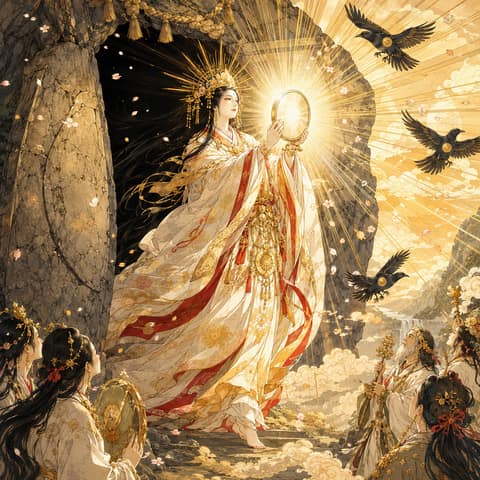
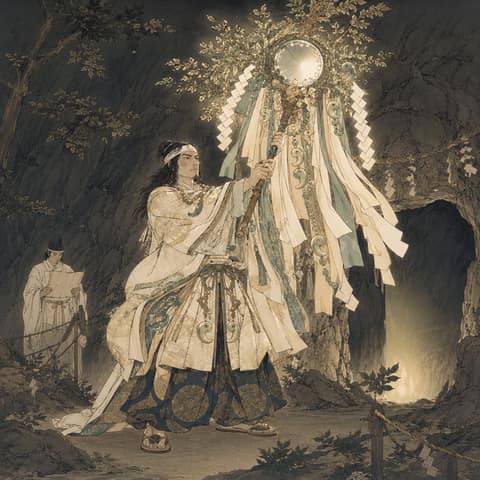
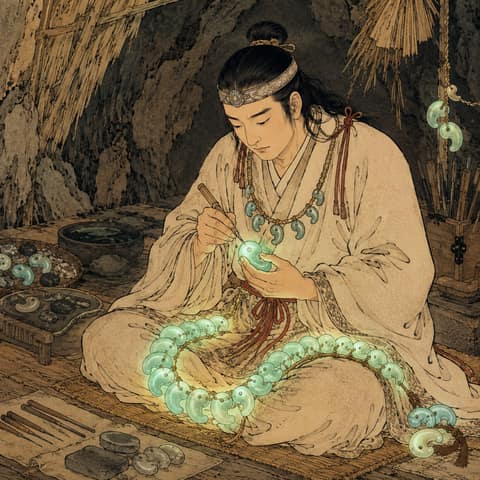
Ishikoridome is the mirror-making deity who was commanded to forge the Yata-no-Kagami (Eight-Span Mirror) during the Heavenly Rock Cave (Ama-no-Iwato) myth, and was later recognized as the ancestral god of the Kagamitsukuri-no-Muraji (mirror-makers guild) during the Descent of the Heavenly Grandson (Tenson Korin). In the *Kojiki* (Ama-no-Iwato II), acting on Omoikane's plan, the gods gathered hard rocks from the Heavenly Tranquil River and iron from the Heavenly Metal Mountains. After seeking out the blacksmith Amatsu-Mara, they commanded Ishikoridome to forge a mirror. In the ritual to draw the sun goddess Amaterasu-Omikami out of the cave, this mirror was no mere ceremonial prop; it was the core vessel designed to reflect her own light and figure back to the hidden goddess. Kokugakuin University's commentary on the Tenson Korin chapter categorizes Ishikoridome as the ancestor of the Kagamitsukuri-no-Muraji, and also notes the genealogy of mirror-making deities appearing as Ishikoridome (or Ishikoridobe) in various accounts of the *Nihon Shoki*. In Tenson Korin II, Ishikoridome descends from heaven alongside Ame-no-Koyane, Futodama, Ame-no-Uzume, and Tama-no-Oya as one of the Five Attendant Deities (Itsutomonoo), and is recorded as the ancestor of the mirror-making clan. The official overview of Hinokuma Shrine and Kunikakasu Shrine mentions that Ishikoridome is enshrined in the auxiliary shrine of Hinokuma Shrine, passing down the legend that in the Age of Gods, Ishikoridome acted as the master artisan who cast Amaterasu's sacred mirror. Before the cave, the mirror stood alongside Ame-no-Koyane's prayers and Futodama's *gohei* as an implement capable of moving the divine will. Ishikoridome is not a deity who calls out to the light directly in the darkness, but rather the deity who crafts the mirror for the light to return to.

Folklore & Legends

Ishikoridome's mythic role lies in bringing "that which reflects" into the darkness of Ama-no-Iwato. When Amaterasu-Omikami hides in the cave, the world loses its light. Omoikane's plan does not begin solely with dance and prayer; it begins with the process of manufacturing objects. The *Kojiki* (Ama-no-Iwato II) records that after gathering hard stones, iron, and a blacksmith, the gods commanded Ishikoridome to make a mirror. The mirror is an optical tool prepared outside the sealed cave, acting as the catalyst that prompts Amaterasu to peek outside, wondering, "Is there a deity more noble than I out there?"

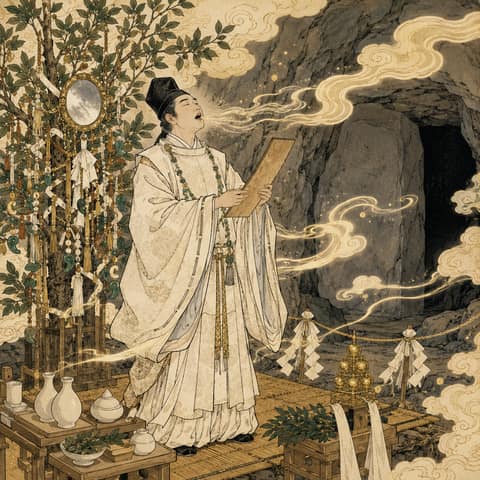
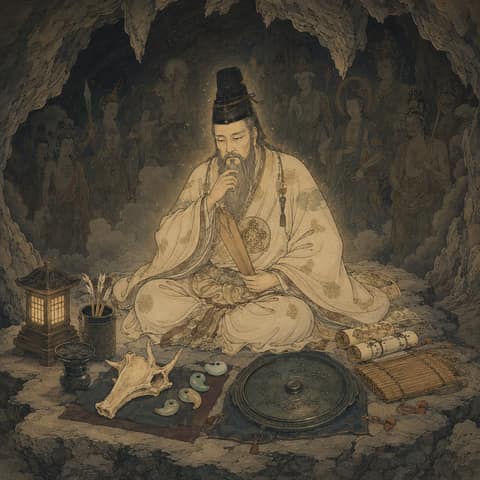
For this deity, making a mirror is both a technical craft and a sacred ritual. Kokugakuin University's commentary on ritual implements points out that the Ama-no-Iwato myth heavily overlays ancient ritual elements such as mirrors, jewels, cloth, ironware, and oracle bones. Among these, Ishikoridome is the deity who transforms materials like iron and stone into a vessel capable of reflecting a god's image. While a mirror is a tool for seeing, in mythology, it possesses the power to move the one who looks into it. Amaterasu is lured out by the mirror. Ishikoridome does not create the light itself, but creates the surface upon which the light recognizes its own existence.

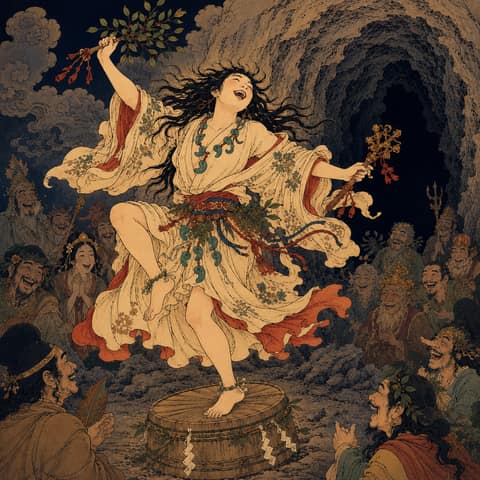
The commentary on the *Kojiki* text connects the name and function of this deity to the mirror-making clan. It notes that Ishikoridome is recorded as the ancestor of the Kagamitsukuri clan in the Tenson Korin section, and indeed descends as one of the Five Attendant Deities. The Five Attendant Deities are the gods who bring the techniques used at Ama-no-Iwato—prayers, *gohei*, dance, mirrors, and jewels—down to the earth. Ishikoridome carries the lineage of mirror-making, linking the mirror forged in heaven for Amaterasu to earthly rituals and the vocations of human clans.

The history of Hinokuma Shrine and Kunikakasu Shrine strongly conveys the later worship of this mirror-making deity. Their official overview explains that Hinokuma Shrine enshrines the Hizokagami (Sun Image Mirror) as its shintai (sacred body), while Kunikakasu Shrine enshrines the Hibokokagami (Sun Spear Mirror). Furthermore, it transmits the legend that when Amaterasu hid in the heavenly cave, following Omoikane's counsel, Ishikoridome acted as the master artisan, casting the sacred mirrors from the copper of Mount Ame-no-Kaguyama. Here, not only the Yata-no-Kagami of the *Kojiki*, but also the two sacred mirrors from the *Nihon Shoki* traditions are tied to the faith of Hinokuma and Kunikakasu.

The deity's alternate names, Ishikoridome and Ishikoridobe, vividly retain the tactile sensation of mirror-making. "Ishi" (stone) evokes the hardness of the molds receiving molten metal, while "kori" (to coagulate/stiffen) connects to the sensation of melted material solidifying to gain form. A mirror reflects light, but its creation requires the heavy manual labor of minerals, fire, molds, and polishing. Ishikoridome is the deity of metallurgy hidden within a myth of light. Because of this, the deity encompasses not just the beautiful mirrored surface, but the unseen hardships of the furnace, the mold, the grinding, and the failures.

The key to understanding Ishikoridome lies in realizing that before a mirror is a "tool for seeing," it is a "tool for welcoming the divine." When Amaterasu leans out of the cave, the mirror functions as another sun placed in the outside world. There is a profound reversal here: a world deprived of light first creates an image of the light and waits there. Ishikoridome is not a deity who simply waits for what is lost, but a deity who creates the place for it to return. To forge a mirror in the dark was to build a doorway for the light to come home.

Related Yokai

Yokai deeply tied to this one in legend.

Detailed Analysis

Ishikoridome, casting the Yata-no-Kagami (Eight-Span Mirror) before the rock cave, is the deity in the Ama-no-Iwato myth who creates the vessel that reflects the lost light back onto itself. When Amaterasu-Omikami hides within the cave, the world goes dark. The gods gather at the Heavenly Tranquil River and prepare according to Omoikane's plan. The *Kojiki* (Ama-no-Iwato II) records that after seeking hard stones, iron, and a blacksmith, they commanded Ishikoridome to make a mirror. This mirror later becomes the central ritual implement used to lure Amaterasu out.

The act of "making a mirror" is extremely proactive in the Ama-no-Iwato myth. If they merely wanted to wait for the light to return, the gods could have simply continued praying. However, Omoikane's strategy is to create a surface to catch the light in advance, even while the light is absent. Ishikoridome's mirror is not a trap to catch Amaterasu. It is a location of light, showing that the outside world is still prepared to welcome the deity. The mirrored surface is silent, but within that silence dwells the signal: "It is safe to return here."

When Kokugakuin University's commentary reads the Ama-no-Iwato myth as an origin tale of ancient rituals, the mirror is a crucial implement alongside jewels, cloth, and oracle bones. A mirror possesses not only the practical utility of reflecting an image but the power to summon a deity and anchor its presence. As the deity responsible for crafting this implement, Ishikoridome bridges the beautiful surface of mythology with the heavy, gritty reality of metalworking. Fire, metal, stone, molds, and polishing—all of it converges into a single mirror placed before the gods.

During the Descent of the Heavenly Grandson, Ishikoridome descends to earth as one of the Five Attendant Deities. The *Kojiki* identifies Ishikoridome as the ancestor of the mirror-making clan. This means the mirror-making technology that guided Amaterasu at Ama-no-Iwato is handed down to earthly clans and integrated into human rituals. Mirror-making is not merely a personal skill; it is a vocation rooted in myth, becoming a part of the ritual technology that supports the heavenly grandson's rule.

The official history of Hinokuma Shrine and Kunikakasu Shrine connects Ishikoridome to another story of mirrors. Hinokuma Shrine enshrines the Hizokagami as its sacred body, while Kunikakasu Shrine enshrines the Hibokokagami. The official overview recounts that when Amaterasu hid in the cave, following Omoikane's advice, Ishikoridome acted as the master artisan and cast the sacred mirrors from copper. Here, the function of the mirror-making deity expands into the worship of two major shrines.

While the Hizokagami and Hibokokagami belong to a different lineage than the Yata-no-Kagami, they are spoken of as mirrors born from the same darkness of Ama-no-Iwato. The shrines note that these two mirrors are revered by the Imperial Court as sacred treasures second only to the Three Sacred Treasures (which includes the Yata-no-Kagami). Here, Ishikoridome's divine status expands from "the deity who made a mirror" to "the deity who upholds the history of mirrors closely associated with the Imperial ancestors." A mirror is an image of the deity, and at the same time, the vessel (yorishiro) that welcomes the deity itself.

Read in a modern context, Ishikoridome is a deity of reflection and recording. Mirrors, lenses, photography, video, measurement, inspection, design, and metal polishing—all are technologies centered on making an object visible without distorting it. The myth of forging a mirror in the darkness resonates with the act of preparing tools that reflect the truth in the midst of confusion. Ishikoridome is not a deity who wields blinding light. When the light returns, Ishikoridome is the deity who silently prepares the surface to catch it, reflect it, and return it to the world.

Furthermore, this deity's mirror is a tool for self-recognition. When Amaterasu looks out from the cave, the mirror does not merely reflect the outside world; it returns the deity's own existence back to her. The hidden one sees her own light once more, reconnecting with the world. Ishikoridome creates that catalyst. To forge a mirror was to prepare the surface for a world that had lost its center to regain itself.

Character Profile

This section is our own creative profile for storytelling. It is not historical fact or scholarship.

Yokai Type
Kami
Rarity
Divine
Personality
Quietly facing the furnace and materials, crafting the vessel to reflect the lost light. Values precision over flashiness, polishing over emotion, and steadfast vocational skill over improvisation.
Compatibility
Deeply compatible with those involved in metalworking, mirrors, photography, video, optics, crafts, design, inspection, and recording, as well as those seeking to re-evaluate and look closely at themselves.
Abilities
Casting the Yata-no-KagamiForging Sacred MirrorsMetalworkingMirror PolishingReflection of LightAncestor of the Mirror-Making ClanOrigin of the Hizokagami and HibokokagamiDescent as an Attendant Deity
Weaknesses
Not a deity who generates light out of nothing. Without materials, a furnace, time, the patience for polishing, and ultimately someone to look into the mirror, this power remains dormant.
Habitat
Before the Heavenly Rock Cave, among the procession of the Five Attendant Deities, at Hinokuma and Kunikakasu Shrines, and wherever mirrors and metalwork are crafted.
For more detailed information and diagnosis results about 岩戸に八咫鏡を鋳る鏡作神・伊斯許理度売命, please click here.

Sources & References

4
  1. 古事記ビューアー・天の石屋②國學院大學古典文化学事業(國學院大學) [古典文献]天岩戸神話における伊斯許理度売命の鏡奉製、八咫鏡、作鏡連祖神としての注釈を確認するための古事記本文・注釈。
  2. 古事記ビューアー・天孫降臨②國學院大學古典文化学事業(國學院大學) [古典文献]伊斯許理度売命が五伴緒の一柱として天孫降臨に従い、作鏡連等の祖とされる箇所を確認するための古事記本文・注釈。
  3. 神宮概略日前神宮・國懸神宮(日前神宮・國懸神宮) [神社公式資料]日前神宮・國懸神宮における石凝姥命、日像鏡、日矛鏡、天香山の銅による御鏡鋳造、二つの神鏡の由緒を確認する公式資料。
  4. 器物データベース・天の石屋と古代祭祀國學院大學古典文化学事業(國學院大學) [学術データベース] Reference天岩戸神話を鏡・玉・布・鉄製品・卜骨などの古代祭祀要素と結びつけて確認した典拠。

Interested in this type of yokai?

Discover the yokai most similar to your personality with our yokai diagnosis

Start Yokai Diagnosis

Meet your guardian yokai at the shrine

Draw an omikuji fortune and discover the yokai watching over you today.