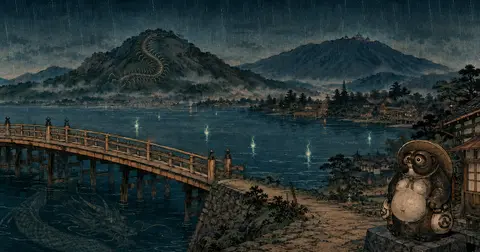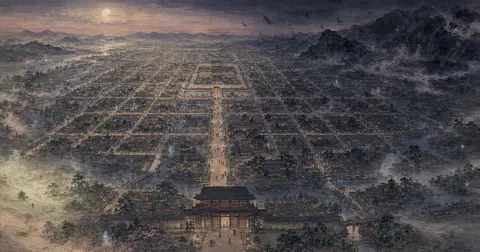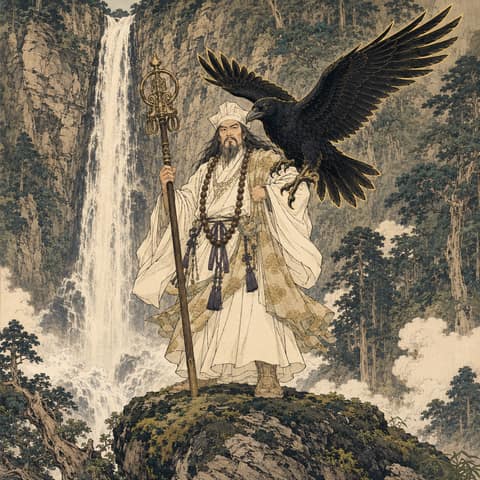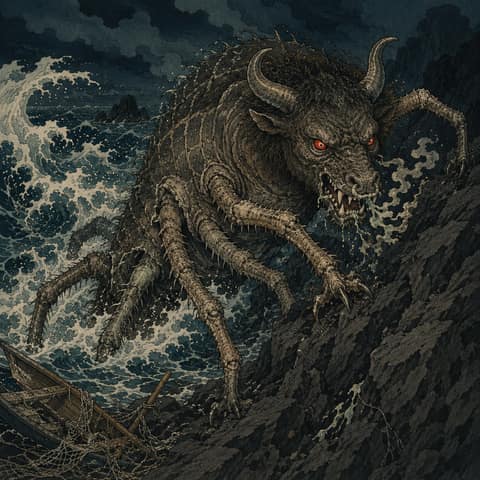
「木の国」と書いて、きのくに。これが紀伊国のいちばん古い名である。降る雨が多く森が深かったからとも、この地を治めた紀国造の名にちなむともいい、やがて好字二字の制で「紀伊」の字が当てられた[1]。木の神が棲む国──そう信じた古代人の感覚は、ただの語呂合わせではない。『日本書紀』は、素盞嗚命から木の種を託された五十猛命が、妹神の大屋都姫・都麻津姫とともに各地へ植樹し、最後にこの地を選んで鎮まったと伝える。三神を祀る伊太祁曽神社は、いまも紀伊国の総鎮守として木を司る[2]。
紀伊国は、現在の和歌山県の全域と、三重県南部の熊野地方にまたがる令制国であった。律令制下では伊都・那賀・名草・海部・在田・日高・牟婁の七郡を置き、北部に紀国造、南の熊野に熊野国造という二つの古い首長がいた[1]。この「二つの古層」が紀伊を理解する鍵になる。北の紀ノ川流域は木と植樹神の国、南の牟婁・熊野は神々の上陸する辺境の他界──同じ令制国のなかに、性格の異なる二つの聖地が同居していたのである。
現在の県全体を束ねる事典は和歌山県の妖怪事典に譲り、この稿では令制国「紀伊」の古層、すなわち神武天皇の上陸する熊野、補陀洛の渡海僧が船出する那智の浜、上皇が百度通った参詣道、空海が開いた高野の山に分け入って、そこに棲む怪を読む。
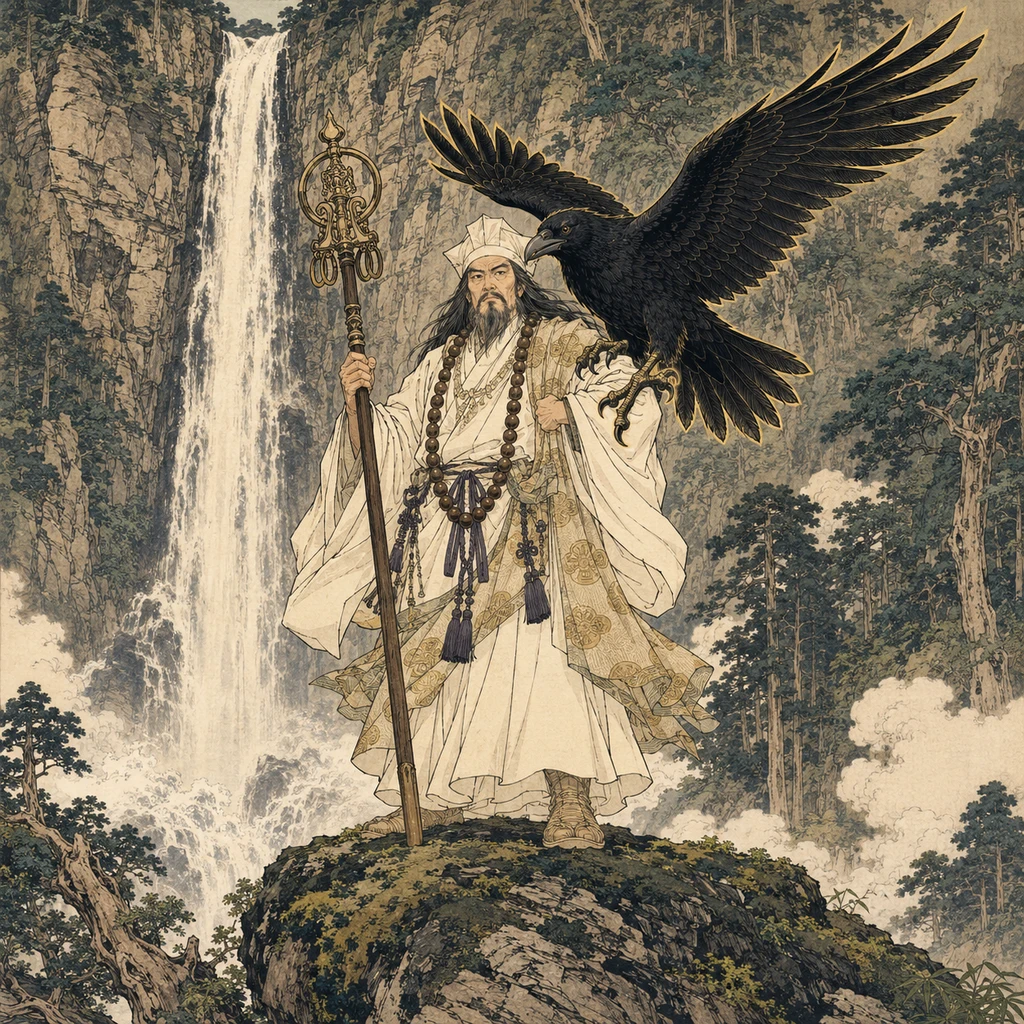
Kumano Gongen
Kumano Gongen is the collective name for the deities enshrined at the Kumano Sanzan (the Three Grand Shrines of Kumano: Kumano Hongu Taisha, Kumano Hayatama Taisha, and Kumano Nachi Taisha). It stands as a symbolic entity of Shinbutsu Shugo, the high-level syncretism of Japan's ancient nature worship (Shinto) and Buddhism. The term "Gongen" means that a Buddha or Bodhisattva has "temporarily" (Gon) "manifested" (Gen) in the form of a Japanese Kami (god) in order to save the sentient beings of Japan. Kumano has long been a sacred land surrounded by steep mountains, deep forests, and the sea, where primal mountain worship—rooted in awe of giant stones, waterfalls, and great rivers—thrived. When Buddhist Pure Land doctrines and the ascetic systems of Shugendo merged with this foundation, Kumano Gongen developed into a powerful object of faith that promised both "salvation in this world" and "rebirth in the Pure Land in the next." From the late Heian period through the Kamakura period, retired emperors frequently made imperial pilgrimages (Kumano Miyuki) there. Eventually, it became Japan's greatest sacred site, attracting people of all classes, genders, and states of purity, creating such endless lines of pilgrims that the phenomenon was dubbed the "Ants' Pilgrimage to Kumano."
Read more神々の上陸する辺境──神武東征と八咫烏
紀伊国の古代を語るとき、まず据えねばならないのは、ここが「神々の上陸する辺境」だったという神話的位相である。『古事記』『日本書紀』の伝える神武東征で、初代天皇となるイワレヒコ(神武)は、難波での敗北ののち海路を南へ迂回し、熊野の地に上陸する。だがそこで荒ぶる神の化身たる大熊が現れ、軍勢はことごとく気を失って倒れた[3]。
倒れた一行を救ったのが、熊野の土豪である高倉下であった。彼は夢の告げに従って一振りの太刀を献じる。この太刀──布都御魂と称えられる神剣──を手にした途端、イワレヒコは目覚め、熊野の荒神は切り倒された。そして天照大神と高木神が遣わした三本足の霊鳥、八咫烏の導きによって、一行は熊野の険路を抜け、大和の宇陀へと至る[3]。
この神話が紀伊国にとって決定的なのは、熊野が「天皇という秩序が、いったん死に瀕してから蘇る地」として刻まれた点にある。荒神に倒れ、神剣で覚醒し、霊鳥に導かれて他界の山を抜ける──熊野上陸の一段は、のちの熊野信仰が抱く「擬死再生」の原型をすでに含んでいる。八咫烏はこののち熊野三山の神使として定着し、参詣者を導く霊鳥となった。
熊野権現とは、本宮・新宮・那智の三山に祀られる神々の総称である。原初の山と滝と巨石への畏怖の上に、仏が衆生を救うため日本の神の姿で現れたとする本地垂迹の思想と、修験道の修行体系が幾重にも積み重なって、この複合神格は生まれた[4]。神武を倒し、また蘇らせた熊野の荒ぶる神威は、馴致されて権現となってもなお、その底に「人を一度死なせてから生かす」辺境の力を宿し続けた。県全体の信仰史は和歌山県の事典に譲るとして、ここでは熊野が令制国紀伊の南半を占める「他界の入口」であった、という古層を確認しておきたい。
南海の彼方へ──補陀洛渡海という捨身
熊野が他界の入口であるという感覚を、これ以上ないほど極端に押し進めたのが、那智の浜から行われた補陀洛渡海である。これは紀伊国の古層を象徴する、世界にも類のない信仰実践であった。
南の海の彼方には、観音菩薩の住まう補陀落浄土があるという。その浄土を目指して、僧が小船に乗り、二度と還らぬ航海へ漕ぎ出す。これが補陀洛渡海と呼ばれた捨身行である。記録に残る最古は貞観十年(八六八)の慶龍上人とされ、平安から江戸期にかけて行われた。全国で約五十六例が確認され、その半数近い二十八例が熊野那智から船出したという[5]。
渡海の様は凄絶であった。全長わずか六メートルほどの船の甲板に小さな屋形を組み、渡海僧はわずかな食料と灯油だけを携えて中へ入る。屋形の扉は外から釘で打ちつけられ、僧はもはや出ることができない。船は伴船に曳かれて沖へ運ばれ、綱を切り離されて黒潮のなかへ消えていった[5]。海のかなたに理想郷があるという熊野の自然信仰が、仏教の浄土思想と結びつき、那智の浜でこの究極の行が定着したのである。
神武の擬死再生も、補陀洛の渡海も、根は同じ一つの地理感覚に発している。紀伊国の南端は、生者の世界が尽き、海と山の向こうに他界が始まる「果ての地」であった。この感覚こそが、次に見る数々の怪を育てた苗床である。
参詣の道に湧く怪──蟻の熊野詣と夜道の妖
他界の入口たる熊野へ、人々は列をなして通った。上皇(法皇)の熊野詣を熊野御幸といい、白河・鳥羽・後白河・後鳥羽の院政期を中心に、総計およそ百度を数えた[6]。やがてその巡礼熱は身分を越えて庶民へ広がり、絶え間なく続く参詣の列は「蟻の熊野詣」と称された。女性や身体に障りのある者など、他の寺社が忌避した人々にまで門戸を開いたことが、熊野信仰の最大の特色であった[6]。
誰もが歩いた道──そこにこそ怪は湧く。紀伊の妖怪の多くが、聖地そのものより「聖地へ通じる夜道」に現れるのは、この参詣の地理から必然的に導かれる。歩く者の不安と疲れと畏れが、峠や淵や辻の闇に形を結んだ。
その代表が、死者の登る霊山の麓に鳴く三体の怪である。
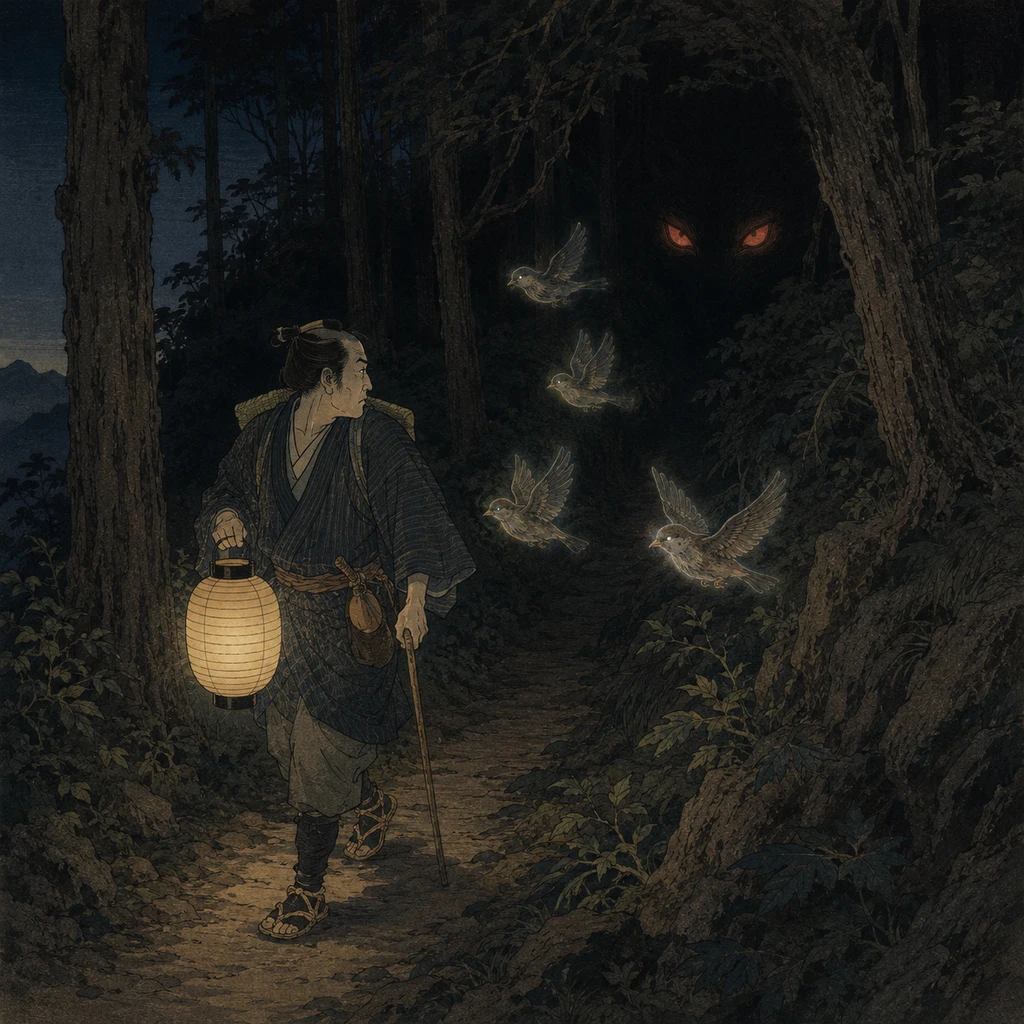 Escorting Sparrowoh-KOO-ree soo-ZOO-meh
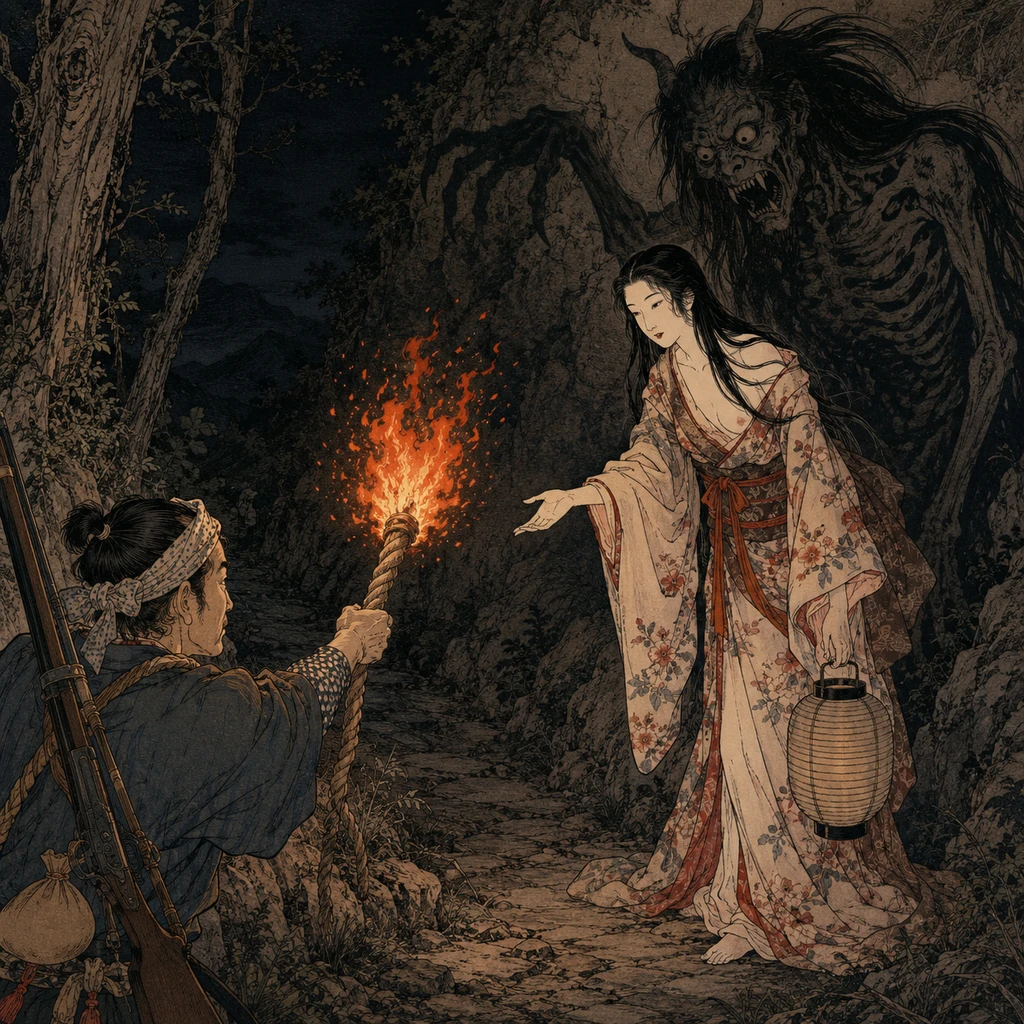 Meat-SuckerNEE-koo-soo-ee
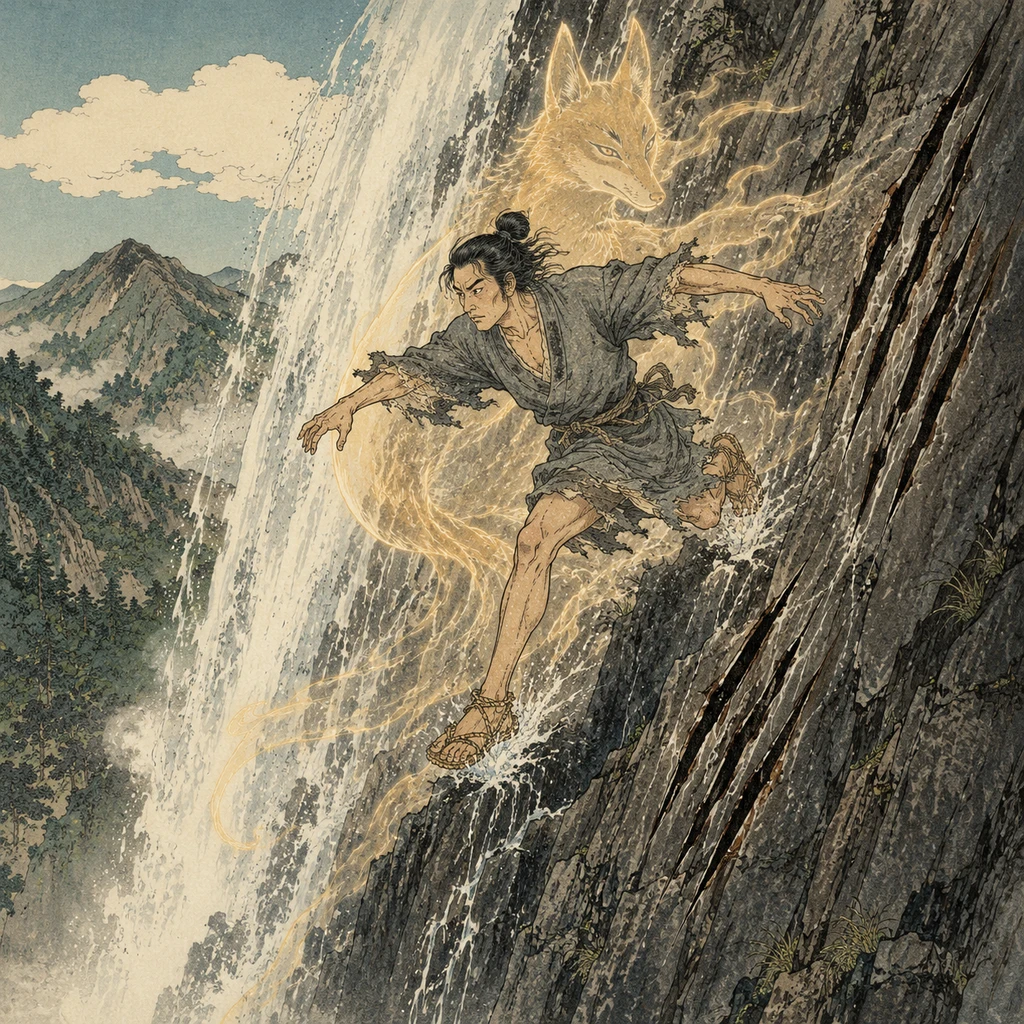 Tamehachi Foxtah-meh-HAH-chee GEE-tsue-neh
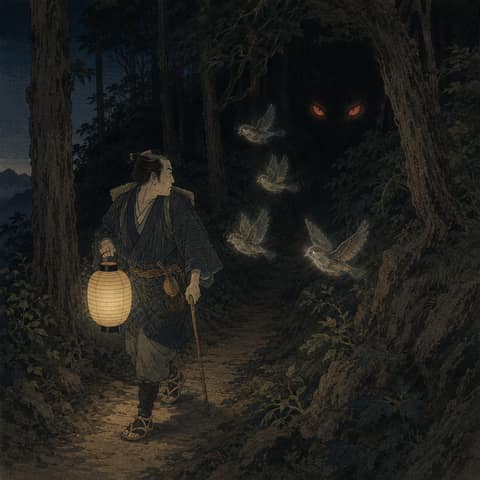
那智三峯のひとつ、標高七四九メートルの妙法山にある阿弥陀寺の周辺で語られた送り雀は、夜の山道で「チチチチ」と鳴きながら人の後を追う怪鳥である。妙法山は古来、死者の霊が最後に登る山として信仰され、亡者の鐘を撞きに登る習わしが伝わる、熊野でも屈指の他界に近い霊地であった。この鳴き声の後には狼、もしくは送り狼が現れる前兆とされ、声を聞いた者は転ばぬよう足元に注意を払って歩いたという。道で転倒すれば、すぐさまそれらに襲われると恐れられたからである。鳴き声を実在の鳥アオジになぞらえて「蒿雀」とも呼ぶが、夜間に飛ぶことからアオジとの同一視を疑う説も併存する[7]。死者の登る霊山の麓、巡礼の夜道だからこそ、こうした「人を送る」怪が育った。
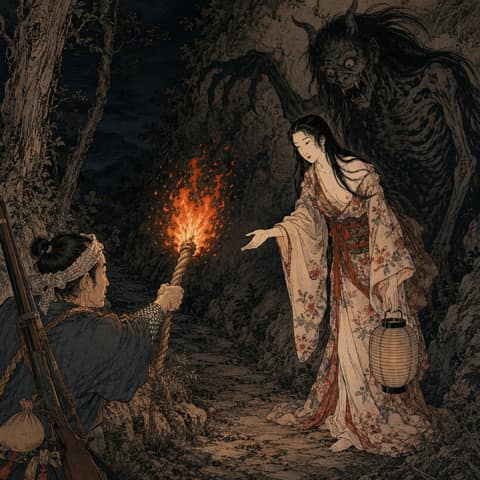
同じ夜道に現れて、より直接に命を狙うのが肉吸いである。提灯を手に山道を行く者へ、十八、九の美しい女に化けて「火を貸して」と近づき、提灯を奪って暗闇に紛れ、人に食らいつくという。紀伊田辺に拠った民俗学の巨人、南方熊楠は、その『紀州俗伝』に肉吸いの記録を残した。明治二十六年(一八九三)に郵便脚夫が夜道で遭い、火縄を打ちつけて退散させた話、また果無山脈で猟師の源造が「源造、火を貸せ」と呼びかけられたとき、一匹の狼が袖を引いて危機を知らせた話などである[8]。火種や火縄を携える戒めは、紀伊の山深さがそのまま結晶した、夜道を生きるための知恵であった。
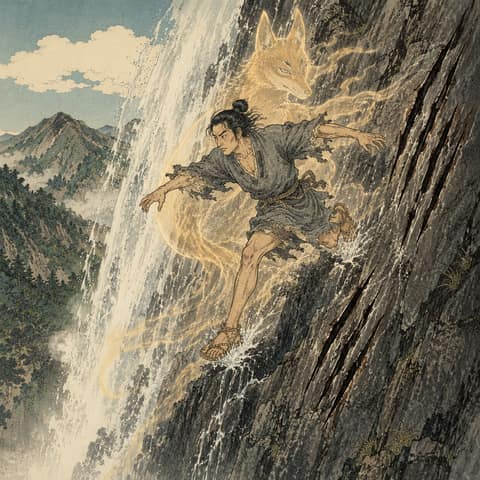
そして、紀伊国でただ一つの飛び地として知られる牟婁郡北山(現在の北山村)には、地形そのものに刻まれた狐の伝承がある。タメハチ狐は、男「タメハチ」に憑いたとされる狐で、滝の絶壁を渡りきる妖力を示したと語られ、断崖に残る筋状の跡をその証とする。もっとも北山には、絶壁を渡り競べたのは蛇と修験者(イカヅチ坊主)で、修験者は落ち、蛇が渡りきったため跡が残ったとする伝えもあり、語り手や家筋によって主体が狐にも蛇にも修験者にも入れ替わる[9]。実在の人物や年代は不詳で、地形伝承と憑き物観が結びついた逸話として読むのがよい。深山の崖一筋にすら幾通りもの物語を見出すこの想像力こそ、参詣と修験の山々に分け入った紀伊の人々が育てた語りの厚みである。
蛇身に変ずる情念──道成寺の鐘
参詣の道の途上で、人の情念が怪へと転じた最も名高い物語が、日高川のほとりの古刹、道成寺に伝わる安珍清姫伝説である。道成寺はこれを延長六年(九二八)の出来事とし、十一世紀の『大日本国法華験記』に記され、『今昔物語集』にも採られたと整理する[10]。
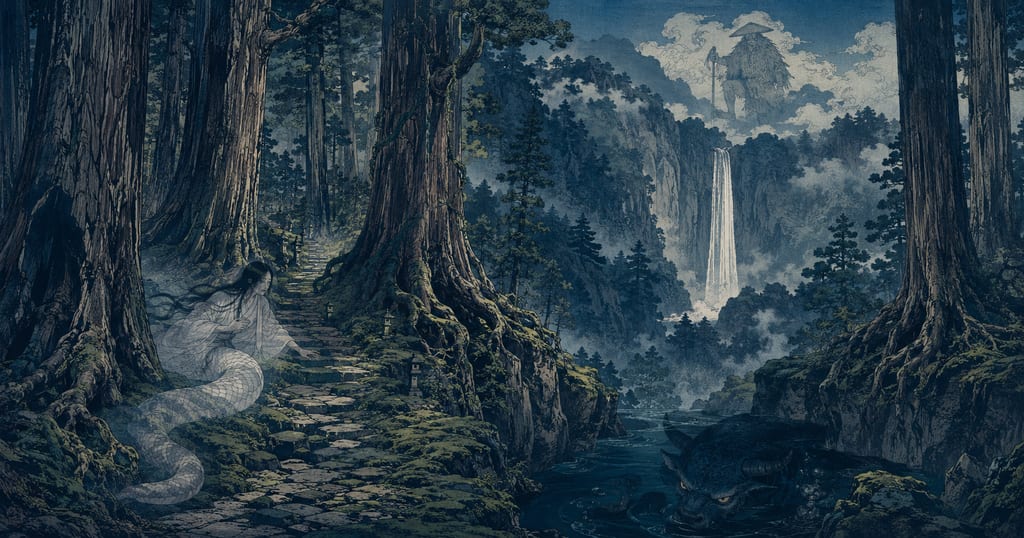
奥州白河から熊野本宮を目指す若い僧、安珍が、紀伊の真砂に一夜の宿を借りる。宿の娘、のちに清姫と呼ばれる女は安珍に恋い焦がれたが、僧は参詣の帰路に再び立ち寄ると偽って去り、約束を違えて逃げた。裏切られたと知った女の追跡は、人間の走りから異類の変化へと移ってゆく。日高川では渡し守が舟を出さず、女は怒りのまま川へ身を投じ、蛇体となって水を渡った[11]。
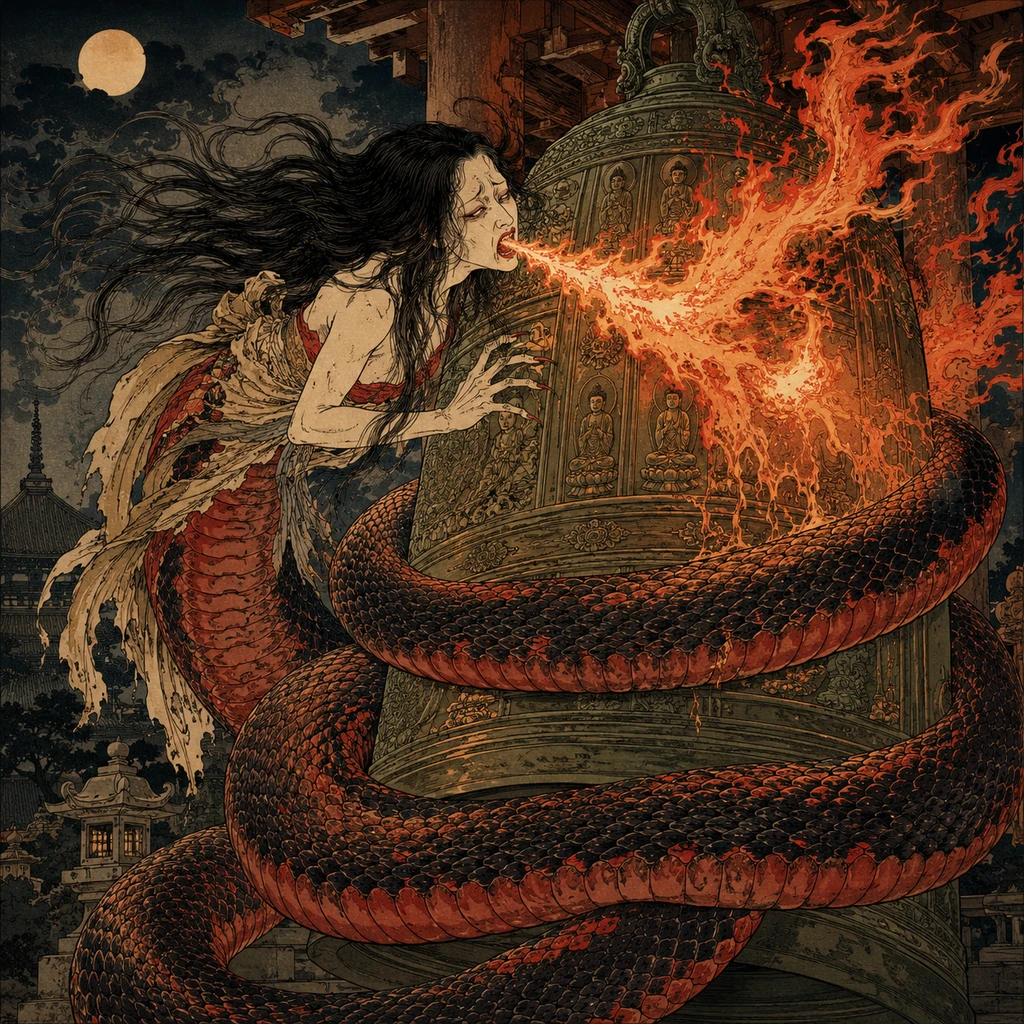
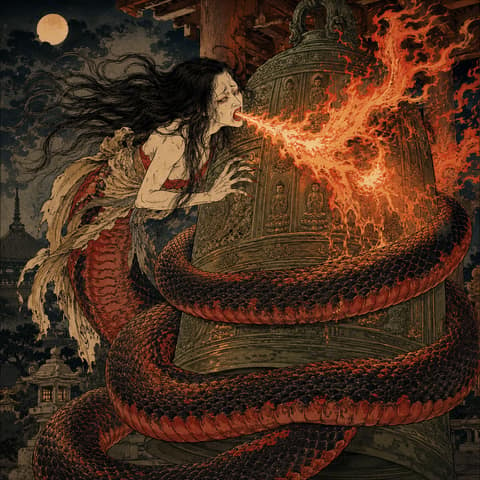
Kiyohime
Kiyohime is the serpent woman from the legend of Anchin and Kiyohime, passed down at Dojoji Temple in Kii Province. She fell in love with Anchin, a monk on a pilgrimage to Kumano. Believing he broke his promise, she chased him across the Hidaka River, transformed into a giant serpent, and burned Anchin to death as he hid inside the temple bell at Dojoji. Dojoji Temple claims this story took place in the year 928 (Encho 6) and it was recorded in the 11th-century *Hokke Genki*, later expanding into the "Dojojimono" plays of Noh, Ningyo Joruri, and Kabuki . In older tales, the woman's name was not fixed; she became established as "Kiyohime" through later temple legends, picture storytelling (etoki), and performing arts. As a yokai, Kiyohime is not a serpent deity in her own right, but a liminal being whose human love was burned by jealousy and obsession into a serpentine form. Much like Hannya and Hashihime, she is a representative demoness (kijo) whose grudge gained a face, a body, and fire.
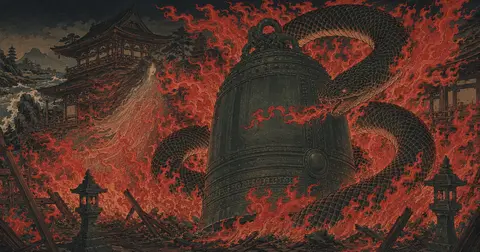
Read more道成寺へ逃げ込んだ安珍は、僧たちによって梵鐘の中に隠される。だが蛇となった清姫は鐘に幾重にも巻きつき、その身の炎熱で鐘もろとも安珍を焼き尽くした。重要なのは、清姫がはじめから怪物ではなかった点である。破られた約束、恋慕、羞恥、嫉妬、宗教者への不信が一気に重なって、ひとりの人間の女が蛇へ転じる。原初の大蛇怪とは異なり、清姫は般若面が表す「怒りと哀しみの同居」に近い存在なのだ[12]。
そして物語のもう一方の主役が、焼かれた鐘そのものである。
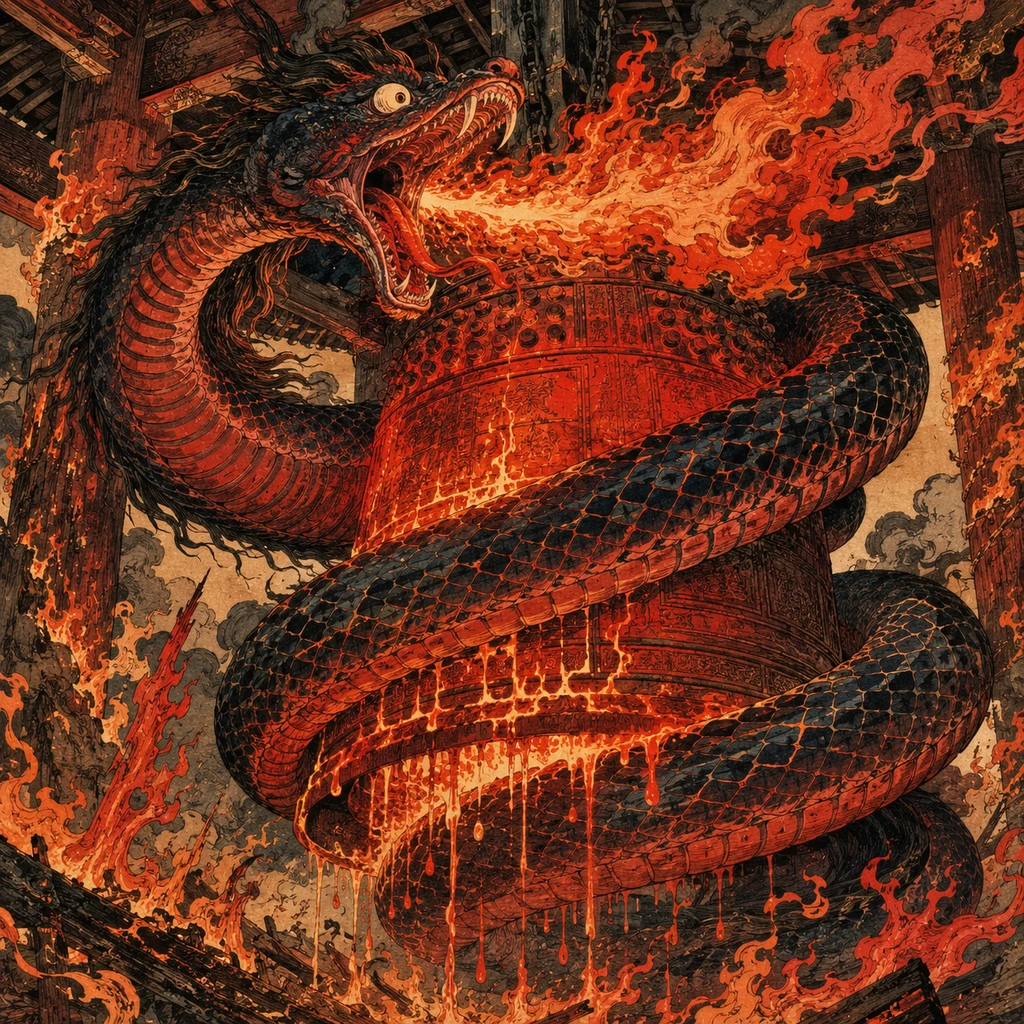
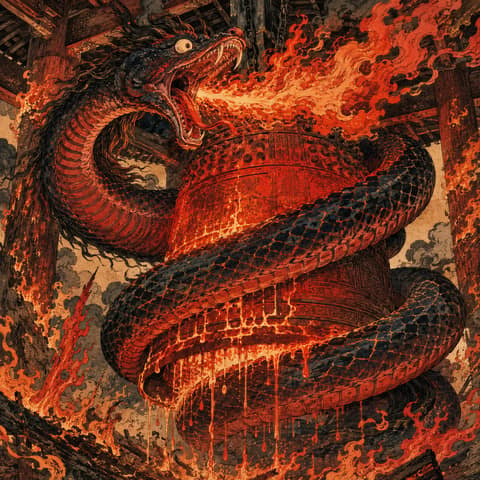
The Dōjōji Bell
The great temple bell famed in the Dōjōji legend. When the monk Anchin hid inside the bell, a woman whose love had turned to vengeful fury transformed into a serpent, coiled around it, and scorched it with searing heat. Traditions diverge: some describe a Noh-style image of the bell turning to boiling water that swallows the monk, while other engi accounts say the fire was quenched and the bell survived. Toriyama Sekien illustrated this variant as “Dōjōji Bell” in Konjaku Hyakki Shūi.
Read more道成寺鐘の伝承は、諸本で大きく揺れる。『道成寺縁起』では、女が蛇身となって鐘に巻きつき火を吐き、長く燃えたのちに水で消火して鐘を除けたとする[11]。一方、能『道成寺』では「鐘は即ち湯となつて」と語り、熱で鐘が融け去る描写が強調される[12]。鳥山石燕は『今昔百鬼拾遺』に「道成寺鐘」を図示し、「鐘とけて湯となる」と記しながら、当時その鐘が他寺に納められていた事実をも併記した。怪異がいかに伝承の過程で変奏されてゆくかを、この鐘ほどよく示す器物はない。
この物語が紀伊国に固有なのは、それが熊野参詣という具体的な信仰の道のうえに据えられている点にある。安珍は奥州白河から熊野本宮を目指す参詣僧であり、清姫の宿は熊野古道沿いの真砂にあった。前節で見た「蟻の熊野詣」の巡礼路を舞台装置として、この悲劇は成立している。聖地へ向かう清浄な道であればこそ、そこで破られた約束と裏切られた情念が、いっそう深い罪と怪へ転じた。日高川町には、いまも清姫の墓と伝えられる塚や、安珍ゆかりの地が点在し、物語が土地に深く根を下ろしていることを示す。近世にはこれが人形浄瑠璃・歌舞伎・舞踊へ展開し、「娘道成寺」をはじめとする道成寺物の巨大な系譜をつくった[13]。
高野の深山と海辺の淵──天狗と牛鬼
熊野が南の海へ開く他界なら、紀伊国の北、紀ノ川の上流に屹立するのが高野の山である。弘仁七年(八一六)、空海が朝廷の許しを得て、標高およそ千メートルの峰々に囲まれた盆地を真言密教の根本道場として開いた。九世紀初頭に開かれたこの伽藍は、のちの真言寺院の規範となった[4]。深山に籠もって法力を練るこの土地の性格は、おのずと山の主たる天狗の領分と重なってゆく。
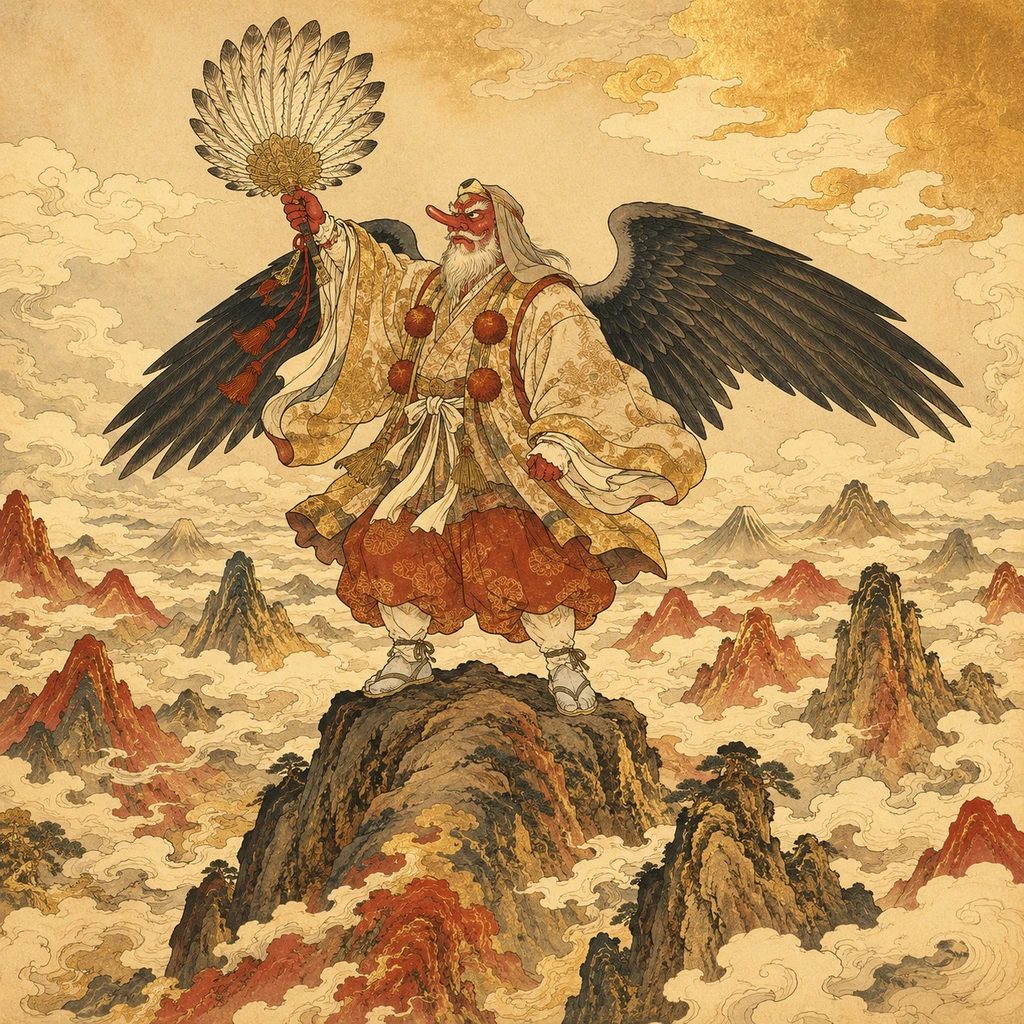
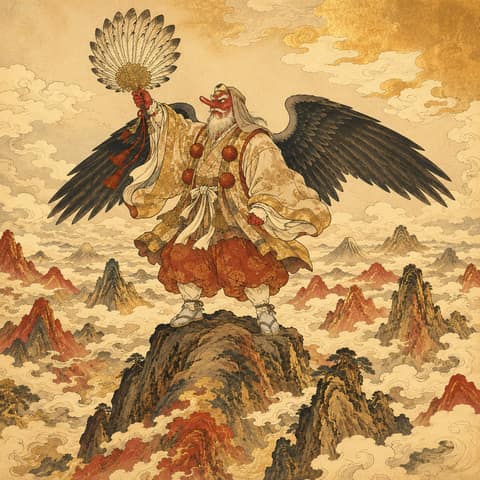
Tengu
The tengu is a yokai and quasi-divine being said to dwell in the mountains of Japan, a lord of the heights inseparably bound to the yamabushi ascetics of Shugendō. Its forms fall broadly into two lineages. One is the long-nosed tengu, with a ruddy face and high nose, clad in the garb of a mountain ascetic, bearing a feather fan and one-toothed high clogs; the other is the crow tengu, with a crow's beak and wings, and beneath them follow lesser kin such as the leaf tengu and the wood-chip tengu. What was once conceived as a bird like a black kite hardened, over the medieval period, into the image of the long-nosed mountain ascetic. The tengu is at once a demon that obstructs the Buddhist Law and, once subdued, a guardian deity who protects it—this dual nature is the essence of the tengu. The notion that an arrogant high monk falls and becomes a tengu was bound to the Buddhist "way of the tengu," and was depicted as satire in late-Kamakura picture scrolls. Within mountain worship, on the other hand, the tengu was revered as guardian of the mountain and master of martial and magical arts, a being that tests or guides the practitioner. From Mount Kurama and Mount Atago in Kyoto onward, each of the sacred mountains of the realm was said to have its own great tengu, and the early-modern Tengu Sutra counts their number at forty-eight.
Read more天狗は山伏と分かちがたく結びついた山の主であり、仏法を妨げる魔でありながら、調伏されれば仏法を護る護法神に転じるという両義性を本質とする。慢心した高僧が堕ちて天狗になるという観念は、仏教の説く「天狗道」と結びついた。永仁四年(一二九六)頃の『天狗草紙』は、南都北嶺の名だたる寺の驕れる僧たちを天狗に擬えて風刺しており、天狗が中世に「仏道の慢心の象徴」として観念されたことをよく示している[14]。諸国の霊山にはそれぞれ大天狗が座すと信じられ、近世の『天狗経』はその総数を四十八に数え上げる[15]。修験の聖地である高野もまた、そうした天狗の棲む山として畏れられた。人が忽然と消える天狗攫い、伐られる大木の音が響くのに翌朝には何もない天狗倒し、山中にこだまする天狗笑い──深山の不可解は、ことごとく天狗の仕業として語られたのである。法力を練る行者と、その法力を試し、あるいは妨げる天狗とは、同じ深山の論理から生まれた対の存在であった。
紀伊にはもうひとつ、黒潮の洗う海の顔がある。その海辺と淵に現れるのが牛鬼である。
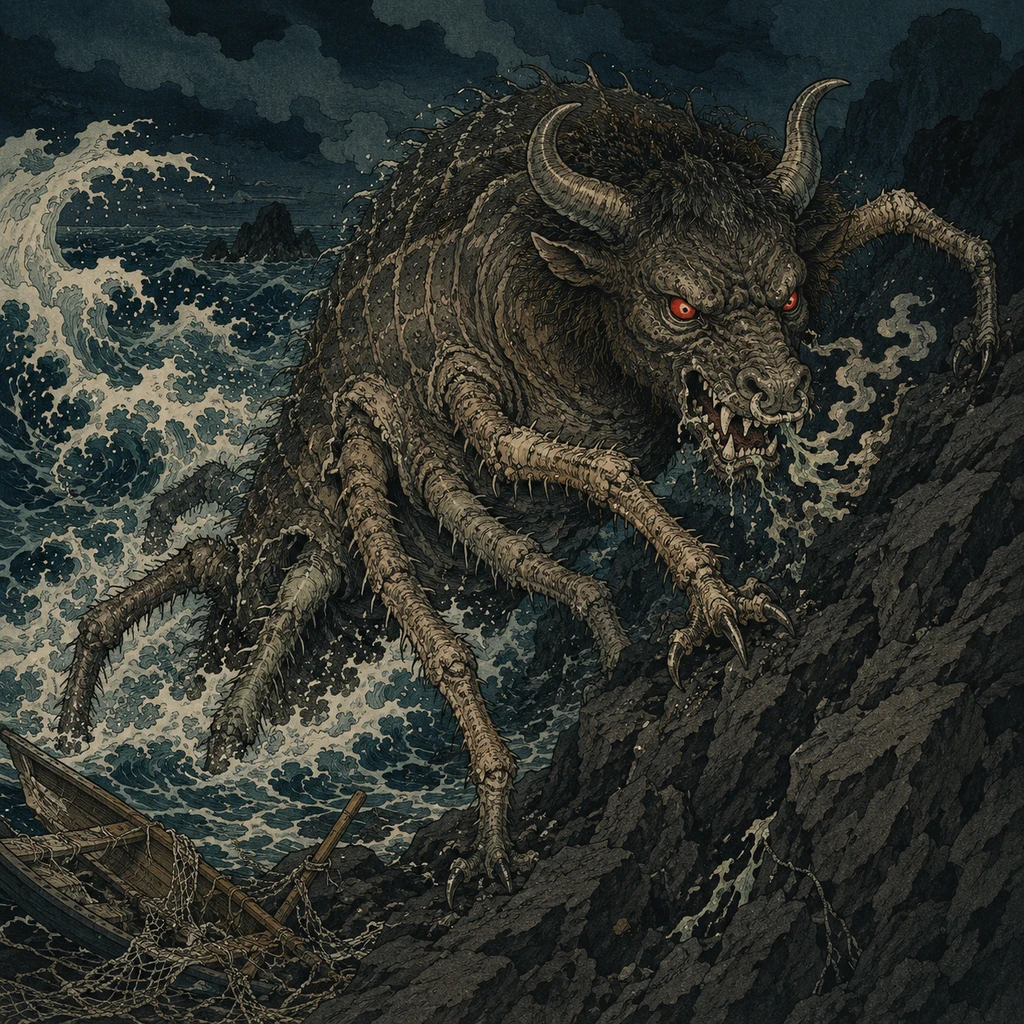
Ushi-oni
Ushi-oni appears chiefly on the coasts, in deep pools, and in the mountains of western Japan. It is among the fiercest and most numinous beings in the yokai tradition. Its body has no single form: some artists give it a bull's head on an oni's body, while others set the same head on the body of a spider. The Heian-period Pillow Book already names Ushi-oni among the things that inspire terror. Its most striking quality is a radical dual nature. In one guise, Ushi-oni is a cruel man-eater and bringer of disease that spreads poisonous breath without discrimination. In another, it leads a mikoshi procession and uses its tremendous force to drive away other evil spirits. Over time, a frightening presence in literature became part of regional worship and festival performance. Few yokai show so clearly how a destructive power could also be received as a guardian.
Read more牛鬼は西日本の海岸や淵に現れる屈指の凶悪な怪で、牛の頭に鬼の胴、あるいは蜘蛛の胴に牛の首など、多様な異形に描かれる。平安の『枕草子』に「おそろしきもの」として名指しされるほど古くから畏怖された存在だ。和歌山では各地の淵や滝に牛鬼が語られ、その性質は土地ごとに少しずつ異なる。牟婁の牛鬼淵は底が海に通じるとされ、淵の水が濁ると「牛鬼がいる」と恐れられ、夕暮れに現れて、見ただけで人を病ませ、あるいは狂わせるという。すさみの琴の滝の牛鬼は人の影を嘗め、影を嘗められた者はほどなく死ぬといい、串本の笹の平の牛鬼は美しい鳥に化けて人を惑わすと伝えられた[16]。淵・滝・海という水の境界に現れ、影や視線を介して命を奪うこの怪は、紀伊の海辺の人々が抱いた水難と風土病の恐怖を、そのまま異形に凝らせたものであった。
紀伊の牛鬼で興味深いのは、それに対抗する呪文が残されていることである。出会ったとき「石は流れる、木の葉は沈む、牛は嘶く、馬は吼える」と、ことごとく逆さまの言葉を唱えれば命が助かるという。これは、牛鬼という存在の理を反転の言葉で攪乱しようとする、海辺の民の切実な防御の知恵であった[16]。
果無の雪に残る片足──一本だたら
紀伊国の最奥、牟婁の山深く、和歌山と奈良の境をなす果無山脈には、皿のような一つ目に一本足の山霊が棲むと伝えられた。
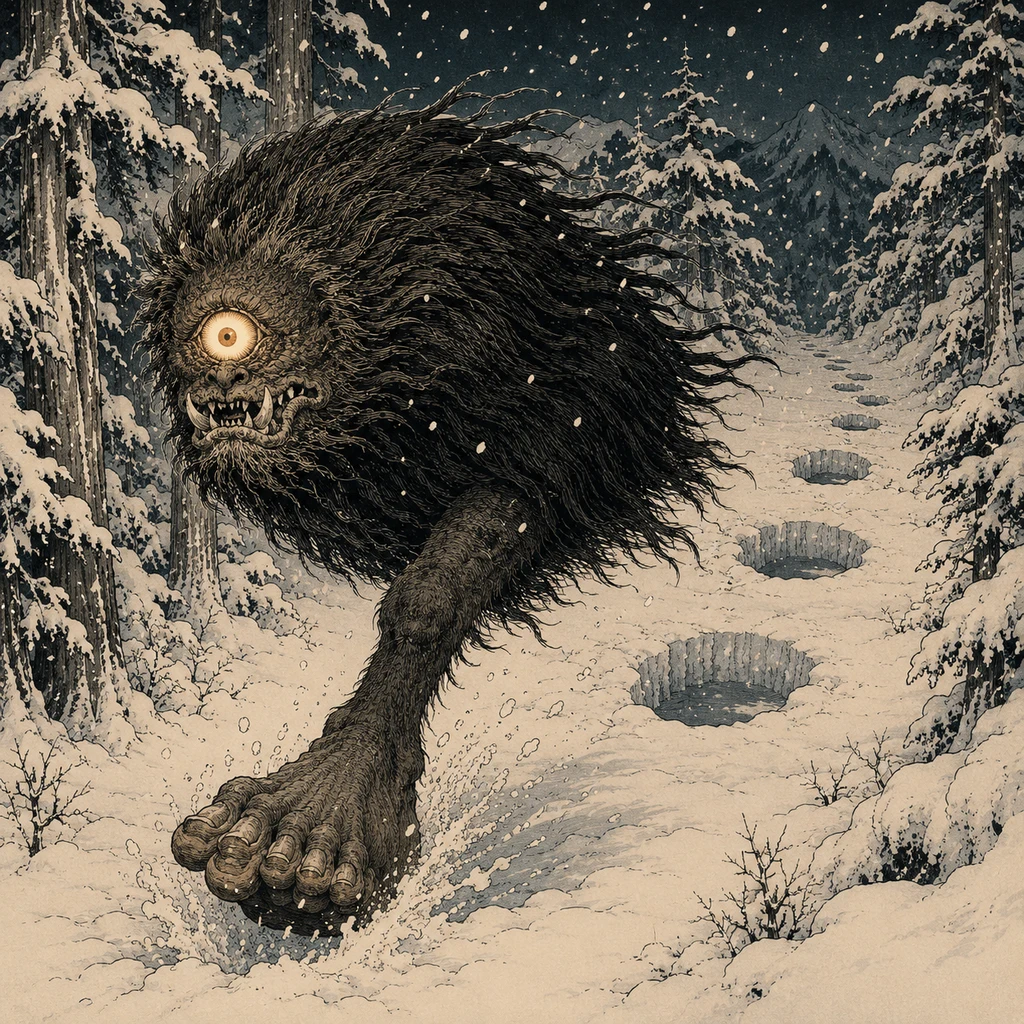
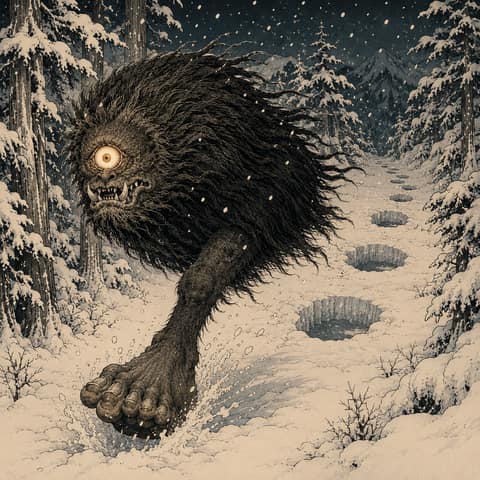
Ippon-Datara
Ippon-Datara is a mountain yokai said to appear as a one-eyed, one-legged being, best known from tales in Kumano (Kii) and Mt. Obagatake in Nara. It is famed for leaving a single, broad footprint in the snow, with few claiming to have seen its body. A well-known tradition says it appears only on December 20, the “Last Twentieth Day,” when entering the mountains is taboo. Folklore often links it to blacksmithing and the tatara furnace, sometimes interpreted as a fallen, one-eyed smithing deity.
Read more一本だたらは、十二月二十日の「果ての二十日」にのみ現れるとされ、姿を見た者はなく、雪上に幅一尺ほどの単跡を残すのみだという。一本足で飛ぶように走り、出会えば病を得るとして山入りを厳しく忌んだ。「果無」の名すら、この時期に人通りが絶えることに由来するという説が伝わる[17]。その核には、伯母ヶ峰の猪笹王の物語がある。背に熊笹の生えた巨大な猪が狩人に撃ち倒され、亡霊が一本足の鬼と化して峰越えの旅人を襲った。これを丹誠上人が封じ、年に一度この日だけ解放を許したため、果ての二十日が峰の厄日となったと語られる[17]。名の「だたら」を製鉄のたたら師に通わせ、片足で鞴を踏み片目で炉火を見続けた職能者の零落と見る近代の解釈もあるが、これはあくまで一説にすぎない。
興味深いのは、一本だたらが今なお語り継がれる生きた伝承だという点である。西牟婁では、河童の一種が山に入って化したカシャンボを一本だたらと呼ぶ例もあり、二〇〇四年春には白浜の富田で一本足の足跡が見つかって話題になった[17]。果無という地名の重い響きと、年に一度の厄日という禁忌が、この山霊を紀伊の山岳信仰のなかへ深く織り込んでいる。
むすび──二つの古層が育てた怪
紀伊国は、ひとつの令制国のなかに性質の異なる二つの聖地を抱えていた。北の紀ノ川流域は木の神の鎮まる「木の国」であり、高野の深山が真言密教の法力を練る場であった。南の牟婁・熊野は、神武が荒神に倒れて蘇り、渡海僧が南海の浄土へ消えてゆく「他界の入口」であった。
この稿で辿った怪は、どれもこの二つの古層から生まれている。神々の上陸する辺境だからこそ熊野権現の荒ぶる神威があり、他界へ通う参詣の夜道だからこそ送り雀が鳴き肉吸いが火を乞い、その清浄な道のうえで破られた約束が清姫を蛇へと変え、鐘を湯へと融かした。深山の法力が天狗を呼び、海と淵の境界が牛鬼を生み、果無の禁忌が一本だたらの片足を雪に刻んだ。
聖が極まる土地にこそ、異形は最も濃く生まれる──木の神の国にして神々の上陸する辺境、紀伊国の妖怪は、その二つの古い記憶の上に立っている。現代の県域全体の妖怪文化については、和歌山県の妖怪事典を併せて読まれたい。