YOKAI.JP
Mt. Omine 鬼が護法に転じる修験の山。大峰山の妖怪事典

大峰前鬼坊・天狗・小雨坊。役行者が鬼神を従えた吉野〜熊野の霊地

鬼が護法に転じる修験の山。
大峰山の妖怪事典

Mt. Omine · おおみねさん

Also known as: 大峯山 / 山上ヶ岳 / 前鬼坊
View on map

奈良県の南、吉野から熊野へと山並みが幾重にも連なる大峰山脈は、日本の山岳信仰がもっとも濃く凝った場所である。なかでも標高一七一九メートルの山上ヶ岳(さんじょうがたけ)は、修験道の祖・役行者(えんのぎょうじゃ)が開いたと伝わる根本の霊地で、いまもなお女人禁制を守り続ける数少ない山として知られる。ここで生まれた妖怪たちには、一本の太い筋が通っている ── 鬼が、敵から護法へと転じるという筋である。

人を喰らっていた鬼が修行者を守る天狗となり、その天狗が雨夜の行場に僧形の怪を呼ぶ。役行者が孔雀明王(くじゃくみょうおう)の呪法で鬼神を意のままに操ったという伝説は、ただの怪力譚ではない。山の荒ぶる力を調伏し、味方へと組み替えてゆく修験道そのものの世界観が、そこには畳み込まれている。大峰の怪異は、都の町に出る鬼とは位相が違う。それは、都が霊力を求めて頼った聖なる深山の住人なのだ。本記事では、この山を象徴する大峰前鬼坊天狗小雨坊の三体を軸に、史実と伝説を慎重に分けながら、鬼が護法へと転じる山の物語をたどる。なお、大峰山を含む奈良全体の妖怪文化については奈良県の妖怪事典も併せて読まれたい。

役行者が開いた修験の山

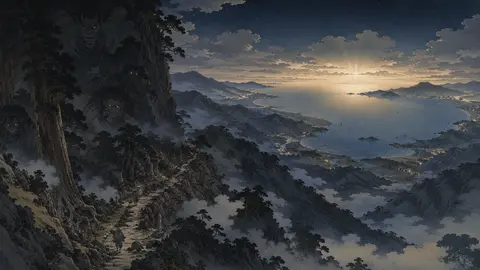
大峰山は、ひとつの峰の名ではない。吉野の金峯山(きんぷせん)から山上ヶ岳・大普賢岳・弥山(みせん)・八経ヶ岳(はっきょうがたけ、近畿最高峰)を経て、はるか熊野へと続く大峰山脈の総称である。この険しい尾根全体が、千三百年にわたって修行の道場とされてきた[1]

開祖と伝わるのは、飛鳥時代の呪術者・役行者、本名を役小角(えんのおづの)という。大和国葛上郡の茅原(ちはら、現在の御所市)に生まれ、賀茂氏の出とされる。彼が金峯山で千日の修行の末に金剛蔵王権現(こんごうざおうごんげん)を感得し、その忿怒の姿を山桜に刻んで吉野に祀ったことが、修験道の根本道場・金峯山寺(きんぷせんじ)の開創と伝えられる[2]。蔵王権現は、釈迦・千手観音・弥勒という三尊が、荒ぶる山の力に応じて忿怒の相に変じた姿とされる ── おだやかな仏が、山においては怒りの形をとる。この発想こそ、大峰の妖怪文化を貫く「転じる」という主題の、いわば神格版である。

ただし、ここで史実と伝説をきちんと分けておきたい。役行者について語る唯一の同時代正史は『続日本紀(しょくにほんぎ)』で、文武天皇三年(六九九年)五月、「役君小角を伊豆嶋に流す」と記す。同書によれば、葛城山に住んで呪術を能くした小角は、弟子の韓国連広足(からくにのむらじひろたり)がその能力を妬んで「人を妖惑する」と讒言したため、遠流に処されたという。つまり史実として確かなのは、葛城に呪術者がいて、讒言により伊豆へ流された、という事実だけである。鬼神を従えたという超人的な逸話は、後世の説話が育てた伝説の層に属する。

その伝説層を代表するのが『日本霊異記(にほんりょういき)』である。九世紀前半に成った日本最古の仏教説話集は、役優婆塞(えんのうばそく)が孔雀明王の呪法を修めて鬼神を自在に使役し、葛城と金峯のあいだに橋を架けさせようとしたと伝える。鬼神が苦役を嫌って働かなかったため、葛城の神・一言主(ひとことぬし)が「役行者は謀反を企てている」と天皇に讒言し、行者は伊豆へ流された ── という筋立てになっている。正史では讒言者は人間の弟子だが、説話ではそれが神へとすり替わる。事実が信仰のなかで磨かれ、神話的な対立構造へと組み替えられてゆく過程が、ここにはっきりと見てとれる。大宝元年(七〇一年)に赦免されたのち、行者は母を連れて天上へ飛び去ったとも伝わる。

鬼が護法となる ── 前鬼後鬼と前鬼の里

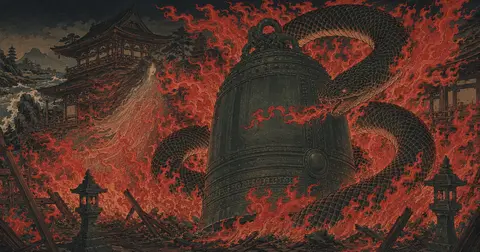
役行者が従えた鬼神のなかで、もっとも名高いのが前鬼(ぜんき)・後鬼(ごき)の夫婦である。伝えによれば、この二鬼はもともと生駒の山中に棲み、里の人の子を喰らう恐ろしい鬼であった。役行者は不動明王の秘法を用いて彼らの末子を岩窟に隠し、わが子を失う嘆きを通して「他人の子を奪う親の悲しみ」を悟らせた。改心した二鬼は行者に従い、その身辺を守り、山々を巡る修行に付き従う護法(ごほう)へと転じたという。
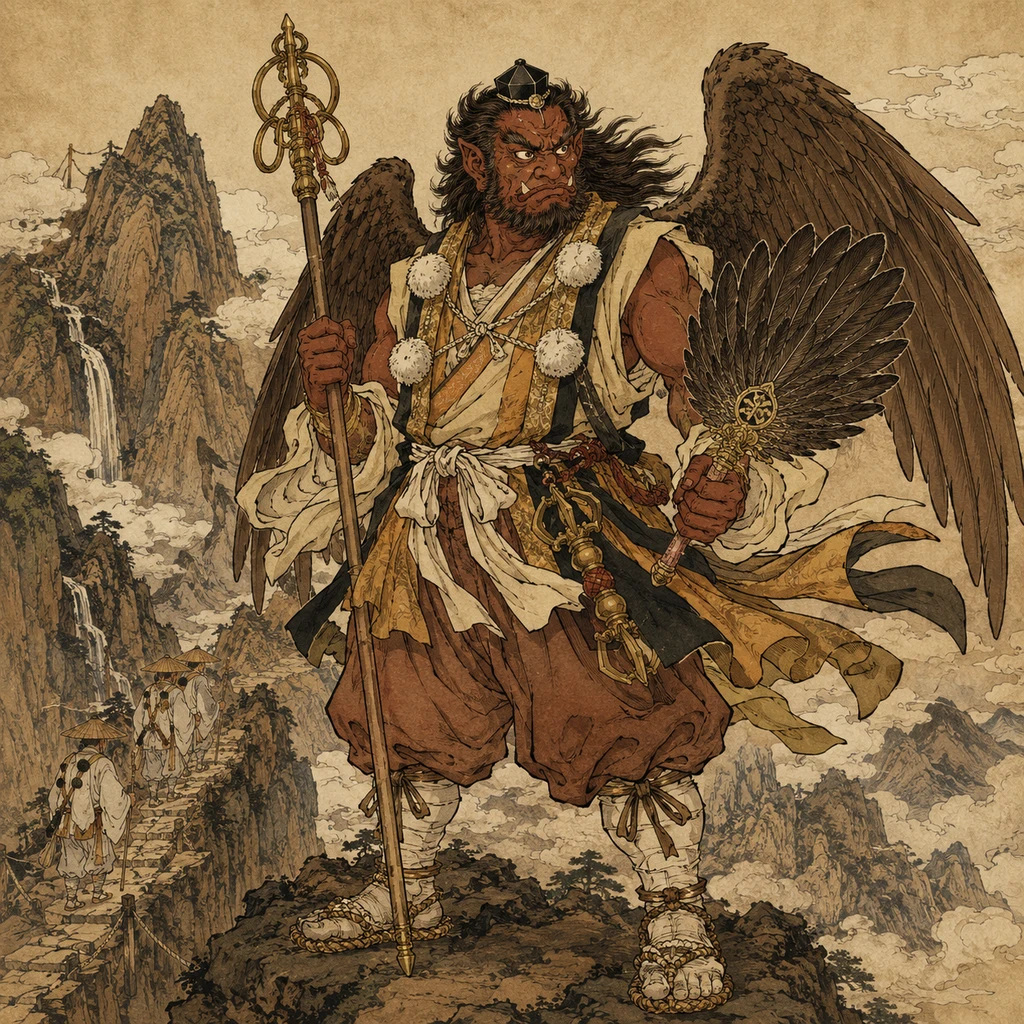
Ōmine Zenkibō

Ōmine Zenkibō

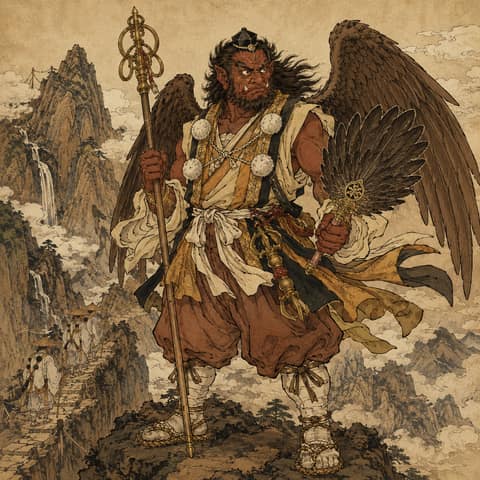
Ōmine Zenkibō is a great tengu enthroned on Mt. Ōmine in Yamato Province, and is counted among the Eight Great Tengu. He is chanted in the Muromachi Noh play Kurama Tengu as "the band of Zenki of Ōmine." His name derives from Zenki, the oni who followed En no Gyōja (En no Ozunu), the founder of Shugendō. En no Gyōja is depicted in the oldest extant tale collection, the Nihon Ryōiki, as a thaumaturge who commanded demons and flew through the air. Zenki was originally an oni who carried off human children, but he was captured by En no Gyōja, repented, and with Goki became his attendant. As an instance of an oni transformed into a great tengu through austerities, Zenkibō sits at Ōmine, the heart of Shugendō, and is handed down as one of the forty-eight tengu.

Read more

この前鬼が、のちに天狗へと昇華した姿が大峰前鬼坊である。諸国の天狗を列挙する『天狗経(てんぐきょう)』は、大峰前鬼坊を四十八天狗の一に数え、また那智滝本前鬼坊(なちたきもとぜんきぼう)の名でも呼んで、愛宕山太郎坊・鞍馬山僧正坊らと並ぶ八大天狗の一に挙げる。人を喰らう鬼が、改心して護法となり、ついには山を守護する大天狗へと位を高めてゆく ── 敵から守護者への転生こそ、大峰前鬼坊という存在の核心であり、この山の宗教観を一身に体現している。

特筆すべきは、この物語が単なる伝承にとどまらず、生きた習俗として千三百年も続いてきたことだ。前鬼の子孫は、大峰山脈の東麓・下北山村の「前鬼(ぜんき)」と呼ばれる谷に住みつき、大峯奥駈道をゆく修行者の宿坊を代々営んできた。前鬼の五人の子 ── 五鬼助(ごきじょ)・五鬼継(ごきつぎ)・五鬼上(ごきじょう)・五鬼童(ごきどう)・五鬼熊(ごきくま)── がそれぞれ宿坊を構え、最盛期には五つの坊が立ち並んでいたが、明治五年の修験道廃止令を経て修行者が減り、住む者も山を下りていった。いまでは五鬼助家の小仲坊(おなかぼう)ただ一軒だけが残り、六十一代目・五鬼助義之(ごきじょよしゆき)氏が法灯を守り続けている。人を喰らった鬼が改心して聖地の門番となり、その血を六十一代・千三百年余りも伝える ── これほど鮮やかに「怖れの対象が、そのまま信仰の担い手へと変わってゆく」さまを示す例は、全国を見渡してもそうはない。鬼の子孫を名乗ることが、この谷では誇りなのである。
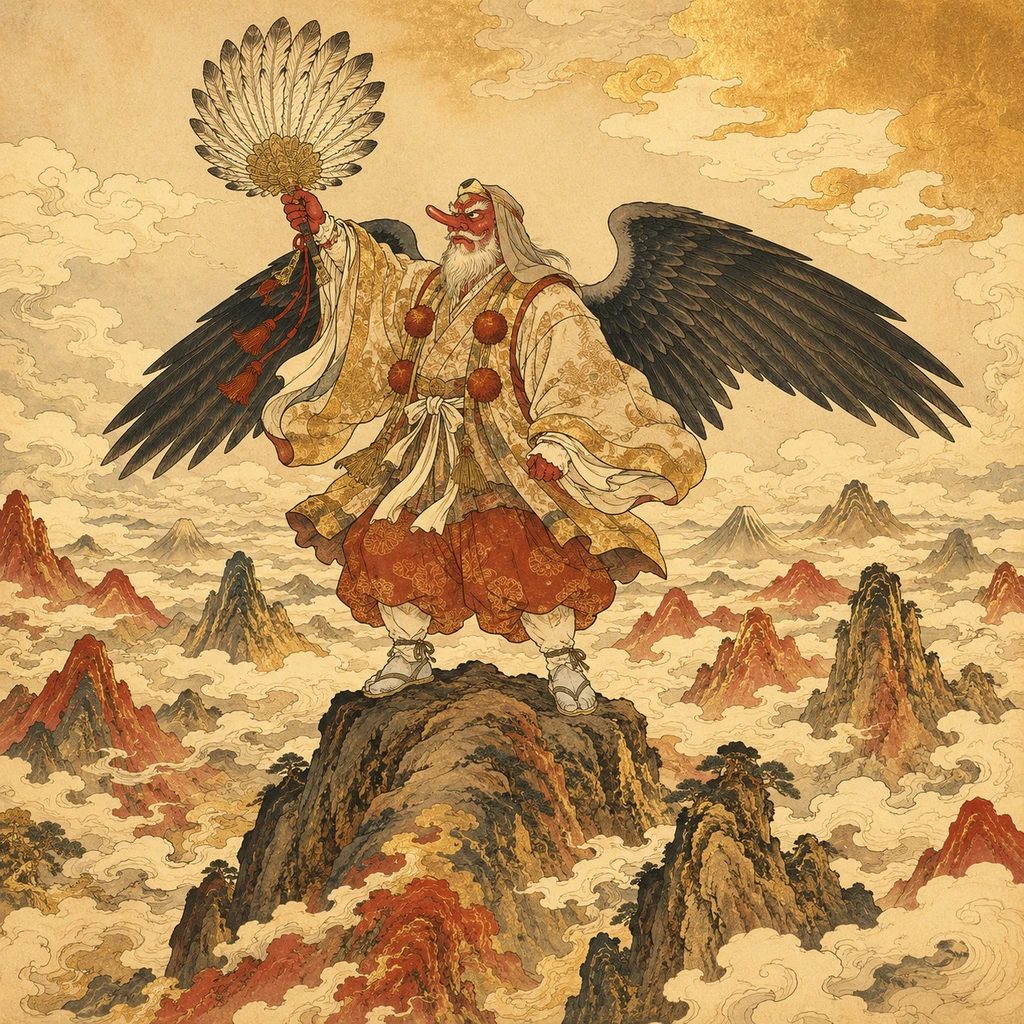
山に棲む天狗

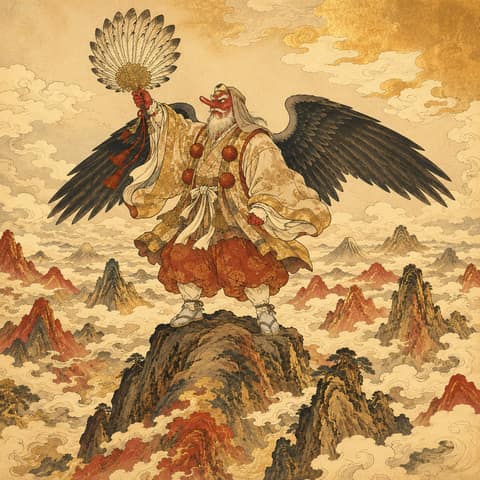
大峰の宗教世界では、天狗もまた、ただ鼻の高い慢心の妖怪ではない。山伏の験力、風と飛行の超能力、仏道から外れた者の堕した姿、そして山を守る護法 ── それらが幾重にも折り重なった、両義的な存在として立ちあらわれる。大天狗はしばしば、その山の護法天狗として祀られた。大峰前鬼坊が八大天狗の一に数えられるのも、まさにこの「霊山には必ず守護の大天狗が坐す」という信仰の現れである。

天狗が棲むと信じられたのは、人跡まれな岩屋や絶壁である。大峰の深部には、修験者が籠もって法力を練る笙の窟(しょうのいわや)のような行場が点在し、江戸期の遊行僧で稀代の仏師でもあった円空(えんくう)も、ここで厳しい修行を積んだと伝わる。岩を穿った窟、断崖の鎖場、そうした人間を拒む険所にこそ、天狗は棲むとされた。

修行そのものが、人を超越した存在へと近づく擬死の体験でもあった。山上ヶ岳の名高い行場「西の覗き(にしののぞき)」では、行者が両足を縄で支えられ、絶壁から上半身を逆さに突き出される。眼下に広がるのは死そのものの深淵だ。そこで先達から「親を大切にするか」「悪事を働かぬか」と問われ、戒めを誓わされる。鎖を頼りに岩壁を攀じる鐘掛岩(かねかけいわ)もまた、命がけの行である。死と隣り合わせの行を通して山の霊力に近づこうとする者にとって、天狗は畏怖と憧憬がないまぜになった、半ば師のごとき存在だった。山を究めた修験者が、死後に天狗になるという伝承が各地に残るのも、この感覚と地続きである。大峰の天狗は、町の噂が生んだ妖怪ではなく、命を懸けて山に入る者たちの宗教的体験そのものから立ちのぼった存在なのだ。

雨の夜の小雨坊

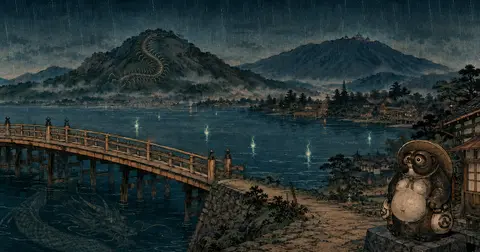
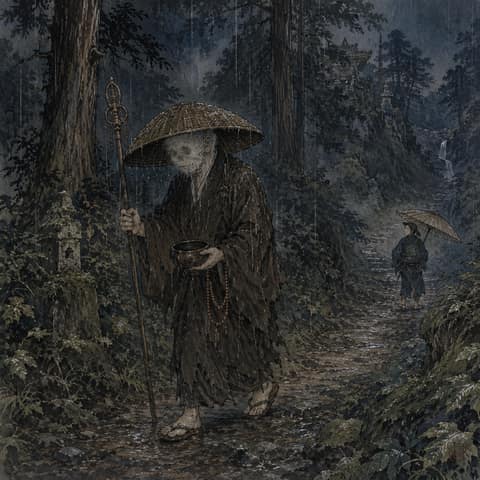
大峰の山岳信仰が生んだ怪のなかで、もっとも地名がはっきりと刻まれているのが小雨坊である。江戸中期の絵師・鳥山石燕(とりやませきえん)は、妖怪画集『今昔百鬼拾遺(こんじゃくひゃっきしゅうい)』の雨之巻に、この僧形の怪を描いた。添えられた解説文はごく短い ──「小雨坊は雨そぼふる夜、大みねかつらぎの山中に徘徊して斎料(ときりょう)をこふとなん」。雨のしとしと降る夜、大峰と葛城の山中をさまよい、僧侶への布施である斎料を乞う、というのである。

Kosame-bō (Little Rain Monk)

koh-sah-meh-BOH

A monk-shaped yokai seen in Toriyama Sekien’s Edo-period work Konjaku Hyakki Shūi, depicted in the rain. Sekien notes it “wanders the mountains of Ōmine and Katsuragi on rainy nights, begging for alms,” portraying it as an apparition of the shugendō sacred peaks that appears on wet nights to solicit offerings. Beyond the image, its traits and origins are uncertain, and there is little evidence tying it to a specific regional oral tradition. Later writers emphasize a mendicant-monk character, but sources are limited.

Read more

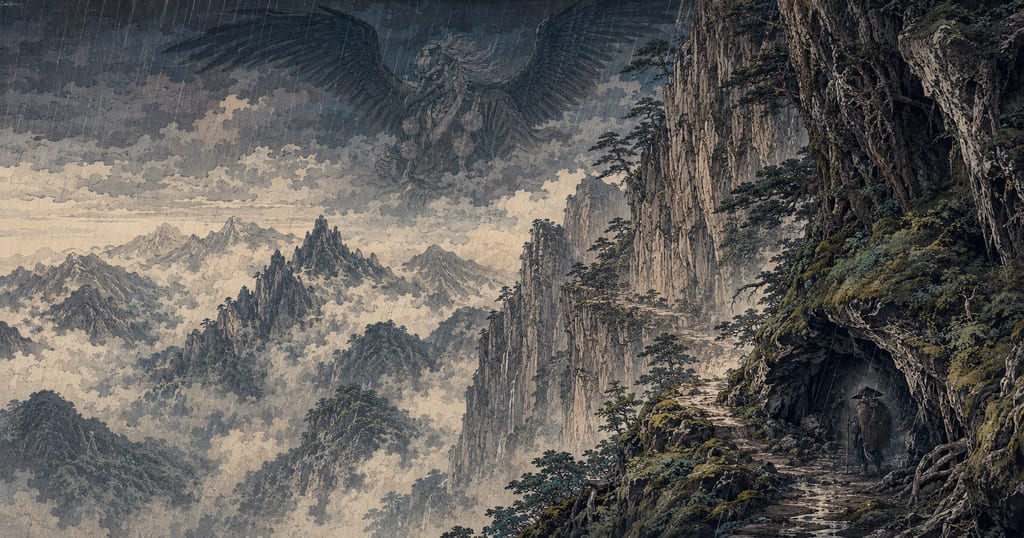
この一文の値打ちは、「大みね」「かづらき」という具体的な山名が、はっきりと書きこまれている点にある。多くの妖怪が「とある山」「深い森」といった漠然たる舞台で語られるなかで、小雨坊は大峰・葛城という修験道の二大霊場を名指しで棲み処とする。つまりこの怪は、修験の山という土地の文脈を抜きには成立しない。雨に煙る大峰の山道で、ふいに僧の姿があらわれ、施しを乞う ── そこには、奥駈道をゆく修行者が雨夜に出会ったかもしれぬ、行き倒れの行者や落魄した山伏の影が重なって見える。聖なる山を歩く者は、聖性の裏側にひそむ零落や死もまた、すぐ隣に感じていたのだろう。

小雨坊が大峰と葛城の双方に出るとされるのも示唆的だ。葛城は役行者が金峯とのあいだに橋を架けようとした、もう一方の修験の聖地である。雨夜の僧形の怪は、この二つの霊場を結ぶ修験のネットワークの上を、いまも徘徊しているのである。

奥駈道と女人禁制 ── 山が守り続ける境界

大峰の妖怪を語るうえで、その舞台となる二つの「境界」に触れておかねばならない。大峯奥駈道(おおみねおくがけみち)と、女人禁制である。

大峯奥駈道は、吉野の金峯山寺から山上ヶ岳・弥山を越え、熊野本宮大社へと至る、全長およそ八十キロにおよぶ峻険な修行の道だ[1]。この道には「靡(なびき)」と呼ばれる行所が点在し、伝統的に七十五靡(しちじゅうごなびき)と数えられる。修行者は靡ごとに経を唱え、礼拝を重ねながら、何日もかけて山また山を踏破する。吉野(金剛界)から熊野(胎蔵界)へと貫くこの道は、二つの曼荼羅(まんだら)のあいだを歩いて渡る、巨大な聖地の縦走路なのである。前鬼の里は、この奥駈道のちょうど中ほど、行者たちが体力の限界に近づくあたりに位置し、だからこそ千三百年にわたって宿坊が必要とされ続けた。鬼の子孫が守る一軒の宿は、修行者の命綱だったのだ。

そして山上ヶ岳は、いまもなお女人禁制を守る。登山口には「女人結界門」が立ち、女性はそこから先へ立ち入ることができない。男女平等の現代にあって議論を呼び続ける習俗だが、これもまた、大峰という山が「境界」を生命線としてきた歴史の延長線上にある。聖と俗、生と死、彼岸と此岸 ── 山伏たちは、無数の境界を越えることで法力を得てきた。二〇〇四年、大峰山を含む紀伊山地の霊場と参詣道はユネスコの世界文化遺産に登録された。

こうして大峰山を歩くと、この山の妖怪たちが、いずれも「境界を越える」という主題のもとに集まっていることがわかる。鬼は敵と味方の境を越えて護法となり、天狗は人と超越者の境にまたがって行場に坐し、小雨坊は雨の夜に聖性と零落の境をさまよう。大峰山は、ただ怪異の出る場所ではない。荒ぶる力を畏れ、調伏し、味方へと組み替えてきた、千三百年の祈りの結晶なのである。元興寺の鬼や飛鳥の四神など、奈良全体の怪異の広がりについては奈良県の妖怪事典に詳しい。
All yokai of Mt. Omine3

Complete list of yokai linked to Mt. Omine, including those not featured in the article above.

  • Ōmine Zenkibō

    Ōmine Zenkibō

    Legendary

    Ōmine Zenkibō

    The Dharma-Guarding Tengu Turned from an Oni — Ōmine Zenkibō

    Mountain & Wilderness SpiritsMt. Ōmine, Yamato Province (Yoshino District, Nara)

    The essence of Ōmine Zenkibō lies in the structure of rebirth: "an oni turning into a tengu." It is a tale that embodies the heart of Shugendō in a single being. His source lies in the old tales of En no Gyōja and the oni. The oldest extant text depicting En no Ozunu is the Nihon Ryōiki (early Heian), which portrays him as a thaumaturge who flew through the air commanding demons. The Konjaku Monogatarishū, Book 11 carries the tale of En no Gyōja having demons build a bridge across the mountains, showing the fixing of the image of En no Gyōja as one who commands demons. Zenki was originally a violent oni who carried off human children. En no Gyōja captured him with the secret rite of Fudō Myōō and reformed him into an attendant. By one account, En no Gyōja hid the youngest child of the Zenki couple in an iron cauldron and, through the grief of having one's own child taken, brought them to realize the sin of carrying off the children of others. The reformed Zenki and Goki became dharma-protecting oni and supported En no Gyōja's practice. This Zenki, sublimated into a great tengu at the end of long austerities, is Ōmine Zenkibō. This plot, of a violent being turning into a guardian of the Buddhist law, shows most clearly that the dread of a child-snatching tengu and the faith in a tengu who guards people share a single root. The Ōmine on which Zenkibō sits is the holy ground of Shugendō. The Ōmine training ground founded by En no Gyōja, and the Ōmine Okugake-michi registered as World Heritage, is a perilous route that ascetics still tread at the risk of their lives, and Zenkibō was conceived as its guardian. He is chanted as "the band of Zenki of Ōmine" in the Muromachi Noh play Kurama Tengu, and stands among the forty-eight tengu of the Tengu-kyō (some sources give "Nachi Takimoto Zenkibō"). And the heaviest single point of this lore is that the bloodline of Zenki is said to live on into the present. Of the five lodges kept by the five children of Zenki and Goki, only the Onakabō of the Gokijo family remains today, and the present-day Gokijo Yoshiyuki continues to receive the ascetics of the Ōmine Okugake-michi. This genealogy is hard to source explicitly in old documents and is transmitted as the oral lore of the surviving lodge; yet this real continuity—descendants of a reformed oni guarding the path of Shugendō beyond thirteen hundred years—makes Ōmine Zenkibō not a mere legend but a symbol of living faith. Chigiri Kōsai of tengu scholarship, too, placed him within the system of the great tengu of the many mountains.

  • Tengu

    Tengu

    Legendary

    Tengu

    What Is a Tengu? An Overview of Types and Iconography

    Mountain & Wilderness SpiritsKyoto, Shiga, and Wakayama Prefectures (the seats of the great tengu on the various sacred mountains)

    This edition is not about a single seat on a particular sacred mountain, but a general treatise that thoroughly unravels "what a tengu is" from the history of its iconography and types. The individual traditions of each seat are left to the page of each great tengu. The form of the tengu is not uniform. The first type is the long-nosed tengu—ruddy face and high nose, clad in the ascetic's headcloth (tokin) and the suzukake robe, a feather fan in hand and one-toothed high clogs on the feet. The second is the crow tengu, with a crow's beak and wings, grasping a sword or a vajra staff. The third are the lesser tengu called leaf tengu and wood-chip tengu, held to be weak and numerous kin. Rather than a fixed classification, these reflect the breadth of the tengu image across eras and regions. The iconography shifted over time. The Heian-period tengu was first conceived as a bird like a black kite, and the image of the crow tengu retains that vestige. The long nose grows prominent only from the late Kamakura period; the Zegaibō Emaki depicts a scene in which a tengu that had disguised itself as a human has its nose lengthen as it returns to bird form. As for the origin of the long nose, there are theories that derive it from the high-nosed Jidō mask of gigaku and link the crow tengu to the Karura (Garuda) mask, and a view that sees the long nose as an iconographic vestige of a bird's beak—but none can be called settled doctrine. It was overlaid with the god Sarutahiko, described in the Nihon Shoki as having a nose seven hand-spans long, and the custom arose of using a tengu mask for the role of Sarutahiko in festivals. The tengu's dual nature is rooted in the Buddhist notion of the way of the tengu. Because it studies the Buddhist path it does not fall into hell, and because it handles heterodox arts it cannot reach paradise either—an intermediate state, and the one who falls there was held to be the arrogant monk. The Tengu Zōshi depicts this notion as satire of the monks of the seven great temples, yet Chigiri Kōsai too warns that the simplification "only arrogant monks become tengu" goes too far. Demon though it is, once subdued it turns to guardianship, and it was held that if a Shugendō practitioner recites the Tengu Sutra he may summon the tengu of the various provinces to grant his wishes—this amplitude between guardian and demon is the very core of the tengu. The certain medieval source for the grouping called the "Eight Great Tengu" lies in the libretto of the Muromachi-period Noh play Kurama Tengu. The passage in which the great tengu calls up the tengu of the provinces he commands in geographical order—"In Tsukushi, Buzenbō of Hiko-san; in the four provinces of Shikoku, Sagamibō of Shiramine; Hōkibō of Ōyama; Saburō of Iizuna… the host of Zenki of Ōmine, Takama of Katsuragi"—shows that the Eight Great Tengu were rooted in medieval belief and performing arts, not an Edo invention. Still, the composition wavers by source, with a variant that adds Hōkibō of Ishizuchi-san; it is no fixed roster.

  • Kosame-bō (Little Rain Monk)

    Kosame-bō (Little Rain Monk)

    Rare

    koh-sah-meh-BOH

    Sekiens Iconography Edition

    Mountain & Wilderness SpiritsAround Mount Ōmine and Mount Katsuragi (tradition)

    A reconstruction based on Toriyama Sekien’s image and brief note. It appears as a small monk drenched by rain, emerging on rainy nights in the mountains. It softly asks passersby for offerings due to a monk, but refusal does not necessarily bring harm. Its place is tied to the sacred Shugendō ranges of Ōmine and Katsuragi, yet no verified lore links it to specific temples or persons. Later sources that say it begs for food or small coins likely simplify Sekien’s term “sairyō” (offerings), with little direct oral backing. Its wandering is said to occur only on fine-threaded rainy nights, and reports from clear nights or downpours are uncertain. Methods to banish or summon it are unknown, and meetings on mountain paths are told merely as fleeting oddities.

Read on ── other regions