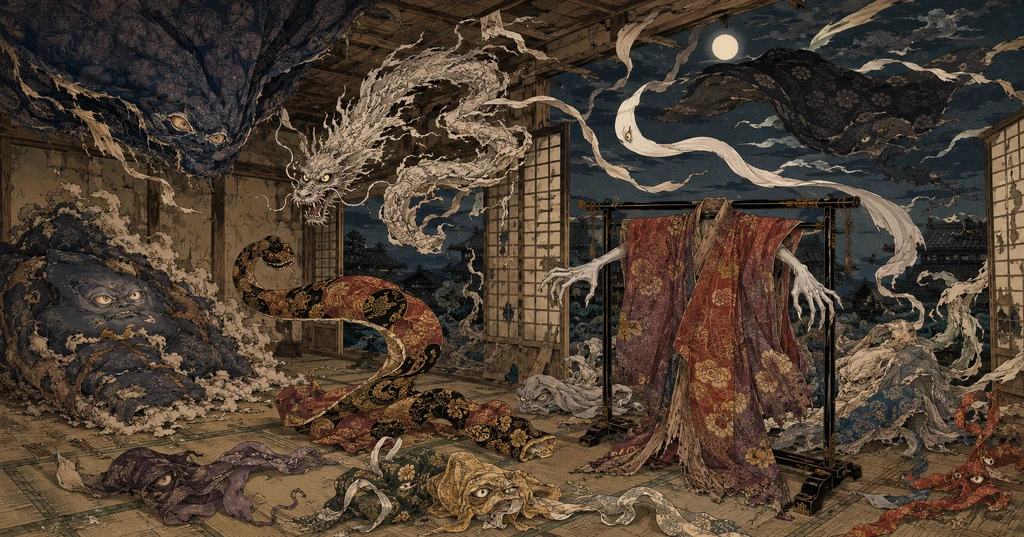
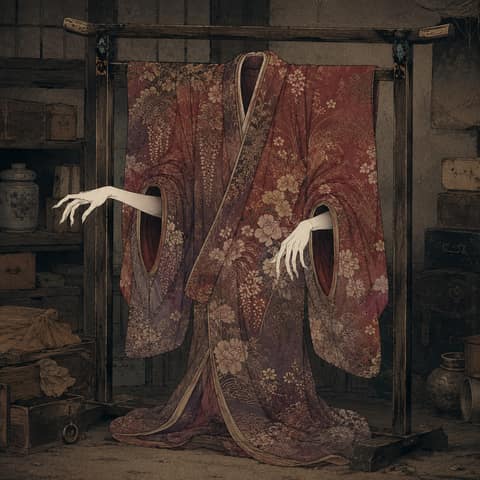
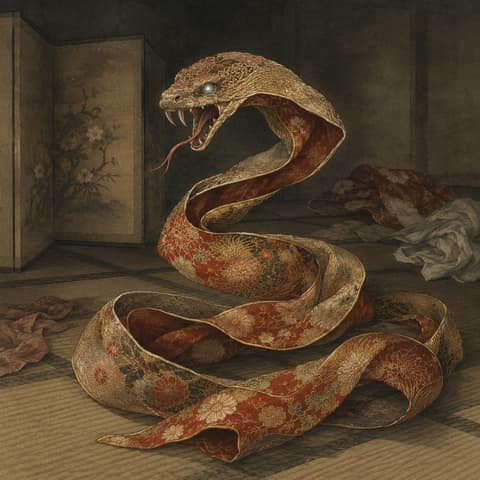
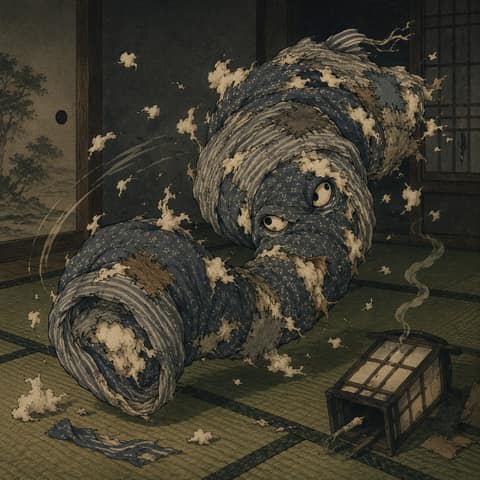
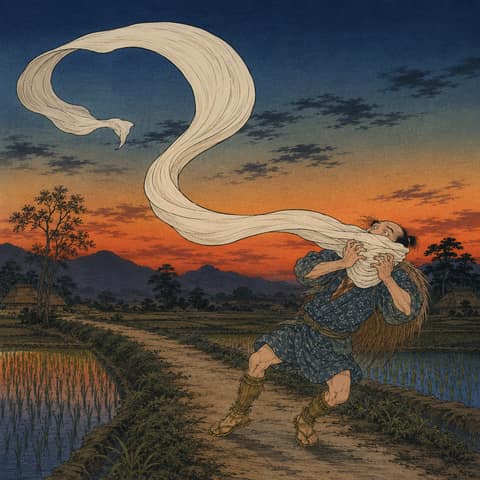
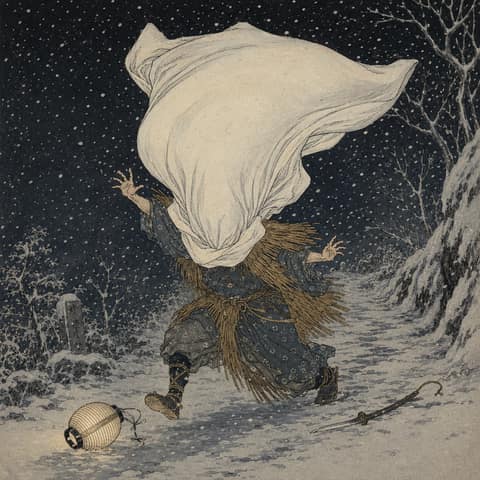
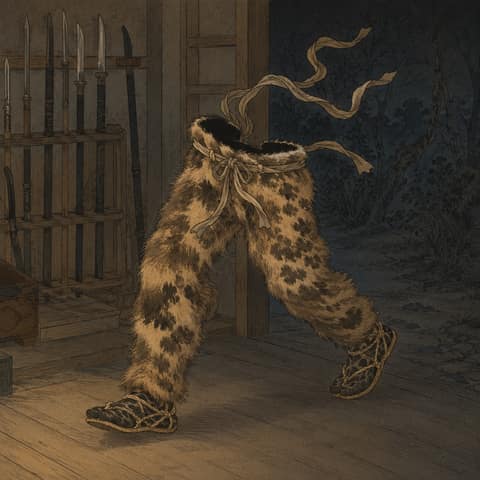
An edited version consolidating Edo-period pictorial sources of the “Inugake” apparition. Inugake are fur leggings worn from the waist to the legs for warmth and protection in hunting gear, placed within the lineage of tool-spirits that gain sentience after long use or separation from their owner. In Sekien’s illustration only the legs seem to walk independently, with the caption evoking the inugake of Kawazu Saburō in The Tale of the Soga. This is a literary hint by the artist rather than evidence of a specific vengeful-ghost tale. In early modern Night Parade of One Hundred Demons and tsukumogami scrolls, yokai wearing inugake appear, emphasizing the uncanny form of the gear. Its nature is generally to show up at night and startle people, with no clear record of harm or benefit. Localized traditions are scant, and most examples belong to urban pictorial culture. It is understood as a classic example of the idea that aged implements come to house spirits.
Character Profile
This section is our own creative profile for storytelling. It is not historical fact or scholarship.
Yokai Type - Traditional Yokai
Category - Household Spirits
Rarity - Uncommon
Personality - taciturn, often deemed relentless, true nature unknown
Compatibility - harmonizes with spirits of old tools and arms, neutral toward humans
Abilities - walks on its own mimicking its owner’s gaitrattles the ties of the garment to startle with noisebelieved to ward off cold winds and guard the feet with spiritual force
Weaknesses - loses power when replaced by new well-maintained gear, purification with salt or fresh water
Habitat - storerooms of townhouses, repositories for samurai or hunting gear, the pictorial worlds of emakimono and printed books