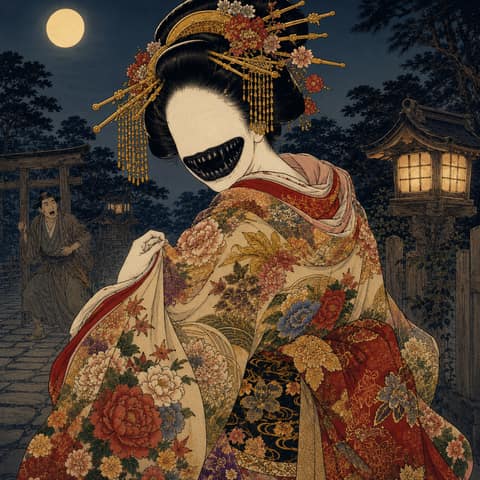
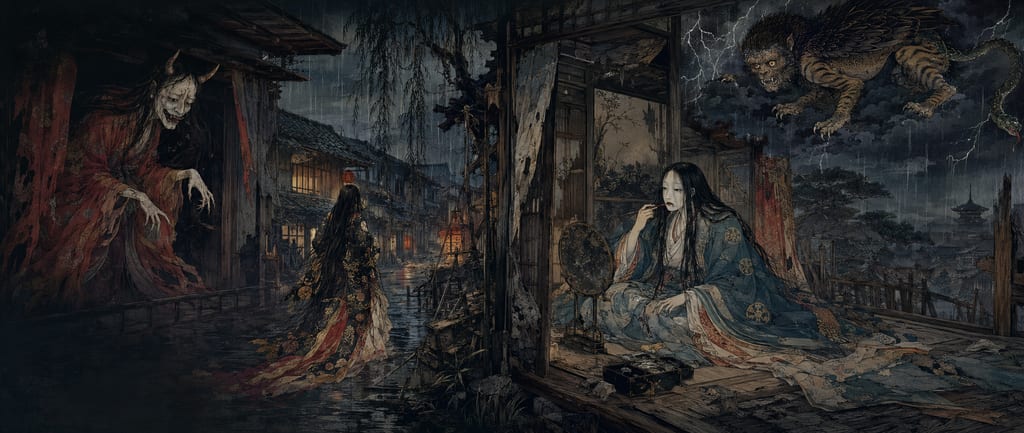
A canonical image based on Toriyama Sekien’s illustrations and Edo kibyoshi. Dressed like a courtesan of the pleasure quarters, its hair grows unnaturally long to shroud the body so the face cannot be discerned. Born from urban satire centered on Yoshiwara and a pun linking courtesans with shapeshifters, it appears as a literary construct with no proper name or origin tale. Sometimes read as a faceless yōkai, it serves as a symbol that reverses the viewer’s desires and assumptions. Sources are primarily printed editions, with scant oral tradition.
Character Profile
This section is our own creative profile for storytelling. It is not historical fact or scholarship.
Yokai Type - Traditional Yokai
Category - Household Spirits
Rarity - Epic
Personality - taciturn, enigmatic
Compatibility - feared and shunned as a mirror of human lust and vanity
Abilities - bewitches people from behindrepels pursuers with the uncanny approach of a hidden faceconceals its form by veiling the body in hair
Weaknesses - identity is easily exposed when seen head-on or under lamplight, little effect on those free from lust
Habitat - Edo pleasure quarters, town streets at night, tatami rooms