Yokai Encyclopedia

Encyclopedia of Japanese Yokai

65 Yokai|14 Category|Page 1 of 3
Localization in Progress - More content available in Japanese version
View Japanese
Sort by: NameAscending
住居・器物
  • Accompanying Hyōshigi

    Accompanying Hyōshigi

    Uncommon

    oh-KOO-ree hyoh-SHEE-ghee

    Tradition-Faithful Version

    Household SpiritsTokyo

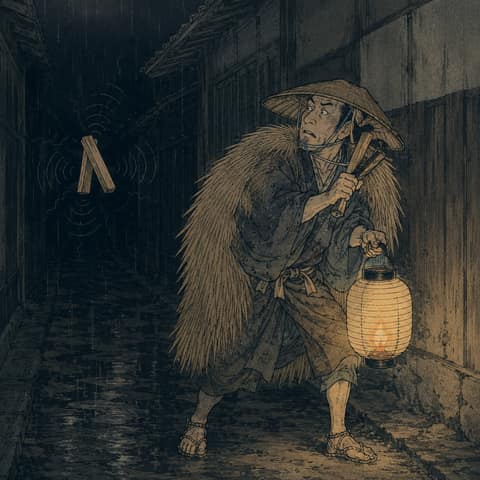
    Aligned with the clapper-wood anomaly counted among the Seven Wonders of Honjo. Understood less as a corporeal yokai and more as a name for an aural phenomenon. It appears in step with the steady rhythm of night-watch clappers, most notable at corners, near water, and in rain. Visual sightings are scarce, and turning back reveals only a lingering presence. An urban ghost tale tied to local customs of community patrols, paired with the kindred “Okuri Chochin.” The lore resists heavy anthropomorphism, and its hallmark is that sound itself becomes the act of “seeing-off.”
  • Akaname

    Akaname

    Epic

    ah-kah-nah-meh

    Bathhouse Grime-Goblin

    Household SpiritsVarious regions of Japan (especially Edo traditions)

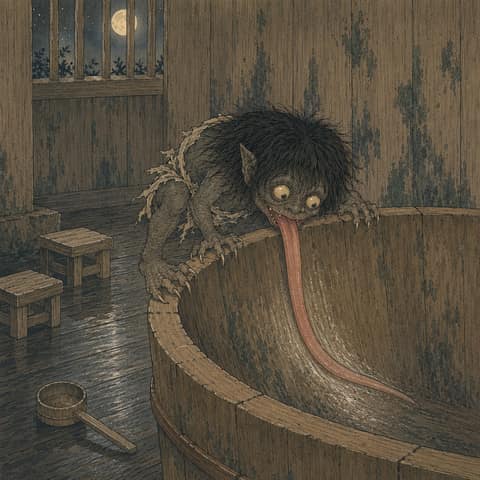
    A canonical form based on Sekien’s imagery and Edo-period prints. Resembling a cropped-haired child, it has clawed feet and an unusually long tongue. It avoids people, appears on deserted nights, and laps up bath scum and mineral scale, leaving wet tongue trails and a strange odor as its trace. Direct harm is rare; it is often seen as a presence that urges residents to clean.

  • Ao-andon

    Ao-andon

    Epic

    AH-oh AHN-dohn

    Ao-andon, Demoness of the Hyakumonogatari

    Dwelling / ArtifactTokyo

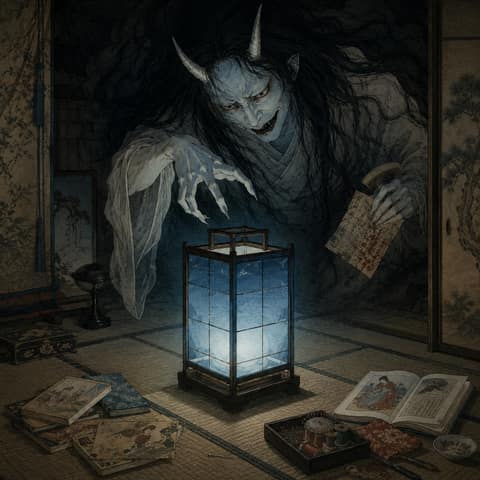
    This is the interpretation version of the "demoness appearing at the climax of the Hyakumonogatari," visualized by Toriyama Sekien, which had a decisive influence on later generations. In this version, the Ao-andon is not a mere jump-scare yokai, but functions as the game master presiding over the "ritual of terror" that is the ghost storytelling, and as a judge testing the psychological limits of the assembled humans. She is clad in a white kimono, revealing sharp horns through her long, unkempt black hair, and floating an eerie smile on her black-dyed teeth. Her appearance is reminiscent of a "Hannya" mask (a woman transformed into a demon by jealousy). As indicated by the sewing tools and letters scattered around her, she is not a "monster that came from somewhere else," but the manifestation of the negative emotions—"suspicion," "jealousy," and "grudge"—of the participants laid bare over the course of telling 100 ghost stories, condensed into a single point in the light of the blue lantern to take on the most terrifying form of a "demoness." The moment the 100th light is extinguished and total darkness and silence descend, she whispers to the participants, "Now, I shall show you the true horror (hell)." She is an entity that transcends the boundaries of yokai encyclopedias, monsterizing the very mechanics of human inner madness and fear—the ultimate refinement of Edo's horror culture.

  • Atakemaru

    Atakemaru

    Uncommon

    ah-TAH-keh-mah-roo

    Atakemaru (Possessed Vessel Tale)

    Household SpiritsTokyo

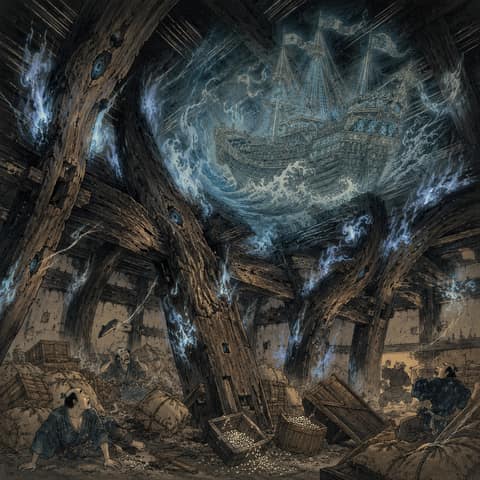
    A folkloric image of Atakemaru, the famed shogun’s flagship, remembered as a presence imbued with lingering spiritual power after dismantling and reuse. The ship’s splendor and public reverence fused with the belief that soul can dwell in objects, becoming a warning that rough treatment of its timbers invites strange happenings. Its manifestations are indirect—unsettling noises, revelatory dreams, possession of household members—with details varying by place and storyteller. Because historical service records blend with oral tradition, the tale functions as a symbolic, cautionary yokai story.

  • Black Hand

    Black Hand

    Uncommon

    KOO-roh-teh

    Lore-Faithful

    Household SpiritsIshikawa

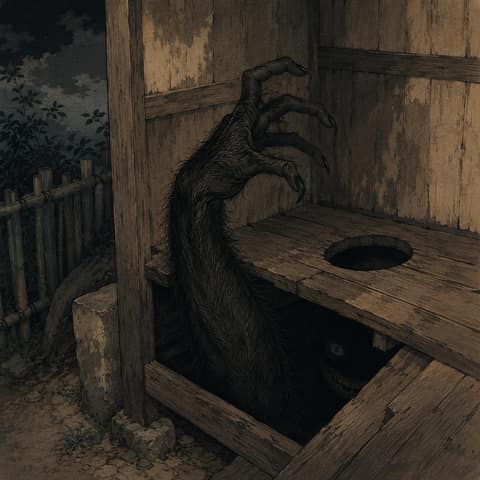
    An image organized from the account “Kurote-giri” in volume six of Shifugoroku. The Black Hand dwells in household privies, extending only a black, shaggy hand to harry people. Its true form can disguise itself and once, in the guise of a monk, retrieved its severed hand. When it shed the disguise it was said to stand nearly nine shaku tall, possessed great strength, and displayed a strange power that enveloped a person. It combines motifs common in early modern toilet ghost tales—“the hand,” “a smothering presence,” and “a transforming monk.” Though often confused with fox or raccoon-dog tricks, the text explicitly names it “Kurote.” Visual depictions are not fixed, and Mizuki Shigeru’s portrayal is thought to reflect other traditions, so features like three fingers or simian traits should not be generalized.

  • Ceiling Licker

    Ceiling Licker

    Epic

    TEN-joh-NAH-meh

    Traditional Interpretation (after Sekien Toriyama)

    Household SpiritsEdo period

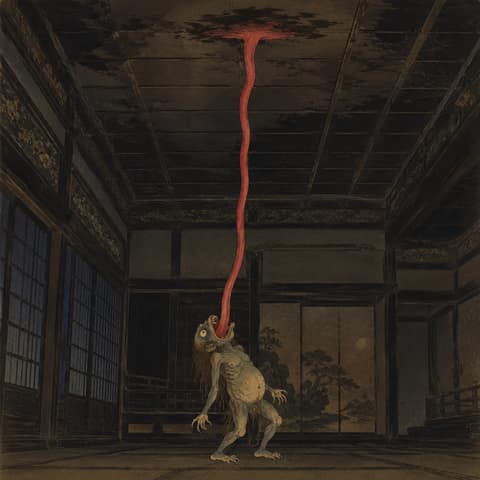
    An interpretation based on Toriyama Sekien’s picture book: a being that lets a long tongue hang down and roams old houses licking the ceiling. Rather than harming people directly, it is portrayed as bringing chill, gloom, and dampness into rooms. Its iconography is traced to a Muromachi-period Night Parade of One Hundred Demons scroll showing a creature extending its tongue upward, and later Edo-to-modern compendia ascribed to it the habit of licking away stains, soot, and cobwebs from ceilings. No proper name, lineage, or origin myth survives; it is taken as a symbol of household hauntings in general. Tradition places it in sparsely occupied buildings such as old temples and mansions, with wet streaks and speckles appearing on boards at night cited as its traces, though a firm regional folklore core is hard to confirm.

  • Ceiling-Dropper

    Ceiling-Dropper

    Rare

    TEN-joh-KOO-dah-ree

    Sekien Gazu Edition

    Household SpiritsEdo period

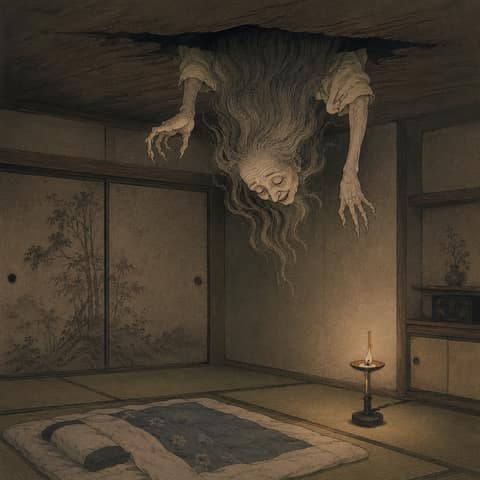
    An interpretation grounded in Toriyama Sekien’s iconic prototype. The house ceiling marks a boundary between inside and outside, the mundane and the otherworld; its upside‑down descent symbolizes an inversion of that threshold. It appears mostly at midnight when human activity has stilled, and is said to cause visual shock without actual harm. Early modern readers linked it to wordplay and household safety, reading it as an allegory that quietly warns of neglect, filth, and hazards in the crawlspace above. Later traditions reinterpreted creaks, drafts, and animal sounds in the ceiling as this apparition, placing it within the broader lineage of domestic yokai.

  • Chochin-obake (Lantern Ghost)

    Chochin-obake (Lantern Ghost)

    Epic

    chochin-obake

    The Typical Lantern Ghost with a Long Tongue

    Artifact / TsukumogamiTokyo

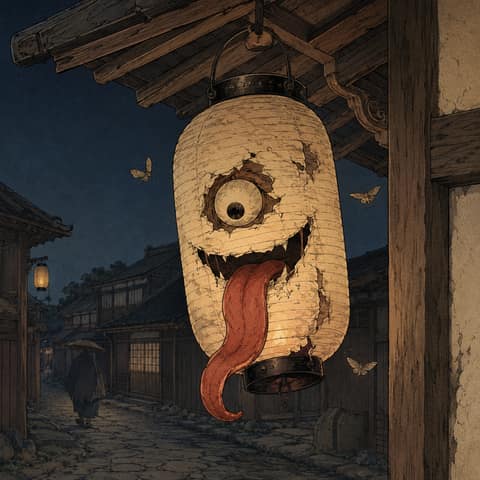
    This version focuses on the most classic image of the Chochin-obake, possessing large eyes and a long tongue, frightening humans with a humorous demeanor. It does not bring deep terror or disaster, but rather plays small pranks on humans after an everyday tool gains life. This casualness is precisely the charm of the Chochin-obake. Opening a large mouth where the lantern is torn and sticking out a red tongue is a pop design that symbolizes the visual culture of the Edo period. Lanterns were originally tools to illuminate the darkness and provide peace of mind. However, when it transforms into a yokai, the flame inside overlaps with the fire of life, flickering in the wind. Although there are no clear folktales stating that it harms humans, the sight of a lantern suddenly opening its eyes and sticking out its tongue on a dark night road undoubtedly brings a sense of surprise, allowing one to intuitively realize that the tool they thought was under their control actually possesses its own will. This is a small but tangible anomaly. This version of the Chochin-obake can be seen as a guiding light connecting humans and the world of yokai. It does not carry a tragic grudge like the Oiwa-chochin. It merely emerges in the darkness of the night, using pranks to make humans aware of the existence of the otherworld. In YOKAI.JP, it is highly appropriate to treat it as such an iconic existence representing the unique humor and approachability of Tsukumogami. If made into a card, the background should depict a dim Edo period night road or a dilapidated temple, with the Chochin-obake's own flame flickering in the wind and its long tongue exaggeratedly extended. Rather than horror, the comicality that makes one want to laugh should be emphasized. It will teach people that not all yokai are terrifying enemies, and that there are yokai like this that just play with humans in the night.

  • Cool-Breeze Oni

    Cool-Breeze Oni

    Common

    SUE-zoo-mee OH-nee

    Modern Variant

    Household SpiritsLate Showa era, urban areas as home technology spread

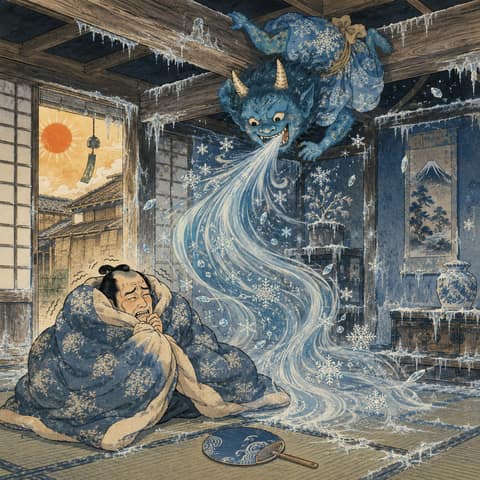
    The Cooling Oni is a yokai born from people overusing air conditioners to escape the summer heat. It usually wears a cute face, breathing out a soft “haa” of chill to cool a room. When it gets carried away, it turns the space into a deep freeze and drives residents to sneezing fits. In winter, it is said to quarrel with the Kotatsu Yokai. Some say if you forget to turn off the remote before sleep, the Cooling Oni slips into your dreams and whispers, “Stay cool a little longer.”

  • Enenra

    Enenra

    Epic

    eh-NEHN-rah

    Gossamer Smoke Sprite

    Household SpiritsJapanese folklore

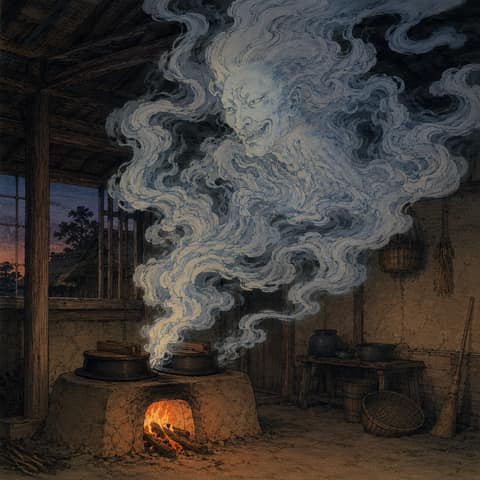
    Based on Sekien’s imagery, this interpretation highlights smoke layered like thin cloth coalescing into a human face. Rather than causing harm, it is better told as a sign pointing out imbalances in a household’s energy and as a warning about fire handling, which aligns with folk beliefs. It holds no fixed form, shifting with wind and temperature, with faces appearing and vanishing according to the viewer’s state of mind.

  • Flash-Spinner Oni

    Flash-Spinner Oni

    Common

    SEN-kyoo-kee

    Modern Version

    Household SpiritsFestival night stalls; schoolyards

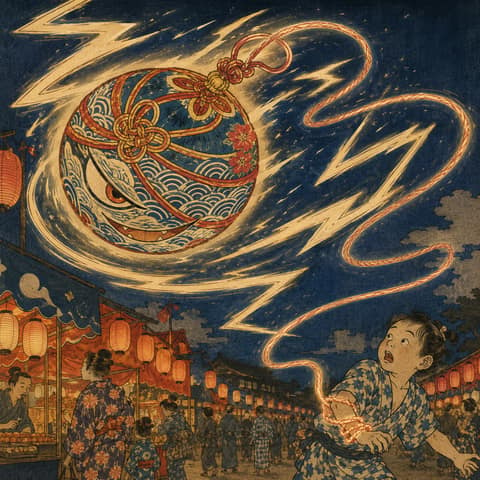
    Senkūki is a yokai born when a well-worn yo-yo from a summer festival absorbs moonlight. It moves with lightning speed, leaving trails of light each time it is cast. Sometimes it tangles its string around a person’s wrist, sometimes it dances in the night sky with an eerie glow, enchanting onlookers. In the hands of the unskilled, its string runs wild, tripping its owner and knocking things over in mischievous pranks.

  • Foot-Washing Manor

    Foot-Washing Manor

    Uncommon

    ah-shee-AH-rah-ee yah-SHEE-kee

    Ashiarai Mansion (Edo Odd Tale Traditional Type)

    Household SpiritsTokyo

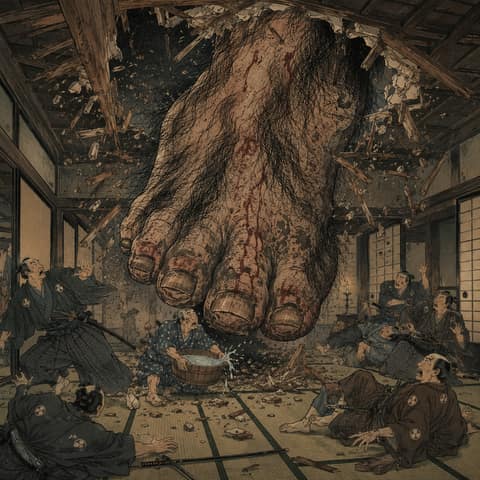
    In Honjo, Edo, this house-bound tsukumogami-like apparition manifests as a single gigantic foot descending from the ceiling to demand washing. It speaks human words and subsides when the ritual act of washing is performed, aligning with household notions of purification. Its true identity is left undefined and has been variously told as demon, monster, beastly shapeshifter, or a transformed house deity. Though threatening, some variants include a protective role that crushes thieves, and tales warn that forced exorcism angers it, reflecting urban ghost lore that prizes proper response over rash banishment. Regional lore varies—ending after a house change, or requiring a woman to do the washing—but the core remains: only the foot appears, and washing makes it withdraw.

  • Fridge Ward

    Fridge Ward

    Common

    RAY-zoh-MO-ree

    Modern Version

    Household SpiritsUrban apartment complexes

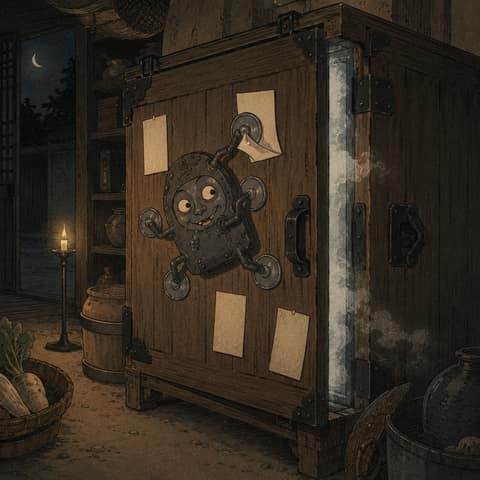
    Among residents of housing blocks and apartments, people have long whispered that if fridge magnets fall or move on their own, it is the work of the Fridge Guardian. In one home, opening the refrigerator at night revealed a single magnet shifted to a new spot, and the next day the head of the house forgot to use meat in the freezer and let it spoil. In another home, a child was found crying before the fridge at night, and when asked why, replied, “A voice from the refrigerator told me to eat snacks.” From tales like these, the Fridge Guardian came to be known as a modern yokai that disrupts people’s eating rhythms.

  • Furisode-no-kai

    Furisode-no-kai

    Rare

    furisode-no-kai

    The Furisode That Burned Edo: The Furisode Fire

    Dwelling / ObjectTokyo

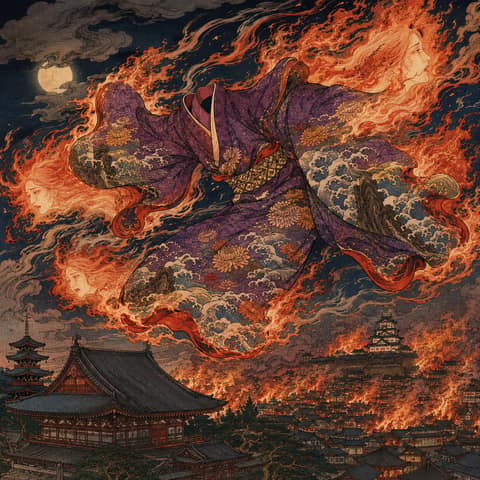
    The *Furisode-no-kai* is characterized by the fact that it is an "anomaly where an object and a disaster become one," lacking the form of a specific yokai. Its core consists of a dual structure: on the inside, there is the curse of an object where a *furisode* imbued with the thoughts of the dead takes the life of its new owner (a passion akin to a *tsukumogami*); on the outside, there is the great disaster where the fire burning the *furisode* loses control and burns down the entire city. The former is a typical example of the many "cursed garments and mementos" tales in Edo, while the latter is the real historical tragedy of the Great Fire of Meireki. The originality of this ghost story lies in stitching the two together. For the residents of Edo, fires were the greatest terror. While praised as "Fires and brawls are the flowers of Edo," once a fire spread, the wooden cityscape easily turned to ashes. The *Furisode-no-kai* can be said to be a product of imagination unique to urban ghost stories, translating that terror into an easily digestible tale of a single garment's fate, giving a face and a reason to an indiscriminate disaster.

  • Fusuma

    Fusuma

    Uncommon

    Fusuma

    The White Cloth of the Night Road: Sado Fusuma

    Dwelling / household objectSado Island, Niigata Prefecture (main form) / Tosa, Kōchi Prefecture (variant)

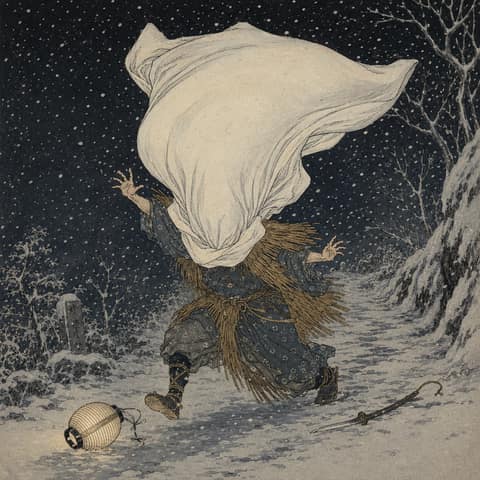
    This version focuses on the better-known white-cloth type from Sado, rather than the Tosa form. It centers on the circumstances in which Fusuma appears on night roads, the method of resisting it with ohaguro, and the legendary connection to the custom of men using kane tooth dye. In Sado, on night roads, snowy paths, or around inns, a white cloth about the size of a wrapping cloth is said to drift down without sound, as if floating in the moonlight, and cover a person from head to shoulders. Blades cannot cut it. Only when someone with ohaguro in their mouth bites through one edge does the apparition wither and fall away. It is true that some men on Sado used kane tooth dye into the Meiji period, and elders preserved the explanation that this was a remnant of measures against Fusuma. Yet the male ohaguro custom also has other possible motives, including festival dress and rites of adulthood. The claim that it existed specifically to defeat Fusuma should be read as partly containing later rationalization. In winter Sado, when wind rises over snowy fields, white cloth from eaves or drying racks can be swept up and blown across one's view. Such natural experiences may also have been retold locally under the name Fusuma.

  • Futon-kabuse

    Futon-kabuse

    Rare

    Futon-kabuse

    Weight Falling on the Bed: Sakushima Futon-kabuse

    Dwelling / household objectAichi

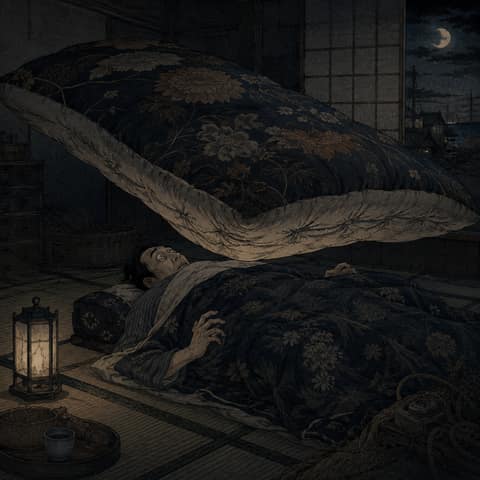
    This version focuses on the process of retelling through which modern yokai encyclopedias have shaped this apparition. The primary source preserves only the bare structure: "it comes softly, slips over the person, and suffocates them." Postwar yokai encyclopedias, including lines descending from Mizuki Shigeru's Nihon Yōkai Taizen and illustrated references edited by Kyōgoku Natsuhiko and Tada Katsumi, took that single sentence as a starting point and added details such as "a futon that feels light gradually becomes heavy" or "it falls silently while the person is asleep." These are later embellishments not grounded in the primary record. At the same time, they work well as a way to convey to modern readers the nighttime bodily sensations of a fishing village: the weight of bedding dampened by sea wind, sleep paralysis from exhaustion, and the cold dampness of the tide creeping in from the sea. The fact that it has no counterpart in Toriyama Sekien - a modern coastal-folklore apparition that does not fit inside Edo picture-scroll yokai - has also left later artists and writers room to imagine its form freely. That openness is part of Futon-kabuse's modern character.

  • Goldfish Lantern

    Goldfish Lantern

    Common

    KEEN-gyoh-toh

    Modern Version

    Household SpiritsSummer festivals, goldfish scooping, lantern culture

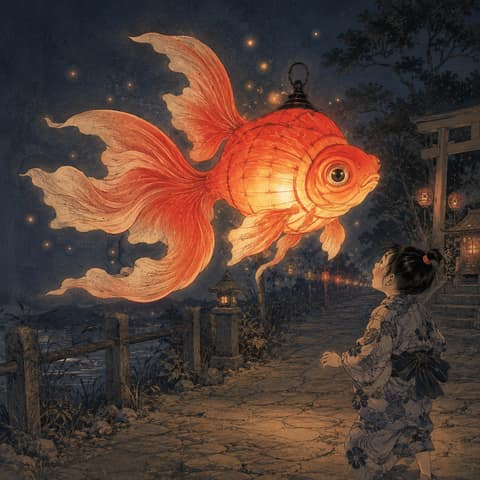
    Kingyo-akari is a yokai said to be born from the dream of a goldfish trapped inside a summer festival lantern. At night it drifts softly through the air, scattering light with its glowing red tail. It appears before lost children and gently lights their way, but if one becomes too enchanted, it may lead them far from the festival’s bustle. Though small and endearing, when its light flickers out, people say it heralds the end of summer.

  • Gooseflesh Specter

    Gooseflesh Specter

    Rare

    MEE-no-keh-DAH-chee

    Emaki Iconographic Type: Hair-Raising Figure

    Household SpiritsJapanese folklore

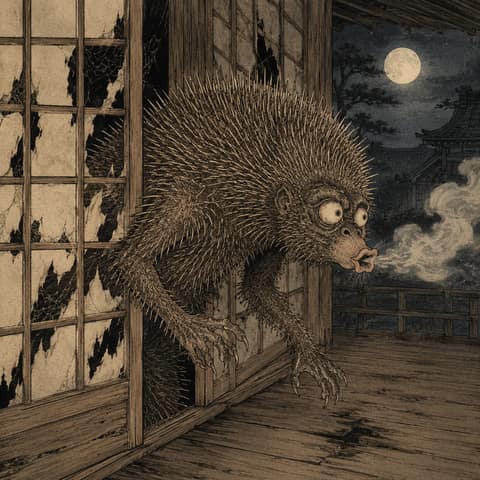
    An image-based yokai originating from picture scrolls without accompanying text, making its function and temperament hard to define. Its bristling, hair-standing posture suggests a visual motif of fear or dread, yet sources provide no explanation and no firm conclusion can be drawn. Names vary by source, and related figures may appear under different titles. Here, characterization is kept minimal, grounded only in the image’s form and the extant manuscripts.

  • Hair in the Hemp Bucket

    Hair in the Hemp Bucket

    Uncommon

    ah-sah-OH-keh-no-keh

    Traditional Record Edition (Awa Curious Tales)

    Household SpiritsTokushima

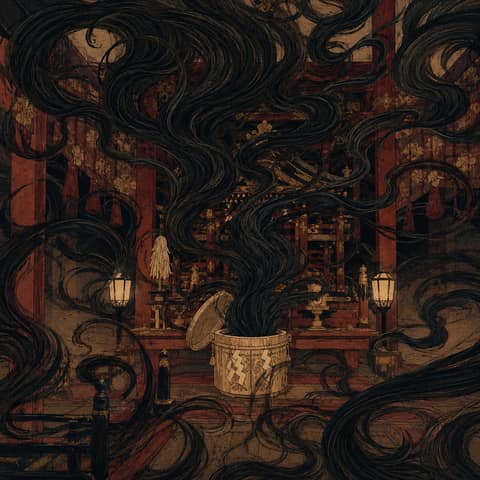
    Based on an old Awa record. Hair kept in a hemp bucket acts as part of the deity’s body or a manifestation of divine power, restraining anyone who disrupts shrine order. It is understood to activate within the shrine precincts rather than roaming independently. The core image is hair that quietly elongates, splits into strands, and entangles targets one by one, reacting to acts like defilement or theft rather than attacking onlookers indiscriminately. Shigeru Mizuki depicted it as a massive hair mass under the name “Asaokege,” but the actual tradition emphasizes function over appearance. Often read as a symbol of in-shrine norms encouraging observance of faith and taboos.

  • Hand from a Kosode Sleeve

    Hand from a Kosode Sleeve

    Rare

    koh-SOH-deh no TEH

    Iconographic Tradition, Based on Sekien Toriyama

    住居・器物Edo period

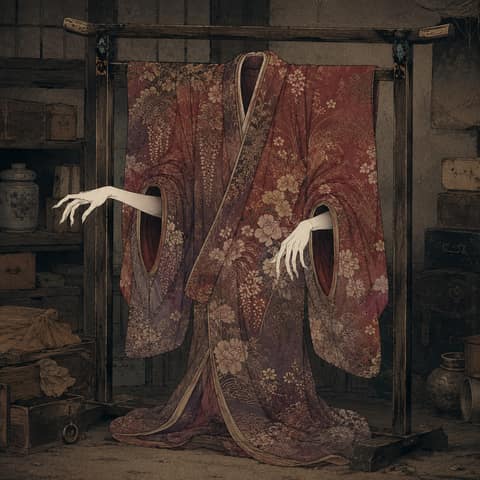
    An interpretation aligned with Toriyama Sekien’s imagery and accompanying text. Only a white feminine hand emerges from the sleeve opening, while the absent owner is signified by the garment itself as the main subject. The kosode was a fine everyday robe of the time; whether it became a keepsake, was dedicated to a temple, or sold marks the branching fate, with spiritual disturbance manifesting as attachment residing in the clothing. It layers commentary on courtesans’ circumstances and the irony of buyout money with an aesthetic for dress and a sense of impermanence, functioning less as a concrete monster than as a “visible metaphor.” In folktales, illness after acquiring secondhand clothes and nightly apparitions of a white hand often cease once the robe is offered to a temple and sutras are chanted. Situated at the crossroads of possessed objects and ghost lore, it can be read as tsukumogami, yet its focus remains the emotions of the garment’s former owner.

  • Headlamp Oni

    Headlamp Oni

    Common

    shah-TOH-kee

    Modern Edition

    Household SpiritsUrban arterial roads; late-night expressways

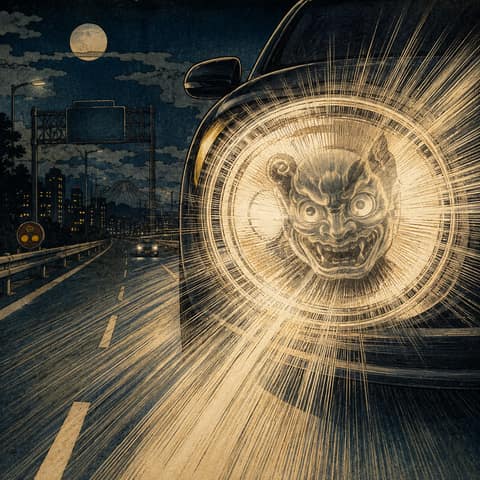
    Kurutōki lurks behind the glass and manipulates dazzling light to mislead travelers. It appears most readily when a driver panics or grows drowsy, and its silhouette is said to flicker within afterimages of light. Yet it is not purely malevolent; at times it flashes a fleeting shadow to warn of danger and snap drivers awake. It embodies both a guardian dwelling in light and a trickster that beguiles the eye.

  • Himamushi Nyūdō

    Himamushi Nyūdō

    Rare

    HEE-mah-moo-shee nyoo-DOH

    Toriyama Sekien Iconography Reference

    Household SpiritsEdo period

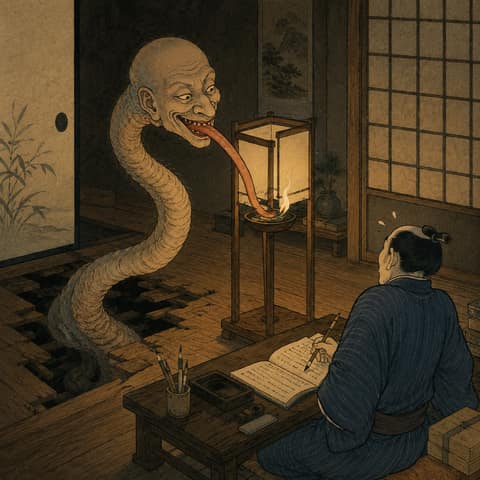
    A reference edition compiled from the illustration and note in Toriyama Sekien’s Konjaku Hyakki Shūi. From beneath the floorboards extends the gaunt upper body of a nyūdō, lips slick, tongue reaching toward the saucer of an andon lamp. Its core origin is a didactic reading: the spirit of one who shirked labor appears nightly to lick the lamp oil, weakening the flame and hindering brushwork and needlework. The name connects to the letter-picture pun “Hemamushiyo Nyūdō,” suggesting a background in doodle play. In lived experience it overlaps with oil-loving bugs seen around hearths and kitchens, told as a being lured by darkness and the smell of oil. It causes no grave harm, preferring to make the flame waver, dampen the wick, and sap one’s focus. When spotted and scolded it shrinks back, a creature strongly inclined to hide in the shadows.

  • House Groans (Yanari)

    House Groans (Yanari)

    Epic

    yah-NAH-ree

    Ienari (Traditional Depiction)

    Household SpiritsVarious regions of Japan

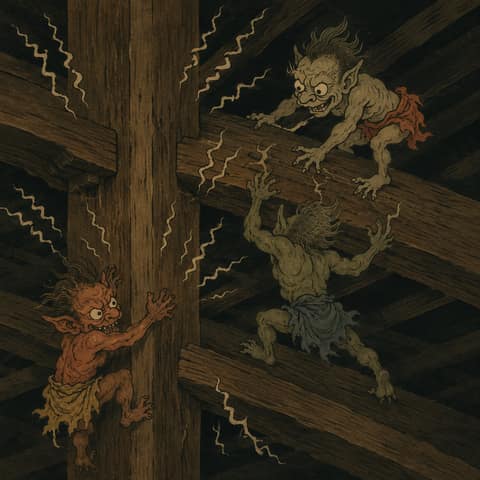
    In picture scrolls it appears as little goblins shaking beams and pillars, a visual rendering of the intangible phenomenon of creaks and tremors within a house. In actual lore it is often told as the house itself rumbling without a fixed cause, though in some regions it is tied to animal curses, the misdeeds of residents, or signs of spirits lingering on the estate. It is said to occur late at night, especially around the Dead of Night, and noises arising at vital spots such as the hearth, storehouse, or armory were feared as ominous. Quiet sitting or sutra chanting, checking and offering for the crawlspace, and purifying beams and pillars are said to calm it, but if it persists, moving house is sometimes recommended. Traditional advice warns against hasty causal claims, urging first a review of the property’s lineage and proper rites to ancestral and household deities.

  • Ipetam (The “Eating Blade”)

    Ipetam (The “Eating Blade”)

    Uncommon

    EE-peh-tahm

    Tradition-Faithful Cursed Sword Image

    住居・器物Hokkaido

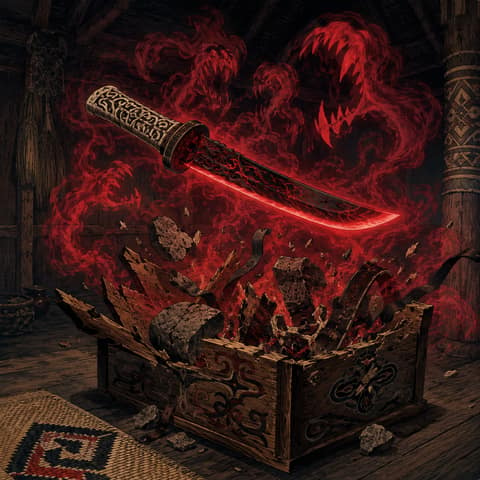
    This version consolidates images of the Ipetam found across Ainu traditions. The blade rings of its own accord and shows hunger by the act described as “eating” stone or leather. Once drawn it will not rest until it sees blood, and tales say it may fly on its own to cut people. Its curse threatens households and kotan, inviting disaster beyond the owner’s will, so it is contained through rites and taboos or by sinking it in water. In Asahikawa and Kamikawa, after casting it into a bottomless bog, a rock in the shape of a sword is said to appear, tying requiem to place names and landscape origins. In Saru, a wit tale survives in which imitating the sword’s sound repels bandits, showing its fearsome name worked as a deterrent. In Kiritoi, Kushiro, an alias tale engraves taboo violation and harm into the sword’s very name, marking it as a remembered calamity object. Related types include the man-eating spear Ipe-op and the self-defense knife Sōsamusipe, suggesting a systematic view of baleful blades and weapons. This reconstruction avoids creative embellishment and adheres to regional records of the cursed sword.

Showing 1 - 24 of 65 yokai