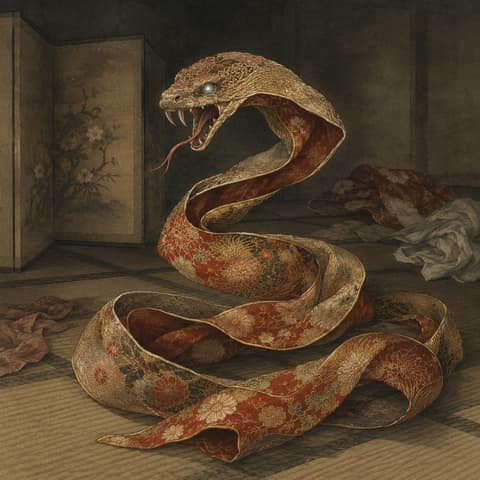
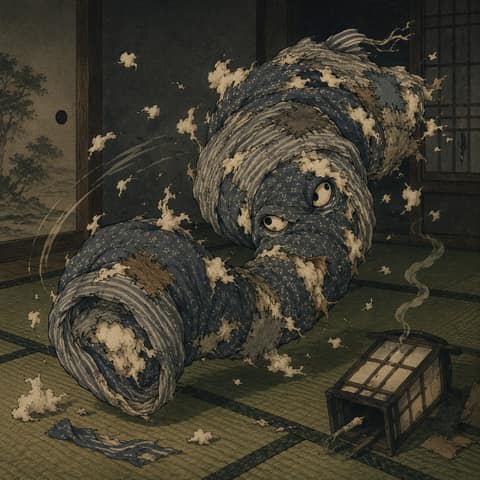
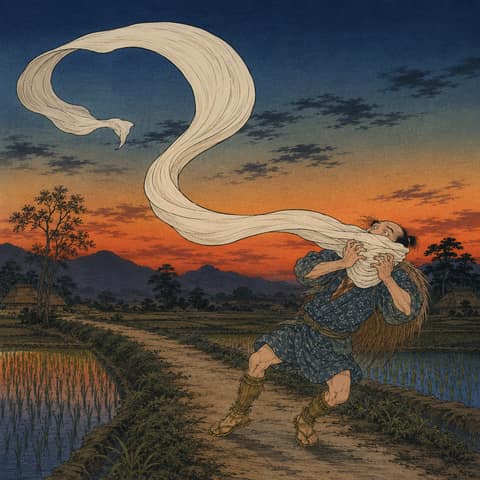
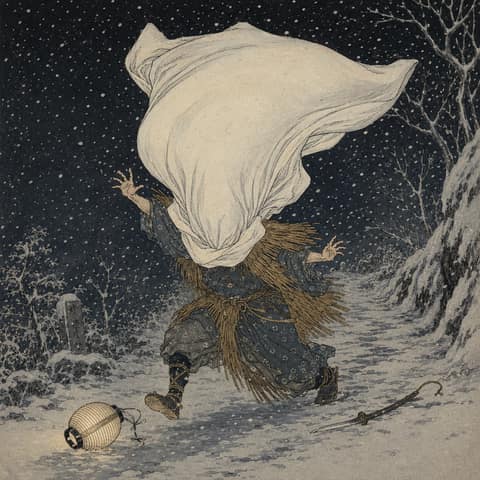
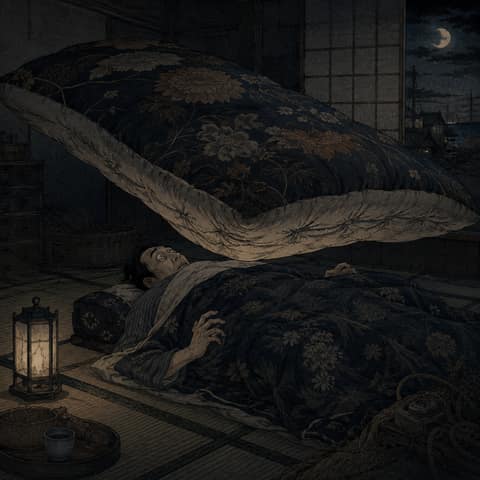
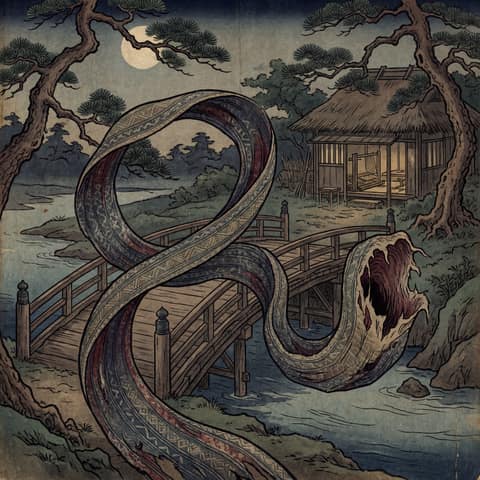
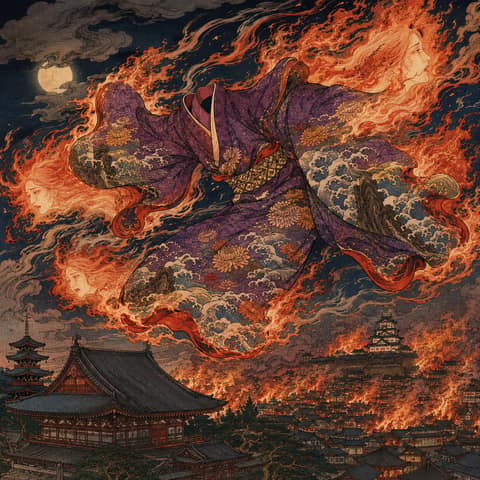
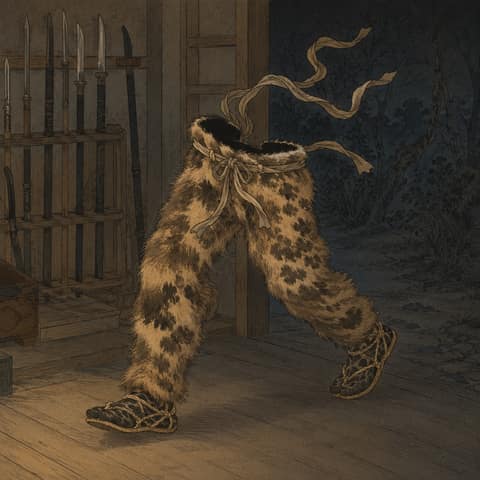
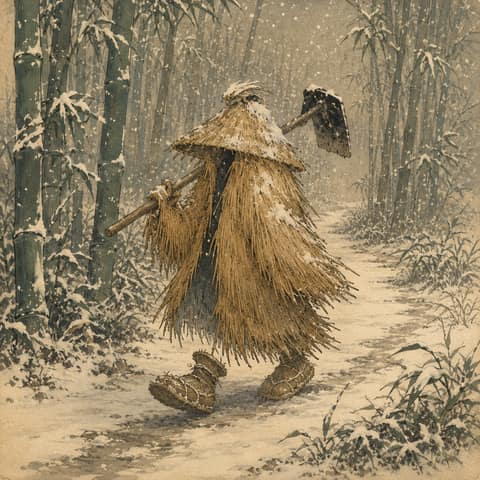
A reimagining of the straw raincoat and straw sandals yokai based on Toriyama Sekien’s imagery. The straw raincoat serves as a protective emblem akin to visiting-deity garb, while the sandals take on the role of roadside boundary charms. Weathered by long use and harsh storms, they are believed to have gained spiritual potency and slipped into the human world. The act of shouldering a hoe evokes farm labor and service to local land deities, and the snowy bamboo grove setting suggests purity and deep quiet. Specific deeds go unrecorded, but it was likely feared as creaking sandal steps at midnight or a walking cloak’s silhouette in a blizzard, with little emphasis on malice. An emblematic member of the early modern tsukumogami ensemble, it reflects reverence for the lifespan and toil of tools.
Character Profile
This section is our own creative profile for storytelling. It is not historical fact or scholarship.
Yokai Type - Traditional Yokai
Category - Animated Objects & Undead
Rarity - Rare
Personality - taciturn, relentless
Compatibility - harmless to those familiar with old tools and farm implements
Abilities - appears with the signs of blizzards and rough weatherleaves footsteps while keeping its form indistinctsheds wet and snow to protect itself
Weaknesses - vulnerable to strong fire, loses spiritual power through new tools and purification
Habitat - bamboo groves, village outskirts, old roads and crossroads