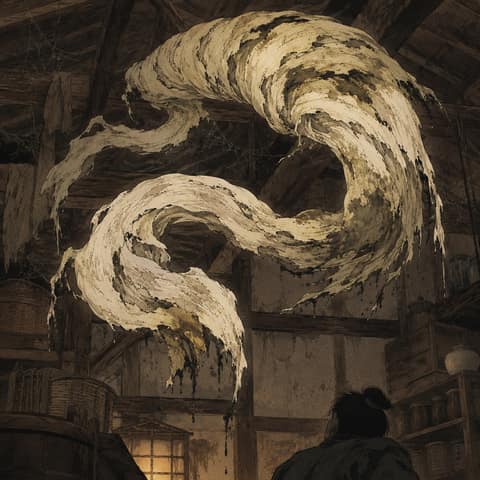
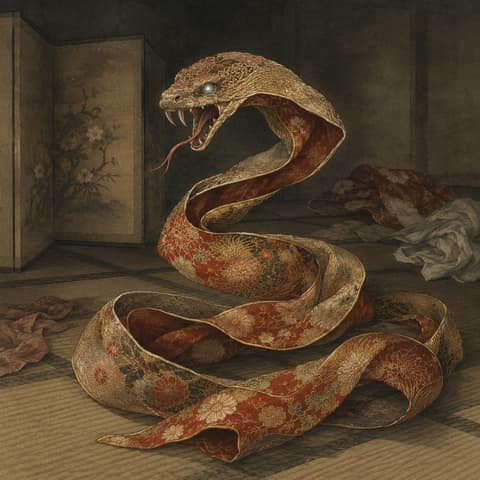
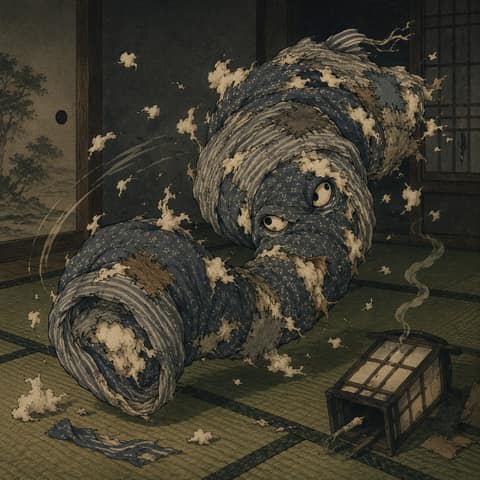
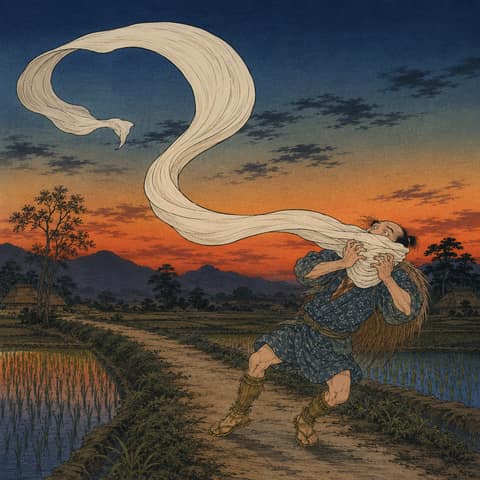
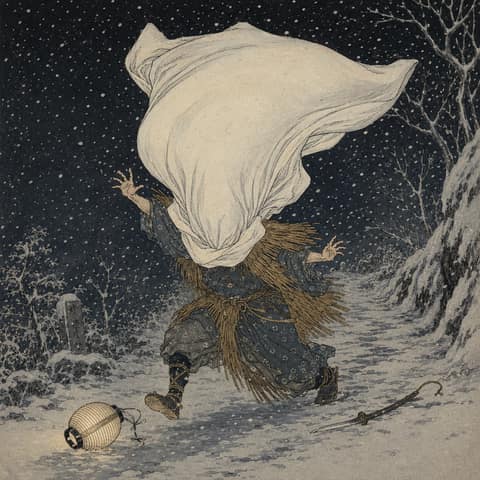
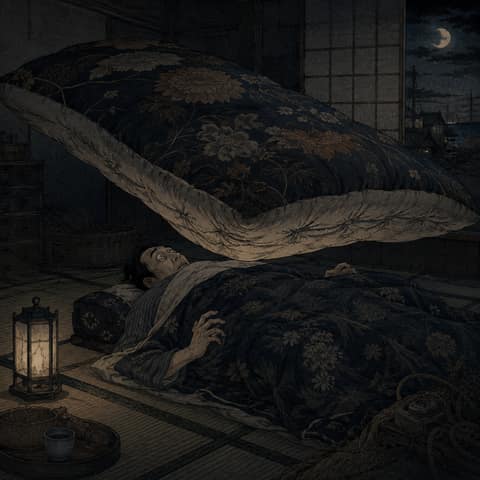
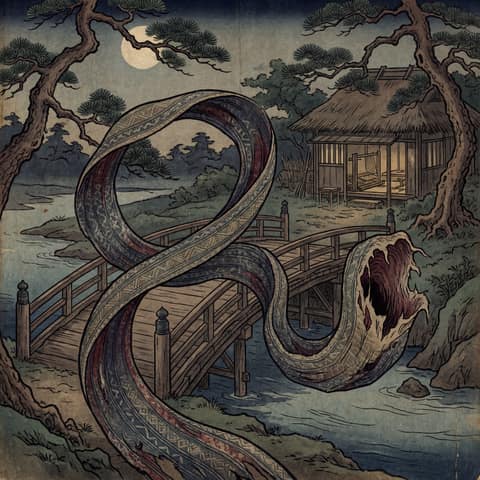
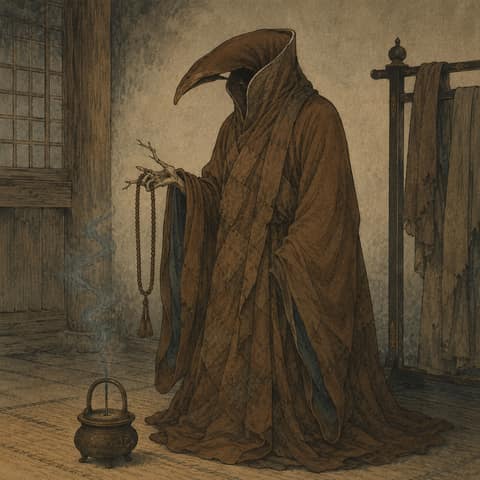
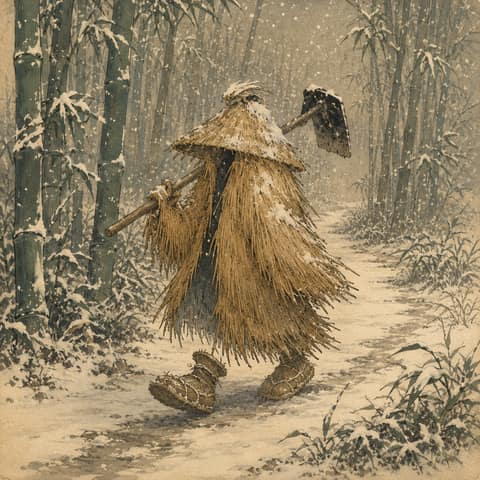
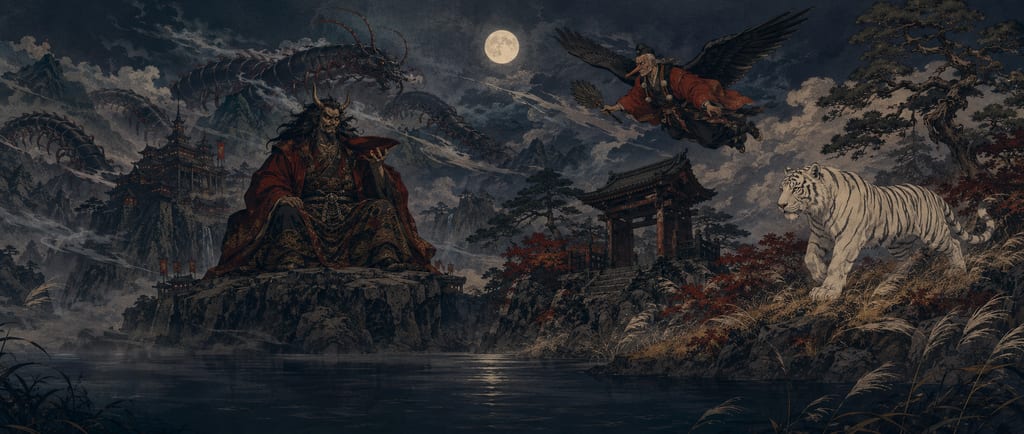
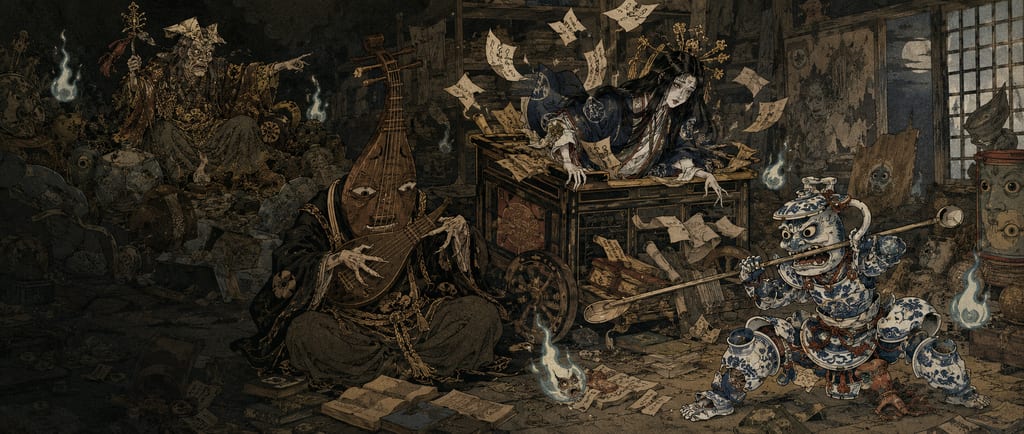
Anchored in Toriyama Sekien’s imagery, this version sees an aged dishcloth trailing long and fluttering in the wind, reimagined as a yokai. The original illustration offers little about harming humans, so it is understood as a symbol of attachment to old objects and the impermanence of things. Aggressive traits found in later ghost tales should be kept separate; here the focus is the eerie nature of a “moving old cloth” and the visual impression of it gliding between walls under a night lamp.
Character Profile
This section is our own creative profile for storytelling. It is not historical fact or scholarship.
Yokai Type - Traditional Yokai
Category - Animated Objects & Undead
Rarity - Epic
Personality - unknown
Compatibility - attuned to antiques, resonates with things that waver in the wind
Abilities - rides the wind and stretches or contracts its formblends into dim light like a white clothdrifts silently from the shadows
Weaknesses - vulnerable to open flame, becomes heavy and sluggish when soaked with water, has no influence over new cloth
Habitat - beams of old houses, gaps in chests and cupboards, storage rooms and storehouses