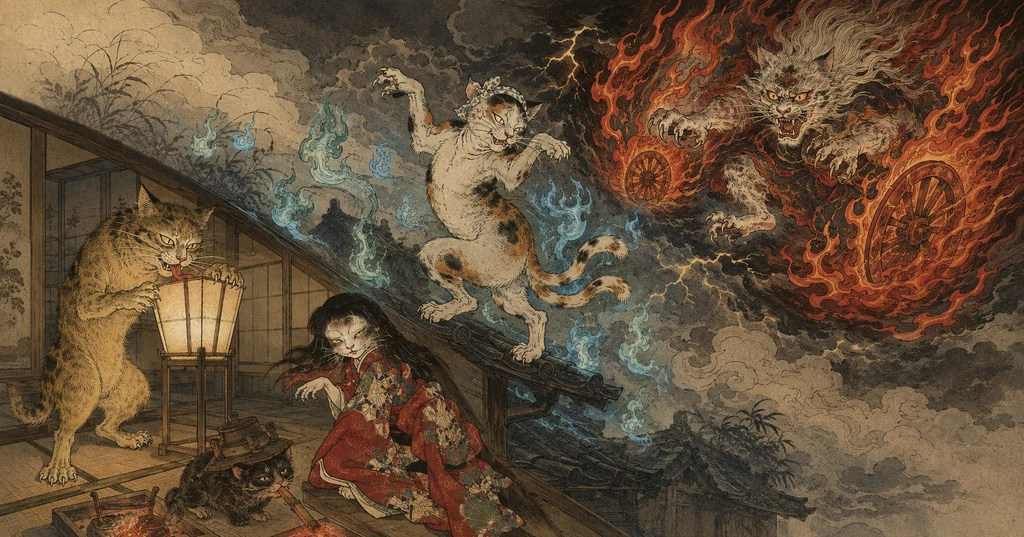
化け猫は一つの姿ではない
「化け猫」と聞けば、年老いた猫、二本の尾、行灯の油、女性への変身、主人の仇討ち、青い火などが一度に思い浮かぶかもしれない。しかし、それらは同じ時代の一匹へ最初から備わっていた特徴ではない。中世の猫胯、家の老猫をめぐる近世怪談、猫またの絵、歌舞伎の怪猫、鍋島物、怪猫映画が、それぞれ別の場面を加えてきた。
化け猫は、固定した生物種というより、猫が人間の理解を越える瞬間を集める大きな名前である。家の中で最も身近な動物の一つでありながら、夜に活動し、音を立てずに歩き、人の指図だけでは動かない。古い記録、怪談、妖怪画、舞台、映画は、その身近さと分からなさをそれぞれ異なる姿で表してきた。
一二三三年、
南都から届いた猫胯の噂
猫怪異の古い記録として重要なのが、藤原定家『明月記』天福元年八月二日条である。南都から来た使者は、猫胯と呼ばれる獣が毎夜現れ、人を食らい、殺して見ると猫のような目と犬のような体をしていたと語った[1]。定家はその風聞を京都で聞き、都へ広がることを恐れて記した。
この獣は、飼い猫が長生きして人へ化けたものとは説明されない。尾の数も書かれず、「南都七郷」と範囲を広げる言葉も原文にはない。現在の化け猫の初目撃ではなく、中世に「猫胯」という名で恐ろしい獣が語られた前史である。
猫まただと思ったものは飼い犬だった
ここには、老猫の変化という考えが十四世紀頃に語られていた証拠と、恐怖が見慣れた動物さえ別物に見せるという笑いが同居する。犬は猫またを倒したのではない。この話から「犬が化け猫の弱点」という規則を作ることはできない。
家族の姿を借りる猫
延宝五年(一六七七)の『宿直草』巻四では、猫の怪異が家の中へ入る。「ねこまたといふ事」では猫が母の姿をとり、「年へしねこはばくる事」では年月を経た猫が異変を起こす[2]。山本綏子は、前者が巻四の冒頭に置かれた意味を論じている[3]。
見知らぬ妖怪が戸口を破るのではなく、毎日餌を与えてきた猫が、最も親しい人物に似た姿を見せる。作品が用いる名は猫またなどであり、現在の化け猫と完全に同一の分類ではないが、年経た家猫をめぐる怪異が家の内部で語られた重要な例である。
何年生きれば化けるのか
猫が長寿によって変化するという考えは古いが、共通する年数はない。寺島良安『和漢三才図会』「猫」は、「十有余年」を経た老いた雄猫が妖をなすという記述[4]を載せる。ほかの資料や後世の解説には別の年齢、体重、尾の長さが現れる。
「十有余年」はこの資料に現れる目安であり、化け猫全体を判定する時計ではない。十年、十二年、十三年、二十年のどれかを一律の規則にすると、個別の資料が持つ違いを失ってしまう。
手拭いをかぶる猫と踊る猫
倉本昭が引用する、宝永五年(一七〇八)序の『大和怪異記』では、猫は赤い手巾をかぶり、後足と尾で立ち、周囲を見回す。原文はここで踊るとは書かない[5]。一方、小林光一郎が取り上げる寛延二年(一七四九)刊『新著聞集』には、猫が集まって踊る話がある[6]。
手拭い、直立、踊りは近い印象を与えるが、同じ文章の一場面ではない。小林の研究は、踊る猫が錦絵にどのように描かれたかを考察する[7]。また、隠岐の猫をめぐる近現代の語りにも、話す、踊る、歌うという姿が記録されている[8]。似た動作でも、資料と地域を分けて読む必要がある。
二本の尾は猫またの代表図像
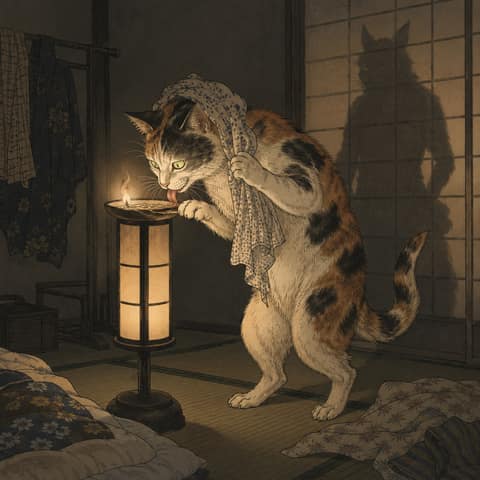
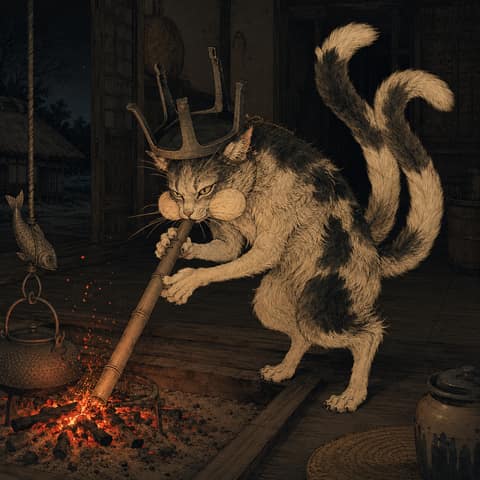
二本の尾は、現在の猫又を見分ける最も有名な印である。鳥山石燕『画図百鬼夜行』「猫また」では、猫が手拭いをかぶり、二本の尾を見せて後足で立つ。だが一二三三年の猫胯にも、『徒然草』の猫またにも、尾の数は書かれていない。
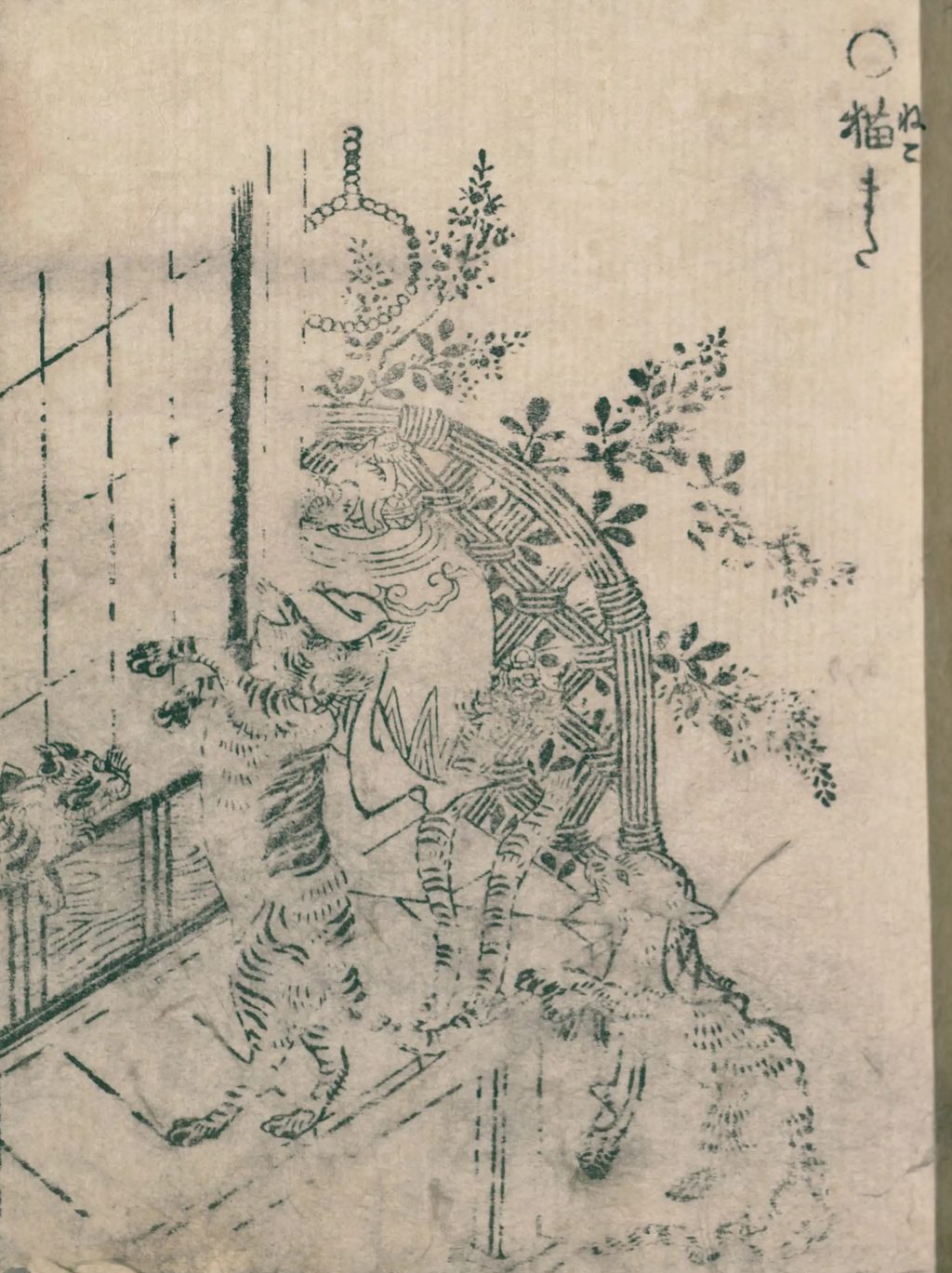
この図の作品上の名は、あくまで「猫また」である。初版は安永五年(一七七六)、掲載画像は文化二年(一八〇五)刊本[9]であり、化け猫一般の原典画ではない。化け猫と猫又は歴史上重なる部分を持つが、「一尾から二尾へ進化する」という共通の成長段階は確認できない。
行灯の油は力の源なのか
『和漢三才図会』「猫」は、油を舐めることを、その猫の性質が表れるしるしの一つに挙げる[4]。書かれているのは観察のしるしであり、油を飲めば妖力を得るという仕組みではない。
手拭い、直立、行灯の油を一画面に組み合わせた現代画は、複数の近世資料に見える母題をまとめた再構成である。古い文章の一節と、後世に構成された一枚の絵を区別すれば、どの要素にどの根拠があるかを正確にたどれる。
「岡崎の猫」が舞台で巨大になる
文政十年(一八二七)初演の『独道中五十三驿』は、東海道をめぐる長い筋の中に老婆おつた実は怪猫という趣向を置いた。後世には「岡崎の猫」と呼ばれるが、場割には鞠子の古寺や猫石の怪異が記される[10]。通称をそのまま愛知県岡崎の実在事件や古い民話地点へ変えることはできない。
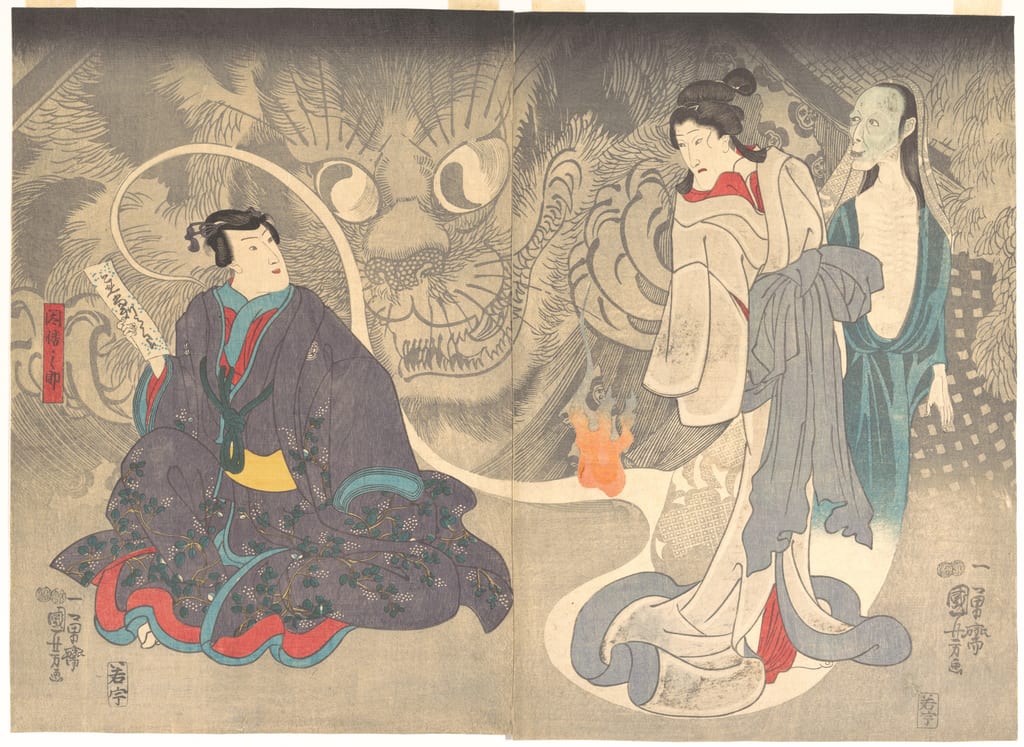
歌川国芳の約一八五〇年の二枚続では、背景いっぱいの猫の顔、輪を描く尾、女性、亡霊、炎が一度に現れる。The Metropolitan Museum of Artは作品名を「Scene from a Ghost Story: The Okazaki Cat Demon」とし、二枚続として所蔵する[11]。これは猫の自然な姿を記録した図ではなく、通称「岡崎の猫」に関わる舞台の怪猫を大きな尺度で見せる芝居絵である。
鍋島の猫はどのように長編になったか
鍋島怪猫譚には、実在する家名、御家騒動、忠義、女性の怨念、仇討ち、猫の変身が重ねられた。国立国会図書館の展示解説によれば、嘉永六年(一八五三)に計画された『花野嵯峨猫魔稿』は佐賀藩の抗議で上演中止となった[12]。早川由美の論文題名では同作を『花嵯峨猫魔稿』と記すため、二つの表記を混同せず、それぞれの出典どおりに示す。
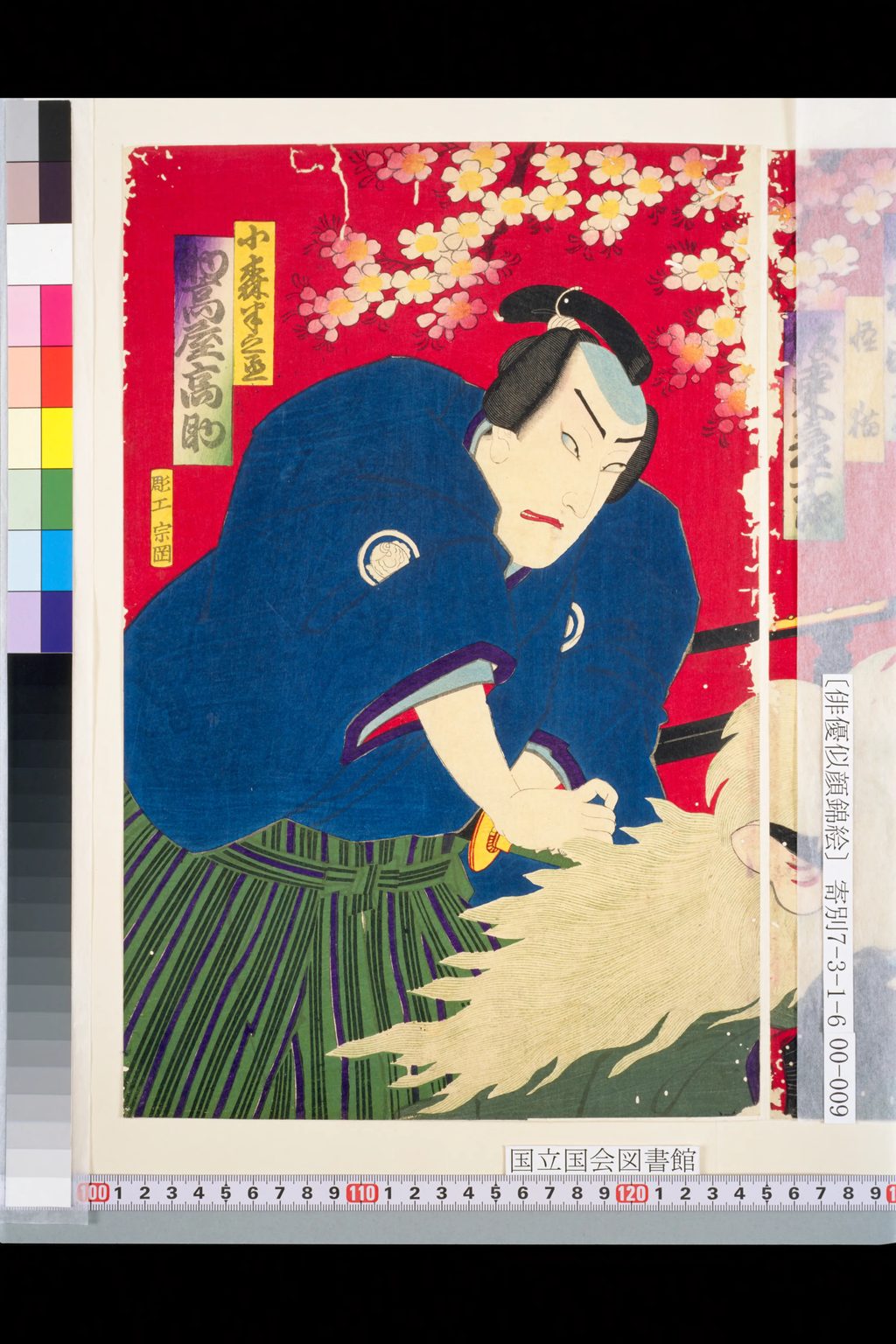
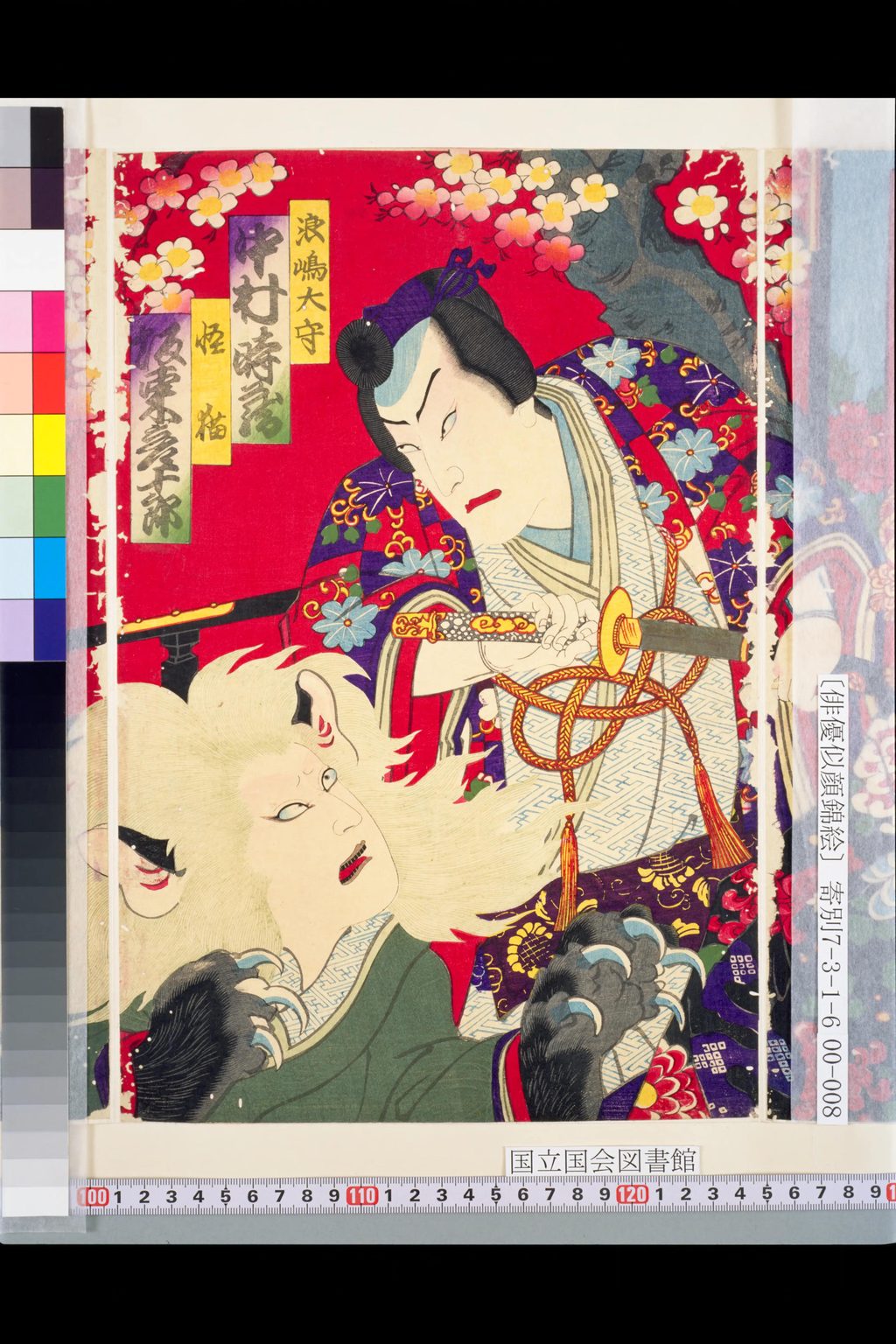
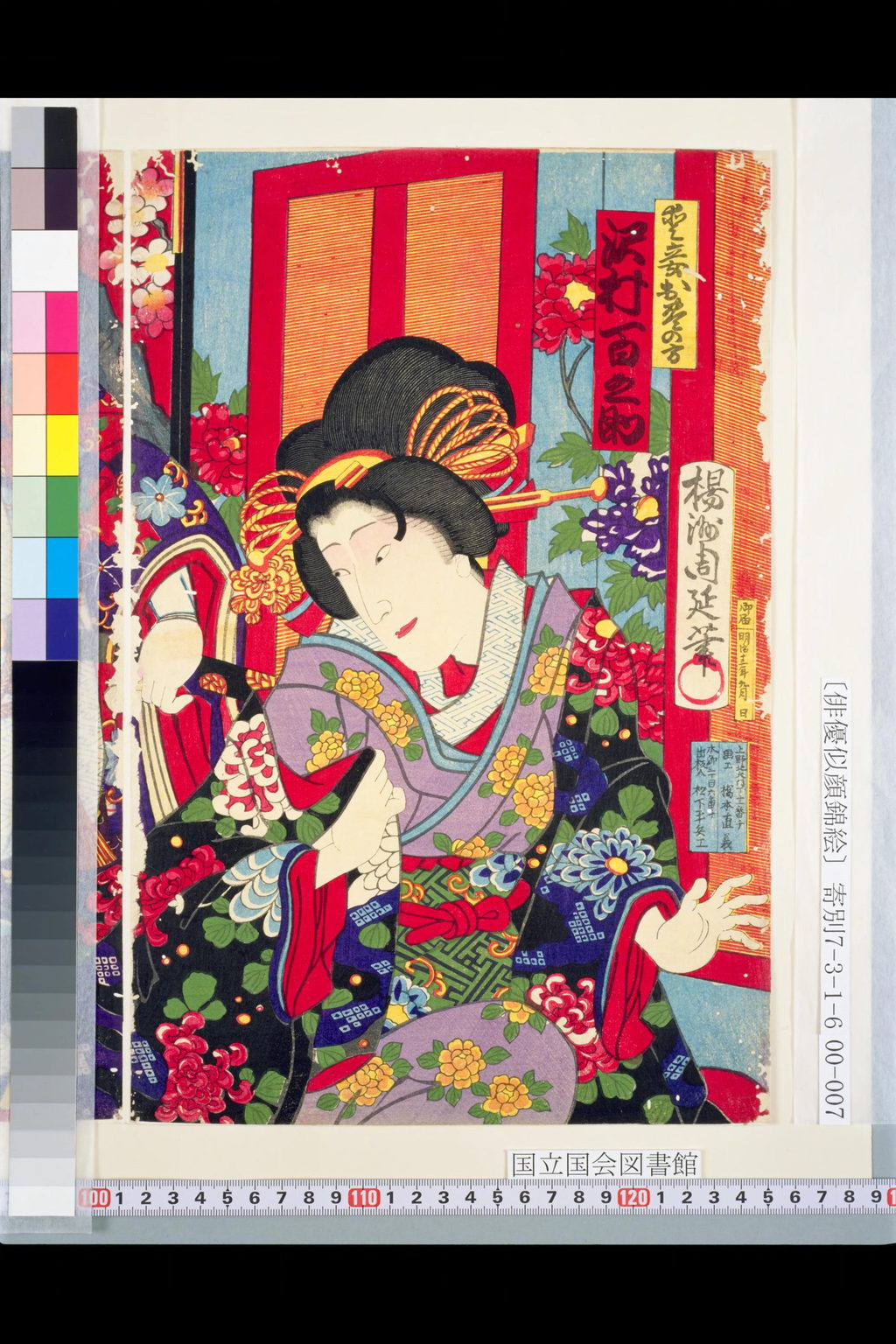
楊洲周延の三枚続は、明治十三年(一八八〇)十月に市村座で上演された『嵯峨奥妖猫奇談』を描く。中央に坂東彦十郎演じる怪猫、左右に浪島大守、小森半之丞、愛妾お豊の方らが配される[13]。錦絵は当時の舞台受容を伝える資料であり、城内で怪猫事件が実際に起きた証拠ではない。
早川由美の研究は、歌舞伎と実録・講談の系統が当初は直接結びつかなかったこと、後者が道中記や藩士の武勇譚などを加えて長編化したことを示す[14]。一つの完成済み伝説がそのまま複製されたのではなく、媒体ごとに人物、動機、見せ場が増えていったのである。
土地ごとに異なる猫の記憶
徳島県阿南市のお松大権現は、お松が処刑前に愛猫へ遺恨を伝え、その後に怪猫が不正を行った者の家へ現れたという縁起を伝える。現在の社には狛猫や多数の猫像が奉られ、勝負や訴訟の神として参拝を集める[15]。
熊本県水上村の生善院には、非業の死を遂げた盛誉法印、その母玖月善女、愛猫玉垂をめぐる伝説がある。猫の供養も兼ねて寺が建てられたと伝わり、「猫寺」の通称で親しまれる[16]。佐賀の鍋島物、阿南のお松、水上村の玉垂、隠岐の踊り語りは、猫という主題を共有しても、同じ猫の生涯ではない。それぞれの土地の記憶として読むことで違いが鮮明になる。
近代の怪猫映画
国立映画アーカイブは、中川信夫監督の一九五八年『亡霊怪猫屋敷』[17]を所蔵作品として紹介している。また、『佐賀怪猫伝』(一九三七)から『山吹猫』(一九四〇)まで、鈴木澄子主演の怪猫映画が六作製作されたヒットシリーズだった[18]とする。
これらの作品情報から、怪猫が昭和の映画でも継続的に扱われたことが分かる。映画に現れる映像表現は、中世から不変の外見ではなく、化け猫表象の近代的な一層として位置づけられる。
共通の性格、
弱点、
退治法はない
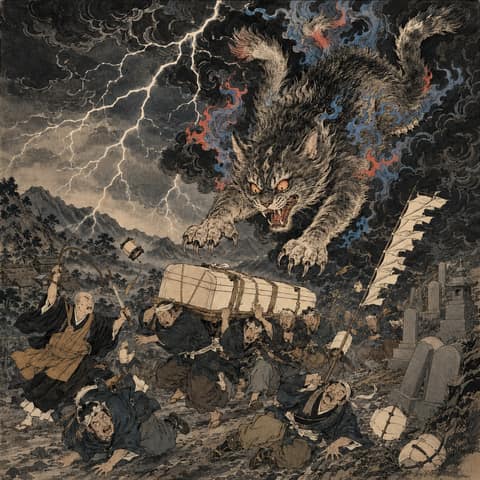
化け猫の性格は物語ごとに大きく異なる。主人を守り仇を討つ猫も、家族を害する猫も、人のように踊るだけの猫もいる。正体を見破られる、武士に斬られる、祈祷を受けるといった結末も、各作品の筋書きであって、すべての化け猫に効く攻略法ではない。
二本の尾、一定の年齢、油、魚、犬、火、経文のどれか一つで化け猫を判定したり退けたりすることはできない。各資料に繰り返し現れるのは統一された能力一覧ではなく、身近な猫が人の知らない振る舞いを見せる場面である。
身近な猫から生まれる怪異
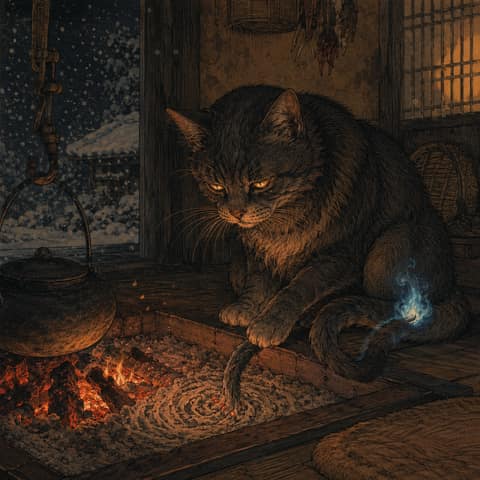
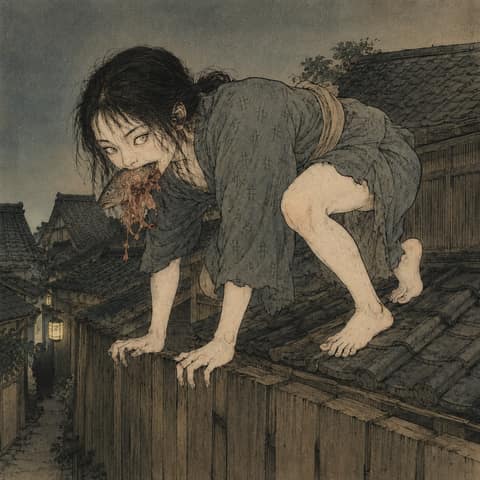
化け猫の話で繰り返し目に入るのは、遠い異界ではなく、人家、灯、手拭い、食事、寝所といった日常の道具や場所である。夜中に歩く、物陰を見つめる、音を立てずに部屋を移るという猫の身近な動きが、人のように立つ、話す、踊る、家族の姿を借りるという怪談の場面へ接続される。
その猫が言葉を話したら何を語るのか。人の姿を借りたら誰に見えるのか。恩を受けた者が傷つけられたらどう動くのか。こうした問いが、各時代の作者や語り手に異なる化け猫を描かせてきた。身近な動物が突然よく知らない存在に見える、その境目こそが化け猫の物語を読み解く鍵である。
Character Profile
This section is our own creative profile for storytelling. It is not historical fact or scholarship.
Yokai Type - Traditional Yokai
Category - Animal Shapeshifters
Rarity - Common
Personality - vindictive and cautious, tricks humans when given an opening
Compatibility - brings misfortune to those who wronged it, avoids those who treat it with care
Abilities - shapeshifting into human formunderstanding human speechcursing and possessioninterference with the dead and corpsescat dance as a play infused with sorcerynight vision and disruptive leaping
Weaknesses - esoteric rituals and sutra recitation, driven off by blades and fire, pacified through memorial rites and apology
Habitat - around human dwellings, alleys and backyards, temple and shrine precincts, mountain hamlets