Yokai Encyclopedia

Encyclopedia of Japanese Yokai

60 Yokai|14 Category|Page 1 of 3
Localization in Progress - More content available in Japanese version
View Japanese
Sort by: NameAscending
動物変化
  • Akamata

    Akamata

    Rare

    あかまたー

    Night-Visiting Serpent Phantom Akamata

    Animal ShapeshifterOkinawa

    The Akamata is a serpent bridegroom that appears in the Okinawan night. It visits a young woman in the guise of a beautiful youth, but its true form is a massive reddish-brown snake. Suspicious, the young woman secretly pierces the hem of the young man's clothing with a threaded needle, and by following the thread at dawn, she is led to a snake's den—a classic spindle-motif tale passed down across the islands. A maiden visited by the Akamata conceives a serpent's child, but she purifies herself on the third day of the third lunar month by going down to the beach and stepping into the tidal waters to wash the unborn snake away. Fear and purification are intertwined in this single narrative, still recounted today as the origin of the Okinawan *Hamauri* festival.

  • Bake no Kawagoromo

    Bake no Kawagoromo

    Rare

    ba-ke no ka-wa-go-ro-mo

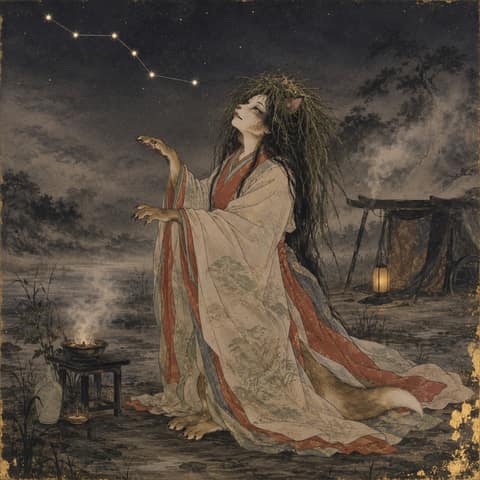
    The Dipper-Worshipping Fox of Transformation — Bake no Kawagoromo

    Animal ShapeshiftersUnknown (a fox-transformation figure recorded in Sekien’s Hyakki Tsurezure Bukuro)

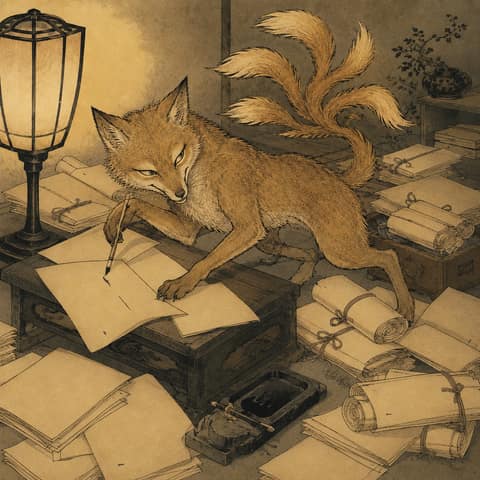
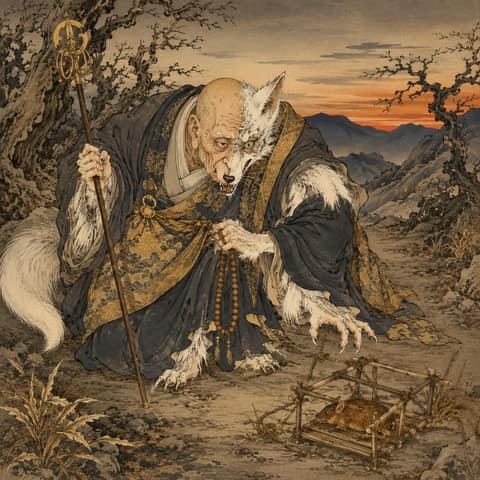
    This version reads the Bake no Kawagoromo through a single point — the fox that transforms by worshipping the Dipper — and follows the rite of its making and the layers of wit folded into the picture. The passage in the Nuogaoji of the Youyang Zazu, the other source, speaks of more than a skull and the Dipper. There the wild fox is called the “purple fox,” and it is said that “when it strikes its tail at night, fire comes forth.” This stroke of fire from a fox’s tail runs continuous with the foxfire so familiar in Japan; behind the Bake no Kawagoromo, too, stands a fox that should by rights be eerie — kindling fire at its tail in the dark, a skull upon its head. When Sekien exchanged that skull for algae, the dread of the bones faded, and in its place came the comedy and pathos of a creature crowned with weed from the water’s floor. That the picture of transformation leans toward the droll rather than the uncanny is the effect of this single substitution. The word “kawagoromo” itself carries the literary turn Sekien favored. Speak of a kawagoromo, and the most famous in the classics is the “fire-rat’s robe” of the Tale of the Bamboo Cutter — that treasure which burns when set to flame and, if counterfeit, betrays the fraud. It and this fox, whose disguise is about to peel, answer one another twice over through the words “kawagoromo” and “bake no kawa.” There is no written proof that Sekien meant to invoke the allusion, but given how thoroughly his picture-books tread upon classical puns, it is hard to take for mere chance. The placement of the image, too, shows the author’s intent. In the first volume it sits between the “Kutsutsura” and the “Kinu-danuki.” Flanked on both sides by transforming beasts, this run forms a small province set within a book of tool-spirits, given over to the transformations of animals. A fox could crowd in among the spirits of old utensils only because “kawagoromo” could be read as a garment, a thing; and by closing with “mused within a dream,” Sekien made this forced pairing follow, naturally enough, the logic of dreams. Its powers and its failings, too, are all rooted in this one picture. The rite of transformation requires prayer toward the Dipper and a vessel borne on the head (a skull, or algae); should the vessel fall, the change does not take. Dressed though it is as a beautiful woman, it cannot quite clear away the beast in its tail, its paws, its attendants — and that “about to peel” is this fox’s appointed weakness. The lowly wild fox, striving three thousand years to reach the figure of a beautiful woman, bears in itself all the longing and all the shortfall of that road.

  • Bakeneko

    Bakeneko

    Legendary

    bah-keh-NEH-koh

    Bakeneko

    Animal ShapeshiftersSagaTokushima

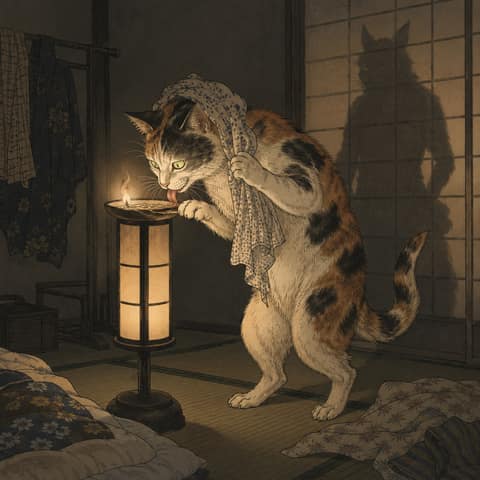
    A consolidated image of the bakeneko based on Edo-period woodblock prints, printed books, and oral tradition. An aged house cat, or one abused by humans, becomes a yokai imbued with vengeful spirit. Portents include licking lamp oil, standing on two legs, and taking human form to slip into a home. Its curses typically target owners or abusers, manifesting as illness, strange deaths, or household decline. Interfering with funerary rites and desecrating corpses are recurring motifs, and tales often end with pacification by monks or ritual prayers. Early modern folk beliefs feared long-tailed cats as gaining occult power, leading to taboos about tail length. Boundaries with the nekomata are blurry, and when the forked tail is not emphasized, the creature is commonly called bakeneko. Urban entertainment refined the monster-cat image, even linking it with courtesan motifs, yet at its core lies awe of a familiar animal and a worldview of gratitude and retribution.

  • Basan

    Basan

    Epic

    BAH-sahn

    Tradition-Faithful Iyo Type

    Animal ShapeshiftersEhime

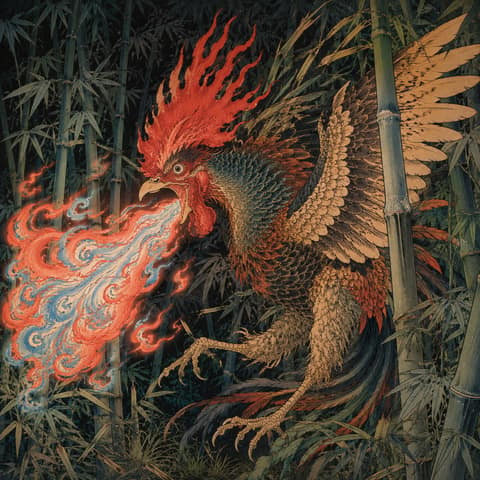
    This version follows accounts from Iyo, portraying it as a monstrous bird lurking in mountain bamboo thickets. It resembles a chicken with a striking red comb, and in the dark only the comb and the fire it exhales are visible. Its expelled fire is a will-o’-the-wisp without heat that does not ignite objects, said to flicker suddenly along night roads and village borders, leaving a strong memory of beating wings. Nocturnal in habit, it reacts sharply to signs of doors opening or moving lights such as torches, and retreats into the thicket at once. Reports of harming people are scarce, with encounters mostly limited to startling passersby, and villages regarded it as an ambiguous sign of the mountain’s presence—neither auspicious nor ill-omened. Early modern sources also note views likening it to a fire-eating bird and names derived from its wingbeat, blending natural-history notes with tales of the uncanny. In folk belief it is placed among boundary spirits marking the divide between mountain and settlement, a gentle anomaly linked to both ghost-light lore and bird-yokai traditions.

  • Blue Heron Fire

    Blue Heron Fire

    Epic

    ah-oh-SAH-gee-bee

    Canonical Folklore Version

    Animal ShapeshiftersNaraNiigata

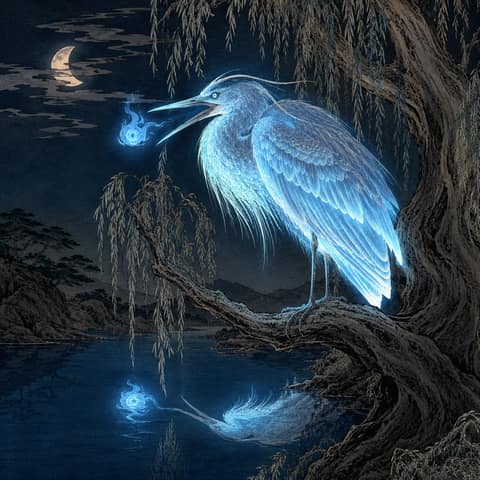
    Aosagibi is told as the pale blue glow seen around night‑active herons such as the black‑crowned night heron, appearing above water or against the night sky. In the Edo period it was depicted by Sekien and recorded widely in essays. Willows and ancient plum trees, river mouths and inlets, and shrine and temple precincts—places where “ki gathers”—were feared as haunts where mysterious fires would linger, and cases are told where a shot “ghost light” proved to be a heron. Explanations noted since early modern times include moonlight and water reflections, the sheen of wet feathers, the glare from white breast plumage, or microorganisms at the waterside, showing how people moved between natural causes and yokai tales. Other strands say old night herons faintly glow by season, turn into fireballs, or breathe fire, letting tales of ghost lights, strange birds, and dragon lamps intersect. Though eerie, many stories end with the creature merely being a bird once brought down, emphasizing its nature as a misperceived apparition.

  • Branching Fox

    Branching Fox

    Common

    eh-dah-BOON-kee-gee-tsoo-neh

    Modern Variant

    Animal Shapeshiftersthe deep layers of a virtual repository

    It slips into quiet development environments like a shadow, sprouting branches with the same name to cloud human judgment. By slipping past reviews, or reverting only configuration files to an older form, it mass-produces bugs that refuse to reproduce. Its origins lie in the superstition of shadow-doubling and the fatigue of collaboration. One name yet two minds, it feeds on human hesitations and grows stronger.

  • Byakko (White Tiger)

    Byakko (White Tiger)

    Divine

    Byakko

    Byakko, the White Tiger, Guardian of the West

    Animal TransformationsNara

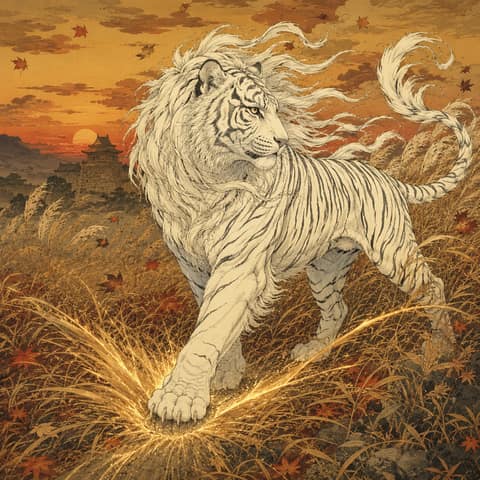
    Byakko is the divine beast of the west, Metal, and autumn, spoken of as forming a pair with the Azure Dragon of the east. This edition traces its astronomical origin and the paired structure with Seiryū. Its origin is in the stars of heaven. The chain of the seven western mansions (Legs, Bond, Stomach, Hairy Head, Net, Turtle Beak, Three Stars) likened to the form of a tiger is Byakko. The Huainanzi's "Treatise on the Patterns of Heaven" makes the emperor of the west Shaohao and its beast the White Tiger, assigning it to Metal, autumn, and white. The western palace of heaven in the Records of the Grand Historian' "Treatise on the Celestial Offices" stands in the same system. The form of a fierce white-furred tiger figures the white of the Metal phase, corresponding to the western sky of autumn, which bears the air of ripening and harvest, and of withering severity. The pairing of Byakko and Seiryū is old. That the early Warring States lacquer garment chest from the tomb of Marquis Yi of Zeng (c. 433 BCE) draws the azure dragon and the white tiger to left and right alongside the names of the twenty-eight mansions shows that the composition of the Four Symbols, setting east (Seiryū) and west (Byakko) face to face, was already established twenty-four centuries ago. In Japan, Byakko was received as a marker of directional protection and of wards. In the Four Symbols' banners of the first year of Taihō (701) in the Shoku Nihongi, Byakko was set to the west (right). Though native tales are scarce, within the geomantic reading of land matching the Four Symbols it was made the guard of the west, and in iconography the White Tiger facing the Azure Dragon still remains on the western wall of the Kitora Tomb. The dragon of the east and the tiger of the west—this symmetry is the very skeleton of the system of the Four Symbols.

  • Chokuboron

    Chokuboron

    Rare

    CHOH-koo-BOH-ron

    Conforming to Traditional Iconography

    Animal ShapeshiftersEdo period

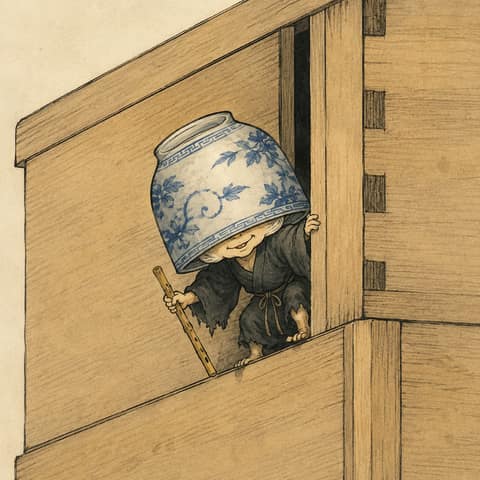
    Guided by Sekien’s imagery and captions, this reading foregrounds its nature as a tsukumogami, a spirit of aged utensils. The little goblin, komusō-like with a sake cup as a hat, emerging from a box accords with the belief that long-used drinking vessels and tools gain spirit and appear at set times. The caption’s citation of Xuanzong and the Spirit of Ink bolsters the idea that spirits arise in objects such as calligraphy, painting tools, and sake ware, with Chokoburo composed pictorially as one of that kind. It does not point to a concrete religious entity of komusō or boro, but playfully borrows half-monk, half-lay visual cues, with a name born of puns and association. No locale of oral tradition is identifiable; its character is chiefly that of a visual怪 within Edo print culture.

  • Court-Entering Sparrow

    Court-Entering Sparrow

    Uncommon

    NYOO-nai SOO-zoo-meh

    Court-Entering Sparrow (Traditional Tale)

    Animal ShapeshiftersKyoto

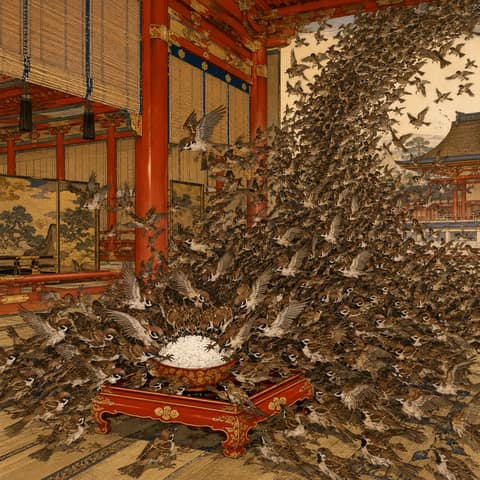
    The Court-Entering Sparrow is often cited as a case where personal grudge takes the form of a small bird that slips in and out of the imperial palace. Its pecking at offerings in the Seiryōden symbolizes trespass into forbidden precincts and the ill omen of defiling sacred food, feared for disrupting court ritual. It was taken as the metamorphosis of Fujiwara no Sanekata’s exile to Mutsu and his unresolved yearning for the capital, and used to explain calamities and blights. A revelatory dream at the Kangakuin and the raising of a Sparrow Mound reflect medieval rites of pacifying vengeful spirits through Buddhist memorials. Real sparrows’ migrations, flocking, and seasonal crop damage underlie the tale, which fused with the idea of visiting birds as vessels for souls. The tradition appears across various records, but details and dates differ, leaving much uncertain.

  • Danzaburō-danuki

    Danzaburō-danuki

    Uncommon

    dahn-zah-BOO-roh dah-NOO-kee

    Dansaburō-tanuki

    Animal ShapeshiftersNiigata

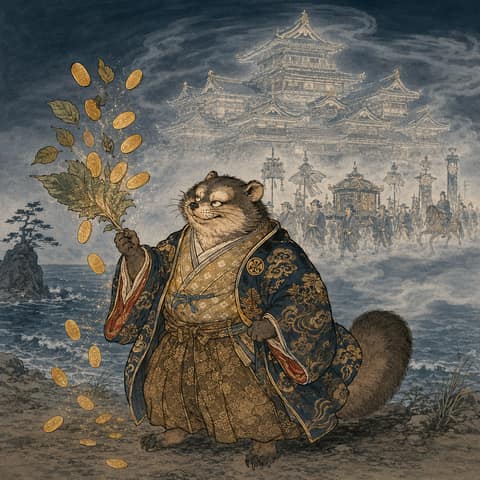
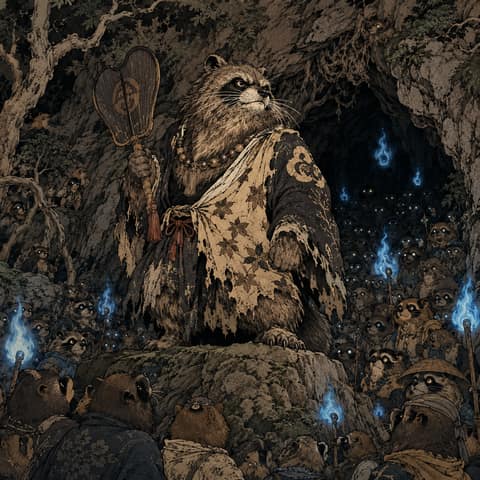
    Dansaburō-tanuki is remembered as the grand chieftain of Sado’s raccoon dogs, famed for masterful trickery and deep ties to local society. His illusions create mirages, phantom processions, and sudden walls to confound wayfarers, especially on night roads, mountain passes, and by the sea. Tales of lending money to the needy connect him to the mining town culture of Aikawa, reflecting folk notions of contracts sealed by IOUs. His lair is said to be a burrow in Shimogoe, masked by glamour to appear as a grand residence. Stories of driving out foxes explain local fauna and blend motifs of fox–tanuki contests, the taboo against spectating spirit processions, and battles of wit. Eventually enshrined as Futatsu-iwa Daimyōjin, he is appeased out of fear of wrath while also invoked for protection. Disguising himself as a physician to make clinic visits shows his skill at blending among people and hints at a spirit-beast who can also bear illness. Overall, the lore favors chastening and moral lessons over wanton harm, making practical benefit and illusion the core duality of his legend.

  • Field Matchlock (Nodeppō)

    Field Matchlock (Nodeppō)

    Uncommon

    noh-DEHP-poh

    Canonical Folklore Version

    Animal ShapeshiftersMountain forests of Japan’s northern provinces

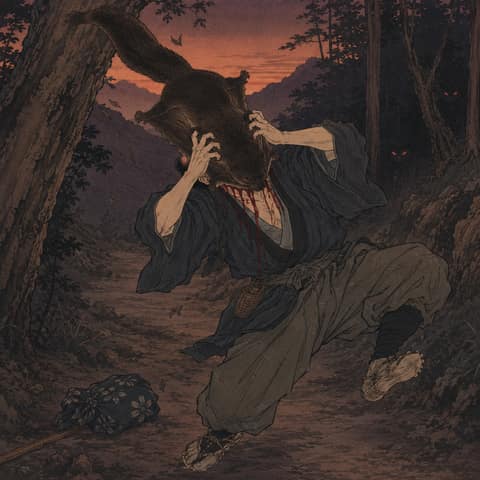
    Based on images from illustrated Edo-period strange tales. It hides in northern mountains and fields and moves from twilight into early night. It appears as a small beast like a badger or a giant flying squirrel, and when attacking it blinds a person to sow confusion. Sources describe two modes: one covers the victim’s face with its whole body, the other spits a bat-like thing that clings to the face. Some accounts say it drinks blood, while later interpretations suggest it steals carried food while the victim’s sight is blocked. Historical conflation with badgers, tanuki, nobusuma, and bats led to shifting names and traits. A simple defense recorded is to keep rolled ear-shaped leaves in one’s bosom, though details vary by region and era. Avoids modern embellishment and follows classical picture compendia.

  • Fūri (Wind Tanuki)

    Fūri (Wind Tanuki)

    Uncommon

    FOO-ree

    Bibliographic-Transmission Composite (Edo Natural History Lineage)

    動物変化Imported from China (accounts found across Japan)

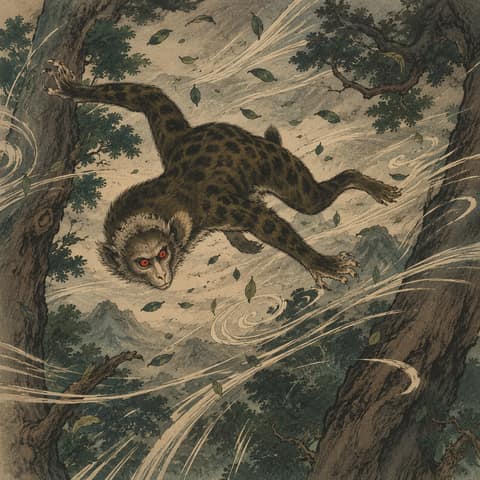
    A synthesis based on Chinese natural-history accounts transmitted in the Edo period, organized against Japanese essays and illustrated compendia. Said to be the size of a small monkey or a marten or tanuki, with a short tail, red eyes, and a dark coat mottled with spots. It appears with the wind to startle people and livestock or leave sudden grazing wounds, without the heavy harm stressed for demons. Its existence wavered in Japan: Wakan Sansai Zue argued it was unborn, Mimi-nashi Hoichi’s Miminashi? (Mimibukuro) recorded rare encounters, and Kō Wahonzō compared the creature 狤𤟎 to the kamaitachi. Thus, though the name is foreign, early modern scholars’ efforts at comparison and identification converged on the idea of a wind-borne beastly apparition, an unseen thing that inflicts slashing grazes. Details of ecology and form vary by text, likely arising from layered readings of local animals—marten, tanuki, monkey, otter—and wind-related mishaps.

  • Genbu (Black Tortoise)

    Genbu (Black Tortoise)

    Divine

    Genbu

    Genbu, the Black Tortoise, Guardian of the North

    Animal TransformationsNara

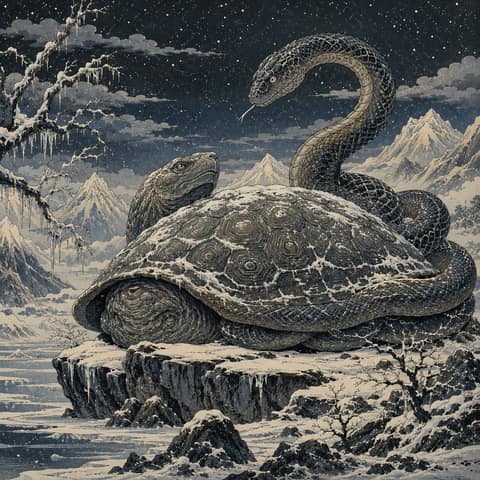
    Genbu is the numinous beast of the north, Water, and winter, bearing the most singular form among the Four Symbols—the entwined form of tortoise and snake. This edition traces the meaning of that iconography and the notion of "land matching the Four Symbols" in Japan. Its origin is in the stars of heaven. The chain of the seven northern mansions (Dipper, Ox, Girl, Emptiness, Rooftop, Encampment, Wall) likened to a tortoise wrapped by a snake is Genbu. The Huainanzi's "Treatise on the Patterns of Heaven" makes the emperor of the north Zhuanxu and its beast Genbu, assigning it to Water, winter, and the dark (black). The dark is the color of the Water phase, figuring the northern winter sky into which all things withdraw. Two meanings overlay the tortoise-and-snake form. The first is the original sense—the figure of the stars of the seven northern mansions. The second is the symbol expounded by the Later Han Cantong qi, which sees the entwined form of tortoise (longevity) and snake (procreation) as the harmony of yin and yang, female and male. The latter is an interpretation overlaid on the original sense, and the two must not be confused. Genbu, too, was anthropomorphized in Daoism into "Xuantian Shangdi (Zhenwu Dadi)," but this is a development of a separate lineage from the directional-guardian Four Symbols of Japan. In Japan, Genbu was spoken of most concretely within the geomantic reading of "land matching the Four Symbols"—terrain backed by a mountain to the rear is held to be the auspicious position of Genbu. Yet the identification that "Heian-kyō is land matching the Four Symbols (the north, Genbu = Mount Funaoka, etc.)" is not a certainty from the time of the capital's founding, but a later interpretation organized and settled into doctrine around the 1970s, with even the identified sites differing among researchers. What is certain reaches only as far as the existence of the geomantic notion of "land matching the Four Symbols" in the Heian period. The Four Symbols' banners of the Shoku Nihongi are the literary first appearance, and the iconography keeps the tortoise-and-snake-intertwined form in the Genbu on the northern wall of the Kitora Tomb.

  • Golden Crow

    Golden Crow

    Rare

    KEEN-oo (Kin-ū)

    Golden Crow

    Animal ShapeshiftersChinese origin; transmitted to Japan

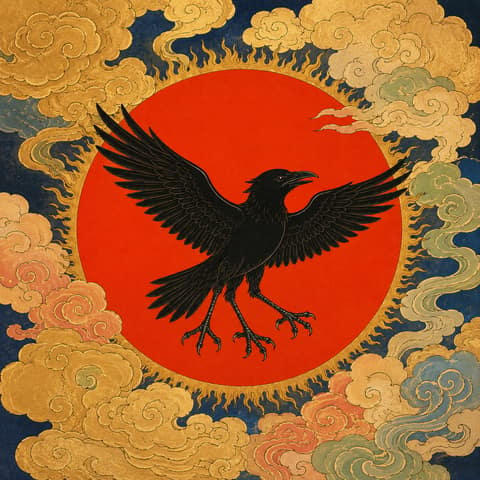
    Rooted in ancient China, this iconographic Golden Crow took hold in Japan from the medieval period through religious art and Onmyōdō interpretations. It rarely appears in concrete怪談 and functions chiefly as a symbol. Its three legs are read as the yang number three, marking the sun’s course, authority, and auspice. In Japanese examples, a black crow is placed upon the solar disk held by the Sun Deva, with vermilion and gold backgrounds. Early modern texts sometimes liken it to solar sunspots, but its original nature is mythic and ritual. It recurs on imperial ceremonial garments, temple and shrine banners, and paintings, and in folk events crows may be used with archery targets or sun emblems. Later explanations sometimes confuse it with Yatagarasu, but their origins and roles are distinct.

  • Gotoku Neko (Trivet Cat)

    Gotoku Neko (Trivet Cat)

    Rare

    GOH-toh-koo NEH-koh

    Iconographic Tradition, Sekien-Centered Version

    Animal ShapeshiftersJapanese folklore

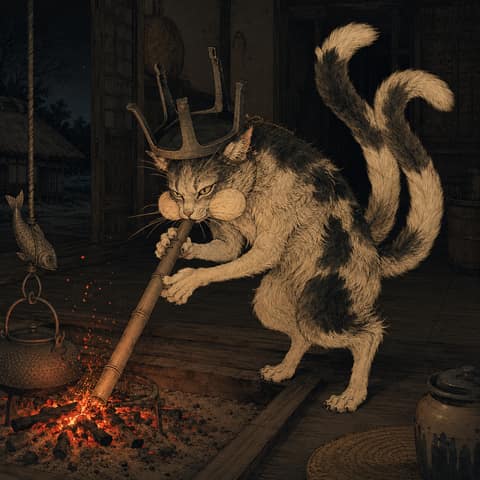
    This version reconstructs the Gotoku-neko based on Toriyama Sekien’s original image and earlier iconography. An aged cat with a forked tail wears a trivet like a crown and lingers at the hearth’s edge. In Hyakki Tsurezure Bukuro, Sekien plays with the boundary between tool-spirits and animal-spirits, citing Tsurezuregusa’s “Crowned Trivet” and offering a punning interpretation. Thus the Gotoku-neko is not merely a monster cat but a symbolic being linking utensils and literary sources. The Muromachi-period Night Parade scrolls show a yokai bearing a trivet among figures balancing tools on their heads; Sekien follows that lineage while giving it a feline form. The postwar notion that it “kindles fire by itself” derives from later guesses about the depicted blowpipe; older records do not specify such acts. Accordingly, in this version it is restrainedly treated as an apparition seen by the hearth, attended by the presence of fire.

  • Great Spider

    Great Spider

    Epic

    OHH-goo-moh

    Great Spider of Mountain and Wilds

    Animal ShapeshiftersNagano

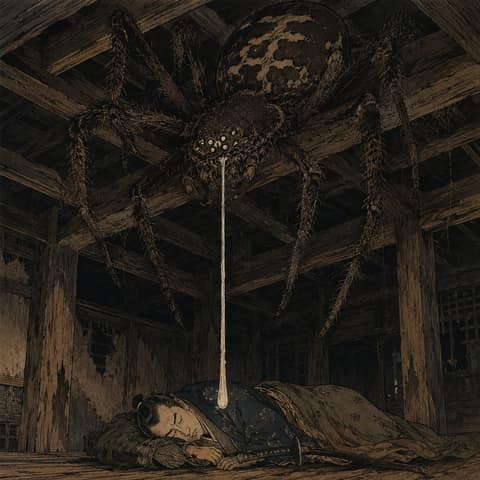
    A tradition-grounded composite of spider apparitions said to gain occult power through great age, lurking in mountain passes, temple rafters, and caves. Appearances range from an ordinary spider grown enormous, to a hairy arm extending from the ceiling, to an old woman in human guise. Avoiding notice, it moves by night, saps vital energy, and binds victims with silk. In slaying tales it often retreats after its limbs are severed by blades, or reveals its true form and is later found as a corpse. Names and lairs vary; reports surface sporadically in local curiosities and essays. Though terms like yamagumo and tsuchigumo sometimes overlap, here it refers broadly to eldritch old spiders.

  • Hihi (Demon Baboon)

    Hihi (Demon Baboon)

    Epic

    HEE-hee

    Hihi (Traditional Accounts)

    Animal ShapeshiftersNagano

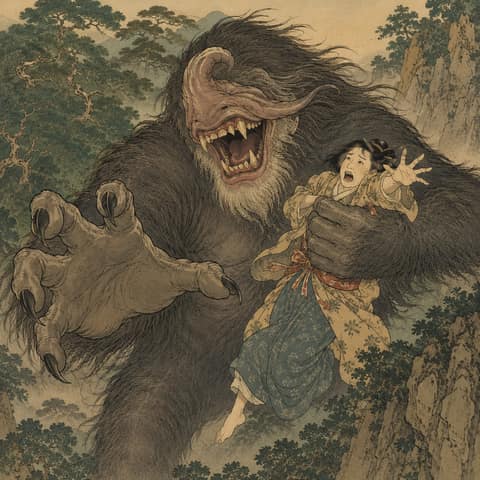
    A depiction of the hihi based on Edo-period images and folklore. Said to dwell in mountains, it is an aged monkey transformed into a giant, powerfully built being. Many regions tell that it bursts into loud laughter, and when its long upturned lips roll back to cover its eyes, it leaves an opening to strike. Tales include the abduction of women, bouts with woodcutters, and raising wind and storm to hurl people. Natural history compendia such as Wakan Sansai Zue report black hair, large size, and hearsay of human speech, though exact locales and physical evidence remain uncertain. Its name is commonly linked to its laugh. It is sometimes conflated with yama-warawa or monkey deities, but is often distinguished as an ape-shaped mountain monster.

  • Houki (Fengxi)

    Houki (Fengxi)

    Uncommon

    FOO-kee

    Houki, the Foreign Beast of Sanglin

    Animal ShapeshifterA foreign beast originating from the Chinese "Classic of Mountains and Seas" (Shanhaijing). Mentioned only by name in Edo-period tales of foreign lands, without tying into Japanese geographical folklore.

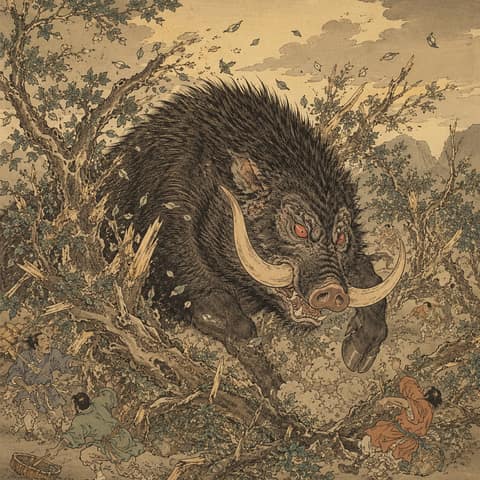
    This is an interpretation of the "foreign beast of Sanglin," imported from Chinese classics and long dormant within natural histories. In this version, Houki is not a human-sized anomaly like Japanese yokai that "frighten people on dark roads" or "settle in homes to bring wealth," but is positioned as a "mythological-scale raging god (symbol of natural disasters)" that brings destruction on a national scale. Its thick, hard skin repels all physical attacks; its charges can flatten forests into plains; and it summons torrential rains when immersed in water. In ancient China, the uncontrollable fury of nature itself (such as floods and beast plagues) manifested in the form of a "gigantic boar." The legend of its extermination by Hou Yi functions as a mythological device narrating the victory of civilization—humanity's hero subjugating overwhelming natural violence through "culture (archery)" and bringing it completely under human control by "eating it (making it an offering)." In Japan, such continental-scale monsters were difficult to localize and were merely filed away as "bizarre foreign beasts." However, when modern entertainment unearthed its attributes of being "hard, gigantic, and possessing near-invincible charging power" to reinterpret it as a motif for the ultimate enemy character, the "despair and awe toward overwhelming violence" held by ancient Chinese toward Houki was inadvertently shared as genuine terror by modern people. It is a highly dramatic case in the history of yokai reception, where a monster with a severed lineage reclaimed its original intimidation through the power of pop culture.

  • Ijū (Strange Beast)

    Ijū (Strange Beast)

    Uncommon

    ee-JOO

    Ijū (Hokuetsu Seppu Version)

    Animal ShapeshiftersNiigata

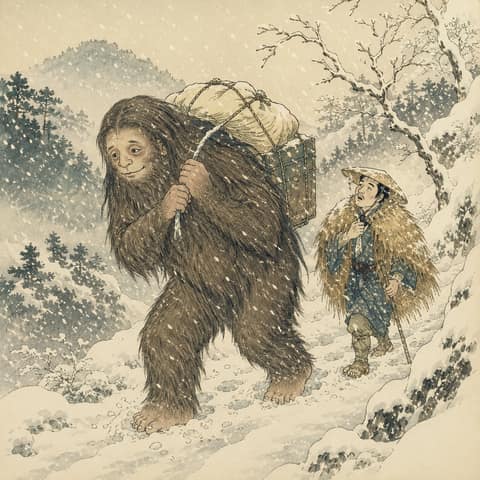
    This version follows the figure recorded in the Tenpō-era compendium Hokuetsu Seppu. Its form is ape-like yet larger than a human, with long hair flowing from crown to back, appearing after parting the dwarf bamboo in mountain ravines. It shows no intent to attack homes, chiefly begs for cooked rice, and repays alms by carrying loads and similar deeds. It is closely tied to the weaving culture of Echigo-chijimi, and in tales of loom maidens it intervenes amid household work rules and notions of ritual purity, turning the tide so deadlines are met. Such accounts treat it as a mountain spirit observing human industry and bringing harmony to cycles of trade and production, akin to food offerings made to mountain deities or guest spirits. Later it was reportedly seen at times but returned to the mountains, leaving only its name. Though an unidentified beast, its refusal to harm and habit of repaying kindness place it on the boundary between uncanny and blessed in local lore.

  • Inugami

    Inugami

    Legendary

    EE-noo-GAH-mee

    Inugami (Traditional Form)

    Animal ShapeshiftersTokushimaKochi

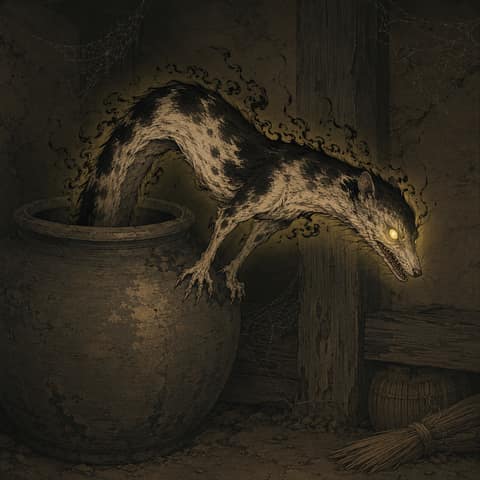
    Inugami are feared as hereditary possessing spirits tied to certain lineages, bringing wealth and prosperity yet shunned as curse gods. Rites and keeping methods vary by region, with offerings made in storerooms, under floorboards, or at water jars. Their form is not fixed: accounts describe a mottled mouse-like creature, a black-and-white weasel-like shape, a long-mouthed rat, or something bat-like. Houses said to keep inugami were believed to have as many spirits as family members, and the spirits were rumored to run to other homes to obtain desired goods. The possessed might bark, tremble in the shoulders, or gorge themselves, and even cattle, horses, and tools were said to be possessed. Exorcism was performed through prayers and esoteric rites, with shrines in Tokushima particularly noted. Origins are variously traced to sorcery, legal taboos, and rites that turn a dog’s head into a fetish, differing by locale.

  • Inugami Gyōbu

    Inugami Gyōbu

    Uncommon

    EE-noo-GAH-mee GYOH-boo

    Kodan Tradition Version

    Animal ShapeshiftersEhime

    The image of Inugami Gyobu should be understood through the lens of how the Matsuyama tanuki tales were reshaped by kodan storytelling. Across Shikoku, dense beliefs in tanuki and transformation legends spread, and in Matsuyama both “guardian” and “trickster” aspects were told of beings dwelling at the boundary between the castle town and the wilds. The title Gyobu signals a bond with the castle, emphasizing a guardian role, while kodan added favored conflicts—such as inviolable pacts and ambushes during internal clan strife—producing varied plotlines. In every variant, the rock shelters and caves of Mt. Kuma form the final stage, where sealing or pacification brings closure. The appearance of Ino Budayu also became standard, linking in a known monster-slaying tale from other sources and lending a higher authority of supernatural judgment to the Matsuyama tanuki narrative. His spiritual power and many retainers match regional views of a tanuki chieftain leading a band, serving as a framework to explain wonders at annual castle-town events and at passes or shrine precincts. Though today’s lore bears kodan embellishments, at its core remains the figure of a tanuki lord guarding the liminal zone between castle and mountain.

  • Itsumade

    Itsumade

    Epic

    e-tsu-mah-deh

    The Death-Bringer that Cries "Itsumade": Itsumade

    Animal YokaiKyotoShiga

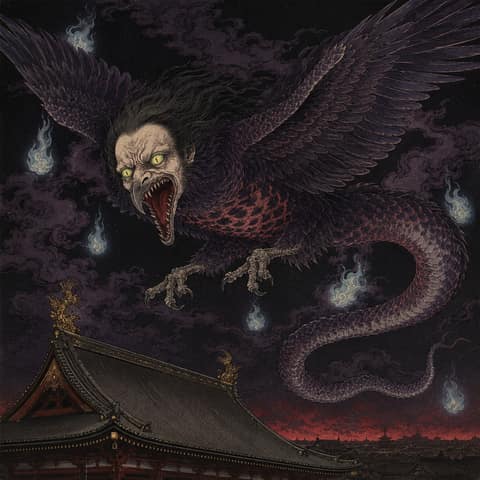
    This version, 'The Death Herald Crying Itsumade (Until When) / Itsumaden', goes beyond being a mere physical monstrous bird, highlighting its aspect as an 'ominous bird of prophecy' that embodies the anxiety of its era's society. In the *Taiheiki*, the appearance of this monstrous bird coincides with the political upheaval of the Kenmu Restoration (1334). The bird's cry of 'Itsumade (Until when?)' superficially incites the fear of death from plagues. However, in a literary and historical context, it acts as a political allegory, representing the agonizing cries of the common people exhausted under Emperor Go-Daigo's direct rule: 'Until when will this war and suffering continue?' In medieval literature, a monster appearing on the roof of the Emperor's palace (Shishinden) signified a warning from heaven (heavenly punishment) against the instability of royal authority and a lack of virtue. Furthermore, the sequence of exterminating this monstrous bird strongly mirrors the 'template' of Minamoto no Yorimasa's 'Nue extermination' in *The Tale of the Heike*. The structure—an unidentified chimera appearing at the night palace, its subjugation by a master archer, and the subsequent reward from the Emperor—served as an epic device to heroicize Oki Jirozaemon Hiroari as a 'new Yorimasa', thereby decorating the authority of the Kenmu government that commanded him. However, while the Nue cried with a voice 'like a bulbul', this bird uttered the clear, human-like words 'Itsumade', imbuing it with a much more direct curse upon its era. During the Edo period, when Toriyama Sekien drew it in his *Konjaku Gazu Zoku Hyakki*, he added the depiction of it breathing terrifying flames from its mouth. The original text of the *Taiheiki* contains absolutely no mention of it breathing fire. This is thought to be the result of overlaying the imagery of mysterious lights flying in the night sky and the 'Kasha' (fire chariot) that carries the resentment of the dead. The visual impact of this 'flame' and 'nocturnal monstrous bird' decisively shifted its interpretation in the later Showa period toward a vengeful spirit, described as 'a monster born from the resentment emitted by abandoned corpses.' In this version, Itsumaden is not merely a bird of prey that attacks people; it is closer to an 'arbiter' that manifests using the resentment of those who died with no one to mourn them and the distortions of society as its energy. Therefore, its cry functions as a cold herald of death, striking directly at the listener's mind more than any physical attack could, questioning: 'Until when will your fate (or your sins) hold out?'

  • Iwanabōzu (Monk Trout)

    Iwanabōzu (Monk Trout)

    Uncommon

    ee-wah-nah-BOH-zoo

    Iwaname Monk (Tradition-Faithful)

    Animal ShapeshiftersGifu

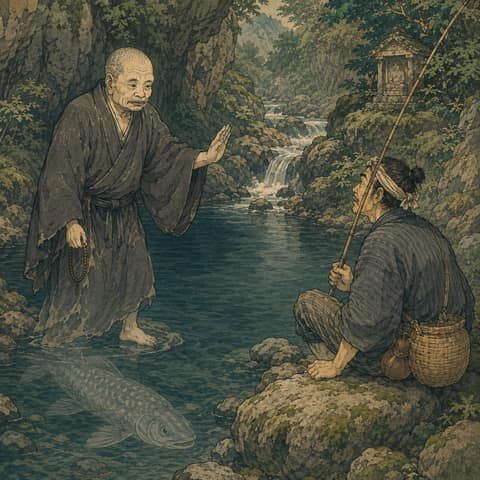
    Based on Edo-period records and regional folktales. An aged char trout appears in the guise of a Buddhist monk and speaks to anglers. It often urges moderation, citing the temple’s domain or the pool’s lord, and departs quietly if given alms. Later it may be caught as a great char, where rice or rice cakes given as alms are found in its belly, revealing its identity. The motif reflects reverence for river and pool guardians and ideas akin to eel and other water deities. Depending on region, it appears as a harmless, didactic type, a warning type bearing deadly poison, or a salvific type that sacrifices itself to stop a levee breach, yet all embody folk norms that safeguard the boundary between waters and livelihoods.

  • Jorōgumo (Enchanting Spider)

    Jorōgumo (Enchanting Spider)

    Legendary

    jo-ROH-goo-moh

    Tradition-Faithful Jorōgumo Archetype

    Animal ShapeshiftersShizuokaNagano

    A Jorōgumo based on the canonical image found in Edo-period sources. A great spider, having aged into a yokai, assumes the form of a young woman or a mother and child to exploit lapses in human judgment. She appears at liminal places such as waterfalls, deep pools, verandas at the edges of mountain villages, and abandoned houses, casting many layers of silk to bind victims and dull their judgment through sleep or enchantment. Toriyama Sekien depicted her commanding fire-breathing spiderlings, helping fix motifs of acting in groups and fleeing into the upper parts of houses such as the attic. In some regions she is deified as a protector against drowning, with stones or small shrines raised in her honor. Many tales end with her being thwarted by human wit—cutting her threads and tying them to a stump, or seeing through her disguise—while others warn of taboos where breaking a vow of secrecy brings death, or of fatal infatuations that drain one’s life. This profile avoids modern embellishment and stays within the breadth of existing tradition.

Showing 1 - 24 of 60 yokai