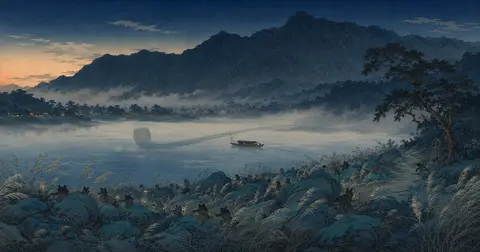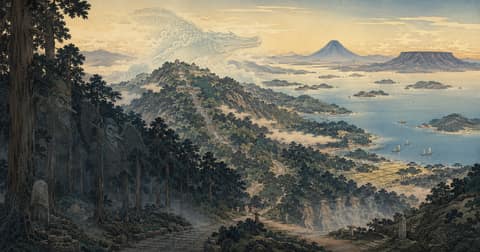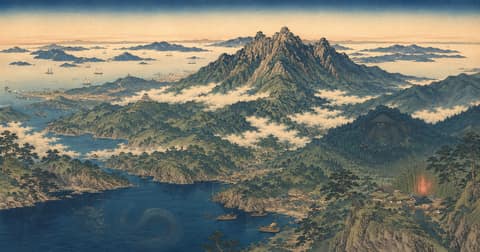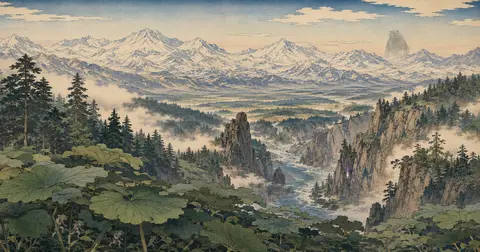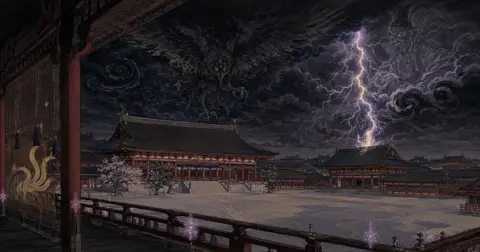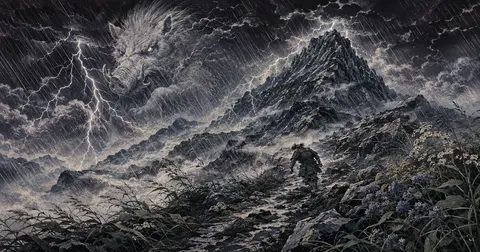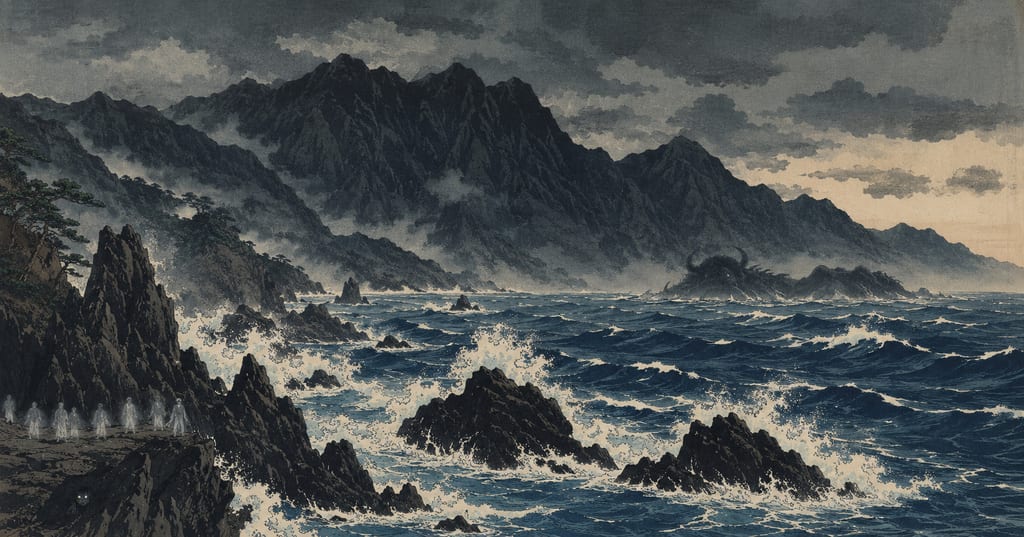
Jutting out expansively into the Pacific Ocean, Kochi Prefecture was once known as Tosa Province. Over eighty percent of its land is covered by forests. To the north, the steep ridges of the Shikoku Mountains form natural borders with Awa and Iyo provinces, while to the south, the open ocean, where the Kuroshio (Black Current) flows, stretches endlessly. The Shimanto and Niyodo rivers carve deep valleys, and the twin capes of Muroto and Ashizuri thrust into the sea. This topography—deep mountains and rough seas—is the very womb of Tosa's yokai culture.
Two distinct elements color the supernatural phenomena of Tosa. The first is spirit possession (tsukimono). Shikoku has long been regarded as the heartland of the *inugami* (dog spirit) lineage, and the practice is said to have been especially prevalent in Tosa since ancient times. The second is the goryo (vengeful spirits)—the belief that those who suffer untimely, unjust deaths become cursing deities who must eventually be enshrined and pacified. The ultimate manifestation of this is the Shichinin Misaki, a collective vengeful spirit that always travels in a group of seven. Furthermore, in Monobe Village (present-day Kami City) in the eastern part of the prefecture, the Izanagi-ryu[1]—often called folk Onmyodo—is still practiced today, where priests known as *tayu* chant ritual prayers to exorcise curses (*suso*). There is no other region where possessing spirits, cursing ghosts, and the arts to exorcise them are so densely intertwined.
Tosa was a long-isolated land, both geographically and culturally. The high walls of the Shikoku Mountains blocked the north, and the south only opened to the vast ocean, restricting travel from other provinces to treacherous mountain passes or rough sea routes. During the Edo period, under the strict control of the Tosa Domain (the Yamauchi clan), the entry and exit of outsiders was heavily restricted, allowing a unique dialect, temperament, and faith to deeply ferment. This semi-isolated climate condensed the logic of village society, causing both external calamities and internal curses to be spoken of as yokai. The higher the mountains, the deeper the mountain horrors; the rougher the sea, the thicker the sea spirits—the density of Tosa's yokai is directly proportional to the ruggedness of its terrain.
In this article, we will explore the yokai of Tosa through four main themes: Possessing and Cursing Spirits, Monsters of the Kuroshio Sea, Beasts of River and Mountain, and the Tosa Obake Zoshi. Rather than merely listing them, we will trace the specific locations and texts to decipher exactly why this unique cast of yokai was born in Tosa.
Possessing and Cursing Spirits:
Inugami and Shichinin Misaki
When discussing the yokai of Tosa, one cannot avoid the culture of spirit possession (tsukimono).
Inugami
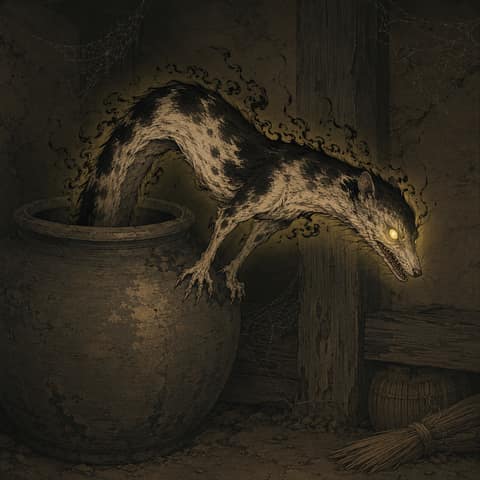
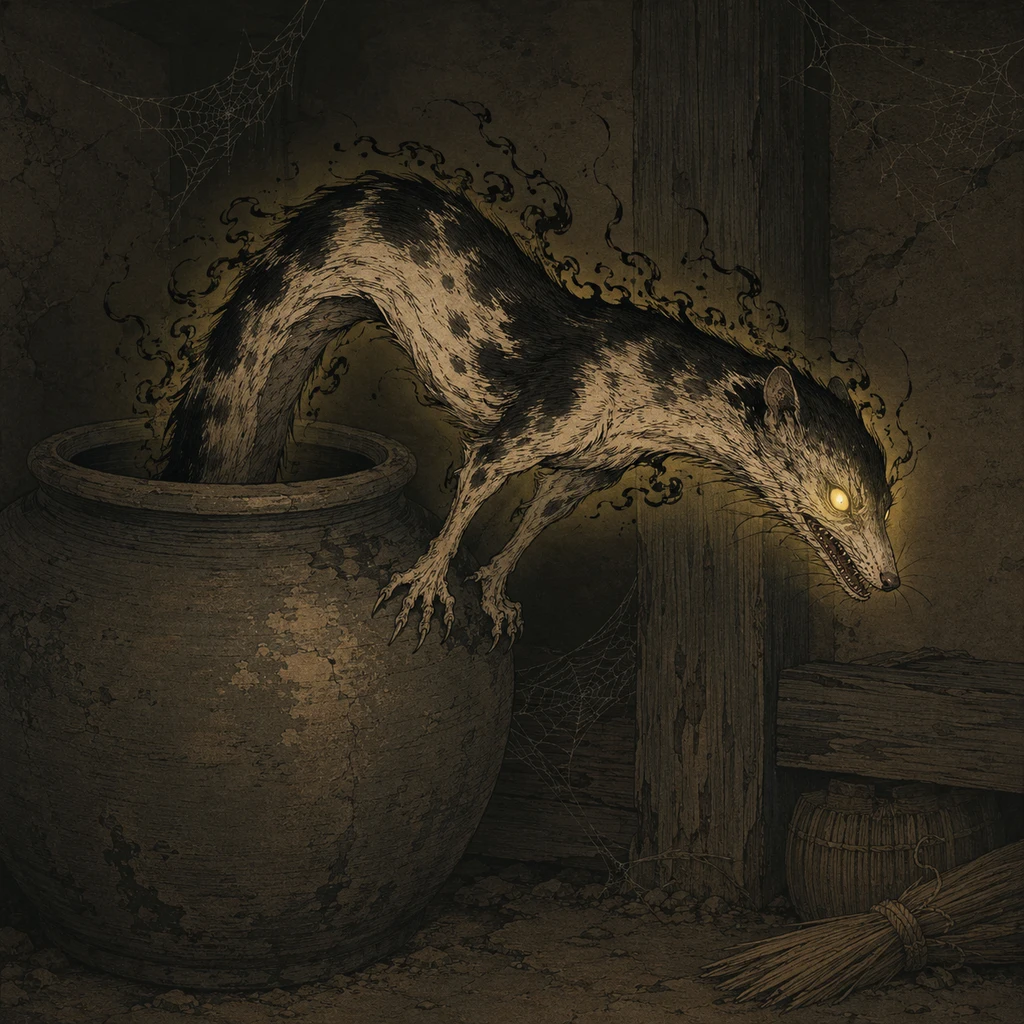
Inugami are possessing dog-spirits found mainly in western Japan, counted alongside fox possession and kuda-gitsune as a powerful occult force. Shikoku—especially Tokushima, Kochi, and Ehime—is regarded as their heartland, with traces reported from Shimane and Yamaguchi down through Kyushu to the Satsunan Islands and Okinawa. Families believed to host hereditary Inugami—called “Inugami bloodlines”—were stigmatized, leading to marriage taboos and social discrimination. Their form and temperament vary widely by locale, with traditions describing them as mouse-like, weasel-like, or bat-like, among other shapes.
Read moreThe inugami is a possession phenomenon that uses the spirit of a dog as a cursed fetish, widely distributed across Shikoku, the Chugoku region, and Kyushu. Among these, Tokushima and Kochi were considered the epicenter. The practice was particularly widespread in Tosa, where inugami were said to be kept in storerooms, under floorboards, or in water jars. Reading their master's intent, they would possess individuals from other households, bringing illness and misfortune to the family line. Those possessed exhibited symptoms such as pain in their chest and limbs or barking like a dog. It was believed that such afflictions could not be cured by medicine, but only exorcised through prayer.
What is particularly noteworthy is a folklorist's record claiming to have witnessed its "true form." Kazuo Katsurai, a local folklorist who tackled both folklore research and human rights issues in post-war Kochi, documented being shown "this is an inugami" by a village elder in Hirose, Tosayama Village (present-day Kochi City). According to Katsurai[2], it was a small creature, about five centimeters long, resembling a mouse or mole, with a large head, pointed snout, and long whiskers. As a yokai, the inugami had thus crystallized into the specific image of a small beast.
However, the inugami carries a dark social history that requires careful discussion. It was believed that the inugami would never leave a family's descendants generation after generation, and such families—labeled the **"inugami lineage" (*inugami-suji*)**—were shunned in marriage. In Shikoku, investigating family lineages before marriage became a custom, which became intertwined with issues of discrimination in the modern era. Gruesome origin tales circulated—such as "beheading a starved dog and burying it at a crossroads to use its enraged spirit as a curse object"—but these were legends meant to explain the inugami's origins rather than historical facts, serving as narratives to justify discrimination against specific families. The very concept of the possession lineage spread by tying into village logic to explain the uneven distribution of wealth and the rise and fall of households. The inugami of Tosa sharply reminds us how yokai narratives and the history of discrimination are inextricably linked. Some theories suggest that the origin tales of the inugami connect back to the ancient Chinese magic of "dog sorcery" (*kenko*) described in the *In Search of the Supernatural* (Soushen Ji)[3], part of the lineage of curses and hexes from the Heian period. These ancient continental magical concepts merged with the logic of family lineage in Shikoku villages, transforming into the dense possession culture unique to Tosa.
The role of "dropping" (exorcising) the inugami was taken up by prayer healers. Kenmi Shrine in Tokushima was renowned throughout Shikoku as a sanctuary for warding off inugami, and a constant stream of people traveled from Tosa to be cleansed of possessions. Meanwhile, in Tosa's Monobe Village, the *tayu* (priests) of the Izanagi-ryu, detailed later, exorcised possessing spirits as *suso* (curses). Both those who cast possessions and those who exorcised them lived within the local community—herein lies the profound depth of Tosa's spirit possession culture.
A brief note on this Izanagi-ryu is necessary. Passed down in the former Monobe Village (now Monobe-cho, Kami City) in the eastern part of the prefecture, this folk religion is said to be a fusion of elements from miko (shrine maiden) beliefs, Onmyodo, Shugendo, and esoteric Buddhism. Its origins allegedly trace back to the end of the Heian period, though this remains uncertain. What makes it unique is that the *tayu* are not bound by an iemoto (head family) system or hereditary succession, nor are they restricted to a specific religious organization, and both men and women can assume the role. Upon request, the *tayu* perform divinations, rituals to pacify the anger of the gods, and exorcisms of *suso* (curses) that cause illness, passing down their prayers and ritual texts systematically. Cutting paper offerings (*gohei*), chanting ritual texts, and exorcising what has possessed someone—the very existence of the Izanagi-ryu forms the religious backdrop that allowed the yokai culture of possessions, curses, and vengeful spirits to take such deep root in Tosa.

Shichinin Misaki
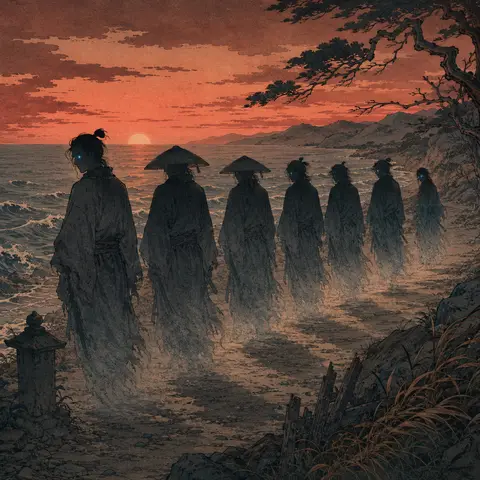
Shichinin Misaki (The Seven Misaki) is a collective spirit yokai from the Shikoku and Chugoku regions, a group of vengeful ghosts that invariably act together as a team of seven. The most famous lineage traces back to the vengeful spirits of the Tosa (Kochi Prefecture) Sengoku warlord Kira Chikazane (who committed seppuku around 1588) and the six retainers who followed him in death. The origin of their pacification myth involves enshrining their spirits as the "Kizetsu Daimyojin" at the Kira Shrine in Haruno-cho, Kochi City. "Misaki" is an archaic term in western Japan meaning "a spiritual entity that possesses people and causes illness." It is said that encountering them on the road leads to a high fever and sudden death. As a collective phantom, they possess a unique, fixed-number cycle of reincarnation: when they curse someone to death, one of the seven spirits achieves enlightenment (Buddhahood), and the newly killed victim takes their place as the new seventh member. In places like Shunan City in Yamaguchi Prefecture, folk belief dictates that one can escape disaster by "hiding one's thumbs inside clenched fists" when walking past. This cyclical structure of a collective spirit is exceedingly rare worldwide, making it an important folkloric phenomenon layered with the tragedies of Sengoku samurai families, medieval western Japanese Goryo (vengeful spirit) worship, and early modern folk warding spells.
Read moreAnd the unique vengeful spirit that Tosa proudly presents to the rest of Japan—if one could say so—is the Shichinin Misaki. "Misaki" is an archaic term used throughout western Japan to mean "a spirit that possesses people and brings illness," but in the Kochi dialect, it simply meant a vengeful ghost. True to its name, the Shichinin Misaki always travels as a group of seven, and anyone who encounters them is stricken with a high fever and dies. Its most defining characteristic is its fixed-number reincarnation structure—when they kill a person, one of the seven spirits achieves enlightenment and moves on, only to be replaced by the person they just killed. Thus, the Shichinin Misaki neither increases nor decreases in number, forever remaining a group of seven to this day.
The most famous lineage of this spirit stems from an actual warlord in Sengoku-era Tosa. Kira Chikazane[4] was the son-in-law of Chosokabe Motochika and served actively as a clan member. However, after Motochika's heir, Nobuchika, died in the Battle of Hetsugigawa in 1586, Chikazane clashed with Motochika over the selection of a successor. His repeated remonstrations incurred Motochika's wrath, and he was ordered to commit seppuku around 1588. Six of his retainers followed him in death by committing ritual suicide, and it is said that their combined seven vengeful spirits cursed the Chosokabe clan. The tragedy of Hieyama Chikaoki[4] and other clan members who were also ordered to commit seppuku over the same succession dispute overlaps with the background of this ghost story.
Motochika held repeated memorial services, but the curse would not be appeased. He eventually enshrined Chikazane's spirit in Nishibun Village (present-day Nishibun, Haruno-cho, Kochi City) as the deity "Kisetsu Daimyojin." This is the current Kira Shrine[5]. The shrine grounds still house the "Head-Washing Basin" where Chikazane's head was supposedly washed after his seppuku, and a constant stream of visitors still comes to this site tied to the Shichinin Misaki. The tragedy of a Sengoku samurai family merged with the goryo (vengeful spirit) beliefs of the Middle Ages to birth a unique legend, which was then pacified through enshrinement—the Shichinin Misaki can be seen as the most complete form of vengeful spirit belief in Tosa.
Monsters of the Kuroshio Sea:
Ushi-oni and Funayurei
Tosa is a province that faces the Pacific Ocean head-on. The main stream of the Kuroshio current flows close to its shores, and pelagic fishing, particularly for bonito, has long supported the livelihoods of its people. The bountiful sea was also a sea that swallowed countless victims of maritime disasters. The sea yokai were born as the flip side of this fear.
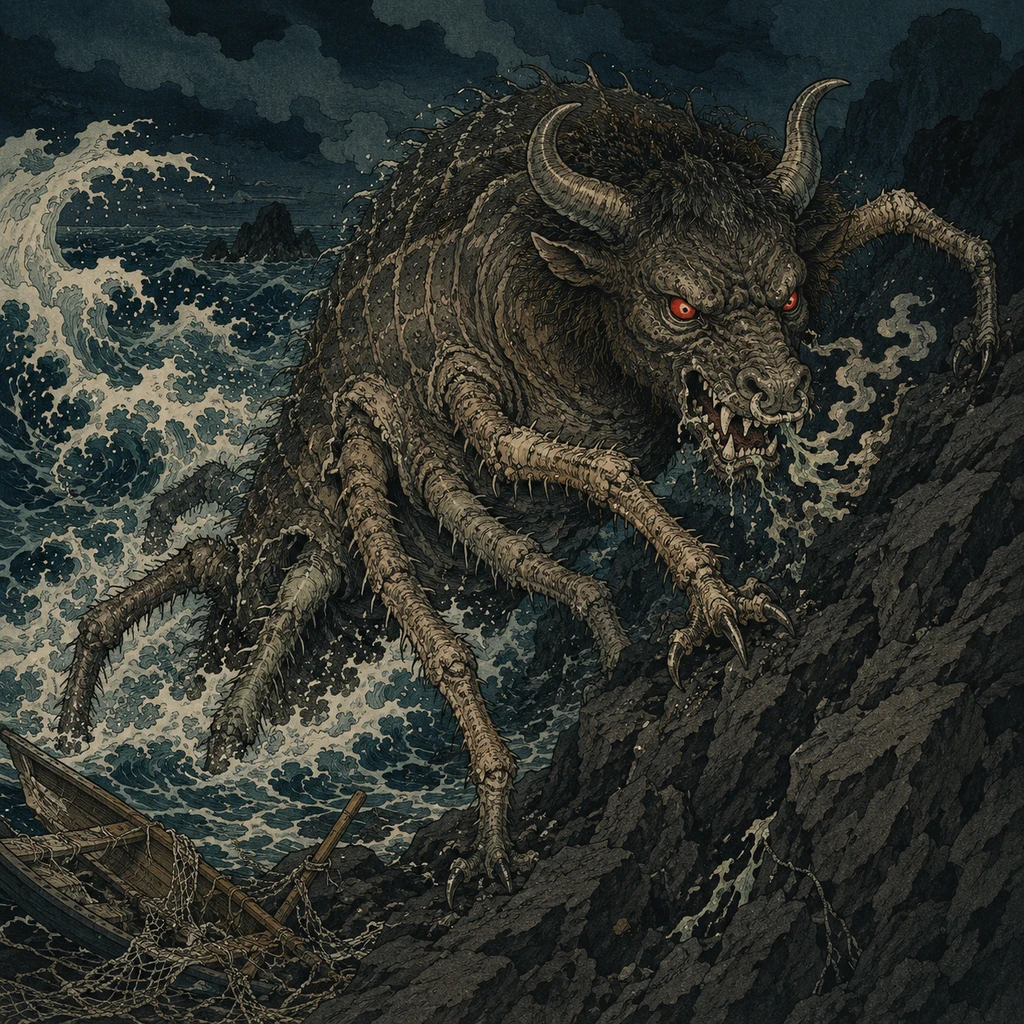

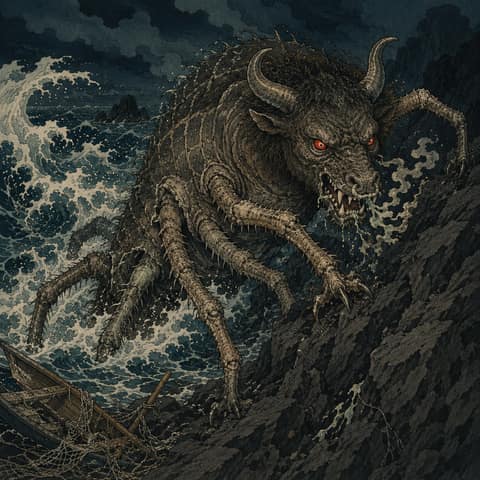
The ushi-oni (ox demon) is one of the most ferocious monstrosities appearing along the coasts, deep pools, and mountains of western Japan. It is depicted in various grotesque forms, such as having an ox's head with a demon's body, or a spider's body with an ox's head. It is an ancient yokai, historically singled out as a "terrifying thing" in *The Pillow Book* (*Makura no Soshi*)[6]. While the ushi-oni of Uwajima (Ehime Prefecture) is particularly famous in Shikoku, its legends extend well into Tosa. Tales tell of a yamabushi (mountain ascetic) who struck down an ushi-oni using a conch shell and spells, then pierced its forehead with a sword and tore it apart; its blood flowed for seven days and seven nights, forming a deep abyss. It is said that such "Ushi-oni Pools" remain in Tosayama in Kochi Prefecture, Mount Shiraki in Tokushima, and Negoroji Temple in Kagawa. The terror of the raging sea and deep pools has been carved into the mountains and seas of Tosa, borrowing the shape of a monster with the head of an ox.
What makes the ushi-oni fascinating is its extreme duality. While it wears the face of a plague god that indiscriminately devours people, it also has the face of a guardian deity. As seen in the festival of Warei Shrine[7] in Uwajima, a massive ushi-oni float parades through the city streets, purifying the area by driving away evil spirits and malevolent forces. "The more violent and terrifying something is, the more powerful a guardian deity it becomes once enshrined"—the same mechanism of goryo belief seen in the pacification of the Shichinin Misaki is at work in the sea monster, the ushi-oni. Tosa, with its capes at Muroto and Ashizuri, was a fitting land to deify and enshrine the threats of the open ocean.
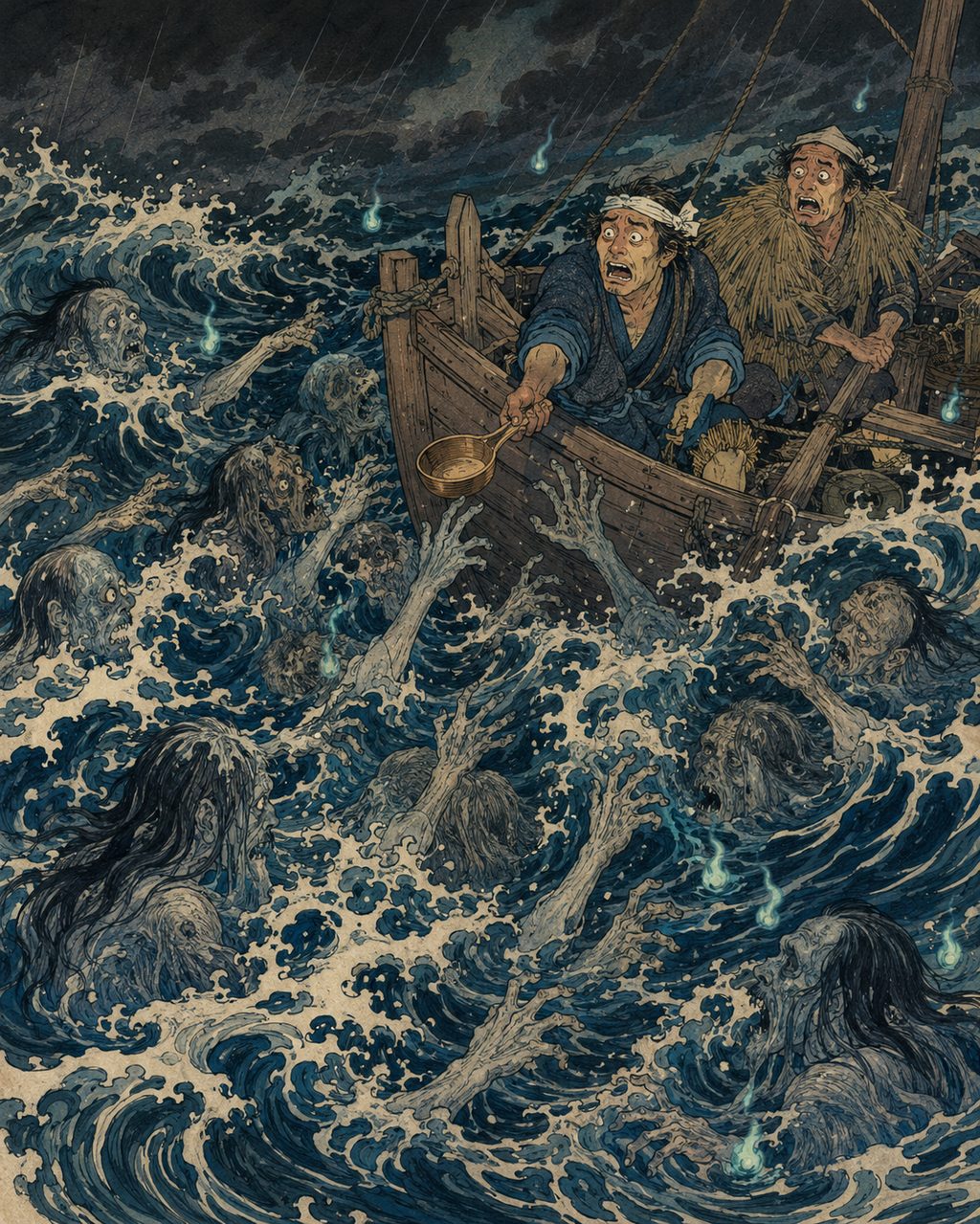
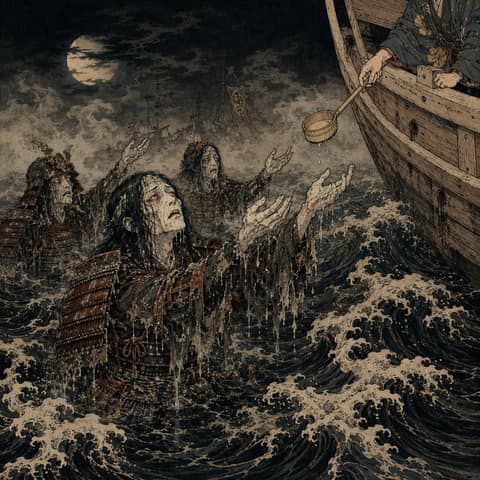
The funayurei (boat ghost) is a haunting anomaly where the collective spirits of those who died in water disasters appear on the sea. On stormy nights or foggy evenings, they approach boats as shadowy figures resembling umi-bozu or as phantom fires, demanding a dipper (*hisage*), crying, "Give me a dipper[8]." If one complies and hands them a dipper, they will pour seawater into the boat until it sinks. Therefore, fishermen prepared dippers with their bottoms knocked out and handed those over to survive the ordeal. In Tosa, it is specifically passed down that when approached, one should throw ashes or mochi into the sea. There was also a taboo stating that if a boat was taken out on the 16th day of the Obon festival, the dead would gather at the boat's edge. The funayurei was the very fear of those who perished at sea, appearing precisely during the sea of Obon and stormy weather. It is an earnest monster of the sea, deeply characteristic of the fishing villages of Tosa that lived with both the blessings and threats of the Kuroshio current.
Beasts of River and Mountain:
Kawauso,
Yosuzume,
and Ippon-datara
Moving our gaze from the sea to the mountains, the yokai of Tosa take on the faces of much more familiar beasts. The Shimanto River, hailed as Japan's last pristine river, and the Niyodo River, boasting some of the clearest waters—these rivers, along with the deep, untrodden mountains that serve as their source, nurtured their own unique phenomena. Tosa's mountains and rivers are characterized by producing many beastly yokai tinged with a sense of charm or sorrow, rather than purely malicious, atrocious monsters.
Kawauso (Otter Yokai)
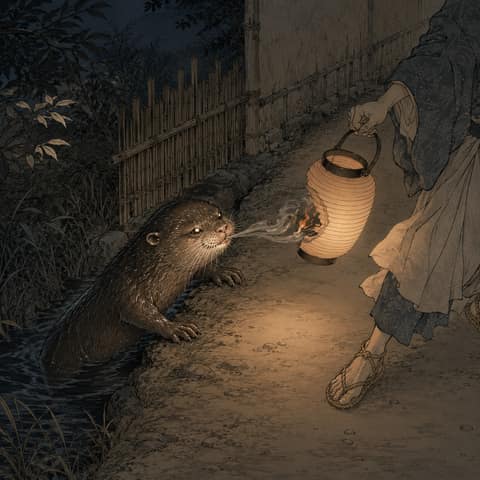
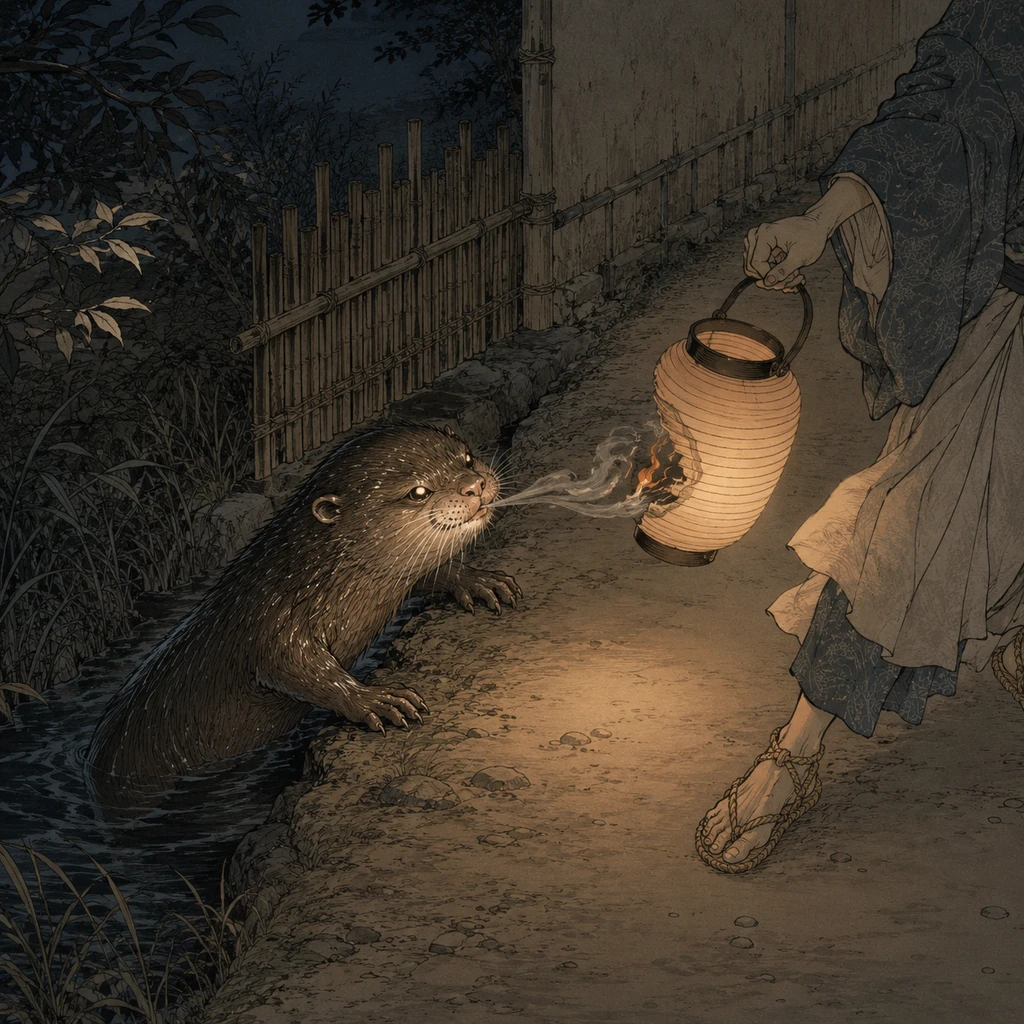
Kawauso are otters that, after many years, become yokai. They understand human speech and excel at shapeshifting. They delight in mischief such as snuffing out lanterns on night roads to lead travelers astray. Many tales describe them luring people while disguised as a beautiful woman, a child, or a monk. Old dictionaries even note, “An aged otter becomes a kappa,” and in some regions they are treated as the same being or close kin to kappa.
Read moreThe kawauso (otter) is said to be a river or marsh otter that has gained supernatural powers over the years, and it was spoken of nationwide as a "shapeshifting beast" alongside foxes and tanuki (raccoon dogs). The Muromachi-period text *Gagakushu*[9] states, "An otter grows old and becomes a kappa," and the belief that otters are a type of kappa is widely distributed throughout Shikoku. They extinguish lantern fires on night roads and transform into beautiful women, children, or monks to bewitch people. However, their shapeshifting is always somewhat flawed, and a common motif across regions is that their true identity is revealed through their heavily accented responses during a conversation. While feared, they were also spoken of as lovable yokai due to their goofy replies. In the Hokuriku region and Shikoku, tales of otters challenging people to sumo matches, much like kappa, are also passed down. The *Wakan Sansai Zue*[10], an Edo-period encyclopedia citing botanical texts, also lists the otter as a clever beast of the waterside, suggesting that the ancient image of a beast with near-human intelligence formed the foundation of the shapeshifting otter legends.
The kawauso of Tosa carries a poignant epilogue that transcends yokai tales. The Japanese river otter, which was once so common that it spawned yokai stories, drastically declined due to overhunting and the deterioration of river environments from the Meiji era onward. The last confirmed sighting of a living Japanese river otter was none other than in Kochi Prefecture. After an individual was sighted at the Shinjo River in Susaki City in June 1979[11], the Japanese river otter's official survival record ended, and in 2012, the Ministry of the Environment designated it an extinct species. The very beast that left behind the legends of the shapeshifting otter now only exists within those legends. Susaki City's mascot character, "Shinjo-kun," is modeled after an otter precisely because of this land's memory. There are few examples as symbolic of the bizarre history of a yokai.
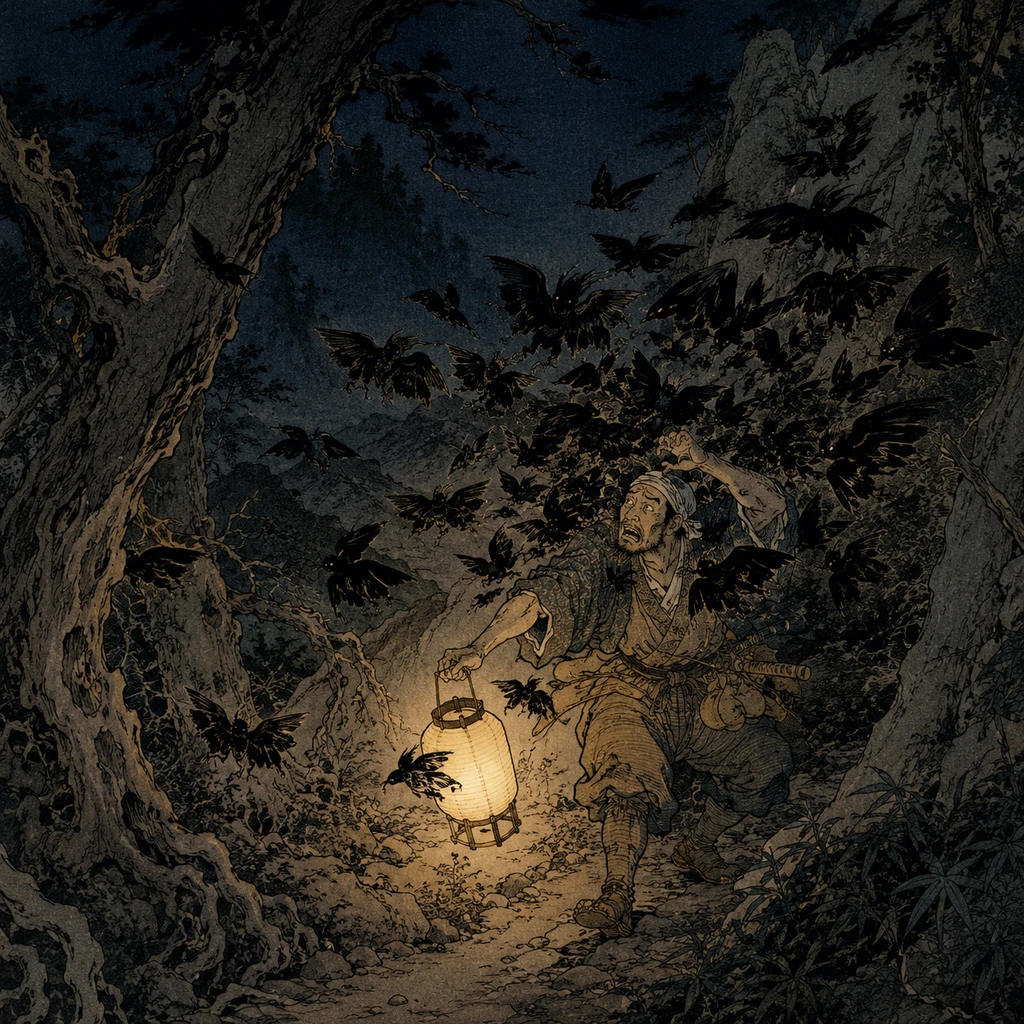
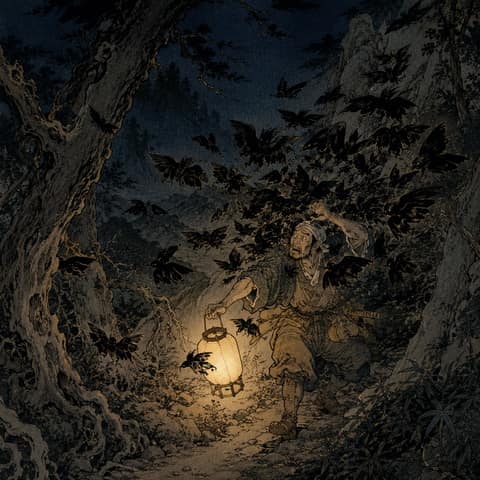
Different anomalies lurk on the mountain paths at night. The yosuzume (night sparrow) is a bird yokai that follows people on mountain roads at night, chirping "chi, chi," with lore centered in Kochi, Ehime, and Wakayama. In Tosa, the aforementioned Kazuo Katsurai[2] played a major role in recording the yosuzume. In the Hata District of Kochi, it follows people on night roads, and being possessed by it is considered a bad omen. In Kitagawa Village, it is said that something resembling a black butterfly chirps "cha, cha" and flutters noisily into one's kimono breast or umbrella, but disappears if one remains quiet. In Minamiuwa, Ehime, it is described as a moth that swarms as an omen of an approaching yama-inu (wolf). In western Japan, the yosuzume is often seen as a precursor to the "okuri-okami" (escorting wolf), and some areas consider it a sign of protection rather than a bad omen. It is said that one can ward it off by grasping the sleeves of their kimono or chanting spells.
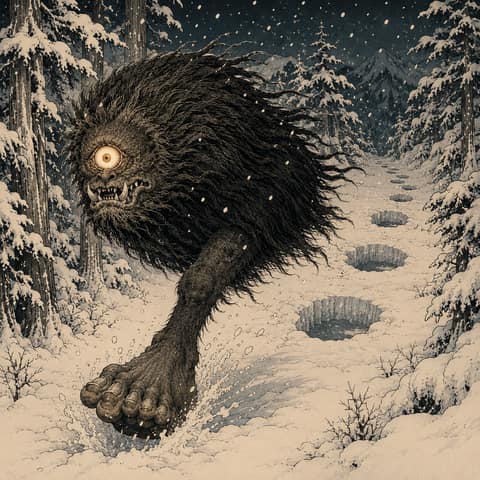
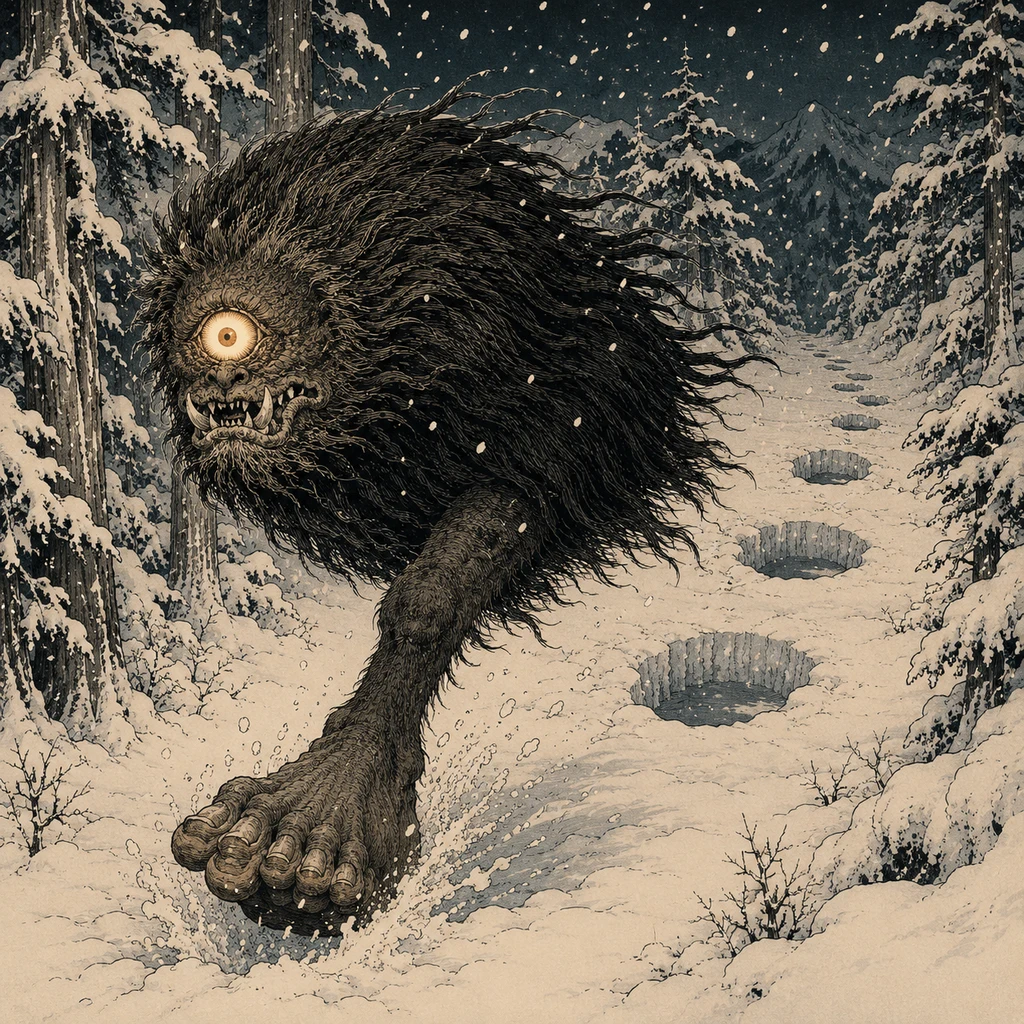
The ippon-datara also appears in the deep mountains. It is a one-eyed, one-legged mountain monster, with its stronghold in the Kumano and Omine regions of Kii Province (Wakayama), but similar tales also exist in Tosa. In Kochi, a monster that rolls down night roads looking like a hand-mill (*teusu*) is called the tatekurikaeshi[12], and some theories identify it with the ippon-datara. Given its one-eyed, one-legged appearance, modern interpretations have overlaid the imagery of the *tatara* (bellows) blacksmith—who stood on one leg to step on the bellows and used one eye to stare into the furnace fire—suggesting it is the fallen figure of a one-eyed blacksmith god. However, this is only one theory, and Tosa's mountain monsters do not necessarily speak of ironmaking. The primal fear of the darkness in the deep mountains is projected onto the ridges of Tosa as the shadow of a one-legged creature. In its homeland of Kii Province, it is said to appear only on the "Final Twentieth" (December 20th) in the Hatenashi mountain range; no one has seen its form, and it only leaves a single footprint about one shaku (approx. 30 cm) wide in the snow. While Tosa's tatekurikaeshi lacks such a precise schedule, the visceral terror of a hand-mill rolling up from behind on a dark mountain path is a mountain monster deeply characteristic of Tosa, grounded closely in human life. It perfectly illustrates how the same one-legged anomaly changes its form and nature as it is passed down in different regions.
The Tosa Obake Zoshi:
Akagashira,
Bakotsu,
and Sanme-yazura
Finally, we must look at yokai materials unique to Tosa. In Edo-period Tosa, local yokai picture scrolls circulated, representing a lineage distinct from the commercial yokai prints published in Kyoto and Edo by artists like Toriyama Sekien.
One is the *Tosa Obake Zoshi* (Tosa Ghost Scroll)[13]—a 16-tale picture scroll passed down in the Yoshimoto family, who served the Fukao family, the principal retainers of the Tosa Domain. It was painted by an anonymous Tosa artist. Unlike the works of famous painters in Kyoto and Edo, its value lies in recording the rustic and visceral folk beliefs actually whispered in the rural villages of Tosa (currently, alongside privately owned copies, a version held by the Sakawa Town Board of Education is also known). Another is the *Tosa Bakemono Ehon* (Tosa Monster Picture Book), in which the "Akagashira of Shogase" is listed as one of the Three Great Yokai of Tosa, alongside the "Warai-onna of Yamakita" and the "Shirouba of Motoyama." These have attracted the interest of Tosa researchers, such as the local historian Masamichi Teraishi (1868-)[14], as materials on early modern Tosa yokai. If Toriyama Sekien's *Gazu Hyakki Yagyo* and other nationally distributed yokai prints were "yokai as urban culture," the picture scrolls of Tosa are records that directly scooped up "the yokai truly feared in the villages." They have garnered renewed attention in recent years as primary sources for the study of regional yokai.
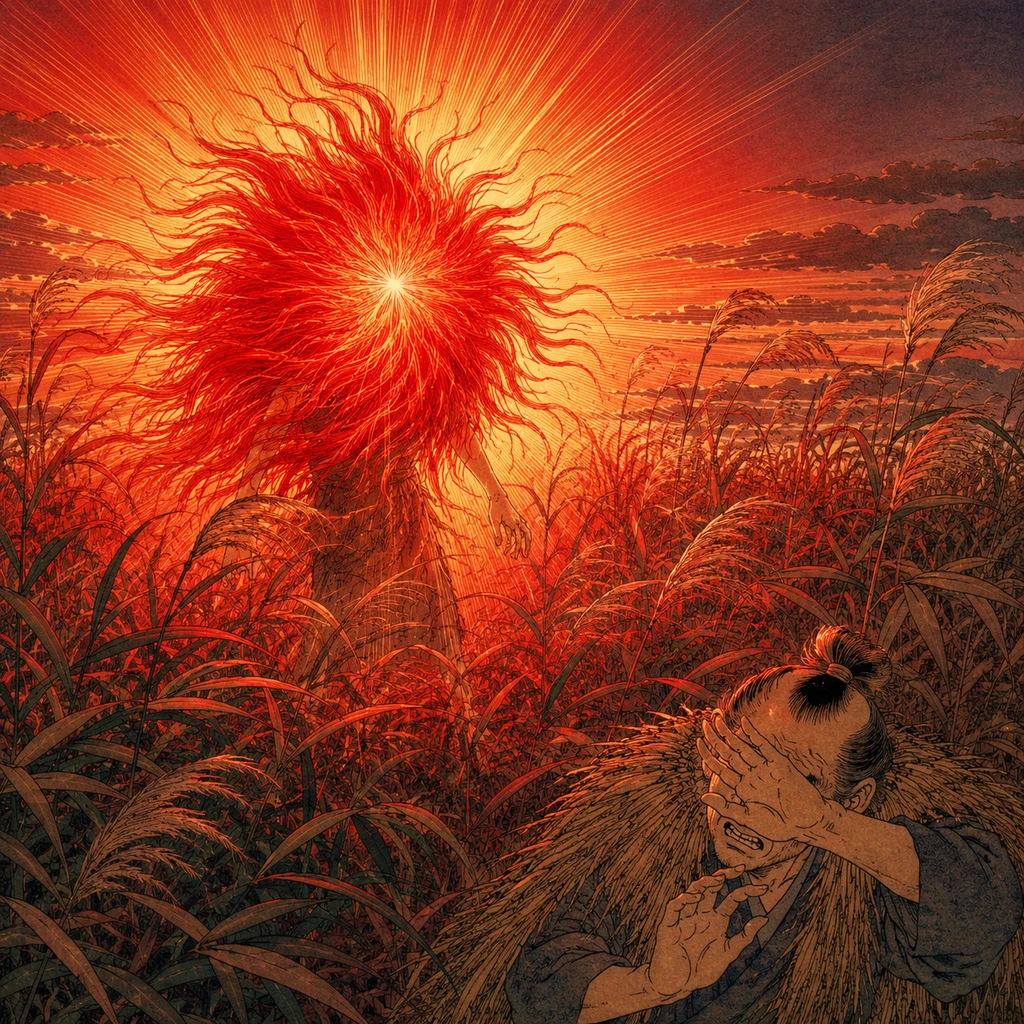
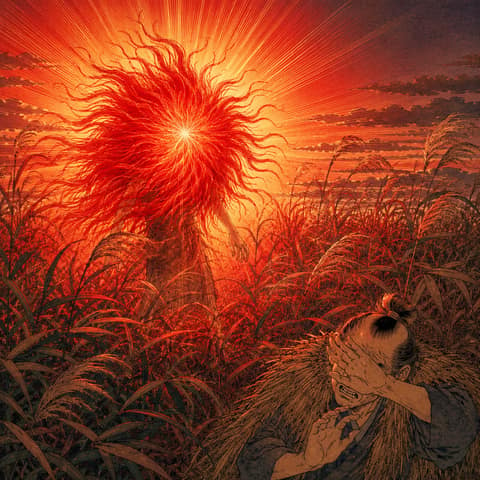
The akagashira (red head) is a phenomenon of the mountains and fields passed down in Shogase, Agawa District (present-day Ino Town). Its red hair is said to shine like sunlight, so dazzling that one cannot look directly at it. It walks on two legs, but its feet are hard to see hidden in the grass, and it has no disposition to attack people. However, it is said that someone who encountered it was blinded, as if staring directly into the morning sun, and after it left, the person suffered an eye disease and nearly went blind, though they recovered with treatment. A monster of light that bewilders people with its glare is rare, possessing a whimsical quality typical of Tosa's mountain yokai. Incidentally, the name "Akagashira" also appears in the *Hyakki Yagyo Emaki*, but it is unknown if it is the same as the Tosa akagashira; only the shared trait of red hair is pointed out. Along with the "Warai-onna of Yamakita" and the "Shirouba of Motoyama"—its peers among the Three Great Yokai—the fact that it is spoken of in connection with a specific local place name (Shogase, Yamakita, Motoyama) perfectly expresses the indigenous nature of Tosa's yokai.
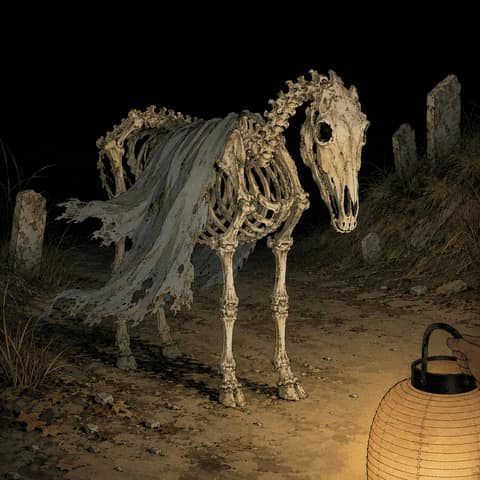
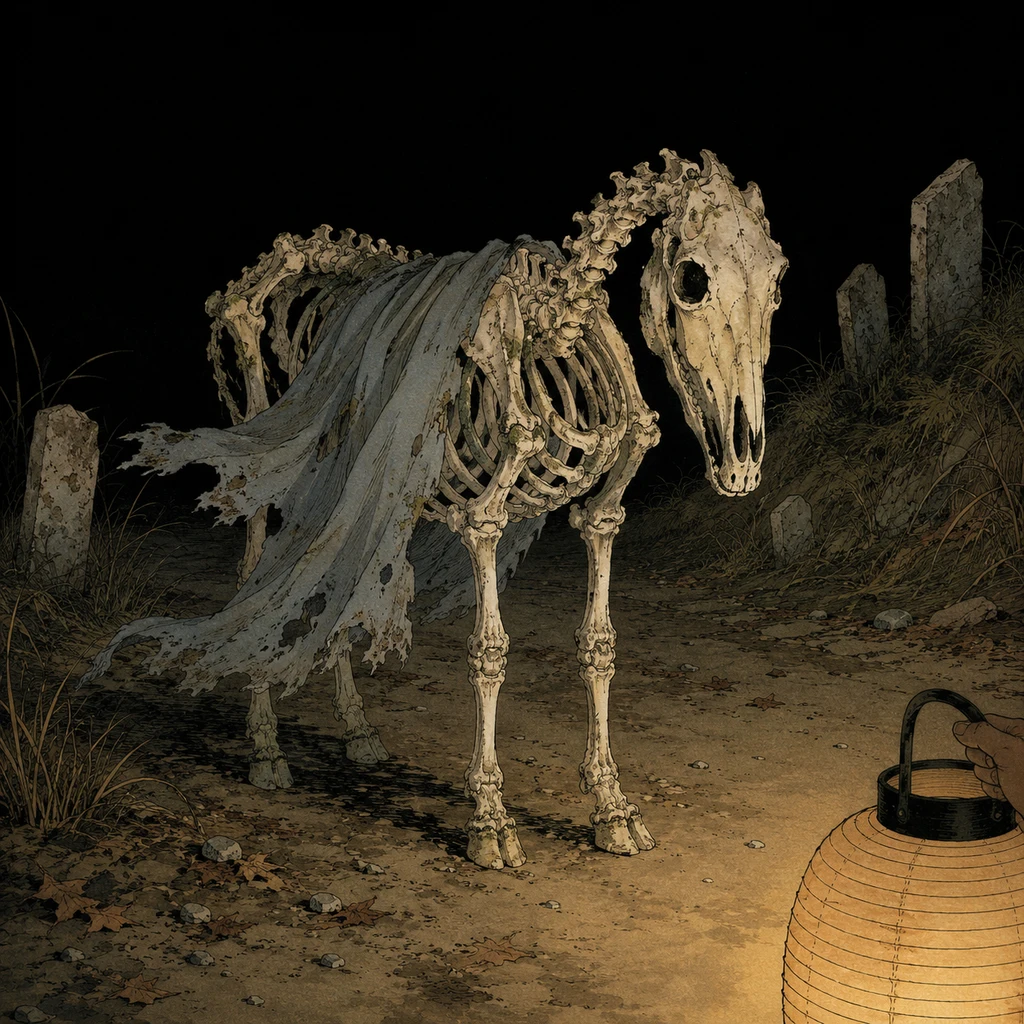
The bakotsu (horse bone) is a skeletal monster said to be the remains of a horse that burned to death in a fire, infused with supernatural energy. In the *Tosa Obake Zoshi*, it is depicted facing off against a yokai resembling a toad called the yadomori[13], separated by a mosquito net. It is a grotesque figure—a massive bleached horse skeleton draped in an old robe around its waist, standing upright on two legs like a human. Horses and oxen were absolute sources of labor that supported agriculture, raised almost like family members. Burying dead cattle and horses arbitrarily was forbidden, and charred bones from fires were sometimes abandoned by the roadside. The bakotsu stands as a manifestation of the sorrow of beasts of burden that were worked to the bone and discarded, an extension of the mindset that led villagers to erect Bato Kannon (Horse-Headed Kannon) statues by the roadside to mourn dead cattle and horses. There are no records of it actively harming people; it is a didactic yokai preaching the ethics of holding an animal memorial service and respecting life to the very end.
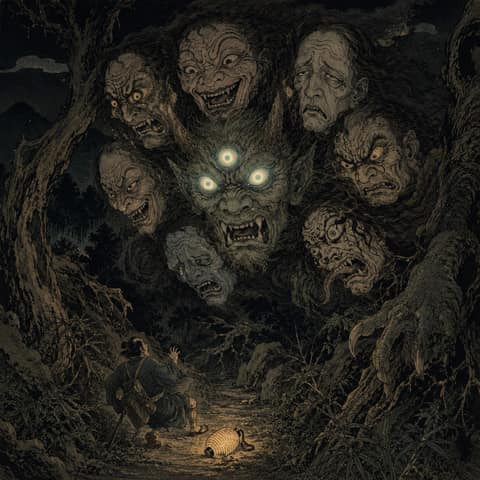
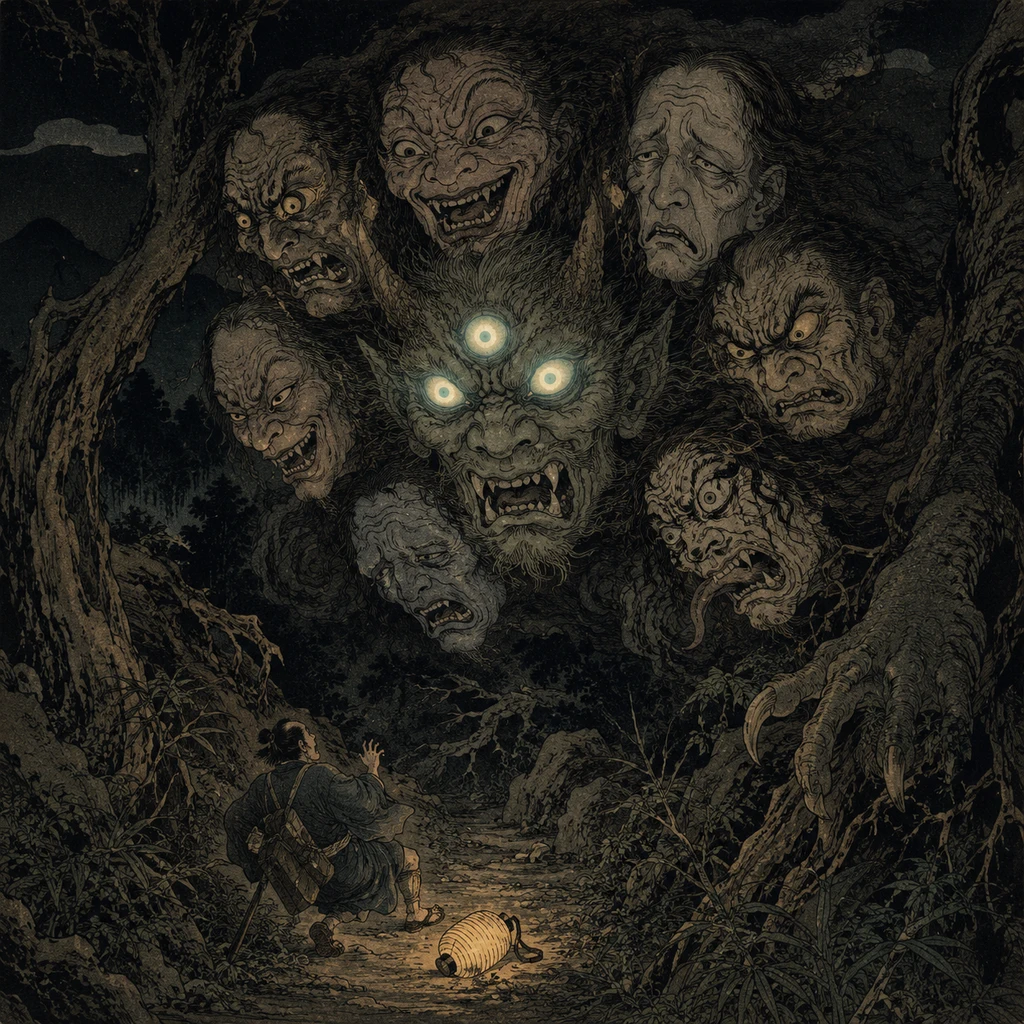
The sanme-yazura (three eyes, eight faces) is a bizarre phenomenon said to have inhabited Mount Saruyama in Tosayama (present-day Tosayama, Kochi City). With three eyes and eight faces, it reportedly attacked and devoured travelers heading to Morimura village. Shime-dayu, said to be the younger brother of Mizuno Wakasa-no-Kami, a powerful local clan leader of Tosayama, erected purifying *gohei* (paper offerings) and set fire to Mount Saruyama. The sanme-yazura thrashed about in the flames before burning to death. Its charred body was so massive that it spanned into the neighboring village. Even after it burned away, only the *gohei* remained, and from then on, the location was spoken of as a historic site of mountain pacification, known as the "Shizume-ishi" (Pacifying Stone) or "Shizume-dokoro" (Pacifying Place). The narrative of erecting a *gohei*, setting a mountain on fire, and exorcising a monster resonates deeply with the magical world of the Izanagi-ryu, where the *tayu* chant ritual texts and use *gohei* to perform exorcisms, beautifully reflecting Tosa's religious climate, which is heavily colored by the magic of purification. The multi-headed, multi-faced grotesque form of three eyes and eight faces is also pointed out to be related to the legends of a multi-headed giant serpent passed down in Tosa, though the details are unclear. In any case, the very structure of the tale—pacifying a massive monster with *gohei*, fire, and words of exorcism, and remembering that site of pacification as the "Shizume-ishi" for generations to come—is a microcosm of the mindset of Tosa, which sought to maintain the peace of the community by exorcising curses and possessions.
Conclusion:
The Land of Possession,
Curses,
and Exorcisms
Three verbs thread through the yokai of Kochi Prefecture: "to possess, to curse, and to exorcise." The inugami possesses family lineages, the Shichinin Misaki curses those it encounters, and the ushi-oni and funayurei lurk in the sea and deep pools. Deep in the mountains, the ippon-datara and yosuzume appear; in the rivers, the shapeshifting kawauso; and in local picture scrolls, the akagashira, bakotsu, and sanme-yazura are depicted. And the *tayu* of the Izanagi-ryu in Monobe Village exorcise these *suso* (curses) with *gohei* and ritual texts, while Kira Shrine pacifies a vengeful ghost as the "Kisetsu Daimyojin."
The reason why the Kuroshio Pacific and the deep darkness of the Shikoku Mountains nurtured such a dense culture of spirit possession and vengeful ghosts lies in the livelihoods lived alongside death in pelagic fishing and the logic of village society in isolated mountain communities. Carrying the social history of yokai and discrimination, and even the memory of the extinct Japanese river otter, the supernatural phenomena of Tosa still breathe deeply today in the valleys of Shimanto and off the Kuroshio coast.