The Dan-no-ura Funayūrei That Ask for a Teigo
To explain The Dan-no-ura Funayūrei That Ask for a Teigo in detail:
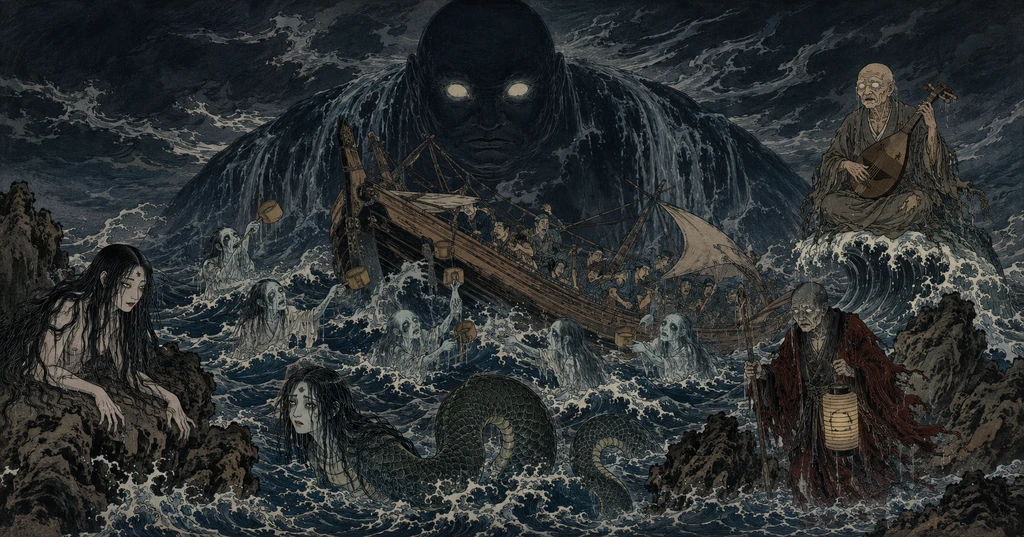
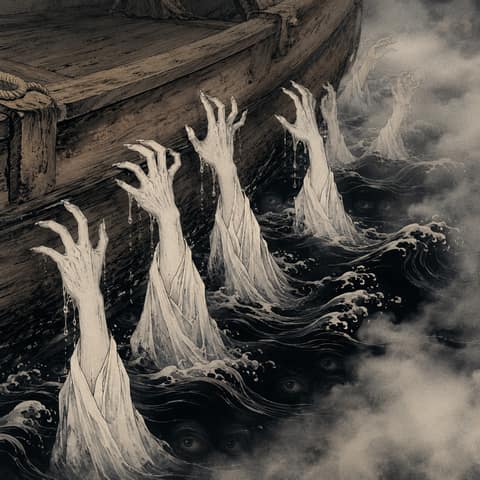
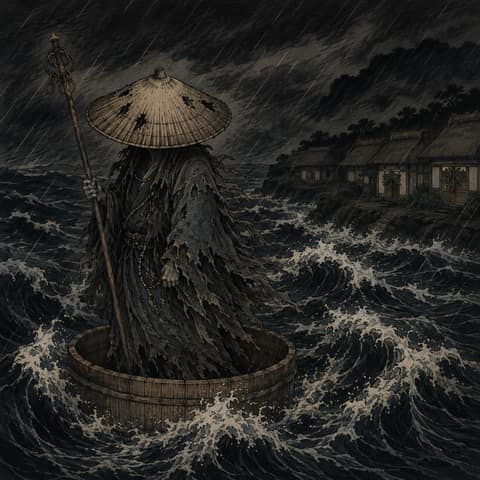
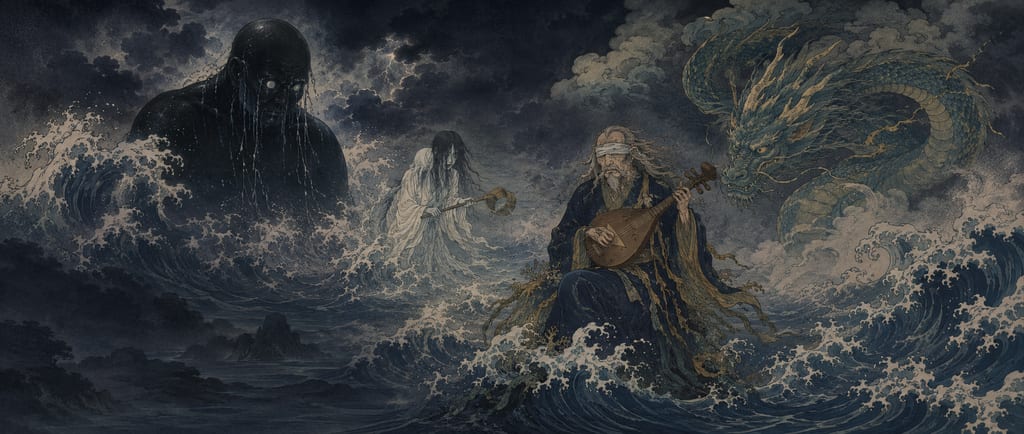
The Funayūrei of Dan-no-ura are said to be the shades of the Taira who sank in the Battle of Dan-no-ura. On misty nights where currents meet in the western sea, they draw alongside a boat with water streaming from their armor and quietly ask for a teigo—a hisage, or handled pouring vessel. Their faces are white, their eyes reddened by salt, and their voices hoarse, yet their words still preserve the etiquette of the warrior class. They keep the order of their former battle lines even at sea: one spirit calls out first, then countless hands seize the planks together.
If the bowl or ladle they receive has an intact bottom, they use it to pour seawater into the boat until it sinks without a sound. People who crossed these waters therefore pierced the bottoms of such vessels in advance and kept them tied beside the rail. When the ghosts accept one, the water runs straight through, and their rancor disperses with the tide. If a monk holds a memorial service and chants sutras, the silhouettes of their jingasa dissolve into the sea mist and the clink of armor chains returns to the sound of the waves.
They do not attack everyone without cause. The stories bring them closest to people who ignore maritime custom or arrogantly treat the sea with contempt, as if the dead meant to impress the memory of the Taira defeat upon the living. On the sixteenth day of Bon, during the equinoctial weeks, or on an anniversary of the battle, the quieter the sea becomes, the nearer the tread of armor seems. Ghost lights line the water like watchfires, reproducing the fleet of long ago. Ash, rice cakes, fragrant flowers, and dumplings can soften their fixation. Cast from the bow, an offering may bring back a single wave like the sleeve of a shirabyōshi dancer and push the vessel onward.
Some accounts say an unflinching stare can also make them withdraw. Elders explain that this is not a contest of will: when the living truly face the dead, the stagnant resentment begins to loosen. Yamaoka Genrin described apparitions as a congealing of ki; here, soot-dark grievance takes shape upon the current. When the wind changes, sutras sound, and offerings sink, that loosened force scatters back into the sea. These Funayūrei are therefore not creatures of terror alone. Remembrance can bring them rest.
A child's outline sometimes appears among their ranks. Its voice is finer still, and it asks for no water; it only hooks small fingers over the rail. If the faint bells of armor can be heard, the crew should steady the helm, take the Hayatomo current at an angle, and send a murmured nembutsu into the wind. The battle-dead adrift in the western darkness yield only to proper rites and compassion.
Character Profile
This section is our own creative profile for storytelling. It is not historical fact or scholarship.
Yokai Type - Traditional Yokai
Category - Aquatic Spirits
Rarity - Epic
Personality - Grievance and courtesy coexist in them. Their requests retain the manners of warriors, but their hands cling relentlessly to the gunwale; deep resentment can still be eased by offerings and memorial rites.
Compatibility - Sailors who respect maritime custom, and monks or travelers willing to remember the dead, have the best chance of calming them.
Abilities - Recognizing whether a vessel has had its bottom piercedBringing sea mist and ghost lights that disorient navigationResponding to offerings, sutra chanting, and memorial ritesApproaching in formation and seizing the gunwale together
Weaknesses - Bottomless bowls or ladles make their bailing useless; sutras, memorial prayers, fragrant flowers, rice cakes, and ash disperse their resentment; an unflinching encounter between the living and the dead makes their forms difficult to sustain.
Habitat - The Kanmon Strait from Dan-no-ura to the waters off Mekari, tidal fronts and dangerous narrows of the western seas, and fogbound shores and harbor mouths.