

YOKAI.JP

Umi-zatō

umi-zatō

Umi-zatō

Umi-zatō

Their soul is listening — speak, and they will answer.

Basic Description

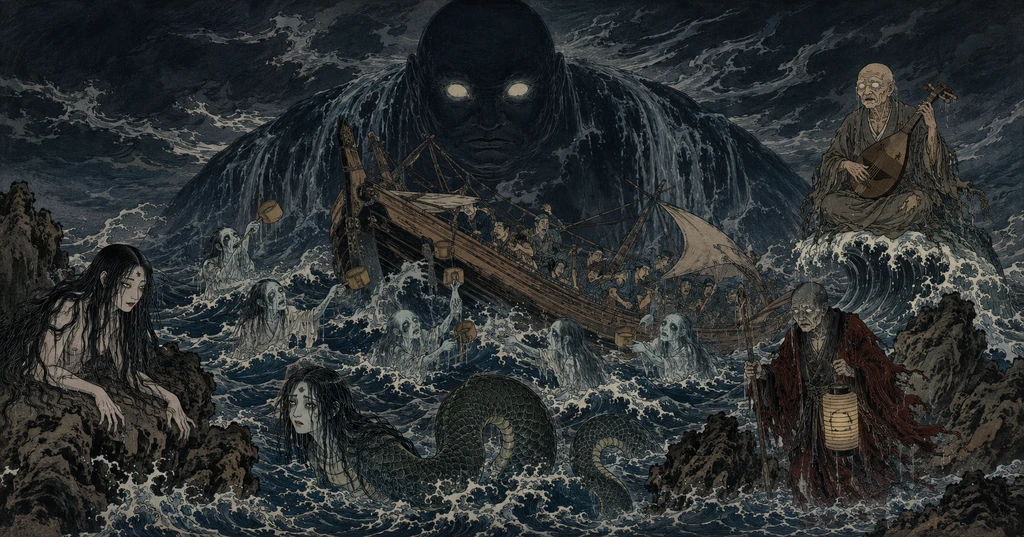
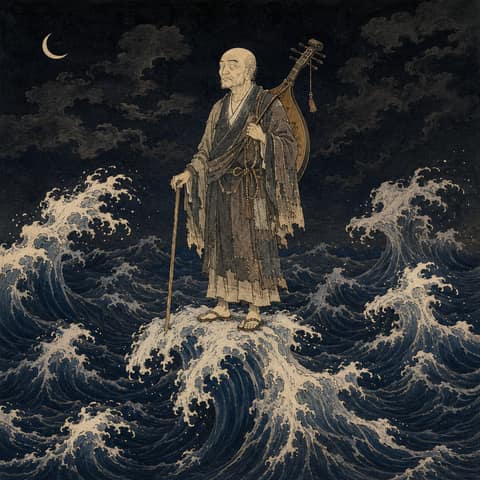
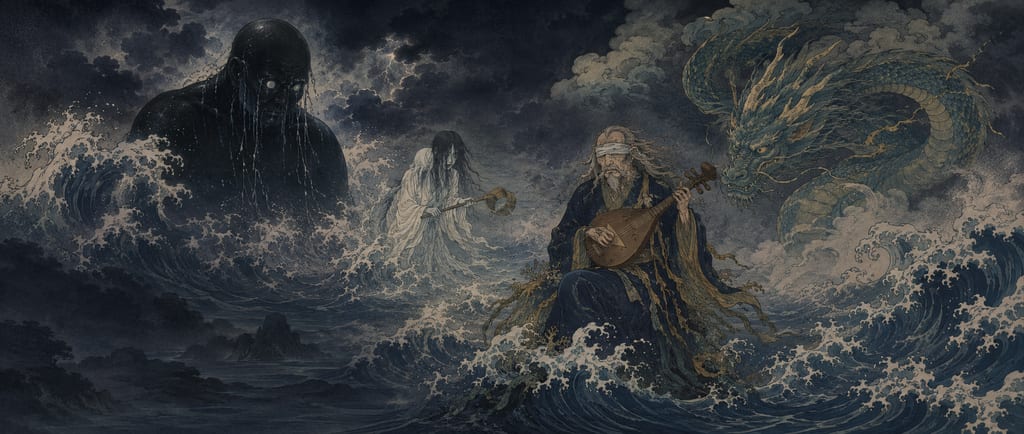
Umi-zatō is a maritime yokai depicted in Edo-period art as a zatō—a blind biwa player and Buddhist lay musician—standing at sea. Examples appear in Toriyama Sekien's Gazu Hyakki Yagyō and in a Hyakki Yagyō picture scroll held by the Matsui Bunko in Yatsushiro, Kumamoto. Neither image has an explanatory text, so the figure's origin and nature remain unknown. It carries a biwa and a walking staff and stands directly upon the waves. Some writers have connected the image with Umibōzu and other apparitions encountered offshore, but there is too little evidence to say more.

Folklore & Legends

No specific oral tradition about Umi-zatō is known. The surviving paintings show only a zatō holding a biwa and staff as he stands among the waves; they say nothing about when he appears, what he does, or whether the encounter is fortunate or dangerous. Yokai researcher Kenji Murakami classifies Umi-zatō among the yokai that exist only in paintings and suggests that the image may be related to Umibōzu. It has also been interpreted more generally as a human form given to the uncanny sea, but that remains unproven. Unlike Umibōzu and Funayūrei, whose stories are rooted in fishing communities, Umi-zatō survives chiefly through the brush of early modern artists: a blind biwa player standing where no one should be able to stand.

Detailed Analysis

Umi-zatō survives only as a figure in Edo-period picture scrolls and yokai paintings. No accompanying story explains his nature or actions. The composition centers on a zatō standing upright among the waves, with his biwa and walking staff made unmistakable. The impossible posture—feet planted on a surface that will not stay still—is what makes the image so uncanny.

Yokai researcher Kenji Murakami calls Umi-zatō a yokai that exists only in paintings and notes that its imagery may overlap with Umibōzu. Beyond that, the sources do not say whether it brings harm or benefit, nor do they preserve any rite or means of driving it away. Only the visual details are secure; what it does, and how anyone should respond, remain unanswered.

Character Profile

This section is our own creative profile for storytelling. It is not historical fact or scholarship.

Rarity
Rare
Personality
Unknown. The surviving sources preserve an image, not a record of character or behavior.
Compatibility
Unknown. No source says whom Umi-zatō approaches, favors, or harms.
Abilities
Depicted standing on the surface of the wavesAppearing as a blind biwa player upon the night sea
Weaknesses
Unknown.
Habitat
The sea and shoreline as depicted in art; no oral tradition ties the figure to a real location.
🔮Yokai Compatibility Test

For more detailed information and diagnosis results about The Biwa-Playing Zatō Standing on the Waves, please click here.

Sources & References

1
  1. 画図百鬼夜行鳥山石燕(国文学研究資料館国書データベース(東京藝術大学附属図書館所蔵), 安永5年(1776年)) [古典図像]鳥山石燕『画図百鬼夜行』所収の産女図。国書データベース第22コマ。

Interested in this type of yokai?

Discover the yokai most similar to your personality with our yokai diagnosis

Start Yokai Diagnosis

Meet your guardian yokai at the shrine

Draw an omikuji fortune and discover the yokai watching over you today.