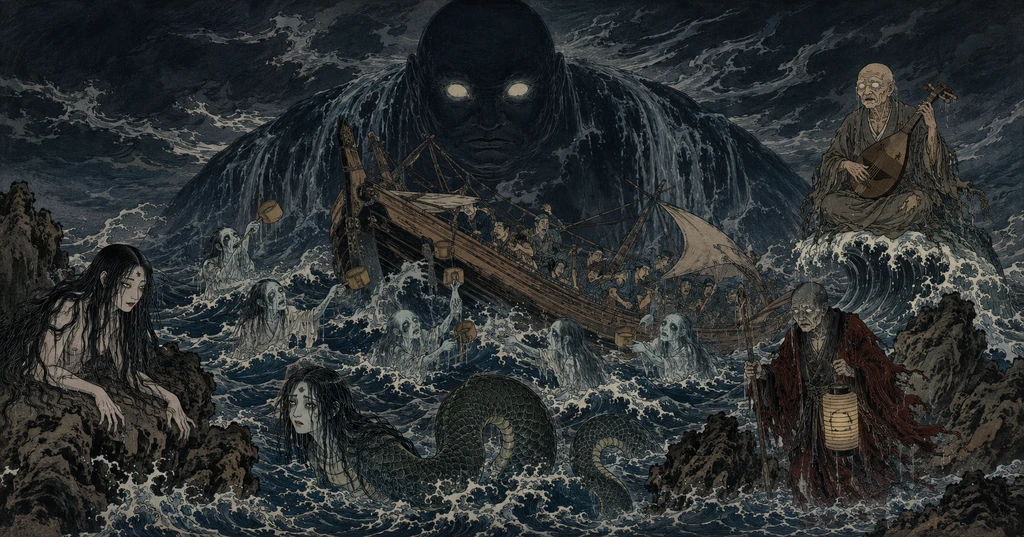
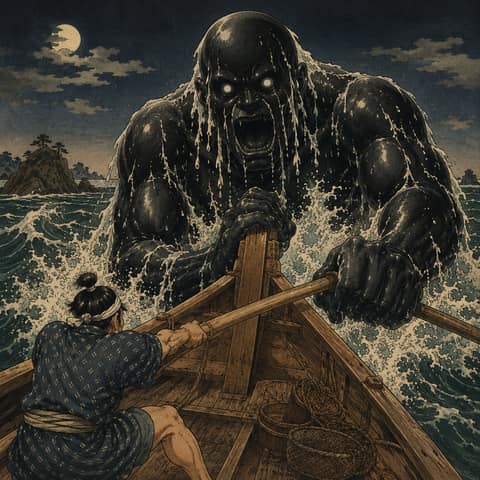


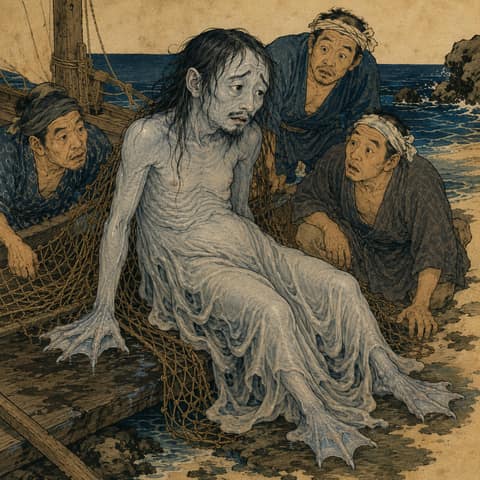
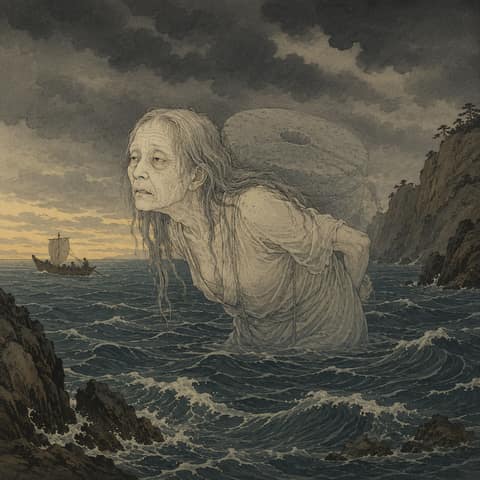
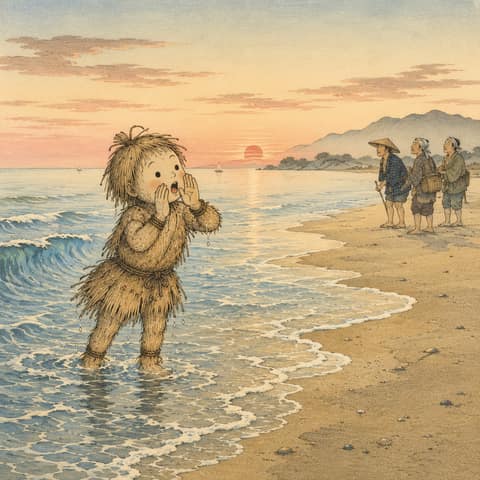
Early modern Japanese accounts of Kaijin drew on two streams of information: reports imported from overseas and descriptions in domestic natural histories. The traditions eventually overlapped. Kaijin is broadly human in shape, but webbing between the digits and loose skin over the entire body set it apart. The skin gathers in folds at the waist and looks almost like a wide pair of hakama. Whether it understands language is uncertain. Most sources say it neither comprehends human speech nor answers, although a variant claims that one survived on land for an extended period. Its diet is equally unclear because many accounts emphasize its refusal of food offered by people. When a captured Kaijin is kept away from the water, it weakens quickly and may die within days. Some have suggested that observers mistook a sea lion or seal for a human figure. Another explanation treats the apparent clothing or folds as seaweed clinging to the body. Neither has been proven. Part of the tradition came through Nagasaki in reports carried by ship, and part came from sightings along the Japanese coast; names and dates differ from source to source, so the material cannot be reduced to one clearly defined animal. Kaijin is best understood as a representative early modern account of an uncanny creature captured at the edge of the sea.
Character Profile
This section is our own creative profile for storytelling. It is not historical fact or scholarship.
Yokai Type - Traditional Yokai
Category - Aquatic Spirits
Rarity - Uncommon
Personality - Silent and wary. Surviving reports rarely describe aggression; the figure reads more like a captured marine being unable to adapt to land.
Compatibility - Encounters are associated with fishers, sailors, and coastal residents, but the sources do not say that Kaijin seeks out or favors any kind of person.
Abilities - Skilled swimmingReported ability to remain underwater for long periodsTolerance of seawater and cold
Weaknesses - Extended separation from seawater, human captivity, dry conditions, and freshwater environments cause rapid decline.
Habitat - Open and coastal seas, inlets and lagoons, and rocky reef waters.