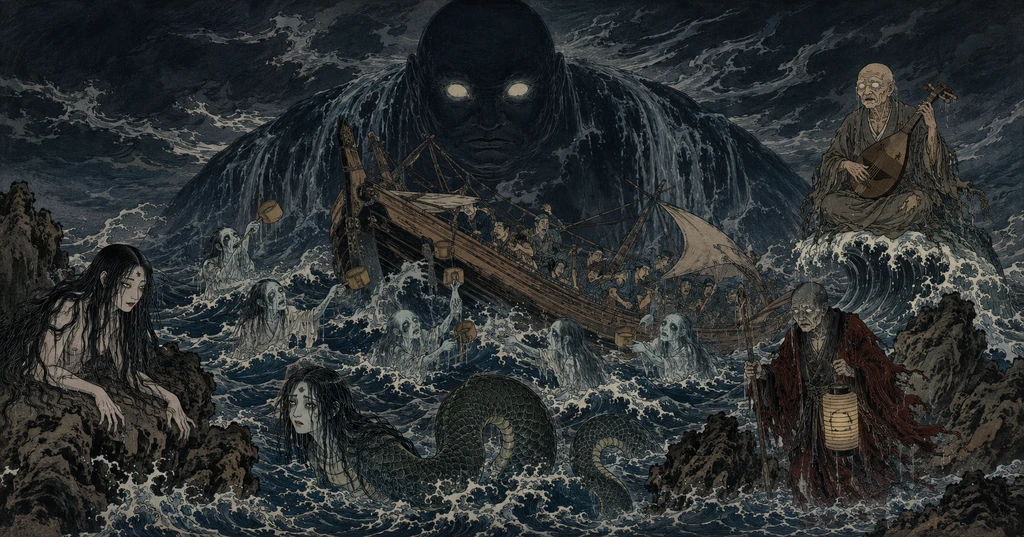
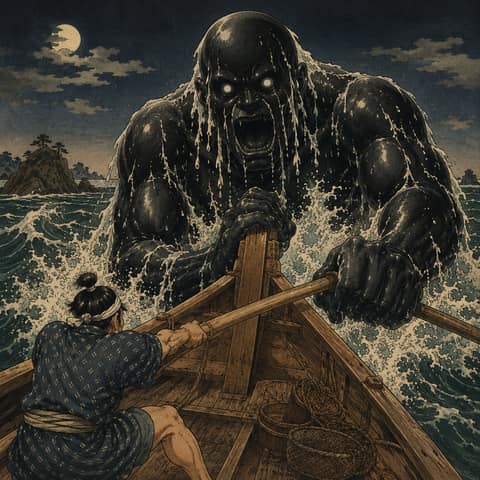
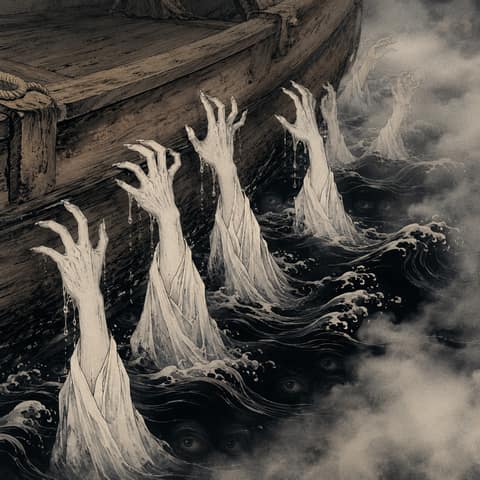
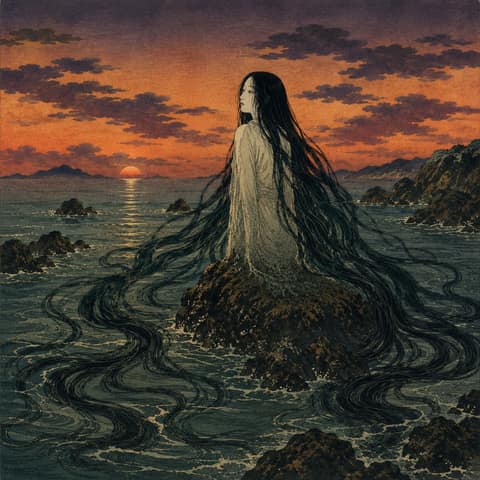
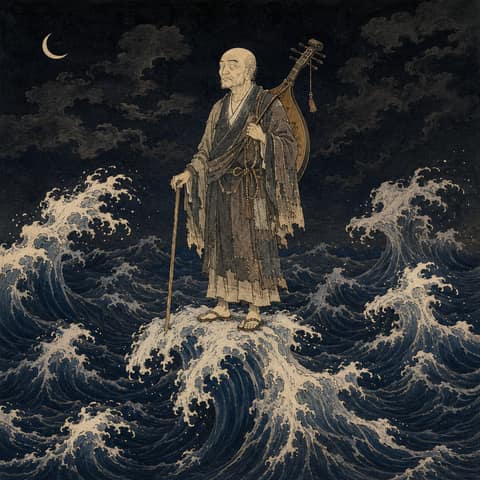
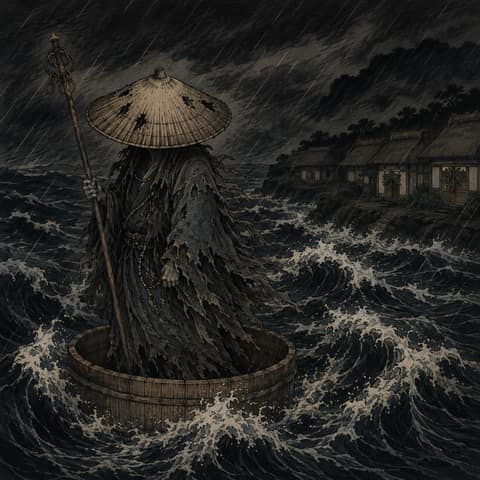
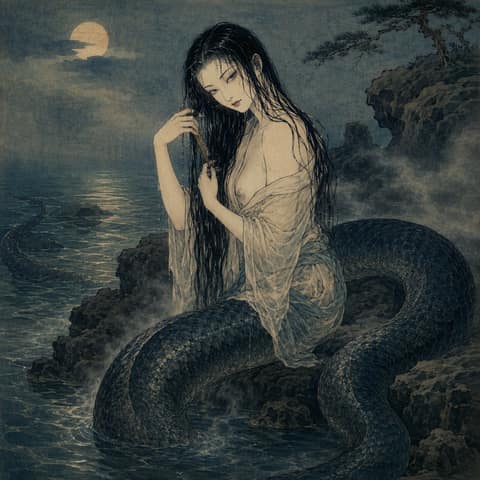
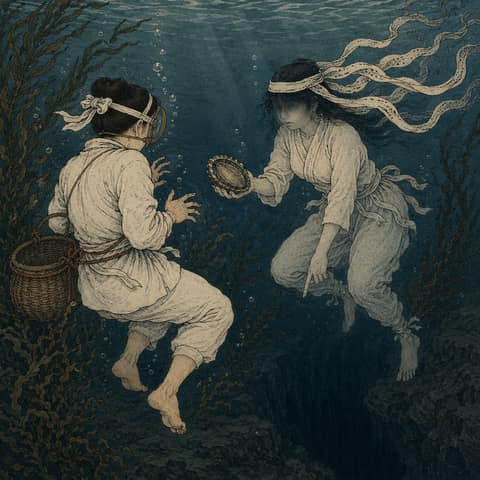
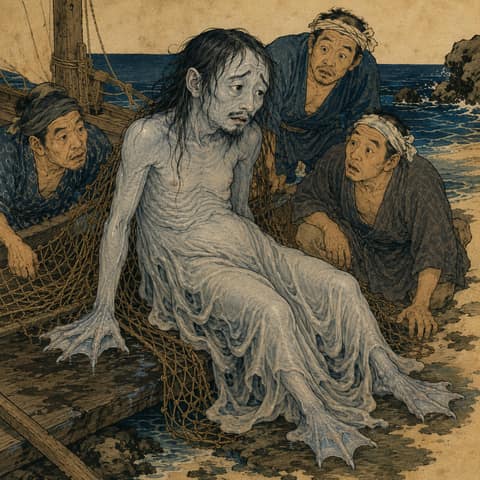
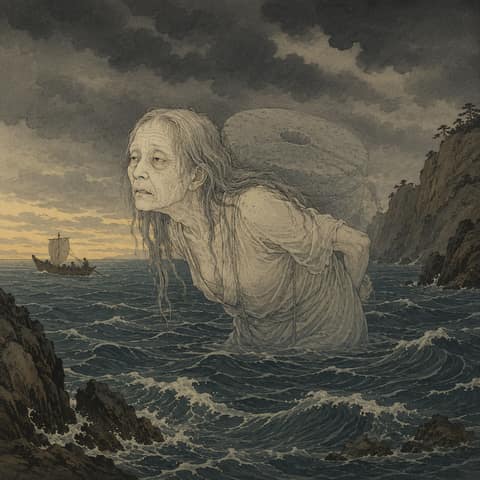
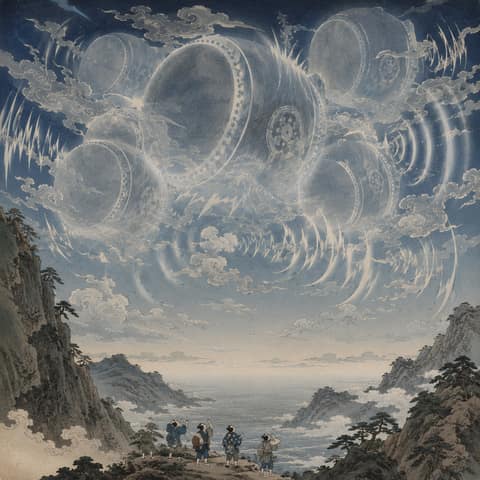
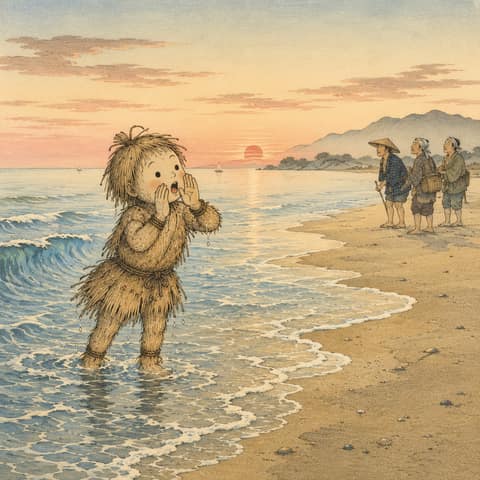
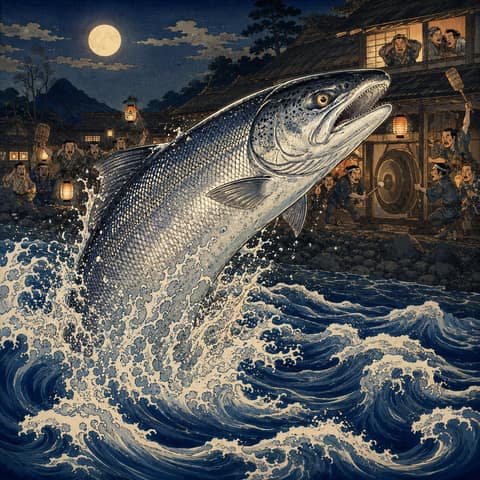
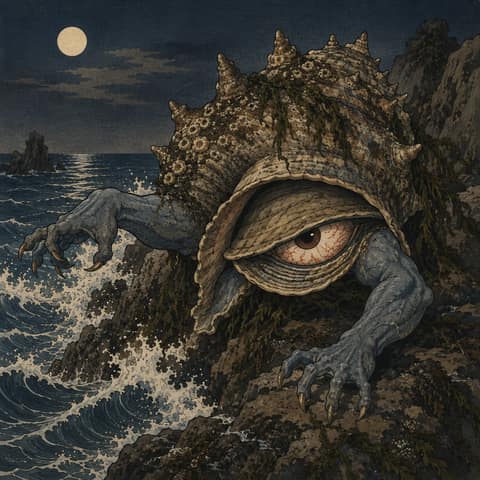
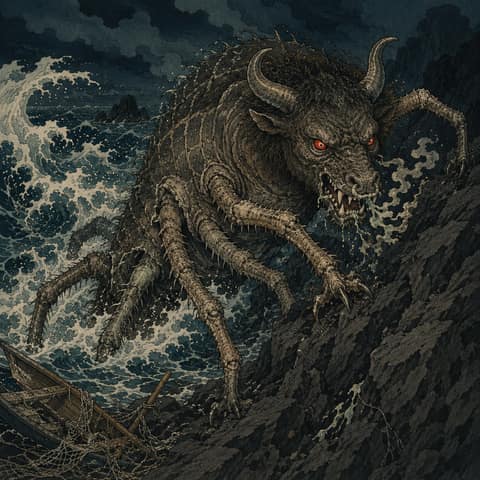
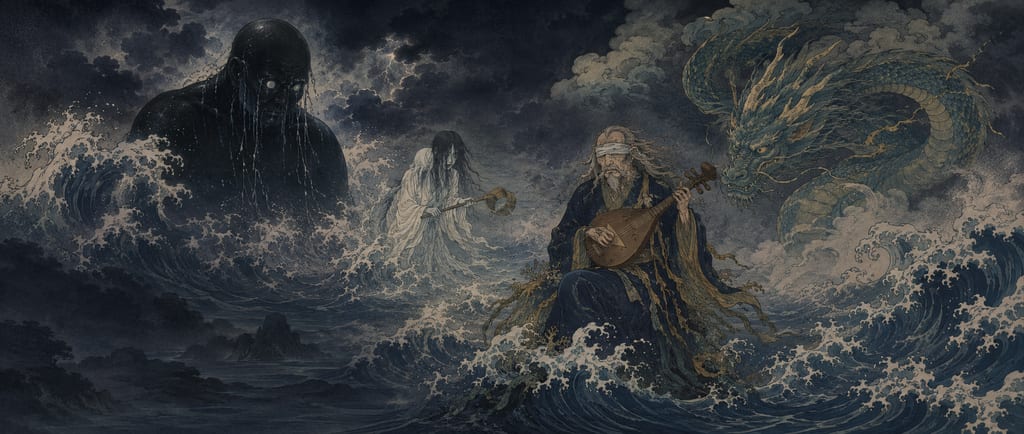
Kainan Hōshi is inseparable from the taboos observed in the Izu Islands on the twenty-fourth day of the first lunar month. It is described as the vengeful dead of maritime disasters. Some origin stories point to a hated island official; others tell of a group of young people killed together in a storm. The resentful spirits cross from offshore in washbasins or small boats, and anyone who sees them may suffer calamity.
That night, households cover their entrances with baskets, place branches of holly and tobira—Japanese cheesewood—in the storm shutters, close themselves indoors, and avoid even outdoor trips to the privy. The next day, the tobira is burned and the crop forecast from its cracking sounds and the way the branches swell. Customs differ considerably from island to island. At Senzu on Izu Ōshima, the visitor is called Hiimi-sama and remains the object of shrine rites; one account assigns a particular family to wait beside the shore through the night. On Kōzushima, shrine priests preserve a solemn nocturnal reception that gives the vengeful spirit the character of a visiting deity. On Miyakejima, plates and earthenware are placed at doorways and small children are put to bed early.
Over time, these practices became a shared rule for guarding the boundary between sea and community. Stories warn that anyone who mocks Kainan Hōshi or breaks the taboo may encounter strange events or fall ill. Researchers have also noted that related traditions are scarce in the southern islands, so the distribution is uneven. Kainan Hōshi is not a general name for every maritime ghost. It belongs to the calendar, ritual life, and one recurring night of the Izu Islands.
Character Profile
This section is our own creative profile for storytelling. It is not historical fact or scholarship.
Yokai Type - Traditional Yokai
Category - Aquatic Spirits
Rarity - Uncommon
Personality - Silent and unyielding. It is said to leave people alone when they observe the night's taboos, but to punish mockery, contempt, or deliberate violations harshly.
Compatibility - It avoids conflict with communities that keep the night indoors and receive the visitor properly, but does not tolerate disrespect toward the rites or the maritime dead.
Abilities - Crossing the sea in a washbasin or small boatBringing maritime danger or illness to witnessesGoing from door to door and accepting plates or other offeringsCausing disturbances when the taboo is broken or mocked
Weaknesses - Baskets, holly, and tobira at the doorway mark the protected boundary; staying indoors, refusing to look at the visitor, and observing the community's rites of reception and pacification prevent conflict.
Habitat - Senzu on Izu Ōshima, Miyakejima, Kōzushima, and the coastal waters of the Izu Islands.