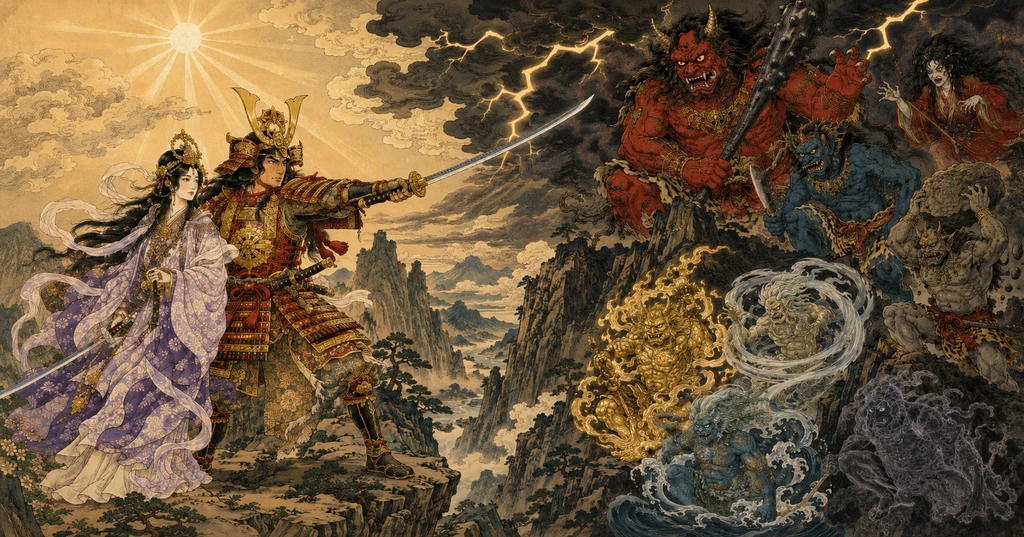
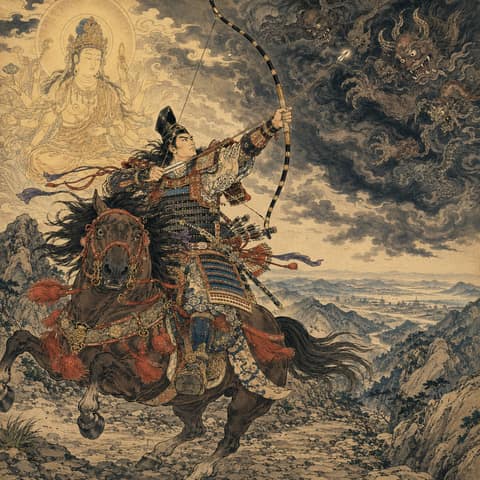
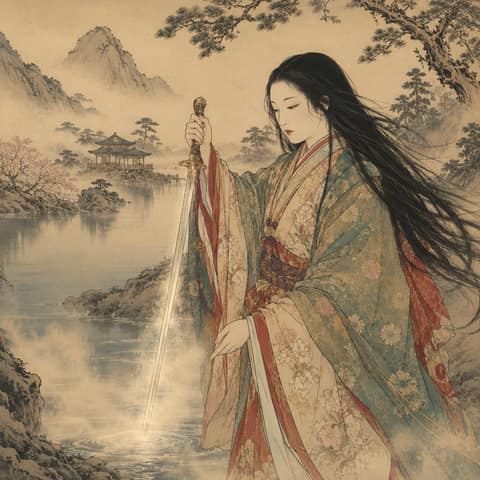
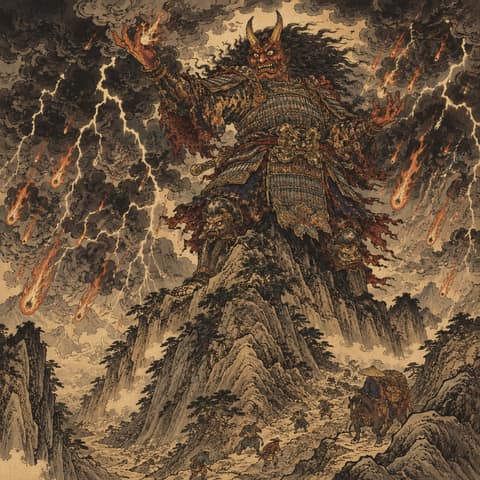
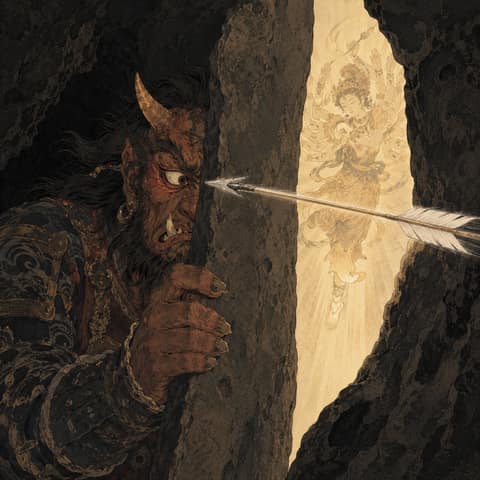
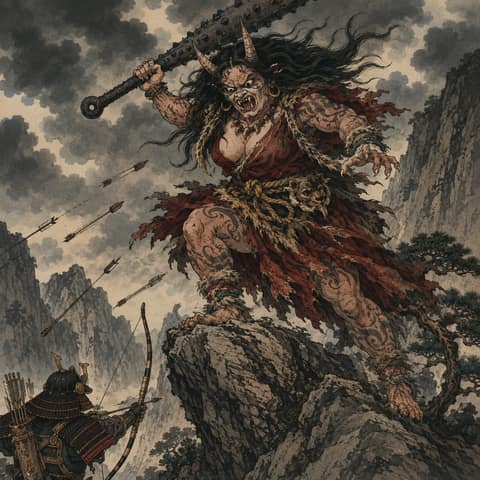
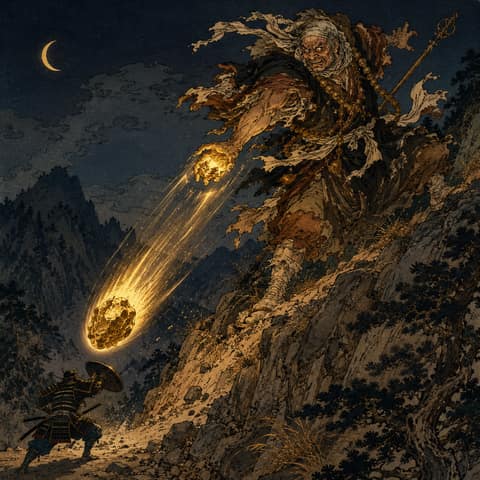
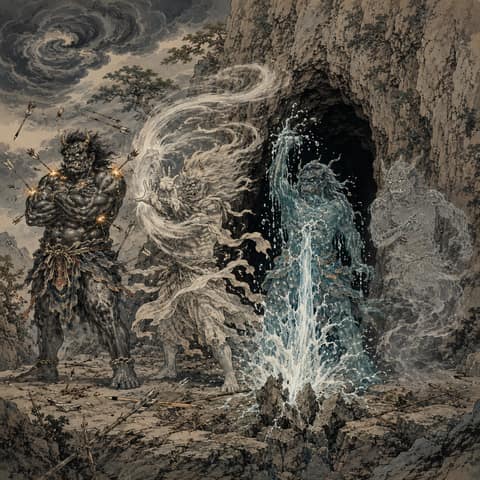
Maki-onna is a demon-woman figure found in temple chronicles and local histories around Ishinomaki, paired with the ogre Ōtakemaru of Mt. Nōgatake. While the slaying tales center on Ōtakemaru, she appears as his consort and later becomes an object of memorial rites and pacification. In the legend where General Tamura subdues various demons with a Kannon image attributed to Enchin and installs Kannon statues on each mountain, Makiyama preserves a tale of dedicating Maki-onna’s cut hair. Place-name and temple-name origin lore (Magiyama to Makiyama) and the transfer of Kannon images are recounted as religious history. Her concrete figure remains understated, yet she stands as a symbol of mountain dread fused with Kannon devotion. Anecdotes with strong fictional color are avoided, and some sources omit her entirely, showing the range of the tradition.
Character Profile
This section is our own creative profile for storytelling. It is not historical fact or scholarship.
Yokai Type - Traditional Yokai
Category - Demons & Giants
Rarity - Uncommon
Personality - vengeful, taciturn, bound to the mountains
Compatibility - averse to human settlements, associated with sacred mountain domains
Abilities - repelling people from the mountains with oppressive presenceemitting uncanny noises at midnightravaging the surroundings through spiritual might
Weaknesses - Buddhist law and Kannon’s protection, the general’s prayers and memorial rites
Habitat - Makiyama in Ishinomaki City Miyagi Prefecture, the Mt. Nōgatake region and related legendary sites