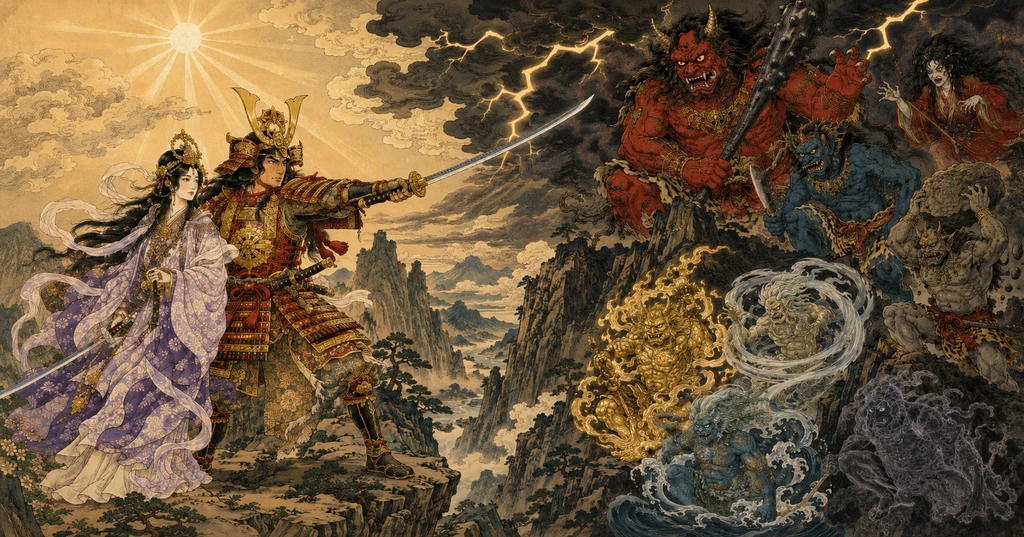
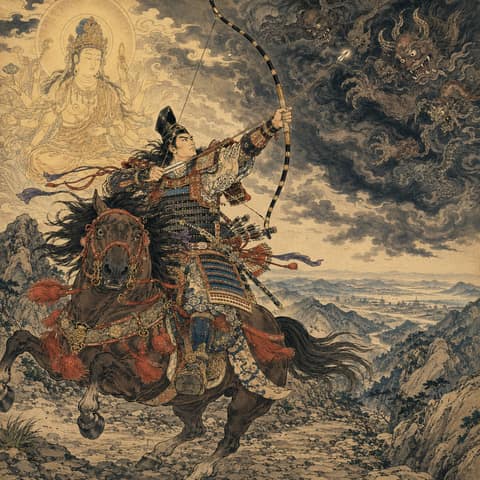

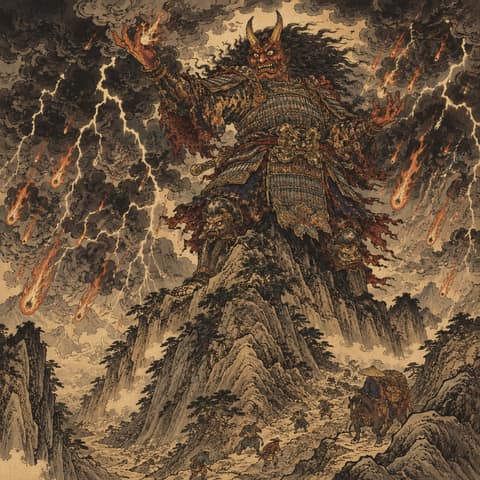
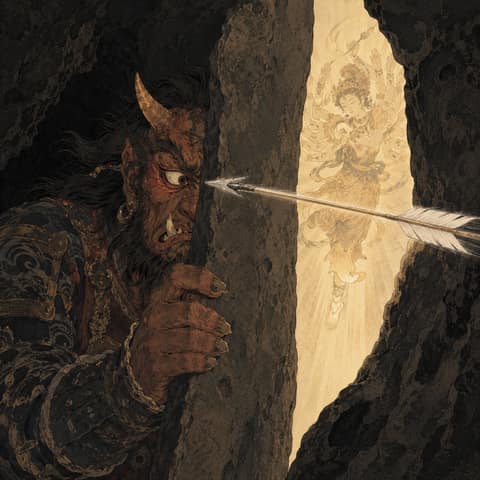
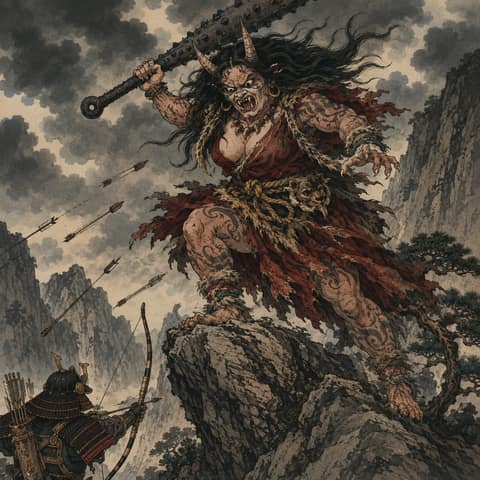
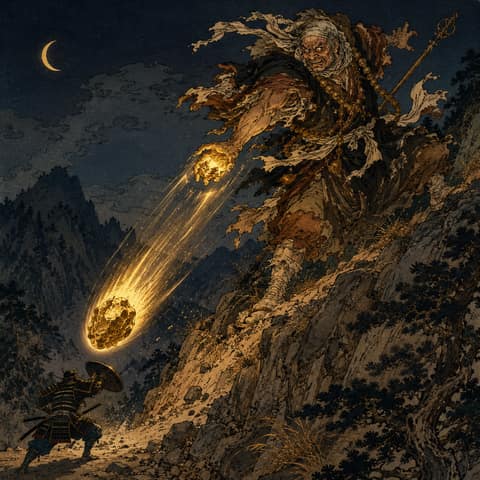
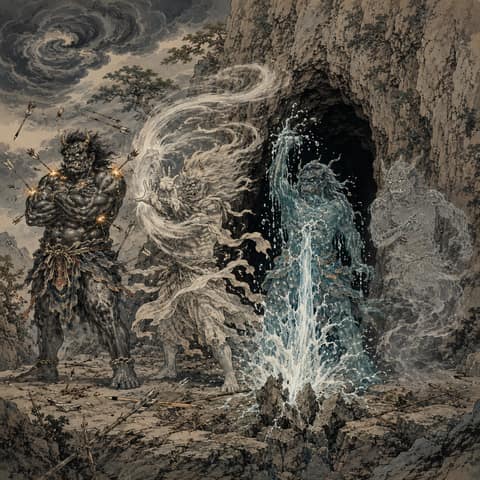
A compiled variant portraying the ogre-general aspect of Kanekira Shika within Tamuramaro-style oni-slaying tales along the Kumanonada coast. He is said to have ruled from the ogres’ sea-eroded cavern known as the Demon’s Rock Dwelling, commanding a band of oni to disrupt maritime routes. In the clash with Tamuramaro, he feared Kannon’s protection, tightened his wards, and barred the stone door to endure a siege. Entranced by the dance led by a child avatar of Senju Kannon, he peered through the doorway and was fatally shot in the left eye. After his defeat, the head was buried in a ravine and ritually pacified. Local lore sometimes names him the pirate chief Tagamaru, with traces preserved in temple-shrine origin tales and toponyms such as Mamigashima, Tomari Kannon (Seimizu-dera), Ōma Shrine, and Onimoto. Historicity is uncertain; some see memories of suppressing revolts or local powers in Kumano later recast into Tamuramaro legend, yet all survive as narrative tradition.
Character Profile
This section is our own creative profile for storytelling. It is not historical fact or scholarship.
Yokai Type - Traditional Yokai
Category - Demons & Giants
Rarity - Uncommon
Personality - bold, cunning, deeply suspicious
Compatibility - sea caves, rocky shores, rough surf
Abilities - leading raids along the coastraising wards and fortifying a sea cave strongholdimmense strength and leapingnight vision and scent-based tracking
Weaknesses - Buddhist law and Kannon’s protection, exposing himself incautiously at the doorway, precise long-range archery
Habitat - Kii Province, Onigajō (Demon’s Rock Dwelling), Kumanonada coast, waters around Mamigashima