
FunayūreiThe Dan-no-ura Funayūrei That Ask for a Teigo
funayūrei
Detailed Description
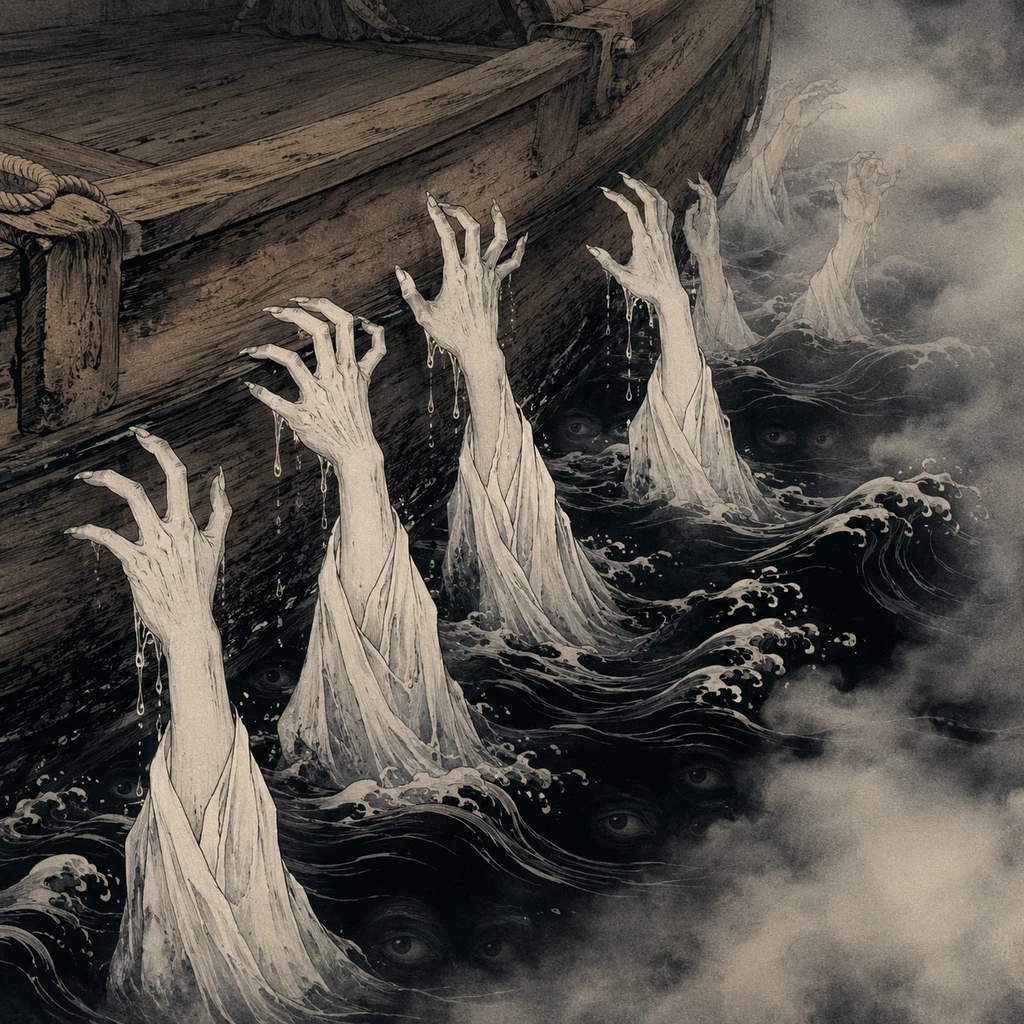
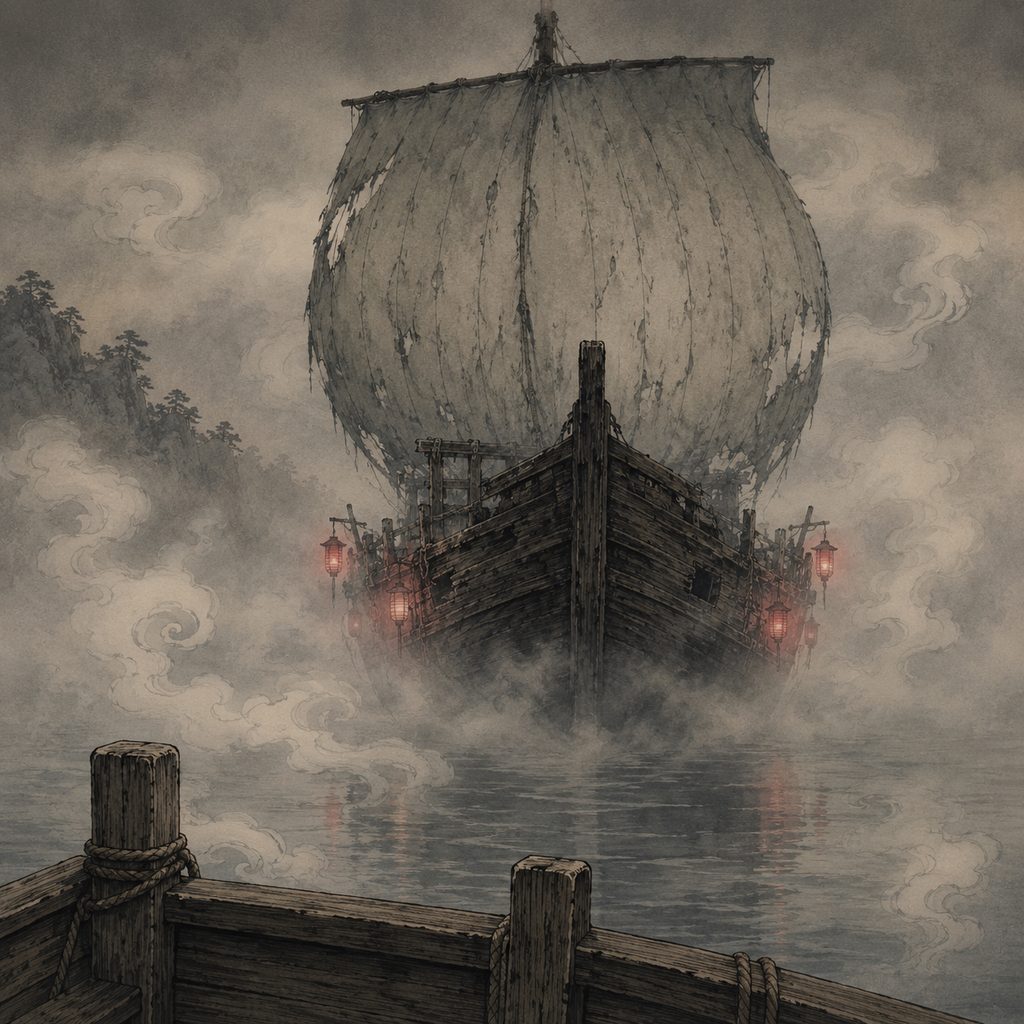
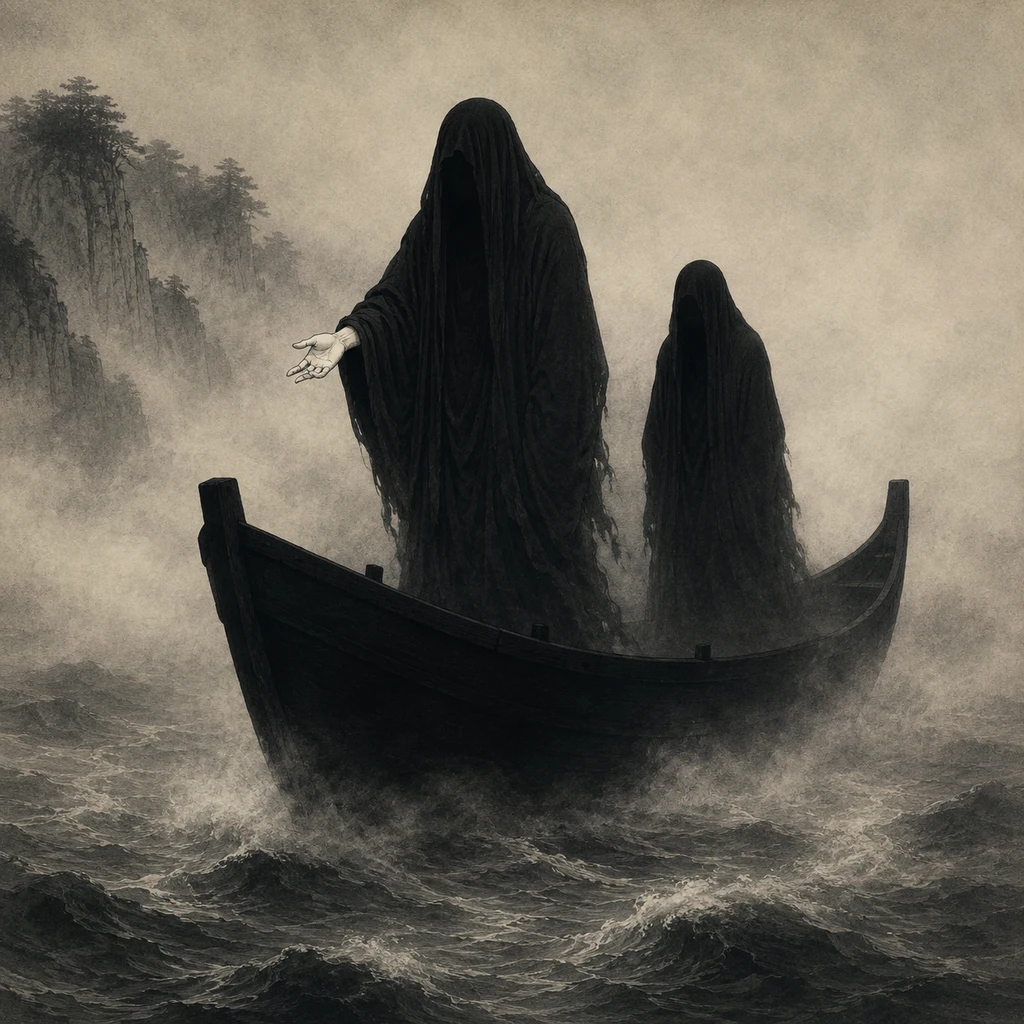
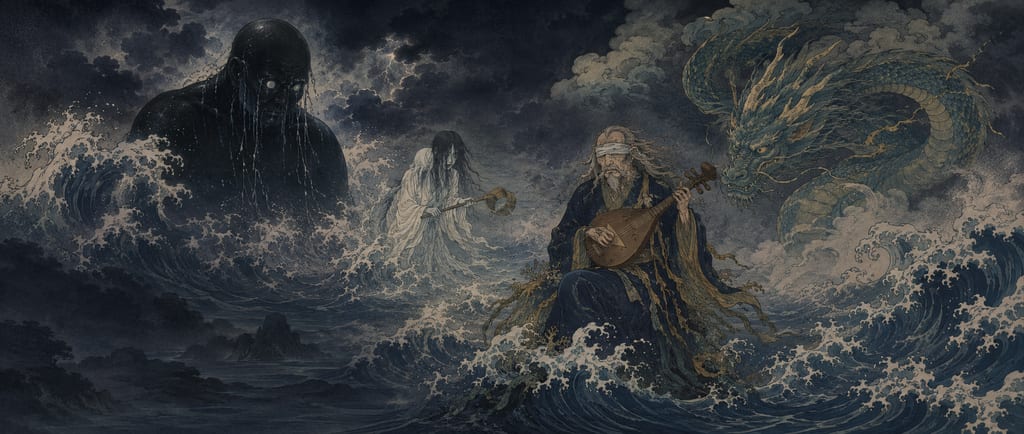
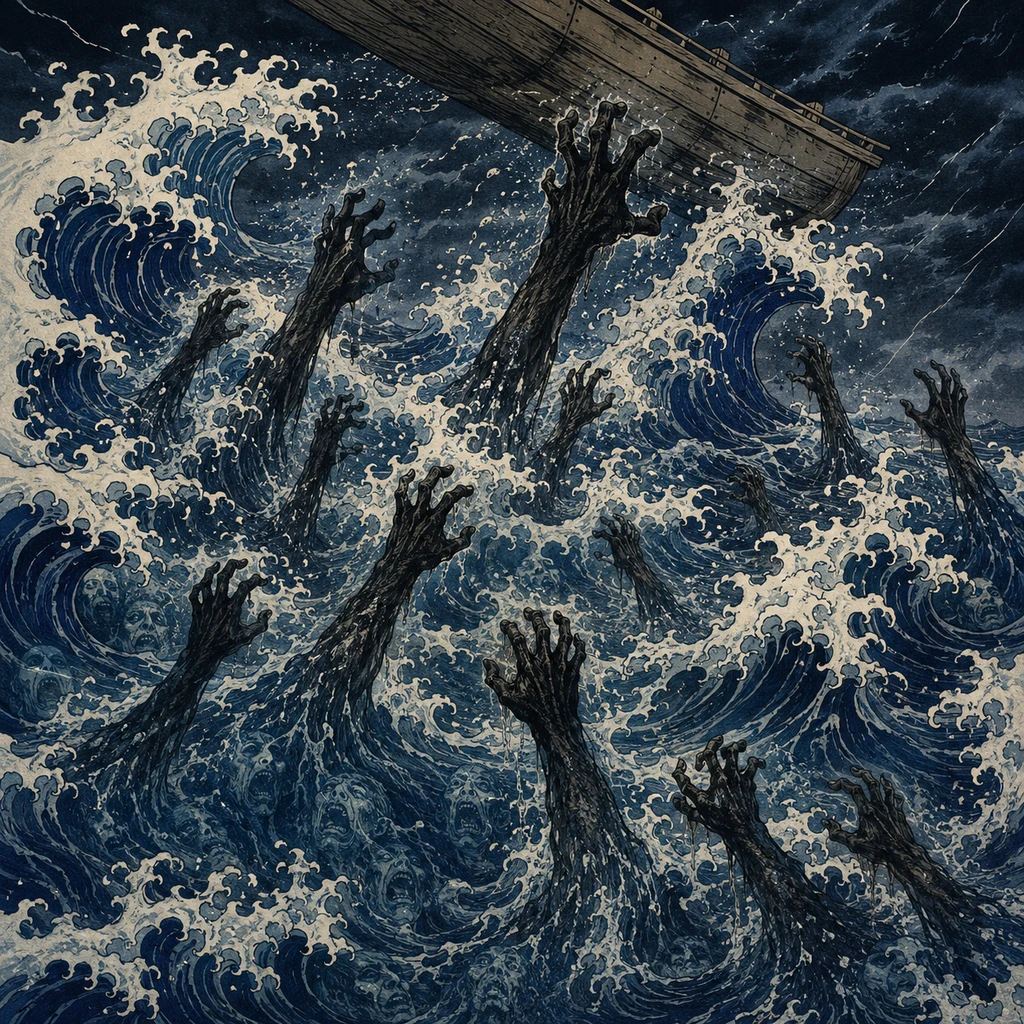
The Funayūrei of Dan-no-ura are said to be the shades of the Taira who sank in the Battle of Dan-no-ura. On misty nights where currents meet in the western sea, they draw alongside a boat with water streaming from their armor and quietly ask for a teigo—a hisage, or handled pouring vessel. Their faces are white, their eyes reddened by salt, and their voices hoarse, yet their words still preserve the etiquette of the warrior class. They keep the order of their former battle lines even at sea: one spirit calls out first, then countless hands seize the planks together.
If the bowl or ladle they receive has an intact bottom, they use it to pour seawater into the boat until it sinks without a sound. People who crossed these waters therefore pierced the bottoms of such vessels in advance and kept them tied beside the rail. When the ghosts accept one, the water runs straight through, and their rancor disperses with the tide. If a monk holds a memorial service and chants sutras, the silhouettes of their jingasa dissolve into the sea mist and the clink of armor chains returns to the sound of the waves.
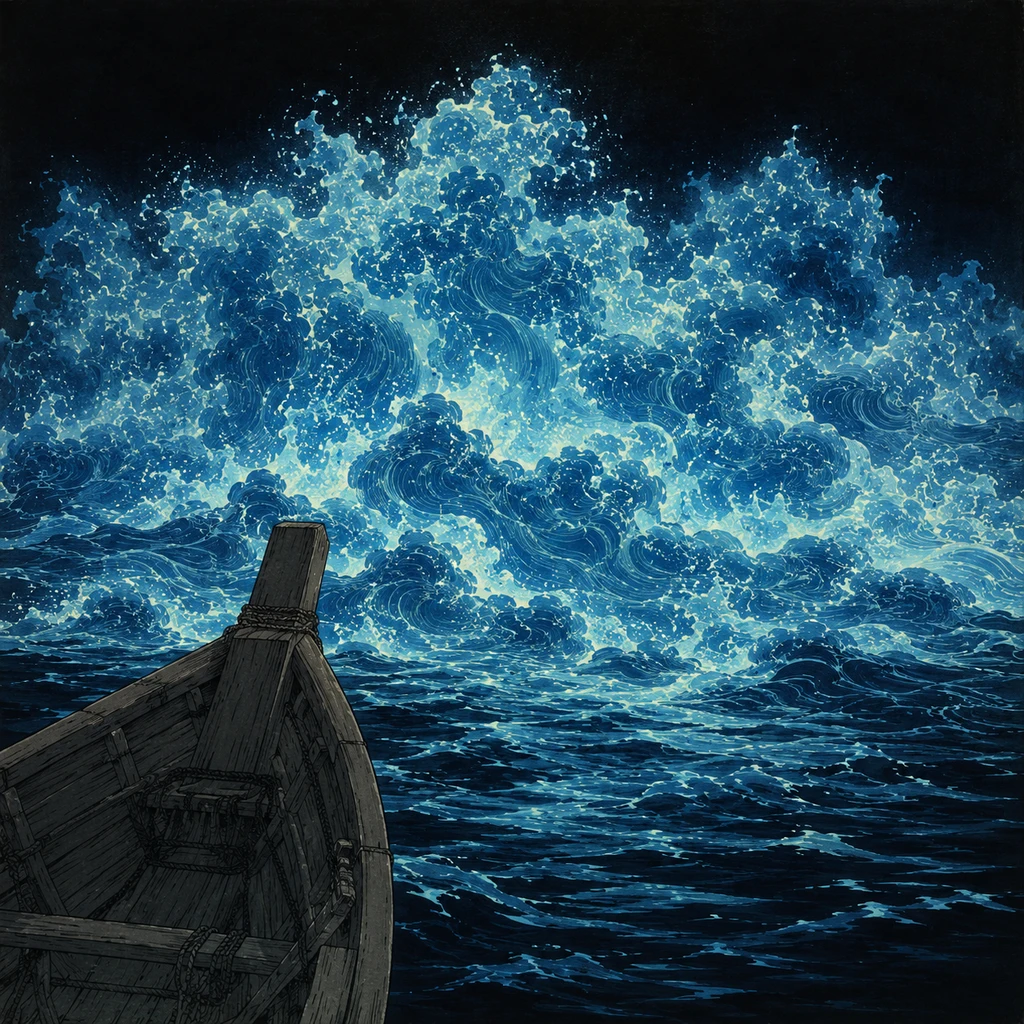
They do not attack everyone without cause. The stories bring them closest to people who ignore maritime custom or arrogantly treat the sea with contempt, as if the dead meant to impress the memory of the Taira defeat upon the living. On the sixteenth day of Bon, during the equinoctial weeks, or on an anniversary of the battle, the quieter the sea becomes, the nearer the tread of armor seems. Ghost lights line the water like watchfires, reproducing the fleet of long ago. Ash, rice cakes, fragrant flowers, and dumplings can soften their fixation. Cast from the bow, an offering may bring back a single wave like the sleeve of a shirabyōshi dancer and push the vessel onward.
Some accounts say an unflinching stare can also make them withdraw. Elders explain that this is not a contest of will: when the living truly face the dead, the stagnant resentment begins to loosen. Yamaoka Genrin described apparitions as a congealing of ki; here, soot-dark grievance takes shape upon the current. When the wind changes, sutras sound, and offerings sink, that loosened force scatters back into the sea. These Funayūrei are therefore not creatures of terror alone. Remembrance can bring them rest.
A child's outline sometimes appears among their ranks. Its voice is finer still, and it asks for no water; it only hooks small fingers over the rail. If the faint bells of armor can be heard, the crew should steady the helm, take the Hayatomo current at an angle, and send a murmured nembutsu into the wind. The battle-dead adrift in the western darkness yield only to proper rites and compassion.
Source Information
種類全体の出典reference
絵本百物語(桃山人夜話)
種類全体の出典primary
今昔画図続百鬼「逢魔時」
著者: 鳥山石燕
年代: 安永8年(1779)
出版社: 江戸東京博物館所蔵・国文学研究資料館国書データベース
Personality
Grievance and courtesy coexist in them. Their requests retain the manners of warriors, but their hands cling relentlessly to the gunwale; deep resentment can still be eased by offerings and memorial rites.
Compatibility
Sailors who respect maritime custom, and monks or travelers willing to remember the dead, have the best chance of calming them.
Abilities & Skills
Weaknesses
Bottomless bowls or ladles make their bailing useless; sutras, memorial prayers, fragrant flowers, rice cakes, and ash disperse their resentment; an unflinching encounter between the living and the dead makes their forms difficult to sustain.
Collection Inclusion
This yokai is included in the following collections:
Famous Yokai | Japan's Most Iconic Yokai, Oni, and Monsters
A guide to Japan's famous yokai like Oni, Kappa, Tengu, and Yuki-onna. Discover their origins through classics, folklore, art, and modern culture.
今昔画図続百鬼|鳥山石燕が描く雨・晦・明の妖怪
鳥山石燕『今昔画図続百鬼』(1779年)の特徴、雨・晦・明の三巻構成、収録妖怪を原典に沿って紹介します。
Japanese Sea Yokai|Apparitions of Ships, Shores, and the Deep
Explore Japanese sea yokai including Umibōzu, Funayūrei, Iso-onna, Nure-onna, Shiranui, Amabie, Bake-kujira, and Isonade through place and folklore.
診断評価
妖怪バウンダリー・タイプ指標
いたずら濃度
3.0high: 戯 low: 護
📝 メモ
提子や柄杓を求め、渡されると船を沈めようとする
変化適応
2.0high: 化 low: 定
📝 メモ
怪火、潮霧、複数の亡霊として姿を揺らす
夜話度
3.0high: 夜 low: 昼
📝 メモ
霧深い夜の潮目や港口に現れる
情の深さ
3.0high: 縁 low: 境
📝 メモ
平家一門の死霊として無念と供物作法に強く縛られる
結界強度
3.0high: 律 low: 流
📝 メモ
関門海峡と壇ノ浦という合戦死者の境界海域に結びつく
表舞台圧
2.0high: 表 low: 影
📝 メモ
壇ノ浦で甲冑姿の霊が列を組み船縁へ迫る
妖怪相性診断
喜び
0.5喜びと楽しさの程度
📝 メモ
喜びの感情は伝承に乏しく、哀魂としての出現が中心
怒り
7.5怒りの激しさの程度
📝 メモ
沈没や首締め、強要(ひしゃくを貸せ)など怨念的攻勢が強い
慈悲深い
2.5慈悲深さの程度
📝 メモ
供養や供物で退く余地はあるが、自発的な慈悲より怨念と鎮魂要請が前面
憂鬱
7.0憂鬱で思慮深い程度
📝 メモ
未供養の水死者としての悲哀・未練が基層にあると解釈される
静寂
2.0内なる平静の程度
📝 メモ
出現は時化や霧に伴い騒擾的で、平静さは低い。供養後に退く静まりはある
いたずら好き
1.0いたずら好きで活発な程度
📝 メモ
悪戯というより実害志向。迷わせ沈める行為は戯れではない
やさしい
1.5やさしく親しみやすい程度
📝 メモ
基本は海難を招く死霊で人に優しく接する描写は稀。供養や作法で退くが主体的な親和性は低い
厳格
6.5厳格で真面目な程度
📝 メモ
禁忌・作法の遵守を強く要求し、破ると罰を与える存在として語られる
守護的
3.0他者を守る傾向
📝 メモ
直接は加害的だが禁忌や安全航行を促す『戒め』の機能が民俗的にあるため低めに加点
神秘的
8.5神秘的で不思議な程度
📝 メモ
霧・怪火・幻視・迷走など強い異界性と多様な姿をとる点が極めて神秘的
霊性の深さ
8.0精神的境界の深さ
📝 メモ
鎮魂・供養・盆の観念や海上儀礼と深く結びつき、名称や対処法の多様性も霊的厚みを示す
Similar Yokai
Yokai with similar personality and characteristics to The Dan-no-ura Funayūrei That Ask for a Teigo
Opposite Yokai
Yokai with opposite personality and characteristics to The Dan-no-ura Funayūrei That Ask for a Teigo
🔮Test your compatibility with Funayūrei now!
Analyze your personality and values to get a detailed compatibility rating with this yokai.
Free, simple, and results in just minutes.