
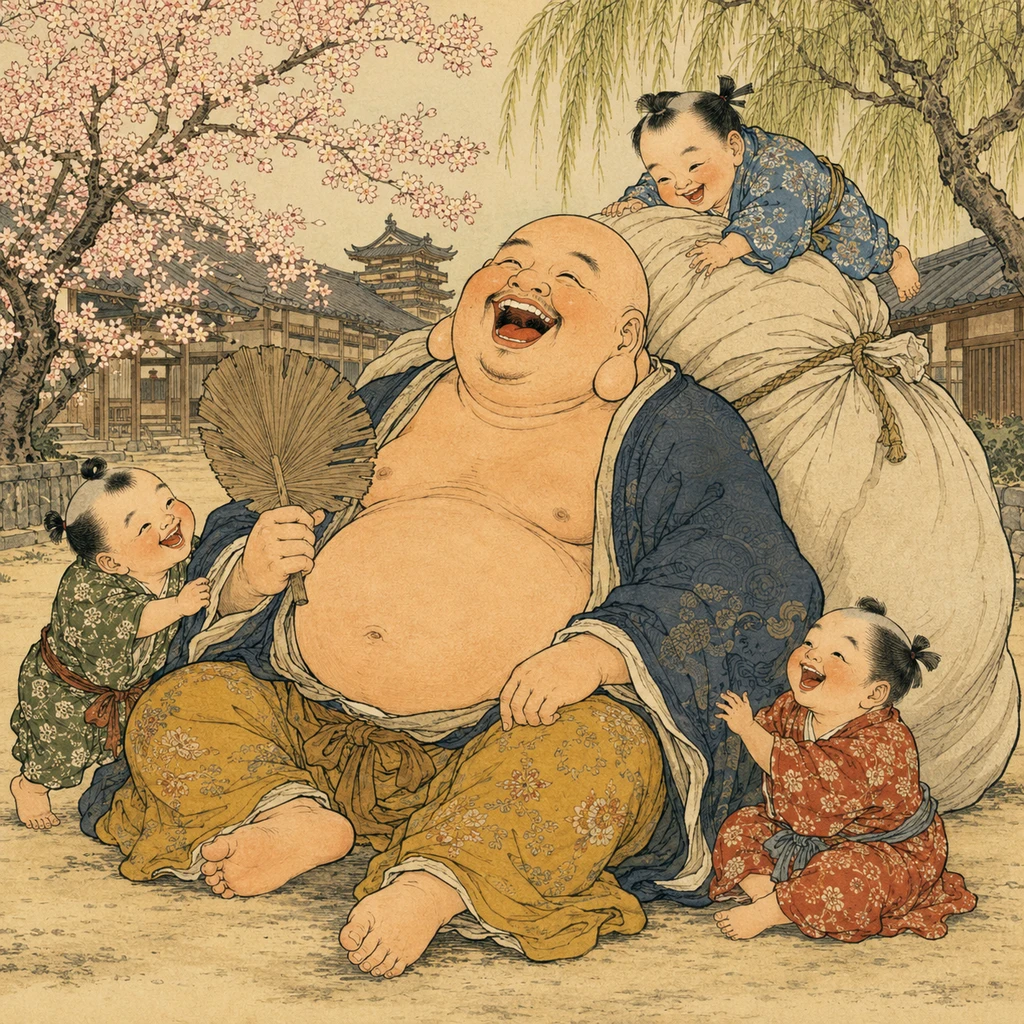
HoteiIncarnation of Maitreya, the Laughing Monk, Hotei
ほてい
Detailed Description
The origin of Hotei is the historical Zen monk Qici (died 917) of the late Tang and Five Dynasties period[1]. Fascicle 27 of the *Jingde Record of the Transmission of the Lamp* (1004) compiled by Daoyuan of the Northern Song provides an independent biography of him, which serves as the fundamental source of the Hotei lore. He is also recorded in fascicle 21 (Section on Miracles) of the *Song Biographies of Eminent Monks* (988)[2] compiled by Zanning, which notes his origin as Fenghua County, Mingzhou (now Fenghua District, Ningbo City, Zhejiang Province), but reports his secular surname and birth year as unknown. His physical appearance was described as short and stout with a bulging belly and deep wrinkles on his forehead. He always roamed the streets carrying a cloth sack (a monk's alms bag or large knapsack), remained warm even when lying in the snow, stored whatever food he begged for in his sack, and was skilled in divination and prophecy. It is said that in the third month of the second year of Zhenming of the Later Liang dynasty (916), he sat on a rock at Yuelin Temple in Fenghua and passed away after reciting the verse: "Maitreya, the true Maitreya, present in billions of forms, continually manifesting to the people of the time, yet the people of the time do not recognize him." Based on this deathbed verse, he became revered as an incarnation of Bodhisattva Maitreya[1]. In subsequent Chinese Buddhism (especially Zen), the image of Hotei as Maitreya became firmly established, giving rise to the custom of enshrining a large-bellied seated Maitreya statue (Maitreya in the form of Hotei) at the main gates and Heavenly King Halls of temples. From the Song dynasty onwards, he was overwhelmingly favored as a subject of ink painting in China, heavily depicted by monk-painters of the Yuan dynasty (such as Yintuoluo and Meng Yujian) and Zen artists. His introduction to Japan accompanied the arrival of Zen Buddhism during the Kamakura period[3]. Monks who traveled to Song and Yuan China brought back Zen paintings (by artists like Muqi and Yintuoluo), and Japanese monk-painters of the late Kamakura and Nanboku-cho periods (such as Mokuan, Ryozen, and Mokudo Shoei) emulated these to establish a lineage of Hotei imagery unique to Japan. By the late Muromachi period, when the Zen monks and artists of the Higashiyama culture[4] (such as Noami, Soami, and Sesshu) formalized the Seven Lucky Gods motif, they incorporated Hotei alongside the previously imported Fukurokuju and Jurojin, combining them with the already localized Ebisu, Daikokuten, Bishamonten, and Benzaiten to form the "Seven Deities of Fortune and Virtue." Entering the Edo period, he became deeply entrenched among the common people as a member of the Seven Lucky Gods Treasure Ship prints[5] and New Year's first-dream pictures, frequently appearing in the woodblock prints of Katsushika Hokusai, Utagawa Kuniyoshi, and Tsukioka Yoshitoshi. His iconographic features—the bulging belly, large sack, and hearty laugh—symbolize in Chinese tradition that "obesity = broad tolerance and a well-rounded personality" and "large sack = the virtue of endlessly giving what is needed despite owning nothing." He represents a unique archetype of "Zen non-attachment as a blessing," distinct from the Daoist deities of longevity (Fukurokuju, Jurojin), martial deities (Bishamonten), and indigenous gods (Ebisu, Daikokuten). In the various Seven Lucky Gods pilgrimages of Edo/Tokyo (such as Yanaka, Asakusa, Nihonbashi, and the Sumida River), the pilgrimage sites are often Zen, Obaku, and Soto sect temples, which have drawn profound devotion from commoners praying for fertility, business prosperity, marital harmony, and good fortune through laughter. Furthermore, Yuelin Temple still exists today in the Fenghua District, and is honored as the "Ancestral Court of Maitreya," being the site of Hotei's birth and passing.
Source Information
種類全体の出典primary
景徳伝灯録
著者: 道原 (北宋·禅僧)
年代: 1004
出版社: 北宋·勅命纂修
種類全体の出典reference
七福神信仰の整理
著者: 近世~現代の民俗·宗教研究
年代: 近世以降
出版社: 通俗百科·民俗学整理
種類全体の出典primary
宋高僧伝
著者: 賛寧 (北宋·律僧)
年代: 988
出版社: 北宋·勅命纂修
種類全体の出典reference
東山文化と七福神画の成立
著者: 室町後期·禅林·画僧
年代: 15 世紀後半
出版社: 足利義政期文化圏
種類全体の出典primary
鎌倉期禅宗渡来と禅画請来
著者: 日本中世仏教史·美術史研究
年代: 鎌倉期 (13 世紀)
出版社: 入宋僧·入元僧経由の禅文化伝入
Personality
An easygoing demeanor, walking the streets with his bulging belly exposed, laughing heartily, and carrying a single large sack on his back. Possessing neither anger nor greed, a disposition that simply gives and simply laughs.
Compatibility
Highly compatible with those wishing to fill their homes with laughter and tolerance, those wanting to run a business with care, and those praying for fertility and marital harmony. He also answers those who wish to let go of tension and anxiety.
Abilities & Skills
Weaknesses
Incompatible with prayers rooted in solemnity and asceticism (such as Shugendo or austerities). Fundamentally unresponsive to prayers that incite anger or competitiveness.
診断評価
妖怪バウンダリー・タイプ指標
いたずら濃度
-3.0high: 戯 low: 護
📝 メモ
笑門来福と分け与えの徳を持つ弥勒の化身
変化適応
2.0high: 化 low: 定
📝 メモ
実在禅僧から弥勒化身・七福神へ変容する
夜話度
-2.0high: 夜 low: 昼
📝 メモ
笑門来福の福神で、夜怪ではない
情の深さ
1.0high: 縁 low: 境
📝 メモ
市井の人々に福を分けるが、執着ではなく慈悲
結界強度
-2.0high: 律 low: 流
📝 メモ
大袋一つで市井を歩く無所有の漂泊性が強い
表舞台圧
2.0high: 表 low: 影
📝 メモ
大袋を背負い市井を歩き破顔大笑する目立つ福神
妖怪相性診断
喜び
10.0喜びと楽しさの程度
📝 メモ
「破顔大笑」「笑門来福」を体現する、喜びと福の象徴
怒り
0.0怒りの激しさの程度
📝 メモ
怒りや競争心を煽る祈願には応えない、完全な非暴力の存在
慈悲深い
10.0慈悲深さの程度
📝 メモ
弥勒仏としての無限の慈悲を地上で実践し、人々に福を分け与える
憂鬱
0.0憂鬱で思慮深い程度
📝 メモ
常に笑い、何ものにも囚われないため憂鬱さとは無縁
静寂
9.0内なる平静の程度
📝 メモ
雪中に臥しても平然とする、禅僧・弥勒菩薩としての深い内面の平静
いたずら好き
7.0いたずら好きで活発な程度
📝 メモ
市井を歩き子供と戯れるような、堅苦しさのない自由な振る舞い
やさしい
10.0やさしく親しみやすい程度
📝 メモ
万人に分け与える無所有の徳を持ち、極めて親しみやすい
厳格
1.0厳格で真面目な程度
📝 メモ
厳粛・禁欲・苦行を旨とするあり方とは対極にある大度量
守護的
7.0他者を守る傾向
📝 メモ
子宝や商売繁盛、夫婦円満を通じて庶民の生活を穏やかに守護する
神秘的
7.0神秘的で不思議な程度
📝 メモ
未来を予言し、雪中でも暖を保つなどの不思議な逸話を持つ
霊性の深さ
9.0精神的境界の深さ
📝 メモ
弥勒菩薩の化身とされ、深い禅の境地に至っている
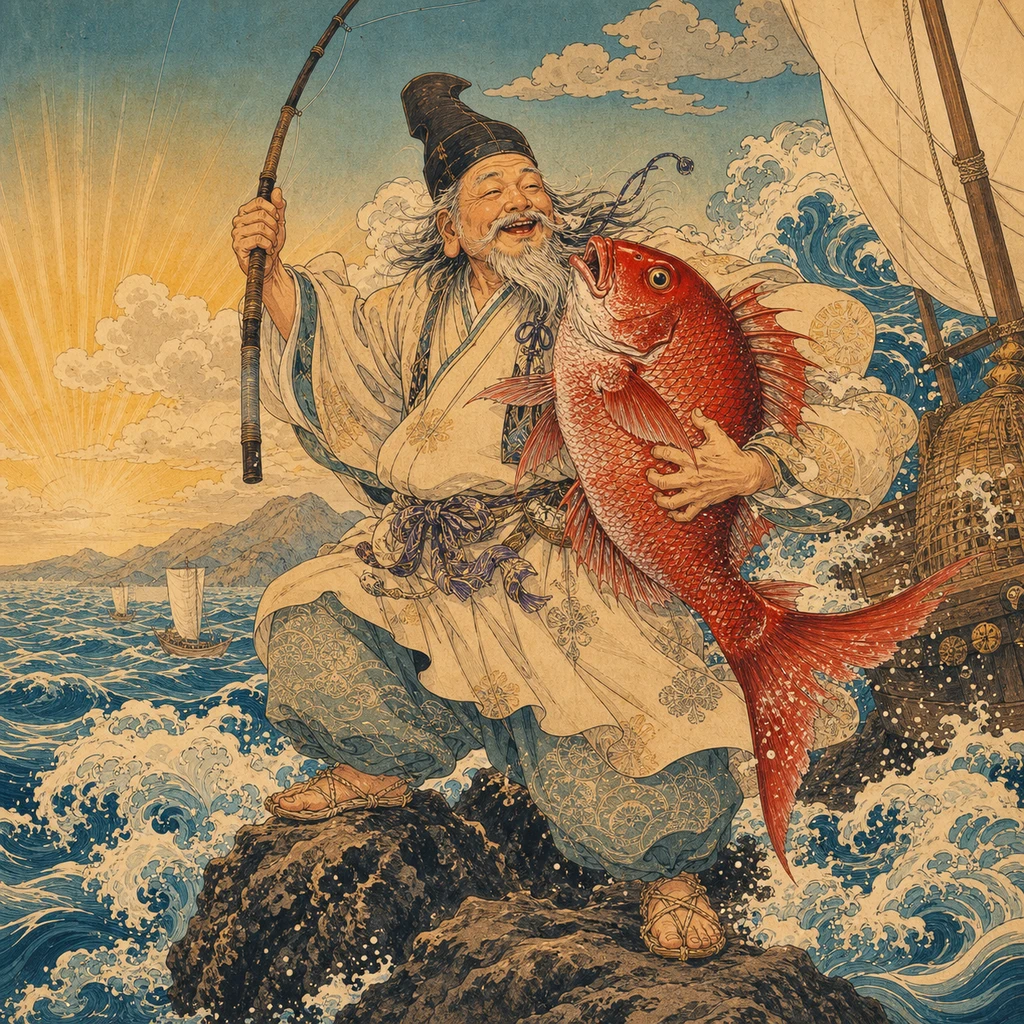
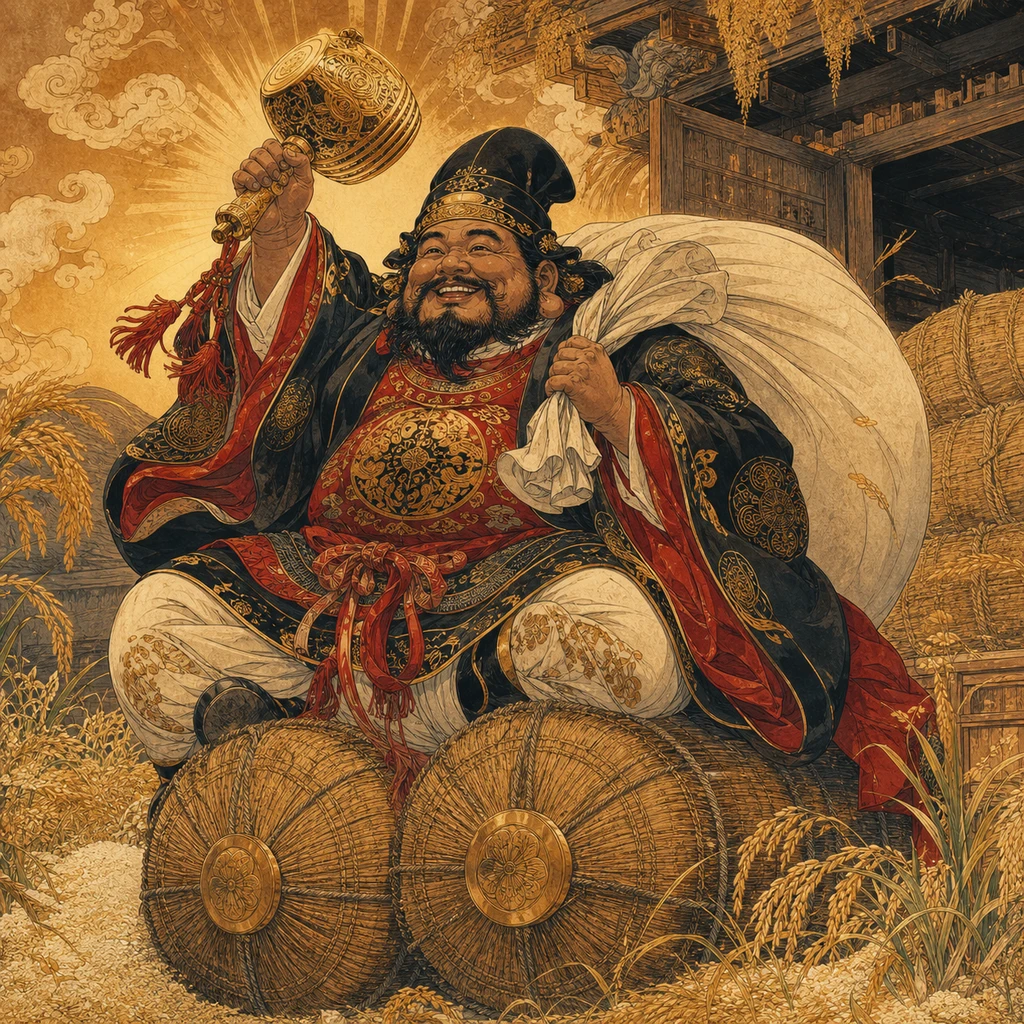
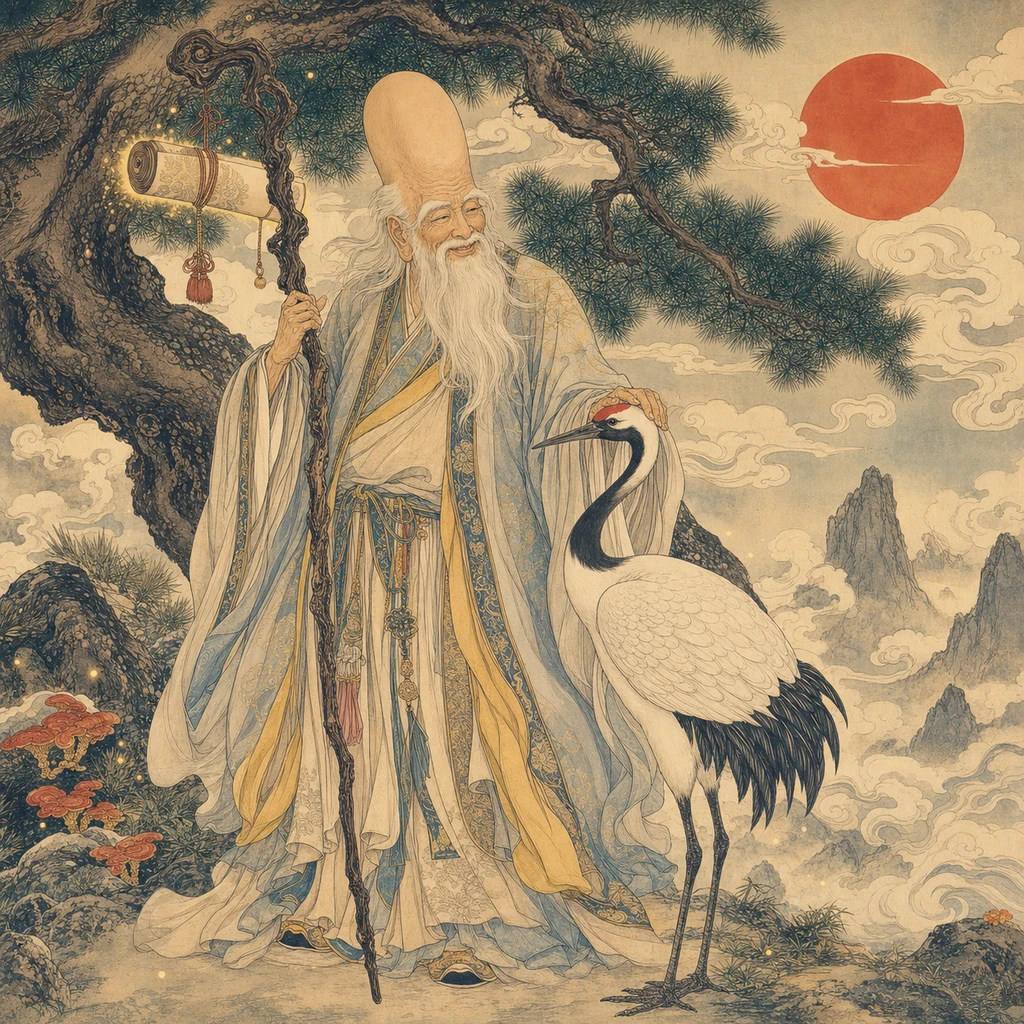
Similar Yokai
Yokai with similar personality and characteristics to Incarnation of Maitreya, the Laughing Monk, Hotei
Opposite Yokai
Yokai with opposite personality and characteristics to Incarnation of Maitreya, the Laughing Monk, Hotei


🔮Test your compatibility with Hotei now!
Analyze your personality and values to get a detailed compatibility rating with this yokai.
Free, simple, and results in just minutes.