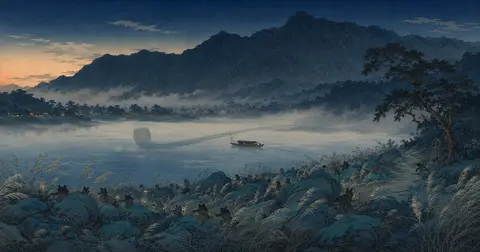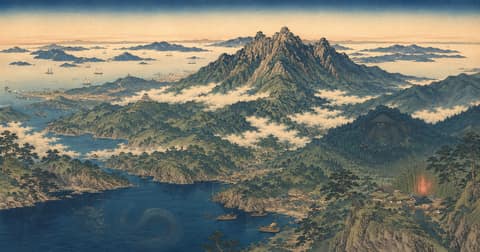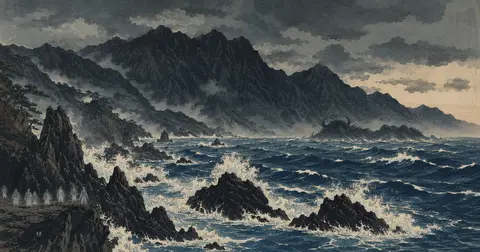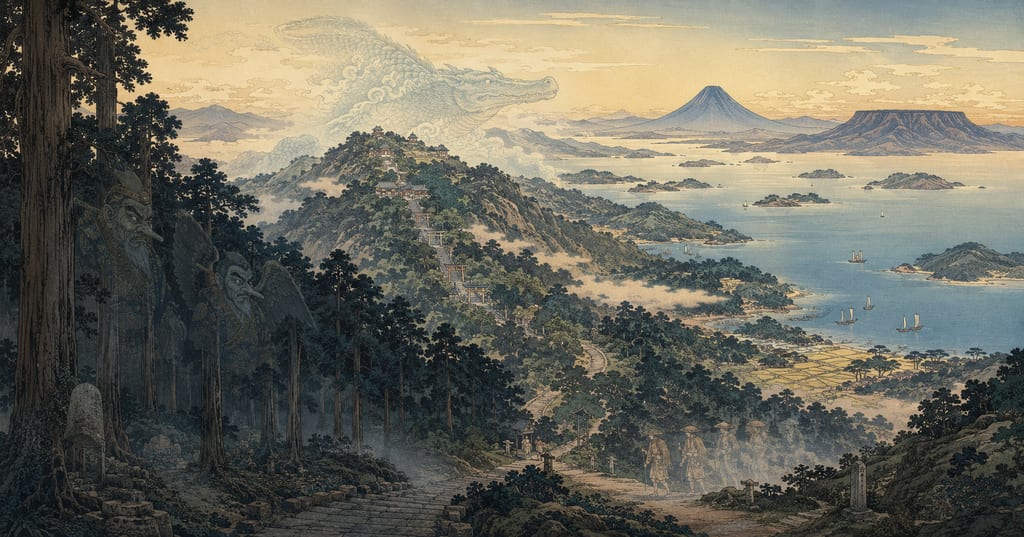
With the calm waters of the Seto Inland Sea and the gentle slopes of Sanuki Fuji, Kagawa Prefecture—situated in northeastern Shikoku—is the smallest prefecture in Japan. Yet, blessed with a warm climate and little rain, it has long stood as a vital crossroads of the maritime routes connecting the Kinai region with western Japan. The sailors of the Shiwaku Islands controlled the Setouchi sea lanes, while travelers making the Konpira pilgrimage disembarked at the port of Marugame to journey inland. Beneath this tranquil and open landscape, however, this land harbors some of the most profound spiritual mysteries in all of Japan.
Resting in the mountain mausoleum of Shiramine is Emperor Sutoku, counted alongside Sugawara no Michizane and Taira no Masakado as one of Japan's Three Great Vengeful Spirits (*Onryo*). The rocky shores of Yashima are haunted by the lingering souls of the Heike clan who perished in the Genpei War, the long approach to Konpira echoes with the prayers of seafarers, and the legends of the Ushioni and wandering phantoms cling to the place names and temples of Goshikidai and the pilgrimage routes to this day. The single thread running through Sanuki's yokai culture is the memory of the sea and those who washed ashore. An emperor stripped of his throne and exiled, a warrior clan defeated in battle and sunken in the sea, a foreign deity who crossed the ocean—all the spiritual mysteries of this land were born against the backdrop of the Seto Inland Sea, a corridor of water. This article will trace Kagawa's yokai one by one, starting from the great vengeful spirit of Shiramine, moving to the sea of Konpira, the Heike of Yashima, and finally the villages and pilgrimage routes of Sanuki.
The Great Vengeful Spirit of Shiramine:
Emperor Sutoku and Shiramine Sagamibo
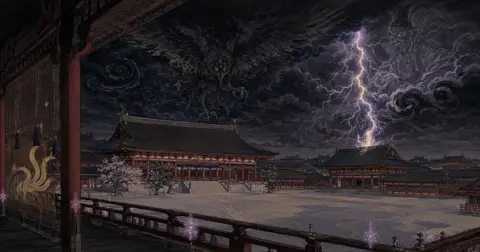
When speaking of the spiritual mysteries of Kagawa, one must first return to Shiramine. Deep in the mountains of Shiramine—one of the peaks of Goshikidai that looks down upon the Seto Inland Sea, north of Sakaide City—lies the only imperial mausoleum in Shikoku: the Shiramine Mausoleum. Resting within this tomb, managed by the Imperial Household Agency, is Emperor Sutoku, counted alongside Sugawara no Michizane and Taira no Masakado as one of the Three Great Onryo of Japan[1]. Why did a peaceful mountain in Sanuki become the site of Japan's most formidable vengeful spirit? The answer lies in the tragic destiny forced upon a single emperor.
Emperor Sutoku
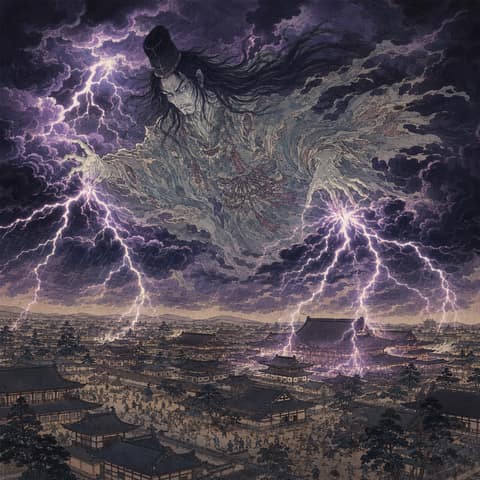
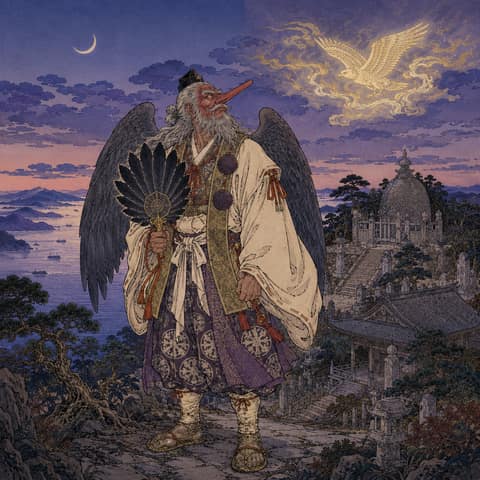
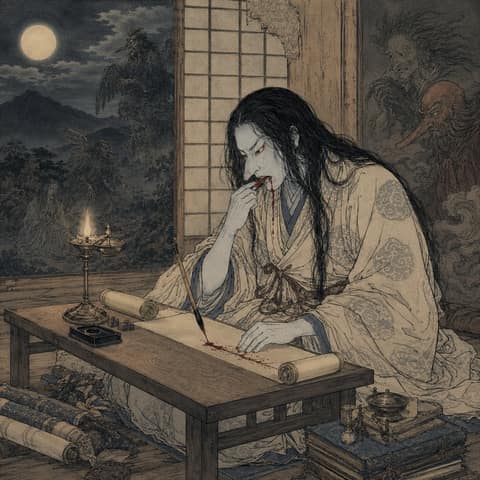
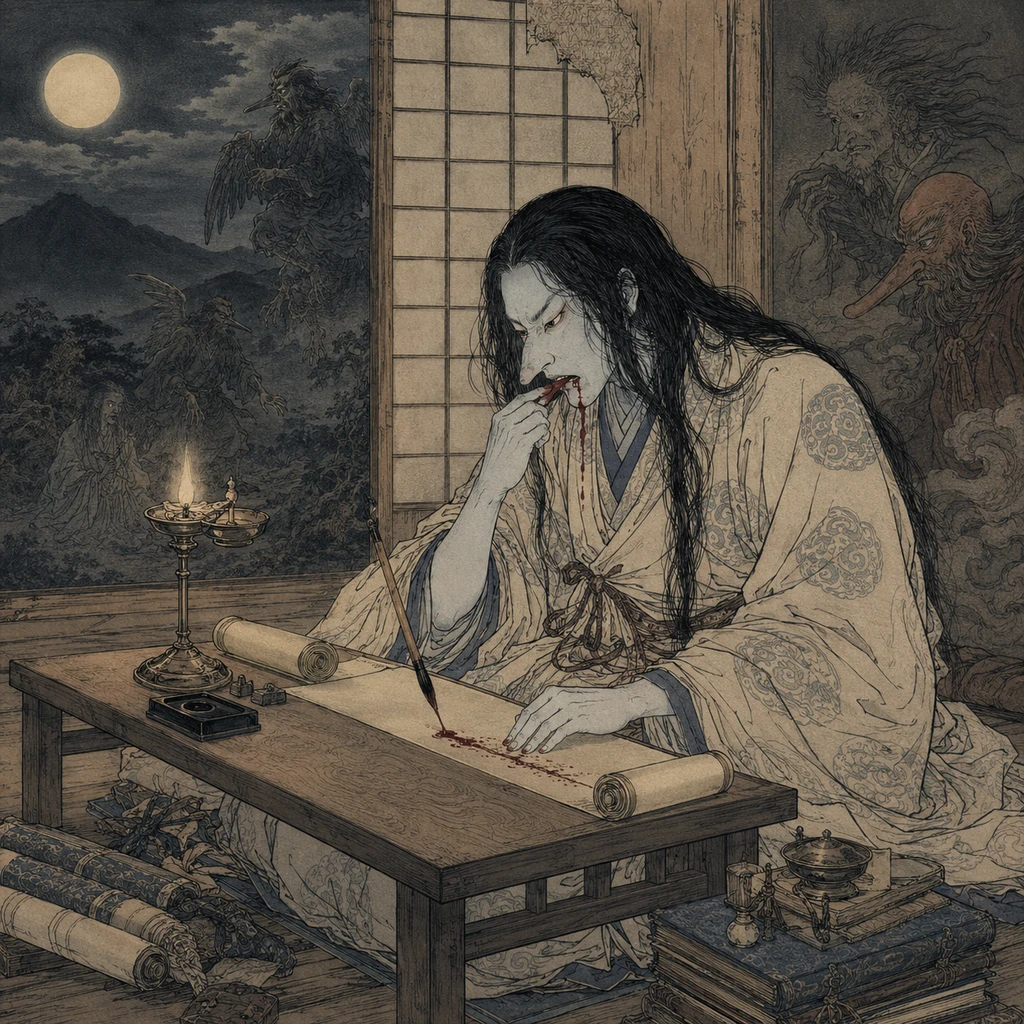
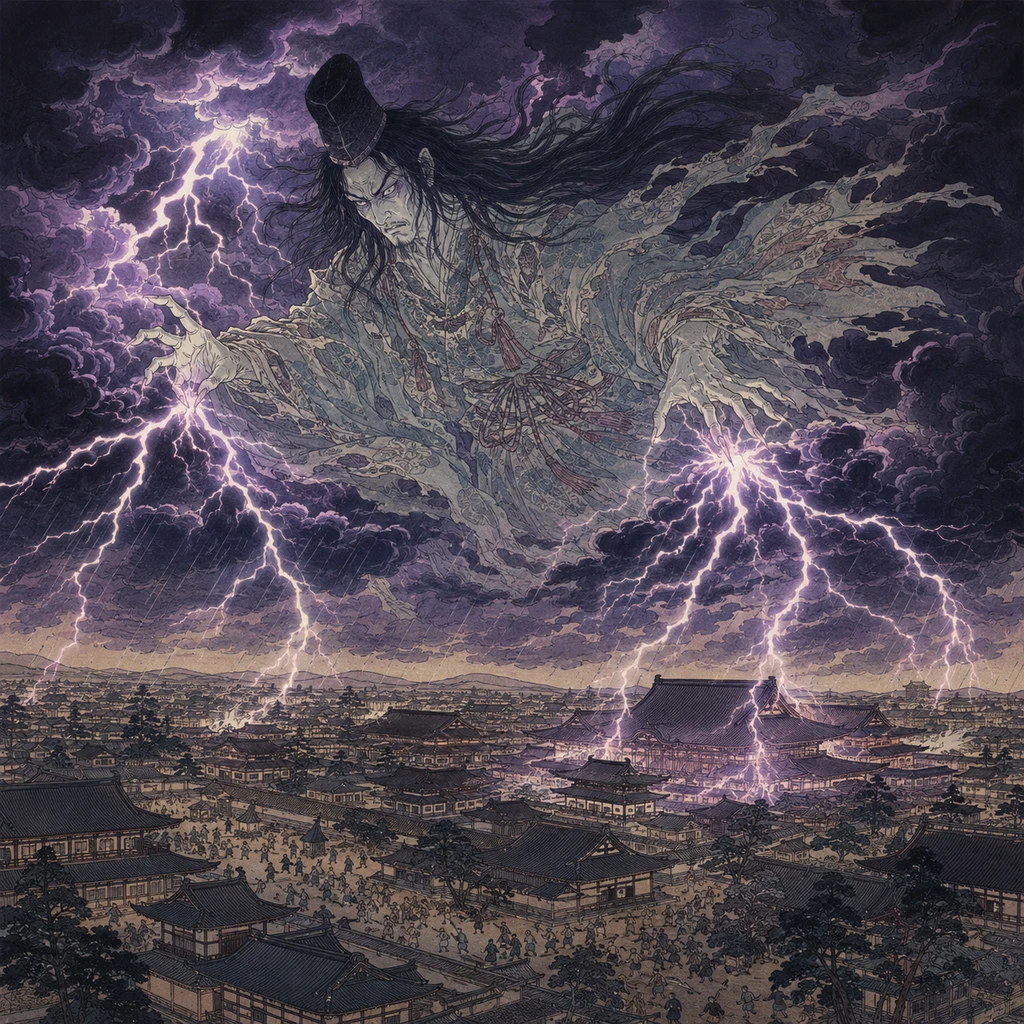
Emperor Sutoku was the seventy-fifth emperor of the late Heian period; defeated in the Hōgen Rebellion and exiled to Sanuki, he died in bitterness, and was thereafter dreaded as the most powerful vengeful spirit and Great Tengu of Japan. Among the "Three Great Vengeful Spirits of Japan," ranked beside Sugawara no Michizane and Taira no Masakado, he is often spoken of as the mightiest. Born as the son of Emperor Toba, he was dogged by the rumor that he was in truth the son of his grandfather, the cloistered emperor Shirakawa—the "uncle-child" (ojigo)—and was shunned by Toba. Though enthroned at the age of three, he was forced to abdicate at twenty-three without ever grasping the power of cloistered rule, and in the first year of Hōgen (1156) his conflict with his younger brother Emperor Go-Shirakawa came to armed clash as the Hōgen Rebellion. Sutoku's side, which mustered Minamoto no Tameyoshi and Taira no Tadamasa, was defeated in a night attack by Go-Shirakawa's side, which mustered Taira no Kiyomori and Minamoto no Yoshitomo; Sutoku was exiled to Sanuki and, never permitted to return to the capital, ended his life in the second year of Chōkan (1164). The legend that, enraged when his sutra-copies made in exile were rejected by the court, he bit off his tongue and wrote a curse in blood, and—cutting neither nails nor hair—turned into a tengu, is what made Sutoku a yokai and a vengeful spirit. After his death, whenever the realm fell into disorder it was feared as his curse, and the court labored to pacify him through renaming and the building of shrines. His vengeful spirit is depicted even in the famous tale of the uncanny in Ueda Akinari's Ugetsu Monogatari.
Read moreSutoku was born in 1119 (Gen'ei 2) as the first prince of Emperor Toba, and ascended the throne at the tender age of five. However, under the cloistered rule of his grandfather, Retired Emperor Shirakawa, and later the intentions of his father, Retired Emperor Toba, he was distanced from actual political power and eventually forced to abdicate by his estranged father. Tensions surrounding the imperial succession and internal conflicts within the regent houses accumulated until they finally erupted into armed conflict in 1156 (Hogen 1)—an event known as the Hogen Rebellion. According to the *Hogen Monogatari*[2], a Kamakura-period war chronicle detailing the conflict, Retired Emperor Sutoku was defeated by Emperor Go-Shirakawa's faction and exiled to Sanuki. He would never set foot in the capital again, passing away in exile in 1164 (Chokan 2). For a reigning or former emperor to be exiled was an exceptionally severe punishment, unprecedented since Emperor Junnin in the Nara period.
The core of his vengeful spirit legend lies in the events that transpired during his exile. Praying for the expiation of his sins and peaceful repose in the next life, Sutoku spent three years meticulously hand-copying the Five Mahayana Sutras. He sent them to the capital, wishing for them to be enshrined in a temple there, at the very least. However, Retired Emperor Go-Shirakawa suspected the sutras were laden with curses and rejected them. Deeply despairing and enraged, Sutoku is said to have bitten off his own tongue and written with his flowing blood: "I shall become the great demon king of Japan, making the emperor a commoner and the commoner an emperor," and "I dedicate these sutras to the demonic path." Thereafter, he never cut his hair or nails, his appearance transforming into that of a fearsome Yaksha, and legends say he became a tengu while still alive. "Great demon king" (*Daimaen*) is a Buddhist term referring to a class of demons that delude the human heart.
When a series of disasters struck following Sutoku's death, they were entirely attributed to his curse. In 1177 (Angen 3), a massive fire burned the capital (the Great Fire of Taro), followed by armed protests from Enryaku-ji Temple, the Shishigatani Plot, and eventually the Jisho-Juei War, which led to the downfall of the Heike clan, the rise of the Minamoto clan, and the decline of the regent houses. All these upheavals were blamed on Sutoku's wrath. The imperial court hastened to pacify his spirit, changing his former title "Sanuki-in," named after his place of exile, to "Sutoku-in," and posthumously restoring the rank of Fujiwara no Yorinaga, who had also been defeated in the Hogen Rebellion. In 1184 (Genryaku 1), a shrine dedicated to Sutoku (later Awata-gu) was erected at the Kasuga riverbed in Kyoto, an old battlefield from the rebellion. The trajectory of Sutoku reversing from a "cursing emperor" to an "enshrined deity" perfectly mirrors the structure of Goryo (vengeful spirit) worship in the Heian capital. Because of the sheer intensity of his grudge, Sutoku was feared for generations as the foremost of the Three Great Onryo.
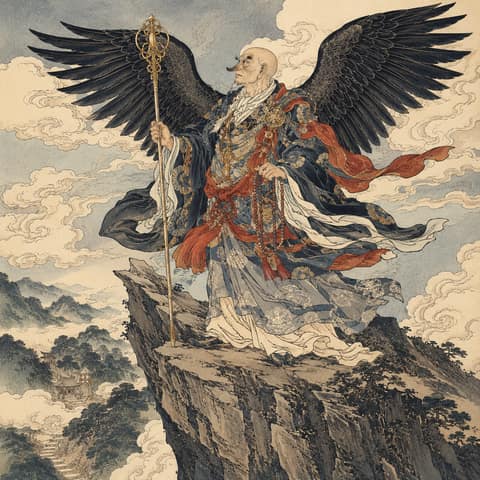
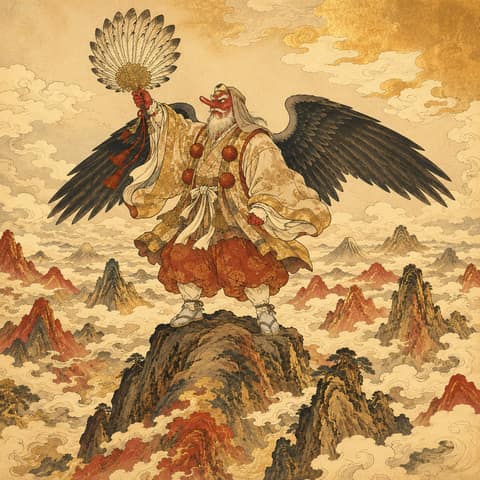
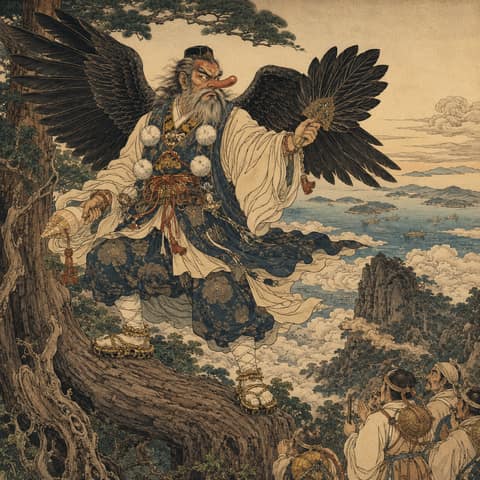
And on Mount Shiramine in Sanuki, there was a tengu who guarded this great vengeful spirit: Shiramine Sagamibo. Conceived as a great tengu who protected Sutoku's Shiramine Mausoleum and attended him, Sagamibo is counted among the nationally renowned Eight Great Tengu. Legend has it that his name derives from his flight to Sanuki from Sagami Province, though various theories exist regarding his origin without conclusive proof. By uniting with the highest-ranking vengeful spirit, Sutoku, Sagamibo transcended the status of a mere mountain tengu, attaining a special position as the guardian of a sacred site.
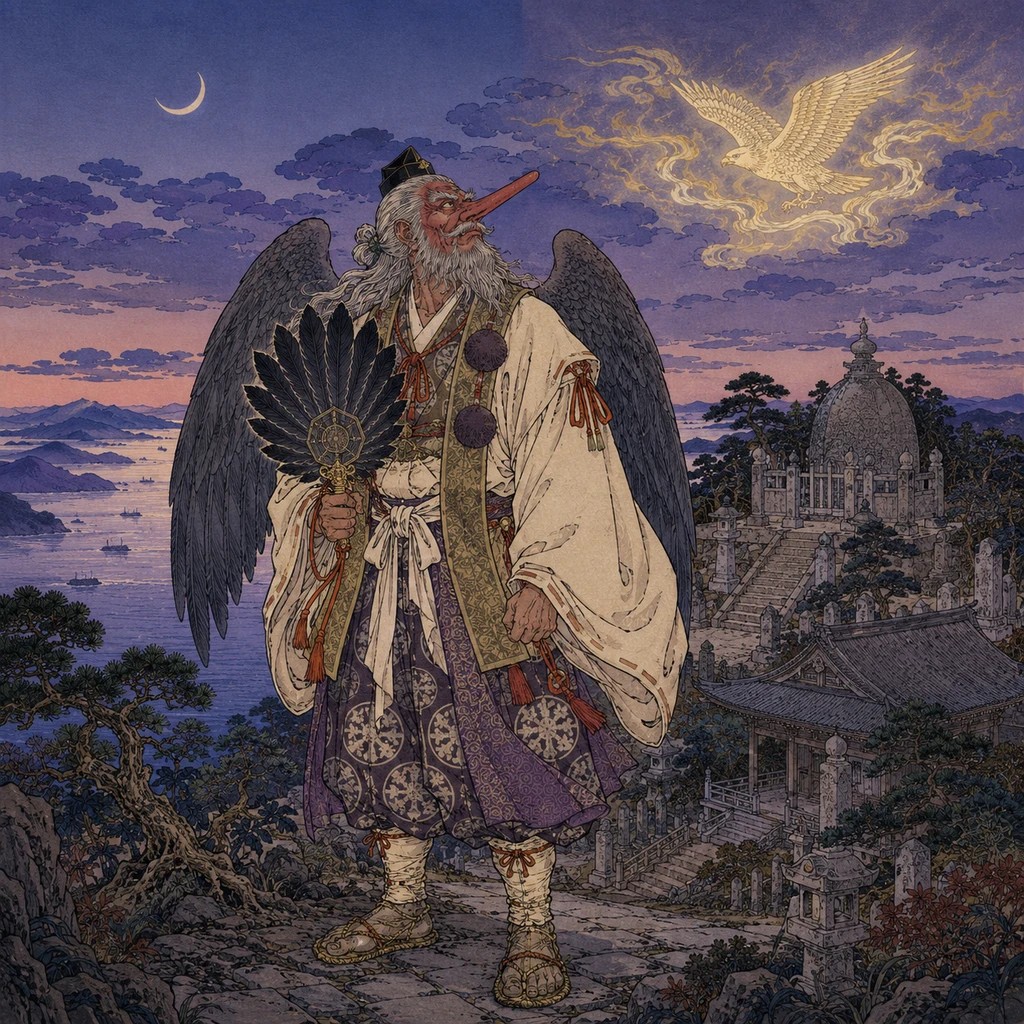
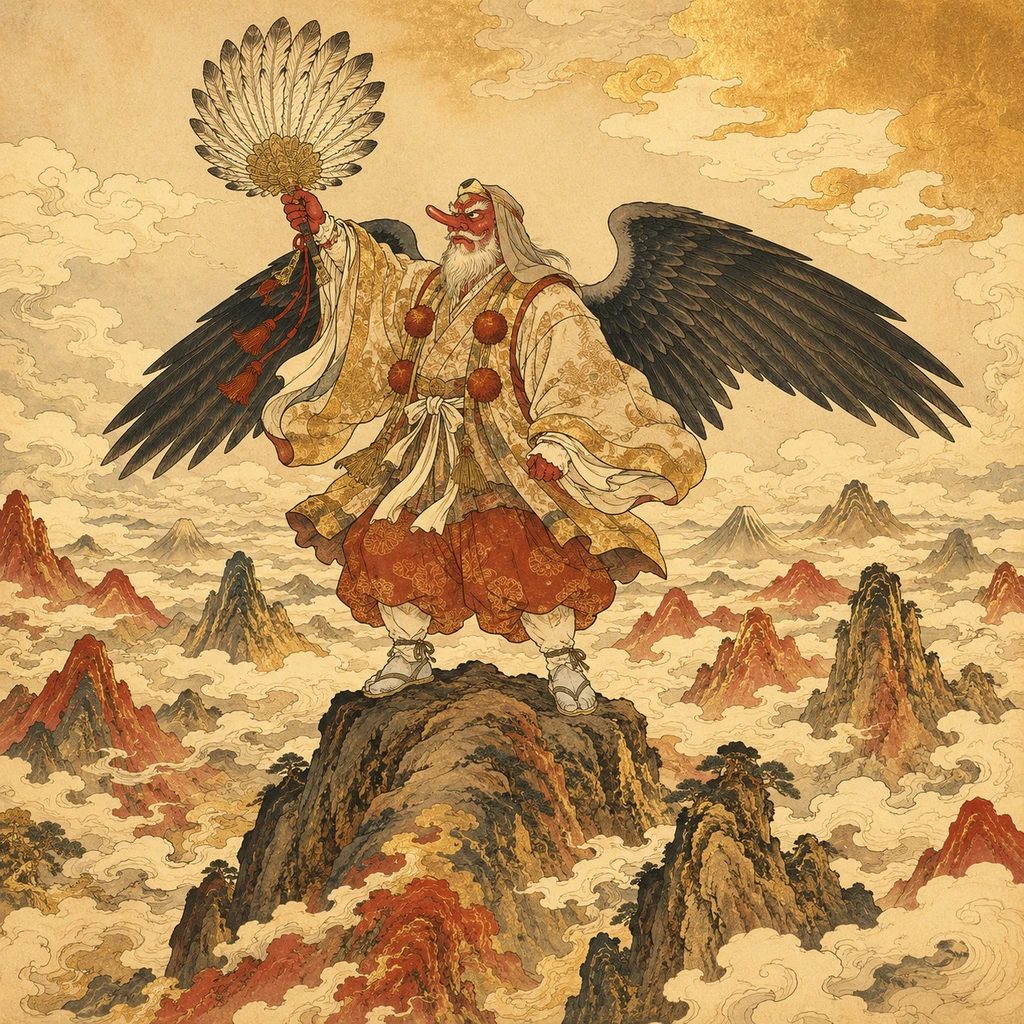
Sagamibo's figure was vividly crystallized in literature. The foundational text is the *Senjusho*[3], a mid-Kamakura collection of tales attributed to Saigyo, which includes a story in Volume One, "Concerning the New Emperor's Tomb at Shiramine," depicting the wandering monk Saigyo visiting Sutoku's grave. This was later dramatized in the Noh play *Matsuyama Tengu*[4], featuring Emperor Sutoku as the *shite* (protagonist) and Saigyo as the *waki* (supporting role), with Sagamibo appearing as the tengu serving Sutoku. The structure of pacification, wherein Sutoku's spirit is comforted by Saigyo's mourning, was fully realized on the Noh stage.
The theme of the vengeful spirit and the tengu was portrayed most strikingly in "Shiramine," the opening piece of Ueda Akinari's *Ugetsu Monogatari*[5]. A masterpiece of Edo-period supernatural fiction completed in 1776 (An'ei 5), it depicts the wandering Saigyo visiting the Shiramine Mausoleum to mourn Sutoku's spirit, engaging in a poetic dialogue with Emperor Sutoku, who emerges from the darkness. As Saigyo tries to comfort him with poetry, Sutoku fiercely argues about the righteous path of a king versus the path of a conqueror, spews his lingering resentment over the Hogen Rebellion, and finally reveals his true nature as the lord of the demon realm, declaring that both the era of the Heike and the Minamoto are the results of his curse. The harrowing conclusion, with the mountain trembling and flames roaring, became the core memory of Sanuki's mountain as the "sacred ground of vengeful spirits and tengu."
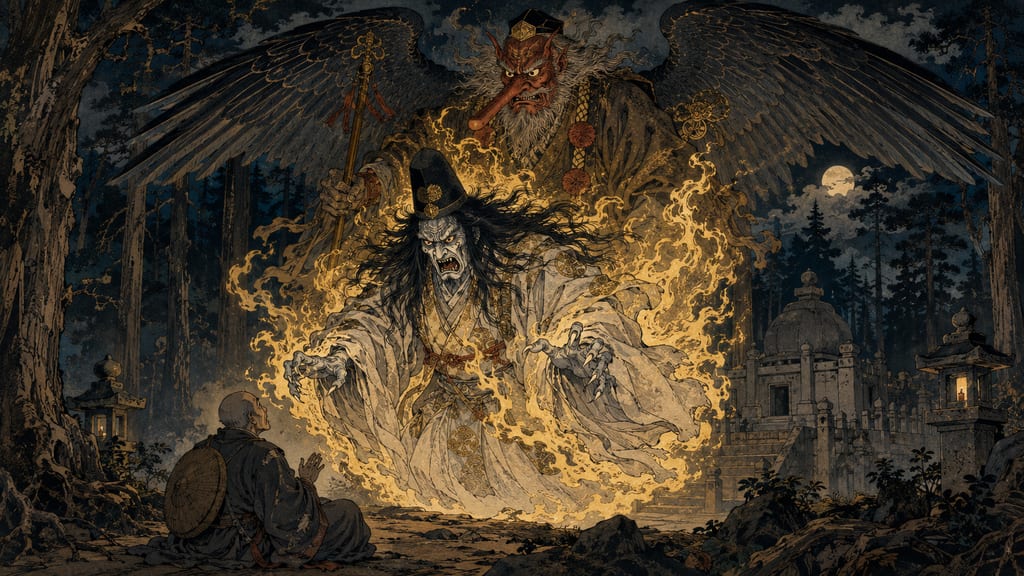
Sagamibo is a common figure tying together these tales of the Tengu of Shiramine continuously since the *Senjusho*.
Furthermore, the tengu here, while continuous with the image of mountain yokai spread across Japan, takes on a unique Sanuki aspect by associating with the specific vengeful spirit of Sutoku. While general archetypes of "what a tengu is"—such as the red-faced Hanataka Tengu, the bird-beaked Karasu Tengu, and the invisible Konoha Tengu—are distributed nationwide, the tengu of Shiramine has been told as the highest order of tengu tale: "an emperor's grudge transforming into a tengu." Sagamibo, who guards Sutoku's vengeful spirit, and the tengu that Sutoku himself is said to have become, are inextricably blended together at Shiramine.
The pacification of Sutoku remained a matter of state concern even into the Meiji era. In 1868 (Keio 4), upon his enthronement, Emperor Meiji specifically dispatched an imperial envoy to Sanuki, welcoming Sutoku's spirit back to Kyoto and founding the Shiramine Shrine. The fact that the grudge of a single exiled emperor had to be called back to the capital and pacified even after seven hundred years had passed is the greatest testament to how continuously Sutoku was feared as Japan's foremost vengeful spirit. The Tonshoji Hall, standing beside the Shiramine Mausoleum, still enshrines Sutoku's spirit today, drifting a quiet aura over the mountains of Sanuki alongside the legend of Shiramine Sagamibo.
The Sea of Konpira:
Konpira,
the Foreign Sea God
Descending from the mountain of vengeful spirits and heading toward the sea, we encounter another spiritual presence of Sanuki. This is Kotohira-gu Shrine, commonly known as "Konpira-san," enshrined halfway up Mount Zozu in Kotohira Town, Nakatado District. With branch shrines nationwide as the guardian deity of maritime traffic, and famous for its endless stone steps leading to the main shrine, the deity enshrined here is Konpira—a heterogeneous god who crossed the distant seas. If the vengeful spirit is one who "washed ashore," Konpira is a god who "crossed the sea"—both born from memories of the sea, highlighting a common undercurrent in Sanuki's spiritual mysteries.
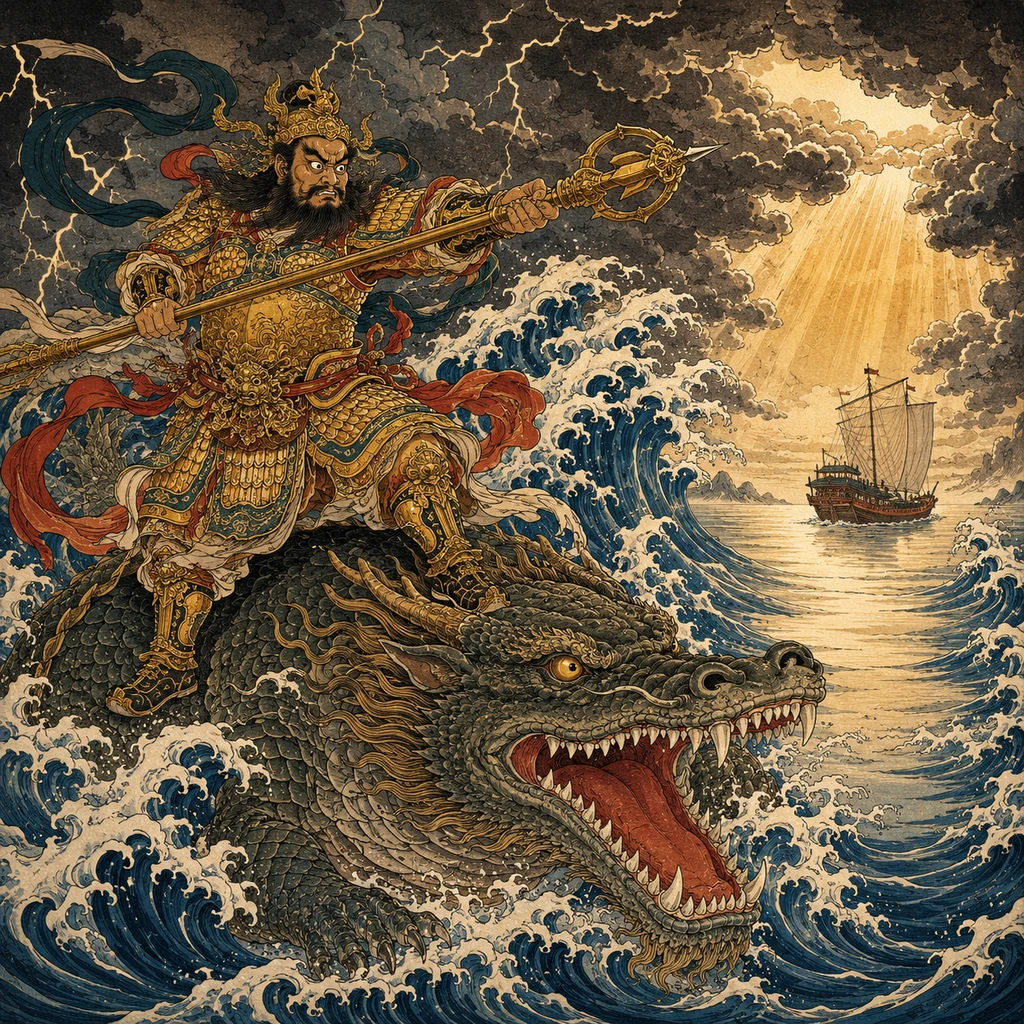
Konpira
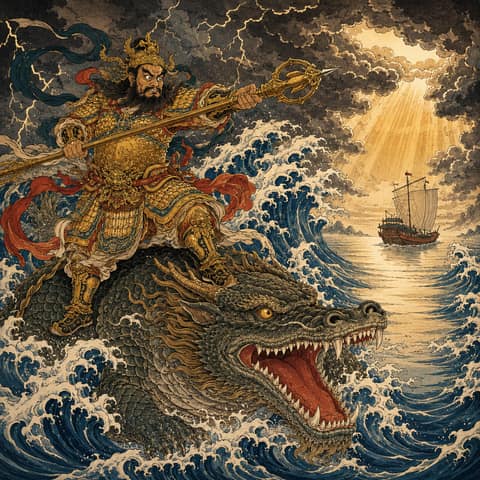
Originating from the Sanskrit Kumbhīra (a crocodile deity of the Ganges River), its divine nature is three-layered: integrated as Kumbhira, leader of the Twelve Heavenly Generals in Buddhism, and syncretized with Omononushi-no-Kami in Japan. By the late medieval period, it became unified as "Zozusan Konpira Daigongen," widely revered as the guardian deity of the sea. The head shrine, Kotohira-gu (located in Kotohira-cho, halfway up Mount Zozu), enshrines Omononushi-no-Mikoto, and Emperor Sutoku (1119-1164) as a secondary deity. During the Edo period, it formed the second largest pilgrimage boom nationwide, giving birth to cultures such as the folk song "Konpira Funefune" and Konpira dogs. With the Shinbutsu Bunri in 1868, it was renamed "Kotohira-gu," confirming Omononushi-no-Kami as the main deity. It is the symbolic deity of Sanuki, attracting immense faith from sailors for maritime protection.
Read moreThe original word for Konpira is the Sanskrit *Kumbhīra*, a water deity deified from the crocodiles inhabiting the Ganges River in ancient India[6]. In Hinduism, this crocodile god was the vehicle (*vahana*) of the Ganges goddess Ganga; it was later incorporated into Buddhism to become General Kubira, the head of the Twelve Heavenly Generals guarding Bhaisajyaguru (the Medicine Buddha), and was frequently depicted in Japan with a serpentine body. Under the medieval theory of *Honji Suijaku* (original enlightenment and local manifestation), General Kubira, enshrined as the guardian of Matsuo-ji Temple on Mount Zozu, was synchronized with the local god of the sea and agriculture, Omononushi no Kami (the harmonious spirit of Okuninushi), unifying as the "Zozusan Konpira Daigongen." Various theories coexist regarding the original Buddhist deity (*honjibustu*), including Acala (Fudo Myo-o), Sahasrabhuja (Senju Kannon), and Ekadasamukha (Juichimen Kannon); this multiplicity of origins speaks volumes to the depth of faith layered across seas and eras.
The main headquarters of Kotohira-gu is situated midway up Mount Zozu (Mount Kotohira, elevation 524 meters); the main shrine is at an elevation of 251 meters, and the inner shrine, Izutama Shrine, is even higher at 421 meters[7]. The very act of climbing the 785 stone steps from the entrance of the approach to the main shrine—and a total of 1,368 steps to the inner shrine—serves as a form of prayer to the sea god. The location—enshrining the sea god halfway up a mountain shaped like an elephant's head—meant it could be looked up to from anywhere in the Seto Inland Sea. For those setting sail, Mount Zozu was a navigational landmark, and Konpira's protection was quite literally a lifeline. The reason a water deity derived from a crocodile transformed into a maritime guardian of the Setouchi is inextricably linked to Sanuki's ancient status as a vital maritime crossroads connecting the Kinai region with western Japan.
In the early modern period, the "Konpira Pilgrimage" surged in popularity as a commoner's journey second only to the Ise Pilgrimage. Travelers from Edo and the Kamigata region would land by boat at the port of Marugame and walk the Marugame Highway toward Kotohira. Folk songs like "Konpira Fune-fune" spread through port towns across the country, and stone lanterns and all-night lights were erected along the highways. Among the most famous customs is the "Konpira Dog" (*Konpira Inu*): dogs acting as proxies for owners unable to make the trip, setting off with an offering fee and a wooden "Konpira Pilgrimage" tag around their necks, accomplishing the pilgrimage while being cared for by travelers along the way. This is proof that faith in the sea god transcended Sanuki and struck deep roots in the travel culture of the entire nation.
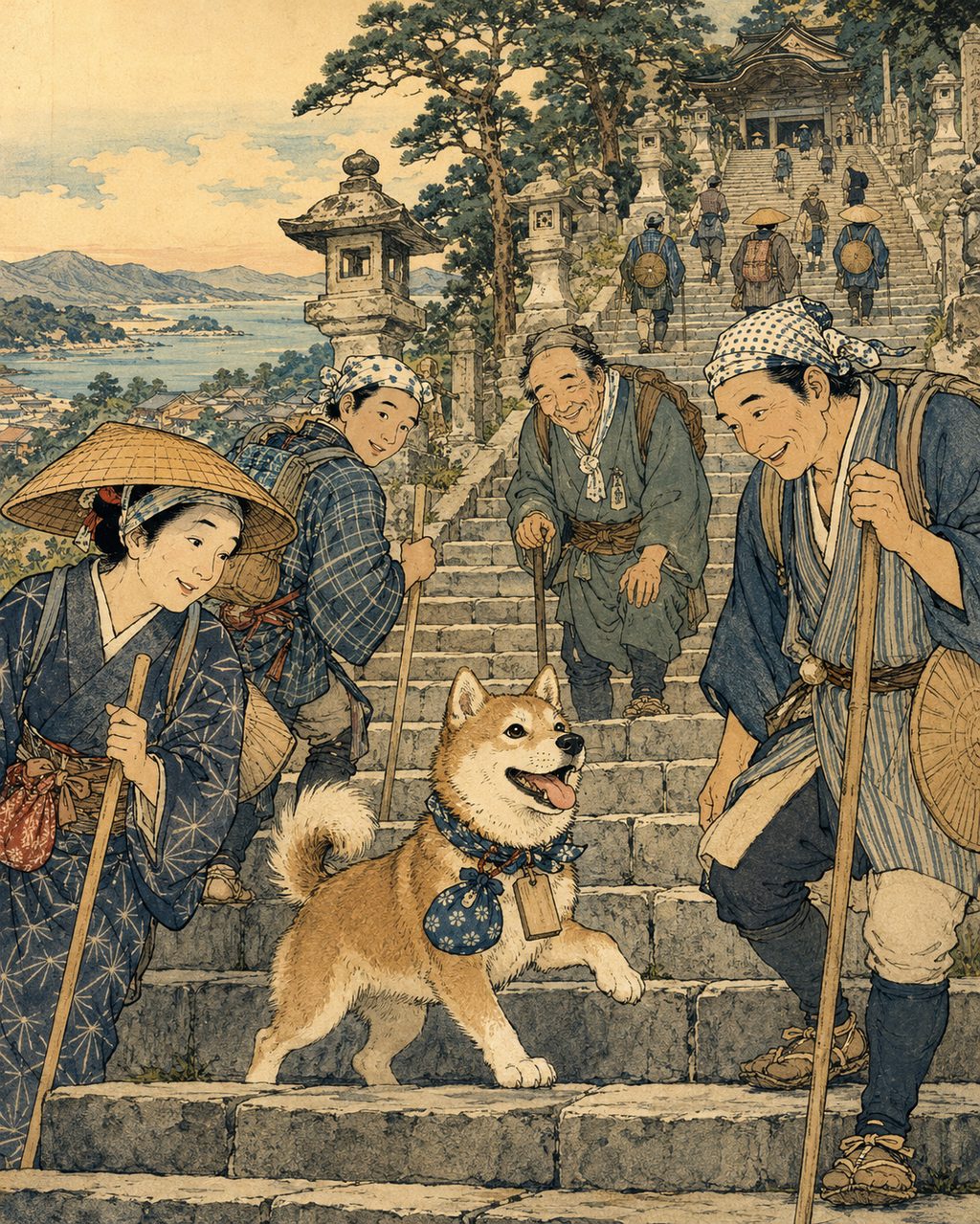
The path by which a foreign crocodile god took root in the climate of the Seto Inland Sea and grew into the maritime guardian Konpira Daigongen perfectly illustrates how Sanuki's yokai culture is centered on "the sea and those who came to it."
The Heike of Yashima:
The Sanuki Heikegani Harboring Vengeful Spirits
Another major memory etched into the sea of Sanuki is the Genpei War. Yashima, a plateau-like peninsula jutting out to the northeast of Takamatsu City, was named for its roof-like shape ("Yashima" literally meaning "roof island"). This stronghold, commanding a panoramic view of the Seto Inland Sea, was one of the last redoubts of the Heike clan. If Emperor Sutoku was the loser of the Hogen Rebellion, the Heike who perished at Yashima were another massive throng of the defeated, sunken in the Setouchi sea.
Driven from the capital in 1183 (Juei 2), the Heike established an imperial palace at Yashima in Sanuki, plotting a resurgence. However, in February of 1185 (Genryaku 2), Minamoto no Yoshitsune braved a violent storm to cross the Seto Inland Sea from Watanabe in Settsu, landing at Katsuura in Awa to launch a surprise attack on Yashima from the rear with a meager force. This is the Battle of Yashima, passed down in the war chronicle *Heike Monogatari*[8]. Facing Yoshitsune's ambush—who set fire to civilian houses to create the illusion of a massive invading army—the Heike fled to their ships offshore. It was during this event that Nasu no Yoichi, a retainer of Yoshitsune, brilliantly shot down a crimson fan held aloft by a beautiful woman from one of the Heike ships, loosing his arrow from horseback amidst the churning waves. This famously celebrated "Fan Target" scene took place during the Battle of Yashima. As the local warriors of Sanuki and Awa sided with the Minamoto, gathering momentum, the Heike abandoned Yashima and fled west; the following month, the entire clan perished at Dan-no-ura.
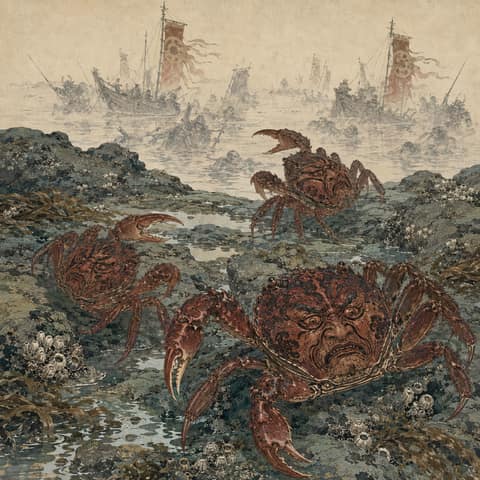
On the rocky shores of Yashima, there lives a crab believed to harbor the lingering souls of the Heike who fell in that battle: the Sanuki Heikegani.

Sanuki Heike Crab
A crab whose carapace bears markings resembling a human face, closely associated with Yashimaura in Sanuki. Popular lore claims these are the transformed vengeful spirits of the Taira clan (Heike), defeated by Minamoto no Yoshitsune—hence the general name “Heike crab.” Similar face-marked crabs are known in various regions and are tied to local names and tales; the term is a local folk label and not a scientific classification.
Read moreThe Kansei-era local product pictorial *Nihon Sankai Meibutsu Zue*[9] records the popular belief that the vengeful spirits of the Heike who perished at Yashimaura turned into crabs, and notes that they are called Heike crabs in Sanuki. The book also lists similar examples, such as the *Takebumigani* (Takebumi crab) in Amagasaki, Banshu, and the *Kiyotsunegani* (Kiyotsune crab) in Bungo and Nagato, as well as those called demon crabs (*Onigani*). While treating them all as folklore, it conveys that similar legends were widespread across the Seto Inland Sea. Both Takebumi and Kiyotsune were names of Heike commanders, reflecting the belief that the individual souls of the defeated clan had transformed into crabs.
These crabs were viewed as vengeful spirits because the bumpy patterns on their shells resemble a human face with eyes, a nose, and a mouth—specifically, the wrath-distorted face of a warrior. The real Heikegani (*Heikeopsis japonica*) is a small crab with a carapace width of only a few centimeters, and the unevenness of its shell is merely the attachment marks of its muscles. However, the fact that they are caught in the seas of ruin stretching from Yashima to Dan-no-ura, combined with their human-like carapaces, led them to be revered and feared as vessels for the grudges of the defeated. It is said that fishermen would not eat these crabs, throwing them back into the sea instead.
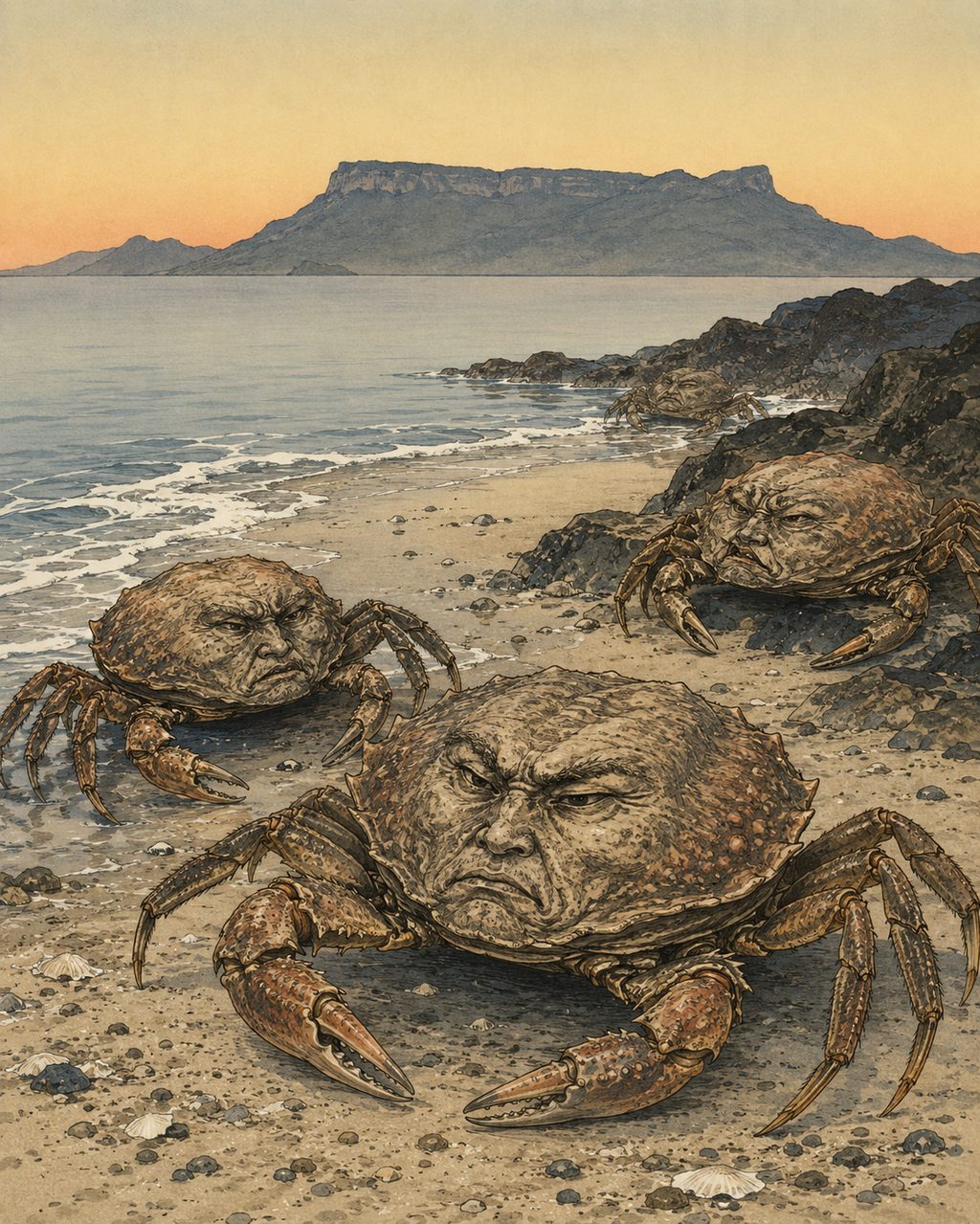
It is a legend of the Heike crab unique to Sanuki, where the memories of geography, biology, and history overlap upon a single, small crab.
Yashima is still maintained today as an old battlefield of the Genpei War, dotted with historical sites related to the battle, such as the spot where the fan shot down by Nasu no Yoichi washed ashore, and the "Pond of Blood" (*Chi-no-ike*) where the Minamoto are said to have washed their blood-stained swords. Historical war tales and the supernatural legends they spawned coexist inextricably on these very shores—this is the defining characteristic of Yashima. The souls of the defeated dissolve into the landscape, become crabs, and remain in the Setouchi sea as subjects of folklore.
The image of the Heike crab's human face was also inherited by modern literature; the playwright Okamoto Kido, in his play *Heikegani* of the same name, depicted the grudge of a woman who lost her husband at Dan-no-ura superimposed upon this crab. This small mystery born from the seas of ruin from Yashima to Dan-no-ura has continued to be a vessel reflecting grief and awe for the defeated, from early modern pictorials to modern stages. The Sanuki Heikegani is, essentially, the face of the defeated remembered by the Seto Inland Sea itself.
The Villages and Pilgrimage Routes of Sanuki:
The Ushioni and Shichinin Dogyo
Apart from high-ranking vengeful spirits and foreign deities, yokai born from the everyday fears of the people breathe life into the villages of Sanuki. These are the Ushioni, appearing at the boundaries between mountains and the sea, and the Shichinin Dogyo, wandering phantoms that roam crossroads and pilgrimage routes. If Emperor Sutoku represents "noble spiritual mysteries," these can be said to be "vulgar yokai" taking shape within the lives of nameless commoners.
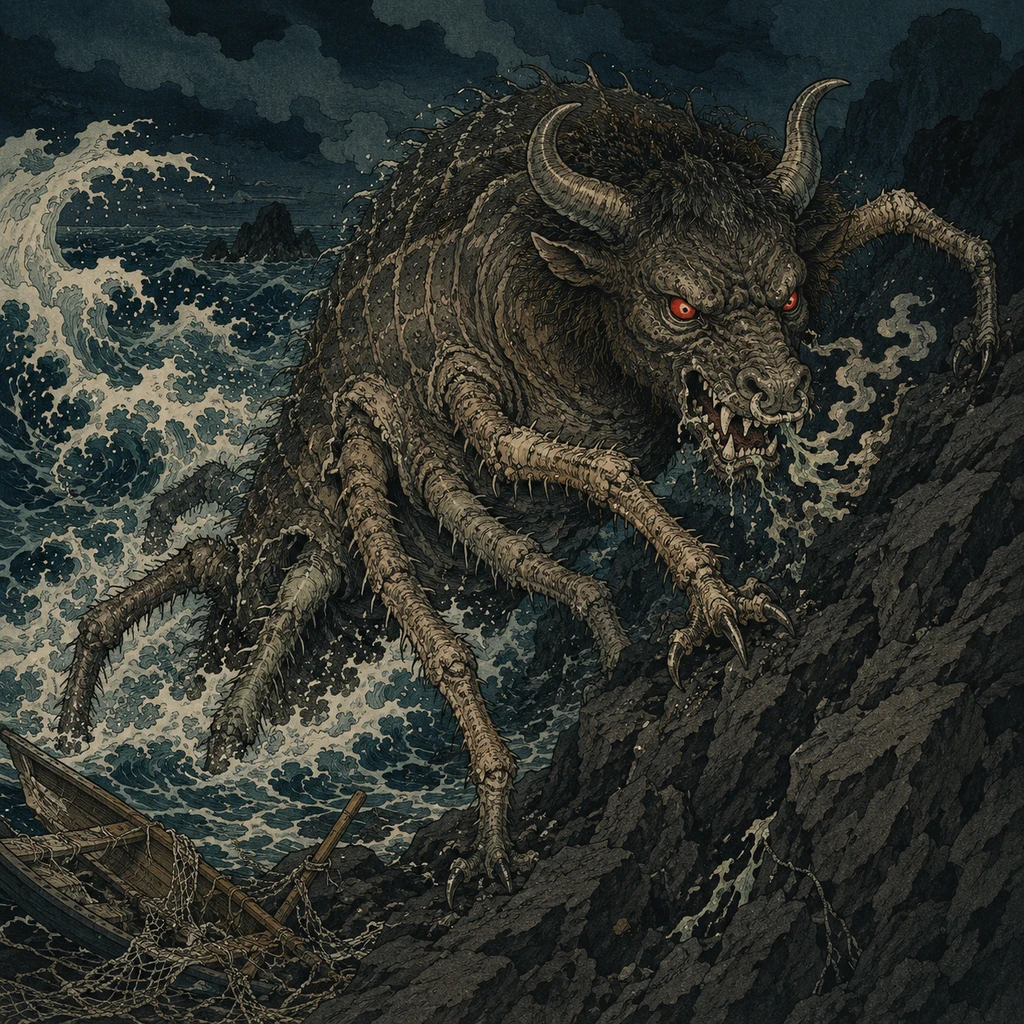
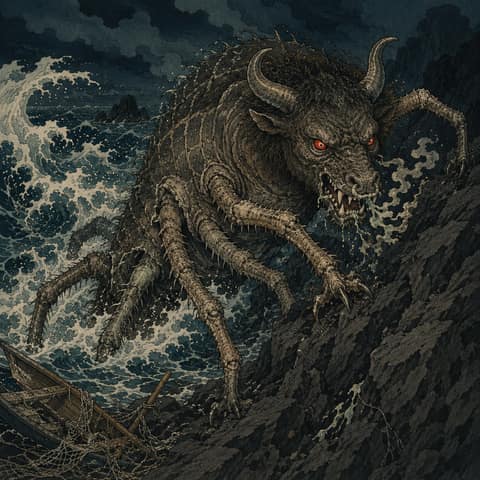
The Ushioni is a monster said to possess the head of a cow and the body of an oni or spider, representing the coastal specters of western Japan. Records of it in medieval literature are old; Volume 32 of the Kamakura-period war chronicle *Taiheiki*[10] contains a tale in which Watanabe no Tsuna, a retainer of Minamoto no Yorimitsu, cuts off the arm of an "Ushioni" in Uda District, Yamato Province, which later disguises itself as Tsuna's aunt to retrieve the arm. This is exactly the same plot as the legend of Ibaraki-doji at Rashomon, indicating that "Ushioni" and "oni" were often equated and interchangeable in the Middle Ages. On the other hand, in folklore, it has a strong character as a water-side monster; along the coasts from the San'in region to northern Kyushu, it was feared as a terrifyingly coordinated monster that conspired with the Nure-onna or Iso-onna. When a baby handed over by the woman became as heavy as a stone, immobilizing the victim, the Ushioni would emerge from the sea to devour them.
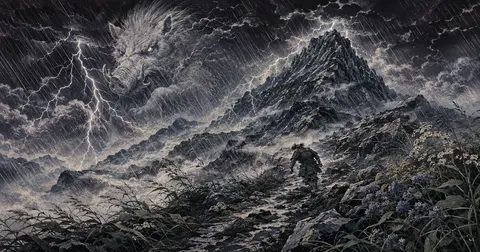
Particularly famous among Sanuki's Ushioni is the tale of the Ushioni slaying at Negoroji Temple, located halfway up Aomine in the Goshikidai range in western Takamatsu City. It is told that around the Tensho era (late 16th century), an Ushioni that appeared in this area and ravaged the villages was shot dead with three arrows by the master archer Yamada Kurando Takakiyo, who cut off its horns and dedicated them to Negoroji[11]. The slain Ushioni was described as having a face like a monkey, a body like a tiger, and membranes on its front legs resembling a flying squirrel. The temple, known as the 82nd sacred site of the Shikoku 88-Temple Pilgrimage, still houses what are said to be the horns of the Ushioni, and a statue of the beast stands along the approach. It is characteristic of Sanuki that the Ushioni—as a coastal monster—is told in connection with the specific mountain and temple of Goshikidai, and the heroic tale of a named archer, Takakiyo. The fact that the monster was slain not with a hero's sword but with a bow is also very fitting for Sanuki, the land of the bow that produced Nasu no Yoichi.
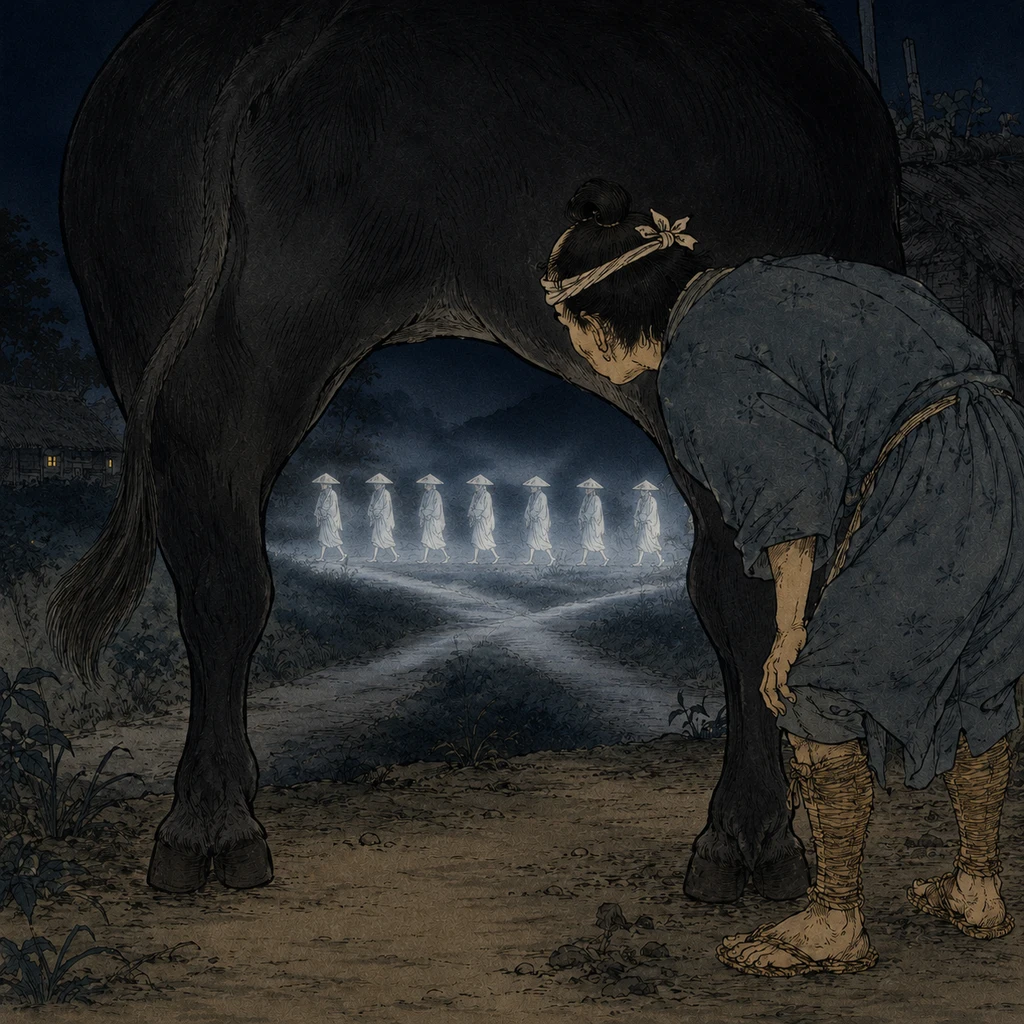
Another entity that appears on the roads of Sanuki is the Shichinin Dogyo. This is the Kagawa appellation for the "Shichinin Misaki," a collective spirit of the dead widely transmitted throughout the Shikoku and Chugoku regions. The spirits of those who died unnatural deaths are said to appear in a line as a group of seven, and it was feared that merely seeing them or encountering them would bring about calamity.
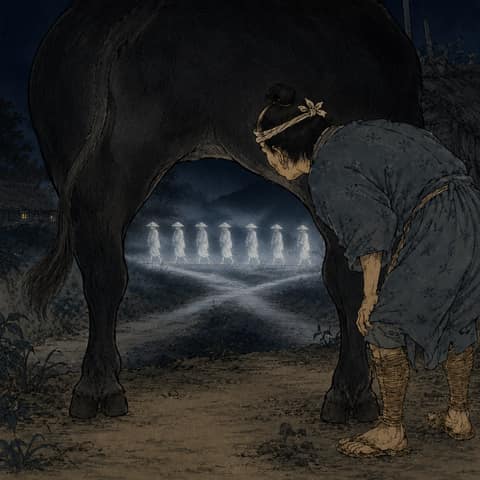
The Shichinin Misaki is spoken of as a chaining curse: encountering them causes death from a high fever, but when one person is killed, one spirit achieves enlightenment, and the newly deceased takes their place, thus always maintaining the number of seven[12]. In Kagawa, a story is told of a person walking along a dark road with a cow when the animal suddenly stopped at a crossroads; finding this suspicious, the person peeked behind from between the cow's legs and saw seven figures passing by silently in a single file, thereby escaping disaster thanks to having peeked. There are also closely related legends such as the "Shichinin Doji" appearing at crossroads in the dead of night, and the "Shichinin Doshi" appearing in straw raincoats and sedge hats during the evening rain. Because encountering them caused people to become depressed and fall ill, customs dictated that one should be fanned and purified with a winnowing basket (*mi*) before entering the house. In neighboring Tokushima, it is said that a headless horse led by the Shichinin Doji descended to a village at the foot of the mountain, but the people appeased them by erecting a Jizo statue.
Shikoku is the island of the pilgrimage, touring the 88 sacred sites associated with Kobo Daishi (Kukai). Along the long pilgrimage routes, graves and memorials for pilgrims who collapsed and died are scattered, reflecting a profound mentality that seeks to mourn those who suffered unnatural deaths with great care.
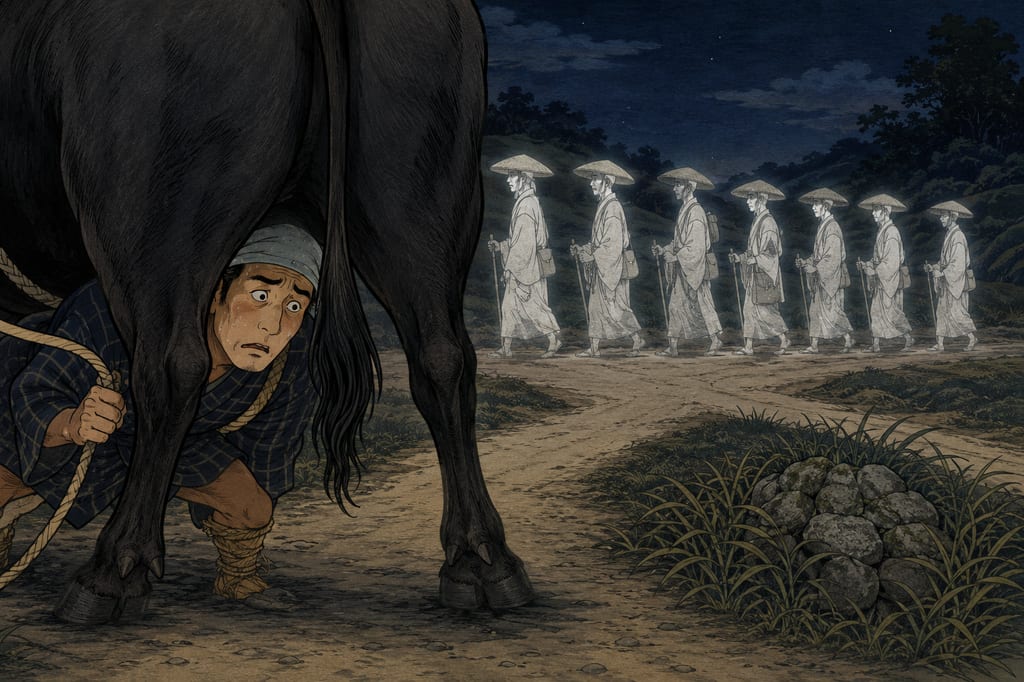
Legends of collective spirits like the Shichinin Dogyo can be said to have taken shape from the awe and pity toward unknown, unconnected dead, rooted in this pilgrimage culture. That is precisely why, even while they are believed to curse those who encounter them, they are accompanied by gestures of careful appeasement—erecting Jizo statues, purifying with winnowing baskets, and treating them with respect. From the highest-ranking vengeful spirit, Emperor Sutoku, to the nameless dead of the pilgrimage—the yokai of Sanuki transmit the memories of those who died on the sea and the roads, layered fold upon fold, to the present day.
Conclusion:
The Land of the Sea and Vengeful Spirits
Tracing the yokai of Kagawa, a single theme repeatedly emerges: the memories of those who washed ashore, those who perished, and those who crossed the sea. Emperor Sutoku, driven from the throne and exiled to Sanuki, and his guardian Shiramine Sagamibo; the Heike who lost at Yashima and sank into the sea to become crabs; Konpira, who transformed from a Ganges crocodile into a maritime deity of the Setouchi; and the unconnected dead piling up on the pilgrimage routes—all of these developed as spiritual mysteries unique to this land, set against the Seto Inland Sea, a corridor of water.
The reason such a heavy and profound culture of vengeful spirits and sea gods is layered beneath the warm, open landscape of Sanuki is none other than because this land has been a maritime crossroads since ancient times, where people, goods, and souls have constantly traversed. Clasping hands in prayer at the mountain mausoleum of Shiramine, climbing the over a thousand stone steps of Konpira, encountering human-faced crabs on the shores of Yashima, and praying to the Jizo on the pilgrimage routes—all of these become a journey that quietly touches the memory of Sanuki, the land of the sea and vengeful spirits. Beneath the calm of the Seto Inland Sea, the tales of the defeated and foreign deities continue to breathe, undiminished even now.