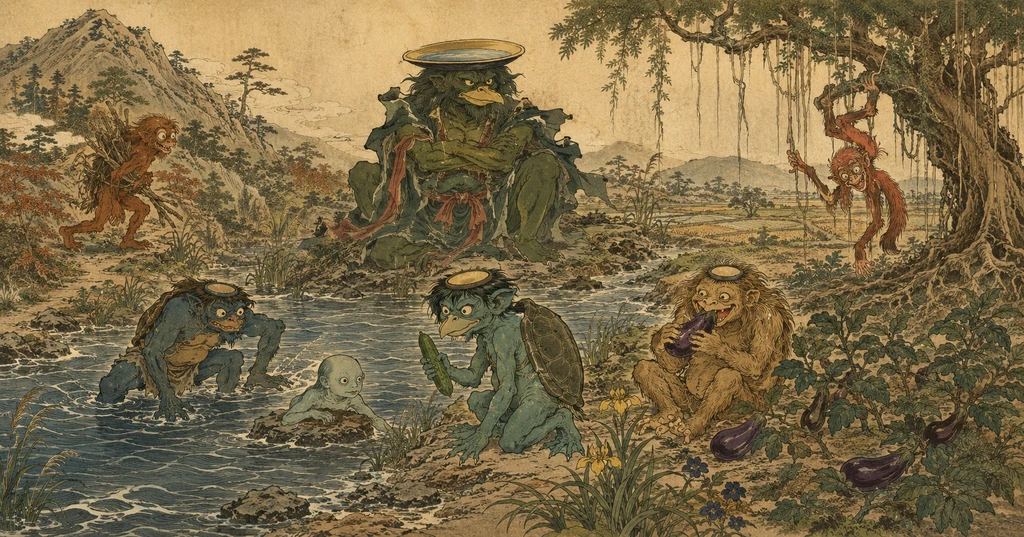
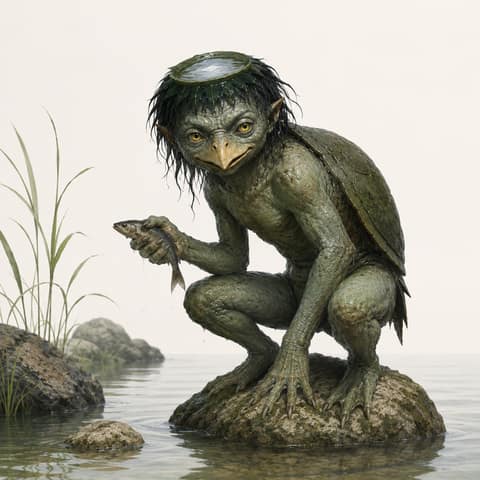
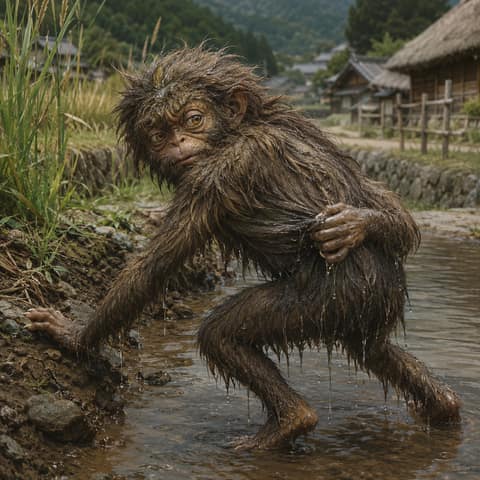
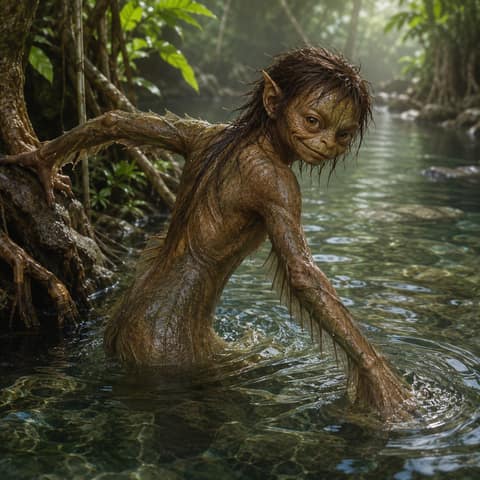
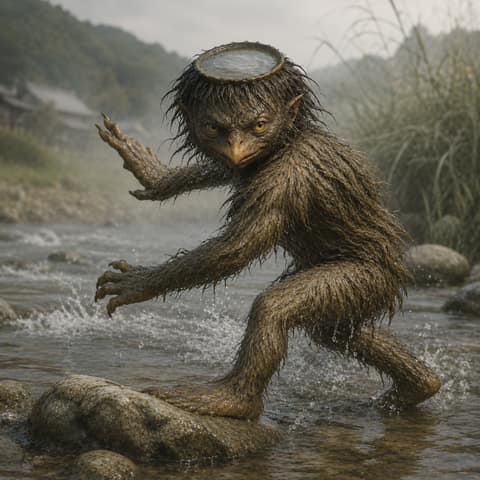
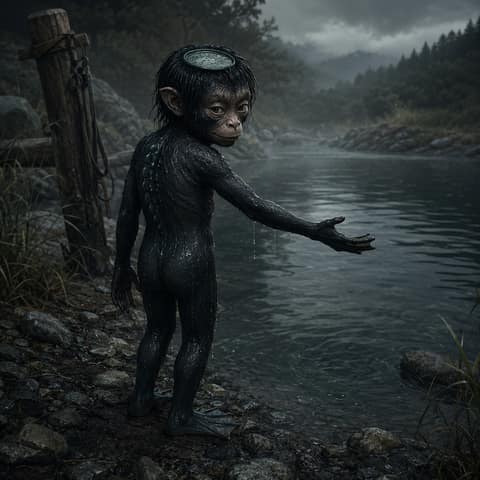
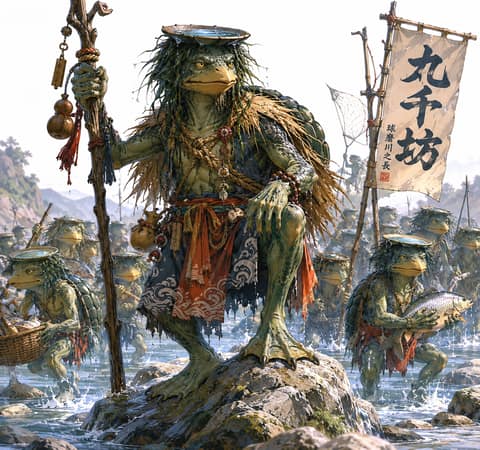
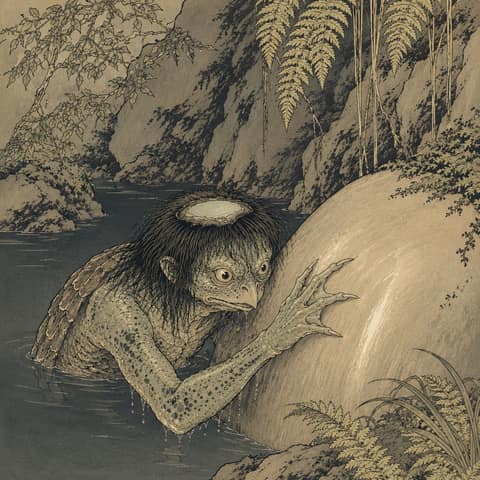
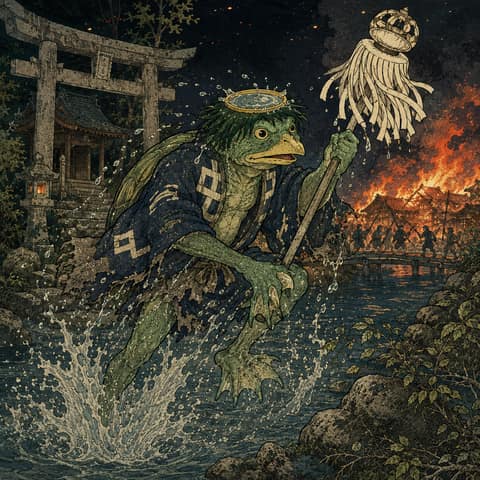
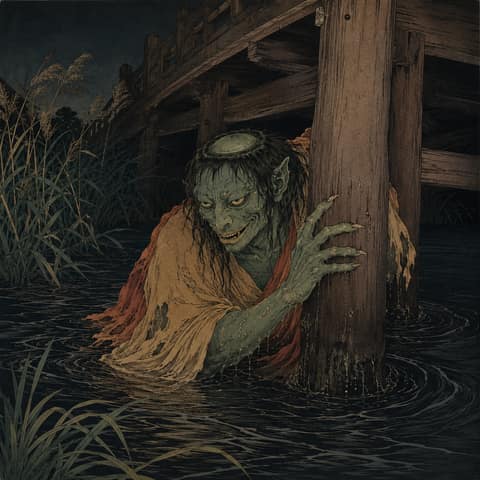
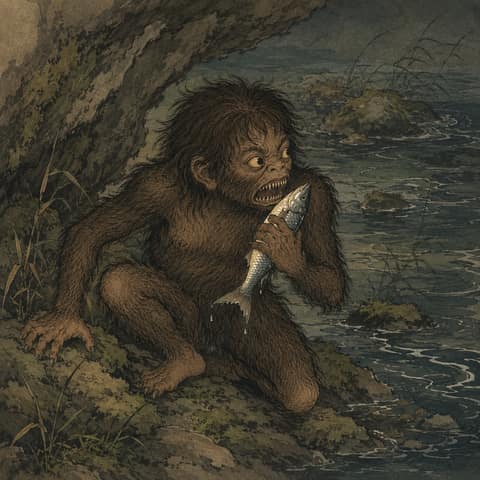
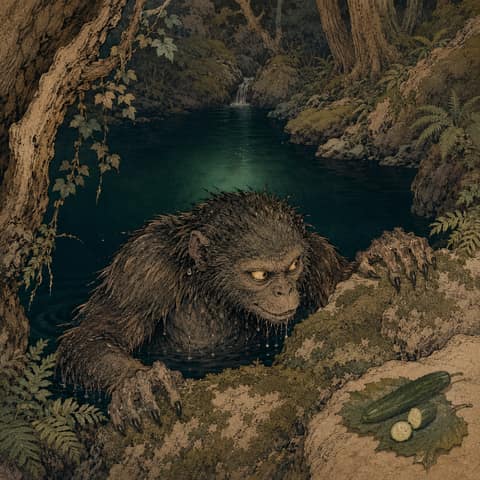
The Bungo Kawatarō is a kind of kappa handed down in the Bungo region of Kyushu—present-day Ōita Prefecture. Across Kyushu the kappa is commonly called "kawatarō," and Bungo Kawatarō is simply the local name for it. It lives in rivers and deep pools, bearing on its head a dish brimming with water. Its body is covered in hair and resembles a monkey, yet it is also said to have a beaklike mouth and a shell. Fond of sumo and underwater mischief, it steals the day’s catch on the one hand, while on the other—if a promise is kept—it imparts knowledge of irrigation and medicine: the two-sided nature so characteristic of the kappa. Should the water in its dish be lost, it was believed to lose its strength.
Folklore & Legends
Throughout Bungo there are tales of a kawatarō keen to challenge people to sumo at the river. If you observe the courtesies—bow your own head and coax it into bowing back—the water in its dish spills, its strength drains away, and it gives up. Feared for dragging horses to the water’s edge and pulling out their entrails, it was at the same time a creature that villagers placated with offerings to quiet the floods. Patterns common across Kyushu were also told in Bungo: floating a cucumber inscribed with one’s name downstream to ward off harm, or learning from a captured kappa the arts of bone-setting and wound medicine.
Such firsthand reports of the Bungo kappa were set down in writing in the late Edo period. The Kappa Kikiawase[1] (1805), compiled in Hita, records eyewitness accounts of the kawatarō as told by local people. The same Hita in Bungo also preserves the tale of "Shōkichi Kappa," about a boy who wrestles a kappa—a sign that this land had long been rich in kappa lore.
This version turns to the local color that Bungo Kawatarō carries within the broad category of the kappa. Across Kyushu the kappa is widely called "kawatarō," and Bungo Kawatarō is one of these. Against the frog- and turtle-like kappa so often pictured on the main island, the kappa of Bungo and the rest of Kyushu are usually described as hairy and monkeylike in build—a vivid reminder of how greatly the kappa’s form varied from region to region.
Its nature is true to the kappa: it claims the waterside as its territory and delights in sumo and pranks, yet retains a regard for courtesy. To those who bring offerings and keep their promises, it was said to grant the practical wisdom useful to people who live by the water—how to read the currents, how to manage irrigation, how to sense the turn of the weather. Rather than dwelling too heavily on grisly horrors like pulling out entrails, Bungo Kawatarō was spoken of as a being met with both fear and reliance; that is its distinctive flavor. The eyewitness records in Hita’s Kappa Kikiawase[1] convey that such a kawatarō was no mere fancy but a living presence within the life of the land.
Character Profile
This section is our own creative profile for storytelling. It is not historical fact or scholarship.
It keeps the waterside as its turf and loves sumo and mischief, yet stands on courtesy. To those who keep their word it shows a dutiful streak, sharing the wisdom of the river.
Compatibility
People who live alongside rivers and water and who cherish manners and promises
Abilities
Prodigious strength underwaterSkilled swimming and divingSumo wrestlingReading the currents and sensing the weatherCatching fish and the wisdom of irrigation
Weaknesses
Rendered powerless if the water in its head-dish is lost
weak to dryness and sunlight
bound by a promise once courtesy is returned
Habitat
Deep river pools, irrigation channels, the shaded riverbanks of Ōita (the old province of Bungo)
The diagram below is a diagnostic evaluation chart for Bungo Kawatarō, the Hairy Kappa of Bungo. The higher the value of each item, the stronger that characteristic is expressed.