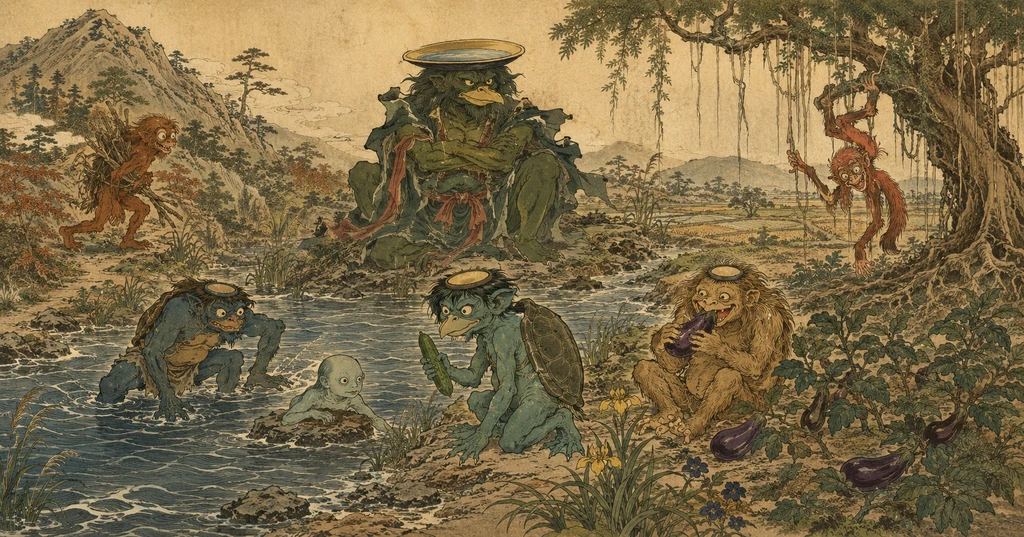
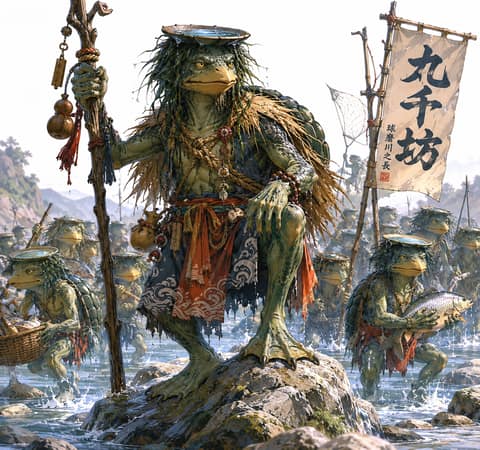
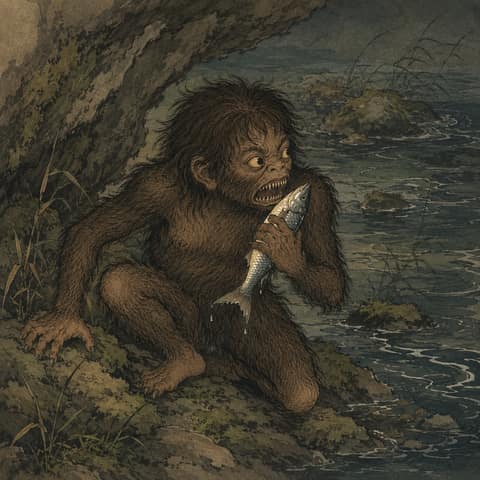
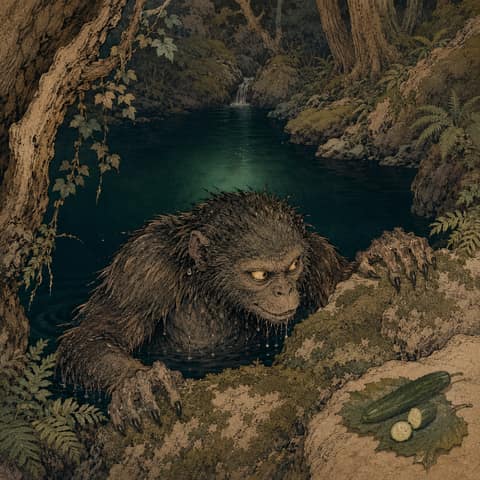
Kyūsenbō (also Kusenbō) is the legendary grand chief said to command every kappa of Kyushu. According to the Edo-period Honchō Zokugenshi[1], he was a kappa who led his clan across from the Yellow River in China, came ashore at Yatsushiro in Higo, and settled on the Kuma River; because the clan grew to nine thousand, its headman took the name Kyūsenbō (“nine-thousand boss”).
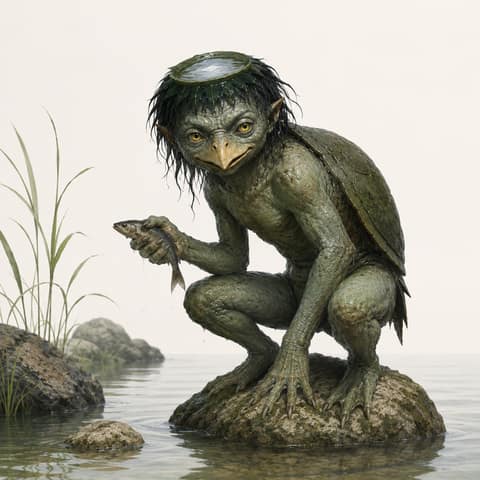
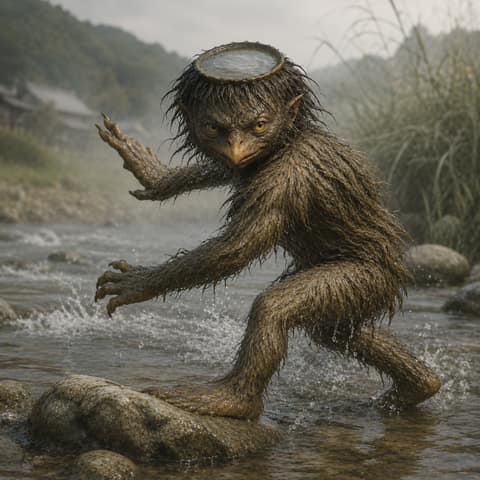
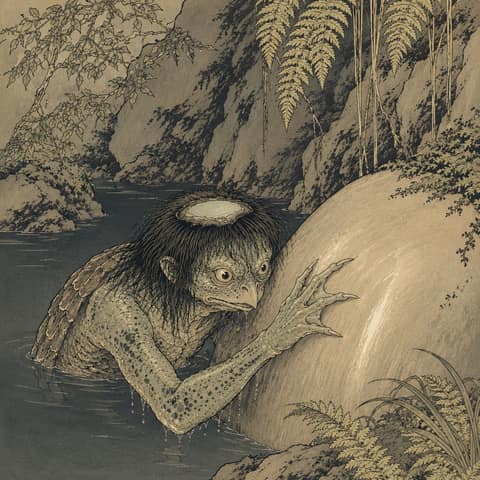
In form he is no different from an ordinary kappa, bearing no strange shape of his own. What sets Kyūsenbō apart is not his looks but his standing as the chief who governs nine thousand kappa across Kyushu[2]. He holds power enough to trouble a whole province, yet is helpless before the monkey, the kappa’s natural enemy — the kappa’s twofold nature, at once formidable and fearful, writ large at the scale of a whole clan. He is known, too, for a tale of reform: later he moved to the Chikugo River and turned from a man-harming demon into a familiar of the water-god, guarding people against flood.
Folklore & Legends
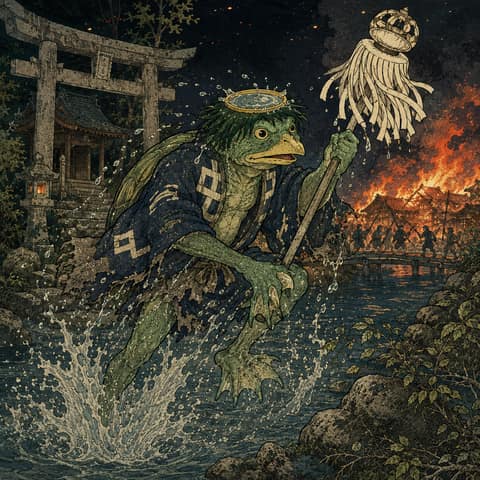
What carried Kyūsenbō’s name into the world was Kikuoka Senryō’s Honchō Zokugenshi (Enkyō 3, c. 1746)[1]. The tale it tells runs thus: the nine thousand kappa that infested the Kuma River kept dragging people under, until at last they drowned a beloved page of Katō Kiyomasa, lord of Higo. Enraged, Kiyomasa gathered from across Kyushu the monkeys the kappa most feared, and set them on the clan all at once. Kyūsenbō could not even put up a proper fight, and was driven from the Kuma River.
With nowhere left to go, the kappa clan was permitted to move to the Chikugo River through the mediation of Arima, lord of Kurume, on condition that they do no harm to people or livestock. Thereafter Kyūsenbō and his familiars served the Suitengū shrine at Kurume, turning into guardians who shielded the people from the floods of the Chikugo. That Suitengū to this day hands out kappa masks and amulets owes to this bond. Yet Kyūsenbō is not among the deities Suitengū formally enshrines (Emperor Antoku and others); he is, at most, a kappa familiar who guards the shrine.
There are also those who place the clan’s homeland not at the Yellow River in China but in a crossing during the reign of Emperor Nintoku, or in some far river of Central Asia — but these are later embellishments. In modern times the novelist Hino Ashihei, born in Kitakyushu, loved the kappa as the theme of his life and spread Kyūsenbō through works such as Kappa Mandara[3]. In 1955, the “Kyūsenbō Honzan Tanushimaru Kappa Clan” that Ashihei and his fellows founded at Tanushimaru in Chikugo was a cultural movement built upon this legend — the Kyūsenbō tradition, carried down since Edo, thus passing into the town-building of today. At Yatsushiro stands a monument to the “Place of the Kappa’s Arrival,” still telling of his memory as the chief of Kyushu’s kappa.
This version looks closely at Kyūsenbō’s singular standing — less a single yokai than the chief of the whole kappa kind.
The kappa is by nature a yokai that changes its name from place to place, told of scattered across the rivers of each region. Among them, Kyūsenbō is drawn as the “head” who governs nine thousand kappa across Kyushu with a single hand[2]. This is unlike the fox’s tenko — a vertical ladder up which a single fox climbs through cultivation. The seat Kyūsenbō holds is a horizontal command over many kappa: in plain terms, the authority of a general over an army.
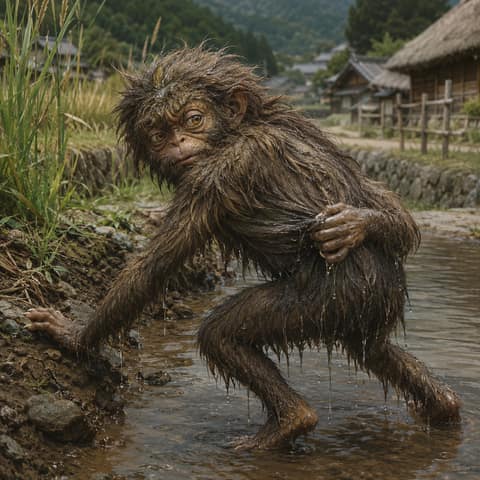
That authority is tested in the contest with Katō Kiyomasa. The single battle handed down by the Honchō Zokugenshi[1] reflects at once the kappa’s strength and its weakness. With nine thousand familiars in hand, he is yet helplessly defeated the moment he faces the monkey the kappa has dreaded since of old. The outcome is settled not by force of arms but by the logic of the natural enemy — and in this the kappa’s true nature is laid plainly bare.
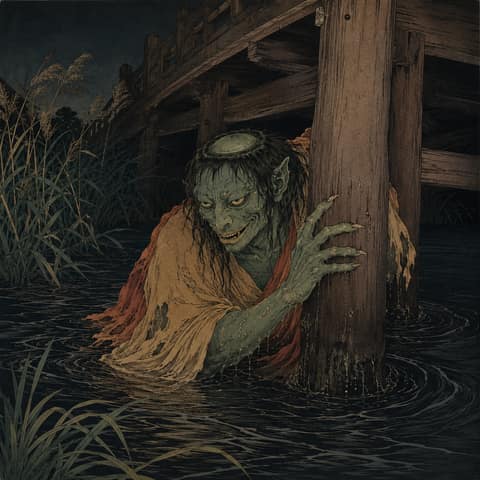
What comes after defeat is his turn toward the water-god. The Kyūsenbō who moved to the Chikugo River changed from a man-attacking demon into a guardian against flood. His bond of serving Suitengū at Kurume shows the kappa to be a being that bears both meanings at once — the peril of water and the bounty of water. The monument at the Place of the Kappa’s Arrival in Yatsushiro, the kappa masks of Suitengū, and the kappa clan Hino Ashihei founded in the Shōwa era — the tale of Kyūsenbō lives on still, from an Edo miscellany to the town-building of today, as a thread of memory the people of Kyushu have spun together with the river.
Character Profile
This section is our own creative profile for storytelling. It is not historical fact or scholarship.
Power enough to trouble a province, and the command of nine thousand. Yet helpless before monkeys; once defeated, he changed his ways and went over to the side that guards people from flood.
Compatibility
Those who live by the water and revere both its bounty and its peril
Abilities
Governs nine thousand kappa across KyushuDrags people and horses into the waterSaid to have crossed over from the Yellow RiverA familiar of the water-god who guards against flood
Weaknesses
Fears the monkey, the kappa’s natural enemy
Defeated by the monkeys Katō Kiyomasa gathered
Bound by the pledge to do no harm to people or livestock
Habitat
The Kuma River, the Chikugo River, Suitengū at Kurume, the Place of the Kappa’s Arrival at Yatsushiro
The diagram below is a diagnostic evaluation chart for The Grand Chief Who Commands the Kappa of Kyushu — Kyūsenbō. The higher the value of each item, the stronger that characteristic is expressed.