The Name Came First;
the Form Was Never One Thing
Hearing "rokurokubi," many people picture a woman with an extraordinarily long neck. Yet the verse in *Takatsukuba*, the earliest candidate for the name, says nothing detailed about either a stretching neck or a flying head[2]. The "rokurokubi" in *Seishō Senku* of 1648 likewise first documents the name's existence[4]. A name does not mean that the familiar modern image had already taken shape.
In seventeenth-century ghost stories, dreams, wandering souls, deluded thoughts, flying heads, and Chinese ethnographic writing begin to gather around the same name. The 1677 title is "Rokurokubi of Fuchū in Echizen Province"[5], but in a closely related Echizen tradition, a sleeping woman's head or soul goes out onto a night road without her knowing[1]. Separating the history of the name from the history of the body is the first step toward understanding the rokurokubi.
The Echizen Woman's Dream of Being Pursued
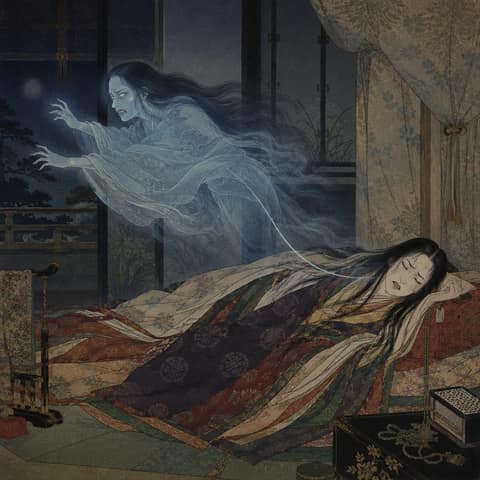
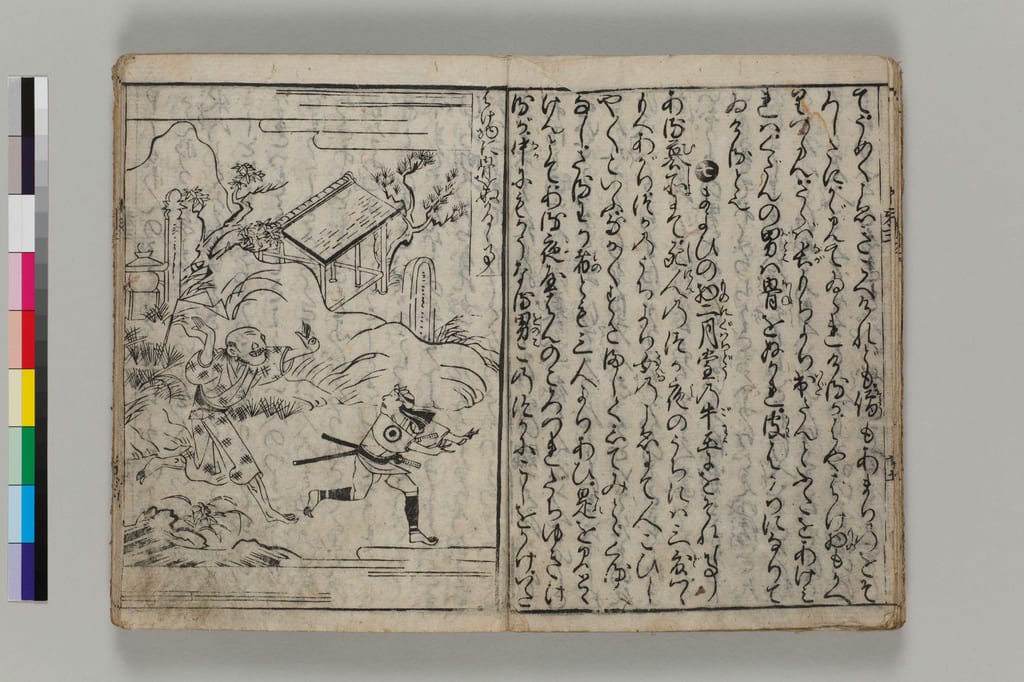
In *Sorori Monogatari*, a man traveling from Hokushō in Echizen toward Kamigata sees a woman's head below the stone pagoda at Saba-ya. It laughs and escapes into a house in Kamiichi, Fuchū. The woman in that house tells her husband that she dreamed a man pursued her in the Sabaya meadows[1]. What the man sees outside and what the woman sees in her dream coincide, so the strange event is both a flying head seen by someone else and a nightmare experienced by the woman herself.
She does not attack the man. Learning that her mind has wandered from her body, she is ashamed of her deluded thoughts, enters Buddhist practice, and prays for her future life[1]. The ending is not an exorcism but a change in how she lives. An account that treats every rokurokubi as a cruel predator misses the quiet terror of this tradition.
The Chinese Luotou People Are Closer to Ethnography Than to Yōkai
The Luotou people in the *Soushen ji* are not one cursed woman but people said to live in the south. The maid of Zhu Huan flies her head each night; the body grows cold and retains only a faint breath. Her head returns at dawn, but if the body is covered with a quilt, it cannot rejoin and falls to the ground in distress[6]. Here, where the vacant body is kept becomes a matter of life and death.
The Feitou Liaozi of the *Youyang zazu* are likewise a strange report about people in Lingnan. A red ring at the neck is a bodily sign before flight; wings grow from the head, which eats crabs and earthworms[7]. This diet can be compared with the insect-eating in Hearn's story, but ancient Chinese writers were not recording a Japanese female yōkai. The gaze that makes foreign people into supernatural curiosities also needs to be read as part of the sources' historical setting.
Does Rokuro Mean Pottery,
a Well,
or an Umbrella?
Today, rokuro most readily brings to mind a pottery wheel, but older uses of the word include a device for winding up a well rope, a woodturning lathe, and the opening mechanism of an umbrella. The Yuan-dynasty poet Chen Fu, describing extraordinary customs in Annam, wrote that a flying head resembled a rokuro[23]. Yasuko Yokoyama reads the rokuro here as the pulley and winding device of a well pulley, and argues that the resemblance between it and the head's vertical movement may lie behind the name[10].
Still, the early Japanese examples in *Takatsukuba* and *Seishō Senku* contain no explanation that takes the name from Chen Fu's verse[2]. The etymological story changes according to whether one imagines pottery, a well, woodworking, or an umbrella. Without a direct naming record, the well-pulley explanation is persuasive, not a settled etymology.
Nukekubi,
Hitōban,
and Rokurokubi
Sawaki Sūshi's *Hyakkai Zukan* of 1737 identifies the image as "nukekubi"[8]. As the name indicates, it belongs first to the image history of a separated head. The first edition of Toriyama Sekien's *Gazu Hyakki Yagyō* in 1776 presents Hitōban (飛頭蛮) with the reading "rokurokubi"[9]. One image thus places a Chinese name and a Japanese yōkai name together.
In Sekien's image, a woman sleeps while her head floats above a folding screen, linked to the body by a narrow line along the floor[9]. The line can look like an elongated neck, but it can also resemble the path of the head's flight or a thread joining souls. The picture blurs the boundary between a detached head and a long neck, leaving room for the many later readings it received.
The first edition of *Gazu Hyakki Yagyō* is from 1776, while the copy made available by the National Diet Library is an 1805 later edition, issued after the printing blocks and publishing rights changed hands[9]. The work's date of creation and the date of the copy now visible are different. Any account of the image must also consider that the same composition passed into later printings.
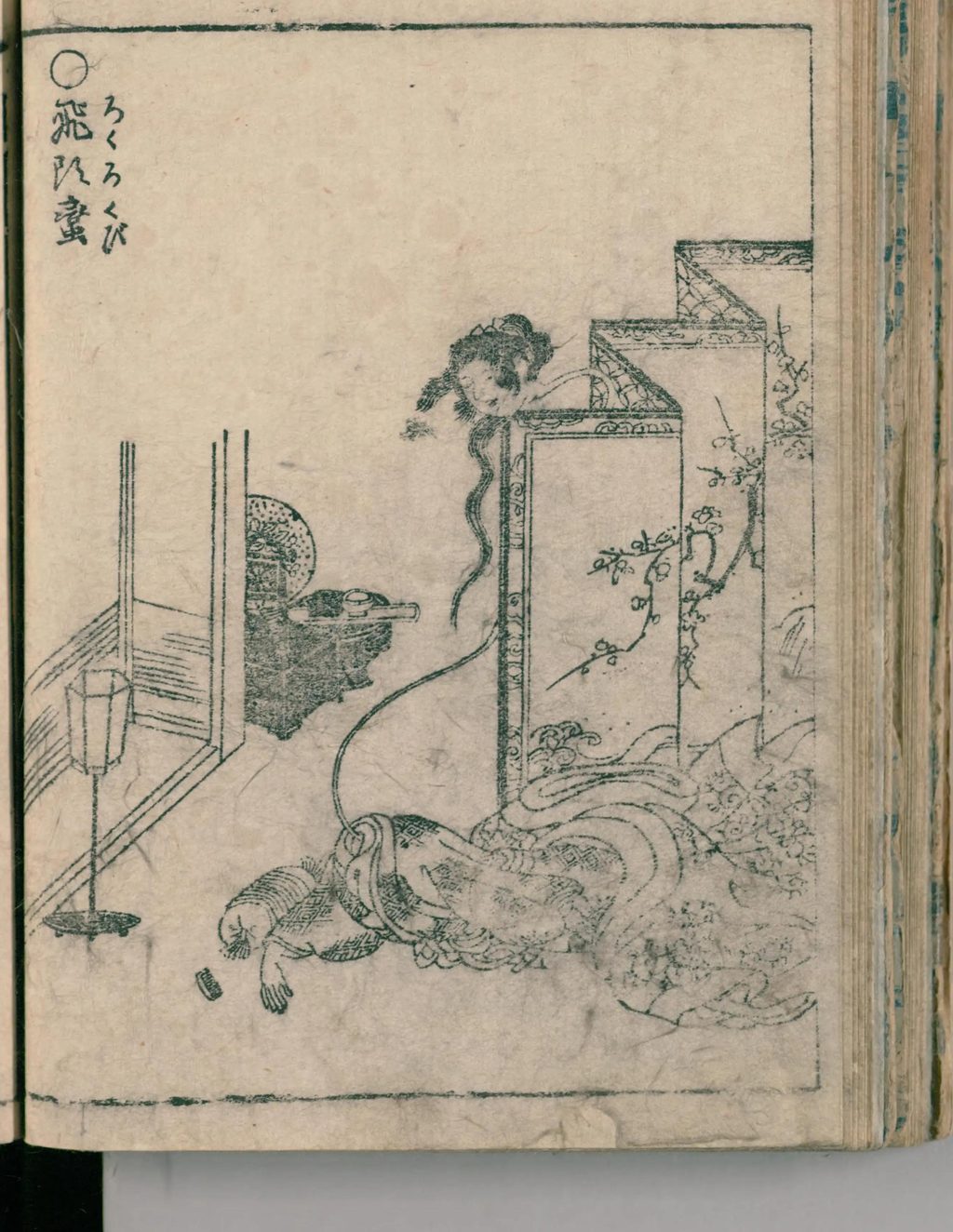
Sawaki's nukekubi is the name of a yōkai in a handscroll; Sekien's Hitōban is the title of a printed image that overlays a Chinese-derived name with a Japanese reading. The two are not before-and-after images of one yōkai. They show that several naming practices for strange separated heads coexisted in the eighteenth century.
When a Long Neck Became Funny
The scene may be read as a monster-making of a woman's attachment, or as an illustration of an everyday expression about waiting eagerly. Either way, its purpose and emotion differ from Chinese-derived stories in which a head leaves its body to eat insects. Length is not merely a bodily mechanism; it is also a metaphor that carries yearning across distance and asks for a reading beyond fear.
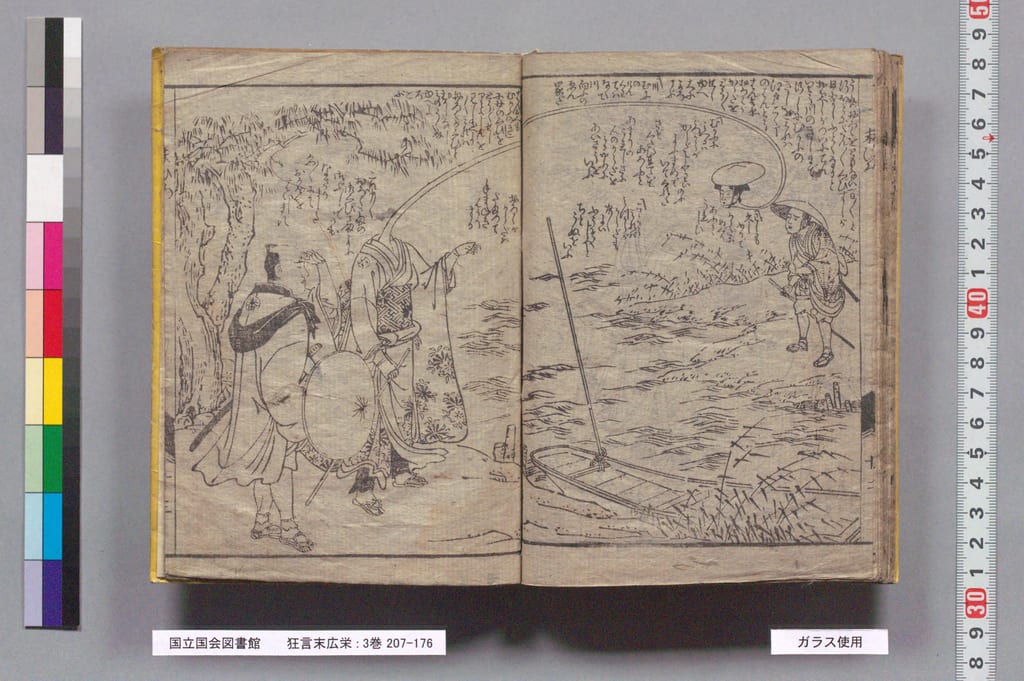
In illustrated books and kibyōshi, a long neck is understood at a glance. A single neck crossing the page has more force than explaining a flying soul or a dream that matches another person's sighting. The accessibility and amusement of visual media likely helped the long-neck form become the popular standard image[10].
Not Only Women,
and Not Only Villains
Even though the beautiful long-necked woman is famous, the subjects in the sources are not limited to one woman. In volume eight of the main series of *Kasshi Yawa*, smoke rises from a maid's chest and her head appears high above, though she is unaware of it[17]. Hearn's story has five people, including a male master and a young woman, who knowingly send out their heads[13]. Under the same name stand one unaware servant and a group sharing a nighttime rule.
Character is equally varied. The woman of Echizen harms no one and enters Buddhist practice in shame at her deluded thoughts[1]. The daughter in the Ibaraki story is tragic: prayers do not cure her and her family leaves the area[20]. In Makino, Shiga, a hardworking bride is simply recorded as a rokurokkubi, with no wrongdoing summarized[22]. Rokurokubi stories reflect not only fear of monsters but bodies one cannot control and the reactions of people who learn about them.
Red Rings,
Purple Lines,
and Red Writing
Marks on the neck differ across sources. In the *Youyang zazu*, a ring like red thread appears the day before flight[7]. In *Kasshi Yawa*, a rumor says that rokurokubi have purple lines, but none is clearly visible on the maid's neck[17]. In Hearn's tale, an old official in Suwa finds several red characters on the nape and decides that the head belonged to a monster[13].
These cannot be combined into one trait, "red Sanskrit characters on the neck." The ring is a bodily omen, the line a rumor, and the writing evidence in a literary work. The white line belongs to another current, involving an image and explanation that join head and body.
Their differences also show how the means of recognizing the strange changed with time. In Chinese ethnography the red ring foretells flight; in an essay the purple line becomes a rumor that prompts suspicion; in Hearn's judgment, red writing becomes evidence that saves an innocent monk.
Even without a clear mark on the neck, being deemed a rokurokubi could reach into daytime life. In the Ibaraki story, a daughter's change becomes a rumor and the family leaves the area[20]. In the Aichi story, her change is tied to the collapse of a marriage[21]. The fear lies not only in the sight of a stretching neck, but in a sleeping body being interpreted by others and an ordinary place in life becoming unstable.
Can Moving the Body Defeat It?
In the *Soushen ji*, covering the body with a quilt before the head returns prevents rejoining[6]. Hearn's Kwairyō acts on this by moving the body elsewhere, and is attacked by the master's head when it cannot return[13].
But the long-necked daughter of Ibaraki, the dreaming woman of Echizen, and Sekien's thread-neck image contain no scene in which moving the body brings death[20]. Sunlight is not a common weakness either. That power in Hearn's story is limited to the hours of darkness[13] is not the same as sunlight itself being poison.
Hearn Chose Flying Heads,
Not Long Necks
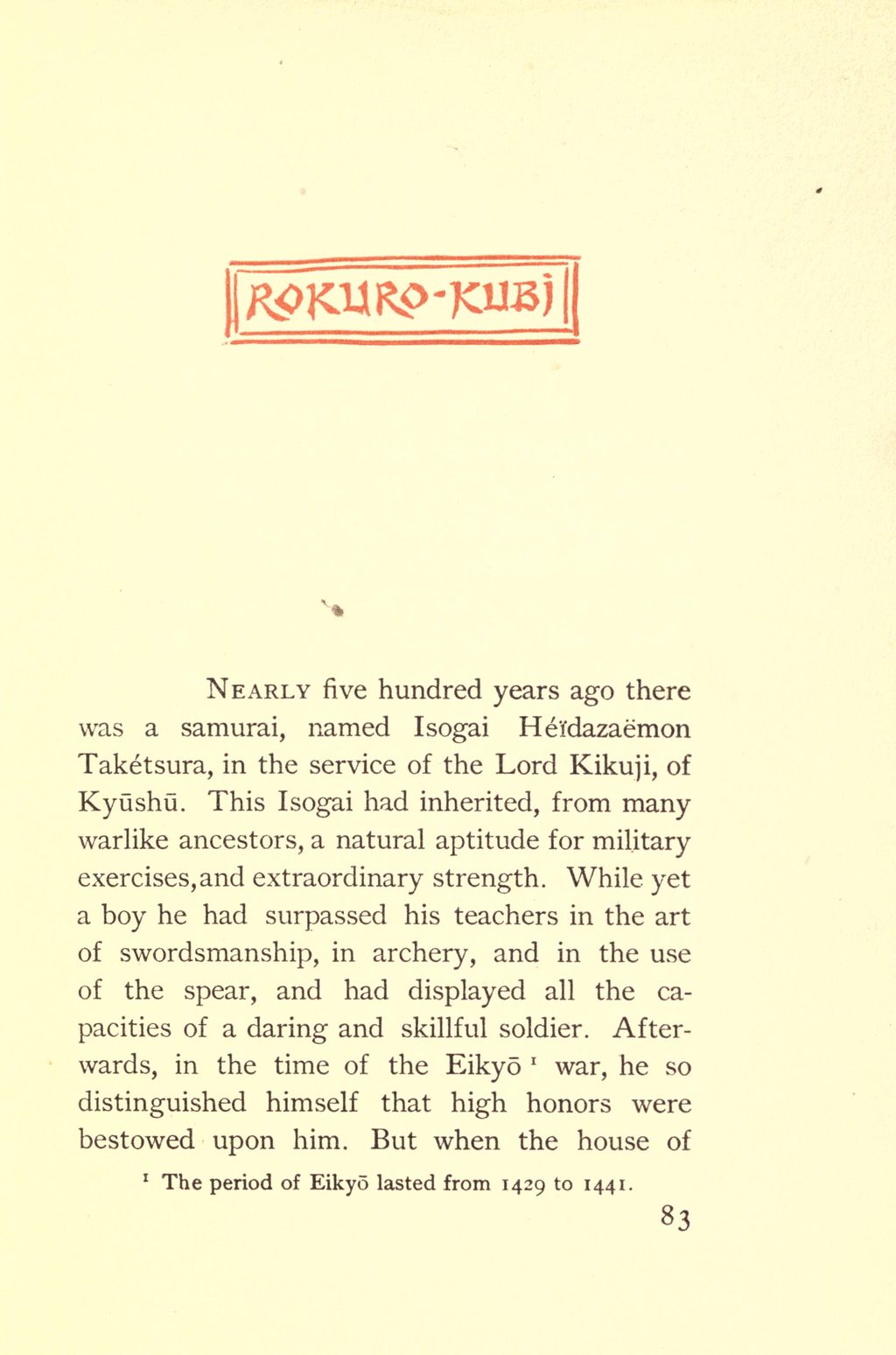
In a note, Hearn explains that the rokurokubi generally known is one whose neck stretches far while remaining attached to the body. Yet he chose the fully detached-head form for the story itself[13]. Knowing both forms, he used flying heads for an adventure ghost story in the mountains of Kai.
The direct source is volume four of *Kaibutsu Yoron* (1803)[14]. Kwairyō fights five heads and carries one to Suwa with it biting his sleeve. A thief buys the head; it is finally returned to Kai and given a grave and segaki rites[13]. The ending, in which a defeated head passes through trophy and commodity before being memorialized, does not leave the boundary between yōkai and humans as a simple question of good and evil.
How the Modern Image of the Long-Necked Beauty Took Hold
The long-necked woman has force partly because it shows an anomaly while keeping face and body in the same image. A fully flying head requires a story to explain whose body it is and how it returns. With a long neck, one can retain a woman's expression, hair, kimono, and an ordinary interior while creating the strange with a single line. It was a structure well suited to beauty pictures, sideshows, film, and manga.
The 1968 film *Yōkai Hyaku Monogatari* made a stretching neck a screen highlight[18]. Manga and animation also include women living in the same communities as humans[19]. As roles expanded into the frightening woman, kind neighbor, lover, and fighting yōkai, the long-necked woman became the form most widely shared today.
Yet tracing that legible image straight back to the Luotou people of the *Soushen ji* or the dreaming woman of *Sorori Monogatari* erases the differences among the sources. The interest of the rokurokubi lies in its identity not being fixed as one thing. When flying heads, dreams, fine lines, long necks, causality, comedy, and adventure ghost stories are viewed as separate layers, the name reveals not one yōkai changing shape but a large category shaped over centuries by East Asian stories and images.
Character Profile
This section is our own creative profile for storytelling. It is not historical fact or scholarship.
Yokai Type - Traditional Yokai
Category - Half-Human Beings
Rarity - Legendary
Personality - It speaks quietly of nighttime events as if they were dreams and has a cautious disposition, not displaying its changes carelessly. It listens closely to others but dislikes having its body or secrets made into a spectacle.
Compatibility - Well suited to people who listen carefully to dreams and old stories and keep confidences. It is deeply wary of those who insist on a single form or touch a sleeping body without permission.
Abilities - In long-neck forms, stretches the neck far while it remains attached to the bodyIn detached-head forms, flies through the night sky as a head aloneIn unaware forms, leaves the sleeping body like a dream or soulIn some detached-head forms, returns to the body and rejoins it before dawnBlends into ordinary human life during the day
Weaknesses - No weakness is shared by every form. In some detached-head accounts, covering or moving the body while the head is absent prevents rejoining. In the Hearn story line, the head must return to the body before sunrise.
Habitat - Homes, lodgings, night roads, and mountain country. It is not fixed to one region; settings differ among literary works, pictures, and regional records.