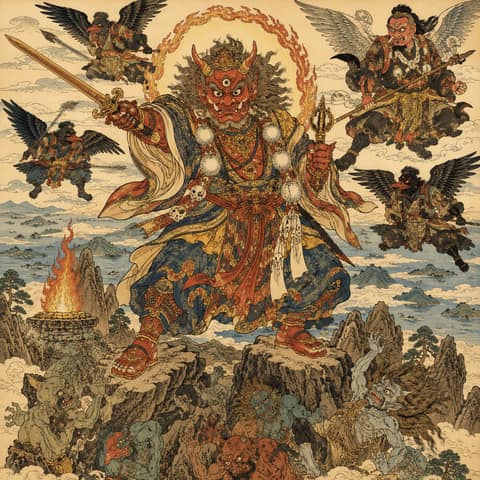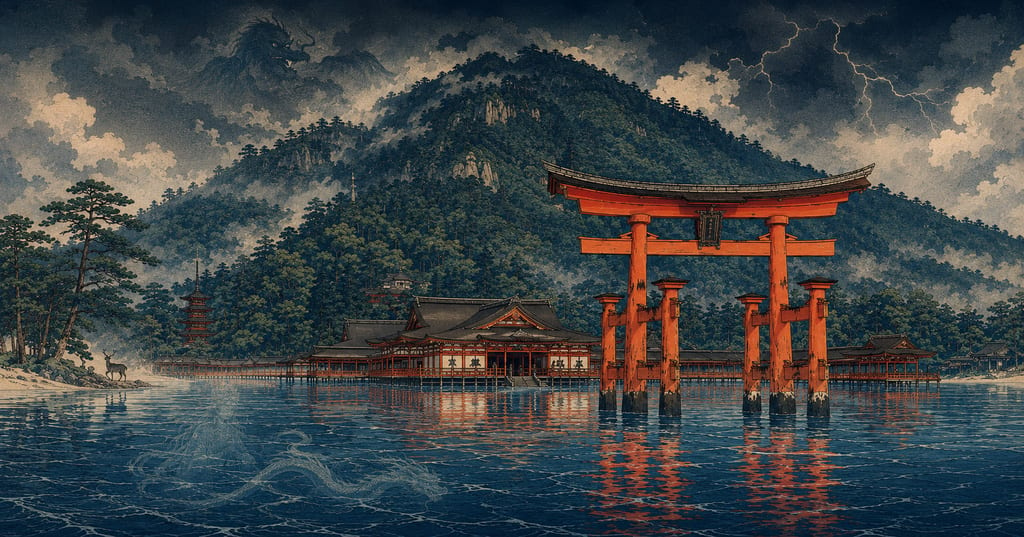
市杵島姫命・厳島龍神の弁財天・七浦の恵比須・弥山の三鬼大権現

海に立つ朱の鳥居、山に棲む鬼。厳島神社の妖怪事典

Itsukushima Shrine·いつくしまじんじゃ
View on map

潮が満ちれば社殿は海に浮かび、潮が引けば干潟の上を歩いて大鳥居の足元まで近づける。安芸の宮島(厳島)に立つ厳島神社は、陸と海の境界そのものを社地とした、日本でも類を見ない聖域である。島全体が神の宿る御山であり、古来ここでは人の死と出産が忌まれ、神聖を保つために血の穢れを島の外へ遠ざけてきた。その禁忌の島に、水の女神と海の福神、そして山の鬼神までもが層をなして棲んでいる。

ここで語られる神霊は、ただ祀られているだけの存在ではない。海上を守る市杵島姫命は中世に弁才天と一体化して水と財と芸能の女神となり、潮の満ち引きとともに姿を変える社殿そのものに神格を映した。弥山(みせん)の頂には、弘法大師空海が勧請したと伝わる鬼の神 ── 日本でただひとつ「鬼」を本尊に祀る三鬼大権現が、天狗を従えて鎮座する。海の神と山の鬼、福と畏れが一つの島で出会う。この記事は、広島県という大きな枠(広島県の妖怪事典)のなかでも特異な、厳島という一点に立つ神々と妖しのものを追っていく。

海に立つ社 ── 厳島という地理と信仰の位相

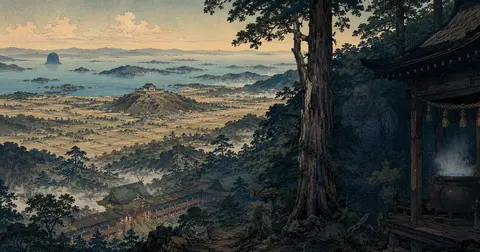
瀬戸内海のほぼ中央、安芸の海に浮かぶ宮島は、本州の沿岸とは目と鼻の先にありながら、古くから別世界の島とされてきた。およそ六千年前の縄文海進で本州と切り離されて以来、島は固有の生態と禁忌をはぐくみ、人々はこの島そのものを神体と見なした宮島という地理が、ここに祀られる神々の性格を決定づけている。

厳島神社の社伝によれば、創建は推古天皇元年(五九三年)、当時この地を治めていた豪族・佐伯鞍職(さえきのくらもと)が神託を受けて社殿を建てたのが始まりと伝わる嚴島神社の御由緒。祀られたのは宗像三女神 ── 田心姫命・湍津姫命・市杵島姫命の三柱で、いずれも海上交通の安全を司る女神である。北部九州の玄界灘で大陸との航路を守った宗像の女神が、瀬戸内海という別の海上の要衝へと勧請されたのだ。島の名「いつくしま」は「斎く島(いつくしま)」、すなわち神を斎(いつ)き祀る島の意とされ、地名そのものが祭祀の場であることを宣言している。

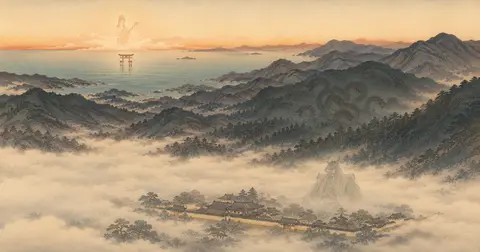
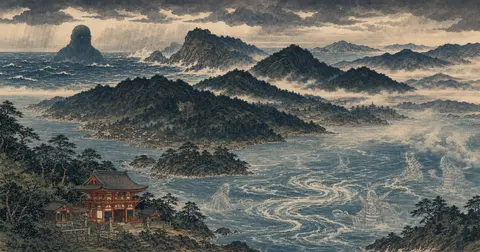
この島の聖性を、もっとも雄弁に物語るのが潮の満ち引きである。瀬戸内特有の大きな干満差によって、潮位が高い時には社殿も大鳥居も海上に浮かび、潮が引けば干潟が現れて鳥居の真下まで歩いていける。海と陸のあわいで一日に二度、世界が入れ替わる ── その境界の不安定さこそが、ここを神と妖しのものの通り道にしてきた。
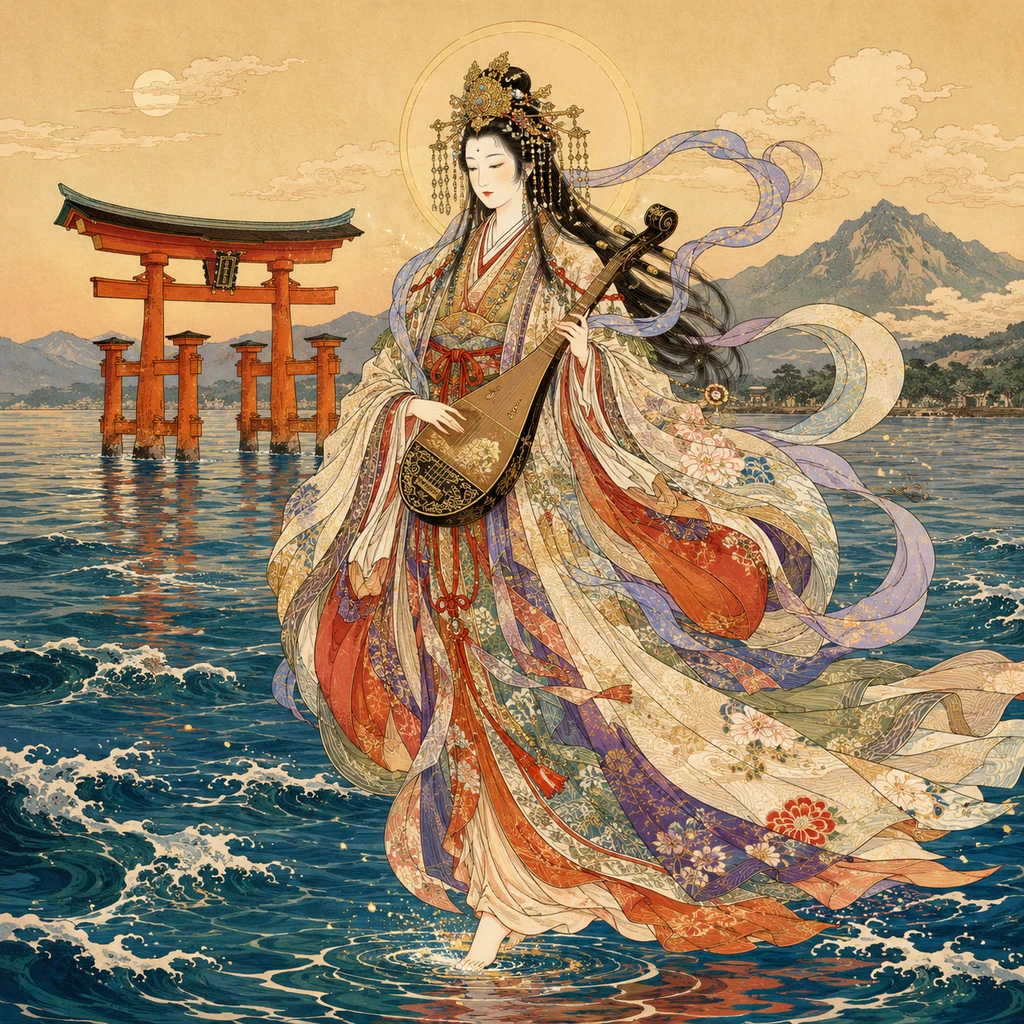
Ichikishima-hime

ichikishima-hime

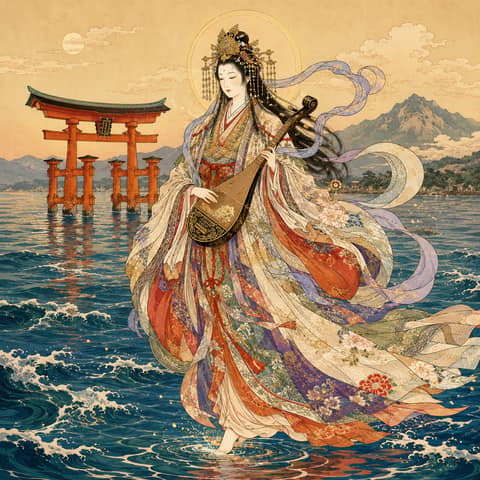
Ichikishima-hime (Ichikishima-hime-no-Mikoto) is one of the Munakata Three Goddesses (Tagori-hime, Tagitsu-hime, and Ichikishima-hime) and the principal enshrined deity of the World Heritage site, Itsukushima Shrine (Miyajima-cho, Hatsukaichi City, Hiroshima Prefecture). In the "Kojiki" and "Nihon Shoki," she appears in the episode of the oath (ukei) between Amaterasu Omikami and Susanoo-no-Mikoto, and is said to be one of the three goddesses born from the mist of breath blown out after Amaterasu chewed and broke Susanoo's Totsuka-no-Tsurugi (Ten-Span Sword). Her name "Ichiki" means "the princess of the island where deities are served and enshrined" (Itsuki-shima), marking her as a goddess governing the sea, voyages, and water. The Munakata Three Goddesses are enshrined at Munakata Taisha (Munakata City, Fukuoka Prefecture) as guardian deities of maritime traffic in the Genkai Sea of northern Kyushu. Her divided spirit (bunrei) was invited (kanjo) to Itsukushima Shrine in Aki/Miyajima, becoming the maritime guardian deity of the Seto Inland Sea. During the medieval period of shinbutsu shugo (syncretism of Shinto and Buddhism), she was syncretized with the Buddhist goddess Benzaiten due to their shared associations with water, wealth, and the performing arts, and was revered as "Itsukushima Daimyojin." Although Benzaiten (Daiganji Temple) and Ichikishima-hime (Itsukushima Shrine) were separated into distinct divine entities by the separation of Shinto and Buddhism in the Meiji era, the characteristic of being a beautiful goddess of water continues to be shared by both.

Read more

水の女神 ── 市杵島姫命と弁才天の習合

厳島神社の主祭神・市杵島姫命は、『古事記』『日本書紀』の誓約(うけい)神話に生まれた女神である。高天原に昇ってきた素戔嗚尊の真意を疑った天照大神が、素戔嗚尊の佩(は)いた十拳剣を噛み砕いて吹き出した息の霧から、田心姫命・湍津姫命・市杵島姫命の三柱が成った嚴島神社の御祭神。名の「イチキ」は神に仕えて斎き祀る「斎き島の姫」を意味し、海と航海と水を司る性格を初めから帯びている。

この水の女神の信仰を一段と豊かにしたのが、中世の神仏習合である。市杵島姫命は、水・財・芸能・美をつかさどる仏教の女神・弁才天と結びついた市杵島姫命と弁才天の習合。両者はともに「美しい水の女神」であるという一点で重なり合い、厳島は「厳島大明神」として神と仏が一体の信仰圏を築いた。隣接する大願寺(高野山真言宗)と厳島神社は、明治の神仏分離までひとつながりの大伽藍をなしていたのである。
#

厳島弁財天と境内の龍神

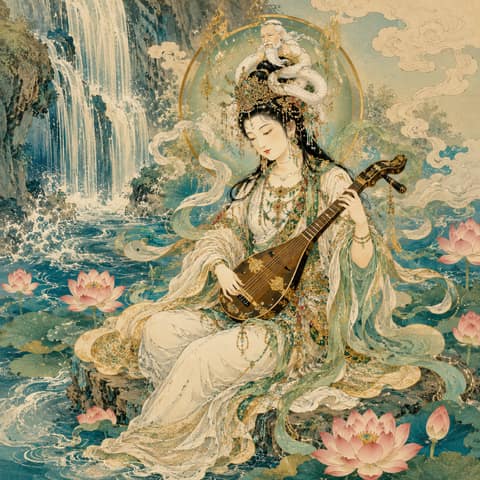
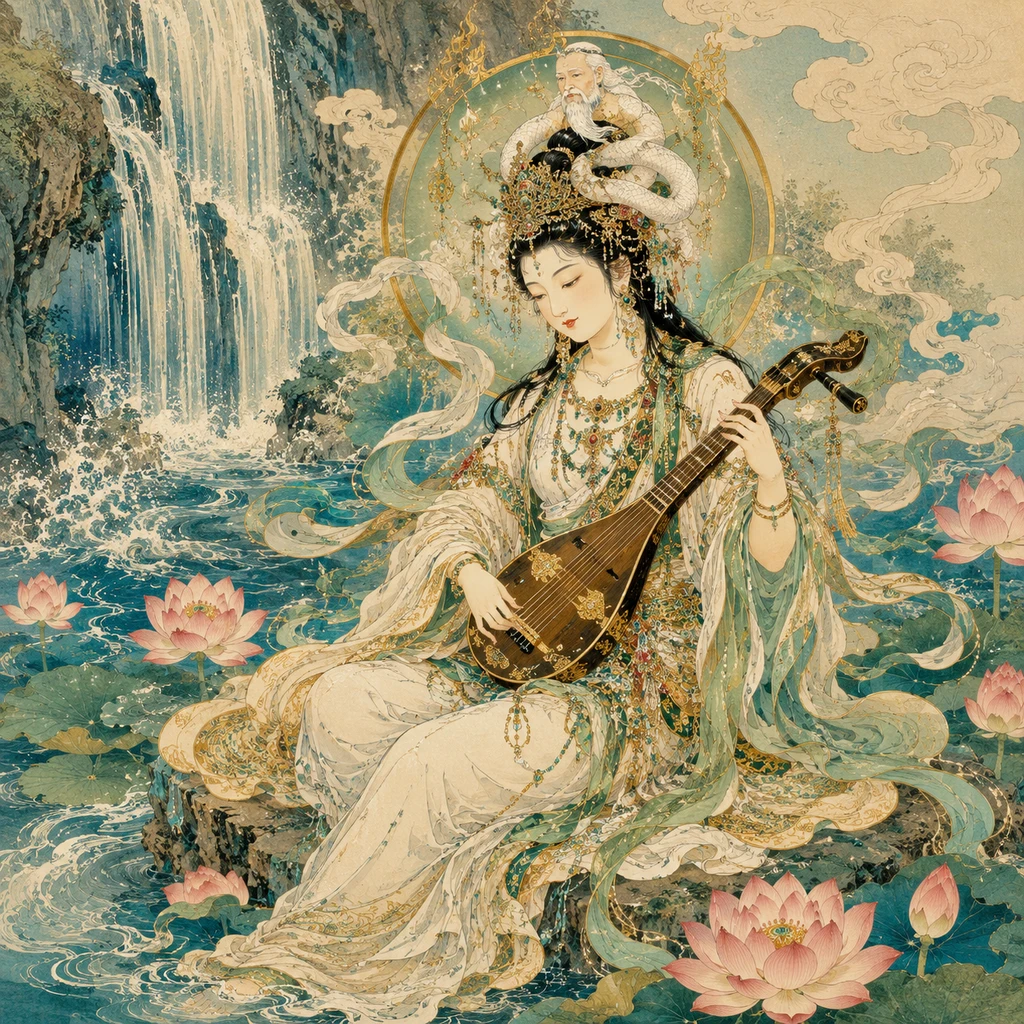
習合の核にいたのが弁財天だ。弁才天はもともと古代インドの川の女神サラスヴァティーに発し、音楽・学芸・言語・川の流れを司る神であった金光明経。それが仏教に取り込まれて鎮護国家の守護尊となり、日本では鎌倉時代以降、人頭蛇身の宇賀神と習合して財福の女神へと変容していく。「弁才天」が「弁財天」と書かれるようになるのは、まさにこの財福神化の軌跡である。

宮島の弁財天は、神奈川の江島・滋賀の竹生島と並ぶ「日本三大弁天」の一に数えられる厳島弁財天。本尊の厳島弁財天像は弘法大師空海の作と伝わる秘仏で、いまも一年にただ一日、六月十七日の大祭の日にだけ開帳される大願寺の厳島弁財天。そして弁財天は水神であるがゆえに、しばしば蛇神・龍神として現れる。大願寺の境内には弁財天の使いとされる厳島龍神が祀られ、海の女神信仰が龍という姿で結晶している。明治元年(一八六八年)の神仏分離令で、弁財天は大願寺へ、市杵島姫命は厳島神社へと神格が分けられたが、「美しき水の女神」という核は今も両者に共有されたまま残っている。

弁才天には、優しい財福神という顔だけでは収まらない一面もある。美しい女神ゆえに嫉妬深く、男女がそろって参拝すると縁を裂かれる ── そんな俗信が江島や厳島で語り継がれてきた。不浄や恋愛沙汰を嫌うという禁忌は、島全体に課された厳しい斎戒とも響き合っている。財をもたらす神であると同時に、境界を侵す者を退ける畏れの神でもあるのだ。

海の福神 ── 七浦に祀られた恵比須

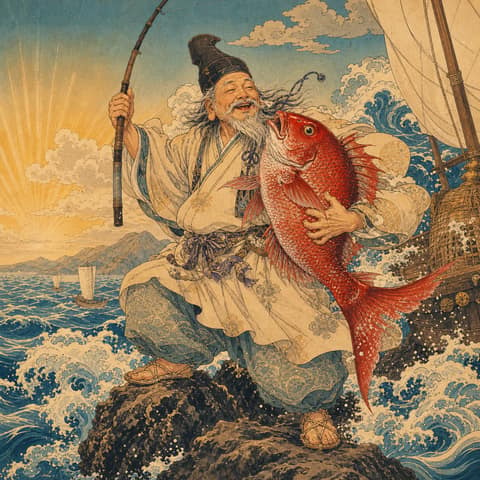
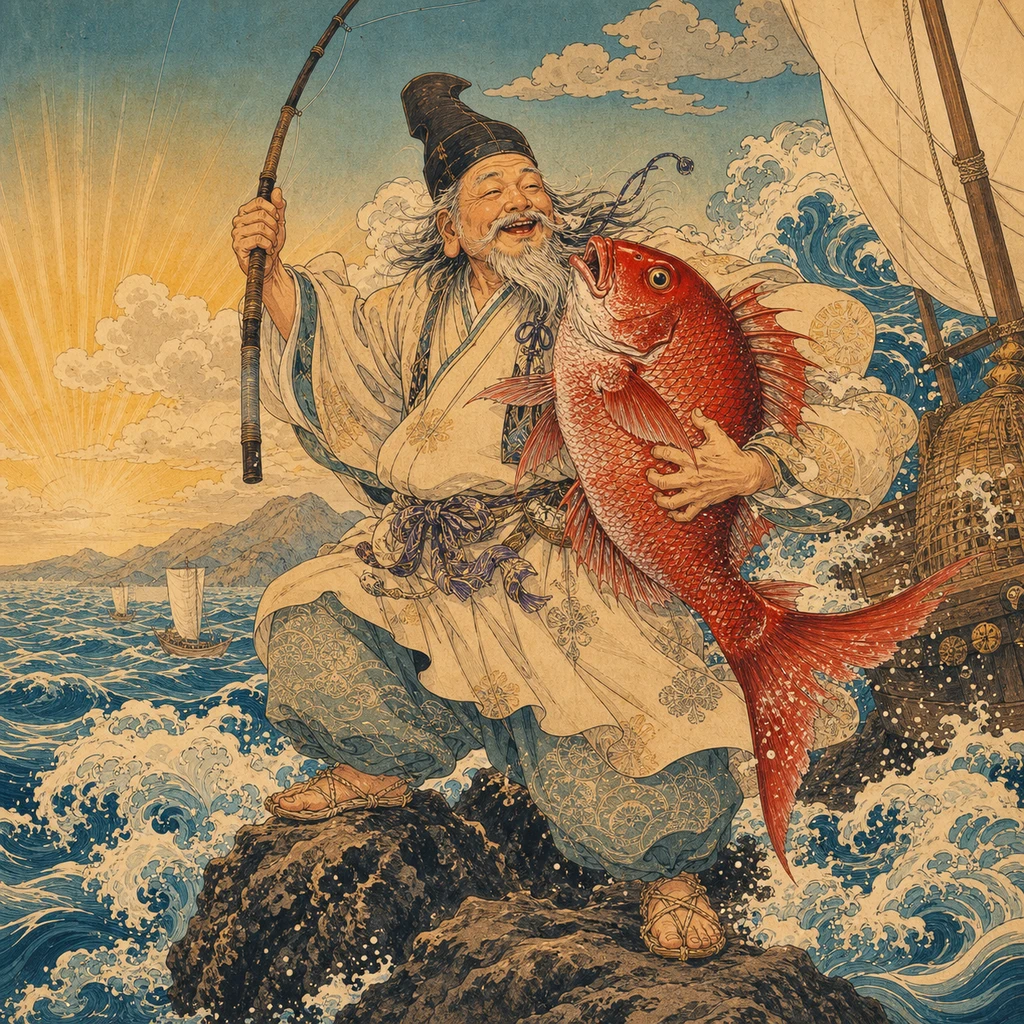
水の女神が島の中心に座すなら、島の縁(へり)を守るのが海の福神・恵比須である。恵比須は七福神のなかでただひとつの日本固有の神格で、鯛を抱え釣竿を持つ笑顔の老翁姿で知られる商売繁盛・漁業・航海の神だ恵比須の起源。その名は「えみし(蝦夷)」と同語源で、「遠くのもの・彼方からやってくるもの」を意味する ── 海の向こうの異界から福を携えて訪れる来訪神、それが恵比須の原像である。

宮島には、この海の来訪神を島ぐるみで祀る独特の信仰がある。厳島神社の摂社・末社のなかに、島の七つの浦に点在する恵比須の社を巡る「七浦(ななうら)めぐり」、いわゆる御島(おんしま)巡りの信仰が伝わるのだ御島巡りの七浦神社。海を生業とする者たちが船で島を一周し、入江ごとに鎮座する神々を拝んでまわる。中心の壮麗な社殿で水の女神を仰ぐだけでなく、島の輪郭に沿って海の福神を一つずつ訪ねていく ── この二重の構造に、宮島が陸の聖地であると同時に海の聖地でもあったことがよく表れている。異界から訪れる恵比須を島の縁(ふち)に配することで、海からやってくる福も災いも、まず神々の前を通らねばならなくなるのである。

山の鬼神 ── 弥山の三鬼大権現と天狗

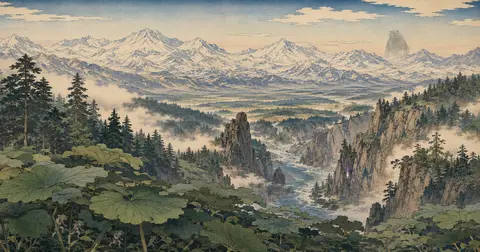
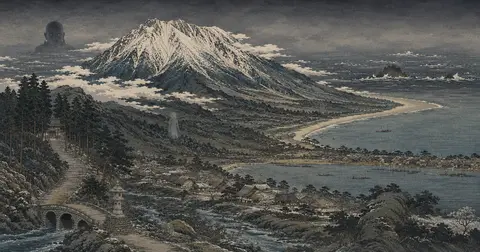
海と水の女神に満ちた宮島だが、その背後にはもう一つの聖域がそびえている。標高五三五メートルの霊峰・弥山(みせん)だ。社殿の朱が海に映える麓とは対照的に、弥山は鬱蒼とした原始林に覆われ、巨岩が累々と積み重なる修験の山である。ここに祀られているのが、この島の妖怪文化の中でもっとも異色の存在 ── 日本でただひとつ「鬼」を本尊として祀る神、三鬼大権現である。

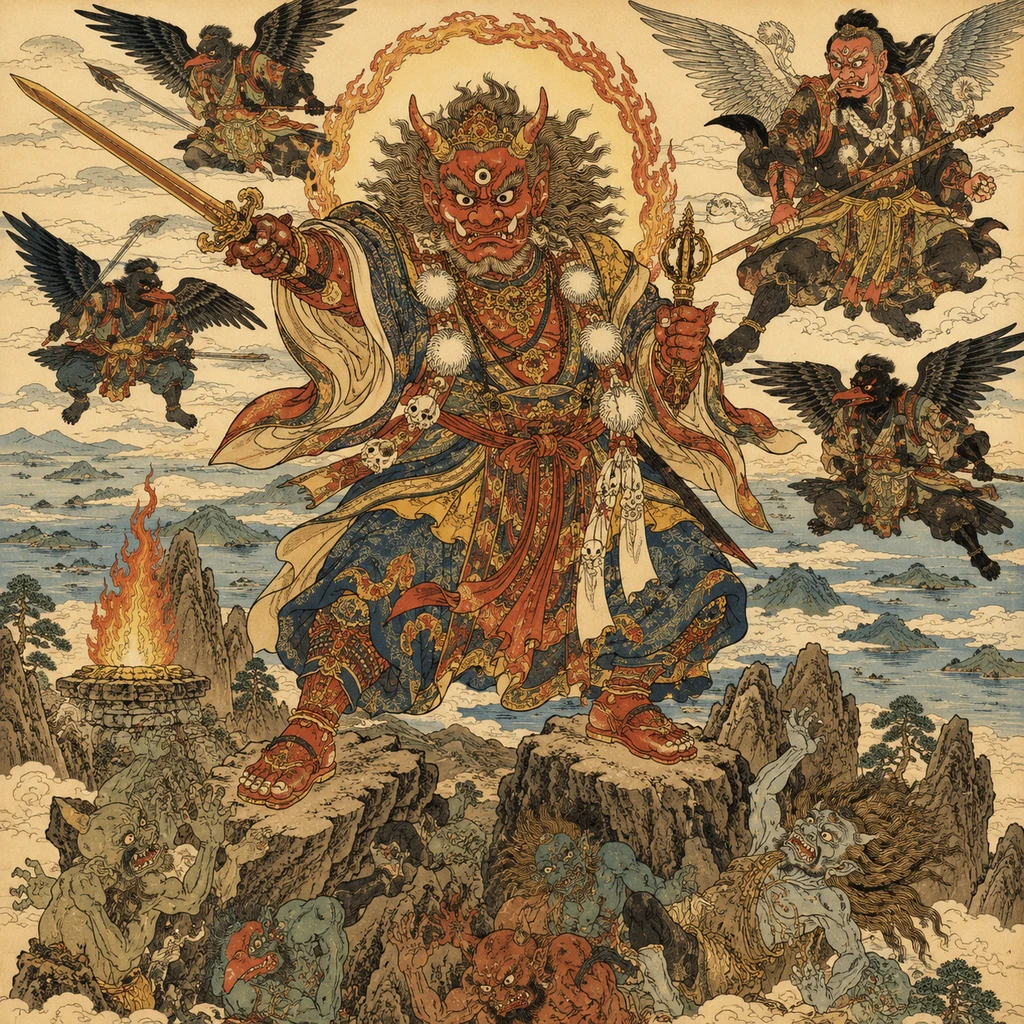
弘法大師空海は大同元年(八〇六年)、唐から帰朝してまもなく弥山を開いたと伝わり、その折に三鬼大権現を勧請して祀ったのが始まりとされる弥山の開基。三鬼大権現とは、追帳鬼神(ついちょうきしん)・時眉鬼神(じびきしん)・魔羅鬼神(まらきしん)という三体の鬼神を一体としたものだ三鬼大権現。追帳鬼神は福徳をつかさどり大日如来を、時眉鬼神は智慧をつかさどり虚空蔵菩薩を、魔羅鬼神は降伏(魔を降す力)をつかさどり不動明王を、それぞれ本地仏とする。本来は人を畏れさせる鬼が、ここでは魔を払い衆生を守る善神へと反転している ── 鬼を福徳・智慧・降伏の三徳に配するこの発想にこそ、山岳仏教と天狗信仰が溶け合った宮島独自の信仰の妙がある。

#

天狗の棲む霊山

弥山には古来、天狗が出ると言い伝えられてきた。三鬼大権現は大小の天狗を眷属(けんぞく)として従えるとされ、山そのものが天狗の領域と見なされてきたのである。これにまつわる伝説が、江戸初期の安芸国主・福島正則の天狗退治譚だ。弥山に天狗が出るというので退治に向かった福島正則だったが、山伏の姿に化けた天狗の威にすっかり恐れをなして退散し、のちに立派な三鬼堂を建てて篤く祀ったところ、二度と天狗は現れなくなったという。武将すら屈服させる山の威 ── それを鎮めるのが鬼神への帰依であった。

弥山の信仰を象徴するのが、山頂近くの霊火堂に灯る「消えずの霊火」である。空海が修行の折に焚いた護摩の火が、千二百年のあいだ昼夜絶えることなく燃え続けていると伝わり消えずの霊火、この火は広島平和記念公園の「平和の灯」の元火にもなった。鬼神と天狗が守る山に、消えぬ火が燃え続ける ── 弥山は宮島のもう一つの心臓である。

近代に入ると、この鬼神は意外な崇敬者を得た。初代内閣総理大臣・伊藤博文である。伊藤は三鬼大権現を篤く信仰し、弥山への参詣道の整備にも力を尽くしたと伝えられる。三鬼堂に掲げられた扁額には、伊藤博文自筆の文字が残るという。海の女神を平清盛が、山の鬼神を伊藤博文が ── 時代を隔てた為政者たちが、それぞれ宮島の神に手を合わせてきたのである。

地名と妖怪の結節点 ── 鳥居・干潟・神鹿

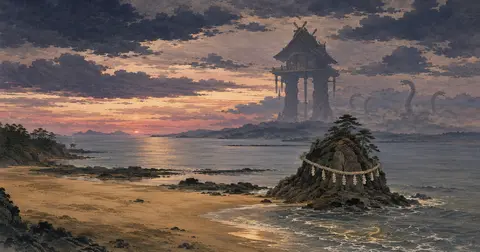
宮島の妖しのものは、特定の場所に強く結びついている。まず海上の大鳥居だ。陸と海の境に立つこの朱の門は、水の女神の領域への入口であり、潮の満ち引きとともに足元を海に浸す。境界に立つ門が満潮で海に溶け、干潮で歩いて渡れる地面に変わる ── この日に二度の変容こそ、市杵島姫命と弁才天という「水の女神」の神格を、目に見えるかたちで島に刻み込んだものだ。

島を歩く者がまず出会うのは、人を恐れぬ鹿たちである。宮島の鹿は、本州と陸続きだった頃の鹿が島に取り残されて野生化したものとされるが、島が神聖視されてきたために古来手厚く保護されてきた宮島の鹿。鎌倉期の西行が島に多くの鹿を見たという記録が残り、明治十二年(一八七九年)には島全体が狩猟禁止区域に指定されている。春日大社のように鹿を明確な神使とする由緒はないものの、神の島に棲む生きものとして、鹿は宮島の聖性を体現する存在であり続けてきた。

  • 大鳥居 ── 水の女神の領域への門。潮の満ち引きで海に浮かび、また干潟に降り立つ境界の標。

時代を貫く神々 ── 平家から世界遺産へ

厳島の信仰史を語るうえで欠かせないのが、平清盛の存在である。瀬戸内海の制海権を握り巨万の富を得た安芸守・平清盛は、夢のお告げに導かれて厳島神社を篤く崇敬し、仁安年間(一一六六〜六九年頃)に現在見られる寝殿造の海上社殿を大造営した平清盛の造営。平家一門は長寛二年(一一六四年)に、一族が一巻ずつ書写・荘厳した豪奢な装飾経 ── 国宝『平家納経』を厳島に奉納している。海の女神への祈りと、海を制した一門の栄華が、ここで分かちがたく結びついた。

中世には弁才天信仰の隆盛とともに「厳島大明神」として神仏一体の聖地が完成し、市杵島姫命は宗像三女神のなかでもっとも著名な女神となった。やがて明治の神仏分離が神と仏を引き剥がし、弁財天は大願寺へ、市杵島姫命は厳島神社へと分かたれる。だがその後も島は聖性を失わず、一九九六年には厳島神社が世界文化遺産に登録された。古代の海上守護神から、平家の守護神、中世の神仏習合の女神、そして世界遺産へ ── 千四百年を貫いて、宮島は神々と妖しのものを抱きしめてきた。

海に立つ朱の鳥居の下に水の女神が座し、島の縁を海の福神がめぐり、背後の山には鬼神と天狗が棲む。福と畏れ、陸と海、神と仏、人と妖し ── 相反するものがことごとく一つの島で出会い、潮の満ち引きとともに姿を変え続ける。それが厳島という、日本でも稀有な聖地の正体である。より広い瀬戸内と中国山地の妖怪文化については、広島県の妖怪事典もあわせて辿ってほしい。
All yokai of Itsukushima Shrine4

Complete list of yokai linked to Itsukushima Shrine, including those not featured in the article above.

  • Ichikishima-hime

    Ichikishima-hime

    Divine

    ichikishima-hime

    Goddess of the Sacred Island Guarding the Sea, Ichikishima-hime

    Deity/Divine SpiritItsukushima Shrine (Present-day Miyajima-cho, Hatsukaichi City, Hiroshima Prefecture) / Munakata Taisha (Present-day Munakata City, Fukuoka Prefecture)

    The core of Ichikishima-hime's divine nature lies in being the "Princess of the Enshrined Island"—a goddess residing in the island itself where deities are worshipped. In Munakata (the Genkai Sea), she protects maritime traffic with the continent, and in Aki (the Seto Inland Sea), she guards the inner sea routes. As indicated by the divine decree regarding the "sea route," she is positioned as a boundary-protecting goddess connecting the nation and the sea. Through her syncretism with Benzaiten, her virtues of water, wealth, performing arts, beauty, and wisdom are layered. The majestic stage setting of Itsukushima Shrine's marine pavilions and vermilion Otorii gate symbolizes her divinity. The landscape itself, where the shrine appears to float on the high tide and connects to the land at low tide, is a manifestation of the goddess governing the boundary between sea and land, the sacred and the profane. She shares deep divine connections with her sister goddesses of the Munakata triad (Tagori-hime and Tagitsu-hime), her syncretized counterpart Benzaiten, and Ebisu, who is also a deity of the sea and good fortune.

  • Ebisu

    Ebisu

    Legendary

    えびす

    Ebisu

    Divine Spirit / DeityNishinomiya Shrine (present-day Nishinomiya, Hyogo; Hiruko tradition) / Miho Shrine (present-day Matsue, Shimane; Kotoshironushi tradition)

    "Ebisu" as an Ancient Japanese Belief in the Sea and the Otherworld. While the basic description touches upon the two major origin theories of Ebisu, a thorough analysis reveals the deep layers of "Ebisu" as an indigenous ancient Japanese belief in the sea and the otherworld. The fact that "ebisu" and "emishi" share the same etymology indicates that ancient Japanese collectively referred to beings arriving from "beyond, the otherworld, or boundaries" as "ebisu," finding abundance, fortune, and auspiciousness in them. As a representative example of the "visiting deity (Marebito)" belief systematized by Shinobu Orikuchi, it forms the core of widespread otherworldly and abundance beliefs in ancient Japan. The Hiruko Myth ── The Narrative Archetype of Deformity, Exile, and Rebirth. The Hiruko myth passed down in the *Kojiki* and *Nihon Shoki* (a deformed child set adrift in a reed boat who is reborn as a deity of abundance in a foreign land) is a representative example of the narrative archetype of "deformity, boundaries, and rebirth" in ancient Japan. The process by which Hiruko washed ashore in Nishinomiya and gained the reverence of fishermen to become Ebisu is the result of this universal religious motif uniquely developing in connection with Japan's indigenous marine and fishing culture. The Kotoshironushi Myth ── The Origin of Ebisu in the Land Transfer Myth. Kotoshironushi, the eldest son of Okuninushi, is a crucial deity who negotiated with Takemikazuchi on his father's behalf in the land transfer myth. The process of Kotoshironushi, who was fishing at Mihogasaki, hearing of the messenger's arrival and advising his father to accept the transfer is a religious expression of the political integration of the center (Amatsukami) and the regions (Kunitsukami) in ancient Japan. The concrete image of a fishing deity flowed directly into the later iconography of Ebisu holding a sea bream and a fishing rod. Coexistence of Two Major Origin Theories ── Hiruko and Kotoshironushi Lineages. The fact that the two major origin theories—Hiruko (Nishinomiya Shrine lineage) and Kotoshironushi (Miho Shrine lineage)—coexist and have been passed down without being completely unified demonstrates the flexibility and plurality of Japanese religious culture. The Edo period Seven Lucky Gods faith integrated both lineages under the common name "Ebisu-sama," and the common people affectionately embraced him as the "god who brings business prosperity and fortune" without strictly distinguishing between the two. Sea Bream, Fishing Rod, Smile ── Medieval and Early Modern Iconography. The modern image of Ebisu (sea bream, fishing rod, smile, ori-eboshi, kariginu) is a culmination of unique designs established in medieval and early modern Japan. (1) The sea bream is a symbol of ancient Japanese fishing, commerce, auspiciousness, and the color red. (2) The fishing rod is a symbol of ancient fishing, rituals, and the Kotoshironushi myth. (3) The smile (Ebisu face) is an expression of gentleness common to gods of fortune since the Middle Ages. (4) The ori-eboshi and kariginu visually emphasize Ebisu's uniqueness as a "fortune god unique to Japan." Toka Ebisu ── The Festival Culture of Edo Period Commoner Faith. The Toka Ebisu in Kansai (January 9-11) is a representative Ebisu festival established in the Edo period, held on a large scale at places like Imamiya Ebisu, Nishinomiya Shrine, and Kyoto Ebisu Shrine. The accompanying chant "Bring a bamboo branch for business prosperity" and the conferment of lucky charms like the fuku-zasa support the collective prosperity prayers of merchants, restaurants, and individual worshipers. Ebisu in the 21st Century ── Urban Culture and Modern Prosperity Prayers. Today, Ebisu is widely embraced as the principal deity for Japanese commerce, dining, fishing, navigation, and new business prayers. The place name "Ebisu" around Ebisu Station in Shibuya, Tokyo, originated from the YEBISU Beer factory in the Meiji era and enjoys nationwide fame as a symbolic name for modern urban culture and commercial districts. Repeatedly reshaped in subculture works, he represents a prime example of ancient marine and otherworldly beliefs transforming into a modern Japanese pop icon.

  • Benzaiten

    Benzaiten

    Legendary

    べんざいてん

    Default

    Deities & Divine SpiritsAncient India (Sarasvatī) / Enoshima Shrine (Fujisawa City, Kanagawa; founded 552) / Itsukushima Shrine (Hatsukaichi City, Hiroshima) / Hogon-ji Temple on Chikubu Island (Nagahama City, Shiga) / Tenkawa Daibenzaiten-sha (Tenkawa Village, Nara)

    From Sarasvatī to Benzaiten — Two Thousand Years of Cultural Transformation. While the basic description touches on Benzaiten's major sanctuaries and folk beliefs, this in-depth analysis explores her cultural evolution spanning over two millennia from ancient India's Sarasvatī to modern Japan's Benzaiten. Sarasvatī is one of the oldest deities in the Rigveda (c. 1500–1200 BCE), governing river flows, music, arts, language, and poetry. After being adopted into Buddhism, she was transformed into a tutelary deity in the Golden Light Sutra and Lotus Sutra, spreading to China, Korea, and Japan. In Japan, she evolved through several stages: (1) as a scriptural protector during the ancient Ritsuryo Buddhist period (7th–9th centuries); (2) merging with Ugajin to form Uga-Benzaiten in the medieval Kamakura period; (3) becoming a deity of wealth and a member of the Seven Lucky Gods in the early modern Edo period; (4) having her enshrined identity frequently altered to Ichikishimahime during the Meiji era's separation of Shinto and Buddhism; and (5) transitioning into a subject of modern superstitions, tourism, and subculture. She stands as a prime example of an ancient deity's cultural evolution, continuously transmitting her legacy while altering her appearance, attributes, and name over two millennia. Ugajin — The Mysterious Human-Headed Snake Deity. Ugajin, who merged with Benzaiten from the Kamakura period onward, is a bizarre figure depicted with a human head and a coiled snake body, and remains a mystery in academic studies. While the etymology of "Uga" points to the grain deity Ukanomitama from the Kojiki and Nihon Shoki, the origins of the serpent imagery are debated, with theories citing influences from the Chinese creator deities Fuxi and Nuwa, the Indian Naga (serpent gods), and indigenous Japanese snake worship from sites like Mount Miwa and Suwa. The amalgamation of a "uniquely Japanese snake deity of unknown origin" with a "Buddhist goddess of Indian origin" to form Uga-Benzaiten is a symbolic testament to the syncretism, creativity, and mysticism of medieval Japanese religious culture. Two-Armed vs. Eight-Armed Statues — Dual Iconographic Lineages. There are two main lineages of Benzaiten statues. (1) Two-Armed Statues: Depicting an elegant heavenly maiden playing a biwa (lute). This lineage inherits the original musical goddess nature of Sarasvatī and has been the traditional form in Japan since the Heian period. (2) Eight-Armed Statues: Depicting a heavily armed warrior goddess holding eight weapons and ritual implements such as a sword, jewel, bow, arrow, axe, halberd, dharma wheel, and vajra. This form, described in the 5th–6th century Chinese translation of the Golden Light Sutra, emphasizes her role as a protector of the state. The eight-armed figure embodies a fierce martial nature quite distinct from the "elegant goddess of arts" image. Combined with the medieval serpentine form of Ugajin, Benzaiten evolved into an immensely complex deity integrating "elegance, martial prowess, magic, and wealth." The Folklore of Serpentine Transformation — A Layering of Water, Wealth, and Fertility Gods. The transformation of Benzaiten (Uga-Benzaiten) into a snake deity is a folkloric phenomenon deeply intertwined with ancient Japanese snake worship (Mount Miwa, Suwa, Usa, Kumano, etc.). In ancient Japan, the snake was revered as a deity uniting four attributes: water (shrines by rivers, ponds, and the sea), wealth (shedding skin, infinite multiplication), fertility (grain and land), and healing (medicine and taboos). As a result of Benzaiten's fusion with Ugajin and acquisition of snake deity traits, all layers of ancient snake worship—waterside shrines, snakes in wallets, shed skin amulets, and prayers for healing—have been inherited as part of "Benzaiten faith." Even today, modern superstitions like "money-washing water, wallet snakes, and relationship-severing" vividly demonstrate the living heritage of a folk culture where ancient snake gods, medieval Benzaiten, early modern wealth deities, and modern tourism intersect. The Couples' Taboo — Modern Superstition of a Jealous Goddess. At major Benzaiten sanctuaries (especially Enoshima and Itsukushima), a modern superstition prevails that "couples who visit together will incur the beautiful goddess's jealousy and break up." This is a modern variation of an ancient Indian fierce goddess nature (Sarasvatī is sometimes depicted as the wife of Brahma, possessing jealousy and passion), medieval Japanese snake attributes (snakes were symbols of jealousy and attachment), and ascetic taboos such as the historic ban on women on sacred mountains. Going beyond mere superstition, it stands as a fascinating phenomenon condensing the complex religious, folkloric, and psychological history from antiquity to the present, making it a subject of study in 21st-century folklore, psychology, and tourism studies. At the same time, connections with "relationship-severing shrines" (like Yasui Konpiragu in Kyoto) have been noted, showing how Benzaiten's taboo nature integrates with modern cultural practices of seeking separation. The Seven Lucky Gods Faith and Edo Commoner Culture. As the only female member of the Seven Lucky Gods (Ebisu, Daikoku, Bishamonten, Benzaiten, Fukurokuju, Jurojin, and Hotei) established in the Edo period, Benzaiten became a central figure in commoner culture. Practices such as the New Year's Seven Lucky Gods pilgrimage, placing a treasure ship picture under one's pillow, hatsumode (first shrine visit of the year), and praying for business prosperity deeply permeated Edo daily life. This represents a significant cultural shift from the medieval Uga-Benzaiten faith (esoteric Buddhism, mysticism, aristocratic culture) to the early modern Seven Lucky Gods faith (commoners, commerce, urban culture). Benzaiten's early modern worship marks a crucial milestone in an epic cultural transformation spanning over two millennia: from an ancient Indian goddess of arts, to a medieval Japanese esoteric deity, to an early modern Japanese deity of wealth, and finally into a subject of modern tourism and subculture. Benzaiten in the 21st Century — Tourism, Subculture, and Severing Ties. In the 21st century, Benzaiten's legacy continues as a tourism resource through the Three Great Benten Shrines, nationwide Benten shrines, and Seven Lucky Gods pilgrimages. Simultaneously, she is repeatedly reimagined in subculture works, such as the video games *Okami* and *Megami Tensei*, and the manga *Nura: Rise of the Yokai Clan*. She has become a multifaceted icon where ancient Indian goddess traits, medieval Japanese snake attributes, early modern wealth associations, and modern relationship-severing taboos intersect. As a rare example of a single deity embodying over two thousand years of cultural evolution—from Sarasvatī in ancient India to Benzaiten in modern Japan—she remains a vital subject of study in yokai studies, folklore, religious history, and comparative mythology.

  • Sanki Daigongen

    Sanki Daigongen

    Epic

    sanki-daigongen

    Japan's Only Demon God Guarding Mount Misen, Sanki Daigongen

    Oni/Giant MonsterMount Misen (Present-day Miyajima-cho, Hatsukaichi City, Hiroshima Prefecture, Sankido on Miyajima) / Daisho-in Temple

    The core of Sanki Daigongen lies in its reversed divine nature, transforming the originally feared oni into a "guardian deity that wards off evil." The three demon gods—Tsuicho, Jibi, and Mara—each govern fortune, wisdom, and subjugation, with Dainichi Nyorai, Kokuzo Bosatsu, and Fudo Myoo as their original Buddhist forms. This trinity structure demonstrates the fusion of the Honji Suijaku (original reality and manifested traces) thought of Shingon esoteric Buddhism with mountain asceticism and tengu worship. The fact that it commands large and small tengu as familiars is directly connected to folk tales of Mount Misen being a spiritual mountain of tengu (like the tale of Masanori Fukushima's tengu extermination). It embodies the sacredness of Mount Misen itself, characterized by Kukai's founding, the unextinguishable spiritual fire, and the strange rock formations likened to Mount Sumeru. The Itsukushima Shrine (Ichikishima-hime and Benzaiten) on the sea and Sanki Daigongen on the mountain form a pair as the guardian deities of the two poles of Miyajima—the sea and the mountain.

Read on ── other regions