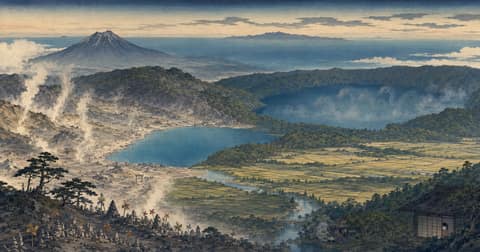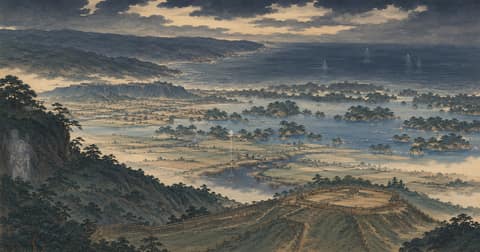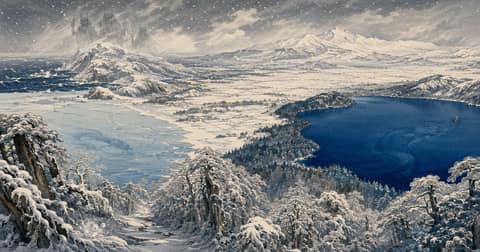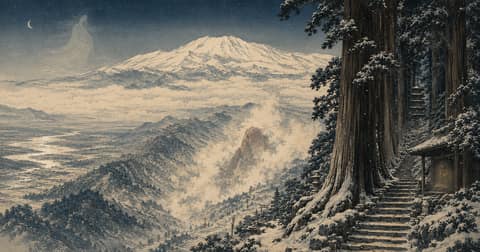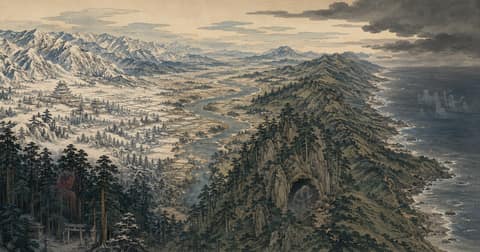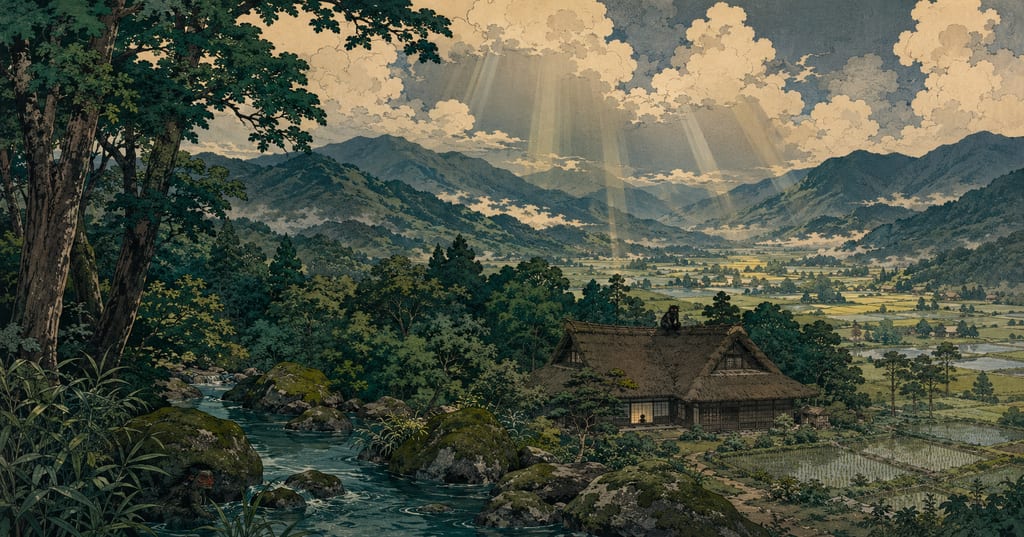
In the inland of Iwate Prefecture, there is a small basin surrounded by mountains on all four sides: Tono-go. This land is special not because it has many yokai, but because its yokai were "recorded." In 1910, when the mysterious tales passed down in this mountain village were written down in a single book, Japanese yokai changed for the first time from being laughable superstitions to subjects of academic research. The name of that book is *The Tales of Tono* (*Tono Monogatari*).
Tono-go forms one pole of the yokai culture in Iwate Prefecture. For a complete picture of the prefecture, see the Iwate Yokai Encyclopedia. This article will take you on a walk through the basin itself that served as the origin, and the very site of the book that transformed yokai into academia.
A Single Book Transformed Yokai into Academia
Zashiki-warashi
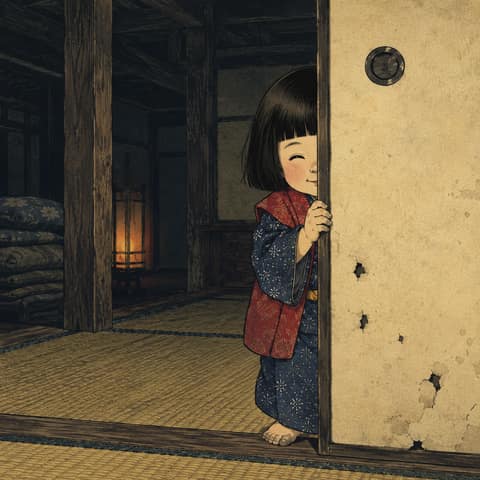
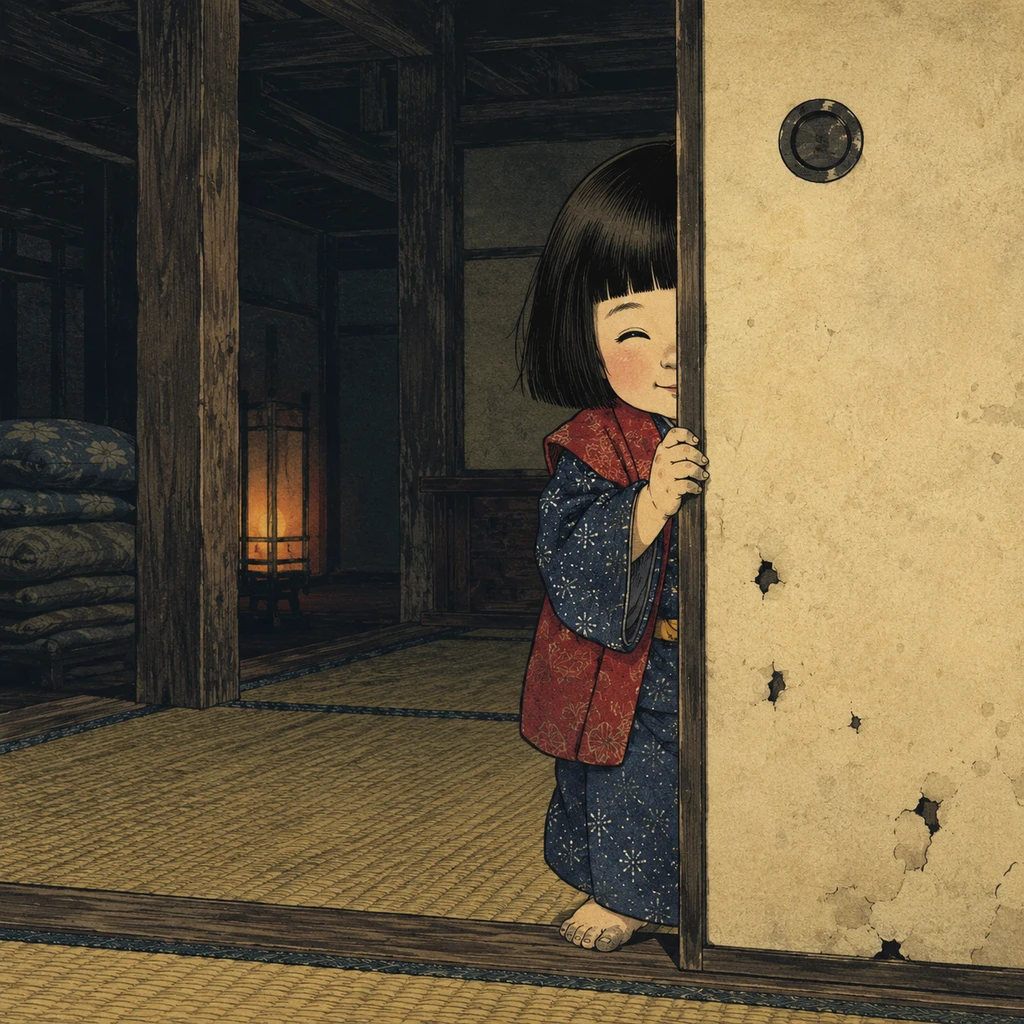
The zashiki-warashi is a household kami or uncanny presence said to dwell in old homes in Tōhoku, especially Iwate. It is often described in a child’s form, but no single appearance defines it. Kunio Yanagita’s Tales of Tōno, Tale 17 records a boy of about twelve or thirteen; in the same tale, an unseen presence makes itself known only by the rustle of paper in the next room and the sound of snuffling. Tale 18 speaks of two young girls, while later local accounts include a child in a red kosode, an old woman, an old man, and beings that show only long, slender hands. The zashiki-warashi is also associated with a household’s prosperity and decline. Tales of Tōno calls it a “kami” and says that a home where it dwells may enjoy wealth and distinction; other stories tell of a household’s fortunes failing after the child has left. This is not a uniform portrait of a capricious being that metes out punishment. It is a folkloric way of linking an inhuman presence felt within a home with that home’s flourishing and decline. The name “zashiki-warashi” seems to have functioned less as the proper name of one being than as an umbrella term for uncanny presences described inside the home. The setting may be a formal room, storehouse, kitchen area, earthen-floored room, or beneath the floor—spaces at the edge of daily life and the house itself. Such a presence may meet a person, or be reported only as a sound, an oppressive sensation, or an unfamiliar shadow. The child figure is an important representative image, not a standard form that erases the range of these accounts. Kizen Sasaki’s collected accounts do not reduce the zashiki-warashi to a simple “child who brings happiness.” They encompass distinct stories associated with formal rooms, storehouses, kitchens, and underfloor spaces, and their names vary from place to place. Some records consider links with the deaths of infants or infanticide, but Sasaki presents these as matters for comparison rather than declaring them the origin of every zashiki-warashi. The term names a broad and varied body of tradition: a sense that someone else is present within the home, carried forward through local memory and stories of a household’s fortunes.
Read moreThe author of *The Tales of Tono* was Kunio Yanagita, who was then an official at the Ministry of Agriculture and Commerce. However, it was not Yanagita who "told" the stories. Kizen Sasaki (pen name Kyoseki), a literary youth from Tono, told the mysterious stories passed down in his hometown to Yanagita, who transcribed and compiled them into this book. The two met in 1908 through the introduction of the literary figure Yoshu Mizuno. Drawn in by Sasaki's storytelling, Yanagita self-published the book two years later, printing a mere 350 copies to bring it to the world[1].
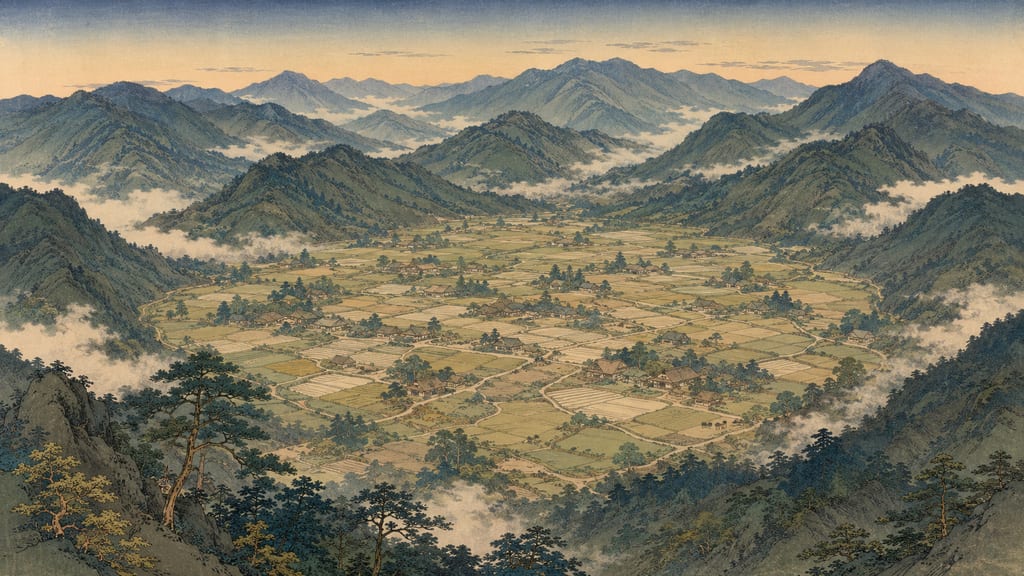
The Tono Basin, though connected to the outside world through horse breeding and highways, was closed off by high mountains on all sides, making it a land where old tales survived intact. This isolation, requiring one to cross mountains whether coming from Morioka or the coast, provided the soil where people continued to talk about the child of the parlor (Zashiki-warashi) and the kappa of the river as if they were matters of just yesterday. Yanagita's visit may have coincided precisely with the final era when those old tales were still vividly alive.
Why did this single book become a turning point in the history of Japanese yokai? It was because Yanagita did not attempt to "explain" the mysteries. Intellectuals of the time either dismissed stories of kappa and Zashiki-warashi as the superstitions of ignorant country folk, or tried to logically debunk them with science. Yanagita did neither. He recorded the stories that the people of Tono "currently believed" in as unchanged a form as possible, and wrote in the preface: "I desire that these tales be told to make the people of the plains shudder" ── hoping that telling these stories would send shivers down the spines of the rational people living in the plains. Not judging the mysteries, but recording them from within the hearts of those who believe. This attitude became the starting point of what would later be known as Japanese folklore studies.
The storyteller, Kizen Sasaki, also did not end up as a mere informant. He spent the rest of his life collecting folktales from the Tohoku region, leaving behind a vast collection of folktale books including *Kikimimizoshi*, and came to be known as the "Japanese Grimm." In his later years, although Sasaki parted ways with Yanagita, he never stopped his work of recording the tales of his hometown. Yanagita, who achieved greatness as a scholar, and Sasaki, who remained rooted in the soil of his hometown ── though their positions differed, without the two of them, the mysteries of Tono would likely have quietly vanished along with the deaths of the storytellers, just like the folktales of many other lands. The one who told, and the one who recorded. The coincidence that the meeting of these two men occurred in a small basin in the Kitakami Mountains changed the very nature of Japanese yokai.
Zashiki-warashi ── The Child God Who Governs Wealth and Downfall
Among the numerous stories in *The Tales of Tono*, the most well-known and the most characteristic of Tono is the Zashiki-warashi.
The 17th tale[1] explains it thus ── A god called Zashiki-warashi lives in the inner parlor of old families, and most of them have the appearance of a child of twelve or thirteen. They make the rustling sound of paper in the next room, snort, and run with tiny footsteps across the bed. And "the house where this god dwells enjoys wealth and honor at will," meaning a house where this child god lives will prosper.
However, the core of the Zashiki-warashi story is not wealth itself, but the "fleeting nature" of wealth. The downfall of the Yamaguchi Magozaemon family told in the 18th tale represents the extreme end of this. One day, a man from the village met two beautiful girls he had never seen before by the bridge at Tomeba. When asked "Where did you come from?", the girls replied, "We came from Yamaguchi's Magozaemon. We are going to another house now." ── The Zashiki-warashi had left the house. Shortly after that, the entire Magozaemon family, over twenty masters and servants, died in a single day from mushroom poisoning; the only survivor was a seven-year-old girl who happened to return to the house during the day. If the god who promised wealth leaves, the house is ruined in a day. Zashiki-warashi is the awe of the rise and fall of a family, which cannot be controlled by human power, crystallized into the form of a child.
What conveys this child god to the present as a "meetable" existence is an inn in Iwate. At Ryokufuso in Kindaichi Onsen, Ninohe, the spirit of Kamemaro, the young child of a defeated samurai who fled north during the Nanboku-cho period, is enshrined as a Zashiki-warashi, and it has even been said that those who see his figure will achieve success. Although the main building burned down in a fire in 2009, the shrine enshrining Kamemaro survived and was later rebuilt, with a never-ending stream of people wishing to stay there today. It brings wealth, but one never knows when it will leave ── this duality of the Zashiki-warashi has always nestled close to the hearts of people who desire wealth yet know its fragility throughout any era. The faith in Zashiki-warashi has extended its branches beyond the basin.
Snow and Funeral Processions ── The Woman of Little New Year,
the Cat of the Funeral
The winters in Tono are long, and the darkness is deep. Two mysteries stand within that darkness.
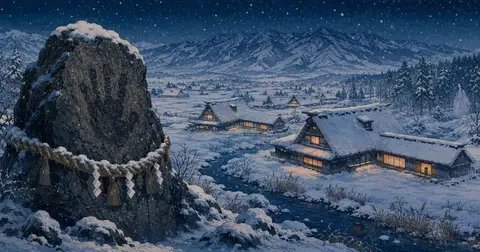
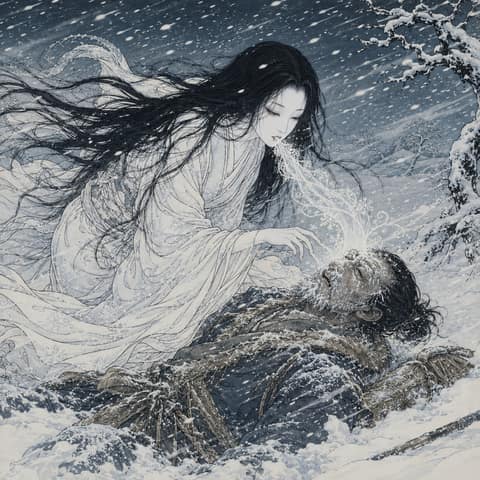
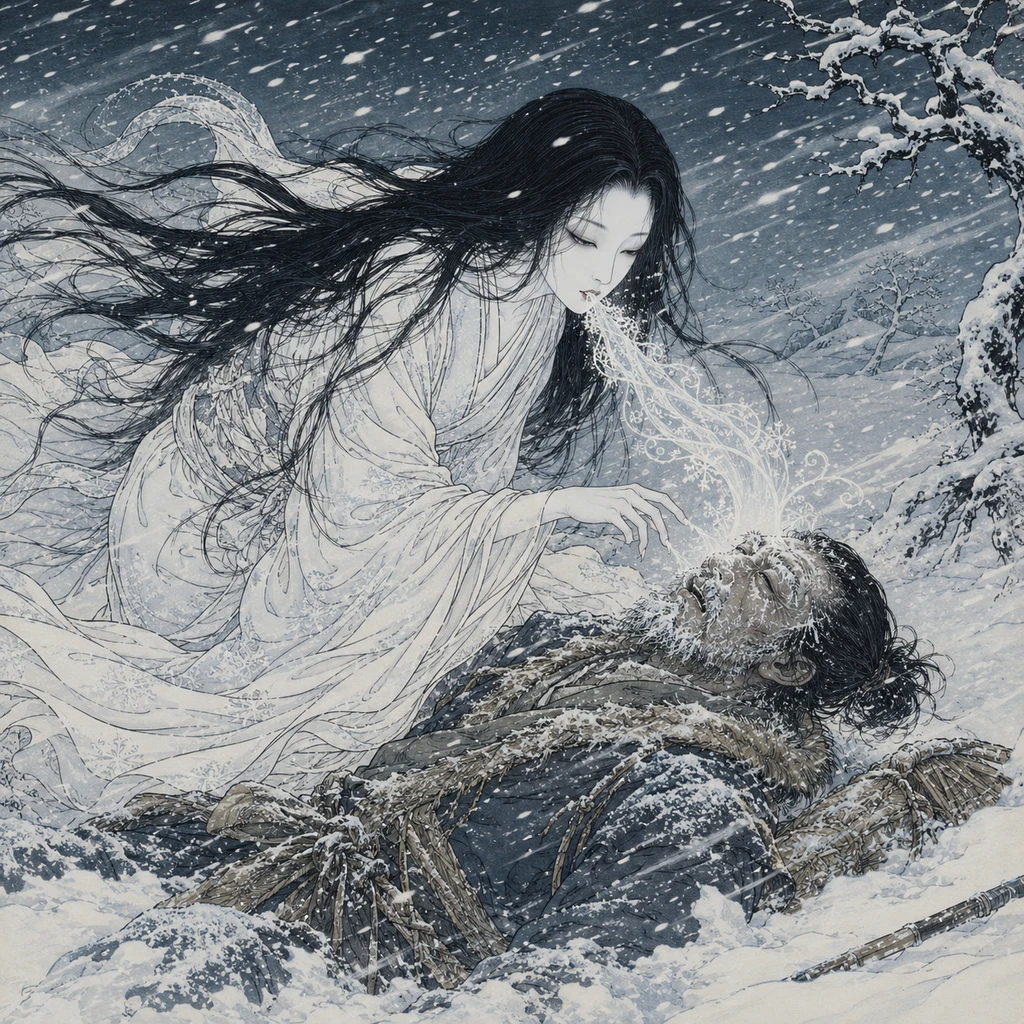
The Yuki-onna (Snow Woman) appears in the 103rd tale of The Tales of Tono[1]. On the night of Little New Year (Koshogatsu), that is, the 15th day of the lunar new year, it is said that the Yuki-onna comes out into the fields leading many children. Kids would get absorbed in sledding on nearby hills and forget the sunset, but on this night of the 15th alone, they were strictly warned, "The Yuki-onna will come out, so go home early." The wisdom of parents worrying about children playing until dark on snowy nights lies behind this mystery. By telling the children engrossed in sledding "the Yuki-onna will come out" instead of just "it's dangerous so come home," they etched the true terror of the winter fields into their young minds. However, Yanagita added, "Few people claim to have seen a Yuki-onna"; feared precisely because she could not be seen, she was an existence like the incarnation of Tono's winter itself.
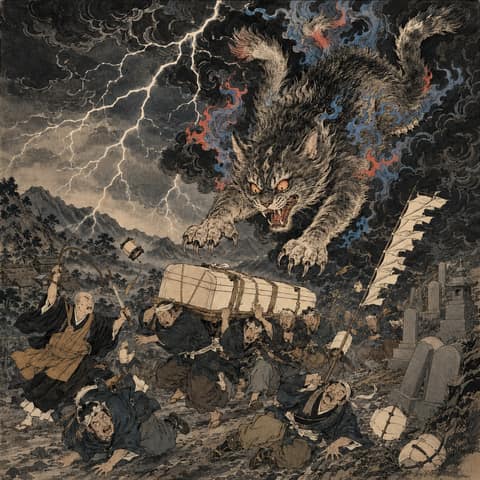
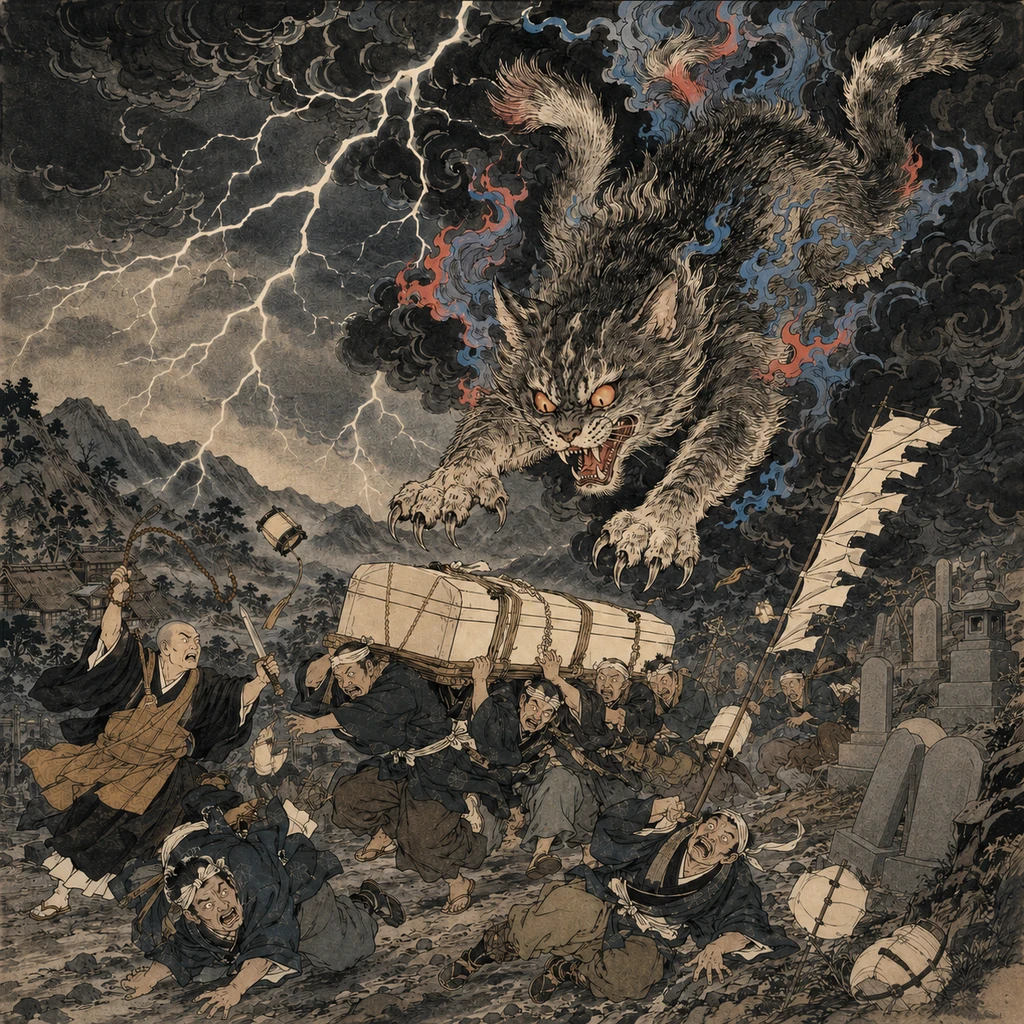
In funeral processions, the Kasha appears. This cat monster that snatches the dead is distributed nationwide, but in Tono it is called "Kyasha" and was narrated in the form of a woman. Behind this is the Tohoku funeral taboo against letting cats near the dead or coffins. If a pet cat steps over a corpse, the body will rise up; black clouds will boil up with a thunderstorm and snatch the coffin ── out of such fears, it is said that bladed tools were placed on coffins during funeral processions, and care was taken not to let the sutra reading cease. The story of the Kasha was also the flip side of the Tono people's earnest etiquette surrounding death. Both the Yuki-onna and the Kasha quietly narrate how the people of Tono gazed upon winter and death.
Horses and Daughters,
Wealth and the Otherworld ── Oshirasama and Mayoiga
What *The Tales of Tono* recorded were not only yokai that threaten humans. Within this basin breathed a sorrowful affection for non-human beings, and illusions of the otherworld surrounding wealth.
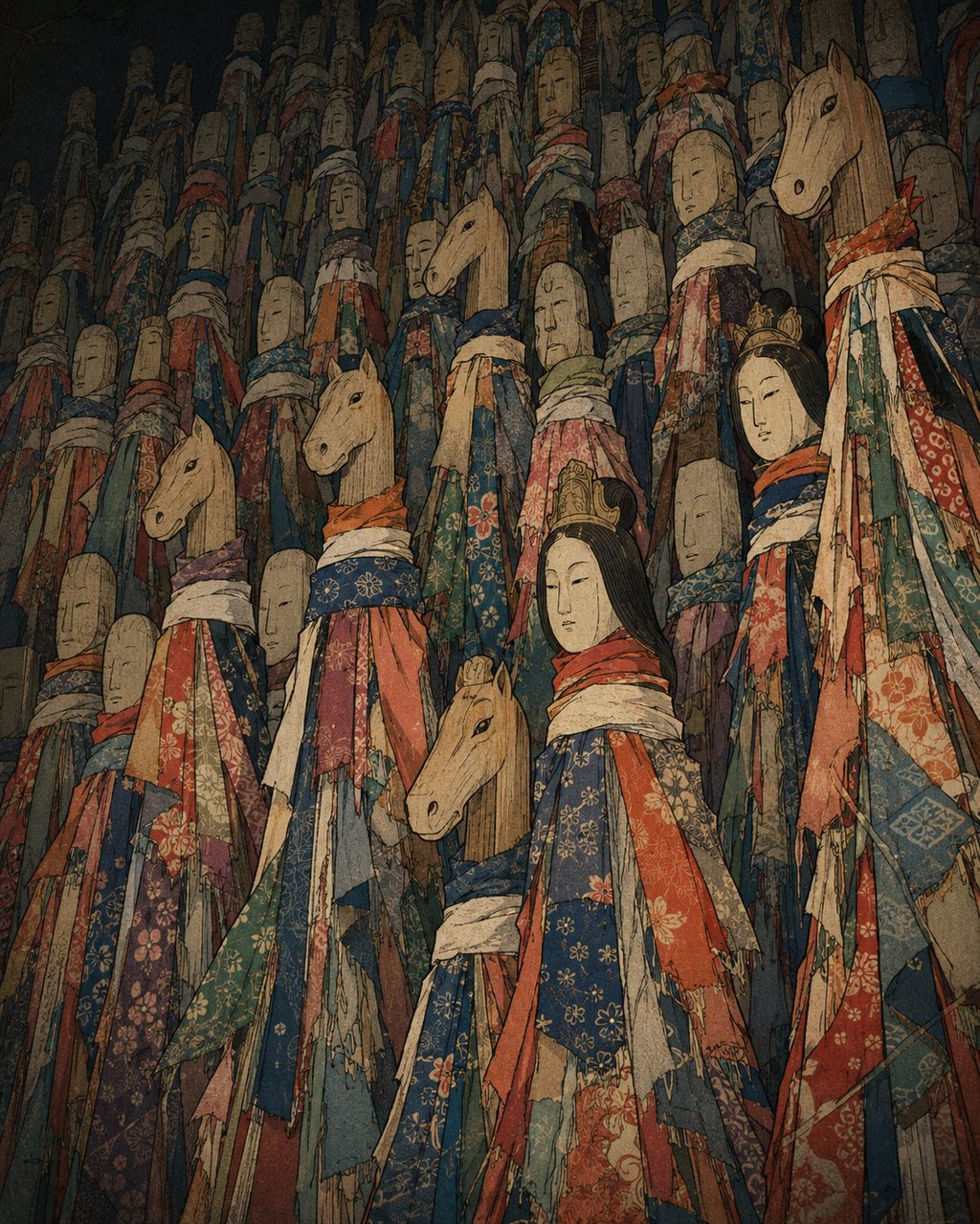
Oshirasama in the 69th tale is one of the most touching stories in Tono. In a certain farmhouse lived a father and daughter. The daughter deeply loved the farm horse they kept, and eventually wished to become husband and wife. The enraged father hung the horse on a mulberry tree, killed it, and chopped off its head with an ax. Then the horse's head ascended to heaven, and vanished together with the daughter who clung to it ── this is said to be the origin of Oshirasama. In the horse-breeding region of Tono, humans and horses lived under the same *magariya* ── a traditional Nambu house where the stable and the main house are connected in an L-shape. At the root of the idea of a daughter yearning for a horse is this life of unity between human and horse sharing a roof. In the sequel conveyed by Kizen Sasaki, the daughter who ascended to heaven appeared in a dream to teach her parents how to raise silkworms, and thus Oshirasama became the god of sericulture. Gods in pairs of a horse head and a princess head, with multiple layers of clothing wrapped around a mulberry core stick, are still lined up by the thousands today in the Oshira-do of the Denshoen, enshrined by believers. Stepping into that hall, the walls are densely covered with gods clad in colorful cloths, and one can witness firsthand how the tragic love of a horse and a daughter was sublimated into a prayer for the livelihood of sericulture.
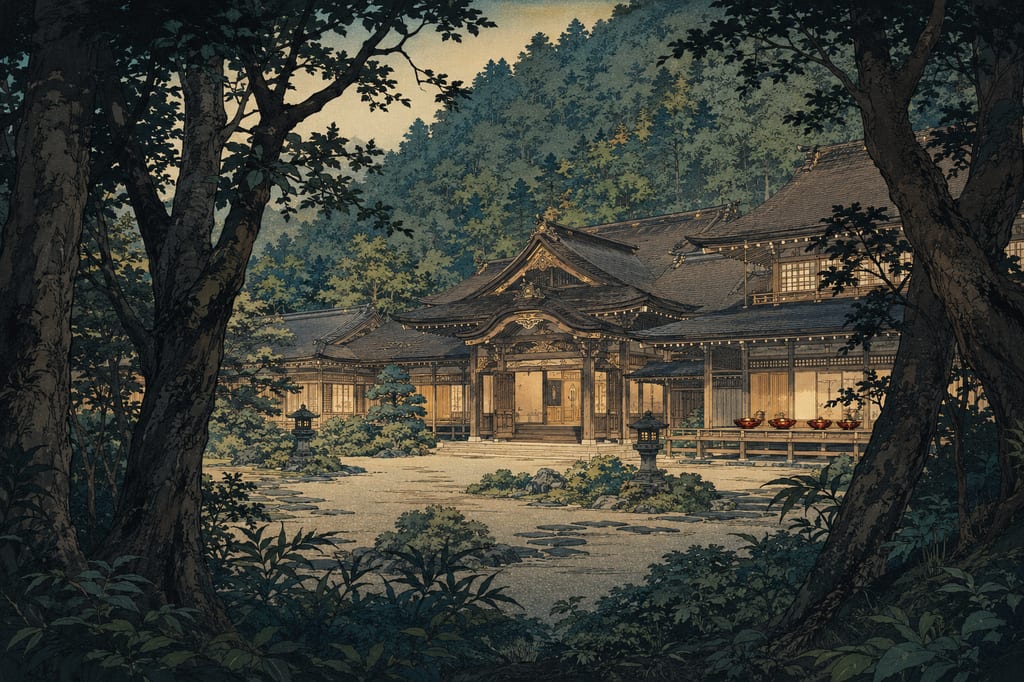
Wealth often arrives unexpectedly from the otherworld. The Mayoiga (Lost House) in the 63rd tale is a splendid deserted mansion one wanders into deep in the mountains. Though equipped with utensils, cattle, and horses, there is no sign of humans. A village woman who went into the mountains to gather chestnuts wandered into this house, but returned without stealing anything. A few days later, a beautiful red bowl drifted down from upstream of the river; when she used it as a measuring cup for the rice bin, rice sprang forth endlessly, and the house prospered. The otherworld grants wealth only to those who are not greedy and snatch nothing. In the following 64th tale, another man wandered into the same Mayoiga, but when people who heard the story searched the mountains out of greed for the utensils, the mansion was never found, and no one prospered ── the otherworld does not open its doors to the greedy. The stories of Mayoiga quietly teach the ethics of Tono surrounding wealth and greed.
Vanishing into the Mountains ── Spirited Away and the Lord of the Mountain
*The Tales of Tono* also contains many mysteries related to the mountains. In this basin surrounded by deep mountains, "spiriting away" (Kamikakushi), where a person suddenly vanishes, was by no means a fabrication. The tales record many stories of young girls or wives vanishing into the mountains and returning to the village years later, or encounters with large strangers called "Yama-otoko" (Mountain Men) or "Yama-onna" (Mountain Women) in the deep mountains. These stories, which spoke of being taken away by the mountain god who took a liking to them, or kidnapped by those who dwell in the mountains, are rooted in the reality of life in a mountain country: the mountain is just outside the human domain, and once the boundary is crossed, one might never return. Yanagita was strongly drawn to these stories of the "Yama-bito" (Mountain People), and cultivated them into one of the important themes of his later folklore studies.
Tracing on Foot,
the Hometown of Folktales
The mysteries of Tono remain special today because their stage can still be traced on foot.
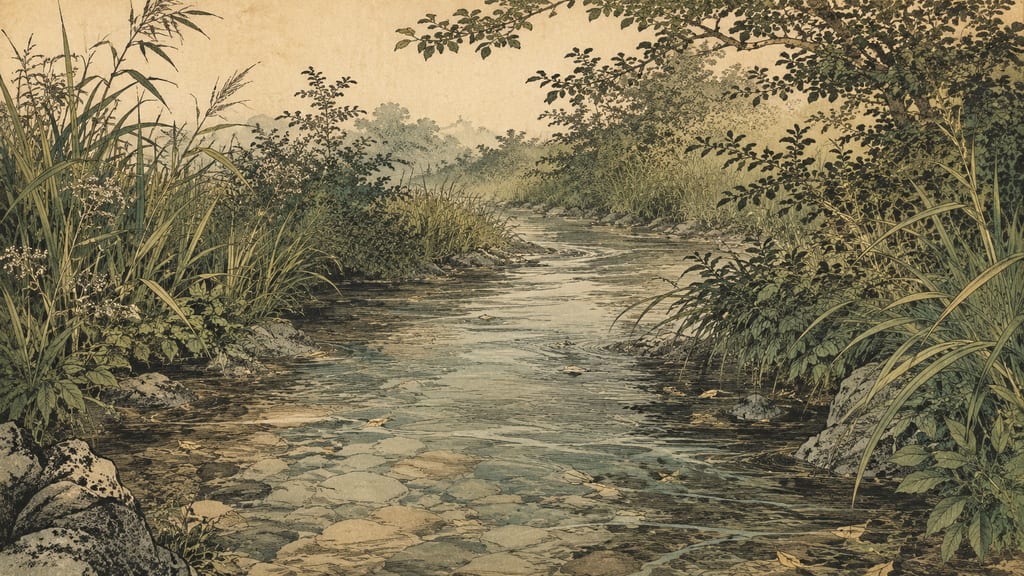
The small river flowing behind Jokenji Temple in Tsuchibuchi Town is called Kappabuchi. The kappa of Tono are said to have had red faces, unlike the blue kappa of other regions. The Sarugaishi River is full of kappa, and *The Tales of Tono* also conveys the vivid story of a riverside house where a kappa child was conceived. At Jokenji, a kappa guardian dog with a depression for a dish on its head, said to have been enshrined in gratitude for helping extinguish a fire, still sits today, and playful "Kappa Catching Permits" are sold at the abyss. Dendera-no (Rendaino) in the 111th tale, where old people over sixty were sent, was a place for abandoning the elderly, yet it is said that the old people came down to the village during the day to do farm work. Coming down to the village was called "Hakadachi," and returning was "Hakaagari." "Haka" is a word with a double meaning, meaning both a grave and the progress of work. Abandoned elders still working in the village by day and returning to the field of the dead by evening ── this sense of placing life and death on contiguous ground speaks of the depth of Tono's views on life and death. It is also said that this Rendaino was always located in a position corresponding to a nearby cemetery called "Danno-hana." Natural anomalies like the strange sight of the "Tsudzuki-ishi," where a giant rock several meters high rests like a bridge on top of two stones, were also passed down by people as having been lifted and placed there by Musashibo Benkei. These giant rocks, pools, and mountain passes scattered around the basin each wear a veil of stories, making the land itself like a single collection of tales. Every time you hear a place name, look up at a rock, or peer into an abyss, the mysteries rise from beneath your feet in Tono.
Tono City protects this world as the "Hometown of Folktales"; the Tono City Museum exhibits the stories through manuscripts and dioramas, and the Nambu magariya in the Denshoen has a memorial hall for Kizen Sasaki attached. By the hearth, elderly storytellers continue to narrate folktales even today. Tono-go is the basin that first showed Japan a third path: neither "discarding them as superstitions" nor "merely fearing them," but "learning from and passing them down." Because a single book was born here, Zashiki-warashi, kappa, and Oshirasama did not vanish, but have been passed down for over a century. Walking through Tono is nothing other than tracing the origin of how the Japanese ── who feared, revered, and eventually recorded yokai, elevating them to academia ── faced the mysteries. The "Hometown of Folktales" that began with a single book continues to narrate quietly amidst the landscape of the basin today.