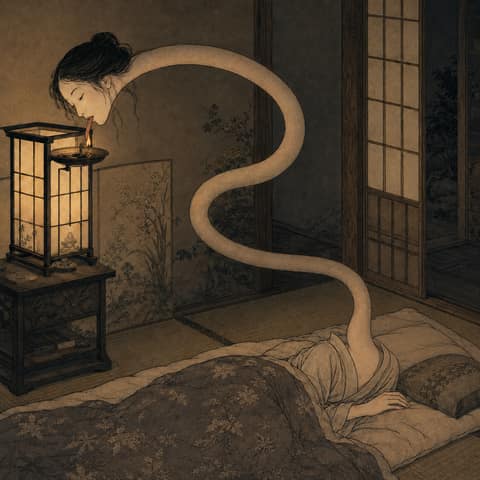
The image of the ikiryō holds two faces: a curse born of resentment, and gentler visitations tied to parting before death or to acts of gratitude. In Heian beliefs, overpowering thought left the body as a “shadow,” appearing at bedchambers, ox-drawn carriages, or gates. In the medieval and early modern eras, scenes witnessed in dreams, will-o’-the-wisps, and flying heads were taken as proof of the soul’s separation. In medical views it was classed as a disorder of the departing soul or of the shadow, with reports of people seeing their own double. The cursing rite of the Hour of the Ox is often linked as a willed sending of intent by the living, though not identical. Regional lore varies in name and form, with some places recording it as a footfall-making human shadow. Overall, it is understood as the coagulation of thought taking shape, a spiritual action of the living set against the dead.
Character Profile
This section is our own creative profile for storytelling. It is not historical fact or scholarship.
Yokai Type - Traditional Yokai
Category - Ghosts & Spirits
Rarity - Legendary
Personality - intensely fixated, driven by emotion, hazy sense of self
Compatibility - highly responsive to the deeply affectionate, sensitive to those bearing grudges
Abilities - possession and influence over targets (illnessmadnesslethargy)remote manifestation (appearing at gatesin bedchamberson the road)dream manifestation (showing up amid dreams and waking visions)sympathetic response (appears in answer to strong emotions)
Weaknesses - pacification by esoteric rites, sutra chanting, and talismans, change or reconciliation of the person’s own intent, blocking by protective charms and spiritual barriers
Habitat - imperial court quarters and noble bedchambers and around ox-drawn carriages, village homes and crossroads and shrine and temple precincts, sickbeds and deathbeds