京都の北野天満宮が、雷神となった道真の怨霊を鎮めるために建てられた社であるなら、福岡の大宰府は、その道真がこの世の生を終えた、終焉の地である。学問の神「天神さま」として全国に祀られる菅原道真 ── その信仰の源は、彼が失意のうちに果てた、この地にある。
そして驚くべきことに、太宰府天満宮の本殿は、道真の墓所の真上に建っている。怨霊として恐れられた人が、いかにして学問の神となったのか。本稿は、道真の生が果てたこの地から、天神信仰のもう一つの中心をたどる。
墓所の上に建つ宮
全国に約一万二千社あるといわれる天満宮·天神社の総本宮の一つが、福岡の太宰府天満宮である。その最大の特徴は、社殿そのものが菅原道真の墓所の上に建てられている点にある。
道真の死後、味酒安行(うまさけのやすゆき)が延喜5年(905年)に廟を建立し、のちの延喜19年(919年)、醍醐天皇の勅を奉じた藤原仲平が、道真の墓所の上に社殿を造営した[1]。これが太宰府天満宮の創祀である。太宰府天満宮は、京都の北野天満宮とともに全国の天満宮の総本宮とされ、「天神さま」信仰の中心として、千年以上にわたり篤い崇敬を集めてきた。怨霊として都を畏れさせた道真を、その亡骸の眠る地に手厚く祀る ── 鎮魂の祈りが、この社の出発点であった。
左遷、
そして終焉
道真がなぜこの地で果てたのか。それを語るには、彼の生涯の最後の転落にさかのぼらねばならない。
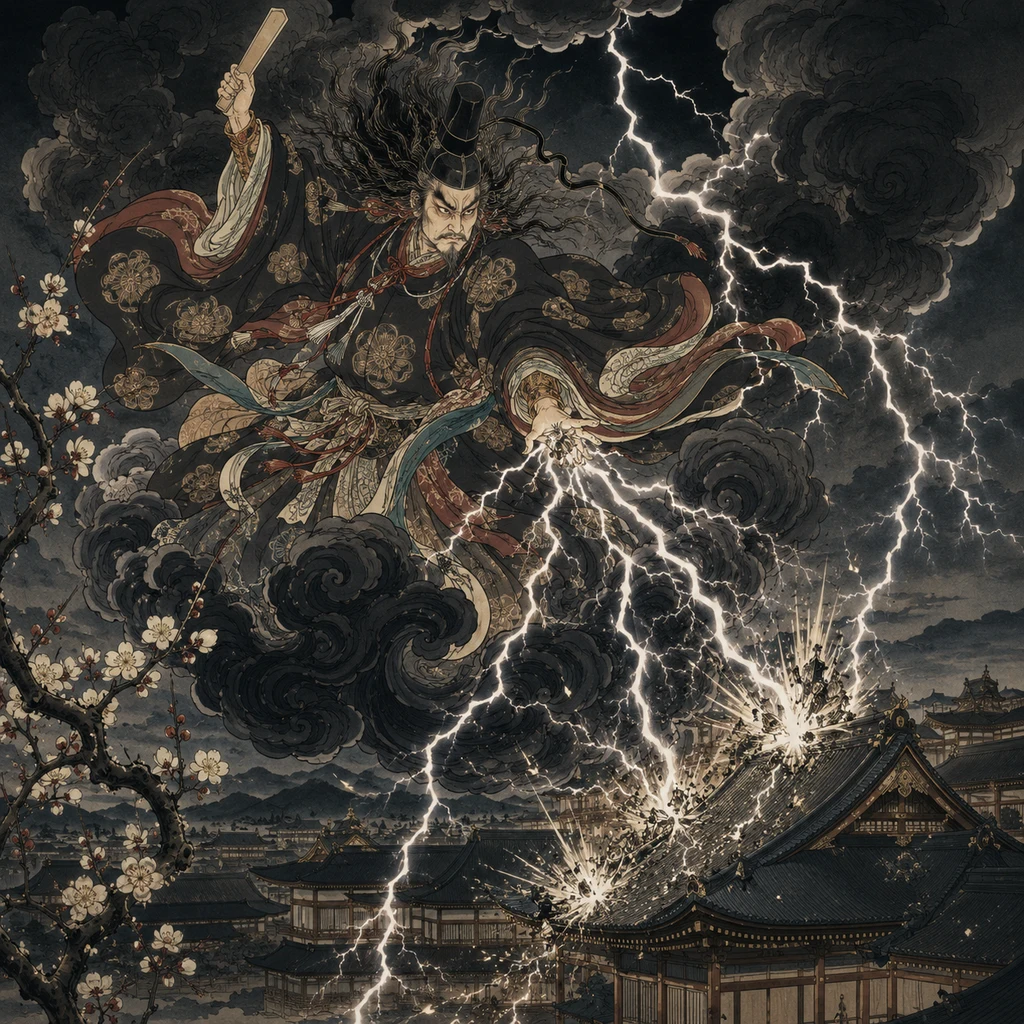
Sugawara no Michizane
Sugawara no Michizane was a Heian-period scholar and composer of Chinese verse who rose to the office of Minister of the Right; after his death he came to be counted among the most dreaded vengeful spirits in Japan, and was in time enshrined nationwide as Tenman-Tenjin, the god of learning. Born into the scholarly Sugawara house, he was favored under the two reigns of Uda and Daigo, but in the fourth year of Shōtai (901), slandered by the Minister of the Left Fujiwara no Tokihira, he was demoted to Dazaifu, where he died in despair in the third year of Engi (903). After his death, the capital saw a succession of deaths among his political enemies, beginning with Tokihira, followed by plague and drought, all whispered to be the curse of Michizane, who had been sunk by a false charge. Above all, the lightning strike on the palace's Seiryōden in the eighth year of Enchō (930), which killed and wounded many nobles, fixed the conception of Michizane as Karai-Tenjin, the thunder-wielding "Fire-and-Thunder Heavenly Deity." To pacify that raging spirit, the court enshrined him as a god, and the cult of Tenjin spread outward from Kitano Tenmangū in Kyoto and Dazaifu Tenmangū, built over his grave. Feared at first as a curse-bringing deity, Tenjin gradually changed in character—on account of Michizane's own outstanding learning in life—into a guardian of scholarship and letters; and in the early-modern era, as terakoya schools spread, he became beloved even among commoners as the god who grants success in study and clears false accusations. The plum he loved so dearly in life, and the thunder he wielded as a vengeful spirit, survive to this day as his emblems.
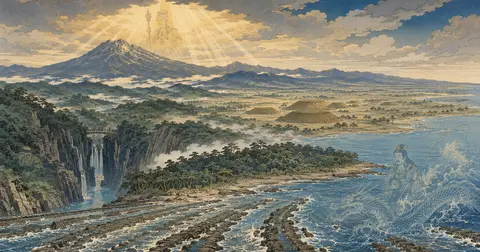
Read more宇多·醍醐両天皇の信任を得て右大臣にまで昇りつめた道真は、学者の家の出としては破格の出世を遂げた。道真は代々学問をもって朝廷に仕えた菅原家に生まれ、若くしてその学才を認められた人物である。家柄ではなく学問の力で高位にまで昇ったその経歴は、当時としては例外中の例外であった。それゆえに、彼の突然の失脚は、多くの人の記憶に深く刻まれることになる。だがその栄達は、旧来の貴族たちの反感を買う。昌泰4年(901年)、道真は「斉世(ときよ)親王を皇位に就けようと謀った」という罪を着せられ、大宰員外帥(だざいごんのそち)に左遷された。これが「昌泰の変」である[2]。左大臣·藤原時平の讒言とされるが、その背後には、道真の急速な台頭をこころよく思わない貴族層の同意があったとも指摘される。
大宰府での道真の暮らしは、惨憺たるものであった。配所は大宰府政庁の南にあった荒れ放題の廃屋で、給与も従者も与えられなかったという[2]。失意と困窮のうちに、道真は延喜3年(903年)2月25日、大宰府で薨去した。享年59[2]。都を追われてわずか二年後のことであった。漢詩の名手として知られた道真は、この廃屋でも京を思う詩を詠んで日々を過ごしたと伝わる。栄華をきわめた右大臣の、あまりにも惨めな晩年であった。その無念の深さこそが、のちに人々が彼の怨霊を畏れた理由でもあった。
牛車は動かなかった
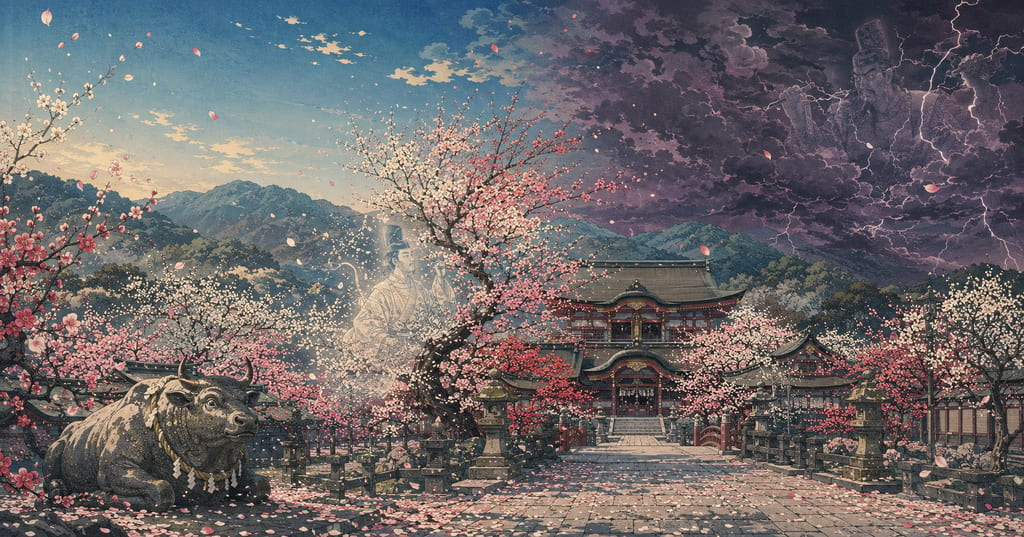
太宰府天満宮の境内には、横たわった牛の像 ──「御神牛(ごしんぎゅう)」が置かれている。参拝者が頭を撫でて知恵を授かると信じられ、いつも多くの手で磨かれて光っている。この牛は、道真の埋葬にまつわる、ある不思議な出来事に由来する。
道真の遺骸を牛車に乗せて葬地へ運ぼうとしたところ、その牛車が門前で動かなくなった。人々はこれを「この地に留まりたい」という道真の遺志と受け止め、その場所を墓所と定めた[1]。動かぬ牛が示した場所 ── それが、今の本殿の建つ地である。御神牛は、道真とこの地を結びつけた、その牛の記憶をとどめている。今日では、御神牛の頭を撫でれば知恵を授かり、体の悪いところと同じ部位を撫でれば快癒するとも信じられ、参拝者にとって最も親しい存在でありつづけている。
怨霊から天神へ
道真の死は、それで終わりではなかった。むしろ、ここから天神信仰の壮大な物語が始まる。
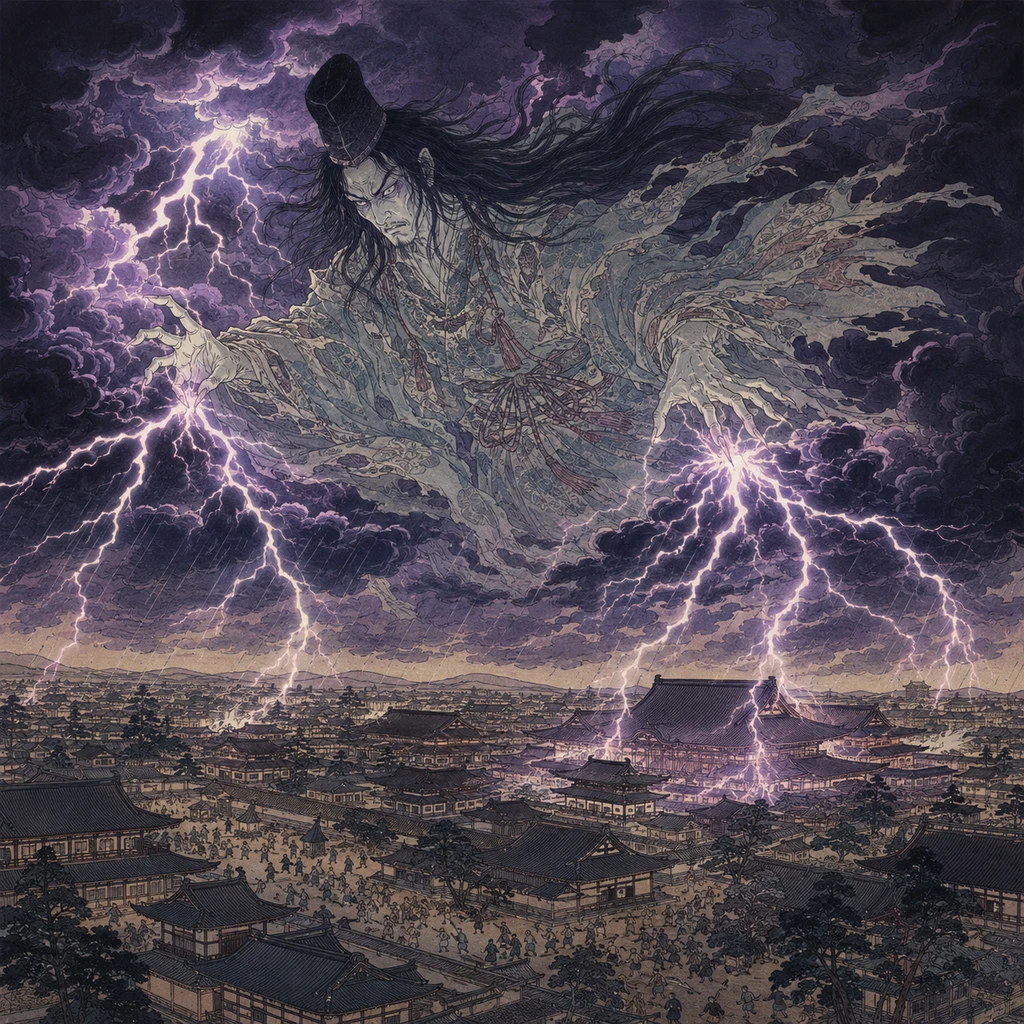
Onryō (Vengeful Spirit)
An onryō is a vengeful spirit born from an untimely or unjust death, or a living person’s overwhelming grudge that manifests harm. From antiquity through the medieval era, disasters such as plagues, cosmic portents, and political upheavals were attributed to such spirits. Communities widely practiced goryō worship, enshrining and pacifying them at temples and shrines. Many famed historical figures were feared and revered as onryō, their dreaded power inseparable from rites meant to appease them.
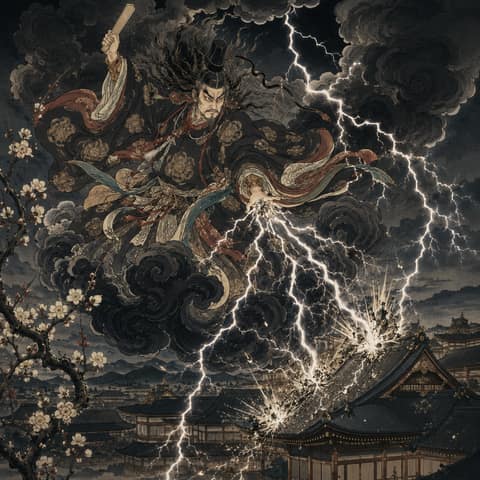
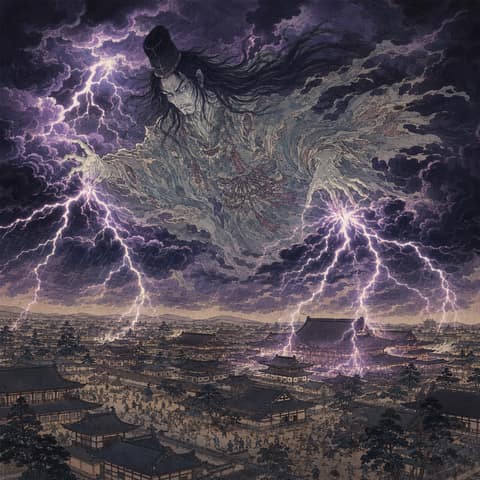
Read more道真の死後、都ではさまざまな凶事が相次いだ。延長8年(930年)には、朝議のさなかに清涼殿に落雷があり、藤原清貫ら朝廷の要人に多くの死傷者が出た ── いわゆる「清涼殿落雷事件」である[2]。人々はこれらの災厄を、無実の罪で死んだ道真の怨霊のしわざと恐れた。雷を操る怨霊は、やがて天の神「天神」と同一視され、畏怖の対象から信仰の対象へと転じていく。無実の罪で死んだ者の霊が祟りをなすという考えは「御霊(ごりょう)信仰」と呼ばれ、平安時代の人々の心を強くとらえていた。道真の天神信仰は、その御霊信仰の、最も大きな結実であった。
この怨霊を鎮めるために京都に建てられたのが、北野天満宮である。終焉の地·大宰府と、鎮魂の地·北野 ── 天神信仰は、この二つの社を中心に、全国へと広がっていった。道真の生涯を京の側からたどる物語は、北野天満宮に詳しい。
飛梅と、
学問の神
太宰府天満宮を語るうえで欠かせないのが、「飛梅(とびうめ)」の伝説である。
道真は梅をことのほか愛したと伝わる。京を去るにあたり、道真は庭の梅に向かって「東風(こち)吹かば/にほひおこせよ/梅の花/あるじなしとて/春な忘れそ」と詠んだ[1]。主を慕ったその梅が、一夜のうちに京から大宰府へと飛んできた ── それが飛梅である。今も拝殿のかたわらに立つこの梅は、境内で最も早く花を咲かせるという。飛梅をはじめ、太宰府天満宮の境内には数多くの梅が植えられ、早春には一面が花の香りに包まれる。梅は道真を象徴する花として、全国の天満宮に欠かせないものとなった。
怨霊として恐れられた道真は、時を経て、その卓越した学識ゆえに「学問の神」として親しまれるようになった。現在の本殿は、天正19年(1591年)に小早川隆景によって再建されたものである[1]。受験を控えた学生をはじめ、年間を通じて多くの参拝者が、合格や学業成就を祈ってこの地を訪れる。
天神信仰の、
もう一つの中心
雷神となった怨霊を鎮める京都の北野天満宮に対し、大宰府は、その怨霊が生身の人として果てた、終焉と墓所の地である。怨霊鎮魂の社と、終焉の地の社 ── 性格を異にする二つの中心が、道真をめぐる信仰を支えてきた。
無実の罪で都を追われ、廃屋で息を引き取った一人の学者。その悲運の死が、千年を越えて全国一万二千社の天神信仰を生んだ。動かぬ牛が定めた墓所の上に、今日も人々の祈りが絶えない。とりわけ受験の季節には、合格を願う学生とその家族で境内がにぎわう。怨霊として畏れられた一人の人が、千年の時を経て、人々が最も身近に手を合わせる「学問の神さま」となった ── 太宰府は、その変転のすべてを見つめてきた地である。福岡の妖怪や信仰の全体像については福岡県の妖怪事典も併せて読まれたい。