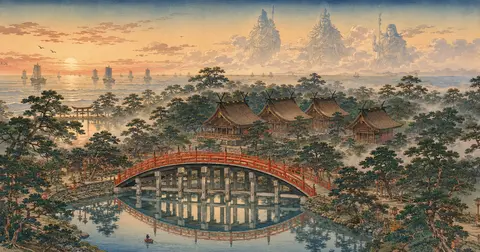
近江(おうみ)という国の名は、湖から生まれた。古代の人々は琵琶湖を「淡海(あふみ)」── 真水の海と呼び、都に近いこの湖を、遠江(とおとうみ)の浜名湖に対して「近(ちか)つ淡海」と名づけた[1]。やがて「近淡海」が「近江」へと縮まる。国の名そのものが、中央に横たわる巨大な湖の存在証明なのである。
近江国は東山道に属し、湖の東を東山道が、西を北陸道が貫き、平安期には東海道もここを通った。東国と西国を分かつ境であり、都へ入る者も都を出る者も、必ずこの水と道の国を踏む ── 近江は、日本列島の交通の臍(ほぞ)であった。この稿では、現代の滋賀県の妖怪事典が湖国全体の怪を見渡したのを承けて、もう一段だけ時を遡る。古代に都が置かれ、英雄が斃れ、最古の人魚が記された「淡海の都」── 令制国としての近江に、妖怪と怪異がどう根を張ったかをたどりたい。
淡海の都 ── 大津宮と壬申の乱の記憶
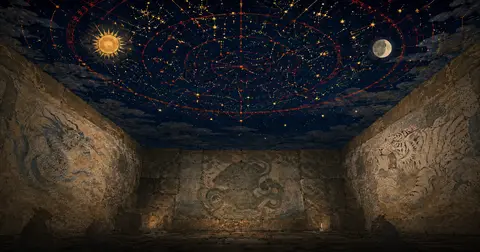
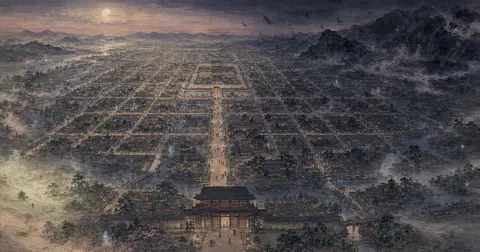
近江を語るとき、避けて通れないのが、ここがかつて日本の都であった事実だ。天智天皇六年(六六七年)、中大兄皇子は飛鳥から近江へ都を遷し、翌年、天智天皇として即位する[2]。白村江の敗戦(六六三年)で唐と新羅の脅威にさらされた朝廷が、湖に守られた要害の地を選んだのだといわれる。この近江大津宮で、全国規模では初の戸籍とされる庚午年籍(こうごねんじゃく)が編まれた。
だが都の命は短かった。六七一年に天智が崩じると、翌六七二年、天智の子・大友皇子と弟・大海人皇子のあいだで皇位を争う壬申の乱が起こる[3]。激戦の末に大海人皇子(のちの天武天皇)が勝ち、都は再び飛鳥へ戻った。近江大津宮は、わずか五年余で歴史から退場する。古代最大の内乱が決した地 ── その記憶が、近江の地層の最も古い層に刻まれている。妖怪や怨霊の物語が、のちにこの国でかくも濃く育つのは、ここが「都であったが都でなくなった土地」だったことと、けっして無縁ではないだろう。
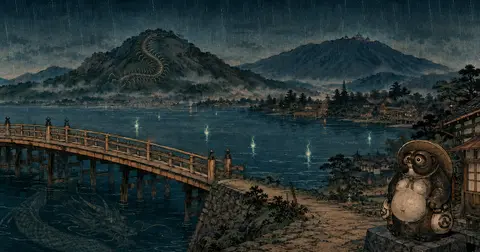
その大津宮と畿内とをつなぐ咽喉(のど)が、瀬田の唐橋であった。琵琶湖から流れ出る川はただ一本、瀬田川しかない。湖の水がすべてここを通る以上、橋は天然の関門になる ──「唐橋を制する者は天下を制す」と称され、壬申の乱でも、橋をめぐる攻防が乱の帰趨を決した[4]。橋の架設は、大津宮遷都のころにさかのぼると伝わる。湖と道と都を一点で結ぶこの橋が、後世、龍と大百足の物語の舞台になるのは、地理の必然であった。
瀬田唐橋の龍と三上山の大百足 ── 道の妖怪
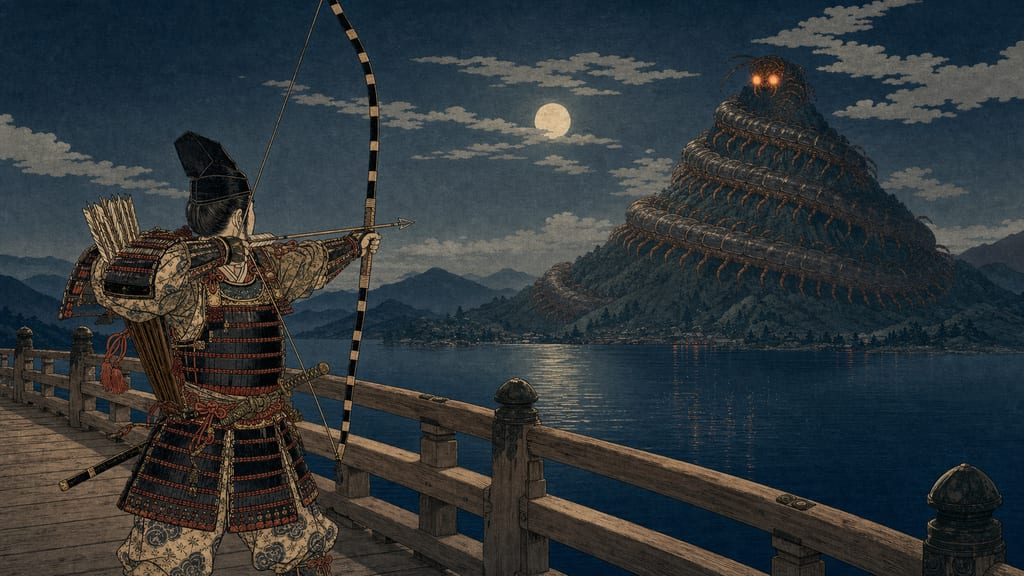
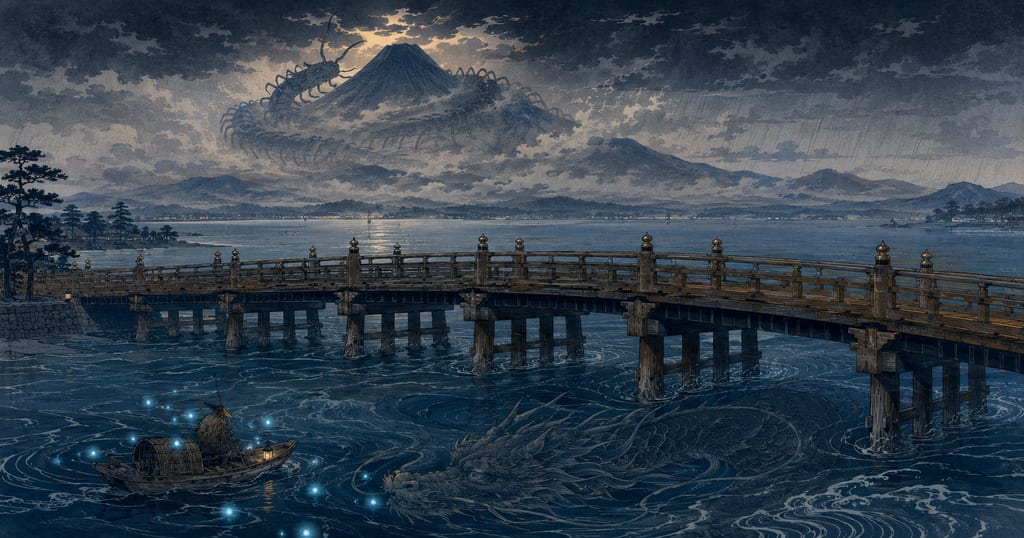
近江国を象徴する妖怪退治譚は、この瀬田唐橋から始まる。平安の武将・俵藤太(たわらとうだ)こと藤原秀郷(ふじわらのひでさと)が、橋に横たわる大蛇に道をふさがれた。ひるまず踏み越えると、大蛇は人の姿に転じ ── 瀬田川と琵琶湖を支配する龍王の化身であった。
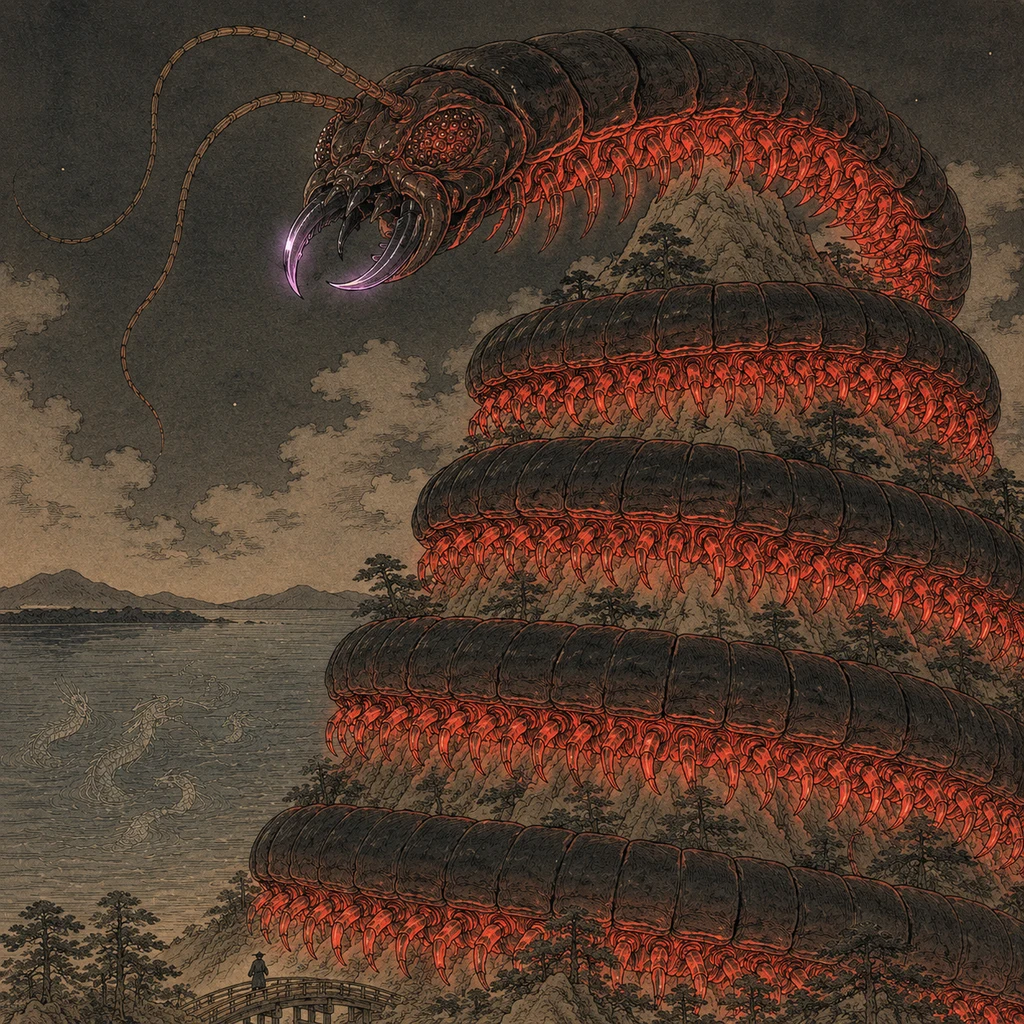
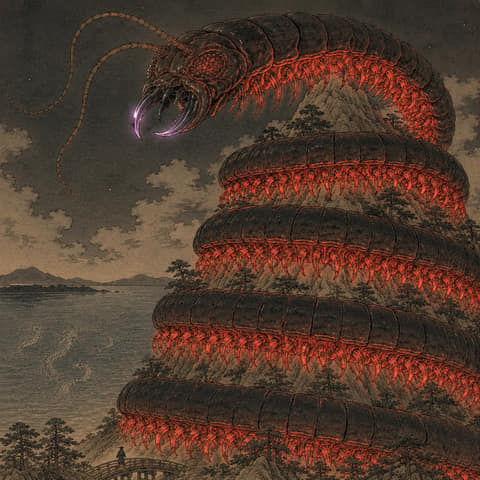
Giant Centipede
The Giant Centipede is a monstrous centipede yokai whose carapace is so hard it deflects blades and arrows. Its body is long enough to coil around mountains, its many legs glow a fiery red, and its venomous fangs were said to bite through armor. It is portrayed as an adversary of great serpents and dragons—water deities—with whom it battles in lakes, marshes, and the wilds. Centipedes symbolized fearless resolve and were seen as auspicious by warriors and merchants, though details of this creature vary widely by region.
Read more龍王は、近江富士とも呼ばれる三上山(みかみやま)を七巻き半する大百足に一族を喰われ、困り果てていた。秀郷は龍王の願いを容れ、二本まで弾かれた矢の三本目に唾をつけ、神仏の加護を得たその一矢で百足の眉間を射抜く。礼として龍宮へ招かれた秀郷は、尽きることのない米俵や巻絹を贈られた ── これが「俵藤太」の名の由来だとも伝わる[5]。武勇譚は『太平記』巻十五にも組みこまれているが[6]、興味深いことに、その『太平記』本では大百足の棲み処を三上山ではなく比良山とする。同じ近江の山でも、語り手によって舞台が湖の東から西へ動く ── このあたりの異伝の機微は、湖国全体を見渡す滋賀県の妖怪事典に詳しい。ここで確かめておきたいのは、橋の下の龍、湖を渡る矢、山に横たわる百足という、近江の地形そのものが物語を動かしているという一点である。道の妖怪は、道のかたちに従って生まれる。
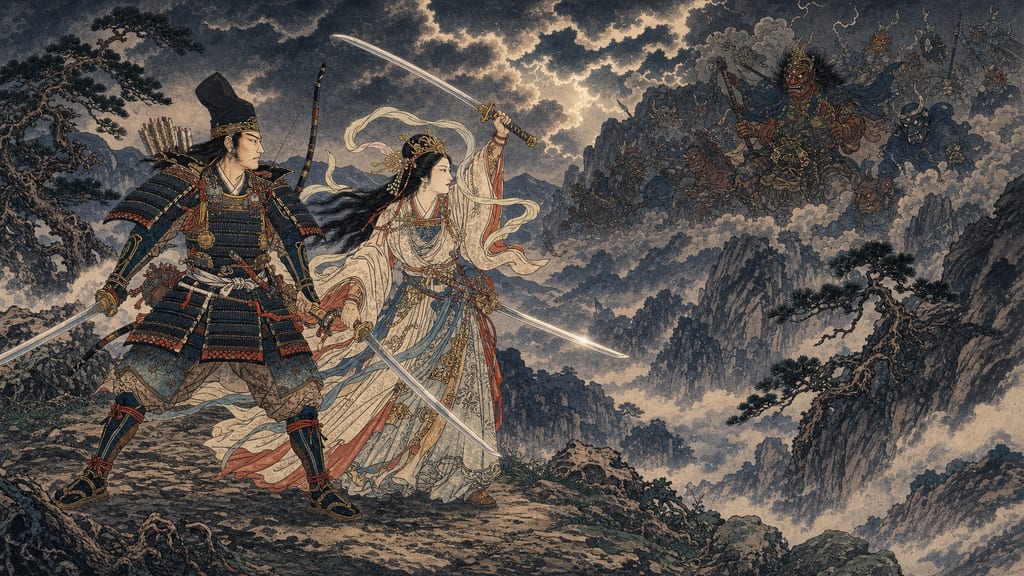
その瀬田唐橋の東詰には、近江国一宮の建部大社(たけべたいしゃ)が鎮まる。祀られるのは古代最大の英雄神・倭建命(やまとたけるのみこと)── だが各地の荒ぶる神を平定したこの英雄ですら、近江の山の神には敗れた。
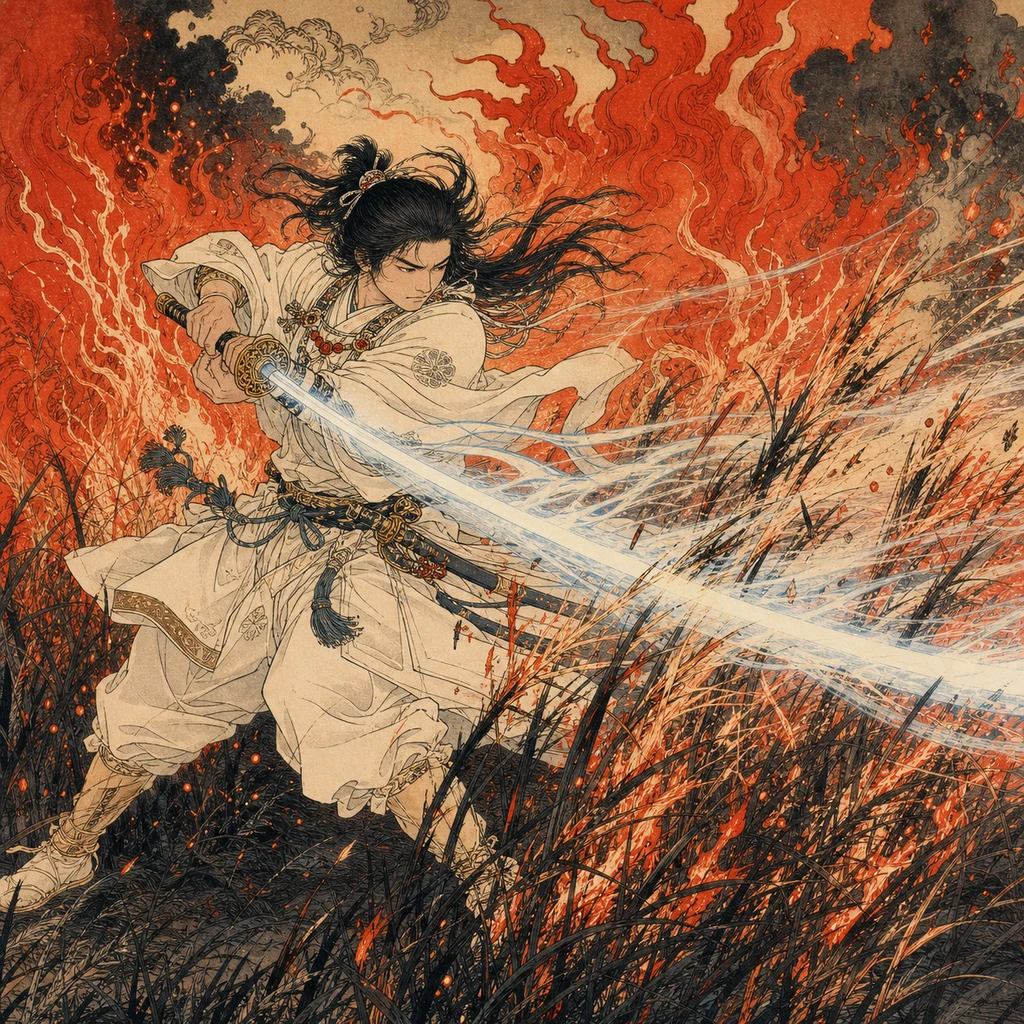
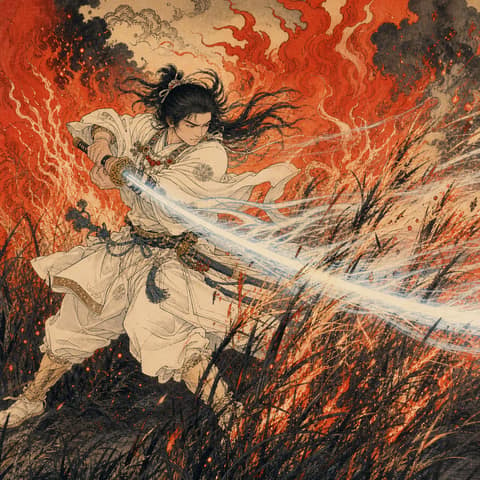
Yamato Takeru
Yamato Takeru is one of ancient Japan's greatest deified heroes, known from the Kojiki and Nihon Shoki as a tragic prince, the son of the twelfth emperor Keiko. In the Kojiki he appears as Yamato Takeru no Mikoto and Ousu no Mikoto; in the Nihon Shoki he is written as Nihon Buyson, Ousu no Mikoto, Yamatooguna, and other forms. After killing his elder brother, Ousu is feared and rejected by his father, Emperor Keiko. He is sent on one campaign after another: west to Kumaso in southern Kyushu and Izumo, then east to the Tokai, Kanto, and Tohoku regions, subduing local gods and powerful clans along the way. In the Kumaso campaign, he disguises himself as a woman, slips into the enemy camp, and kills the Kumaso Takeru brothers; at the moment of death, Kumaso Takeru grants him the name Yamato Takeru. With the Kusanagi sword, given to him by his aunt Yamato-hime, ancestress of the Ise Shrine saigu, he escapes the grass-fire attack at Yaizu in Suruga. At the sea of Hashirimizu, his consort Ototachibana-hime throws herself into the waves to calm the sea god. Finally, after being cursed by the mountain deity of Mount Ibuki in Omi, he falls gravely ill and dies at Nobono in Ise, now Kameyama in Mie Prefecture. The legend that he became a white bird after death and flew away is one of ancient Japan's major tales of heroic ascent and transformation. Shrines, tomb traditions, Shiratori shrines, and Atsuta Jingu, where the Kusanagi sword is enshrined, preserve his memory across Mie, Aichi, Gifu, Shizuoka, and beyond.
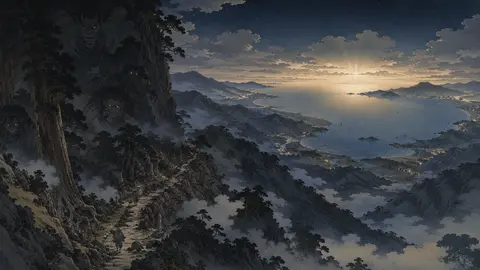
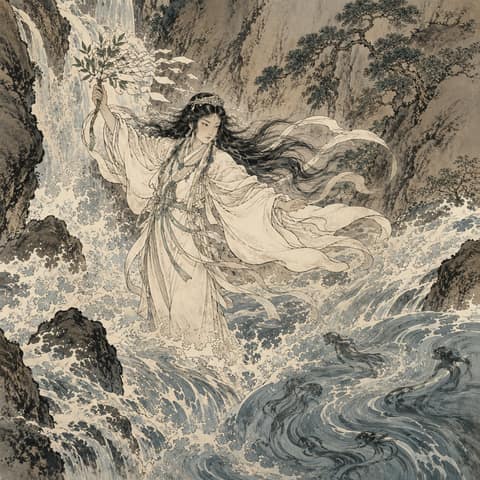
Read more『古事記』によれば、ヤマトタケルは伊吹山の神を素手で討とうと登り、道で出会った白い大猪(『日本書紀』では大蛇)を「神の使いだろう、帰りに殺す」と侮った[7]。怒った神は大氷雨(おおひさめ)を降らせて彼の正気を奪う。山を下りた英雄は、伊吹山南麓の醒井(さめがい、現·米原市)の「居醒(いさめ)の清水」でわずかに息を吹き返したと伝わるが、ついに病を得て、伊勢の能煩野(のぼの)で力尽きた。澄んだ湧水はいまも街道沿いに流れ、英雄の最期を近江の地に結びつけている。琵琶湖を見おろす伊吹の山は、英雄を殺すほどの荒神(あらがみ)の坐す山として、この国の北東にそびえていた。建部大社が彼を武運の神として祀るのは、敗れてなお神格を得た英雄への、近江の人々の敬意のかたちであろう。
湖底の最古の人魚と、
湖を掘った巨人 ── 水の妖怪
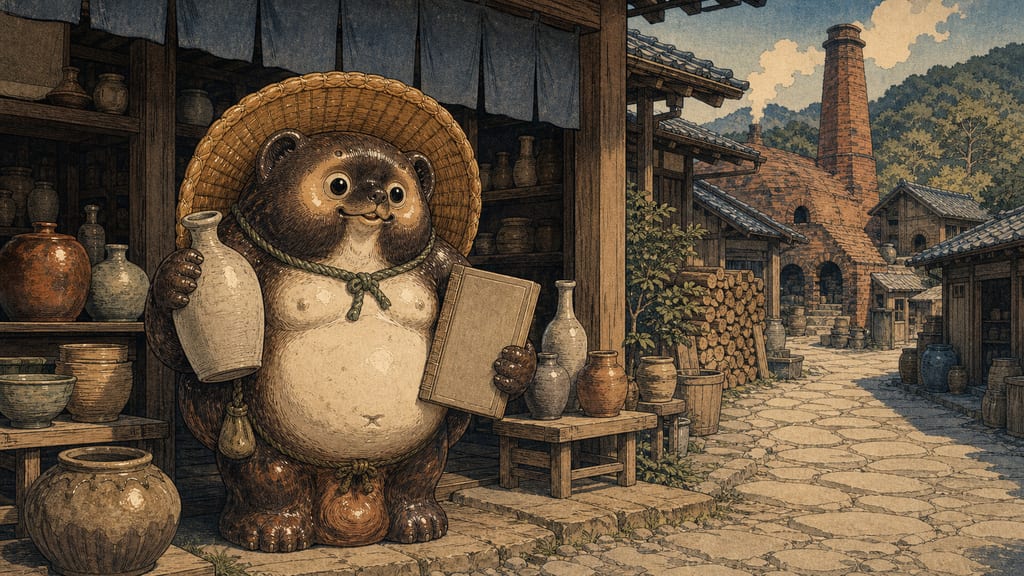
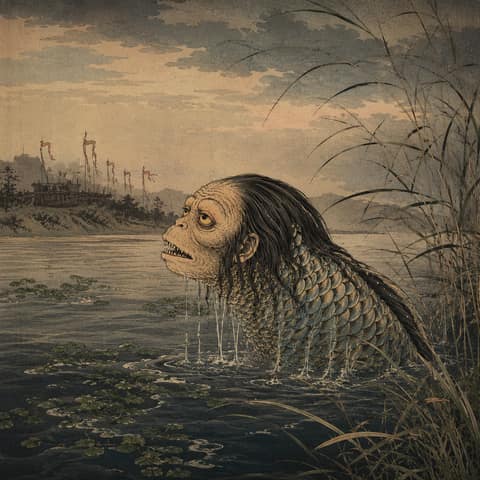
近江が「淡海の海」と呼ばれた水の国であることは、妖怪の系譜にもくっきりと刻まれている。日本最古の人魚の記録は、ほかでもない近江のものだ。
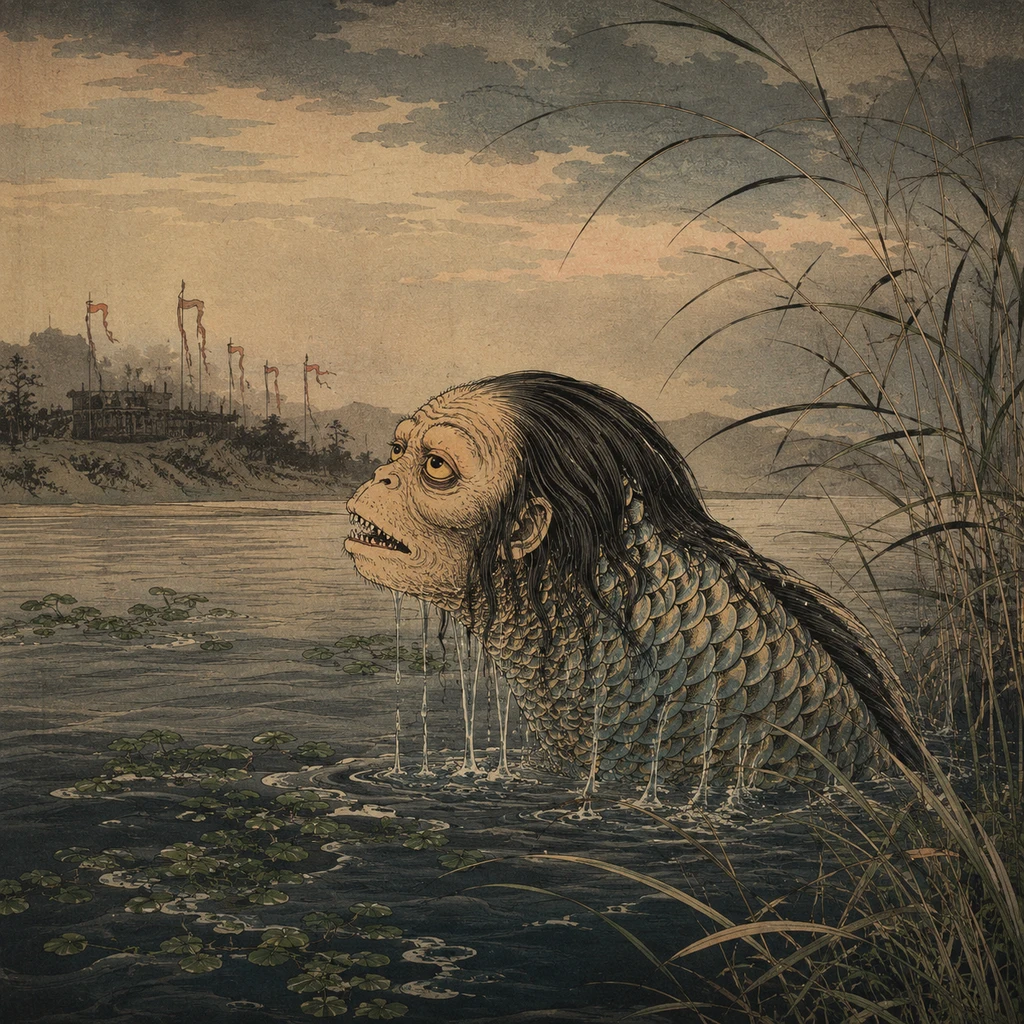
Ningyo
Ningyo (lit. "Human-Fish") are half-human, half-fish yokai said to inhabit the seas and rivers. In Japanese folklore, they are peculiar entities bearing two completely opposing faces: "eternal youth" and "an omen of disaster." Unlike beautiful Western mermaids, the Ningyo appearing in ancient Japanese texts are often depicted as grotesque creatures with "monkey-like faces and fish bodies" and "sharp teeth and horns." When washed ashore, they were regarded as a dark omen predicting ominous events such as wars and plagues. Conversely, there was an intense belief that their meat acted as an "elixir of immortality"; the legend of "Yao-bikuni," a woman who allegedly lived for 800 years after eating Ningyo meat, is widely distributed throughout Japan. Entering the Edo period, Ningyo suddenly transformed from an object of fear into a "sideshow attraction" and a "rare beast" of curiosity. Craftspeople manufactured massive quantities of "Ningyo mummies" by ingeniously stitching the upper half of a monkey to the lower half of a fish, sparking a massive boom as these artifacts circulated both domestically and internationally.
Read more『日本書紀』推古天皇二十七年(六一九年)の条に、近江国の蒲生河(がもうがわ)に「其の形(かたち)人の如し」というものが現れたと記される[8]。海ではなく、湖へ注ぐ淡水の川に現れたところが、いかにも近江らしい。同じ年、摂津国の堀江でも「児(わかご)の如し、魚にも非ず人にも非ず」というものが網にかかったと併記されるが、近江の蒲生河の例は、文献に裏づけられた人魚の最古例として知られる。もっとも当時「人魚」という語はまだ成立しておらず、後世の人々がこれを人魚と読みかえたものだ。明治の博物学者・南方熊楠は、この古例をオオサンショウウオの誤認だろうと推測している ── 怪異の記録は、しばしば、まだ名を持たぬ何かへの戸惑いから始まる。
水の妖怪は、湖の創成譚にまで遡る。近江には、琵琶湖そのものを掘ったという巨人の伝説が伝わる。
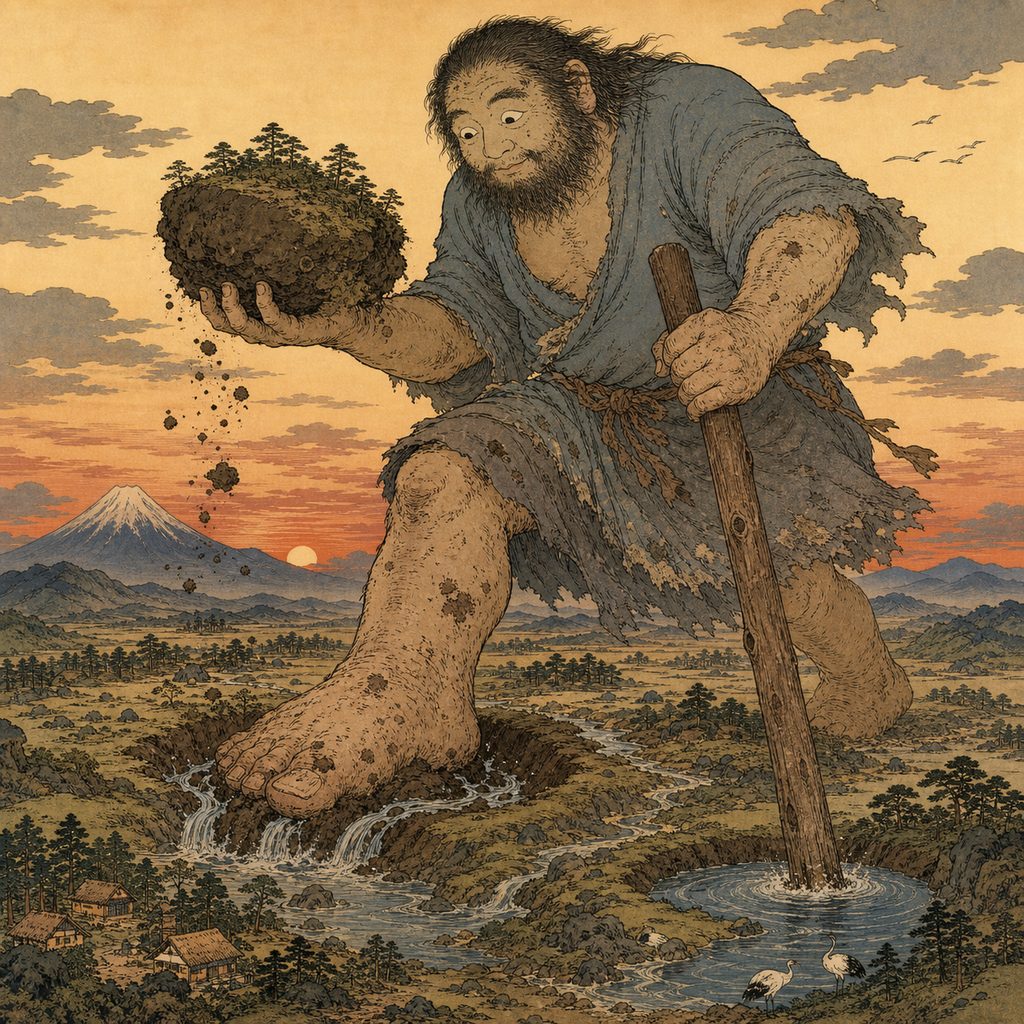
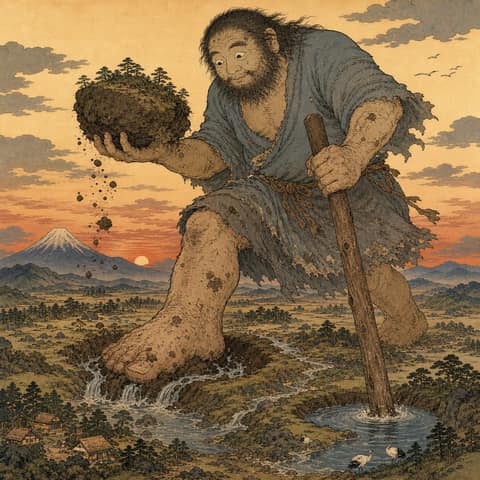
Daidarabotchi
Daidarabotchi is the foremost name in Japanese giant traditions, identifying a widespread body of lore that explains hollows, ponds, marshes, wells, mounds, and mountains as physical traces left by a colossus. Centered primarily in the Kantō and Chūbu regions, the giant is known by appellations that shift across localities—taking forms such as Daidarabō, Daidabotchi, Dairabotchi, and Deedarabotchi—and has historically been transcribed with kanji compounds such as 大太法師 (*Daitabōshi*) and 大多羅法師 (*Daitarahōshi*). Rather than signifying a single mythic individual possessing an identical appearance and life story nationwide, the name functions as an umbrella under which communities grouped analogous regional narratives that interpret local topography through titanic deeds. At the core of these traditions lies not the giant’s facial features or garments, but the physical impression stamped upon the earth in his wake. A single stride caves the ground into a pond or marsh; the point where his foot braces heaves the soil upward; and earth carried or knocked from footwear accumulates into knolls and barrows. Feats such as shouldering mountains, excavating and shifting enormous deposits of earth, planting a walking staff, or excreting connect far-flung peaks, bays, depressions, and natural springs to one colossal frame. These deeds and implements are not attributed uniformly across every district, however, nor does any nationwide consensus define the giant’s moral character, intellect, or attitude toward humans. Classical provincial gazetteers such as the *Hitachi no Kuni Fudoki* and *Harima no Kuni Fudoki* similarly document ancient legends that attribute local landforms to the bodies, footprints, and bodily waste of immense beings referred to as “people of high antiquity” (*jōko no hito*) or “great men” (*ōbito*). While these early accounts share a clear structural framework with later Daidarabotchi traditions, the classical texts never invoke his name. Consequently, they cannot be taken as proof that the same folkloric creature persisted unchanged from classical times; instead, they are comparative evidence for the age of the idea of explaining regional geography through the anatomy of a giant.
Read moreダイダラボッチは、山や湖をつくるほどの巨体を持つ国造りの巨人だ。富士山を盛り上げるために近江の土を掘り、その掘った跡が琵琶湖になったと語られる[9]。湖の輪郭と富士の山容が、一人の巨人の手仕事として一続きに想像されているのである。この伝説の縁から、昭和四十三年(一九六八年)に静岡の富士宮市と近江八幡市は夫婦都市の縁を結んだ。神話を都市交流に変えてしまうあたりに、伝説がいまも生きていることがうかがえる。掘った土が富士になり、その跡が湖になる ── 列島の地形を一つの物語で結ぶこの巨人は、近江が「水の国」であることの、最も雄大な説明になっている。
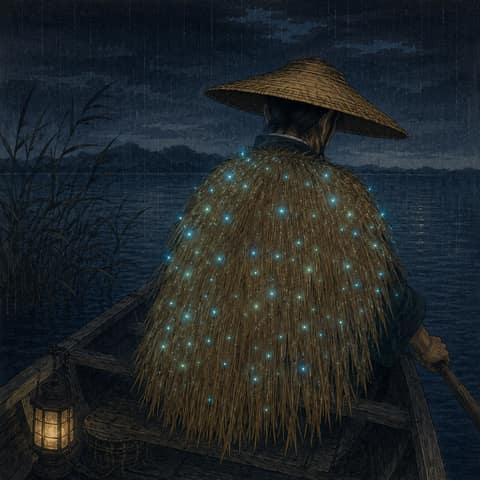
そして、夜の湖そのものが妖しい火をともす。彦根に伝わる蓑火(みのび)は、湖を渡る舟人の妖怪である。
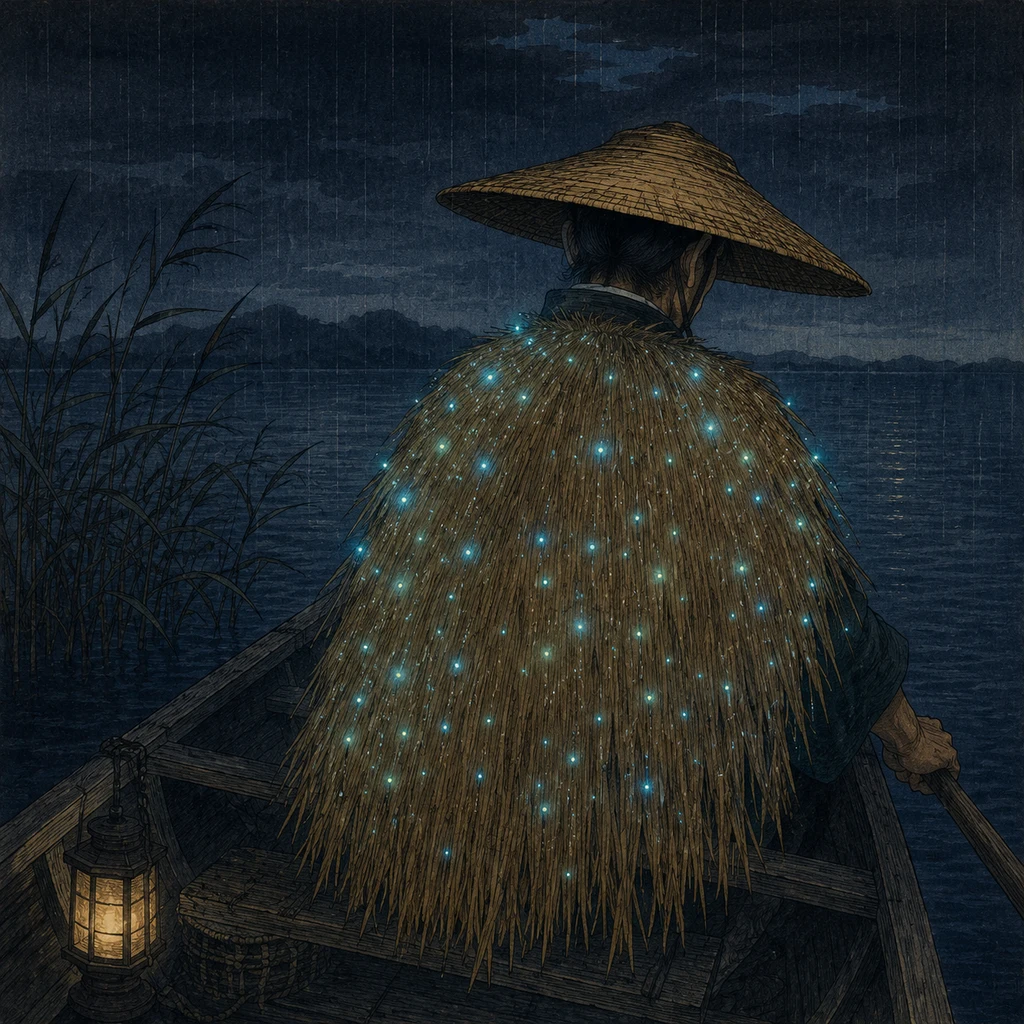
Minobi (Rain-cloak Fire)
Minobi is a will-o’-the-wisp–like fire said to appear as tiny lights dotting a straw rain cloak on boats crossing Lake Biwa, especially on rainy nights in the rainy season. It neither burns nor spreads; if the cloak is removed, the lights vanish. Brushing at them makes them multiply, glittering like starlight. Some traditions call it the manifestation of drowned spirits, while modern views liken it to a kind of gaseous luminescence; similar reports exist across Japan.
Read more旧暦五月の雨の夜、琵琶湖の舟上で、蓑(みの)に蛍のような火の玉がいくつもまとわりつく。手で払えば払うほど数を増し、けれども熱くはなく、蓑を脱げば消えるという[10]。鳥山石燕も『今昔百鬼拾遺』にこれを描いた[11]。火でありながら水上にともるという矛盾を、そのまま静かな美しさに変えてしまうところが、湖国の怪らしい。水死者の魂が火になるという説もあれば、明治の井上円了は湖面から立つ燐(りん)やガスのなせるわざと説いた ── 怪異と科学のあわいで、蓑火はいまもほのかに光りつづけている。
三井寺の怨霊 ── 山門寺門の争いが生んだ鼠
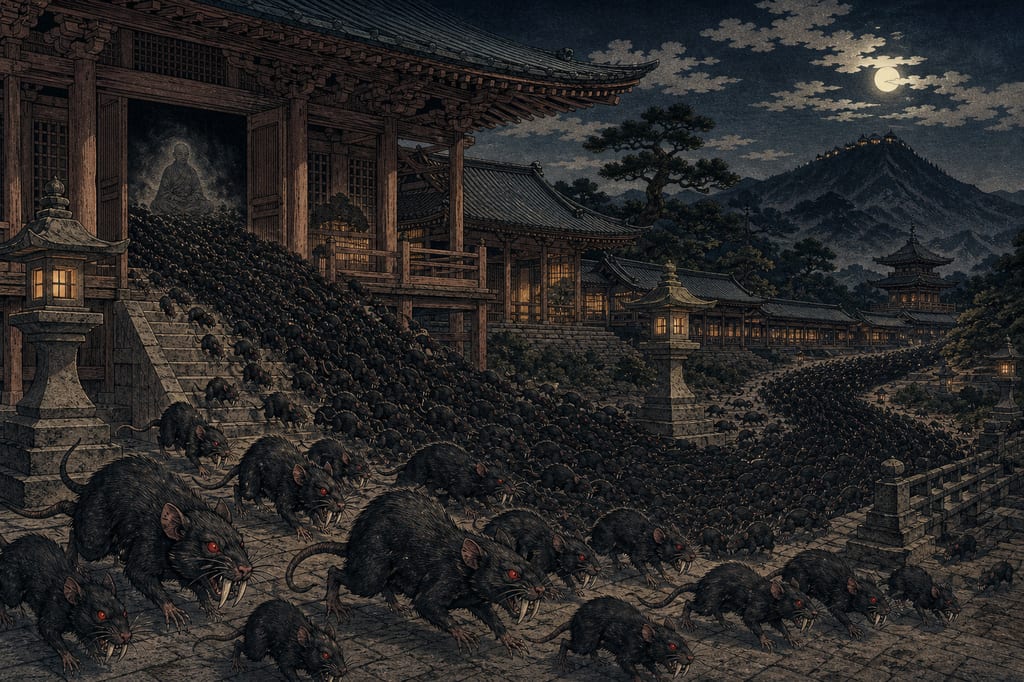
都の記憶が古代の層なら、中世の近江に怪異を呼びこんだのは、寺と寺との争いである。大津の三井寺(園城寺)は天台寺門宗の総本山で、たびたび戦乱に焼かれては再興された「不死鳥の寺」として知られる。この寺の歴史に重なる怨霊譚が、頼豪(らいごう)と鉄鼠(てっそ)の物語だ。

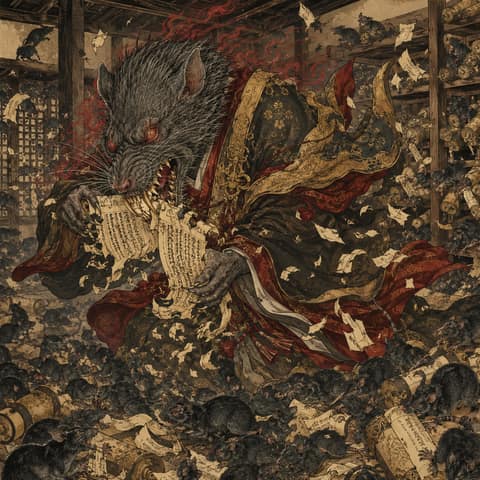
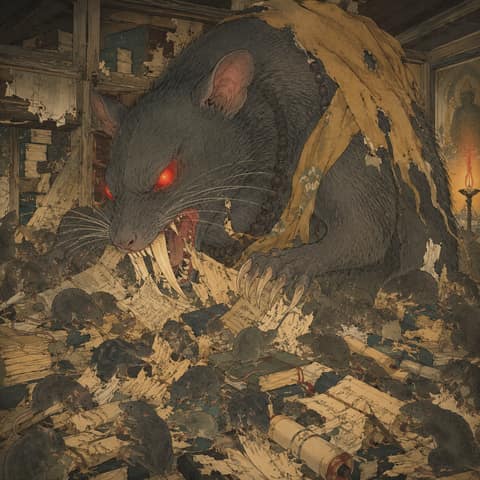
Raigō
Raigō, a mid-Heian Tendai monk famed for efficacious rites, is said to have prayed successfully for Emperor Shirakawa’s imperial heir. Later he sought to establish an ordination platform at Onjō-ji (Mii-dera), but fierce opposition from Enryaku-ji thwarted him. Harboring resentment, he reputedly fasted to death. Afterward his vengeful spirit took the form of a rat that gnawed through sutra repositories—the dreaded “Iron Rat” (Tessō). His tale appears in The Tale of the Heike and The Taiheiki, blending historical record with onryō lore.
Read more頼豪は、白河天皇に皇子誕生を祈願し、百日の祈りの末にこれを成就させた三井寺の高僧だった。恩賞として三井寺に戒壇(かいだん ── 僧に戒を授ける場)を設けることを願ったが、これを嫌う比叡山延暦寺の強硬な反対で叶わず、憤死したと伝わる ──『平家物語』は、恨みのあまり怨霊と化した頼豪が、自ら祈り出した皇子を呪い殺したと語る[12]。承暦元年(一〇七七年)、皇子はわずか四歳で世を去ったという。
この怨念が、やがて鉄の牙を持つ鼠の群れへと姿を変える。
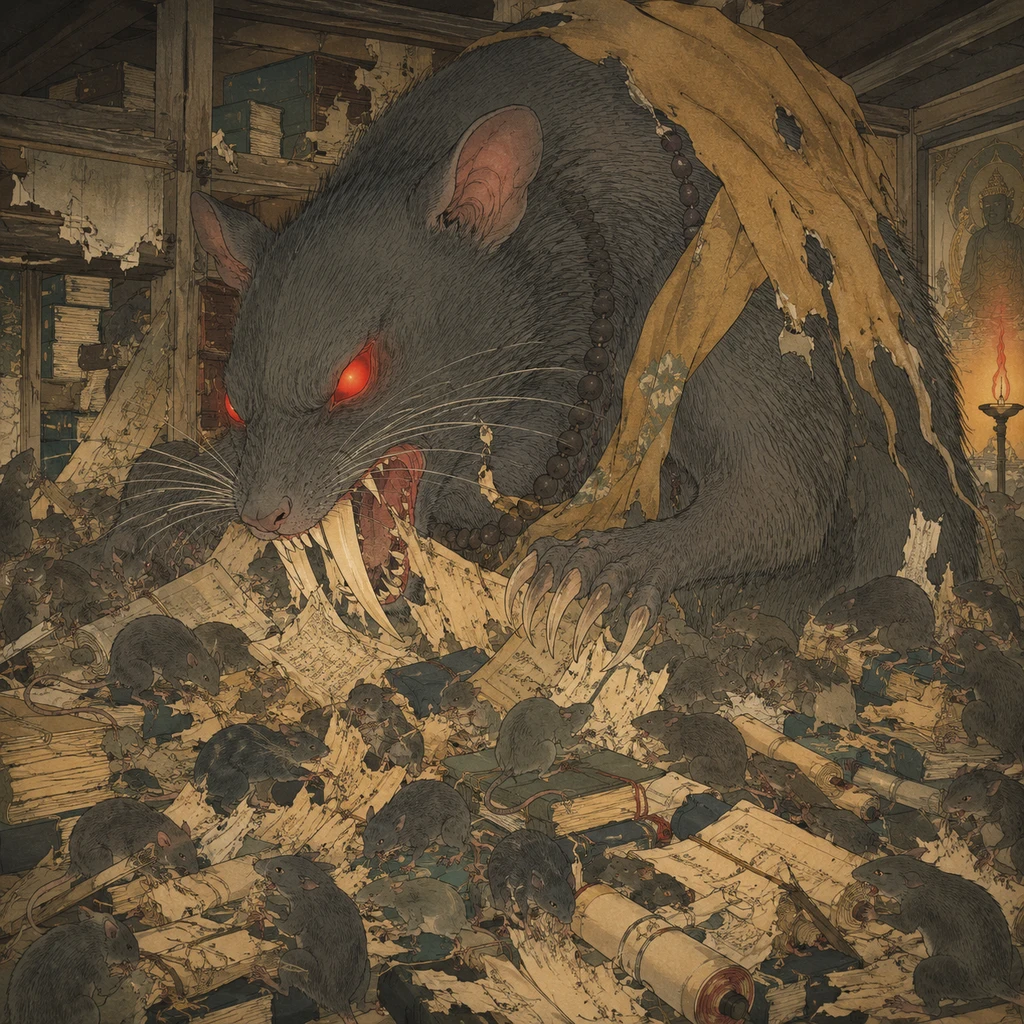
Tesso
Tesso is a yokai said to be the vengeful spirit of the monk Raiyō from Onjōji (Miidera), which took the form of a giant rat. Framed by the rivalry between Enryakuji and Miidera, it is depicted as a massive rat that gnaws through sutras and Buddhist images. The name “Tesso” comes from Toriyama Sekien’s Illustrated Night Parade of a Hundred Demons; older sources call it Raiyō’s Rat or the Miidera Rat. The tale blends a grudge-ghost narrative with folk fears of rat damage, and memorial rites linger at shrines and temples around Mount Hiei and Ōtsu.
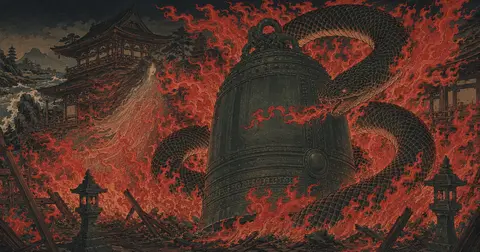
Read more後世の物語では、頼豪の怨霊は八万四千の鉄鼠となって比叡山へ押し寄せ、経巻や仏像を食い荒らした[13]。江戸の妖怪画はこれを鉄鼠(てっそ)と名づけて結晶させ、三井寺には鼠の霊を祀る十八明神社(じゅうはちみょうじんしゃ)── 通称「ねずみの宮」が、いまも比叡山の方角をにらむように建っている。
怨霊が鼠に化けるという発想の背後には、近江の宗教史そのものがある。同じ天台でありながら、円珍(えんちん)門流の三井寺(寺門)と、円仁(えんにん)門流の延暦寺(山門)とは、座主の補任や戒壇の権をめぐって長く反目しあった ── これを「山門寺門の争い」と呼ぶ[14]。正暦四年(九九三年)には山門が寺門の坊舎を焼き、寺門の僧およそ一千人が山を下って三井寺に拠った。頼豪が望んで容れられなかった「戒壇」とは、まさにこの対立の核心であった。怪異は、ここでは空想の産物ではない。生々しい権力闘争の記憶が、鼠という小さな獣の姿を借りて語り直されたのである。
比良の天狗と、
地の底をめぐる三郎 ── 山と地下の妖怪
近江は道と湖の国であると同時に、湖を囲む山の国でもある。湖の西にそびえる比良山(ひらさん)には、大天狗が宿る。
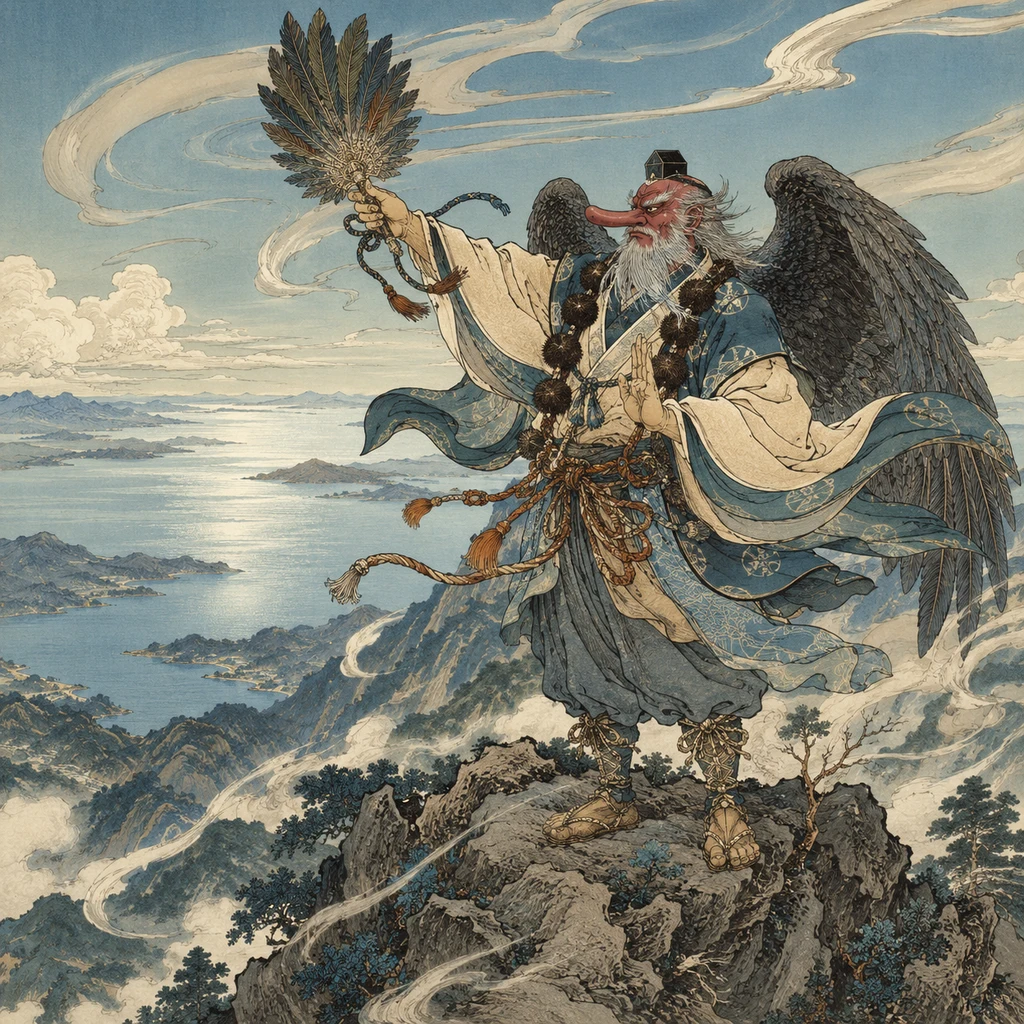
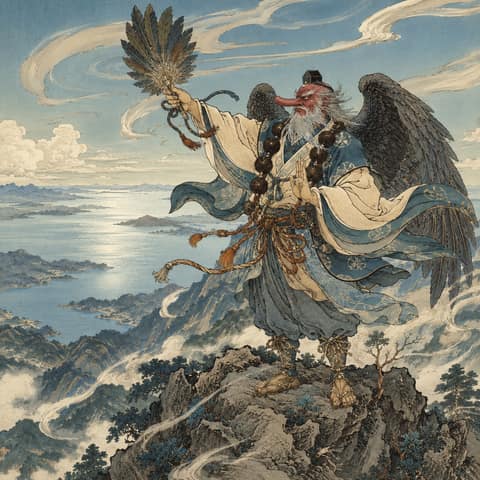
Hira-san Jirōbō
Hira-san Jirōbō is a great tengu who strikes his roots into Mt. Hira in Ōmi Province; within the forty-eight tengu and the Eight Great Tengu, his name stands in the second seat (rank two), next after Atago-san Tarōbō. Drawn as a long-nosed great tengu, he is held to command the mountain air and the wind and to govern the tengu beneath him. Based in the Hira range that towers along the western shore of Lake Biwa, the tengu of this mountain appears by name in medieval texts. The Hirasan Kojin Reitaku, written by Keisei in the first year of Enō (1239), records a dialogue with the aged tengu (the "old man") of Mt. Hira, conveying that Hira had long been conceived as a sacred mountain where tengu dwell. Within the tengu hierarchy headed by Atago Tarōbō, Jirōbō, as the second seat, has often been spoken of in a pair with Tarōbō.
Read more比良山次郎坊(ひらさんじろうぼう)は、愛宕山の太郎坊に次ぐ大天狗とされる。注目すべきは、天狗が単なる人を化かす妖怪としてではなく、宗教を論じる存在として一次史料に現れることだ。鎌倉時代の僧・慶政(けいせい)が著した『比良山古人霊託(ひらさんこじんれいたく)』(一二三九年)には、ある女房に憑いた比良山の大天狗と慶政とが、仏法をめぐって長く問答するさまが記されている[15]。日本を代表する八天狗を数えるとき、その筆頭が愛宕の太郎坊、これに次ぐのが比良の次郎坊だとされた。琵琶湖を見おろす比良の高嶺は、それほどの大天狗が坐すにふさわしい山と仰がれたのである。
天狗という存在そのものについては、近江の比良に限らず、修験の山すべてにまたがる広がりを持つ。
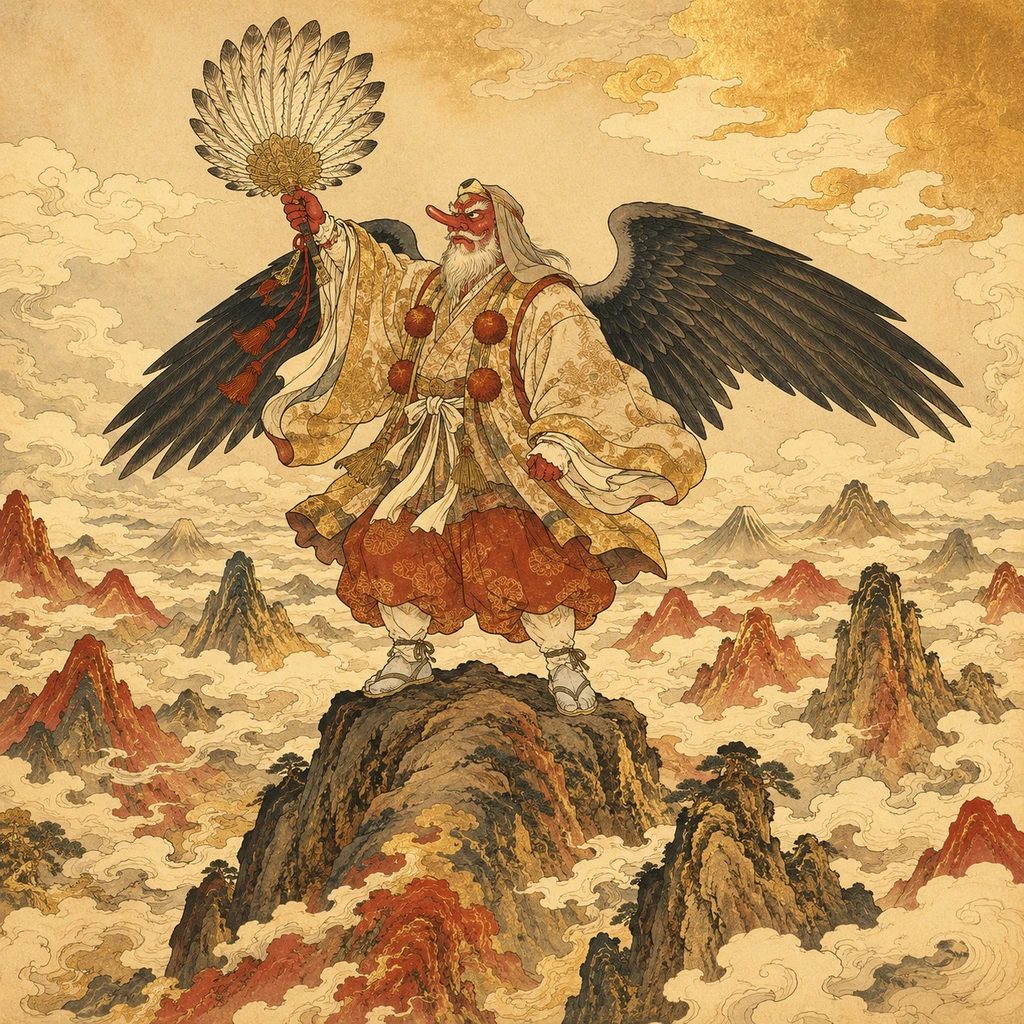
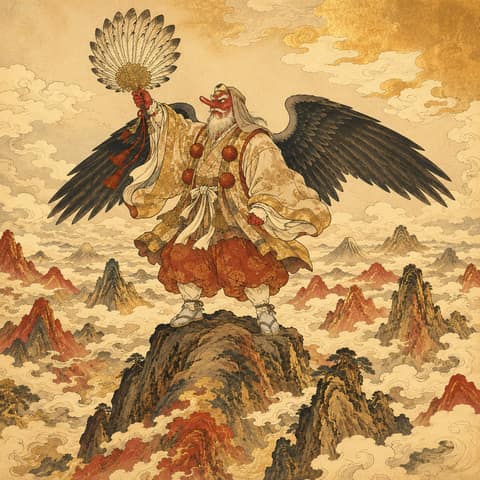
Tengu
The tengu is a yokai and quasi-divine being said to dwell in the mountains of Japan, a lord of the heights inseparably bound to the yamabushi ascetics of Shugendō. Its forms fall broadly into two lineages. One is the long-nosed tengu, with a ruddy face and high nose, clad in the garb of a mountain ascetic, bearing a feather fan and one-toothed high clogs; the other is the crow tengu, with a crow's beak and wings, and beneath them follow lesser kin such as the leaf tengu and the wood-chip tengu. What was once conceived as a bird like a black kite hardened, over the medieval period, into the image of the long-nosed mountain ascetic. The tengu is at once a demon that obstructs the Buddhist Law and, once subdued, a guardian deity who protects it—this dual nature is the essence of the tengu. The notion that an arrogant high monk falls and becomes a tengu was bound to the Buddhist "way of the tengu," and was depicted as satire in late-Kamakura picture scrolls. Within mountain worship, on the other hand, the tengu was revered as guardian of the mountain and master of martial and magical arts, a being that tests or guides the practitioner. From Mount Kurama and Mount Atago in Kyoto onward, each of the sacred mountains of the realm was said to have its own great tengu, and the early-modern Tengu Sutra counts their number at forty-eight.
Read more験力、飛行、慢心、そして護法 ── 天狗は、聖と魔の両方を一身に背負う、修行の山の住人である。鼻高の山伏天狗、烏天狗、木の葉天狗と図像も多彩で、ときに人をたぶらかし、ときに仏法を守護する。比良山次郎坊は、その天狗類のなかでも、近江という土地に固有の名を与えられ、正統な大天狗として語り継がれた一例だといえる。
同じ近江の南東、甲賀の地からは、地の底をめぐる異形の英雄が生まれた。
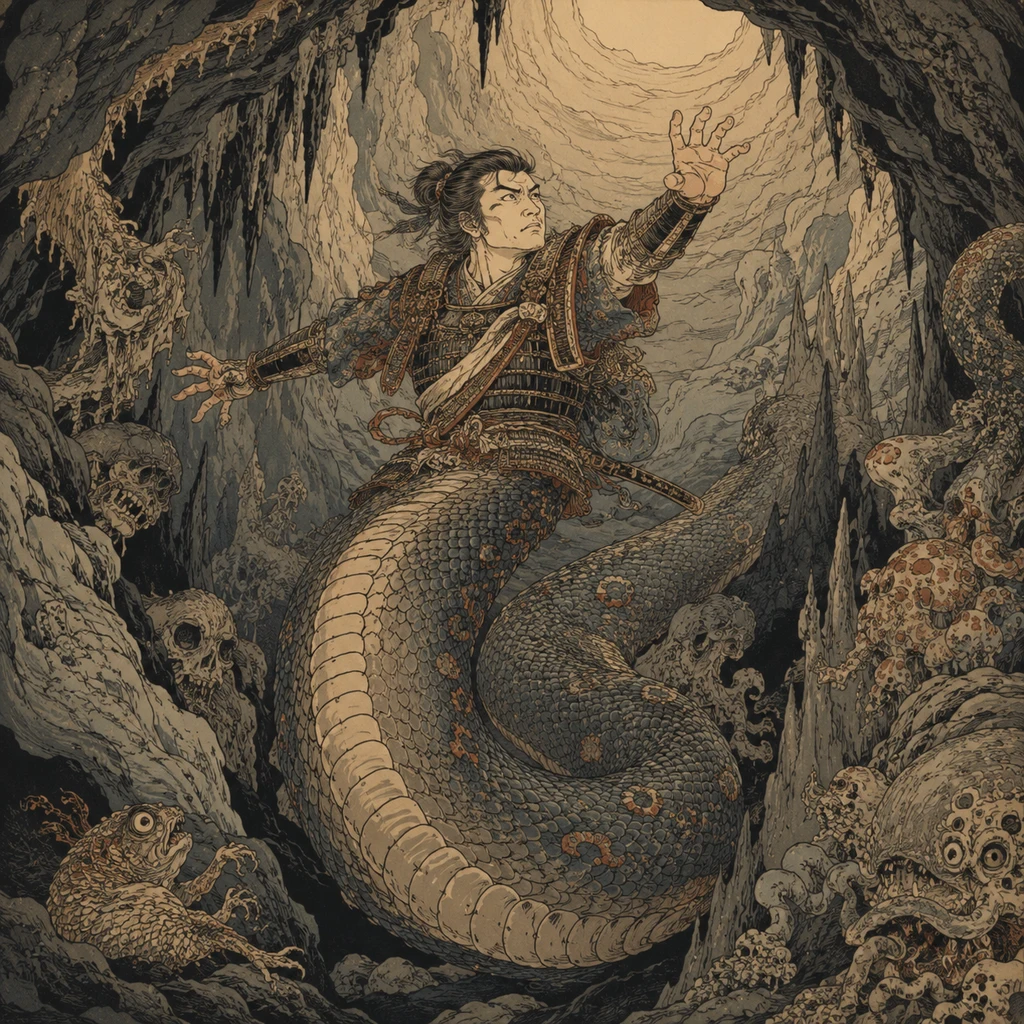
Koga Saburo
Koga Saburo is the protagonist of a medieval Japanese legend found in the "Origins of Suwa" chapter of the Shintosho, recounting an epic subterranean journey and his transformation into a serpent. Described as the third son of a powerful family in the Koka District of Omi Province, he enters a deep cave in Mount Tateshina in Shinano Province while searching for his missing wife, Princess Kasuga, only to be trapped underground due to his older brother's jealousy. After a long and arduous wandering through the subterranean otherworld, he finally returns to the surface, but his body has transformed into that of a giant serpent or dragon, ultimately linking him to the worship of the Suwa Upper Shrine's deity. Rather than conflating him with Takeminakata-no-Kami from the Kojiki, Koga Saburo is best understood as the product of an alternate medieval Suwa origin myth—an archetypal story of "a warrior who attains godhood by passing through the form of a serpent".
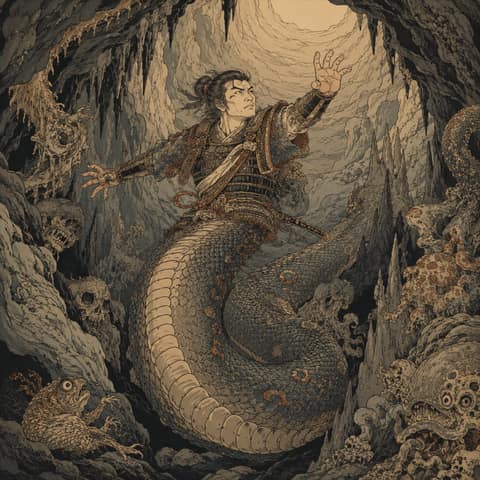
Read more中世の説話集『神道集』の「諏訪縁起」によれば、甲賀の領主の三男・甲賀三郎(こうがさぶろう)は、天狗にさらわれた妻・春日姫(かすがひめ)を救うべく、信濃の蓼科山(たてしなやま)の人穴へと分け入った[16]。だが地上へ引き上げる綱を兄に切られ、地の底に取り残されてしまう。地下には七十二もの国があったと語られ、三郎はそのひとつ維縵(いかん)国の王女と契りながらも、なお地上を恋いつづけた。長い帰路の末にようやく地上へ帰り着いたとき、その身はすでに蛇(龍)へと変じていた ── やがて人の姿を取り戻した三郎は、諏訪の明神になったと語られる。武士が地底をめぐり、蛇身を経て神へと昇る ── 甲賀の地は、こんな壮大な転生譚の出発点でもあった。地下を旅する英雄という発想が、湖と山にはさまれた近江の地から立ち上がっているのは、暗示的である。
灯火の妖怪と、
湖国を歩いた商人たち ── 近世の近江
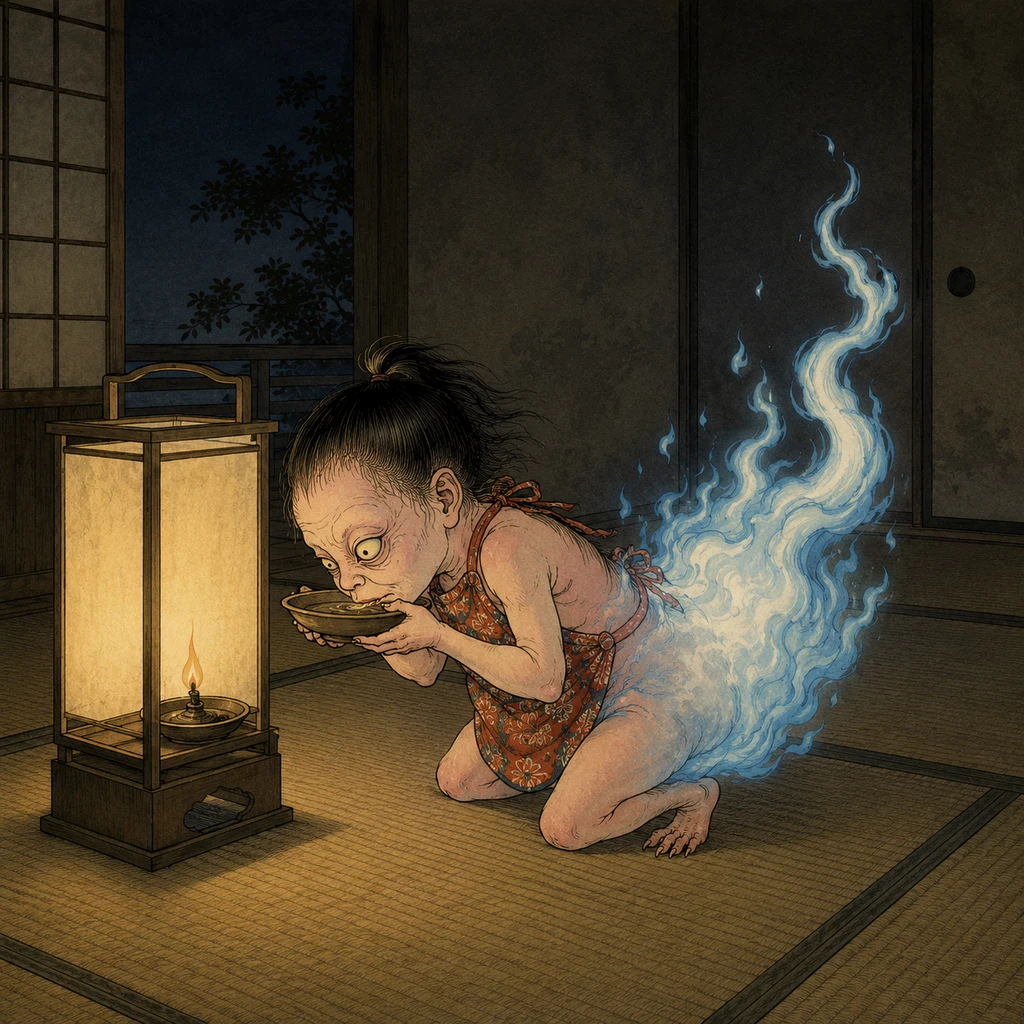
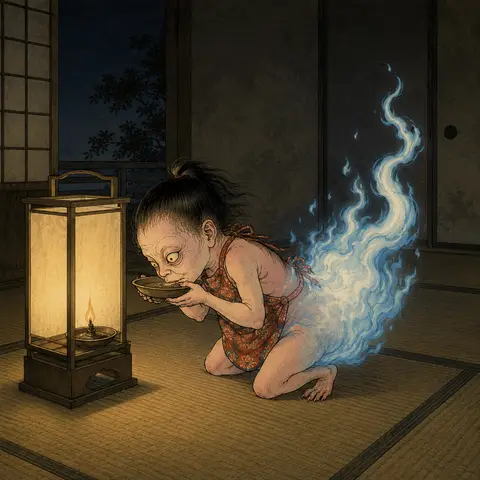
Oil Baby
A yokai illustrated in the mid-Edo period by Toriyama Sekien in Konjaku Gazu Zoku Hyakki. It appears as an infant that licks oil from household lamps. The motif draws on a local belief from Ōtsu in Ōmi: an oil seller who stole oil offered to a Jizō statue died and became a wandering fire. Sekien adapted that ghost-fire tale, embodying an obsession with oil in the form of a red baby.
Read more近世に入ると、近江の妖怪は街道や町の暮らしのなかに溶けこんでいく。その代表が油赤子(あぶらあかご)だ。鳥山石燕の『今昔画図続百鬼』(一七七九年)に描かれたこの妖怪は、赤子の姿で行灯(あんどん)の油を舐め取る[17]。石燕の図像の背後には、近江国大津の俗信がある ── 大津で地蔵の灯明油を夜ごと盗んで売っていた油売りが、死後に迷って怪火(油坊)と化したという話だ[18]。火の玉が家に入りこんで赤子の姿となり、油を舐め、また火に戻って飛び去る。「灯(あかり)」が怪を呼ぶという発想は、油という商品が貴重で、寺社の灯明や行灯の灯が暮らしの中心にあった時代の感覚から生まれている。
そして油という商品は、近江のもう一つの顔へとつながっていく。湖と東西の街道に恵まれた近江は、近世日本を代表する商人 ── 近江商人を生んだ土地であった。
- Oil BabyAH-boo-rah AH-kah-go
- Minobi (Rain-cloak Fire)MEE-noh-bee
- Ningyoningyo
- Giant CentipedeOH-oh-MOO-kah-deh
八幡商人、日野商人、五個荘商人らは、天秤棒一本をかついで全国へ行商に出た。日野商人は売薬や醸造を得意とし、油もまた彼らの扱った重要な商品の一つであった[19]。「近江の千両天秤」という言葉は、天秤棒一本から千両の身代を築く気概と、富を得ても行商の初心を忘れぬ戒めを、同時に伝えている。妖怪の世界では油を盗む怪火が語られ、現実の世界では油を商う商人が街道を歩く ── 油という一つの品をめぐって、怪異と経済とが同じ近江の街道の上で交差していたのである。湖が交通の臍であったからこそ、ここでは物も人も怪も、同じ道の上を行き来した。
結び ── 湖と道が記憶を畳む国
近江国の妖怪をたどると、この国がいかに「境の国」であったかが見えてくる。東国と西国の境、水と陸の境、聖と魔の境 ── そのいずれもが、湖と道という近江の地理に根ざしている。瀬田唐橋に龍と大百足が立ちあがり、伊吹山に英雄を斃す荒神が坐し、蒲生河に最古の人魚が記され、巨人が湖を掘り、三井寺に怨霊の鼠が群れ、比良に大天狗が宿り、甲賀から地底をめぐる三郎が現れ、大津の街道に油の怪火がともる。
古代の都が置かれ、壬申の乱が決し、英雄が斃れた近江は、その後も都の神仏・軍記・怪談を湖と山で受けとめ、独自の怪異に編みなおしてきた。令制国としての近江がたたんだこれらの記憶は、いまも現代の滋賀県の妖怪事典へと地続きに流れこんでいる。淡海の都は、わずか五年で都であることをやめた。だが、都であった記憶も、英雄が敗れた記憶も、商人が街道を歩いた記憶も、この水の国はけっして手放さなかった。近江の妖怪とは、その畳まれた記憶が、湖面にほのかに灯した火なのである。