The Netherworld: Ten Kings and the River of Three Crossings
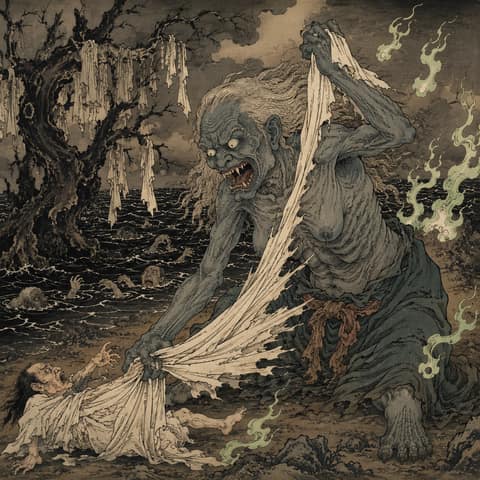
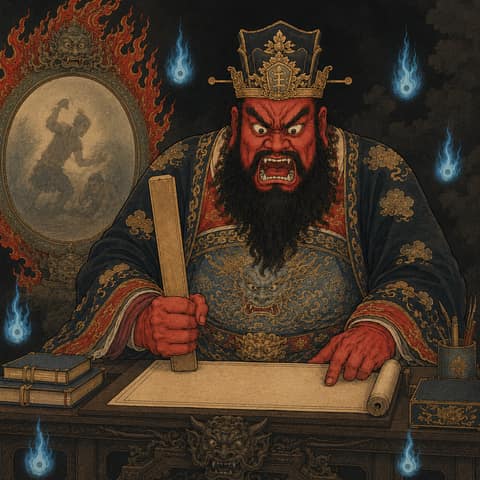
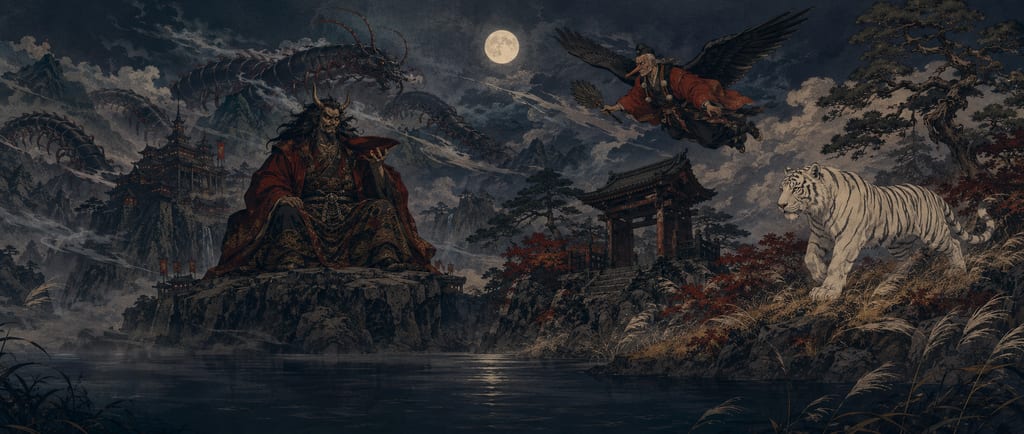
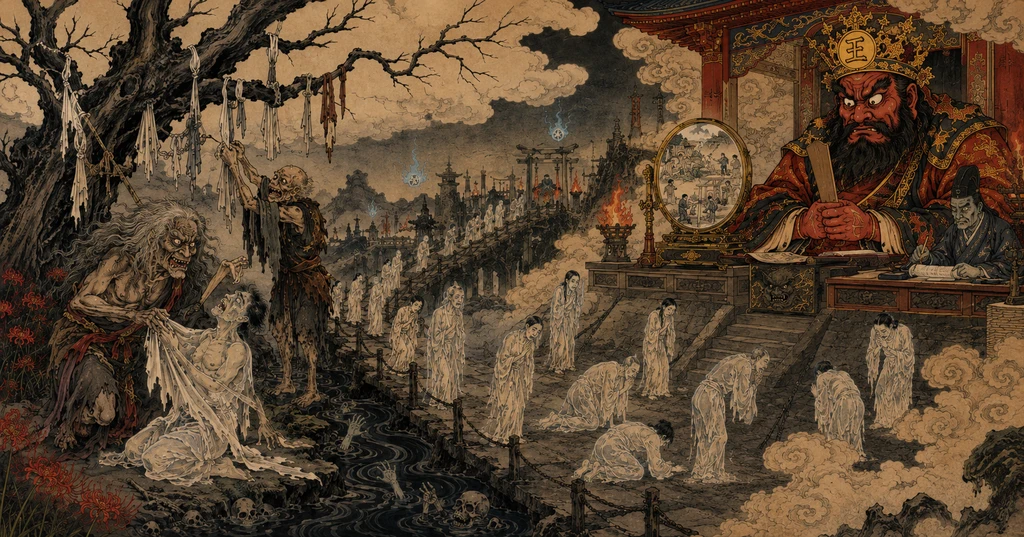
The major figures composing the medieval Japanese netherworld view—a syncretic blend of Buddhism, Daoism, and Shinto. The deceased undergoes judgments by ten kings at ten temporal nodes (the forty-nine-day period plus the 100th-day, first-anniversary, and third-anniversary memorials). At the River of Three Crossings, administered by the second king Shokō, Datsue-ba strips the deceased of clothing and Keneō hangs them on the Eryōju tree, weighing sin by the bough's sag—this is the preliminary judgment. The fifth king, Enma, presides over the central trial on the thirty-fifth day. He uses the Jōharikyō mirror to project the deceased's life as imagery, while Gushōjin, Shimyō, and Shiroku finalize the verdict with their records. This concept of posthumous ethics, karmic retribution, and the life-projecting mirror constitutes the deepest layer of Japanese views on life and death.