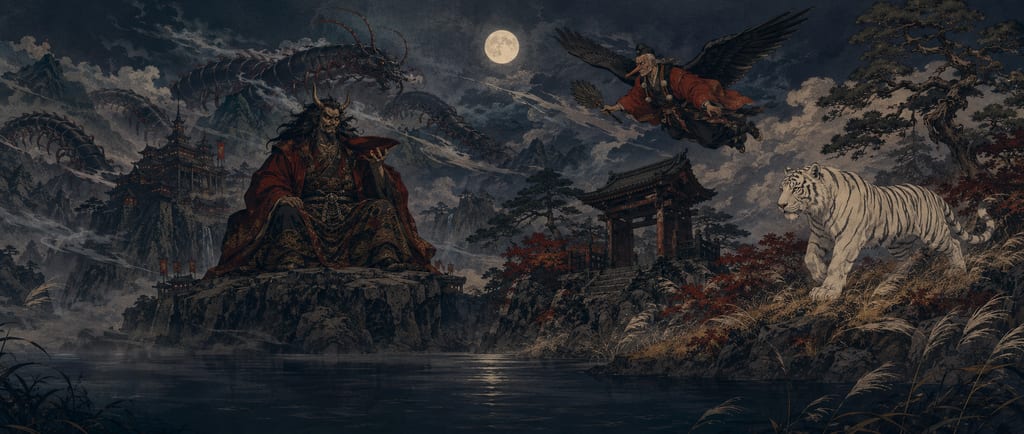
A canonical image of Muginodo Daimyojin found in measles prints. A formidable deity subdues a red-black oni under both feet while onlookers press their hands in prayer. Though the god’s origins are unclear, the image renders the disease visible and calms anxiety through the act of trampling. The accompanying text lists convalescent care, dietary restrictions, and prayers for recovery, blending devotion with practical guidance. The design reflects the plain sincerity of folk belief.
Character Profile
This section is our own creative profile for storytelling. It is not historical fact or scholarship.
Yokai Type - Traditional Yokai
Category - Deities & Divine Spirits
Rarity - Divine
Personality - stern, compassionate
Compatibility - banishing disease, household safety
Abilities - warding off epidemicssubjugating evil spiritsprotecting the householdsoothing anxiety
Weaknesses - uncertain provenance leading to strong regional variation, transmission of faith dependent on print publishers
Habitat - townhouse doorways, tokonoma alcoves, picture-book shops